Thirteen old-time cartridges that are still great choices for whitetail hunting.
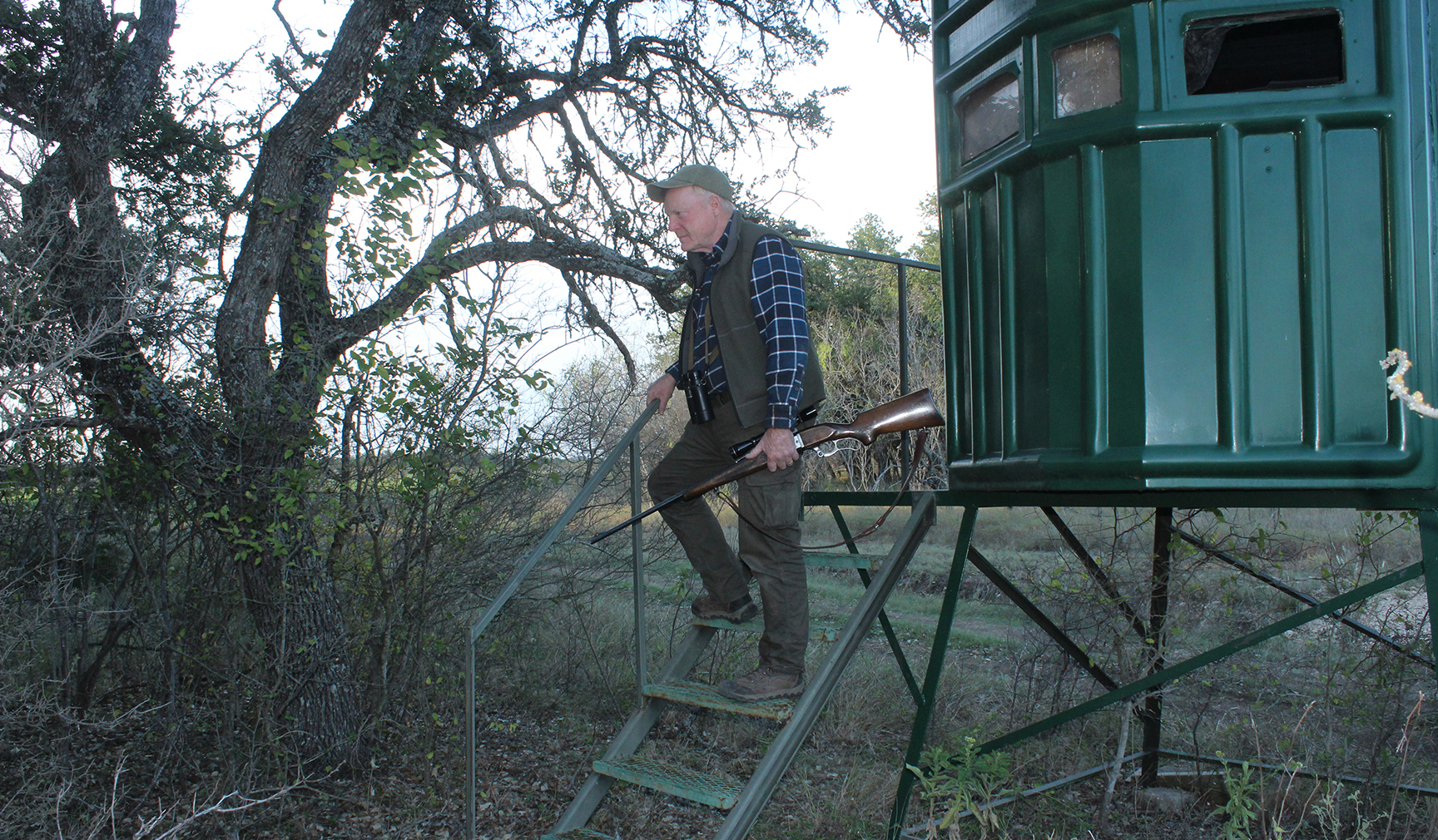
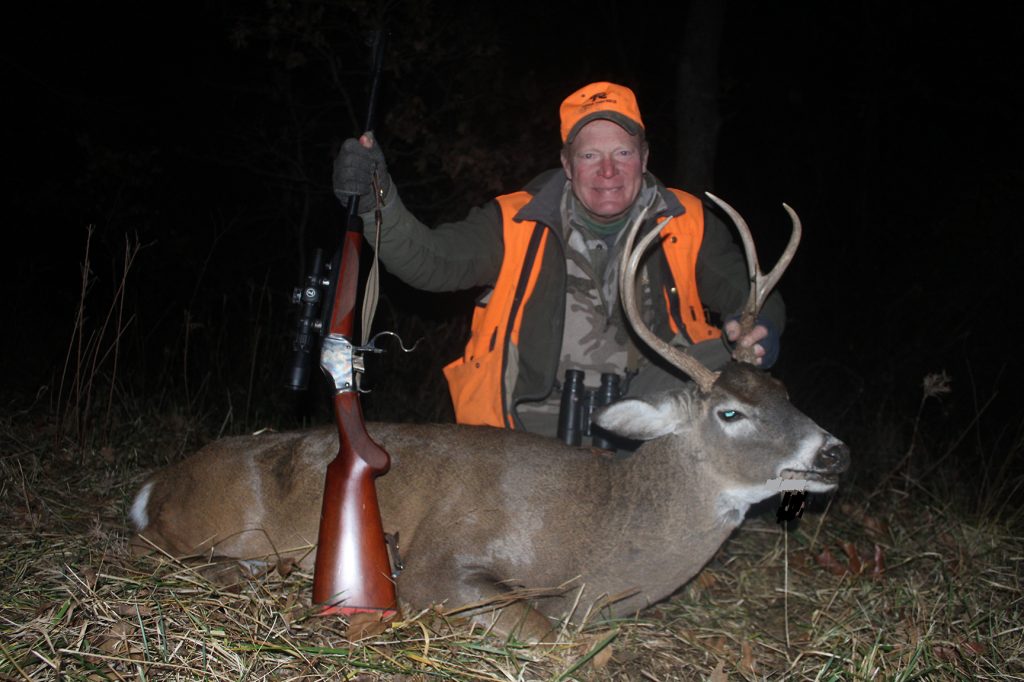
Photo above: The author exits a Texas deer stand with a 1950s-era Savage 99 in .300 Savage. Boddington carries this accurate and hard-hitting rifle often on medium-range deer hunts.
Campfire arguments about cartridges are fun. There are lots of great hunting cartridges, and how well you place your bullet is always more important than the rifle and cartridge that propelled it. Still, it’s fun stuff. I’m always curious to see what hunters bring to our whitetail hunts in southeast Kansas; it’s good fuel for campfire discussions.
Our timbered ridges don’t offer long shots, but images of the Yellow Brick Road are unavoidable. Some hunters bring magnums. They work but aren’t essential. The opposite approach: many of our hunters go traditional. Every year, we see 7x57s, .270s and .30-06s, plenty of .308s, All are excellent for our conditions.
This year, we had fourteen different cartridges in our Kansas woods. Multiples were the usual suspects: 6.5 Creedmoor, .270, .308, and .30-06. Cartridges new to our camp included Ryan Orth’s 6mm ARC, Keith Roberts’ 6.8 Western, and Paul Cestoni’s .338 Federal. Magnums were present and they worked. Rodney Cayemburg used his 7mm Rem Mag, Duane Evans had a .280 AI, and Ryan Murray used his .300 WSM.
What’s a “Classic?”
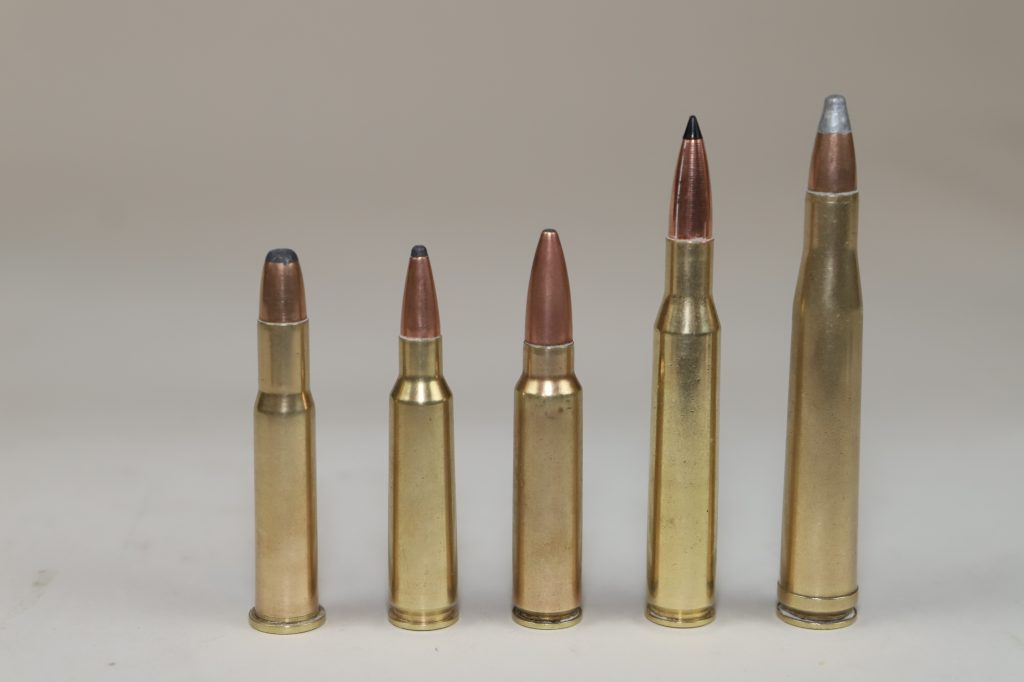
Definitions of classic and antique vary. Google says: “Generally, an item must be at least 100 years old to qualify as an antique.” For a centerfire cartridge to have a hundred-year run isn’t common, but there are numerous centenarian cartridges still in use. Many, I’ve never encountered, but I came up with thirteen cartridges a hundred years old or more that I’ve seen take bucks in recent seasons. Here’s my “baker’s dozen,” by order of age:
.45-70 Govt. (1873)
8×57 Mauser (1888)
.303 British (1888)
7.65 Argentine Mauser (1889)
7×57 Mauser (1892)
6.5×55 Swedish Mauser (1894)
.30-30 Winchester (1895)
.30-06 Springfield (1906)
.280 Ross (1906)
.250 Savage (1915)
.300 Savage (1920)
.270 Winchester (1925)
.300 H&H Magnum (1925)
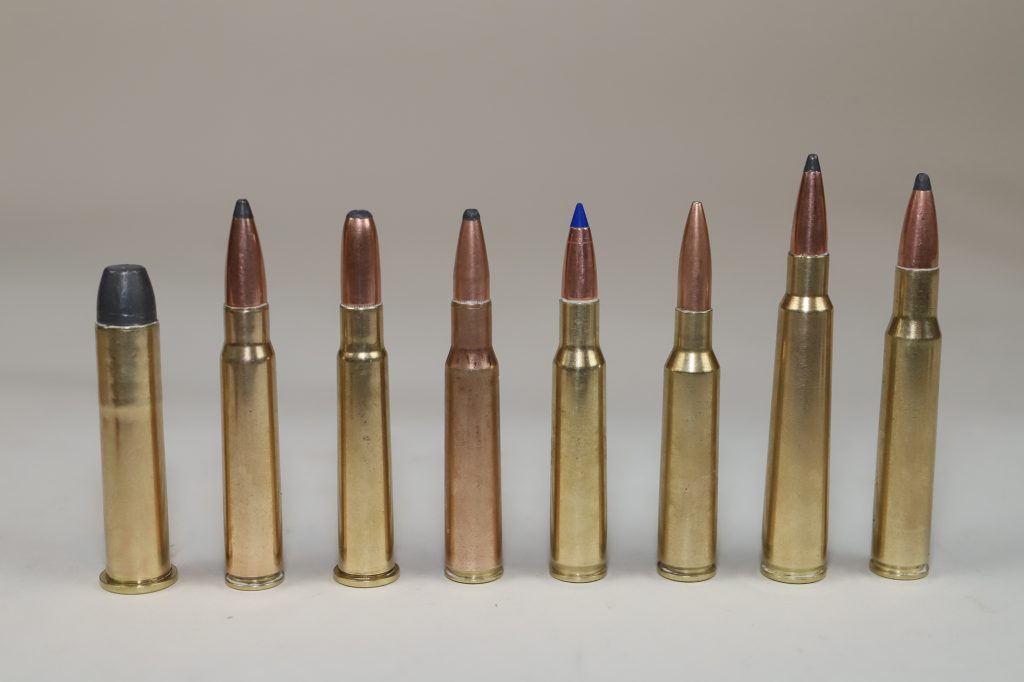
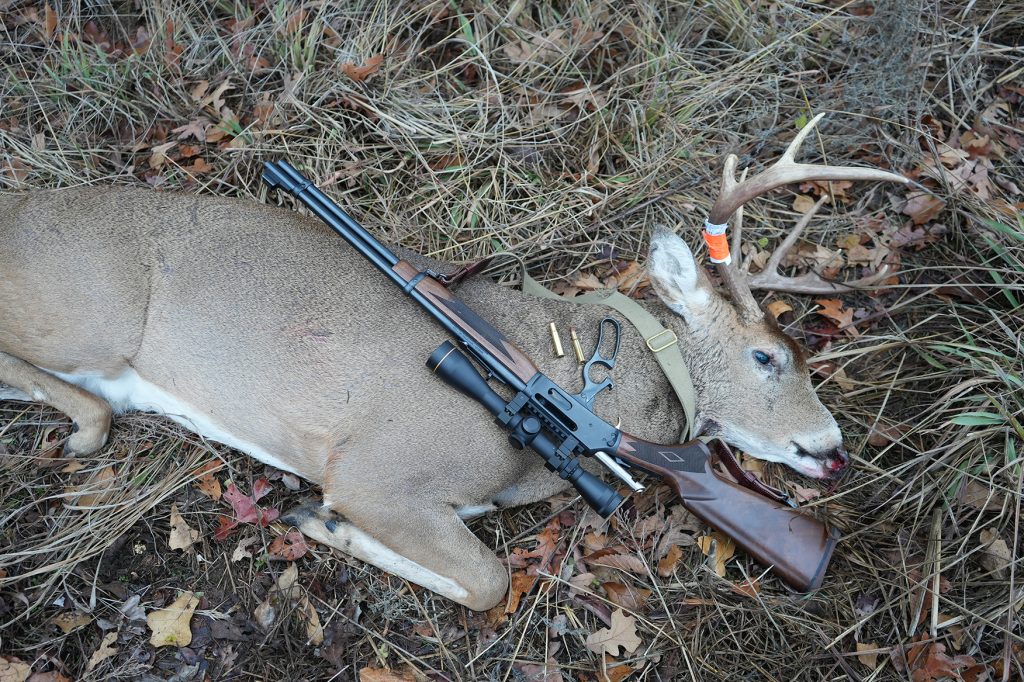
Oldest is the .45-70 Government. It’s amazing that it’s still with us, but “modern” loads with lighter bullets and smokeless powder render it an effective short-range deer thumper. I’d never hunted deer with it until recently, but when Ruger brought out their 1895 Marlin I took it whitetail hunting. It’s harder-kicking than necessary, but impressive.

“Smokeless” propellant came into use in 1886. Initially, most cartridges were military developments. France was first with the 8mm Lebel (I’ve never fired one). Germany was second, with the 8mm Mauser, technically 7.92×57. Originally with .318-inch roundnose bullet, changed to a .323-inch spitzer in 1903. The 8×57 remains popular in Europe, often compared to our .30-06. It’s harder-hitting because of larger bullet diameter, but not as fast.
Clayton Paul brought an 8×57 to our 2025 Kansas deer camp. It worked, but Clayton is an accomplished competitive shooter, so whatever he shoots, works. Likewise, his son, Ryan Paul, who brought a gorgeous Mauser in 7.65 Argentine his dad made for him. These are the first 7.65 and 8×57 Mausers we’ve had in camp. Both took excellent bucks, one shot each.
At the dawn of smokeless powder, Peter Paul Mauser experimented with variations of case length and bullet diameter to get ideal performance. His 6.5×55 Swede, 7×57, 8×57, and the 7.65×53 Argentine Mauser all became popular hunting cartridges. The 7.65 Argentine may have been Mauser’s best, rivaling .30-06 performance in a shorter case.
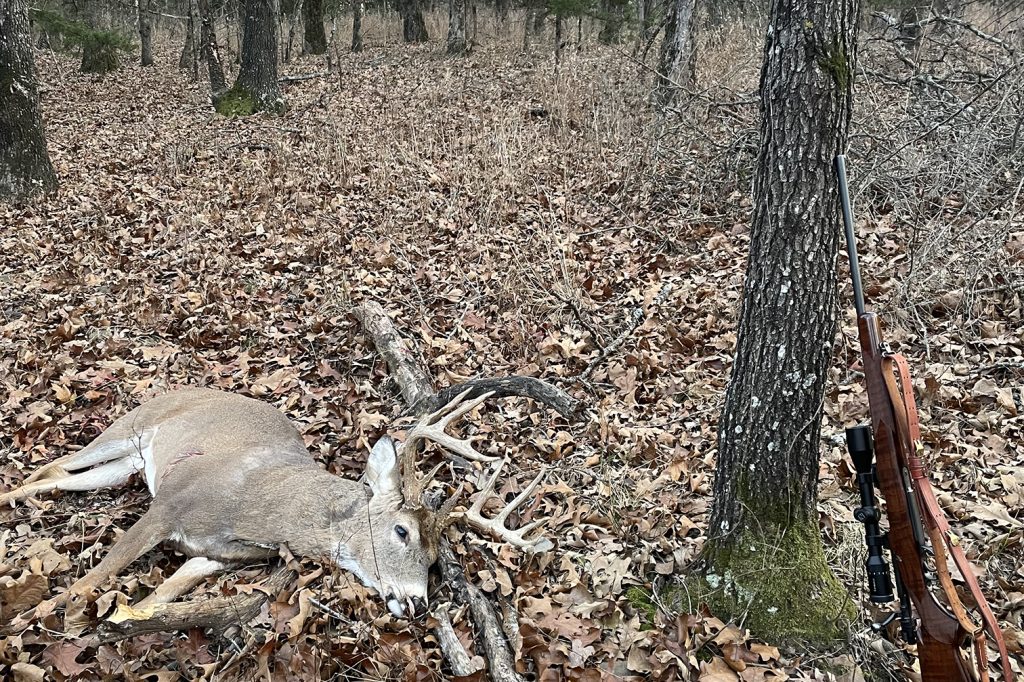
This was Ryan Paul’s third time with us, three great bucks, three shots fired. Three days into his hunt, wind right, I put him in his favorite stand, a tall tree stand atop a ridge. Ryan went up there for the day, and texted me about 4 p.m. that he had a good buck down.
Military developments weren’t exclusive to continental Europe. In 1888, Great Britain adopted the rimmed .303 British. With modern loads, the .303 is similar in power to .308 Winchester. Three seasons back, I carried a .303 in Uberti’s Courteney stalking rifle, on the Browning 1885 action.
In Cuba in 1898, we took too many casualties to the Spaniards’ Mausers. In 1903, we switched from .30-40 Krag to the 1903 Springfield and the .30-03 cartridge. Three years later, we updated to the .30-caliber, model of 1906 cartridge with a lighter, faster spitzer bullet. The .30-06 remains one of our most versatile hunting cartridges. Every season there are .30-06 rifles in camp.
In 1906 Canadian Sir Charles Ross unveiled the .280 Ross cartridge, chambered in his straight-pull rifle. Intended for the military, the .280 Ross saw limited use with Canadian forces in WWI. Pre-dating belted magnums, with a fat, rimless case, .280 Ross was the first cartridge to approach 3,000 feet per second (fps).
With speed and high energy, the .280 Ross had great appeal as a sporting cartridge. Except: Bullet technology wasn’t up to the velocity. In 1911, Sir George Grey, brother of the British Foreign Secretary, failed to stop a wounded lion with his .280 Ross. Horribly mauled, he died a few days later.
I knew the story, had never seen a Ross rifle. In 2022 Larry Tremaine brought a rare Ross sporter to Kansas. With older rifles, iron sights are a limitation for buck hunting. He pulled it off, took an eight-pointer.
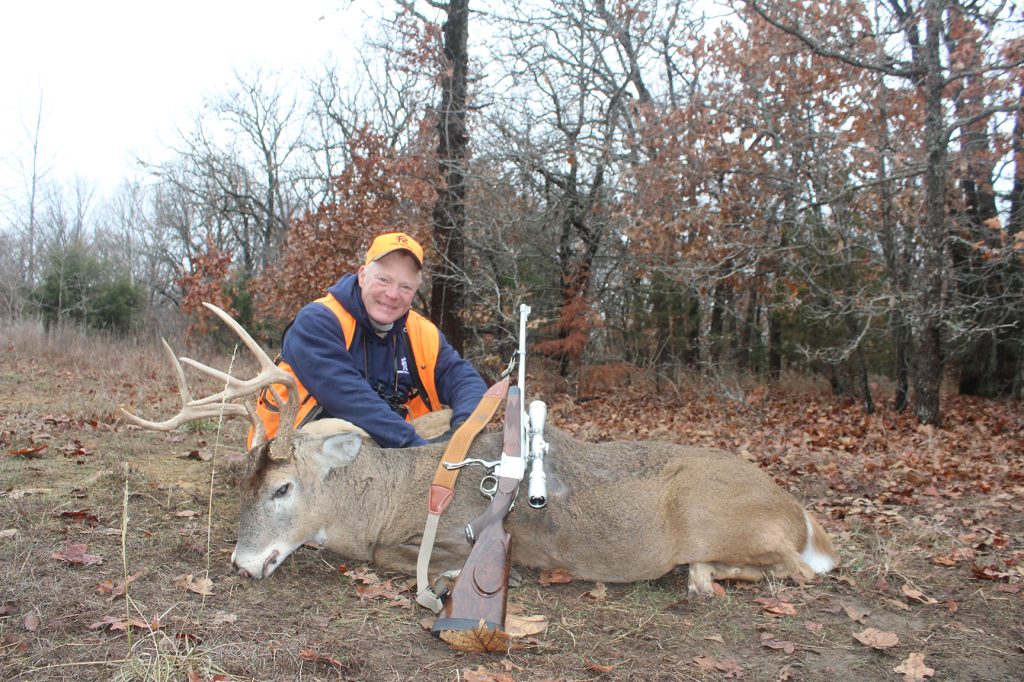
The same season, Ruger collector Lee Newton brought a gorgeous custom Ruger No. 1 chambered in .280 Ross. We had no ammo, but we begged a few cartridges from Larry. At the end of the season, I used it to drop a funky-horned 7-pointer. .280 Ross brass is scarce, but bullets are more problematic. The .280 Ross calls for an oddball .287-inch bullet. Larry and I were both rattling 7mm (.284-inch) bullets down the Ross barrels. Accuracy was sketchy; we needed close shots and got them.
Civilian Centenarians
In 1895, the .25-35 and .30-30 were companion introductions, the first two sporting cartridges designed for smokeless powder. Although both were popular, the .30-30 came to define America’s deer rifle. Still widely chambered, the .30-30 is perfect for deer-sized game, provided you don’t need range. In Kansas, I often take a .30-30 to certain short-range stands. Only in newer rifles with optical sights because in thick timber, first light comes late and shooting light leaves early.
With internal rotary magazine suited for spitzer bullets, Arthur Savage’s 1899 lever-action was stronger than either the Marlin or Winchester. In 1915 Savage engaged gun designer Charles Newton to develop a cartridge. Based on a shortened .30-06 case, the result was the .250-3000 (.250 Savage), the first commercial cartridge to break 3,000 fps. It could only reach that speed with a light 87-grain bullet. When it worked, it struck like lightning, but, like the .280 Ross, bullet technology wasn’t there and some found it erratic. A slower 100-grain bullet—which Newton had argued for in the first place—proved more consistent, and the Savage lever-action offered Winchester serious competition.
This increased in 1920 when Savage necked the .250 case up to create the .300 Savage. With 1920 propellants it almost equaled .30-06 velocity of the day. The .300 was Savage’s most popular chambering until the late 1950s, when the Savage action was adapted to the .308 family. I have a 1919 .250-3000 rifle, a takedown with flip-up aperture sight, and a 1950s-era .300 Savage with scope. Because of the aperture sight, (and my eyes), I’ve done little buck hunting with the .250. The .300 is a standby for medium-range deer hunting. Much-battered, it groups 1.5 MOA, hits hard, and I enjoy carrying it.
Seeking a faster, flatter-shooting cartridge that kicked less than the .30-06, Winchester pulled out the stops with their .270. In 1925 it was America’s fastest cartridge and is still one of our best deer cartridges. Funny, I’ve never carried a .270 on my Kansas farm. Many of our guests bring .270s, and I’ve used it for deer hunts from Canada to Mexico. For deer hunting under any conditions, the .270 is hard to beat.
Across the pond, also in 1925, Holland & Holland necked their .375 H&H case down to .30, creating the Super .30, what we know today as the .300 H&H Magnum. It has since been superseded by fatter, shorter (and longer) belted and unbelted .30-caliber magnums. Its long, tapered case with gentle shoulder is easy to improve upon. But it produces amazing accuracy, feeds like melted butter, and with goods handloads produces surprising velocity.
In 2024, anticipating the .300 H&H’s centennial, I dug out my Ruger No. 1 .300 H&H, the most accurate No. 1 I’ve ever owned. With the same mindset, Coloradan Kevin Perry brought his .300 H&H to our Kansas camp. His is a gorgeous custom rifle made by his friend, Kevin Weaver. Several days apart, we both took nice bucks from the same stand. No longer chambered in factory rifles, and with dwindling factory loads, the .300 H&H is still a great hunting cartridge. As I’ve often said, you don’t need a magnum for whitetail hunting. But, with night coming fast and dark woods looming, it’s nice to have your buck down on the spot. Doesn’t matter whether it’s a new whiz-bang or an old-timer. What matters is that it does the job.