Our newest “official” big-game animal, the javelina, offers a fun and rewarding winter hunt.
December in Alaska is a challenging time. I lived there for many years, and although I tolerate cold well, when the temperature dropped below minus 20 I always remembered Jack London’s classic story “To Build a Fire” and stayed inside. Cabin fever is a real phenomenon even though we call it “seasonal affective disorder” now.
One year, I just had to get out. A friend and I flew to Phoenix, rented a car, drove east to Safford, and chatted with the local wildlife biologist. With some new circles on our map, we set off into the desert—way off into the desert, farther than we ever should have gone in a rental car.
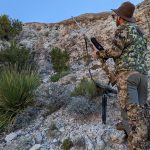
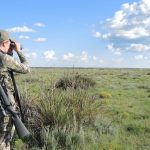
After cooking a meal over a mesquite fire and going to sleep under the stars, we rose the following morning set off on foot in search of an animal I’d never even see before—the javelina. The open desert terrain offered an inviting opportunity to pick a high spot, sit down, and glass. I hiked up to the base of a nearby mountain although I didn’t really know what I was looking for. The blue sky and brilliant sun had already compensated for the time and effort of the trip.
At first the desert looked empty, but then I started paying attention. The desert flora was fascinating. In contrast to other thorny habitat I’ve hunted, the cacti were spaced far enough apart for me to walk through them easily. As the birdlife awoke with the rising temperature, I identified several species I’d never seen before: cactus wrens, acorn woodpeckers, even a pair of roadrunners poking around in the mesquite below me. As I hiked over to another ridge, I spotted a fresh cougar track. Cougars had to eat something, didn’t they?
After several hours of glassing, I felt the warm sand invite me to take a nap. Still sleep deprived after all that travel, I nearly accepted. Then I heard an odd chorus of snuffling and grunting in the broken, rocky terrain downhill. Moments later, a dozen animals that could only be javelina appeared from the brush, working their way upward to my left. (The proper term for a group of javelina is a “squadron,” although I didn’t know it at the time.)
Despite my lack of experience with them, based on what I knew about their biology I assumed (correctly, as subsequent encounters proved) that smell was their keenest sense. Light morning thermals had developed, so I had the wind. After noting some landmarks, I began a stalk designed to put me right in front of them as they fed uphill.
That first javelina hunt took place more than forty years ago, and Lori and I subsequently wound up spending our winters in southern Arizona. While we spent most of our hunting time chasing quail with our bird dogs, we were in the heart of prime javelina country, and I hunted them enough to learn a lot more about them. Despite their small size, I always thought of them as big game. After all, I had one tag, hunted them by hiking and glassing, and used my stalking and tracking skills. Furthermore, they were much bigger than quail.
Not everyone agreed with that opinion, but now the javelina has finally earned some of the respect I always thought it deserved. Both the Boone and Crocket Club and the Pope and Young Club recently added the collared peccary (the proper common name for the javelina) to their list of big-game animals eligible for entry into their record books, the first time in years a new species has been added.
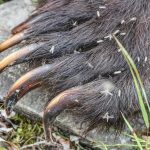
Although javelina are commonly referred to as pigs or hogs, that is biologically inaccurate. They differ from true members of the hog family in the structure of their feet, stomachs, and ears. Like feral hogs, they are omnivores that will eat almost anything. They are especially fond of prickly pear. Chewed prickly pear is good indication of their presence in the area, and an abundance of this cactus is a reliable clue to productive javelina habitat.
Two other peccary species inhabit the New World, but white-lipped and Chacoan peccaries only occur in South America. Reaching weights up to 90 pounds, white-lipped peccaries are larger than our javelina, which rarely weigh more than 50, and they are more aggressive.
Javelina are abundant in northern Mexico, and I have shot them there incidentally while hunting whitetails. North of the border, hunting opportunities are limited to Texas, Arizona, and New Mexico. Since most of my experience with them has come in Arizona I’ll focus on what I learned about them there, but general principles about their habits and how to hunt them apply wherever they are found.
While desert-adapted javelina can go for long periods of time without surface water, they’ll take it when they can get it. Water sources like springs and stock tank overflows are always a good place to start looking for sign. While glassing from an elevated position is the classic way to hunt them, I’ve not infrequently stumbled into them at close range while hiking. It always pays to remain alert any time you are hunting in a javelina habitat.
Javelina are most active early and late in the day, when it is easy to spot their dark forms moving across the desert floor as they feed. They are much harder to see when they are bedded in the shade at midday, so that’s a good time to take a break and go quail hunting.
Javelina tusks are sharp, and they can put on an impressive threat display when cornered or defending their young. However, unprovoked attacks on people are rare. In Arizona javelina injure a few people every year, usually when a dog is nearby. Adapted to defend themselves against coyotes, javelina can be very aggressive toward dogs especially if their young are present. I was always worried about my dogs when I was hunting quail, so I fitted them with Kevlar vests, which also helped protect them from thorns and cholla.
Despite their small size and the reassuring statistic just cited, javelina, like any wild animal, can be dangerous, especially when wounded. Hunters should always use caution and common sense when approaching a downed animal. Arizona is also home to more venomous snake species than any other state. Although they are less active during the winter hunting season, they’re still there and are much more likely to cause serious injury than javelina, so watch where you put your feet when hunting the desert.
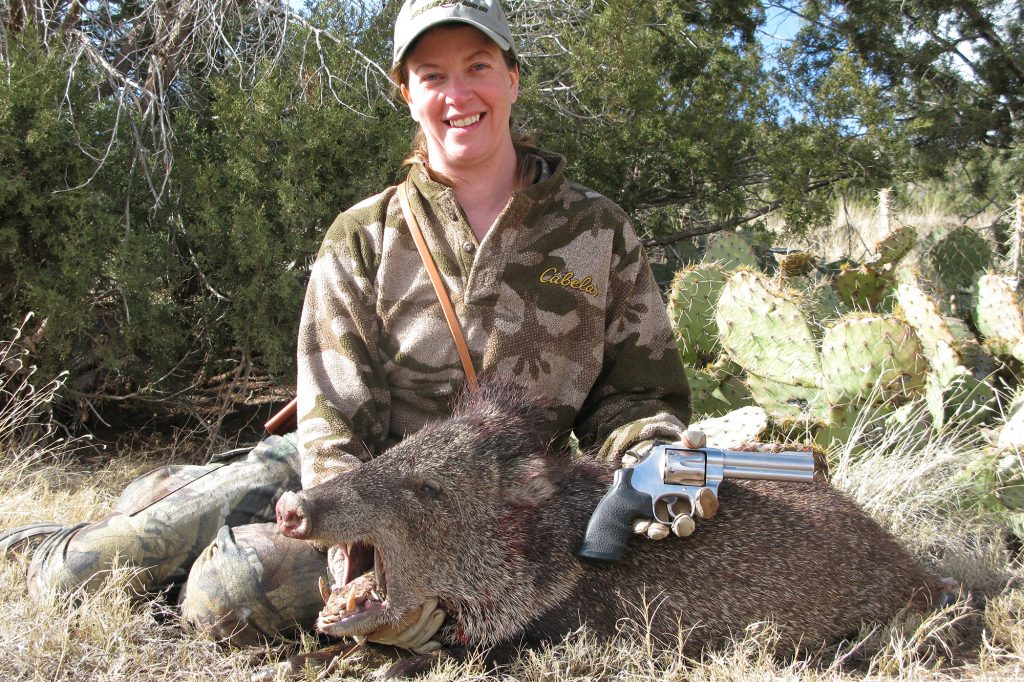
Javelina have poor eyesight, and their hearing is no better than fair. As noted earlier, their sense of smell is acute, so wind direction is the most important consideration when planning a stalk. If you can keep the breeze in your face, you have an excellent chance of getting a close shot. This makes them an ideal quarry for bowhunters, especially for those just making the transition from firearms. Arizona also offers a HAM season (handgun, archery, and muzzleloader) after the general archery season, providing special opportunities to hunt with close-range firearms. There is a general firearms season after the archery and HAM seasons. However, the opportunity for close shots invites voluntarily limiting one’s means of take. If you’re not a bowhunter, pack your handgun or muzzleloader and give it a try.
A lot of hunters I know share the misconception that smaller animals like javelina and antelope are easier to bring down cleanly than larger ones. However, javelina are remarkably tough little critters, and proper shot placement is just as important on them as it is on animals the size of moose. I’ve spent a lot more time tracking wounded javelina than I thought I’d need to after marginal hits. After a shot, unless you can see the animal lying dead in front of you, obey all the usual rules. Note the exact spot where you last saw the animal, give it some time, and start tracking carefully.
It’s difficult to discuss regulations since they change frequently and differ from state to state, so this information is just meant to provide general guidelines. As always, hunters need to review current regulations in the area they plan to hunt before heading into the field. Seasons generally take place during the winter, an especially attractive time for snowbound residents of northern states to head to the desert. Arizona requires drawing tags in most districts, although some may be available over the counter for bowhunters.
Quail aren’t the only species whose pursuit can be combined with a javelina hunt. Deer and javelina seasons often overlap. Javelina habitat offers good opportunities to encounter one of our most challenging big-game animals, the Coues deer. I ran into them frequently when I was hunting javelina, just as I often ran into javelina when I was deer hunting.
Having been raised in a “you shoot it, you eat it” family, a principle I’ve followed with game animals as diverse as mountain lions and zebras, I’ll offer some comments on the food quality of javelina. Their terrible reputation is easily explained—and avoided with proper management in the field.
Javelina have oil-secreting glands on their faces and above their tails. The musk they produce is oily, tenacious, and odiferous. When stalking, I’ve even smelled them before they smelled me. Javelina meat itself doesn’t differ much from that of other game animals since the musk is all in the hide, but getting even a small amount of this oil on the meat will render it practically inedible.
The trick is to field-dress the carcass without letting that happen, which is easy if you have a hunting partner along. When skinning the animal, one of you should hold and pull on the hide without touching the meat while the other one butchers the meat without ever touching the hide. While you can prepare the meat as you would with any venison, it’s likely to be tough, so turning it into sausage is a good option. A hunting partner once turned his javelina into pastrami, which was delicious.
One welcome aspect of hunting javelina in Arizona is their abundance on public land. Around 90 percent of the state lies within the public domain and contains a lot of great javelina habitat on BLM and National Forest with the abundant back roads providing access. Many of those roads are barely passable and help may be a long way away, so go prepared with everything you need to change a tire or get out of a ditch. Don’t forget the first rule of desert travel—carry plenty of water.
Back on that rocky hillside forty years ago, the breeze held steady and the javelina and I arrived at the same place at the same time. I didn’t have any cover, but doing nothing more than holding still allowed me to remain undetected. Identifying a mature boar proved easier than I expected, and I sent an arrow through his chest from a range of perhaps ten yards. At the sound of my bowstring’s twang, a chorus of squeals and grunts arose as the pigs tore off over the rim of a dry wash. Keeping an eye on the one I’d shot was like playing a shell game. I didn’t see him fall despite what I felt sure was a solid, well-place hit. A brief tracking job after letting the area settle back down proved that impression correct.
Since then, I’ve spent a lot of time in javelina country. Some of those days ended quickly, with a prompt encounter and a steady breeze that allowed an easy stalk. On other occasions I couldn’t locate a javelina even after glassing until my eyeballs ached. I never failed to have a great time, keeping myself in shape during the long winter, enjoying the weather when the snow was flying back home, observing exotic wildlife, and looking over more public land than I could hunt in a week—or a season.
No wonder I have enjoyed seeing the javelina officially become the big-game animal I always thought it was.
Keeping Score
The Boone and Crockett Club and the Pope and Young Club now accept javelina entries into their record books. Javelina skulls are measured in the same manner that both organizations measure bears and cats–the greatest length and greatest width are recorded to the nearest sixteenth of an inch. Minimum entry scores are 13 14/16 for Pope and Young and 14 5/16 for Boone and Crockett.