A program by the Wild Sheep Foundation is changing lives, connecting families, and creating confident, proficient hunters.
Renée Thornton wasn’t raised in a hunting family, but she cares deeply about where her food comes from. After a decade-long pursuit of trying to find ethically and organically produced meat from small local producers and farmer’s markets, Thornton embarked on a personal journey to become a hunter when she was in her mid-forties. It wasn’t easy, as many other adult-onset women hunters have discovered. As a result of her experiences, Thornton became passionate about engaging with and helping other women learn to hunt.
Her experience led to the formation of the Wild Sheep Foundation’s Women Hunt program, which is both a hunter-skills training program and a social and collaborative effort to help more women find their way into the hunting fields and support those who are already there. As founder and chair of the Women Hunt program, Thornton spearheads an ever-growing network of dynamic female conservation and hunting enthusiasts.
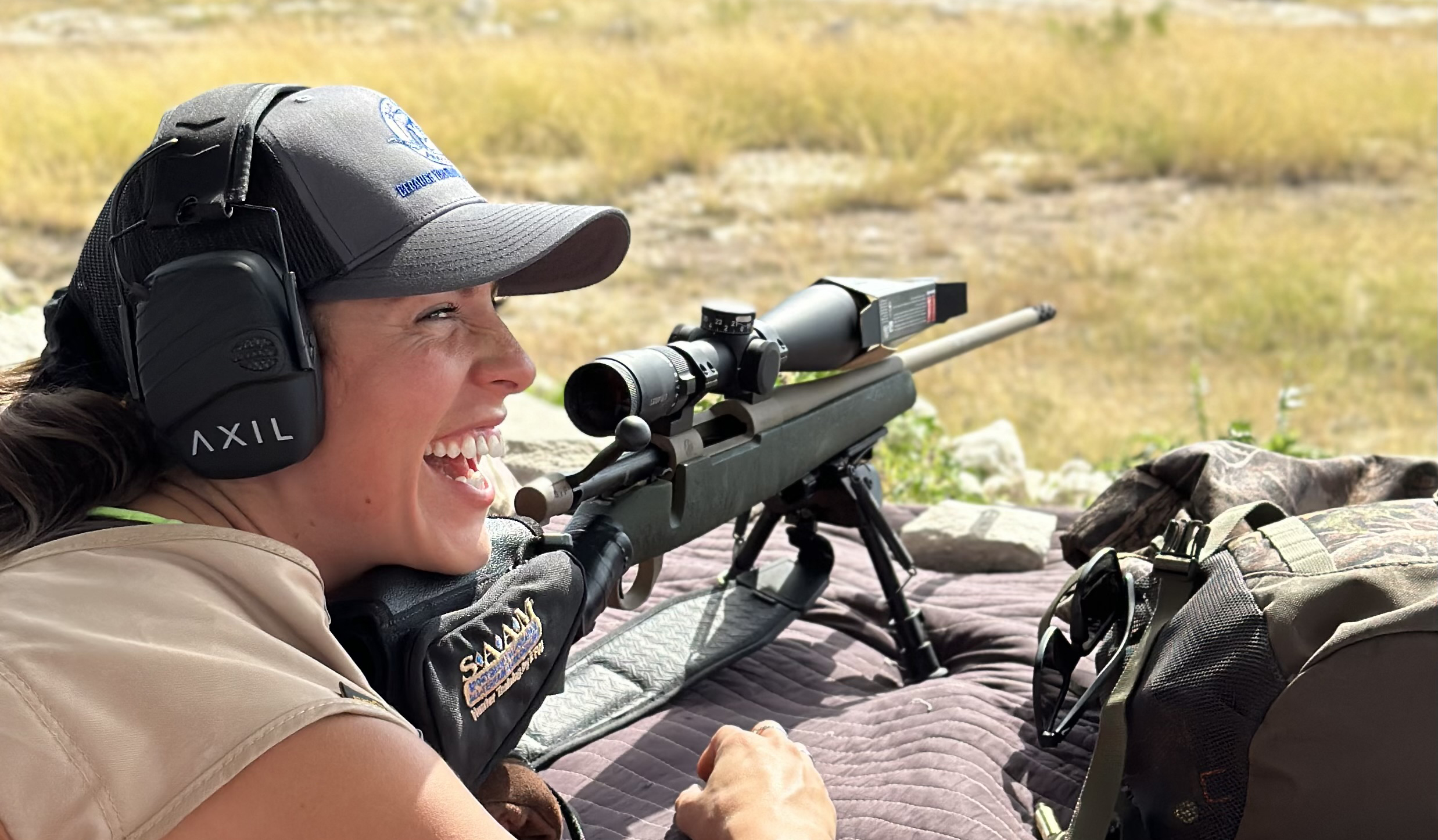
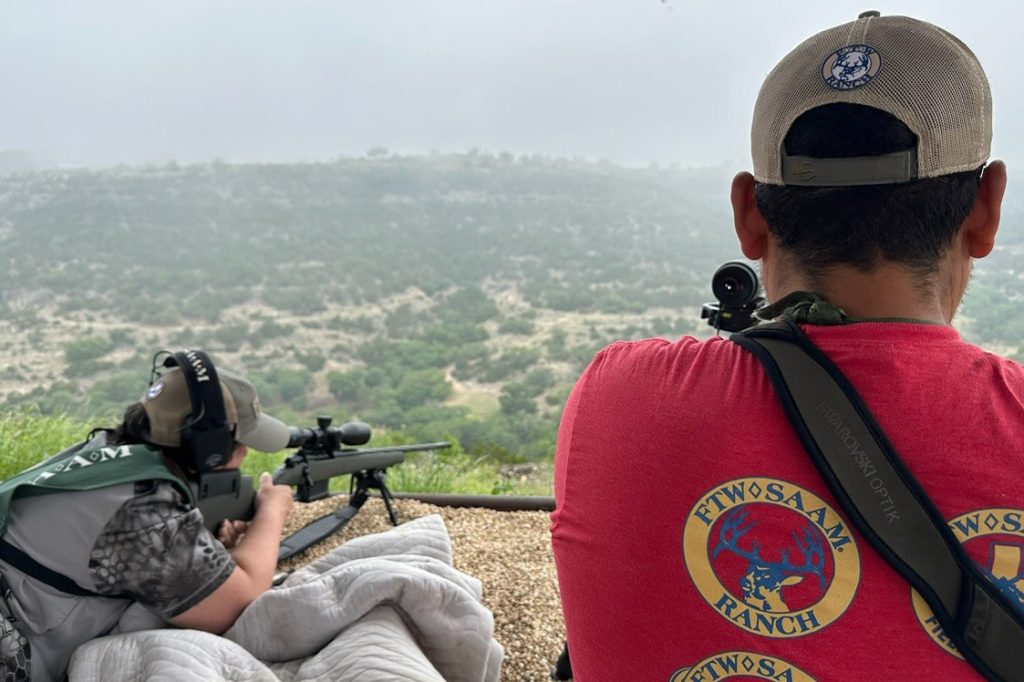
In late 2018, Wild Sheep Foundation (WSF) formed a volunteer committee under Thornton’s guidance to build the Women Hunt program. The committee soon found an ideal partner: FTW Ranch in the Texas Hill Country, home of the highly regarded SAAM hunter-focused shooter-training program. FTW was developing a week-long training course for new hunters called Field to Fork, and they agreed to hold one specifically for women.
The first Women Hunt Field to Fork course was held at FTW in 2021, and it’s now an annual event hosting a dozen women each year. Each participant pays her own travel expenses to get to Texas, but once there, everything is paid for, including the course (normally $4,950, which includes food and lodging), and a package of high-quality women-specific gear donated by program sponsors.
There are far more interested participants than available spots, so the Women Hunt committee developed an application that requires answering a number of questions about the applicant and her motivations for attending. Typically, 100 to 125 applicants vie for the twelve coveted spots. The committee performs a blind, merit-based assessment of the applications. (Applicants are not required to be members of WSF.)
One of the unique aspects of the application is that it not only asks potential attendees why they want to learn to hunt, but how they plan to give back to the conservation and hunting community once they have completed the course. This, more than anything, is what sets Women Hunt apart from other hunter skills training programs.
“Although the training course currently hosts only twelve women a year, it has a much larger impact because of the giving back,” Thornton explained. “Every graduate has a ripple effect; our graduates have reached thousands of other women. It’s a small group with a large impact.”
In addition, graduates of the course become part of a family of sorts, and continue to be assisted and encouraged in their ongoing hunting journeys. “We try hard to find them local mentors,” Thornton said. “They get a complimentary membership to the WSF chapter nearest to where they live, and an invitation to engage with other hunters in their region.”
I spoke with a number of graduates of the Women Hunt program to learn what spurred them to apply for the course and to get their thoughts on the program.
Kara Browne’s husband and two teenage sons are all avid hunters, and for years she longed to join them but, as she put it, “I didn’t want to be a project.” Her husband, a WSF member, saw an e-mail advertising the Women Hunt course and forwarded it to her.
“At first I didn’t do anything with it,” she said. “But then I started thinking…. my friends are always taking classes to learn new things. Why not? I filled out the application and sent it in.”
Browne had never shot a hunting rifle before arriving at FTW for the 2023 course, where she trained with a Weatherby rifle in 6.5 Creedmoor, a women-specific rifle that fit her well and that she ended up purchasing. She remembers taking a shot one morning on the range at FTW. “The instructor said to me, ‘Do you know why you missed that shot? You closed your eyes!’ It was such a privilege to have this very experienced person helping me understand what was doing.”
Beyond the skills training, Browne said it was the confidence she gained from the course that made it great. “Also, the learning environment was ideal,” she said. Although she was one of the older women in her class, she discovered a surprising bond with women in different stages of life, ranging from early twenties to middle-aged. “We were all different. Not just in age, but for example, there was one vegetarian who wanted to learn to hunt so she could eat wild game, and then there was me who had been cooking wild game for decades. But we’d work together on a project, like butchering a deer, and we all were like-minded.”
Browne hunted wild boar during the class. She didn’t get one, but she had a blast chasing them through the hills with her hunting partner. When she got home, there was a week left in the Montana deer season, and she went afield with her family for the first time as a full-fledged member of the hunting party. Her husband and sons were impressed with her newfound skills, and a bit envious of her experience. “It was everything I needed to feel confident,” she said. “Now, on our family’s adventures, I’m one of the hunters. I’m not just following them.”

This past October, Browne downed her first animal, a pronghorn, on a hunt with her family in eastern Montana, making a 240-yard shot. “All four of us got one,” she said. “I felt like I was really part of the crew.”
Today Browne volunteers with her local WSF chapter and enjoys connecting with others who care about wildlife conservation. She is also very involved in a local orienteering club. The confidence gained from hunting helped her develop the confidence to head off-trail with just compass and map. “I get so much delight from doing that!” she said.
Suzanne Agan has a Ph.D. in Environmental Science and is a professor at the American Public University System. She grew up with no exposure to hunting and something of an anti-hunting mindset, although an early career stint with the California Waterfowl Association helped her understand how hunting supports wildlife conservation. When her boss at the university asked her to design a course focusing on hunting and wildlife management, she began to research the issue. When she stumbled upon the Women Hunt booth at a conference of The Wildlife Society in 2023, she learned about the program.
“I was so focused on the science behind hunting and wildlife conservation that I had never really thought about the other aspects of it, including sustainable food sourcing. I knew I wanted to apply and attend the course to get a firsthand perspective on hunting,” Agan said. Although she was initially focused on her job assignment, the questions in the application got her thinking about the personal aspects of it as well as the professional ones.
“The program is so well done,” she said. “The whole thing was all new to me, yet from the first moment I was very comfortable around everyone, instructors and students alike. In the first three days I went from never shooting a rifle to being proficient out to 700 yards. My biggest concern regarding learning to hunt was the possibility of wounding an animal, so for me it was all about gaining confidence in my shooting.”
She especially remembers her first shot at the 700-yard target. After breaking the shot, she searched in the spotting scope, unable to locate her hit. The instructor asked her where her shot hit and she said she didn’t know. He said, “That’s because you blew out the bull’s-eye!”
While she did not shoot an animal during her hunt at FTW, a month after she returned home to Georgia, a friend invited her and her husband to hunt deer on their property. They hunted all day, and toward evening, a buck stepped out of the trees 150 yards away and stood broadside.
“It was a gift,” Agan said. “A gift I never knew I wanted. I didn’t hesitate. I shot it right through the heart. I never would have done it prior to the Women Hunt course. That day changed everything.”
Agan continues to practice her shooting skills, meeting regularly with one of her former FTW classmates at a shooting range; they also hunted together last year and plan to do so again. But Agan’s time in the field with her husband has been another unexpected blessing: “It’s something we do together now. It’s been great for our marriage.”
Agan created the course her boss asked for and now has the joy of teaching a wide range of students, both hunters and non-hunters, about the intersection of hunting and scientific wildlife management. She has also found that being a hunter has significantly benefited her research, which focuses on red wolf recovery in North Carolina. “Now I can relate to the hunters I talk to. It has helped me gain valuable perspective. And just from being in the field as a hunter, I’ve learned so much about deer biology, why seasons are structured the way they are, and how deer interact with predators.”
Hoping to welcome more people like Dr. Agan into the hunting community, Women Hunt recently partnered with The Wildlife Society, which has helped spread the word among wildlife biologists. According to Thornton, some 30 percent of program applications are now coming from non-hunting wildlife professionals.

Although Manitoban Brandi Love grew up in a family of hunters, she never hunted, spending her teen years focused on horses and rodeo events. When her father experienced health problems in 2020, she regretted never having hunted with him. She began looking for hunter-skills training, not wanting her dad to have to teach her.
When she saw the inaugural Women Hunt program advertised on social media, she applied and was selected. After attending the course in 2021, as she puts it, “The door swung open.” Since then, she has hunted bear and elk with her dad every year. She also accompanied her parents on a mouflon hunt in Hawaii and most recently to South Africa for plains game.
But her biggest takeaway is the community of like-minded women she now feels a part of. “My social connections and group of friends have shifted so much since doing this,” she said. “These women all prioritize themselves, which is so beneficial for their entire families.” Love now volunteers as secretary of the Women Hunt committee.
When Paula McClain was growing up, her parents absolutely forbade her to touch guns—they were “man stuff.” She married into a family of avid hunters and anglers, but even with them, it was mostly the men who went hunting. Her husband encouraged her to join them in the field, and she did a couple of times, but she felt fear simply handling ammunition. “I wanted to be independent and self-sufficient, but as a deaf person, I was apprehensive of whether I could really do this on my own,” she said.
Her son Caleb, an avid hunter, found out about the Women Hunt program and encouraged her to apply. She did and attended the course in 2022. “The program was over the top, more than I ever anticipated,” she said. “The instructors were so patient and knowledgeable. Most of the students knew very little. I loved that it was all age groups, all walks of life, all sorts of socioeconomic status. But all of us wanted to know more about conservation and how to harvest an animal the right way, start to finish.”
During the week, McClain went from being afraid to handle a box of ammunition to ringing steel targets at 1,000 yards, one after another. “It’s a very intensive, immersive experience,” she said.
One of the standout moments of the course for McClain was when the group headed to the meat shed to learn how to skin and process a deer one of the hunters had shot. She flashed back to when she was about ten years old and her uncle had brought home a deer and had hung it up and was skinning it in her parents’ backyard. She asked her mother what he was doing. Her mother told her what her uncle was doing was disgusting, and she was not allowed to even look out the window.
“But I was always so curious about that, and when we started processing the deer, I thought, I can do this! It’s not yucky at all! Since then, whenever my son shoots a deer, I always ask him to let me help process it. That moment in the meat shed, I realized that if I can do this part, I can do all of it: learn to shoot a deer and process it and cook it for my family.”
Recently, McClain’s family acquired a deer lease. “I’m not at all nervous now to go by myself, be out there in the dark. I still have a lot to learn, but every outing is a learning experience. I am learning the ways I need to adapt. As a deaf person, I can’t listen for deer, so I have to have heightened awareness in other ways. I am constantly building on the skills I learned in the course.”
McClain is a principal at the Mississippi School of the Deaf and the Mississippi School of the Blind. This gives her a platform to teach conservation concepts to her students and help them learn what it means to take care of animals and their habitat, as well as to show them that outdoor experiences can be enjoyed by everyone, including those with hearing and vision challenges.
Most of all, though, she is thankful for the way her newfound confidence in the outdoors and love of hunting has brought her closer with her family, and especially with her son Caleb, who has become her hunting mentor. She is also excited about an African safari she booked for 2026 in the Limpopo region. “It’s my trip,” she laughs. “But I’ve invited Caleb and my husband and some other family members.”
Kim Nieters is the Vice President of Operations for the Wild Sheep Foundation. Despite coming from a hunting family and having spent a thirty-plus-year career working with hunters and supporting hunting-related causes, she was never a hunter herself. Her father hunted, and although he took her brother along, she was never allowed to go. “It was always boys-only,” she said.
A decade ago, one of her co-workers took her antelope hunting. She got an antelope, but having no experience with firearms, she was uncomfortable with the gun. “I was more afraid of the gun than I was of hunting,” she said. On a second trip afield, her rifle went off unexpectedly as she was getting set up for a shot. “I didn’t have the safety on, and I had my finger on the trigger,” she said ruefully. No harm was done, but understandably, the experience scared her badly, and she never wanted to hunt again.
But last year when she had the chance to attend a Women Hunt course created for women who work in the hunting industry, Nieters decided to do it. “The opportunity to learn from the best at FTW was something I did not want to miss,” she said.
The patient, professional trainers at FTW caused her confidence with rifles to soar. “At one point I was setting up for a shot from a sitting position and one of the instructors got behind me and said, ‘We have a floater!’ He was talking about my cheek not being on the stock. We all laughed, but I have never forgotten that. My biggest takeaways from the course were what I learned on that range: Build your house, get comfortable, safety first, and pay attention to what you are doing and don’t worry about what everyone around you is doing.”
Nieters is now a confident shot with the Weatherby rifle she used at the FTW course and now owns, and she plans to hunt deer in Wyoming with it this year. She is especially looking forward to taking her twenty-two-year-old daughter afield in the near future. “I’m so proud of WSF for creating Women Hunt. It is a life-changing program,” she said.
So what’s next for the Women Hunt program? Thornton is hoping to expand it to offer more learn-to-hunt courses and involve more women. Funding is the major issue. “There is a clamor for us to do more, but we need more funding to do more than one a year,” she said.
She is also in the process of helping to build a Women in Hunting Community, open to all women interested in hunting—first-timers and experienced hunters alike. The idea is to help women find resources and support in their local area along with project opportunities and organizations to join. Women Hunt also hosts a “Beer and Bubbly” social hour at the WSF convention every year, where everyone is welcome.
A third prong of Women Hunt is the Rubye Mayflower Blake Legacy Fund, which has a mission to empower women recovering from traumatic experiences by fostering healing through the transformative power of nature.
There’s no doubt that the participants in the Women Hunt program are having an outsize influence. All the course graduates told me they are strongly encouraging other women they know to follow their hunting dreams. As Paula McClain said, “It’s like that old TV commercial: one person tells two people, and on and on.”
All the Women Hunt participants I spoke to described the program as a life-altering experience. If you know someone who would be interested in this program, or if you would like to support this important initiative, you can learn more at wildsheepfoundation.org/womenhunt.