This jungle deer is probably America’s least-known big-game animal.
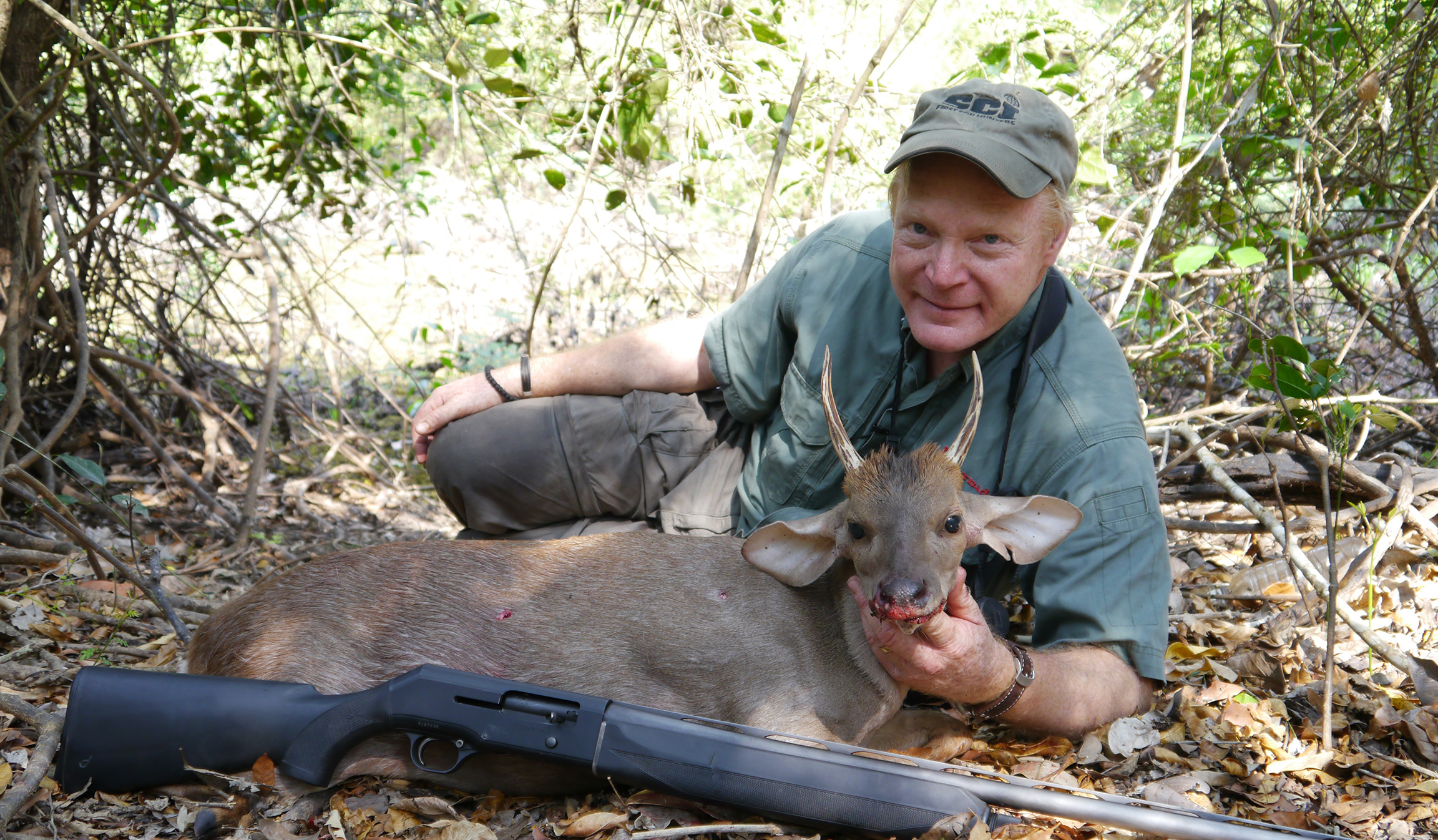
Photo above: The author’s big Yucatan gray-brown brocket was taken at Balam, state of Quintana-Roo in 2013. If you don’t know brockets, it doesn’t look like much, but a buck like this is equivalent to a monster whitetail.
Just the other day I was in deer camp at Steinbeck Vineyards, during our August coastal deer season. On a blistering afternoon, we were killing some time and swapping stories, waiting for it to cool down a bit. One of the hunters, Kyle Welker, showed me a photo of a huge gray-brown brocket, one of the biggest I’ve seen. This is sort of equivalent to a 190-inch whitetail. Its antlers were thick, sharp spikes, clearly more than six inches long. Huge. We passed his phone around and half the folks in camp, all experienced hunters, had never heard of a brocket deer.
The brockets are small jungle deer, found in multiple species and races from southern Mexico down through Central America, on through the vast Amazon Basin to northern Argentina. Most of us consider “North America” to run north from the Panama Canal. Even by the stingiest definition, Canada, Mexico, and the United States are North American countries. So, Mexico’s brocket deer are bonafide North American game animals. Yet they get so little love that many hunters aren’t aware they exist.
I first heard about brocket deer from gunwriting great and early deer hunting guru John Wootters, a patient and important mentor when I was a new editor. From Texas, Wootters did a lot of hunting in Mexico, tried several times to get a jaguar (when still legal). For sure, he’s the first person I knew who had taken a brocket deer.
I was fascinated, and I put brockets on my bucket list. I had my first chance in the 1980s, joining SCI leaders Andy Samuels and hunting legend Dr. Jim Conklin on a brocket hunt in Mexico’s Yucatan. It wasn’t a great hunt– the outfitter was a mess, little food, sleeping in hammocks under the stars. But there were plenty of brockets. I think we had five hunters in camp, and I was the only one who didn’t get a buck. That happens. In any camp, someone draws the neck of the chicken. I passed on females, never saw a buck. I now know that four of five was an astonishing success rate.
In those days, a brocket was a brocket. The brocket deer of southern Mexico are the least-studied and least-known North American big game animals. Local hunters talk about mountain and dwarf brockets, which may or may not exist as distinct races. Today, we know that, in southern Mexico, there are Yucatan gray-brown brockets (also called brown brockets), and red brockets.
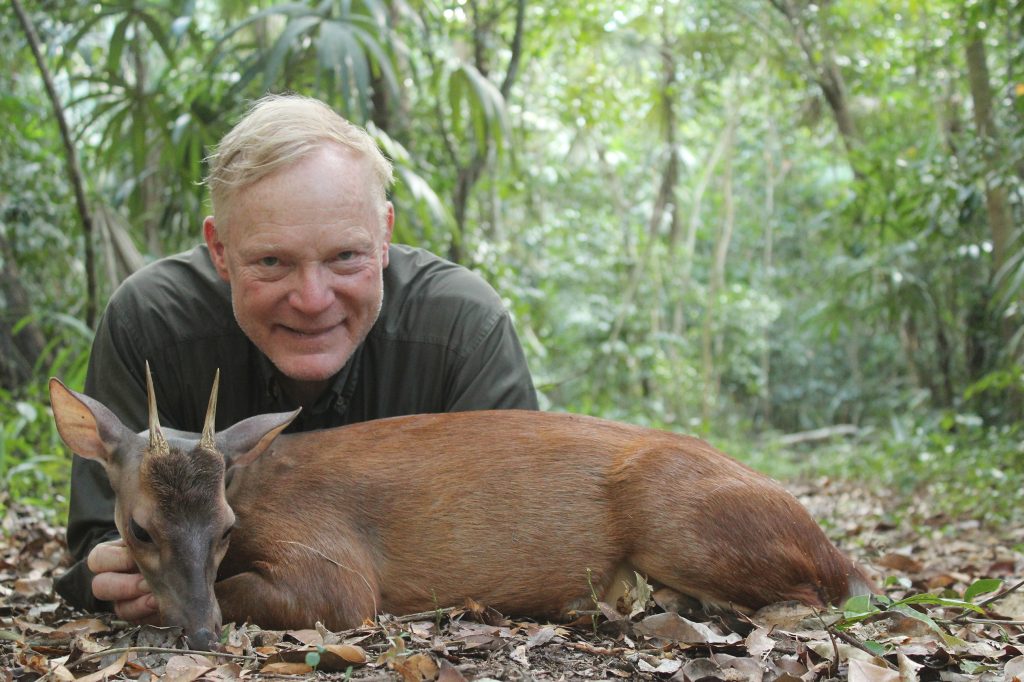
Current taxonomic thinking places them in different genera: The smaller red brocket is Mazama americana; the more widespread brown (also called gray/brown) is Odocoileuspandora, thus of the same Odocoileus genus as whitetails and mule deer. I’m no scientist, but this makes sense; at first glance, a gray-brown brocket could be mistaken for a small first-year-spike whitetail. The red brocket is quite a different animal. Not just different in color and size, but differing in skull shape, pedicels, and antler curve.
The gray-brown seems happiest in less dense jungle and can be found in edge habitat close to agriculture. Slightly smaller, with sharp, straighter antlers, the red brocket is more a creature of the densest jungle and often found in hilly country. Their habitats overlap, but where they are found together it seems to me there might be ten brown brockets for every red brocket. Not that you will see ten brockets of either color. On a couple of week-long hunts, I might have seen a half-dozen gray-brown brockets. On others, in a week of hard hunting I never saw a single deer.
A brown brocket is one of the most difficult North American animals to hunt. The red brocket is several times more difficult. I made four dedicated hunts for a red brocket. The only one I’ve seen is the one I took in 2022.
On my first jungle hunt, “Dr. Jim” was bopping back toward “camp” near dusk and saw a nice buck drinking from a stream. He shot it, and it was clearly different from the brockets our friends had taken. Smaller, narrower skull, with straight antlers. In those days, even in the record books, a brocket was a brocket, but I’m convinced Dr. Jim shot a red brocket.
Seasonal color varies, all antlered animals vary in antler configuration, and size differential is small. So, what’s the difference between gray-browns and red? With this story, I am sharing perhaps the rarest hunting photo I have. Mexican friend and dedicated hunter Andres Santos took a nice gray-brown, and on the same day another hunter took a big red brocket. Andres had the presence of mind to put them together; in the only side-by-side photos of brown and red brockets I have ever seen.
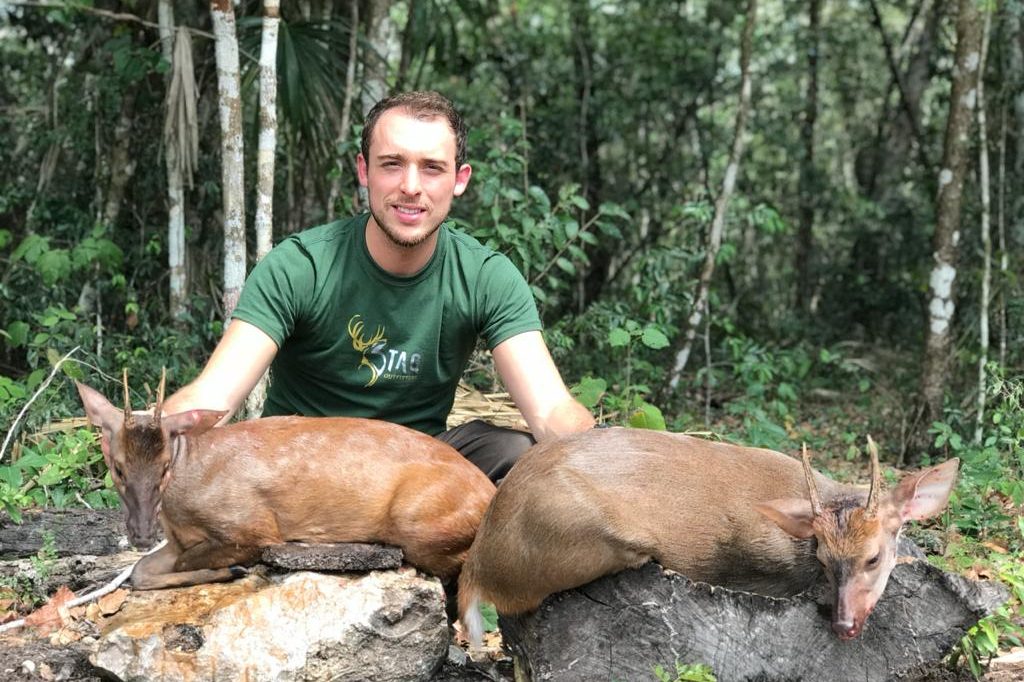
I did several more Yucatan hunts and took gray-browns. Typically, brockets are taken from machans in the jungle, using shotguns. One was on the edge of agriculture, taken with the outfitter’s rifle. Clean, sharp spikes are typical, but both species occasionally fork. That buck had a major fork in the lower third of the left antler.
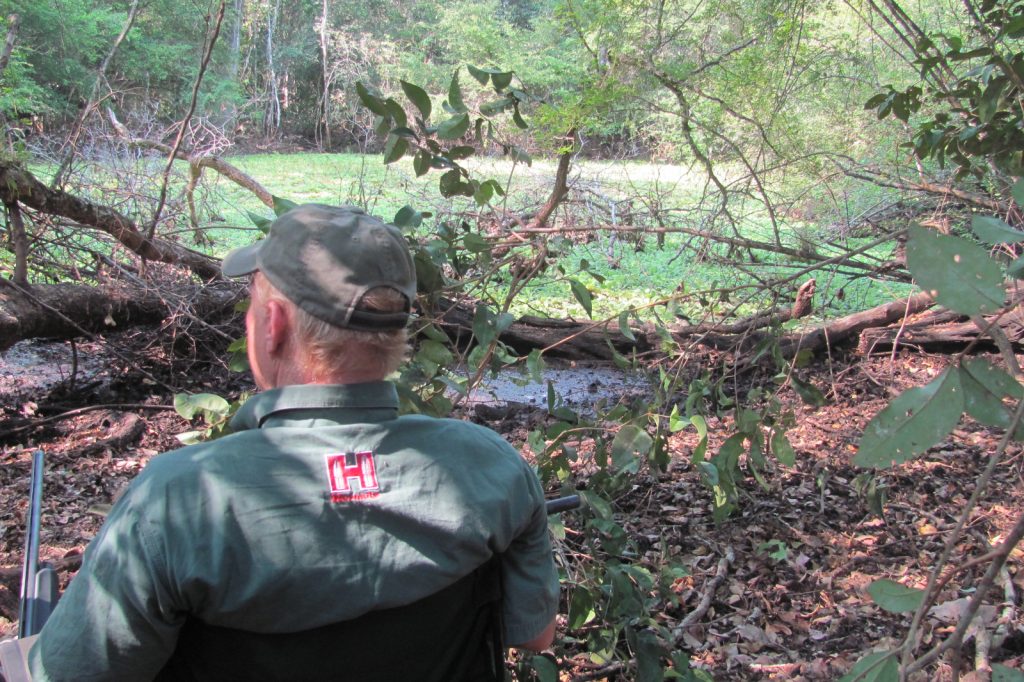
A few years later, during a hot midday I was comfortable in a hammock, watching a waterhole, with Yucatan hunting legend Hector Arias. Hammocks are comfy and I was out like a light when he punched me. “Big brocket coming.”
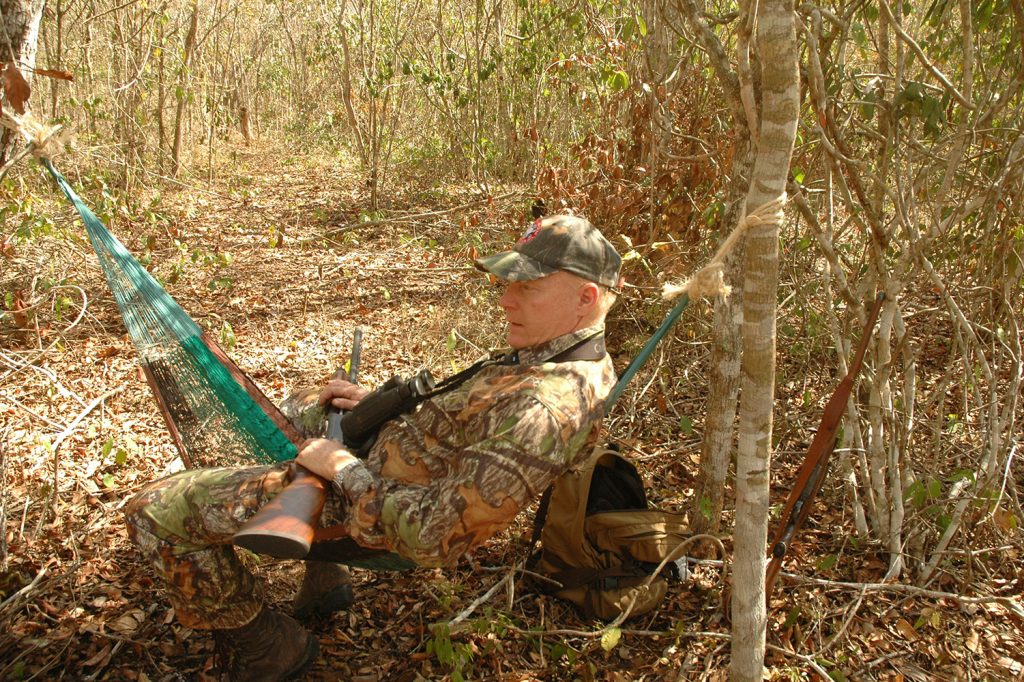
I rolled out, crawled a few yards. I could see the legs, not the head, and then the buck stepped into view. I almost emptied the Benelli, filled with No. 4 buckshot. It was a huge brocket, with big bases, antlers curving slightly inward. Kyle Welker’s buck looks bigger. Both are as rare as a 190-inch whitetail. And, like most big animals, it takes some luck. Right place, right time.
It’s tough hunting, usually hot and humid, but the jungle is so different from any other North American habitat. It’s not comfortable, and I hate stand hunting, but you never know what you might see. Agoutis, white-lipped peccaries, howler monkeys, tapirs in the rivers. A Kansas friend, Brad Oakes, joined me one spring. He was sitting over a waterhole and had a big jaguar in front of him at forty yards. I’ve seen tracks, never a jaguar, but I’d love to see one. I came to enjoy the Yucatan jungle.
The good news: It’s not an expensive hunt, and although it’s always best to concentrate on the main goal, there’s plenty of other game, and Yucatan is the only place for ocellated turkey. It’s unlikely I could ever take a bigger gray-brown, no interest in trying, but I decided I wanted a red brocket, probably the most difficult North American animal to hunt on purpose.
I spent a week at Balam in tall machans, red brockets on trail cams. Irregularly; they’re always irregular. Never saw a brocket, red or brown. My friend Rex Baker came up with his North American “Rex Baker Super 40,” including both gray-brown and red brocket. Rex didn’t have one either, so we were on parallel paths. And equally stubborn. Rex got his red a few days before I took mine.
In 2021, my friend Sergio Alcazar (ALC Global Adventures) suggested Mario Canales, operating in Yucatan. Most Yucatan hunting, for ocellated turkey and brown brocket, seems to be in late spring, April into May. The red brockets are on a different schedule, feeding when the amapola trees drop their flowers…in late March. As a tropical deer, some bucks (not that you will see a bunch) seem to be in hard antler throughout the year, but the majority seem to be in hard antler in spring.
I saw no brockets at all on our 2021 hunt, but Sergio got a very nice red brocket, antlers fully formed but not yet shed. Between the two of us, 50 percent success was awesome. Hector Arias was now working with Mario, and the two of them were seriously studying their red brockets. I tried again in March 2022.
Hector and I sat in tall machans for a couple days, saw nothing. Toward noon on the third day, we had a wind change, so we vamoosed for lunch and a siesta. I had just dropped off in my hammock when Hector shook me. “We go.”
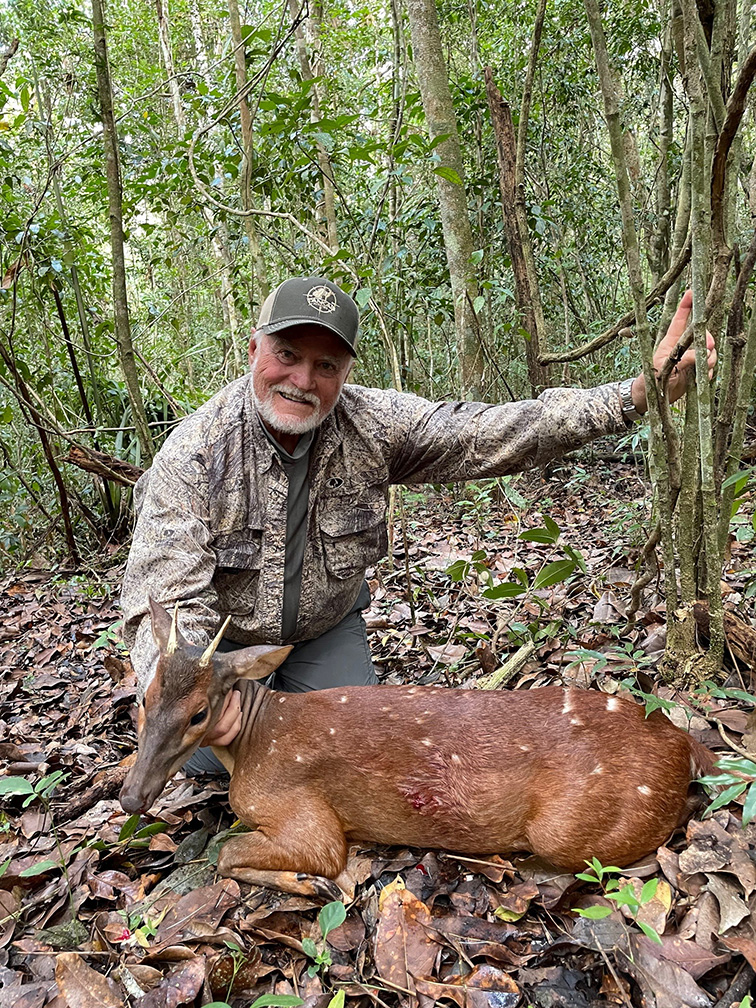
I cannot know if it was luck or instinct. We climbed a steep ridge, crawled up into hammocks in a tall machan at about 2 pm, heat of the day. I was just getting comfortable when Hector nudged me and pointed. Good Gawd, the only red brocket I’ve ever seen pranced into the white amapola flowers littering the ground.
I shot him with the camp Mossberg, at maybe 25 yards, the entire No. 0 buck pattern striking his shoulder. Hunting with the next-door outfitter, Sergio got his red brocket on his first hunt, but in three tries hasn’t yet taken a brown. Rex and I were on our fourth attempts. I have no idea how many times Andres Santos has tried. He still doesn’t have a red brocket. As Jack O’Connor said of Coues whitetails, “Even where there are a lot of them, there aren’t very many of them.”
There is no place where there are a lot of brocket deer. It’s not a physically demanding hunt like sheep, but I know of no North American animal more difficult. The brocket is a cool little deer that’s worth the effort. You just keep trying.