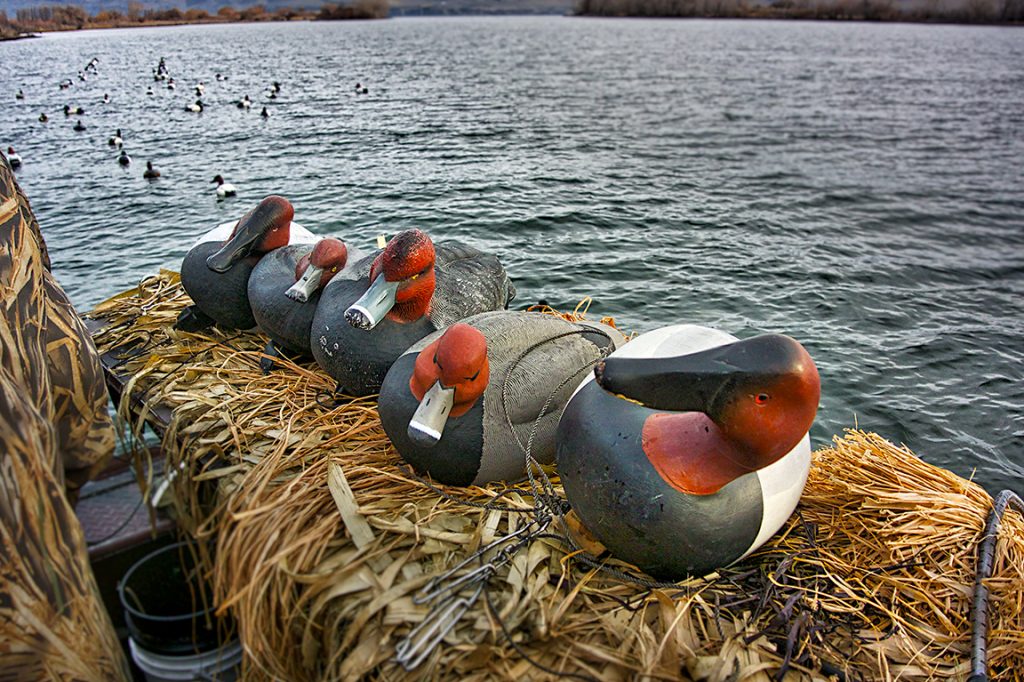
Hunting sea ducks calls for tough retrievers and shotguns with plenty of punch.
Low, gray skies descended almost to the waterline. A feeble sun lay just above the mountain horizon to the south, invisible above the scud. The wind was modest by local standards—15 gusting to 20—but it still made our decoys tack back and forth crazily against the incoming tide. It was just another day of winter duck hunting on Kodiak Island.
Lori and I had been married for just a few months. I’d optimistically billed this trip as a honeymoon. Although she had grown up in a Montana ranch family, she had never done any wingshooting. I knew this would be a challenging way to introduce a beginner to shotguns. However, winter visits to Bob, one of my guiding partners, had become a regular, highly anticipated event. I wasn’t going to miss it, and my bride wasn’t going to be left behind.
Although she was well grounded in firearm safety and had done some target shooting, I suggested that she leave her 20-gauge behind. Sea duck hunting requires more punch. Crouched behind a beach log twenty yards from the waterline, I knew the shooting would be difficult even for a veteran, and I didn’t want her to start off frustrated.
Then Ernie, another member of our team, shouted, “Birds coming from my side!” Stretched out in a line and flying low against the water, they were still a long way out, but I could tell they were surf scoters. The flock veered sharply in our direction. As I heard Ernie fire, I identified a drake by its distinctive facial markings, swung my barrel as fast as I’d ever made it move, and watched the bird cartwheel across the waves. The flock was moving so fast I didn’t even think about a second shot.
“Got one down?” I asked Ernie.
“Yeah, but its head’s up and it’s swimming hard.”
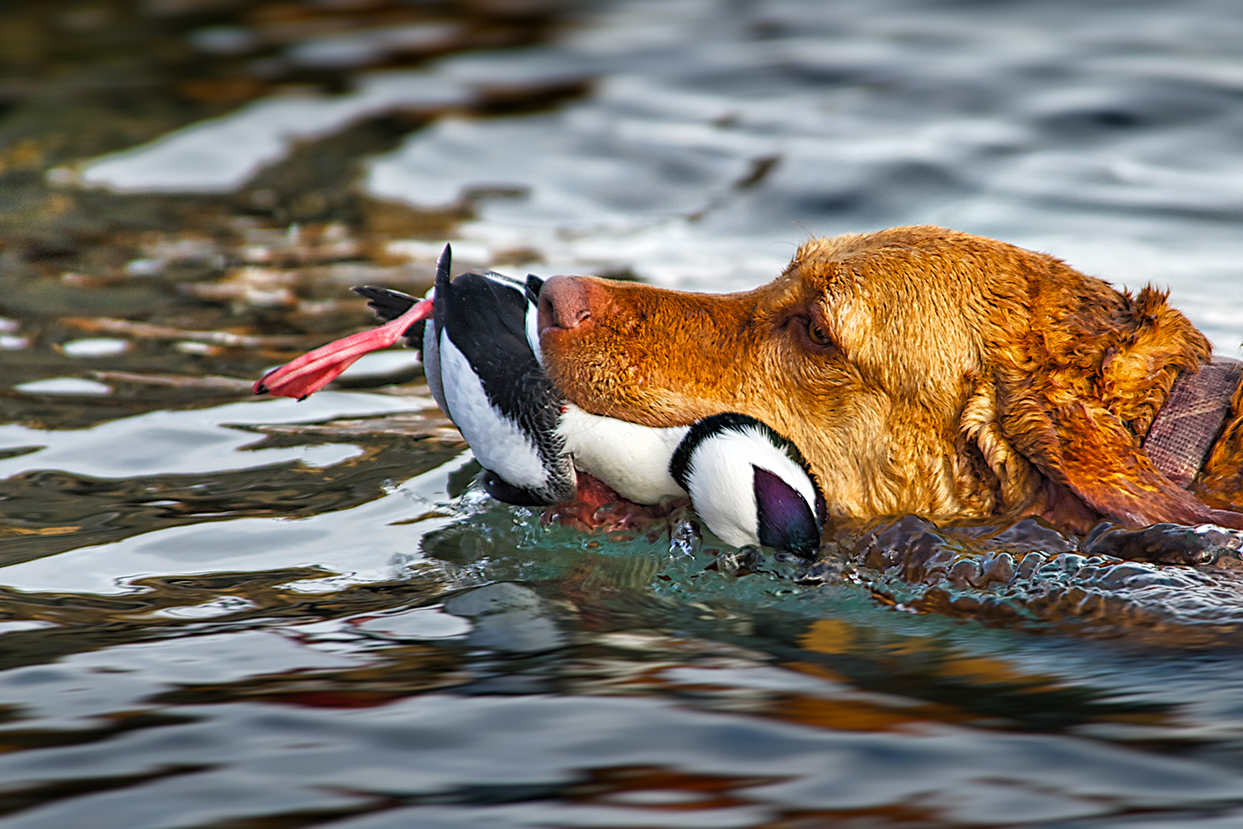
“The dog will get it.” Bob’s Chessie had followed us all the way from camp, and I welcomed his company despite his faults. I’d hunted with Yaeger for years, and while I respected his talent and determination, I also knew that he treated commands as suggestions at best. He had broken at the sound of Ernie’s shot and was already closing on the wounded duck.
“We don’t have to worry about getting my bird,” I said, and we didn’t. The dog had evidently marked that one down too, and as soon as he dropped the cripple at Ernie’s feet he plunged back into the sea, churning off in that direction.
“That looked like a long shot,” Lori said as Yaeger began the return leg of his retrieve.
“It was,” I agreed. “Don’t worry. They’ll be closer soon and you can take my gun and start shooting.”
“How do you know that?”
“Because the tide is coming in.” Although modest by Alaska standards, Kodiak tides are still greater than any in the Lower 48. “In another hour the waterline will be right in front of us. We’ll have to move the decoys, but you should have some closer shots.”
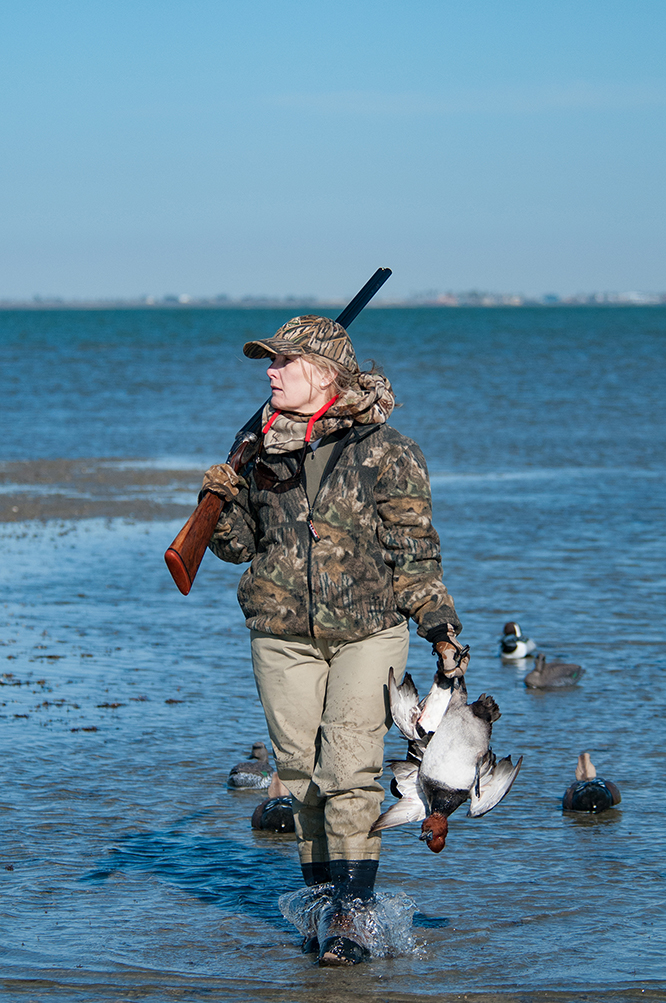
She did. After some predictable missing, she dropped a drake harlequin and immediately demanded that we take it to our taxidermist. Since harlequins may be the most gorgeous waterfowl on the continent, I didn’t argue. Although I felt sure the bears would already be in their dens, I dropped a couple of slugs in my shotgun before we began the hike back through the woods to Bob’s cabin.
Now, thirty years later, Lori shoots at least as well as I do. I love looking at that mounted harlequin and remembering how it all began–on a sea duck hunt.
How does hunting over salt water differ from inland duck hunting? Let me count the ways.
I’ve done some saltwater duck hunting along the Texas Gulf Coast and enjoyed it, but most of my experience has come in the North Pacific. Sea duck hunting doesn’t have to mean cold, wet, and windy weather, and I’ve hunted the Texas coast in shirtsleeves. Weather in the North Pacific is another story. Plan on dressing in your best foul-weather gear.
Air temperature isn’t the only challenge. When I lived in Alaska, the Coast Guard estimated that after twenty minutes of immersion in the North Pacific a healthy young recruit would be “unable to participate in his own rescue.” Remember that grim warning when hunting or traveling in a skiff. Paying attention to the tides is crucial along the shoreline. An outgoing tide can leave the skiff you arrived in high and dry, while rising water can cut you off from dry ground.
Sea duck hunting requires more thought than usual in the selection of guns and loads. Inland, I’m a bit of an outlier. When I’m shooting decoying ducks over the little springs and creeks I hunt in the Central Flyway I’m happy with a 20-gauge. It’s easier to handle a light gun when swinging quickly in tight cover, and my banged-up right shoulder no longer enjoys recoil from a heavy load. Most shot opportunities are close, and if they aren’t I don’t take them.
That reasoning doesn’t apply in salt water, where the shots are longer and the birds are tougher. I find sea ducks harder to bring down than the usual mallards and pintails, perhaps because their leaner outline gives pellets less to hit and they have thicker protective layers of plumage and fat. Whatever the case, sea ducks call for more firepower than my usual light duck guns can provide.
It’s best to plan as if you were hunting geese, with three-inch 12-gauge shells, tight chokes, and heavy shot. In contrast to puddle ducks, I don’t hunt geese with anything lighter than No. 2s or chokes less than full. Those are good guidelines for sea ducks, too.
One other important consideration affects my choice of firearms on sea duck hunts. The marine environment can be devastating to shotguns. While I don’t own any shotguns that I could call fancy, most of mine are nice enough to deserve good care. I hate to expose them to salt water. When I lived in Alaska I hunted sea ducks with our standard camp bear gun, a 12-gauge pump that had been handled roughly for years. Even so, I cleaned it religiously after every trip to the coast, as I admit I don’t always do with my other guns after a day of upland hunting .
I’ve always believed in some wisdom from Nash Buckingham: “The best long-distance load for waterfowl is a good retriever.” Since I spend more time fussing with my dogs than with my firearms, I almost have one at my side when I’m wingshooting, no matter what the quarry. The sea presents a lot of challenges to a dog, no matter how tough it has proven elsewhere. I never take a dog to the salt until it has demonstrated endurance, strong swimming, and determination in fresh water.
The choice of dogs is always personal. Anyone familiar with the Chesapeake Bay retriever’s origin story will understand why they are so popular among sea duck hunters. I’ve watched some heroic saltwater retrieves by friends’ Chessies. However, the Lab’s ancestors worked offshore in the Newfoundland cod fishery centuries ago, a background that persists in their genetics. I’ve always been a Lab guy and, with a couple of exceptions, mine have always taken readily to the sea.
Sea duck hunting isn’t all about raging seas and miserable conditions. Back (way back) when I was growing up in Washington, friends and I would rise early, take the ferry across Puget Sound, drive across the Hood Canal Bridge on the east side of the Olympic Peninsula, (years before its 1979 collapse) and fish a couple of under-appreciated little steelhead streams. Then, unless the fishing was fantastic, we would drive north, launch our canoe, and paddle out to the spit at head of the bay. If the tide was right, we’d spend a couple of hours pass shooting a mixed bag of dabblers and sea ducks with an occasional brant mixed in. Oysters grew on the spit, which we would shuck and eat with tabasco sauce and squeezed lemon while we waited for ducks to fly. We never went through a lot of shells, but it’s hard to remember better duck hunting trips.
The tideline is one of our most biologically diverse and fascinating ecosystems. I can enjoy it whether I’m carrying a shotgun, a fly rod, or just poking around in the mud. When I moved back to Montana from Alaska, the thing I missed most wasn’t the moose, sheep, or salmon, but the sea. Hunting the waterfowl that live there is one of my favorite excuses for returning.