It happens to all of us eventually. The important thing is to learn from it.
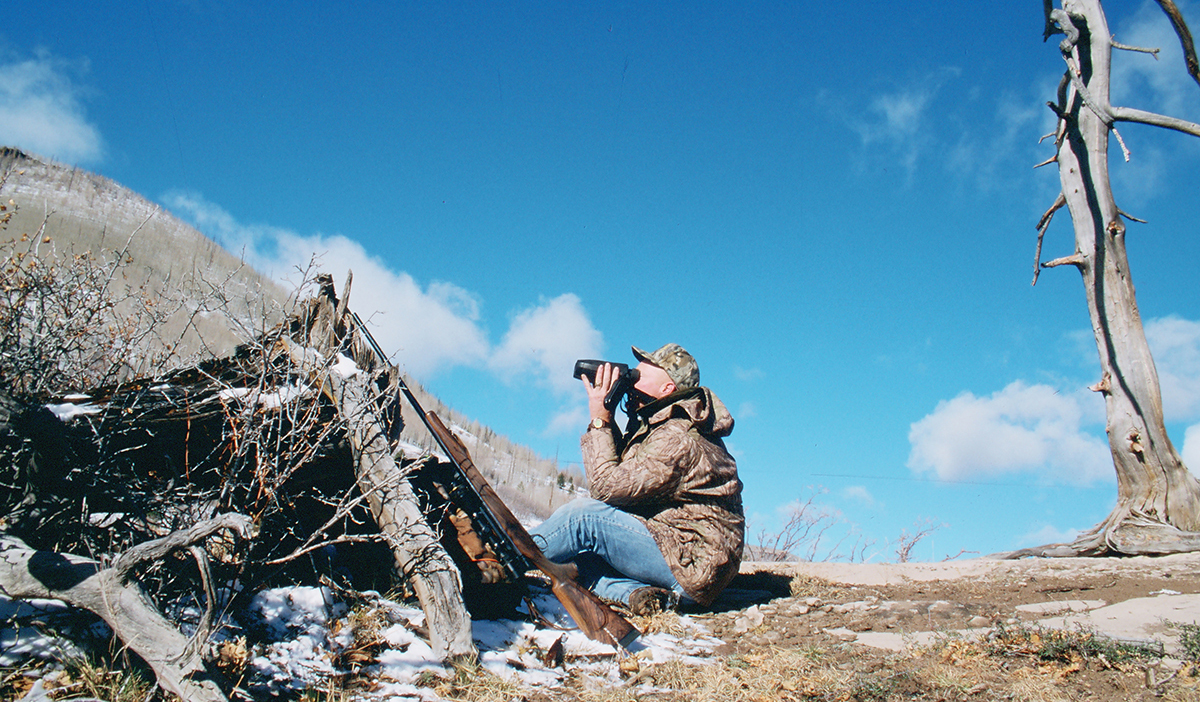
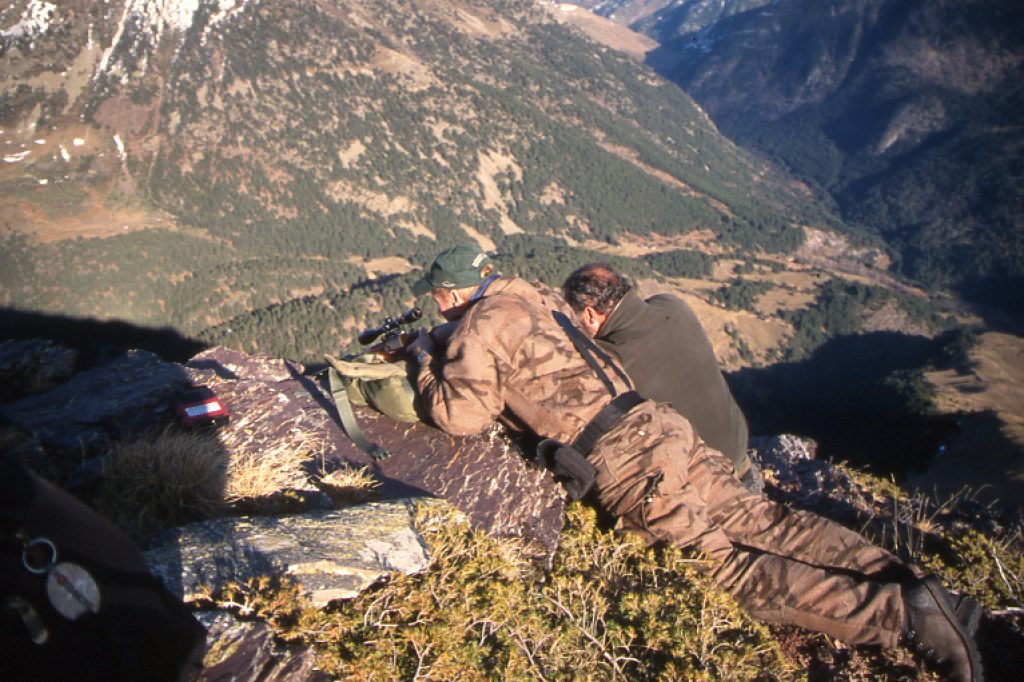
Photo above: A place of shame. From this spot in Arizona, the author missed the best elk he’s ever seen. Although far, he misjudged the uphill angle, held high and shot over. “Hold on hair, never on air.”
Missing is not an easy subject to address. As a young writer, I was advised that stories about unsuccessful hunts—and errors—were to be avoided. Mostly because people don’t want to read about that stuff. As one reader put it, “I can mess up perfectly well on my own; I don’t want to read about you people messing up.”
I get that, but over time we have created unrealistic expectations. Failure, in terms of unfilled tags, is part of the deal, but we don’t talk about that. Two years ago, I was on an elk hunt in Colorado. Tit was third season, too warm, no snow, and the elk were up high. There were six hunters in camp, and no shots fired. Nothing wrong with the hunt; the elk just weren’t there. Not much of a story, so I didn’t write about it. I wasn’t mad about it, there just wasn’t much to tell.
Missed shots, too, are part of the deal. Yeah, I know, our editor will be deluged with letters from hunters who maintain they have never missed. I used to think there were two explanations: He or she has an exceptionally selective memory, or he or she hasn’t hunted very much. Stick around, and it’s bound to happen.
Now that I’m older, I realize there’s a third option. Most American hunters pursue whitetails, and many hunt from the same stands season after season. They know the likely approaches, they know the distances. Provided they take their time, there’s no excuse for a bad shot. Even then, however, misses can happen. In part, I’ve learned this from my Kansas whitetail hunting. On our property, shots aren’t long and all our stands offer a steady rest. And yet, now and again, we have misses. There is lots of airspace around game animals, and lots of excitement when a long-dreamed-of buck appears.
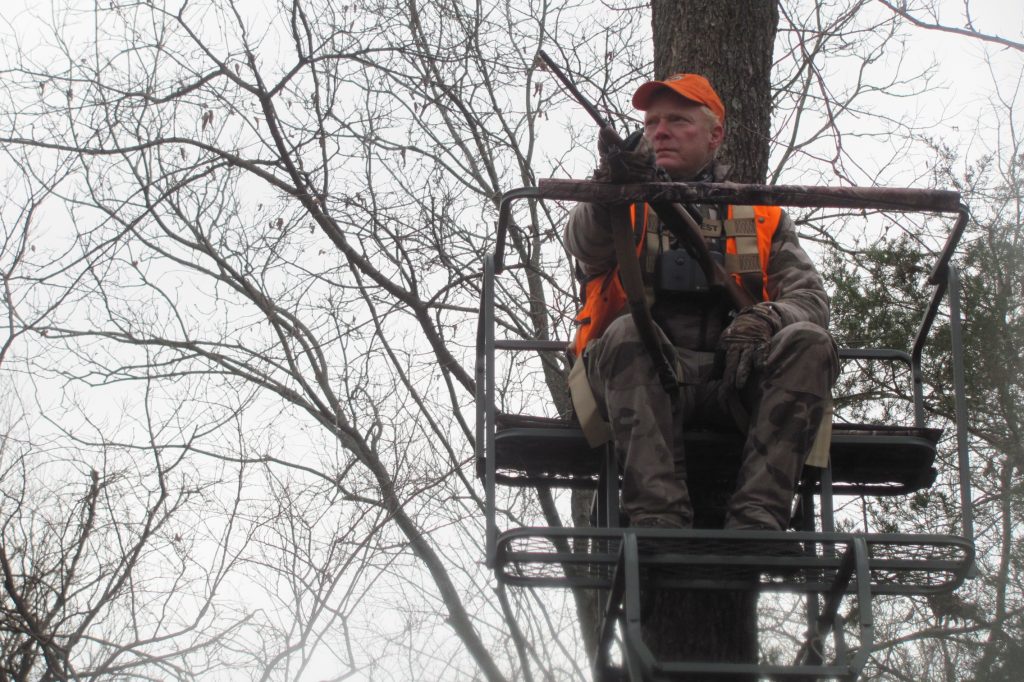
Most hunting is different from stand-hunting for whitetails. Unfamiliar distances and terrain, unexpected field positions. Maybe add some huffing and puffing from altitude or exertion. Suddenly, there is much more airspace around that animal.
Neither unfilled tags nor misses are the worst that can happen. Almost-misses are worse–poorly placed shots that result in a wounded animal. This is stuff we write about even more rarely. Sadly, it happens, also part of the deal, because no one shoots perfectly every time. Never happened to you? Bless you. Stick around. And remember the Bible teaches us “Pride goeth before a fall.”
I have had many unsuccessful hunts. If there was a story, I wrote about it. In a group, provided some hunters get lucky, there’s usually a story. The good news: Completely skunked camps are about as rare as camps where every hunter fills his or her tag.
I have made errant shots and I have wounded animals. In sixty years of hunting, fortunately, just a few. I have written about them. The hurt, shame, and embarrassment never goes away. Such massive errors still haunt me, as do a handful of spectacular misses, which I have also written about.
Some writers admit their errors, others don’t. No moral judgment implied. A story is a story. We need to be truthful, but within that truth we don’t have to tell everything. Do we?
I was not blessed with a selective memory. Late at night, when sleep won’t come, I relive some of my worst errors. One of these was my first buffalo in Kenya. I could have shot again, but I failed to, making the classic American error of admiring my first shot while a wounded buffalo dove into the bamboo forest, never to be seen again.
Fifty-five years ago, Dad and I drew tags in Colorado’s Maroon Bell Wilderness. Far down a steep slope, I got a shot at a wonderful buck. There were no rangefinders back then and I didn’t understand the uphill/downhill thing. I held too high and shot right over him. Years later, I made the same mistake on a huge Arizona elk. Today, we have angle-adjusting rangefinders, reticles, and turrets that could have helped. Maybe. But both times I broke a cardinal rule: “When in doubt, hold on hair, never on air.”
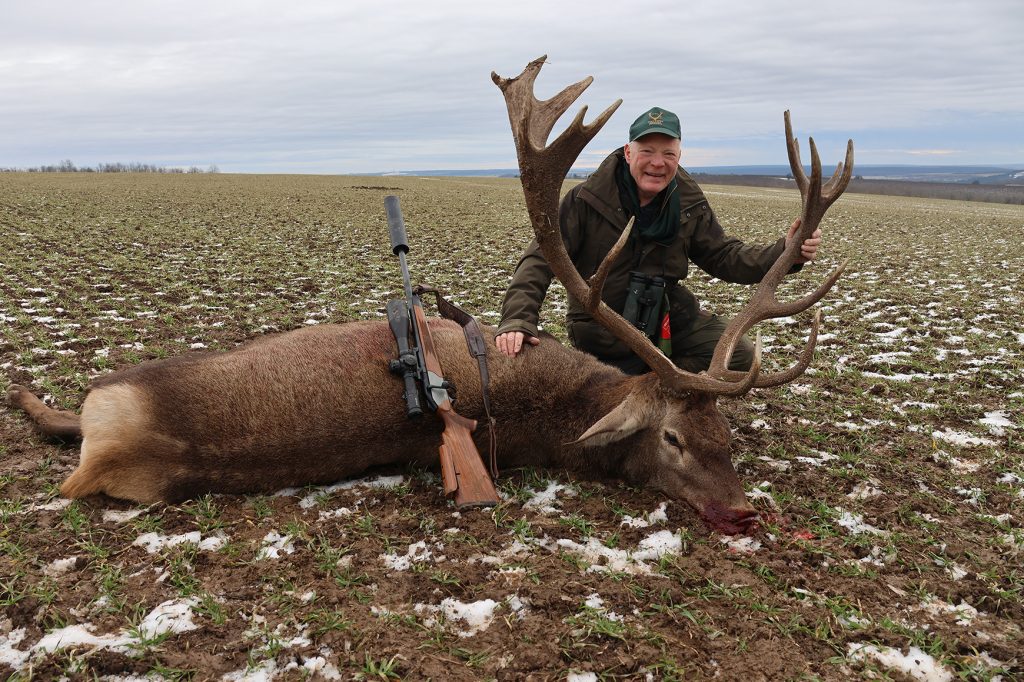
I’ve often written about these and other foibles. Right now, I’m on the horns of a dilemma. Recently, I did a red deer hunt in Europe, and took a fine stag at the tail end. The story I wrote omits the fact that three days earlier, I missed a stag. My excuse, if one is needed: I couldn’t figure out how to include that incident within the allowed word count. The omission bothers me enough that, as penance, I’ll tell it now.
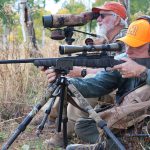
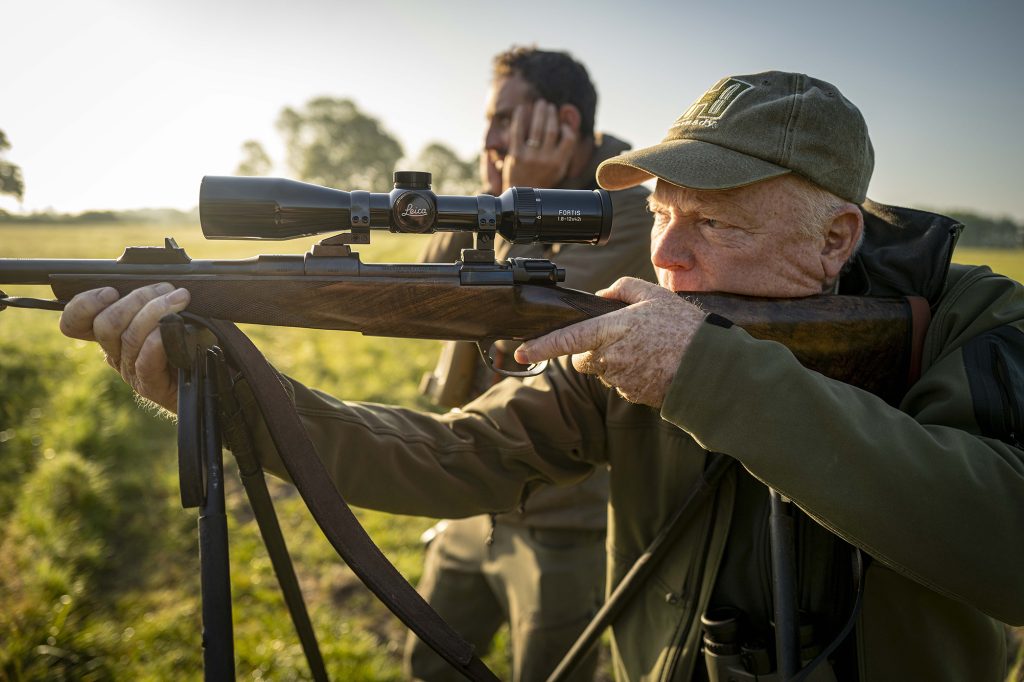
That afternoon we fought blizzard conditions in thick timber. At dusk, we spilled out at the bottom of a steep cutline. Two benches up stood a cluster of hinds, with the antlers of a nice stag on the skyline. It wasn’t that far, but no rangefinder can give a reading in a snowstorm. My guide set up shooting sticks and we cleared the ocular lens of snow while the stag remained standing. I got on him, got the shot off, and he ran into the trees.
Dark was gathering by the time we got up there, but tracks were clear in the snow. There was no blood. I felt good about the shot, so I assumed we’d find him in the morning. However, we had cell phone video of the shot, taken over my shoulder, which is very useful under such circumstances. The video gave no indication of a hit. Next morning a search was made, and we found no sign, so the hunt continued to eventual success.
That’s a good story because it was a clean miss. But it’s disturbing because I cannot explain it. Europeans don’t observe shooting hours, so it was getting dim. Blowing snow didn’t help, but the animal was dark against fresh snow, its antlers clean against darkening sky. The scope was bright enough, and I felt steady on the excellent Danish Viper-Flex fore-and-aft shooting sticks. The fact that I missed doesn’t bother me. Not knowing why I missed will bother me for a long time. Rushed, in terrible weather, I wish I hadn’t taken the shot at all.
Fortunately, I don’t miss often, but it happens. When it does, that’s my usual reaction: Why did I take that shot at all?
If you’re among the fortunate few who have never missed or near-missed (or can’t remember when it last happened), then the reality is mentally devastating. Yes, it really can happen to you, and eventually will if you hunt enough, especially under varying conditions. There are two things you can do. First, get back on the horse and ride again as quickly as possible. Try to put it past you, accept that it’s part of the game.
Second, and more important, try to understand why you missed. Thirty years ago, in an early book (Shots at Big Game), I devoted an entire chapter to “mystery misses,” the ones that haunt you because you aren’t sure what you did wrong. That red stag is now added to my short list of unexplained errors. First, if you don’t know what you did wrong, check the rifle! Mechanical failures are rare but real; it’s essential to rule them out before continuing. You bet we did that before continuing my stag hunt!
Usually, if we are experienced hunters and shooters, we know exactly what went wrong. Then the cure is simple: Vow to never do that again. Or spend more time on the range working on whatever position failed you.
Last spring, I spent some time in Europe roebuck hunting. Assisting in a managed harvest, we shot, well, a bunch of deer. I’d just had cataract surgery and lens replacement, and I could see the difference. I felt twenty years younger, was shooting like a champ.
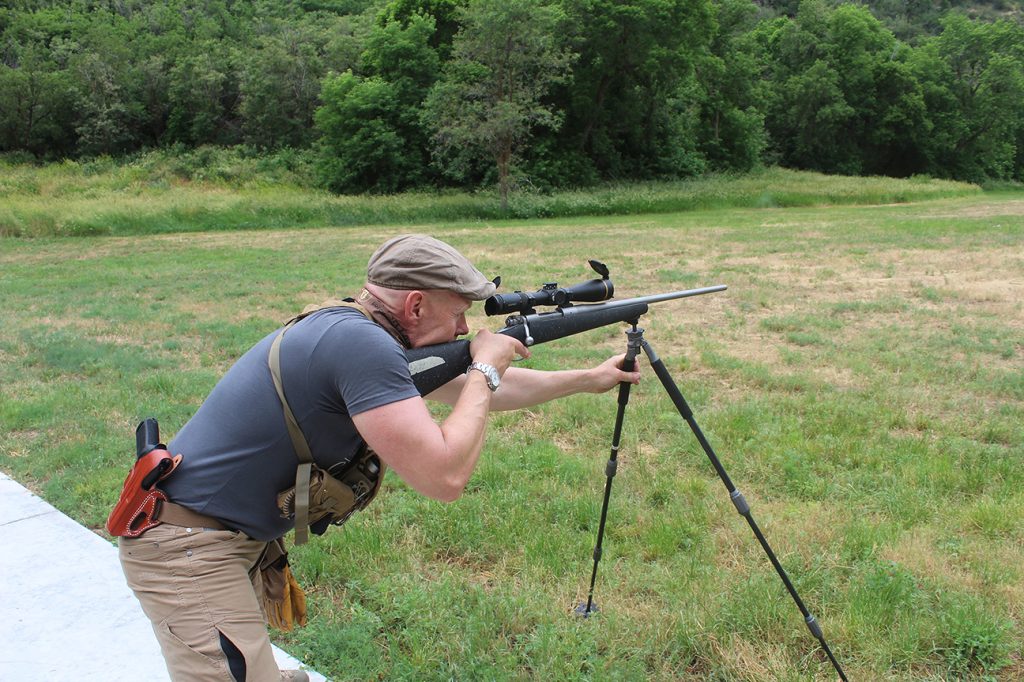
I practice from a lot of positions, and I shoot well off sticks. One common technique I’ve never mastered, however, is shooting off a tall bipod. I suck, cannot avoid a wobble. In Latvia, my guide used a tall bipod. My heart sinks when I see one, and I know I’d better be close. Roebucks are small and a good buck wasn’t close. I struggled to get steady enough and tried to time the wobble to the trigger break and failed. I kicked myself as I wondered why I took that shot.
The real secret to avoiding misses is to not take any shot you aren’t certain of. What that means varies widely depending on your skill level, equipment, distance, light, weather, wind, shot presentation, and so much more. Unfortunately, we’re all human, and all our equipment is made and used by humans. Sooner or later, most of us get excited, rush shots, misread wind, an animal takes a step, we have a mechanical or optics failure, or all that airspace gets us. Being sure is the essence of ethical hunting, but (hopefully) rare misses are still part of the game. If you know what happened, it’s good to let them haunt you. Maybe you won’t make that mistake again.