You can never go wrong carrying this classic caliber.
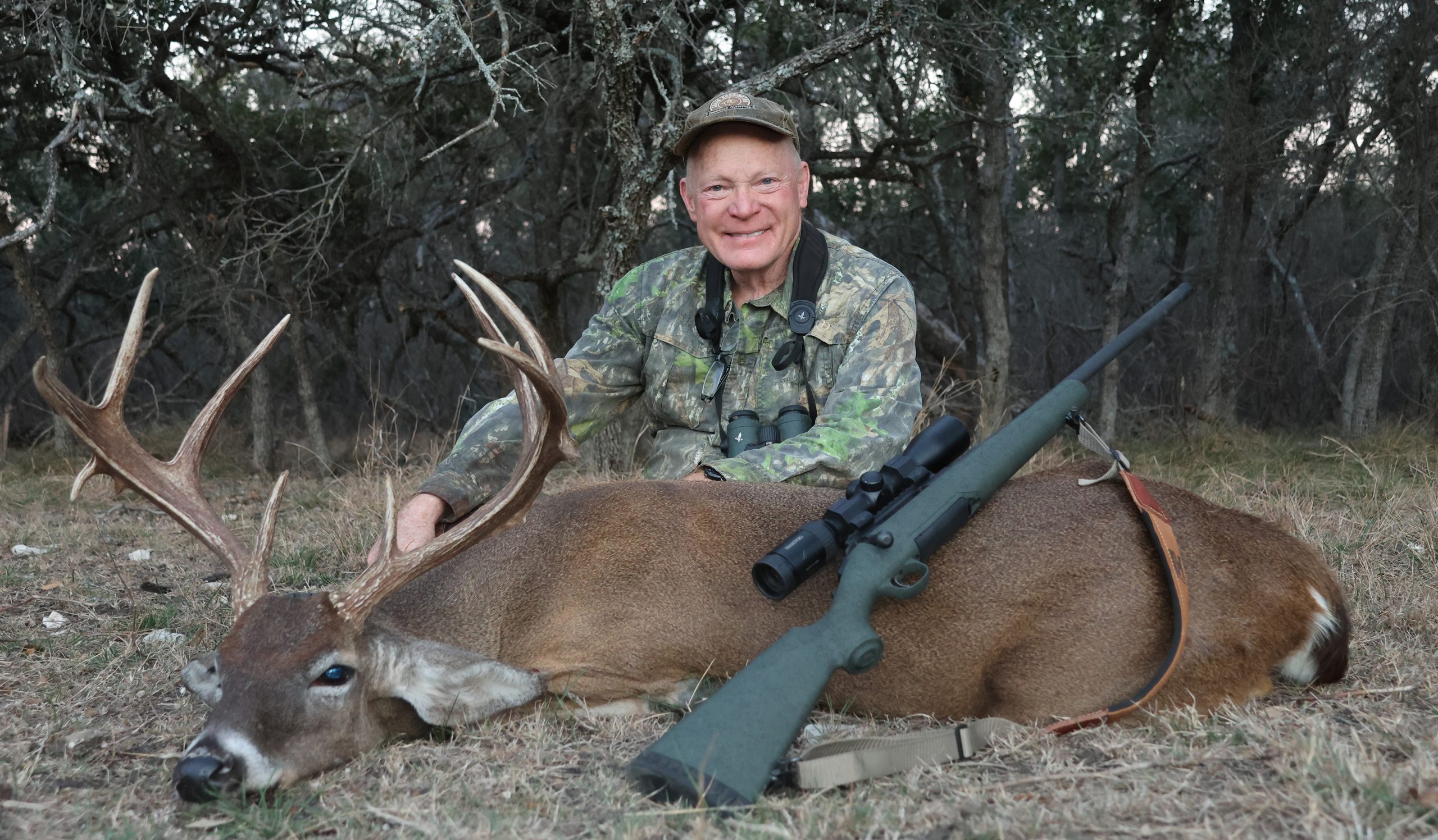
Photo above: This big Texas whitetail was taken with a new Ruger Glenfield in .30-06 loaded with 180-grain Swift A-Frame bullets.
It was the last day of the Texas deer season, deep into the last (and best) hour. Movement in the trees. Heavy body, thick neck. Before I could see antlers, I knew this was an older buck. When he stepped clear I saw good mass and width—a big, mature eight-pointer.
He stood quartering to me, head down. I put the cross hairs on the point of the on-shoulder and pressed the trigger. The buck was down so fast he almost appeared to bounce. Well, the presentation was good, shot placed where I wanted. And I hit him with a powerful rifle, a .30-06.
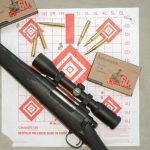
America’s military cartridge through both World Wars, Korea, and countless smaller actions, the .30-06 was also America’s most popular sporting cartridge for most of the twentieth century. Still common, still effective, but against successive blizzards of brave new cartridges, the .30-06 is often overlooked. It’s been years since I’ve had a new test rifle in .30-06 in my hands. This rifle was Ruger’s new Glenfield, a plain-Jane bolt-action. On the range, it grouped far better than an inexpensive rifle really should. In the field, it pounded that buck.
That’s what the .30-06 will do. I have often said that the .30-06 is needlessly powerful for deer-size game. But it works. Against all those sexy new cartridges, the .30-06 has stood the test of time and stands up very well.
I’ve written this before, but it bears repeating: The .30-06 is the most powerful cartridge ever adopted by a major military. As a sporting cartridge, it comes into its own as an elk cartridge and remains, in my opinion, the most ideal choice for African plains game. Not as much recoil as a magnum, yet devastating efficiency on the wide range of antelopes, small to large.

Although old, it is not slow. Today, the most common loads are a 150-grain bullet at a speedy 2,910 fps; 165 grains at 2,800; and 180 grains at 2,700. Note this last: That’s the same velocity as the vaunted 6.5 Creedmoor with a 140-grain bullet. Sure, the ’06 kicks more, but with more frontal area and bullet weight, there isn’t much you can’t do with a .30-06 and a 180-grain bullet. If you want more, the old standard for the largest game was a 220-grain bullet at a credible 2,500 fps. Despite variance in velocity and bullet weight, all four loads produce close to 3,000 ft-lbs, a lot of energy.
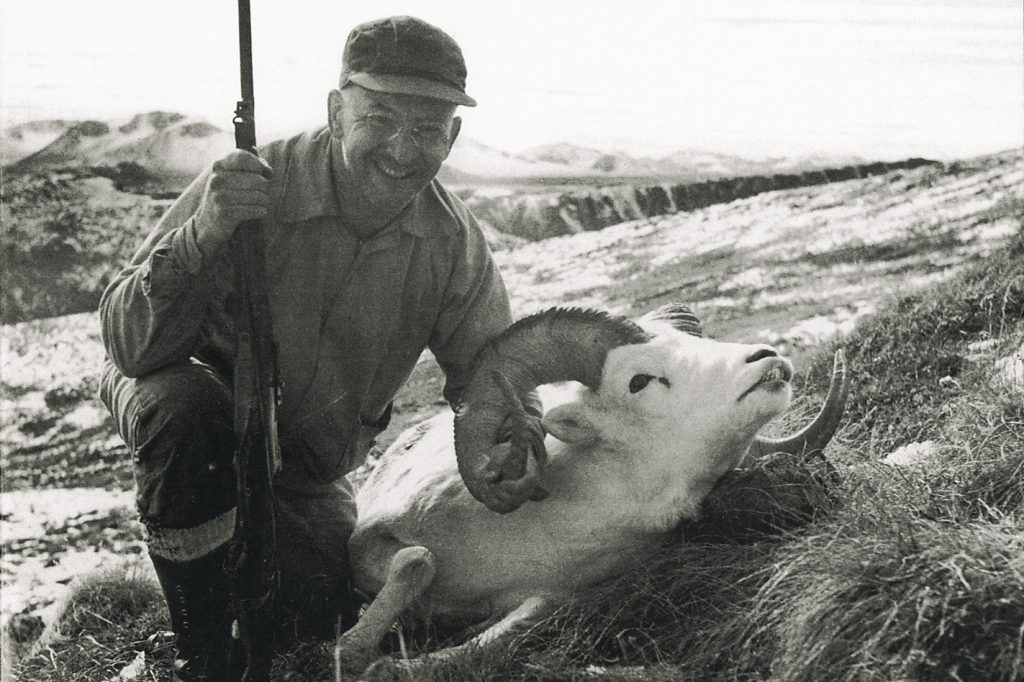
As the .375 H&H is on larger game, the .30-06 is the jack-of-all-trades for medium game. Even Jack O’Connor, patron saint of the .270, conceded in letters (never in print) that the .30-06 was more versatile. In the 1950s, Grancel Fitz was the first person known to take all species of North American big game. Fitz used one rifle, a Griffin & Howe Springfield in .30-06. A generation later, Dr. J.Y. Jones accomplished the same feat, using only his battered Remington .30-06. “North American big game” includes four sheep and a goat, plus Alaskan brown, grizzly, and polar bear. And bison and walrus, both very large.
The .30-06 made its bones in Africa on the 1909 Roosevelt safari, both Kermit and his dad, Theodore, taking prodigious quantities of game, small to large, with 220-grain bullets. In 1933 Ernest Hemingway relied on his Griffin & Howe Springfield because he hated the heavy trigger on his .470 double. He took black rhino, buffalo, lion, plains game. On his first safari, Robert Ruark relied on a Remington .30-06 for his plains game. Jack O’Connor’s wife, Eleanor, was mostly a 7×57 fan. Eleanor considered the .30-06 a cannon, stepping up to it (with 220-grain bullets) only for extra-large game, including elephant and tiger.
Because of that history and lineage, when I was planning my first African hunt, I decided I had to have a .30-06. To this day, I have never taken a big bear, buffalo, or pachyderm with a .30-06, and few sheep or goats. Across that broad spectrum, I think there are better tools. Instead, I’ve used several .30-06 rifles for all manner of deer, elk, and a pile of plains game.
In 1976, I went to the Camp Pendleton PX and bought a Ruger M77 in .30-06 and a Redfield 3-9X scope. On my first safari, at first, I shot poorly. Young, excited, trying too hard. As Harry Selby told Robert Ruark, “Everybody misses at first. It’s the light.” I suppose he was right. (There isn’t good shooting light when you have your head up your —.) I got past the jitters, shot well in the second camp down on the Tsavo plains. Antelopes small and large, near and far. I came to appreciate the .30-06. For the next few years I used little else. Blacktails, whitetails, mule deer, Coues deer, couple more African hunts. Then that rifle was stolen.
In the aftermath, I switched to left-hand bolt rifles, including a beautiful left-hand M700 .30-06 from the Remington Custom Shop. That rifle went to several continents, accounted for a lot of animals. Later, I had a wonderful Jarrett .30-06 on a left-hand Remington receiver, wonderfully accurate. In the early 2000s I was doing an Africa-based outdoor television show, Ruger as one of the sponsors. I went back to the beginning and bought a Ruger M77, this one in left-hand bolt.
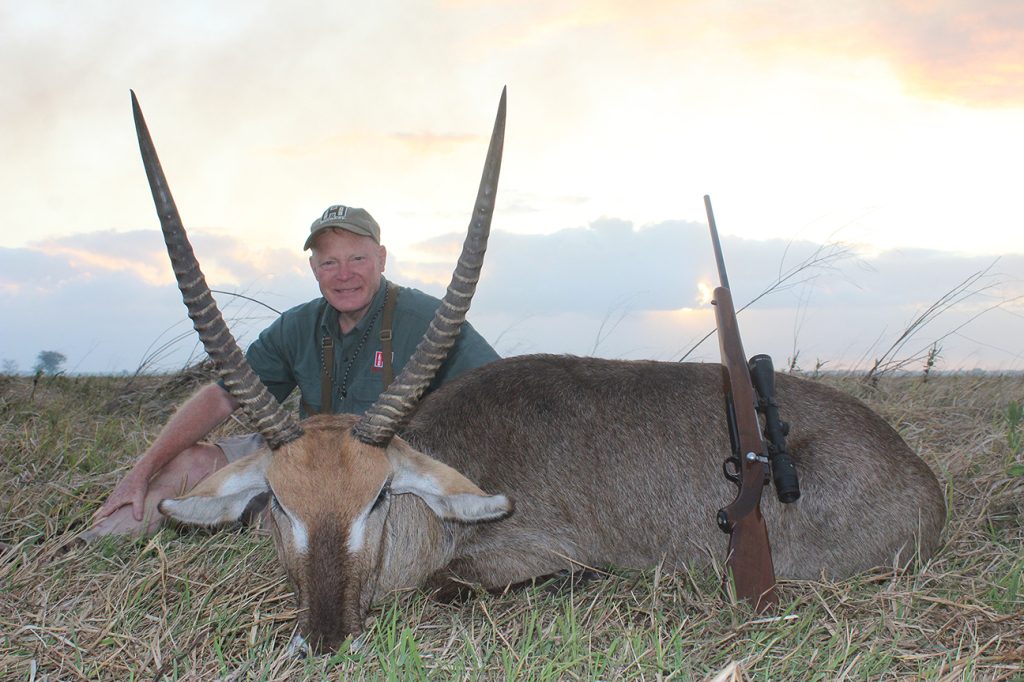
When Donna got interested in hunting, I shaved a bit off the butt and reset the recoil pad. Oh, boy, that rifle has taken a lot of African game. Some people are less sensitive to recoil than others. Generations of recruits complained about getting beat up by their Springfields and Garands. If Donna thought that Ruger was a cannon, she never mentioned it, and she shot it well. That said, the .30-06 is powerful and it kicks. I wouldn’t start a youngster with a .30-06, nor is it a wise choice for people who admit they don’t like recoil. When she got her own rifle, I switched her to a .270 and she hasn’t looked back. The switch was for flatter trajectory and lighter rifle, not for less recoil. Ready to go, that .30-06 weighs 8.5 pounds and produces 22 ft-lbs of recoil. Donna’s .270 is a super-light MGA, six pounds loaded and ready. Gun weight matters; her .270 produces more recoil than the .30-06.
Over the years, I’ve gone up and down the bullet scale. That first Ruger really liked 180-grain Nosler Partitions, loaded as fast as I could get them. The Remington shot its best groups with 165-grain bullets. A little faster and flatter-shooting, and on game up to elk, I never saw any difference in performance. The Jarrett shot everything well but really liked a 150-grain Barnes X loaded fast. Once, hunting whitetails in Saskatchewan, I spotted a buck cruising an open snow field behind my stand. No time to range him, so I held on the backline and dropped it into the boiler room. With our current Ruger, I went back to 180-grain bullets, shooting mostly plain old Hornady Interlocks at the standard 2,700 fps. The .30-06 isn’t slow, but at its moderate velocity, good bullet performance is routine. Same lesson that first Ruger taught me 50 years ago: There isn’t much you can’t do with a .30-06 and a 180-grain bullet.
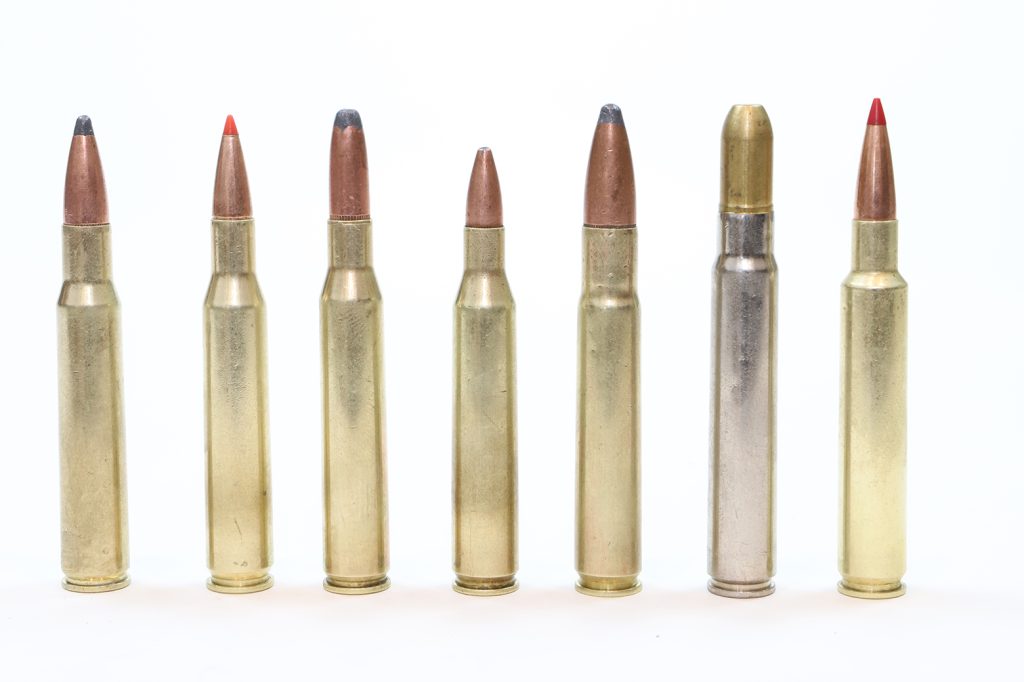
As America’s most common cartridge, for many years a new test rifle was likely to be a .30-06. I have no idea how many came and went. Some grouped spectacularly, others not so well, but always good enough. The Ruger Glenfield I used on that Texas buck is the first .30-06 test rifle I’ve seen in a while, which suggests the great old .30-06 is being overlooked in the snowdrifts of newer cartridges.
Let’s finish by remembering where the .30-06 nomenclature came from. One of the fun things I do is teach some classes at daughter Brittany’s She Hunts skills camps for women. In “Bullet Basics” I try to make some sense of our nonsensical morass of cartridge nomenclature. .308 Winchester is clear, .308-inch bullet, introduced by Winchester. .257 Weatherby Magnum, fine. .257-inch bullet, designed by Weatherby, modified by “magnum,” from French for an extra-large bottle of champagne (the ladies love that). Then we have rounded numbers, reversion to blackpowder convention (.30-30, .45-70). And now whimsical names and alphabet soup: Creedmoor, Legend, ARC, PRC. It’s nearly impossible for anyone who didn’t start reading gun magazines in grade school to sort it all out.
The grand old .30-06 is perhaps the most notable. No one ever accused the US military of simple nomenclature. Officially, the new cartridge we adopted in 1906 was: “Cartridge, ball, caliber .30, Model of 1906.” It was soon and forever shortened to “Thirty-aught-six.”