What, exactly, makes the Creedmoors, PRCs, and other new cartridges different from our old favorites?
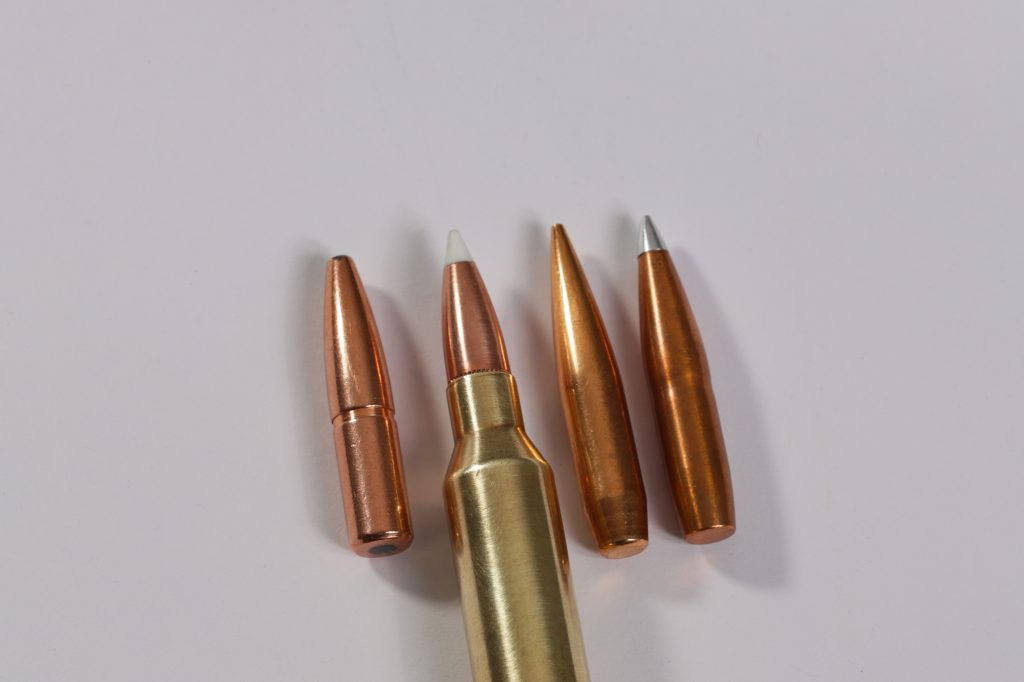
Photo above: The 6mm Creedmoor wasn’t necessarily designed to spit bullets faster than the old .243 Winchester, but to shoot longer, more aerodynamically efficient, higher B.C. bullets equally fast. The results are less drop, less wind deflection, and more retained energy at all distances.
A centerfire rifle cartridge released in 2007 has become the blueprint for twenty-first century cartridge design. Its performance, popularity, and success initiated a paradigm shift that threatens to sweep the .270 Winchester, 7mm Remington Magnum, .300 Winchester Magnum, and perhaps even the .30-06 Springfield into the dustbin of history.
Whoa! Hold on a second there. Did I just write that? Did you read it correctly? I’m afraid so. I’m no swooning devotee of this particular cartridge. Nor am I writing this to advance sales of it or any others built on its blueprint. But just as the .30-06 drove twentieth-century cartridge design after 1906, so has the 6.5 Creedmoor influenced twenty-first century cartridge design. We hunters don’t have to embrace this, but we should understand the formula and how it changes ballistic performance to equal or beat older cartridges, and how this might change the way we hunt. Or at least the way we shoot when we hunt.
Legions of shooters reject the 6.5 Creedmoor as nothing more than the 6.5×55 Swede of 1894 in a different dress. Zealots champion it as the most accurate, efficient, and deadliest small-caliber centerfire that ever warmed a barrel. The reality is somewhere between those extremes, but that’s not the gold nugget we’re digging for here–the blueprint is. And that was drawn up by the combined efforts of Dennis DeMille of Creedmoor Sports (purveyors of precision target rifles, ammunition, and ancillary gear), Dave Emary, then chief ballistician at Hornady, and Joe Theilen, then assistant director of engineering at Hornady.
The goal, as initiated by match competition shooter DeMille, was to create the ideal, factory-loaded cartridge that would produce the kind of consistent accuracy and trajectory that could win “across-the-course” match-shooting competitions. This meant out-of-the-box precision, efficiency, mild recoil, and long barrel life with mass-produced ammo and rifles. The new cartridge needed a balance of ballistic performance, meaning minimal drop and wind deflection with the side benefit of high retained kinetic energy. Emary realized these same characteristics would make an exceptional hunting cartridge, too.
With the .260 Remington and 6.5×47 Lapua as guides, the team soon configured the Creedmoor. The resulting design (based, to no one’s surprise, on the rim and head diameters of the .30-06) didn’t look radically different than several existing cartridges. The new Creedmoor did not produce record muzzle velocities, but its mix of performance benefits pushed it steadily up the leaderboard. By 2020, virtually every rifle manufacturer in the world was chambering for it. Around that same time, it became the hottest selling centerfire rifle ammunition in the USA, beating out the .308 Winchester for the top spot.
Critics belittle the 6.5 Creedmoor project as merely copycat work, but that ignores the evolutionary development of centerfire cartridges going back to at least the 8x50mm Lebel in 1886. This rimmed, bottlenecked French military round set the table for what became the twentieth-century model. The Lebel was the first to burn smokeless Poudre B, three times more powerful than blackpowder. Two years later the German military tweaked the French design by pouring smokeless powder into a rimless case with less radically tapered sidewalls to make the 8mm Mauser. The die had been cast, and the race was on.
By the end of the nineteenth century, virtually every military in Europe and, for that matter, the rest of the world, had adopted the new standards. The US military joined by stretching the 8mm Mauser a quarter of an inch and necking it down to hold a .308-inch bullet, borrowing the spire point shape from, again, the pioneering French. The resulting .30-06 cartridge, topped with a 150-grain spire point bullet, then began its evolutionary transformation into the .256 Newton, .270 Winchester, .35 Whelen, .280 Remington, .25-06 Remington, 6.5-06, .280 Ackley Improved, and .338-06. Each of them fit the “standard-length” action accommodating 3.340-inch-long cartridges.
In the early 1950s, Winchester shortened .30-06 brass to give us the .308 Winchester, which was soon reworked into the .243 Winchester, .358 Winchester, 7mm-08 Remington, .260 Remington, .338 Federal, and a dozen wildcats lost to history. Each of those fit within the 2.81-inch “short-action” family.
Add to this menagerie the host of belted magnums and fat cartridges based on the .375 H&H, .404 Jeffery, and others, and you have the extensive and redundant twentieth-century model of cartridge development. Most of it hinged on increasing powder supply in a handful of action sizes and case diameters to increase muzzle velocity and drive traditional bullet weights faster and faster to reduce drop and deflection.
Then came the laser rangefinder. Once shooters in the late 1990s discovered they could pinpoint target distances, they realized they no longer needed hyper velocity to offset poor range estimates. Instead, they could match any bullet’s trajectory curve to known ranges and compensate by dialing scope turrets or selecting appropriate drop compensation reticle lines.
The most significant remaining obstacle was wind deflection. No matter a bullet’s velocity at launch, it deteriorated with distance. The longer a bullet remained in the air, the farther any crosswind directed it off course. Bullets shaped long and lean slipped atmospheric drag, flattened recoil, and reached targets sooner. They have a higher ballistic coefficient (B.C.), the numerical measure of a projectile’s ability to overcome air resistance in flight. Shooters began to appreciate this aerodynamic efficiency. Alas, most rifles weren’t built to maximize it. The old, standardized rifling twist rates were usually too slow to stabilize long, heavy-for-caliber bullets.
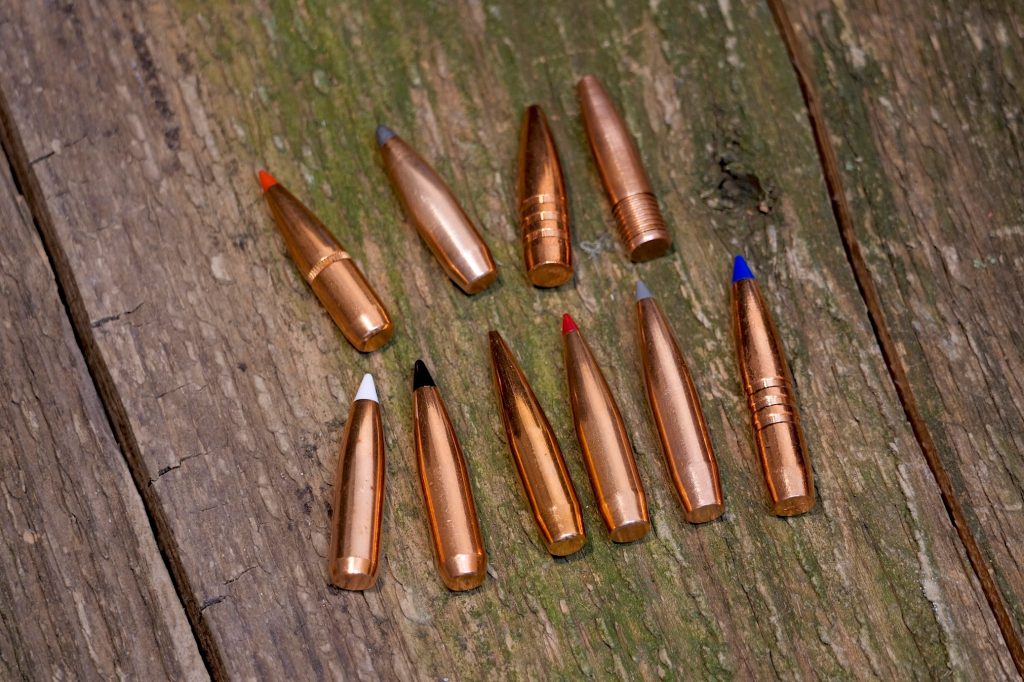
It strikes one as odd that rifling twists didn’t change with the times. It’s understandable that ammo manufacturers didn’t want to confuse shooters with bullets that wouldn’t stabilize in older rifles, but why didn’t they ramp up twists in new rounds such as the .260 Remington, .270 WSM, 7mm SAUM, or even the 7mm-08 Remington of 1980? The concept of aerodynamic efficiency had emerged with the Minie ball way back in 1848. Sleek bullet form improved with spire points and boat tails in the 1890s, advanced further with secant ogives and polymer tips in the late twentieth century, but didn’t really explode into shooters’ or manufacturers’ consciousness until the Creedmoor began outshooting the venerated .308 Winchester at extreme range. The insanely high .580 to .625 B.C.s of 140- to 143-grain .264 bullets moderated long-range wind deflections as well as did the 200-grain and heavier bullets fired from .30-caliber magnums–with much less recoil.
Here, then, was the golden nugget. Not only did the little 6.5 Creedmoor shoot flatter, recoil less, and deflect less in wind than the .308 Winchester, but it also retained more bullet energy. By 2010, the aerodynamic bullet evolution was becoming a B.C. revolution.
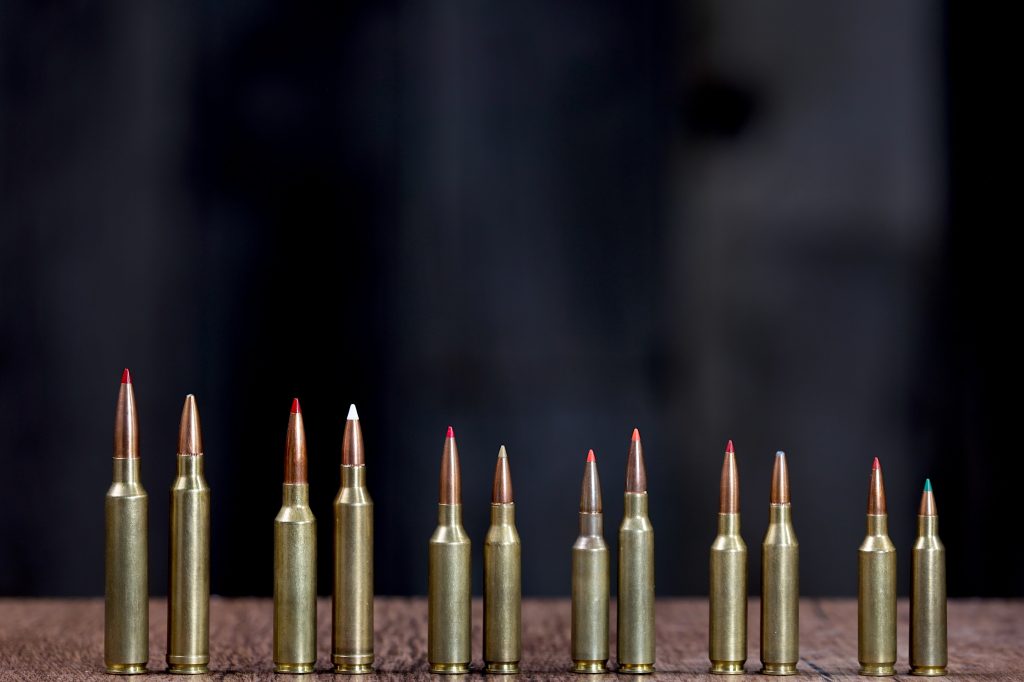
Today, the 6.5mm Creedmoor “blueprint” is apparent in a host of twenty-first-century cartridges, including the .22 Creedmoor, 6mm Creedmoor, .25 Creedmoor, 6.5 PRC, 6.8 Western, 7mm PRC, and .300 PRC. Because its influence is growing, hunters should understand what makes it different, and whether that difference is enough to matter.
Here are the features of the new twenty-first-century cartridges that matter, ranked in no particular order:
Heavy-for-caliber, long, high-B.C. bullets: Minimizes drag, which decreases flight time, decreases wind deflection, and retains more kinetic energy.
Head height: This allows seating of long, high B.C. bullets without full shank diameter intruding into powder space.
Minimal body taper: Maximizes powder space, minimizes back thrust pressure on the bolt.
Short, wide body: Shorter powder columns generally ignite and burn more evenly and impart more energy to the bullet because the initial powder burn/gas pressure near the primer is not wasted pushing the upper stack of powder before it burns.
30- to 35-degree shoulder: Maximizes powder space, provides positive headspacing, improves case-to-bore alignment, reduces neck stretching for extended case life (in handloading).
Longer neck: Aids bullet alignment with bore for enhanced accuracy.
Moderate powder capacity: By balancing powder capacity with anticipated bullet weights that lead to muzzle velocities in the 2,700 to 3,100 fps range, accuracy is easier to achieve.
Then there are the rifles. Rifles for these new cartridges are built with faster rifling twists to better stabilize the long, efficient, high B.C. bullets. There are also chamber specifications that enhance performance. Throats–the space in which the bullet perches when a cartridge is locked into battery–are reamed for minimal tolerances less than 0.001-inch-over-bullet-diameter range. This aids bullet alignment with the bore. Most twentieth-century cartridge throats are SAAMI-specified with as much tolerance as 0.007-inch.
New rifle chambers also feature a more consistent leade. This is the taper or ramp from the throat into the bore. Tight tolerances here mean the ramps to each land match perfectly, starting bullets straight into the barrel.
SAAMI specs on the chamber dimensions of rifles chambered in these twenty-first-century cartridges are tight–what many refer to as “match grade.” This could have been done with any rifle and cartridge from the twentieth century, but as a general rule tolerances were a bit more generous then because average accuracy was adequate for the limited ranges at which game was taken. Greater chamber tolerances made it easier for mass-produced ammunition to always fit and function in mass-produced rifles.
Traditionalists often defend twentieth-century cartridges and rifles by correctly pointing out that they just plain work. Deer, elk, moose, and bears haven’t gotten any tougher. So why do we need new cartridges or high B.C. bullets? Why this fixation on quarter-minute accuracy when rifles that shot 1.5- and even 2-MOA were good enough for grandpa?
There are no absolute answers, although one can argue that Daniel Boone killed whitetails and even elk with his flintlock muzzleloader and round balls, so who really needs a .30-06 or .257 Roberts? Degrees of accuracy, bullet energy, and muzzle velocity are personal choices. If you are satisfied with the recoil, rifle length and weight, muzzle velocity, bullet weight and construction, ballistic drop and wind deflection from your current cartridge and rifle, stick with them. But if you are intrigued by the reduced wind deflection, increased out-of-the-box precision, and higher retained energy inherent in twenty-first-century cartridge designs, you might want to experiment with one of them.