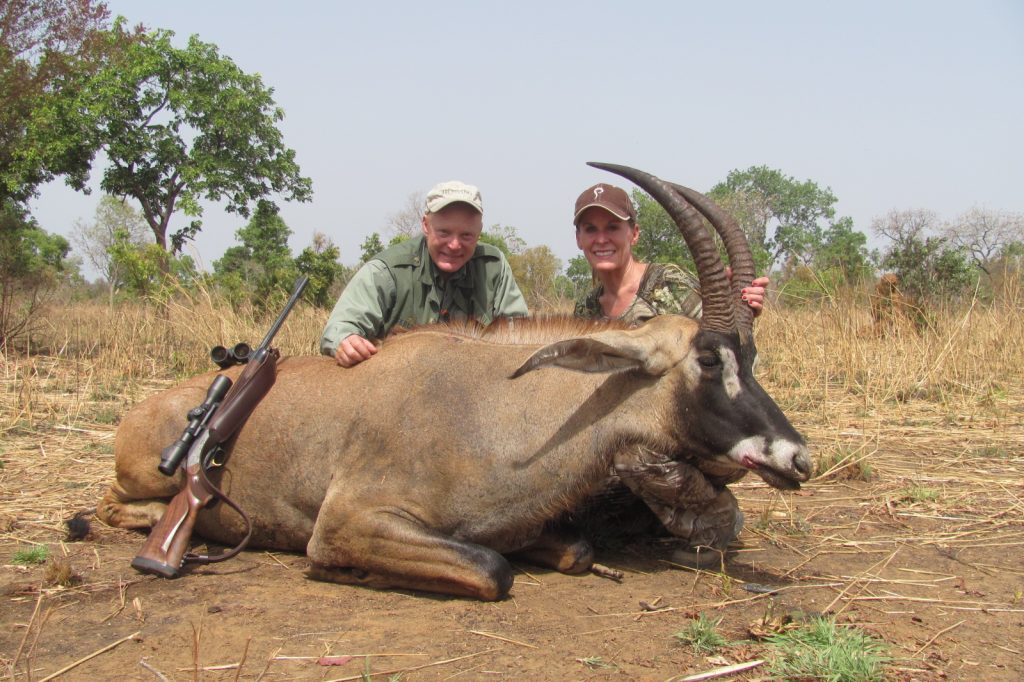
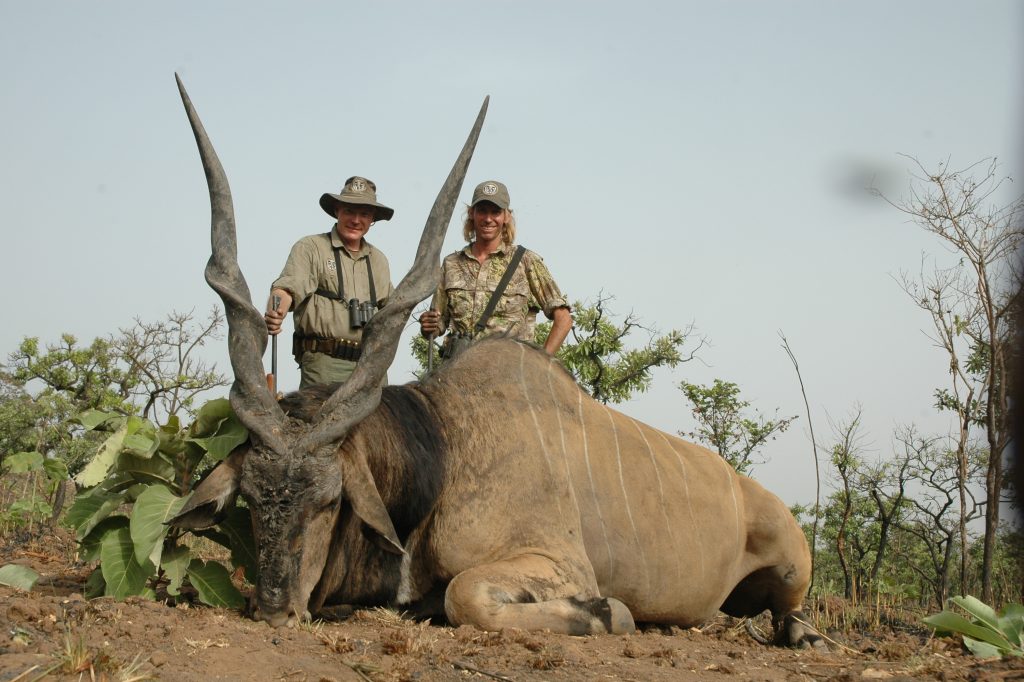
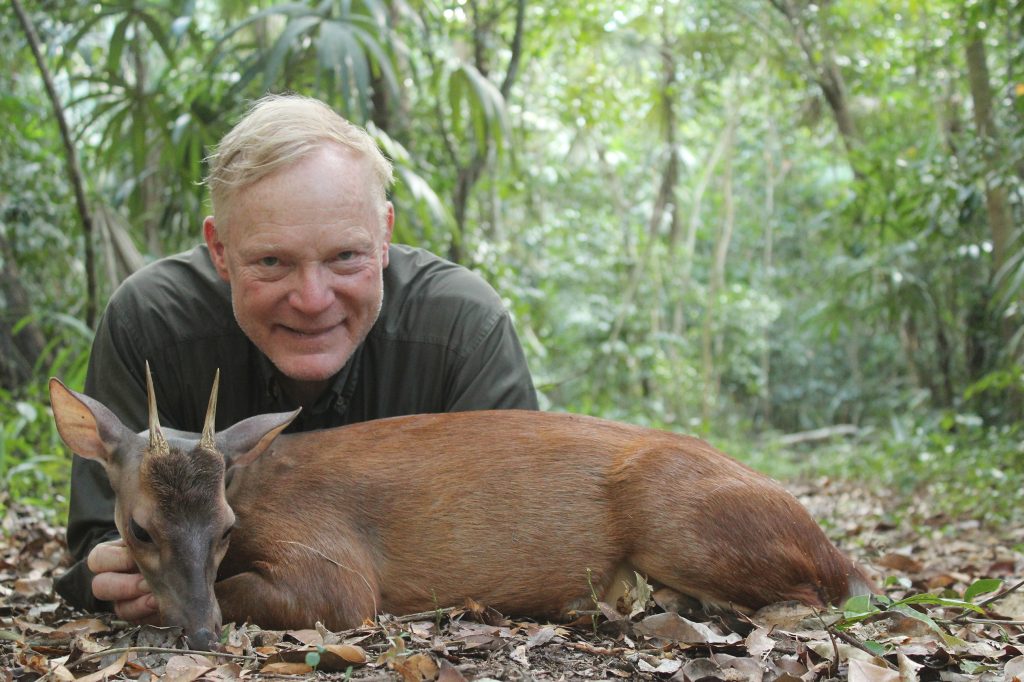
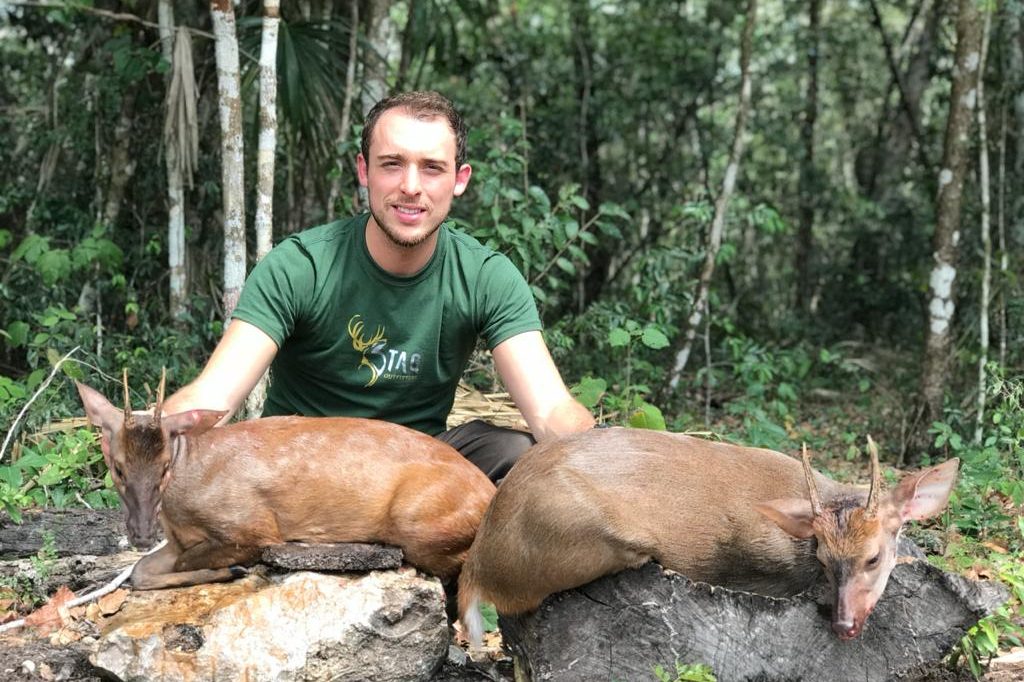
Here’s what you need to know about Colorado’s proposed “right to hunt and fish” Constitutional amendment—and why you should care even if you don’t live in Colorado.
Photo above by Victor Schendel Photography
Hunting is a way of life for many of us, but it is also much more than that. It is the basis for a century-old conservation model, and a crucial component of the science-based wildlife management system and funding mechanism that has built and maintained the abundant wildlife resources we enjoy today.
In the last few years, I’ve watched with growing dismay as the anti-hunting movement flexed its muscles across the country, including in the state I call home. Here in Colorado, there have been multiple attempts to ban specific types of hunting via end-runs around scientific management protocols. Meanwhile, some of our state wildlife commissioners have openly boasted about voting their “values” and “feelings” over the agency’s science.
In some states, things are even worse. Oregon came frighteningly close this year to placing a measure on the ballot that would classify hunting, fishing, raising livestock for food, and even trapping rats and mice as criminal acts. The measure, IP 28, fell short of the required number of signatures to make the ballot—but it did get 104,262 validated signatures, which is scary enough, and its proponents are likely to try again next year.
In Colorado, a strong coalition of sportsmen’s groups led by Coloradans for Responsible Wildlife Management (CRWM) has been successful in beating back the most egregious threats to our hunting heritage. Now this coalition has decided it’s time to stop playing only defense. It’s time to take back the ball, as it were, and go on the offensive to forestall radical proposals like the one in Oregon.
That’s the backdrop to a proposed ballot initiative that would establish a constitutional right to hunt, fish, and harvest wildlife in Colorado. The measure would affirm hunting and fishing as preferred methods of wildlife management, while preserving the state’s authority to regulate these activities based on sound science, public safety, and long-term conservation goals.
It’s true that hunting and fishing in Colorado are already protected by state statutes, as they are in most states. But state laws can be changed relatively easily, and anti-hunting groups have figured that out. Constitutions are a lot harder to change than statutes, and that’s the whole point of the proposed amendment.
If the attempt is successful, Colorado would be the twenty-fifth state with a constitutional right to hunt and fish. The precedent goes all the way back to 1777, when Vermont amended its constitution to read, in part: “The inhabitants of this State shall have liberty in seasonable times, to hunt and fowl on the lands they hold, and on other lands not inclosed… under proper regulations…”
In more recent times, twenty-three other states have followed suit in amending their constitutions to protect hunting, angling, and trapping. They are: Alabama, Arkansas, Florida, Georgia, Idaho, Indiana, Kansas, Kentucky, Louisiana, Minnesota, Mississippi, Montana, Nebraska, North Carolina, North Dakota, Oklahoma, South Carolina, Tennessee, Texas, Utah, Virginia, Wisconsin, and Wyoming.
The exact wording of Colorado’s proposed initiative is as follows:
“Shall there be an amendment to the Colorado Constitution creating a constitutional right to hunt, fish, and harvest fish and wildlife by traditional methods, including all species of fish and wildlife managed by the state except non-game species, endangered species, or any species that is illegal to hunt under federal law, and, in connection therewith, establishing hunting and fishing as the preferred means of managing fish and wildlife populations; and persevering the right of the state to regulate hunting, fishing, and wildlife management if necessary for sound scientific wildlife conservation and management, public safety, or to preserve the future of hunting and fishing opportunities for all species?”
This would not mean that hunters and anglers would have the right to go around trespassing or breaking the law, and it would not limit the authority of the state wildlife agency to set seasons, bag limits, and game laws. It simply establishes that hunting and fishing are the primary and preferred means of responsibly managing and controlling fish and wildlife populations.
The idea is that if someone tries to ban a commonly used method of hunting or fishing, or stop hunts for a currently hunted species without a solid scientific reason, hunters and anglers would be able to use this constitutional right to challenge it in court. Shortly after Florida passed its amendment in 2024, for example, activists attempted to stop the state’s black bear hunt. A court found that the scientific basis for the hunt was sound, so it was allowed to proceed.
Bottom line: A constitutional right to hunt and fish is another tool we can use to ensure that professionals, not politicians, make decisions about wildlife management. It can help state agencies continue to be guided by science rather than emotional rhetoric.
Time will tell whether this attempt by the Colorado sporting community to go on the offense is successful. No matter what happens, hunters in other states would do well to watch carefully what unfolds. You may be on the playing field sooner than you think.
Sure, you watch the wind when you hunt, but do you know how to read it?
Photo above by VicSchendelPhotography.com
Hunters probably pay more attention to the wind than most people, but how many really understand the phenomenon itself, how it forms and moves, how it affects and helps predict incoming weather, and the many ways it can impact personal safety?
To the simple question of what causes wind, there is a simple-seeming answer: Wind is air moving from high pressure to low pressure, influenced by temperature differences, Earth’s rotation, and local geography.
Unpacking that definition is not so simple, however.
For starters, nearly all weather occurs in the troposphere, the lowest stratum of our atmosphere. This roughly 7- to 12-mile-high layer of air is mostly heated from the bottom up. Solar radiation warms the Earth’s surface, which then warms the air above it. Because the surface is so variegated, warming is uneven. Land heats up much more quickly than water, for instance. Warmer air is less dense (its molecules more separated) than cool air, so it rises, creating an area of lower atmospheric pressure. Air pressure is the weight or force of air being pulled down by gravity at a given point. The denser (heavier) the air, the higher the pressure. As warm air lifts, nearby cooler, high-pressure air moves in to fill or equalize the gap. High pressure air always flows toward lower pressure air. That flow or movement is wind.
A good local example of this dynamic is illustrated by land and sea breezes. When land is bordered by a substantial body of water, such as an ocean coastline or the shore of a large lake, daytime sun rays heat up the land much more quickly than the water. (Water disperses heat more widely and deeply than a comparatively thin layer of solid ground, which is a much more efficient conductor of heat.) The air over land warms and rises, creating an area of low pressure. The cooler (higher-pressure) air over the water rushes in. These “sea breezes” are a pleasant relief on hot summer days. At night, the dynamic reverses. Land cools off quickly, while the day’s heat retained in water releases slowly. Now the low pressure is in the warmer air above the water, and the land air is cooler. Low pressure air over the water lifts, and high pressure air from the land rushes in, reversing the day’s wind pattern with a “land breeze.”
Two more key concepts help explain how wind works. Warm air rises, but it cools as it lifts, since temperature decreases with altitude. Cool air eventually sinks, warming as it lowers. This rising and falling of air results in a roughly circular movement called convection. Locally, there are minor convection currents; when these grow large enough they become “convection cells” (as displayed, for example, in large cumulus clouds). The convective process has been called the engine of weather systems, since it transfers heat throughout the atmosphere, drives cloud formation, generates precipitation when the clouds are loaded with water vapor, and contributes to the creation of winds.
Wind patterns circulate because of a second important concept: the Coriolis effect, which is caused by the eastward rotation of the Earth. Because the planet spins faster at the equator than at the poles, objects at different latitudes travel on the Earth’s surface at differing speeds. This causes winds to bend to the right in the Northern Hemisphere and to the left in the Southern Hemisphere. Globally, the Coriolis effect helps shape large-scale wind patterns such as the polar easterlies, the trade winds, the jet stream, and the prevailing temperate-latitude westerlies (winds that blow approximately west to east, as, for instance, across most of the United States and Canada).
Local geography can also be an important influence on wind. A good example, very relevant for hunters, is how winds form and operate in mountainous terrain. On a daily basis, air flow in the mountains has a similar dynamic to land and sea breezes. In the morning and for much of the day, sun rays heat the mountain slopes. As air near the slopes, and possibly from an adjacent valley floor, warms, it rises, flowing uphill toward the ridge or peak. This anabatic or “valley” wind might be very light, hardly noticeable in some cases, but it can carry your scent to animals above you. (Note that sometimes the upslope air current is mitigated by more substantial “weather winds” blowing in from a frontal system or storm.) And just as with land/sea breezes, the mountain wind reverses as the sun goes down. The slopes cool, which also cools nearby air, making it heavier. Gravity drives the denser air downslope from the mountain top, creating a katabatic wind. These evening and night winds can be strong and cold–especially if funneled through a pass or canyon–so it’s wise to prepare for them in mountain country.
Another kind of downslope wind is a foehn (sometimes spelled fohn). Unlike a katabatic wind, which is a local temperature phenomenon, foehn winds result from large-area, regional differences in air pressure. They are formed when moist air systems approach the windward side of a mountain range that runs perpendicular to the prevailing wind. As the moist air lifts upward against the windward slopes, it quickly cools. Water vapor condenses and falls out, either as rain or snow. The air that makes it over the peak or ridge is now dry, and descends rapidly on the leeward side as an increasingly warm and sometimes strong wind. The famous chinook winds of the mid-to-northern Rockies are foehn winds. Although foehns occur in all seasons, they are most striking in winter, when surges of warm air rush down the Rockies and onto the frigid Great Plains, turning bitter cold into spring-like warmth, melting the snowpack as it goes. (One folk name for these winds is “snow-eaters.”) Temperatures can rise 45 degrees in 15 minutes. Montana towns east of the Rockies have gone from near zero to 68 degrees in a few hours. Snowmelt occurs so quickly that floods are a problem, and the inevitable quick refreeze creates icy roads and hazardous travel. In the mountains, the plunge of very warm, dry air can trigger flash floods, slushy trails, and avalanche danger on the leeward side–so relief from the severe cold can be a mixed blessing.
In meteorological terms, an air mass is a large parcel of atmosphere that is fairly uniform in temperature and moisture content. Within these masses are pressure systems–areas of either high or low air pressure–that can be large enough to cover a million square miles. High-pressure systems are associated with fair skies, mild winds, and stable weather. Airflow is anticyclonic–clockwise and moving outward from the center. Low- pressure areas flow cyclonically, which is counterclockwise and inward toward the center. (These airflow directions are reversed in the Southern Hemisphere.) Lows are associated with turbulence, precipitation, and wind. When high- and low-pressure systems meet, creating a front, wind forms. The intensity of the wind is determined, in large part, by the extent of the pressure difference, or gradient. A steep gradient–very high pressure meets very low pressure–produces the highest wind speeds. When a cooler air mass plows into a warmer mass, forming a cold front, the warmer air is driven higher into the sky, creating a zone of increased convection and turbulence. Ground temperatures lower, winds whip up and/or change direction, and rain or snowfall can be heavy. Cold fronts move fast and can appear suddenly, catching unobservant hunters by surprise.
An important fact to remember: when wind speed doubles, wind force quadruples. For example, a 20-mph wind pushes four times harder than a 10-mph wind. This is especially important when encountering gusting winds. Wind gusts may blow 50 percent faster (and 200 percent stronger) than the existing steady wind. These blasts can be a serious threat to anyone outdoors, and it’s smart to find shelter or at least a substantial wind break when high-wind gusts appear or are in the offing. Be sure to survey the area overhead so that you don’t seek shelter where a tree, large branch, or other heavy object might be blown on top of you, your tent, or your vehicle.
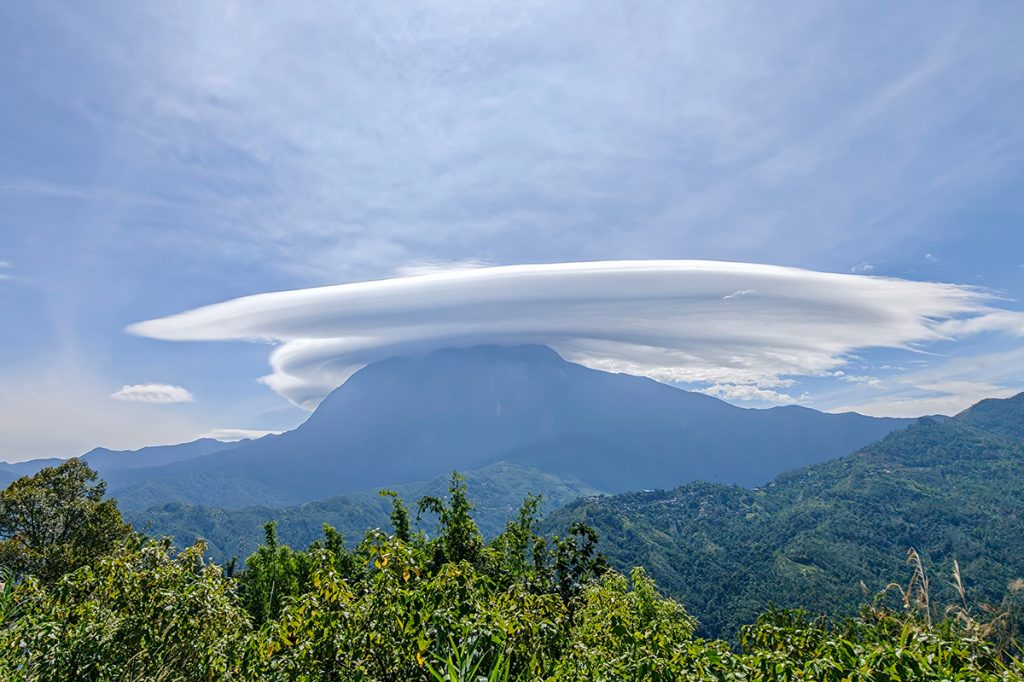
Reading clouds and cloud progressions is a large, separate subject, but a few cloud notes are worth mentioning in relation to wind forecasting. In mountain country, keep an eye out for lenticular clouds that form like a lens-shaped cap over or near peaks and high ridges. These are altocumulus clouds that have been smoothed by high winds aloft, and can make one think of flying saucers. Often, even in mostly fair-weather skies, they are a signal that winds will increase and wind gusts might soon appear at ground level. Lenticulars that grow and lower can be a sign of incoming, worsening weather.
In mountainous country, keep an eye out for flying-saucer-like lenticular clouds—a sign that the wind is likely to increase.
Squall lines approaching from the distance as a wall of dark or dark-bottomed, low-hanging clouds (with or without visible lightning) indicate that both wind and precip are on the way. Tall, anvil-headed, dark-bottomed cumulus clouds are showing ramped-up convection, which means strong winds. Shelf clouds are cumulus with a wedge-shaped formation on the leading edge (sometimes looking like shelves of stacked, partial discs), caused by gusty outflow winds. Any darkened storm clouds showing hanging bottoms with visible roiling or rotation are a warning that high winds are on the way.
A horizontal tube-shape spinning at the base of a cloud or squall line is a “roll” or “roller” cloud that is generating a gust front of high-velocity, down-rushing winds that can extend for a dozen or more miles and be extremely dangerous, toppling trees, ripping up tents, and throwing shrapnel through the air. Seek shelter when possible. If shelter or a windbreak isn’t an option for whatever reason in high-wind situations, lie flat on the ground, covering your head with whatever protection is available–your folded arms if nothing else. Wind speed at ground level is significantly reduced even from that blowing at head-height.
A valuable habit to cultivate is tracking wind direction and especially changes in wind direction while in the field. In particular, note veering or backing wind shifts. A veering wind (in the Northern Hemisphere) is one that changes direction in a clockwise progression–say from southwest to west to northwest–indicating the presence or approach of a high-pressure (fair weather) system. If it’s raining or storming, a veering wind-change signals the weather is clearing and will soon improve. A backing wind, one that is shifting counterclockwise–from southeast to east to northeast, for example–promises the opposite, the presence or arrival of a low-pressure system, which usually means atmospheric turbulence and inclement weather (or even, in some Eastern seaboard locations, a dreaded nor’easter storm).
It’s wise to remember that winds don’t need to be fast and strong to be potentially dangerous. Even a mild cool breeze can increase the risk of both dehydration and sunburn, for instance. Moving air causes more evaporative fluid loss, and the cooling effect not only dulls the thirst urge, it can inhibit awareness that one’s skin is being slowly broiled by ultraviolet radiation. Conversely, a modest breeze combined with wet or damp clothing is a slow but steady path to potential hypothermia when air temperatures are 55 degrees F or colder. And in seriously cold air, it doesn’t take a lot of airspeed to increase wind chill and the risk of frostbite or other frigid-weather maladies. No matter the time of year or the particular blend of field conditions, it always pays to pay attention to the wind.
These interesting African antelopes include the topi, tsessebe, blesbok, and bontebok.
Photo above: A group of bontebok in South Africa. Although blesbok also have white faces, they lack the bright white body markings of their close cousin, the bontebok.
The damalisc antelopes, genus Damaliscus, are close relatives to the hartebeests (genus Alcelaphus), with similar color and coat, preorbital glands at the inside corners of their eyes, and similar horns on both sexes. In short, a damalisc is almost a hartebeest—but not quite! The group includes topi, tsessebe, blesbok, and bontebok, all plains-dwelling herd antelopes. In terms of wariness, they may not be the sharpest knives in the antelope drawer, but there’s nothing wrong with their eyesight, and topis and tsessebes are among the most fleet-footed of African antelopes.
I always found it interesting that the record books list “damaliscs and hartebeests” together. Horns are a primary difference. Hartebeest horns grow from massive bases, then make abrupt turns, generally ending with rearward-pointing tips. The damaliscs are at least a third smaller, with round. ringed horns that grow in gentle curves.
Within genus Damaliscus, there are just two species: D. lunatus, topi, tiang, korrigum, and tsessebe; and D.pygargus, bontebok and blesbok. Whether in horn size or shape, or anything else, none are dramatic antelopes, none considered among Africa’s great prizes. No one has ever proposed a “grand slam of damaliscs!”
However, where they occur, damaliscs are an important part of the African scene. Sometimes they are common game, sometimes local rarities, depending on where you are. They and their hartebeest cousins are among the most widespread of African antelopes. The damaliscs are discontinuous, originally found from Senegal to Kenya, and from Ethiopia to the Cape, but only here and there.
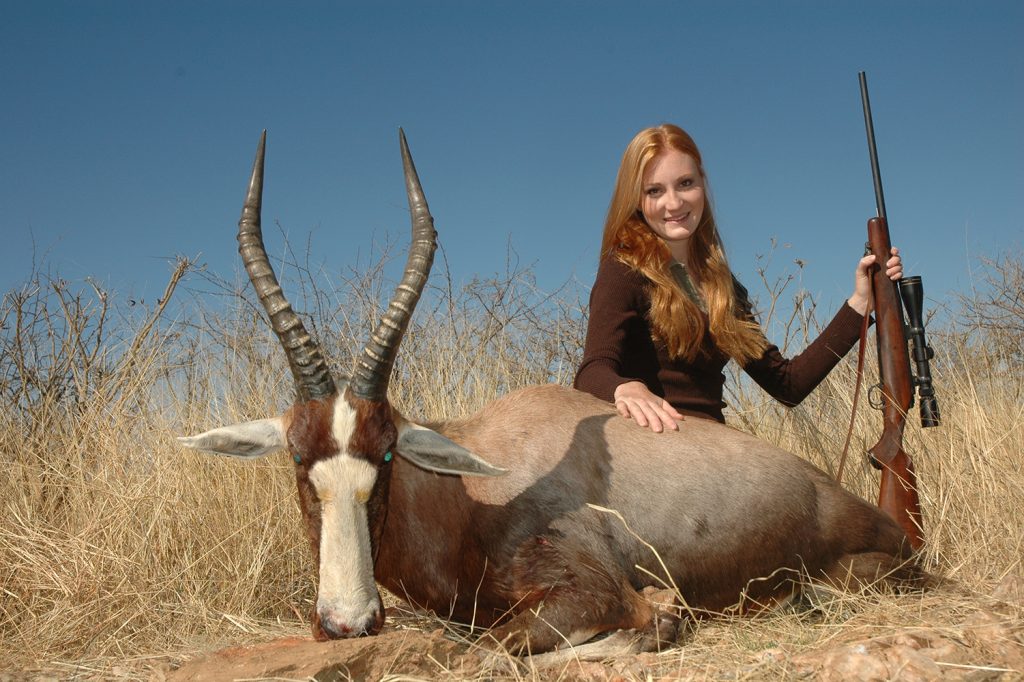
Blesbok (“buck with the blaze,” referring to the white forehead stripe) are common across South Africa and, although non-native, widely found across Namibia. Although susceptible to predators, blesbok are prolific. On safaris in Southern Africa, most hunters will take a blesbok. Like common animals worldwide, big blesbok are rare. If your PH says, “I think you should shoot that blesbok,” you probably should.
Brittany Boddington with an exceptional blesbok, taken in central Namibia. Blesbok are not native to Namibia, only South Africa, but they have been widely introduced and are common there, especially in southern and central Namibia.
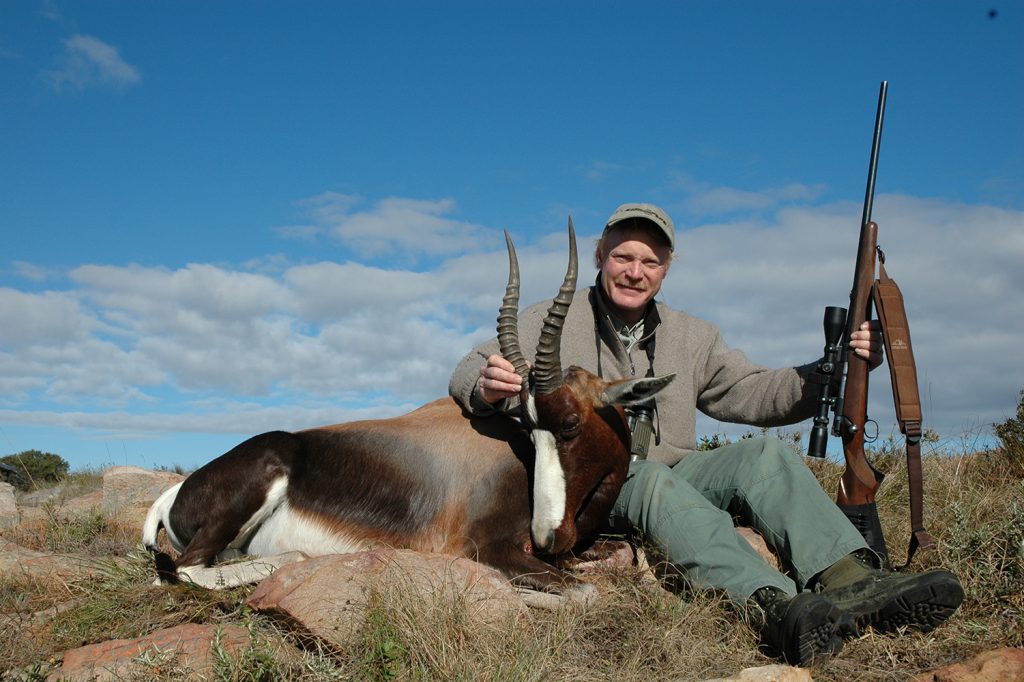
Blesbok and bontebok are subspecies, and will interbreed freely, so they cannot run together else one race will vanish. Slightly smaller, with bright white underparts, the bontebok is distinct, and almost became extinct. Primary home range was in the Western Cape, on a collision path with the Voortrekkers. Deriving from Dutch, “bontebok” translates as “patchwork buck,” referencing the white markings. In the early twentieth century, only seventy pure bontebok remained. Seventeen were captured, and in 1931 Bontebok National Park was established near Swellendam, South Africa.
Compared to blesbok, the bontebok has always been a rarity. All bontebok alive today, in numerous private herds, descend from those saved in Bontebok NP. When I took mine, it was behind a low cattle fence. It wasn’t a tough hunt, but it was technically free range. Today, “certified” bontebok herds must be behind game fences to prevent interbreeding with blesbok. Just this year, the Weatherby Foundation removed bontebok from their award ballot because it is no longer possible to take one free-range.
The bontebok is slightly smaller than the blesbok in both body and horn. The two races interbreed freely so, today, “certified herds” of bonteboks must be game-fenced to prevent them from crossbreeding with the more common and widespread blesbok.
The other damaliscs, tsessebe, topi, tiang, and korrigum, occur farther north, and all are spotty. The tsessebe (often spelled sassaby) is native to certain areas in northern Namibia, the Limpopo Valley, Botswana’s Okavango, Zambia’s Bangweulu, western Zimbabwe, and southwest Tanzania. Populations are often many miles apart. It seems unclear is this weird distribution is natural or caused over time by human influence. Either way, tsessebes are where you find them.
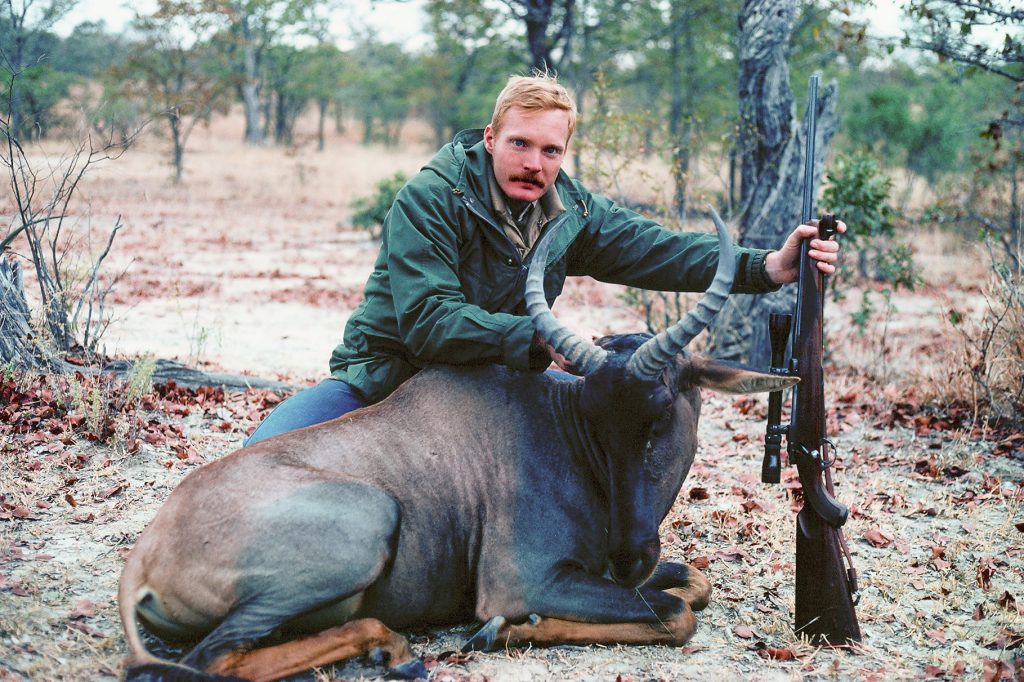
I shot my one and only tsessebe with Barrie Duckworth in 1979, near Bulawayo, one of the odd pockets where they occur. Since, I’ve seen them in Bangweulu, in the Okavango, and occasionally on game ranches in Namibia and South Africa. In 2007, Donna was with me on an elephant hunt in central Botswana with Johan Calitz. We got the elephant early, and Johan proposed we go to Maun, buy plains game licenses, and spend a few days at his Okavango camp. The Okavango was shifting to photographic safaris, so it was the last chance to hunt that beautiful area.
The author’s only tsessebe was taken in grassy plains near Rhodesia’s Matopo Hills in 1979, one of the “spots” in the tsessebe’s spotty distribution.
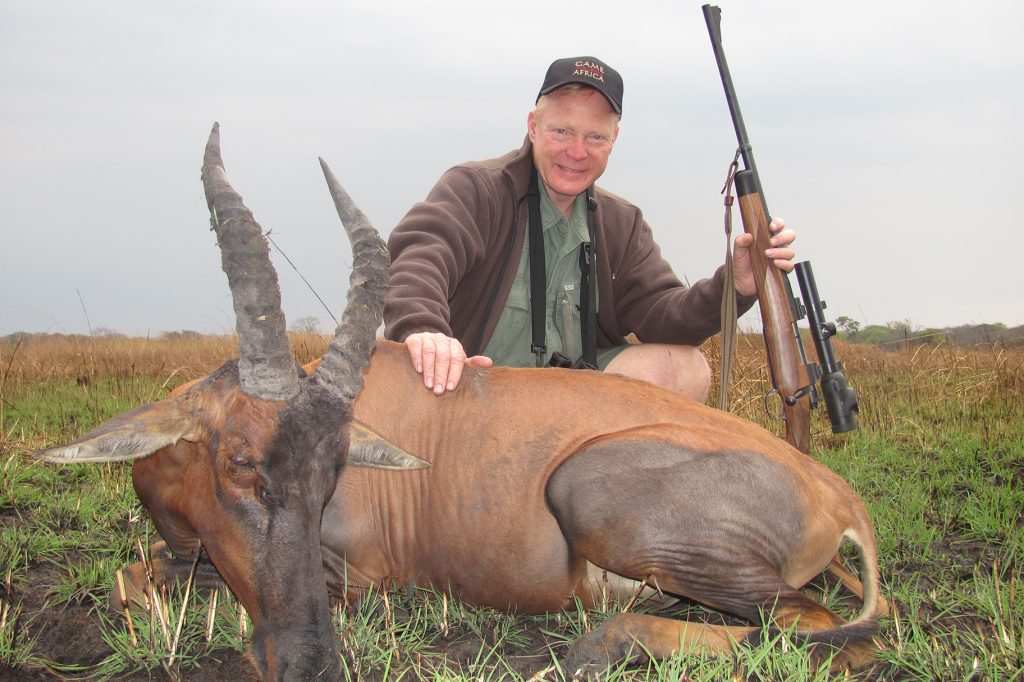
Donna had come down with something and was really sick. We made it to camp and she crawled into bed and crashed. Next day, the last thing she wanted to do was hunt, but the licenses were in her name. A tough lady, she rallied and took what were probably the last red lechwe and tsessebe to be hunted in the Okavango.
Topi and tiang are found in East Africa, well north of the nearest tsessebe. The two are visually indistinguishable. Both have a reddish coat with almost purple iridescence, in common with blesbok and bontebok. Although there is a small coastal population on the border between Kenya and Somalia, topi are primarily found in northwestern Tanzania, southwest Kenya, and on into southern Uganda. Considered common game where they occur, they are also spotty. On the upper Ugalla in 1993, Geoff Broom and I saw tracks, never an animal. They are also present in the Rungwa, but I never saw any.
The only topi I’ve ever seen were in Kigosi, western Tanzania, east of the more famous Moyowasi. There, they were plentiful, often seen in small herds on grassy plains. Hunting with Jaco Oosthuizen, I finally got a good topi. Again, there’s a major break, with the similar but slightly larger tiang primarily found in South Sudan’s East Equatoria, east of the Nile, tipping into northwest Kenya and northeast Uganda. They are also found—and huntable—in southwest Ethiopia. I never got down there, so I’ve never seen a tiang. I probably won’t ever see one, but there’s a lot of wildlife in East Equatoria. The tiang is just one of eight antelopes that have been hunted little, or not at all, since the last Sudan safaris in 1983. Maybe peace will break out in Sudan and such a safari can be possible.
A good topi, taken in the Kigosi block of western Tanzania in 2010.
There’s another almost-damalisc, or almost-hartebeest, that I’ve never seen. Only identified in 1887, the hirola occupies a small, isolated range in northeast Kenya and Somalia. They were long called Hunter’s antelope or Hunter’s hartebeest, after HCV Hunter, who collected the first specimen. Long lumped in with the damaliscs, the hirola has more recently been ascribed to its own unique genus and species, Beatragus hunteri. Lighter in color and smaller-bodied than topi or tiang, the hirola has lyre-shaped horns like impala, but thicker with more abrupt turns. Sadly, the hirola has been extirpated in Somalia and the current Kenya population is believed to number as few as 300. Although long protected, the hirola lives in a rough neighborhood and there is no zoo population. Critically endangered, the hirola could be the first African animal to become extinct in modern times.
There is one more damalisc that I have seen and hunted. Although it is similar to topi and tiang in appearance, the korrigum is slightly larger in both body and horn. Because of this, it’s often called “giant topi,” sharing the purple coloration of its cousins, but with dark legs instead of the tan limbs of topi and tiang. It once occupied a huge range across the Sahel, from Senegal to Chad. Old-timers (even older than me) told me of vast herds of korrigum in 1970s in the giant eland country between Chad and CAR.
Recent decline has been severe. Korrigum are gone from much former range and there are no vast herds. There are isolated populations in various national parks, with the largest numbers probably in Pendjari NP in Benin, and in Waza NP in northern Cameroon. Korrigum are on license in some adjacent hunting blocks in northern Cameroon, which is almost the only place to hunt korrigum right now.
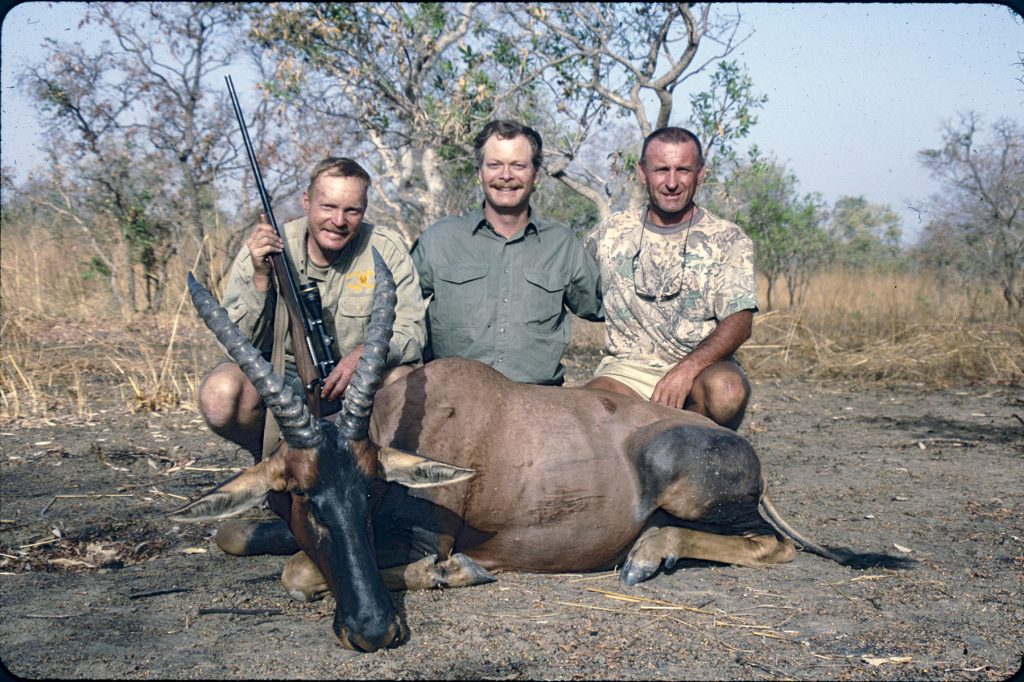
At the turn of the millennium, when the late Alain Lefol was hunting Chad, korrigum were on license and a number were taken. Although Chad is open again, as I understand it, korrigum are either not on license or not present in the areas currently hunted. In 2000, Chris Kinsey and I hunted in Chad with Alain Lefol. It was a wonderful free-wheeling safari across 500 miles of Chad, from the Ennedi Mountains near Libya, down through Dar Sila, to the CAR border. There, along the Aoukale River, out of food, low on water, with just enough fuel to get back to Ndjamena, we found korrigum. Chris got a big bull, and mine was big enough. I’m glad I had the opportunity.
The author, Chris Kinsey, and Alain Lefol with Kinsey’s excellent korrigum, taken on the Aoukale River in Chad in 2000. Often called “giant topi,” the korrigum is the largest of the damaliscs.
Ursus arctos is one of the most impressive big-game animals in the world.
Photo above: Guides and hunters in a Mountain Monarchs of Alaska fly camp in May 2024: Boddington, guide Dave Dye, guide Pete Mayall, hunter Matt Balise. Matt’s bear, on the right, is the largest, squaring well over 10 feet.
What’s the greatest game animal in the Northern Hemisphere? For some, it’s a big elk, for others a moose. You’ll get no argument from me if you pick a wild ram. What about the big bears, the world’s largest carnivores–North America’s only truly dangerous game?
The brown/grizzly bear ranges (today discontinuously) from the Pyrenees of France and Spain east across Eurasia, across what was once the Siberian land bridge to North America, down the western mountains. Almost within living memory, it lived as far south as Mexico’s Sierra Madre, and as far east as Hudson Bay. Across this huge range, the brown/grizzly is the same bear, Ursus arctos.
Out of human compulsion, we separate the brown/grizzly bears into regional groupings. The biggest brown/grizzly bears are the bears of coastal Alaska and, across the Bering Sea, on Russia’s Kamchatka Peninsula. These bears get big because of their high-protein salmon diet in the fall and their shorter hibernation period because of the warm currents from Japan. Although data is sparse, it wouldn’t surprise me if the brown bears from Japan’s northern islands were biggest of all.
As a bucket-list item, many hunters want one big bear. Doesn’t matter if it’s brown or grizzly, just so it’s big. I shot my first grizzly in 1974, in British Columbia. Youngster that I was, I was ecstatic. Although a boar, it wasn’t big.
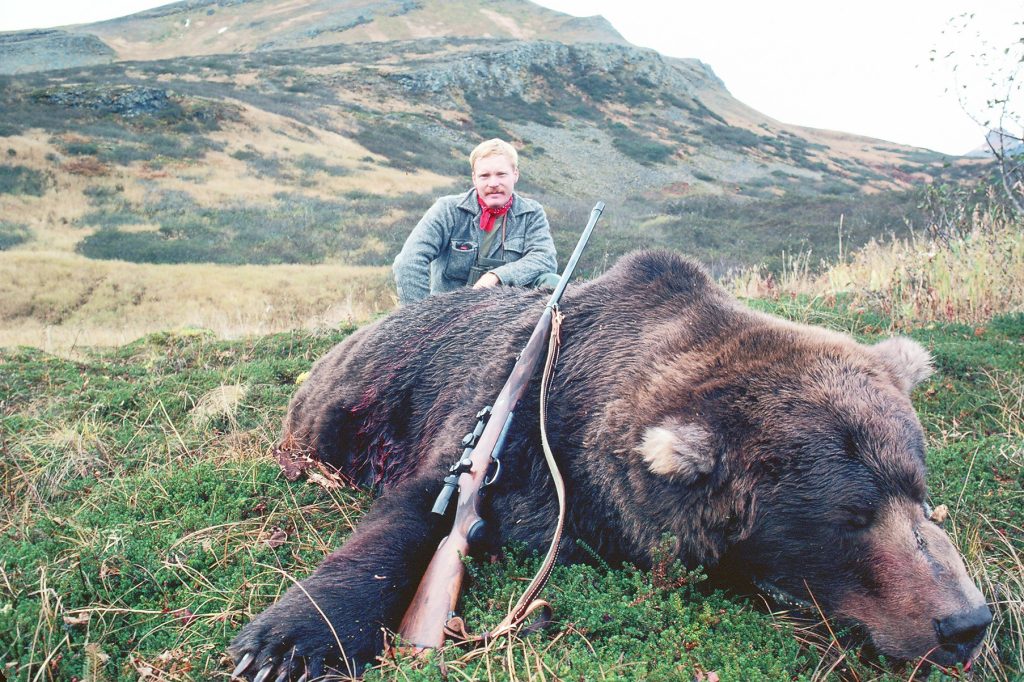
In 1981 I was the fledgling Editor of Petersen’s HUNTING, and I had a chance to hunt brown bear with the legendary Don Johnson out of Cold Bay, near the bottom of the Alaska Peninsula. On the first day, we saw a bear at great distance. Guide Michael Joe “Slim” Gale insisted it was a big bear. He was right, and we got the bear. Hours later, we got the skin down to a sandbar where Don might be able to land a Supercub. On that sandbar, we laid out the skin, no stretching, for the “Alaskan “square”: 10 feet 8 inches by 11 feet 2 inches. By any measurement, it was a ten-foot bear. With only slight exaggeration, it could be called an 11-footer. The story I wrote was titled “Giants Still Walk.”
This monster bear was taken in Alaska in 1981, measuring nearly 11 feet by “Alaskan square.”
One colleague called me a liar. Another wrote that such bears don’t exist. Yes, they do, but they are rare and you need luck, which I had in October 1981. I have always known I can never beat that bear. Problem is, an encounter with a big bear is such a special experience that I haven’t been able to call it quits.
I did several hunts in southeast Alaska with my old friend Jim Keeline. We never got a brown bear, but that was my fault: I flubbed a shot at a fine bear. It also took me several tries to get a big grizzly in Arctic Alaska; my timing was always too early or too late. Hunting with Dave Leonard, I caught it right on the third try and took a wonderful bear.
I got lucky again in the spring of 1992. At Ronald Reagan’s suggestion, Gorbachev tore down the wall. The world changed, and Russia’s great hunting became available. The Hunting Consortium’s Bob Kern was among the first in, and Joe Bishop and I headed to Kamchatka. At first, it didn’t feel lucky. We hit Petropavlovsk at the same time as a spring blizzard, so no bears were out.
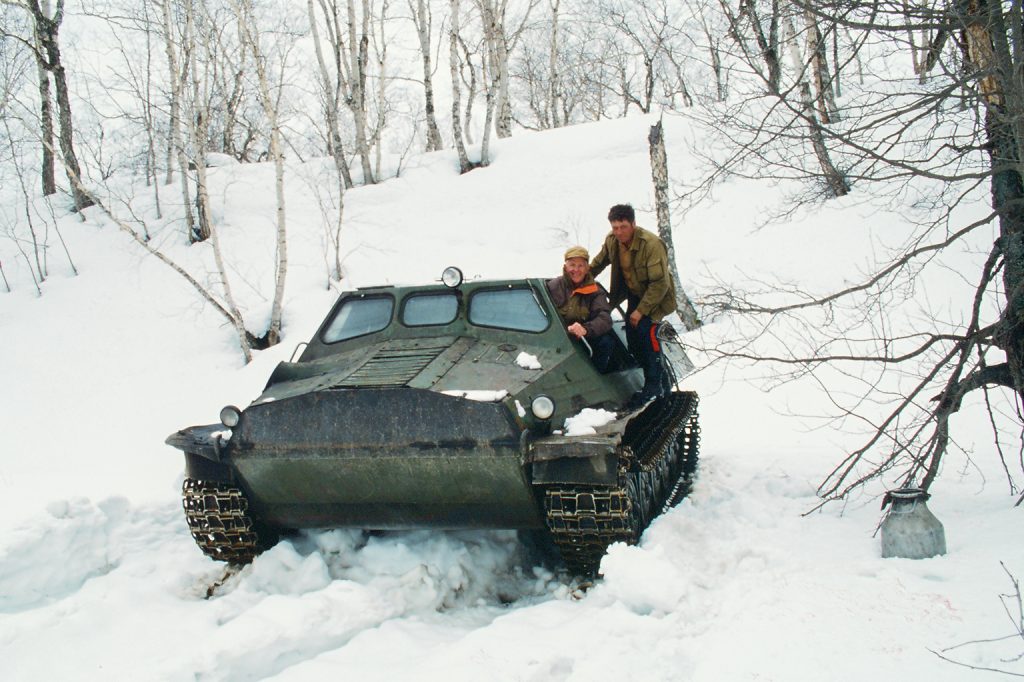
Our outfitter had a TBD, the logistics variant of Russia’s famous BMP armored vehicle. He was proud of it, so I asked how he’d gotten it. Six months earlier, when the Soviet Union dissolved, a Russian colonel wanted a bear rug to take home to his wife in Moscow. They’d made a trade. At the time, I was a lieutenant colonel, commanding an infantry battalion. I had a good laugh pondering what would happen to me if I traded a Hummer for a bearskin.
Joe Bishop, clanking through the snowy woods in May 1992, in a TBD, logistics variant of Russia’s BMP fighting vehicle. The local outfitter traded a Russian colonel a bearskin for his “tank.”
We clanked through the snowy woods in our tank, then did some hunting on snowmobiles and on cross-country skis. Joe Bishop, from Colorado, was an accomplished skier. Me, well, I’d never been on cross-country skis. I took a lot of spills and kept Joe laughing with creative Marine swearing.
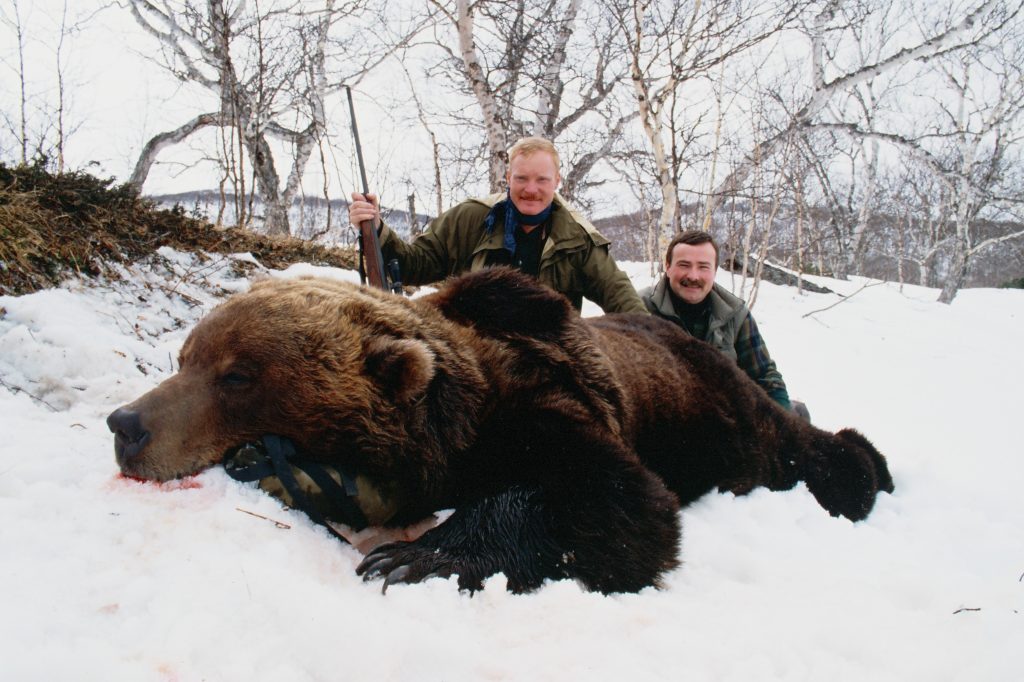
It warmed up quickly. The white stuff receded, I fell down less, and the bears came out. Joe and I both took dandies, Joe’s a big light-colored boar, mine a dark, burly brute with a head like a bucket. Kamchatka Peninsula has the world’s densest population of brown/grizzly bears, with estimates varying from 10,000 to more than 27,000. After skinning my bear, Bob Kern and I laid the skin out flat on clean snow. Although it was a big bear, the best we could get out of it for the “Alaskan square” was 9½ feet. By skull measurement, though, it was the SCI world record for several years. It has now slipped to 24th place in that listing.
The author and Bob Kern with a fine Kamchatka brown bear, taken in May 1992. By “Alaskan square,” this bear was 9.5 feet, a good bear. By skull measurement, it was the SCI world record for several years.
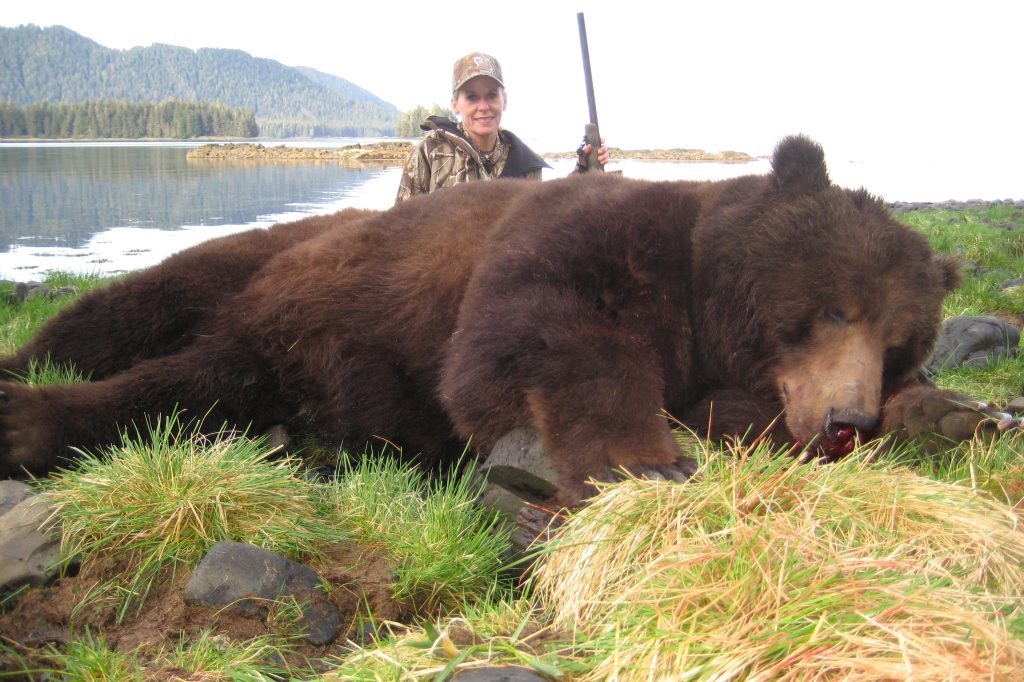
At their very best, I think Alaska produces bigger bears. That’s especially true in the famous areas: lower Alaska Peninsula, Kodiak, Unimak. On my wife, Donna’s, one-and-only brown bear hunt, she took an honest ten-foot bear on the first day, hunting with Alisha “Mutts” Rosenbruch-Decker on the bottom end of Admiralty Island. Hers was Glacier Guides’ largest bear that season.
Donna Boddington took this big bear at the southern tip of Admiralty Island. Great bear country but not known for bears this big. Taken on the first day of her hunt, it was exactly 10 feet by “Alaskan square,” and was Glacier Guides’ biggest bear of the season.
Since the early 1990s, Kamchatka’s brown bears have offered a sound alternative. While Alaska can produce larger bears, even in the most famous places, not every hunter gets a ten-footer. And the average bear in Kamchatka beats the Alaskan average. We all like to talk about exceptional animals, but a nine-foot bear is a big bear. Anyone who passes such a bear, first day or last, is making a mistake. The Alaskan average is smaller, the Kamchatka average about there.
Overall success is higher in Kamchatka, enabled by the large bear population and snowmobile mobility through most of the spring season. Brown bear hunts in Kamchatka are less costly than Alaska, with a second bear allowed. For thirty years, I suggested to hunters in search of a big brown bear that they consider Kamchatka.
Then the tanks rolled into Ukraine. I had a hunt in Russia planned when the war started. Some hunters went, although in smaller numbers. At the conventions this year, I was delighted when Bob Kern told me he was resuming operations in Russia. His Kamchatka bear hunts have just concluded, and they had a great season with some great bears taken, no problems with permits or firearms importation. Camps, equipment, food, conditions have been significantly upgraded since Joe and I did that early hunt. A retired military man like me, Kern is careful and I’ve trusted him for forty-some years. There’s some hunting I’d still like to do in Russia. I’m making plans, but maybe not for a big bear. I might have scratched that itch for the last time.
In October 2023, I decided I must have one more encounter with a big bear. I went to old friend Dave Leonard’s area, Mountain Monarchs of Alaska, at the tip of the Alaska Peninsula, hunting in Izembek Wildlife Refuge around the volcanoes, an area famous for monster bears. I saw the biggest, most beautiful bear I’ve ever seen and stalked him three times. By the time we got there, he’d vanished. Then fierce Aleutian weather closed in, sending us back to our tents. The Peninsula brown bear season is “odd-number falls” and “even-number springs.” I could have waited until fall ’25, or I could try again in spring ’24. Since I no longer buy green bananas, I went back six months later.
The weather was kinder and the bears were out. I took a gorgeous, no-brainer boar 24 hours after I landed in spike camp. Twenty-four hours later, my camp-mate, Matt Balise, took an even bigger bear. Mine was under ten feet, his well over.
Alaska produces the biggest bears, and the known “big bear areas” produce most of the giants. Accept as reality: It’s tough hunting, success not given. So, if you want a big brown bear, Alaska and Kamchatka are your primary choices. I doubt I’ll get that itch again. If I do, I’m curious to see how Kamchatka has changed since 1992.
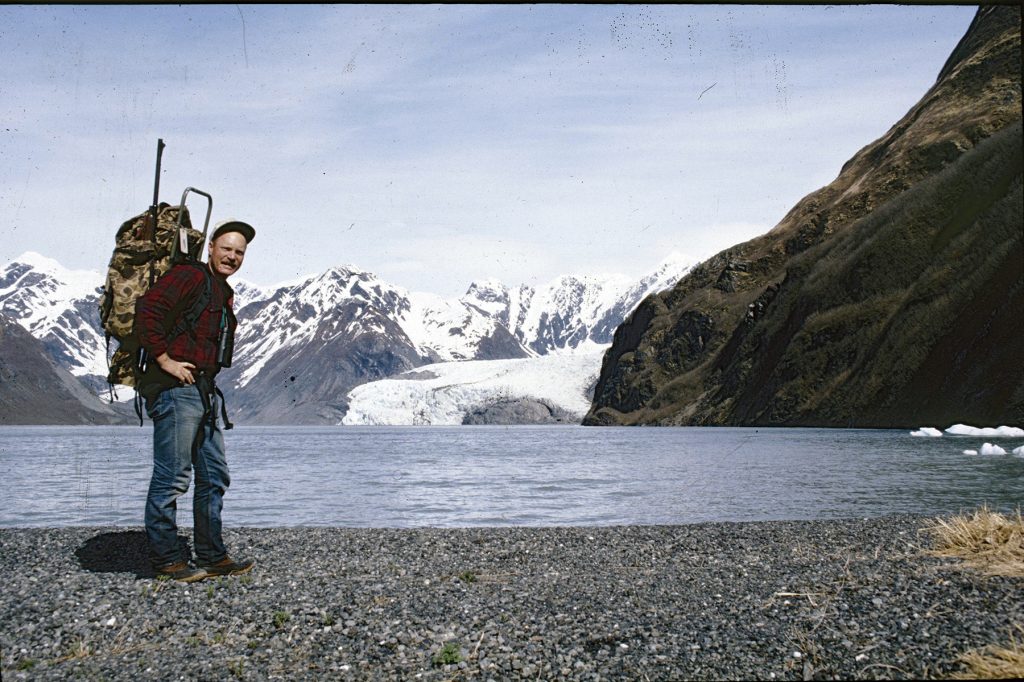
In the 1980s and 1990s, the author did several bear hunts in the glacier country of southeast Alaska.
What, exactly, makes the Creedmoors, PRCs, and other new cartridges different from our old favorites?
Photo above: The 6mm Creedmoor wasn’t necessarily designed to spit bullets faster than the old .243 Winchester, but to shoot longer, more aerodynamically efficient, higher B.C. bullets equally fast. The results are less drop, less wind deflection, and more retained energy at all distances.
A centerfire rifle cartridge released in 2007 has become the blueprint for twenty-first century cartridge design. Its performance, popularity, and success initiated a paradigm shift that threatens to sweep the .270 Winchester, 7mm Remington Magnum, .300 Winchester Magnum, and perhaps even the .30-06 Springfield into the dustbin of history.
Whoa! Hold on a second there. Did I just write that? Did you read it correctly? I’m afraid so. I’m no swooning devotee of this particular cartridge. Nor am I writing this to advance sales of it or any others built on its blueprint. But just as the .30-06 drove twentieth-century cartridge design after 1906, so has the 6.5 Creedmoor influenced twenty-first century cartridge design. We hunters don’t have to embrace this, but we should understand the formula and how it changes ballistic performance to equal or beat older cartridges, and how this might change the way we hunt. Or at least the way we shoot when we hunt.
Legions of shooters reject the 6.5 Creedmoor as nothing more than the 6.5×55 Swede of 1894 in a different dress. Zealots champion it as the most accurate, efficient, and deadliest small-caliber centerfire that ever warmed a barrel. The reality is somewhere between those extremes, but that’s not the gold nugget we’re digging for here–the blueprint is. And that was drawn up by the combined efforts of Dennis DeMille of Creedmoor Sports (purveyors of precision target rifles, ammunition, and ancillary gear), Dave Emary, then chief ballistician at Hornady, and Joe Theilen, then assistant director of engineering at Hornady.
The goal, as initiated by match competition shooter DeMille, was to create the ideal, factory-loaded cartridge that would produce the kind of consistent accuracy and trajectory that could win “across-the-course” match-shooting competitions. This meant out-of-the-box precision, efficiency, mild recoil, and long barrel life with mass-produced ammo and rifles. The new cartridge needed a balance of ballistic performance, meaning minimal drop and wind deflection with the side benefit of high retained kinetic energy. Emary realized these same characteristics would make an exceptional hunting cartridge, too.
With the .260 Remington and 6.5×47 Lapua as guides, the team soon configured the Creedmoor. The resulting design (based, to no one’s surprise, on the rim and head diameters of the .30-06) didn’t look radically different than several existing cartridges. The new Creedmoor did not produce record muzzle velocities, but its mix of performance benefits pushed it steadily up the leaderboard. By 2020, virtually every rifle manufacturer in the world was chambering for it. Around that same time, it became the hottest selling centerfire rifle ammunition in the USA, beating out the .308 Winchester for the top spot.
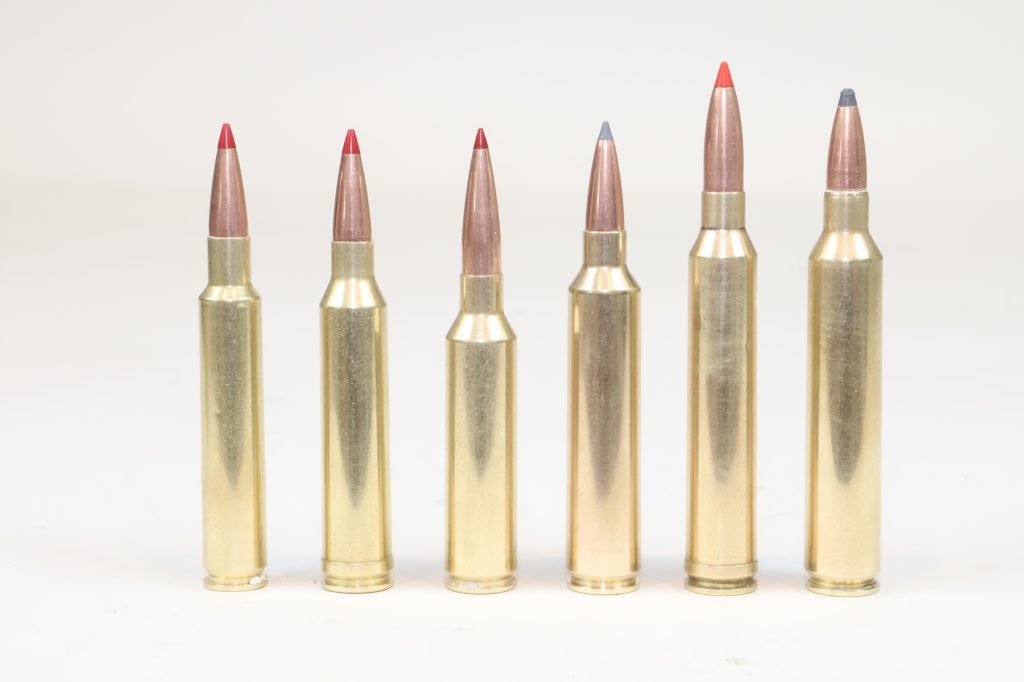
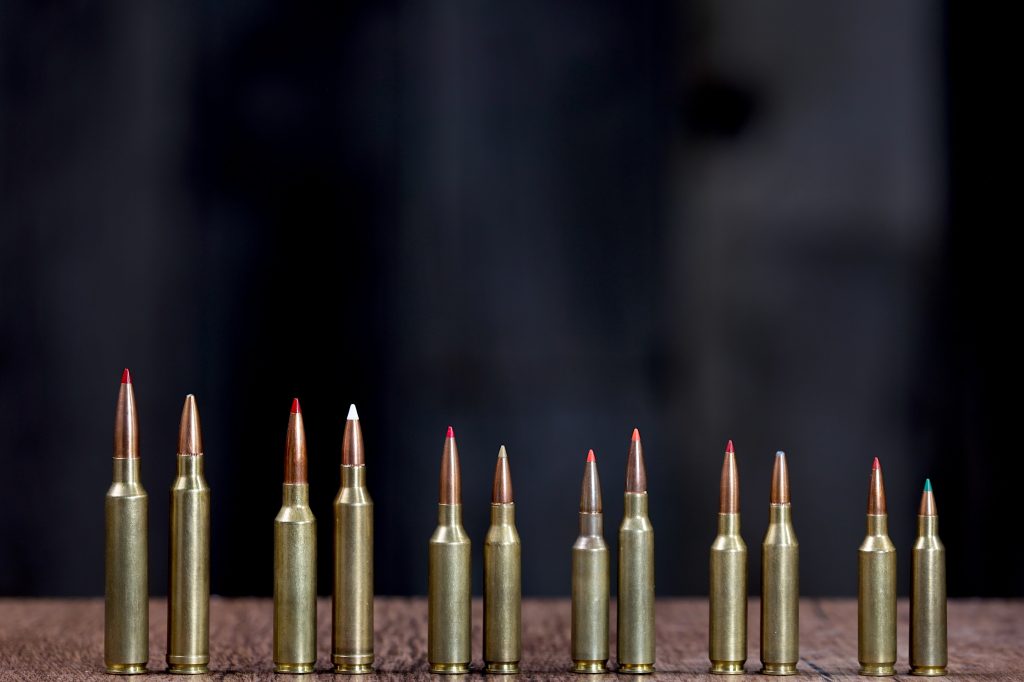
This photo shows modern versions of the old standards in each caliber, compared with newer versions. You can see how the new rounds have more “head height” for longer bullets that don’t impede below the neck-shoulder junction. From left: .300 PRC and .300 Win. Mag.; 7 PRC and 7mm Rem. Mag.; 6.5 PRC and .260 Rem.; 6.5 Creedmoor and 6.5×55 Swede; 6mm Creedmoor and .243 Win.; .22 Creedmoor and .22-250 Rem.
Critics belittle the 6.5 Creedmoor project as merely copycat work, but that ignores the evolutionary development of centerfire cartridges going back to at least the 8x50mm Lebel in 1886. This rimmed, bottlenecked French military round set the table for what became the twentieth-century model. The Lebel was the first to burn smokeless Poudre B, three times more powerful than blackpowder. Two years later the German military tweaked the French design by pouring smokeless powder into a rimless case with less radically tapered sidewalls to make the 8mm Mauser. The die had been cast, and the race was on.
By the end of the nineteenth century, virtually every military in Europe and, for that matter, the rest of the world, had adopted the new standards. The US military joined by stretching the 8mm Mauser a quarter of an inch and necking it down to hold a .308-inch bullet, borrowing the spire point shape from, again, the pioneering French. The resulting .30-06 cartridge, topped with a 150-grain spire point bullet, then began its evolutionary transformation into the .256 Newton, .270 Winchester, .35 Whelen, .280 Remington, .25-06 Remington, 6.5-06, .280 Ackley Improved, and .338-06. Each of them fit the “standard-length” action accommodating 3.340-inch-long cartridges.
In the early 1950s, Winchester shortened .30-06 brass to give us the .308 Winchester, which was soon reworked into the .243 Winchester, .358 Winchester, 7mm-08 Remington, .260 Remington, .338 Federal, and a dozen wildcats lost to history. Each of those fit within the 2.81-inch “short-action” family.
Add to this menagerie the host of belted magnums and fat cartridges based on the .375 H&H, .404 Jeffery, and others, and you have the extensive and redundant twentieth-century model of cartridge development. Most of it hinged on increasing powder supply in a handful of action sizes and case diameters to increase muzzle velocity and drive traditional bullet weights faster and faster to reduce drop and deflection.
Then came the laser rangefinder. Once shooters in the late 1990s discovered they could pinpoint target distances, they realized they no longer needed hyper velocity to offset poor range estimates. Instead, they could match any bullet’s trajectory curve to known ranges and compensate by dialing scope turrets or selecting appropriate drop compensation reticle lines.
The most significant remaining obstacle was wind deflection. No matter a bullet’s velocity at launch, it deteriorated with distance. The longer a bullet remained in the air, the farther any crosswind directed it off course. Bullets shaped long and lean slipped atmospheric drag, flattened recoil, and reached targets sooner. They have a higher ballistic coefficient (B.C.), the numerical measure of a projectile’s ability to overcome air resistance in flight. Shooters began to appreciate this aerodynamic efficiency. Alas, most rifles weren’t built to maximize it. The old, standardized rifling twist rates were usually too slow to stabilize long, heavy-for-caliber bullets.
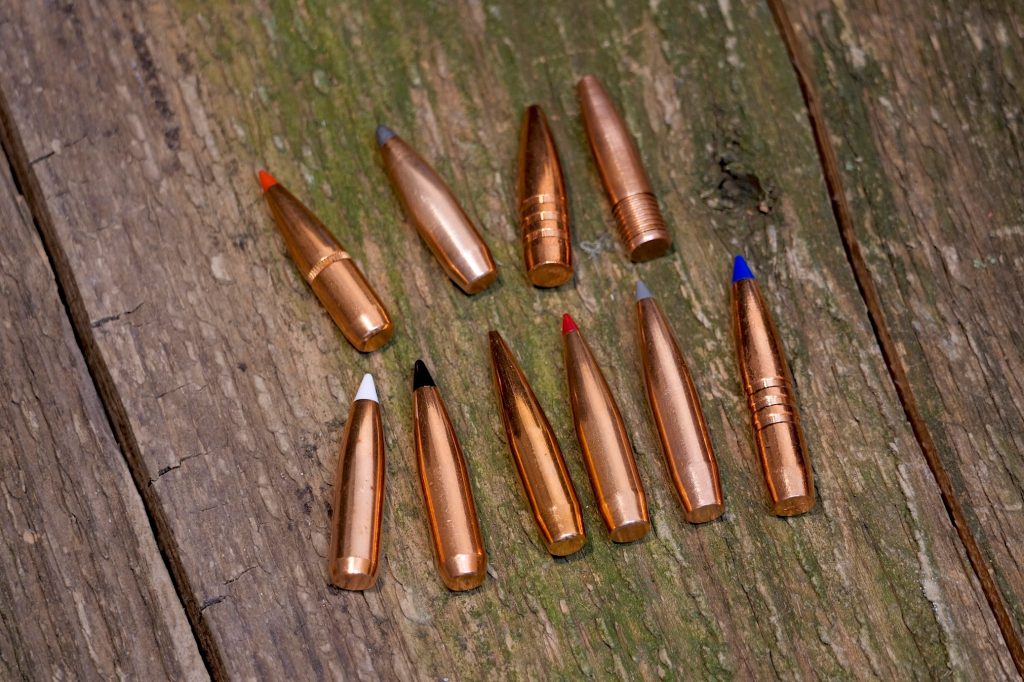
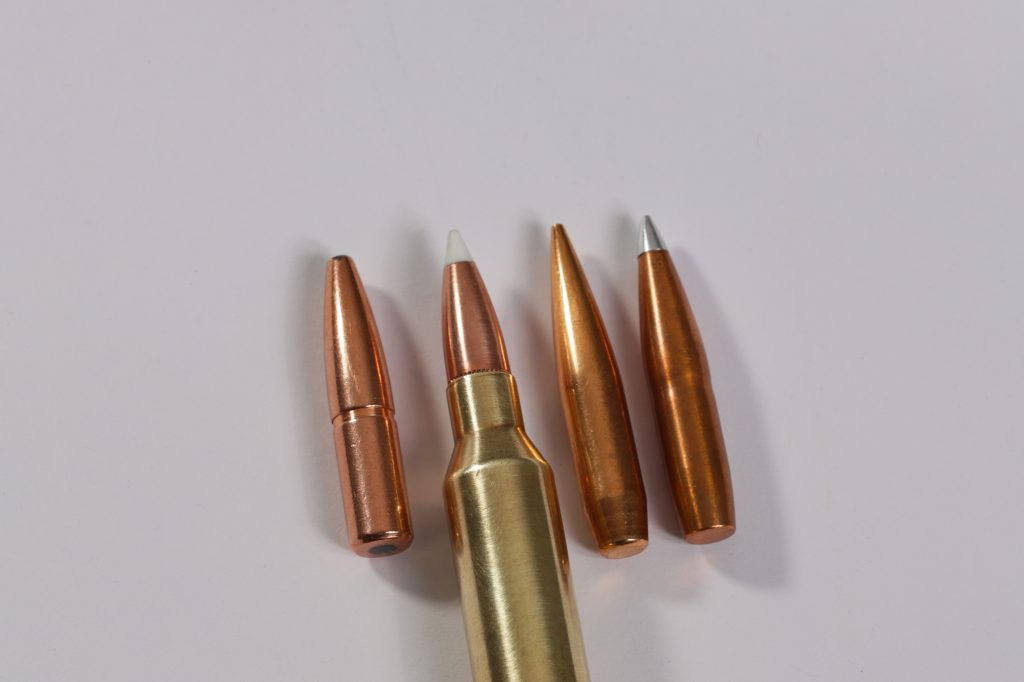
Old-style .284 bullets at top, new-style ones at the bottom. The length difference is obvious.
It strikes one as odd that rifling twists didn’t change with the times. It’s understandable that ammo manufacturers didn’t want to confuse shooters with bullets that wouldn’t stabilize in older rifles, but why didn’t they ramp up twists in new rounds such as the .260 Remington, .270 WSM, 7mm SAUM, or even the 7mm-08 Remington of 1980? The concept of aerodynamic efficiency had emerged with the Minie ball way back in 1848. Sleek bullet form improved with spire points and boat tails in the 1890s, advanced further with secant ogives and polymer tips in the late twentieth century, but didn’t really explode into shooters’ or manufacturers’ consciousness until the Creedmoor began outshooting the venerated .308 Winchester at extreme range. The insanely high .580 to .625 B.C.s of 140- to 143-grain .264 bullets moderated long-range wind deflections as well as did the 200-grain and heavier bullets fired from .30-caliber magnums–with much less recoil.
Here, then, was the golden nugget. Not only did the little 6.5 Creedmoor shoot flatter, recoil less, and deflect less in wind than the .308 Winchester, but it also retained more bullet energy. By 2010, the aerodynamic bullet evolution was becoming a B.C. revolution.
Today, the 6.5mm Creedmoor “blueprint” is apparent in a host of twenty-first-century cartridges, including the .22 Creedmoor, 6mm Creedmoor, .25 Creedmoor, 6.5 PRC, 6.8 Western, 7mm PRC, and .300 PRC. Because its influence is growing, hunters should understand what makes it different, and whether that difference is enough to matter.
Here are the features of the new twenty-first-century cartridges that matter, ranked in no particular order:
Heavy-for-caliber, long, high-B.C. bullets: Minimizes drag, which decreases flight time, decreases wind deflection, and retains more kinetic energy.
Head height: This allows seating of long, high B.C. bullets without full shank diameter intruding into powder space.
Minimal body taper: Maximizes powder space, minimizes back thrust pressure on the bolt.
Short, wide body: Shorter powder columns generally ignite and burn more evenly and impart more energy to the bullet because the initial powder burn/gas pressure near the primer is not wasted pushing the upper stack of powder before it burns.
30- to 35-degree shoulder: Maximizes powder space, provides positive headspacing, improves case-to-bore alignment, reduces neck stretching for extended case life (in handloading).
Longer neck: Aids bullet alignment with bore for enhanced accuracy.
Moderate powder capacity: By balancing powder capacity with anticipated bullet weights that lead to muzzle velocities in the 2,700 to 3,100 fps range, accuracy is easier to achieve.
Then there are the rifles. Rifles for these new cartridges are built with faster rifling twists to better stabilize the long, efficient, high B.C. bullets. There are also chamber specifications that enhance performance. Throats–the space in which the bullet perches when a cartridge is locked into battery–are reamed for minimal tolerances less than 0.001-inch-over-bullet-diameter range. This aids bullet alignment with the bore. Most twentieth-century cartridge throats are SAAMI-specified with as much tolerance as 0.007-inch.
New rifle chambers also feature a more consistent leade. This is the taper or ramp from the throat into the bore. Tight tolerances here mean the ramps to each land match perfectly, starting bullets straight into the barrel.
SAAMI specs on the chamber dimensions of rifles chambered in these twenty-first-century cartridges are tight–what many refer to as “match grade.” This could have been done with any rifle and cartridge from the twentieth century, but as a general rule tolerances were a bit more generous then because average accuracy was adequate for the limited ranges at which game was taken. Greater chamber tolerances made it easier for mass-produced ammunition to always fit and function in mass-produced rifles.
Traditionalists often defend twentieth-century cartridges and rifles by correctly pointing out that they just plain work. Deer, elk, moose, and bears haven’t gotten any tougher. So why do we need new cartridges or high B.C. bullets? Why this fixation on quarter-minute accuracy when rifles that shot 1.5- and even 2-MOA were good enough for grandpa?
There are no absolute answers, although one can argue that Daniel Boone killed whitetails and even elk with his flintlock muzzleloader and round balls, so who really needs a .30-06 or .257 Roberts? Degrees of accuracy, bullet energy, and muzzle velocity are personal choices. If you are satisfied with the recoil, rifle length and weight, muzzle velocity, bullet weight and construction, ballistic drop and wind deflection from your current cartridge and rifle, stick with them. But if you are intrigued by the reduced wind deflection, increased out-of-the-box precision, and higher retained energy inherent in twenty-first-century cartridge designs, you might want to experiment with one of them.
The SAAMI maximum overall cartridge length of 3.290 inch means 7mm Rem Mag chambers and magazines will not accommodate today’s longest, heaviest, highest B.C. bullets unless they are seated deeply into the powder space. In contrast, the 7mm PRC is designed to fit SAAMI-spec chambers with the longest bullets seated no deeper than the neck/shoulder junction.
Long before I was born, she was blazing hunting trails for my generation to follow.
Photo above: My mom, Loretta Berger, practicing with her recurve bow (while pregnant) in 1958.
When my mom was a little girl in the 1930s, her father was a Scoutmaster. His Boy Scout troop was always doing cool outdoor things—camping, hiking, shooting, building campfires. Grandpa used to chuckle when he told me how mad Mom got when, at age five, she was told she couldn’t be a Boy Scout. She wanted to do all those fun things, too.
Grandpa wasn’t a hunter, but he did teach Mom a lot of the same skills he taught his Scout troop, and she grew up loving the great outdoors. When she got together with my dad in the mid-1950s, she finally had an enthusiastic mentor to teach her to hunt. Years of deer hunting with a recurve bow and her trusty Marlin .30-30 followed, with many happy hours spent in the Pennsylvania woods.
She was a stay-at-home mom, while my dad taught at the local high school. The two of them always hunted together on the opening days of the buck and doe seasons, which were school holidays in northern Pennsylvania. Dad would have to go back to work after each opening day, so if Mom didn’t have her deer yet, she’d head back out into the woods on her own.
One of her second-day success stories occurred one snowy December morning in the early 1970s when she drove her snowmobile up on a ridge behind our house, parked it, and hiked out to a good deer crossing she knew about. A couple of hours later, she shot a nice doe. After dressing it out, she lashed it to the rear of the snowmobile and skidded it neatly back down to the house, where it was waiting for Dad to skin and quarter when he arrived home that afternoon.
As a hunting-obsessed youngster shuffling along in both of their boot tracks every fall, I had no idea at the time how unusual it was to be part of a family where hunting with both Dad and Mom was the norm.
Mom passed in 2015, but I think of her every day. Much has changed in the hunting world, mostly for the better. Women are a more visible presence in the deer woods and in hunting camps across the country than they were in her day, when none of her female friends hunted. Today, women are fairly well represented in the hunting media, the firearms industry, and the guiding community, and two globetrotting women have even won the prestigious Weatherby Award. Just about every successful hunting outfitter today is happy to accommodate couples and families, as well as women hunting on their own. It wasn’t always so.
For much of this, we female hunters of today have women like my mom to thank—true hunters who took to the woods simply because they loved it, as well as men like my dad who welcomed them with enthusiasm and were thrilled to have a life partner who was a hunting partner as well. Their influence may have done more than we will ever know to ensure that our hunting traditions will be around for a long time to come.
And on a personal level, her fearless example steered me straight into a life filled with unforgettable adventures in the great outdoors—a truly magnificent gift. Thanks, Mom.
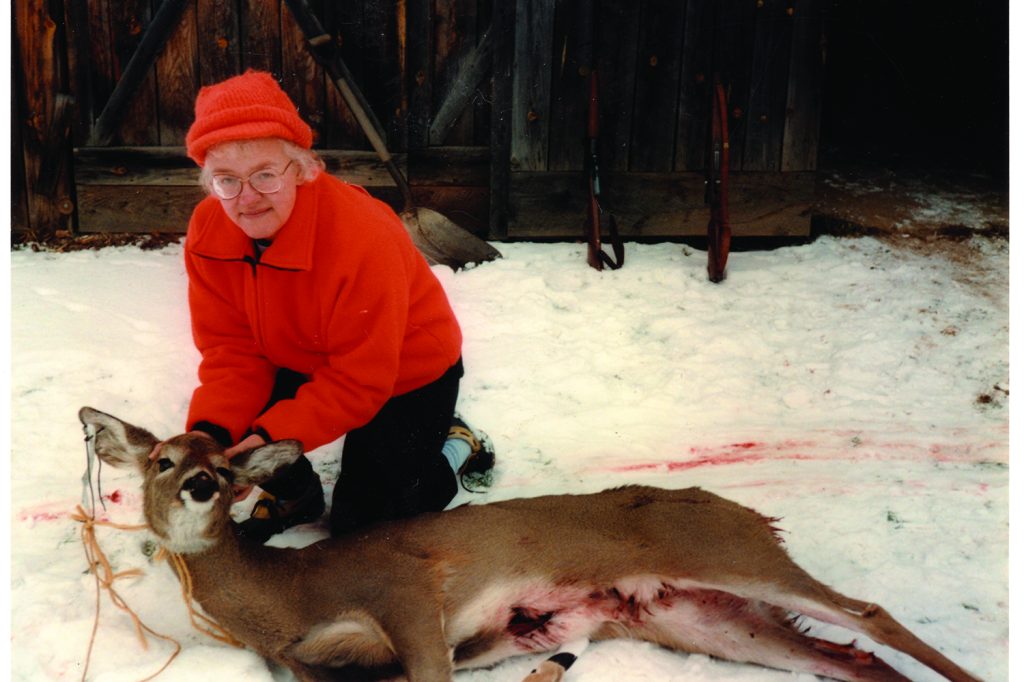
The author’s mom posing with a whitetail doe she shot in the mid-1980s with her .30-30.
You can never go wrong carrying this classic caliber.
Photo above: This big Texas whitetail was taken with a new Ruger Glenfield in .30-06 loaded with 180-grain Swift A-Frame bullets.
It was the last day of the Texas deer season, deep into the last (and best) hour. Movement in the trees. Heavy body, thick neck. Before I could see antlers, I knew this was an older buck. When he stepped clear I saw good mass and width—a big, mature eight-pointer.
He stood quartering to me, head down. I put the cross hairs on the point of the on-shoulder and pressed the trigger. The buck was down so fast he almost appeared to bounce. Well, the presentation was good, shot placed where I wanted. And I hit him with a powerful rifle, a .30-06.
America’s military cartridge through both World Wars, Korea, and countless smaller actions, the .30-06 was also America’s most popular sporting cartridge for most of the twentieth century. Still common, still effective, but against successive blizzards of brave new cartridges, the .30-06 is often overlooked. It’s been years since I’ve had a new test rifle in .30-06 in my hands. This rifle was Ruger’s new Glenfield, a plain-Jane bolt-action. On the range, it grouped far better than an inexpensive rifle really should. In the field, it pounded that buck.
That’s what the .30-06 will do. I have often said that the .30-06 is needlessly powerful for deer-size game. But it works. Against all those sexy new cartridges, the .30-06 has stood the test of time and stands up very well.
I’ve written this before, but it bears repeating: The .30-06 is the most powerful cartridge ever adopted by a major military. As a sporting cartridge, it comes into its own as an elk cartridge and remains, in my opinion, the most ideal choice for African plains game. Not as much recoil as a magnum, yet devastating efficiency on the wide range of antelopes, small to large.
This excellent Colorado 6×6 was taken near timberline. This was the first elk the author took with a .30-06, a left-hand Remington M700, using a 165-grain Remington Core-Lokt bullet.
Although old, it is not slow. Today, the most common loads are a 150-grain bullet at a speedy 2,910 fps; 165 grains at 2,800; and 180 grains at 2,700. Note this last: That’s the same velocity as the vaunted 6.5 Creedmoor with a 140-grain bullet. Sure, the ’06 kicks more, but with more frontal area and bullet weight, there isn’t much you can’t do with a .30-06 and a 180-grain bullet. If you want more, the old standard for the largest game was a 220-grain bullet at a credible 2,500 fps. Despite variance in velocity and bullet weight, all four loads produce close to 3,000 ft-lbs, a lot of energy.
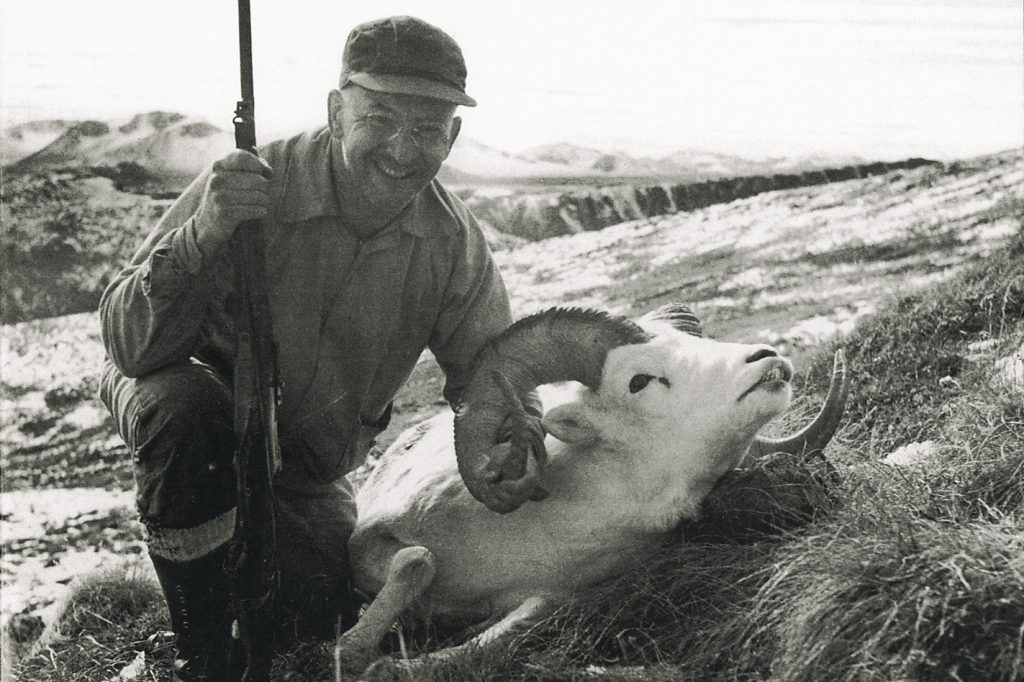
As the .375 H&H is on larger game, the .30-06 is the jack-of-all-trades for medium game. Even Jack O’Connor, patron saint of the .270, conceded in letters (never in print) that the .30-06 was more versatile. In the 1950s, Grancel Fitz was the first person known to take all species of North American big game. Fitz used one rifle, a Griffin & Howe Springfield in .30-06. A generation later, Dr. J.Y. Jones accomplished the same feat, using only his battered Remington .30-06. “North American big game” includes four sheep and a goat, plus Alaskan brown, grizzly, and polar bear. And bison and walrus, both very large.
Grancel Fitz with his first wild sheep, a Dall ram, taken in 1935 with Fitz’s Griffin & Howe Springfield in .30-06. Twenty years later, Fitz would be the first person to take all 29 varieties of North American big game, all with this .30-06.
The .30-06 made its bones in Africa on the 1909 Roosevelt safari, both Kermit and his dad, Theodore, taking prodigious quantities of game, small to large, with 220-grain bullets. In 1933 Ernest Hemingway relied on his Griffin & Howe Springfield because he hated the heavy trigger on his .470 double. He took black rhino, buffalo, lion, plains game. On his first safari, Robert Ruark relied on a Remington .30-06 for his plains game. Jack O’Connor’s wife, Eleanor, was mostly a 7×57 fan. Eleanor considered the .30-06 a cannon, stepping up to it (with 220-grain bullets) only for extra-large game, including elephant and tiger.
Because of that history and lineage, when I was planning my first African hunt, I decided I had to have a .30-06. To this day, I have never taken a big bear, buffalo, or pachyderm with a .30-06, and few sheep or goats. Across that broad spectrum, I think there are better tools. Instead, I’ve used several .30-06 rifles for all manner of deer, elk, and a pile of plains game.
In 1976, I went to the Camp Pendleton PX and bought a Ruger M77 in .30-06 and a Redfield 3-9X scope. On my first safari, at first, I shot poorly. Young, excited, trying too hard. As Harry Selby told Robert Ruark, “Everybody misses at first. It’s the light.” I suppose he was right. (There isn’t good shooting light when you have your head up your —.) I got past the jitters, shot well in the second camp down on the Tsavo plains. Antelopes small and large, near and far. I came to appreciate the .30-06. For the next few years I used little else. Blacktails, whitetails, mule deer, Coues deer, couple more African hunts. Then that rifle was stolen.
In the aftermath, I switched to left-hand bolt rifles, including a beautiful left-hand M700 .30-06 from the Remington Custom Shop. That rifle went to several continents, accounted for a lot of animals. Later, I had a wonderful Jarrett .30-06 on a left-hand Remington receiver, wonderfully accurate. In the early 2000s I was doing an Africa-based outdoor television show, Ruger as one of the sponsors. I went back to the beginning and bought a Ruger M77, this one in left-hand bolt.
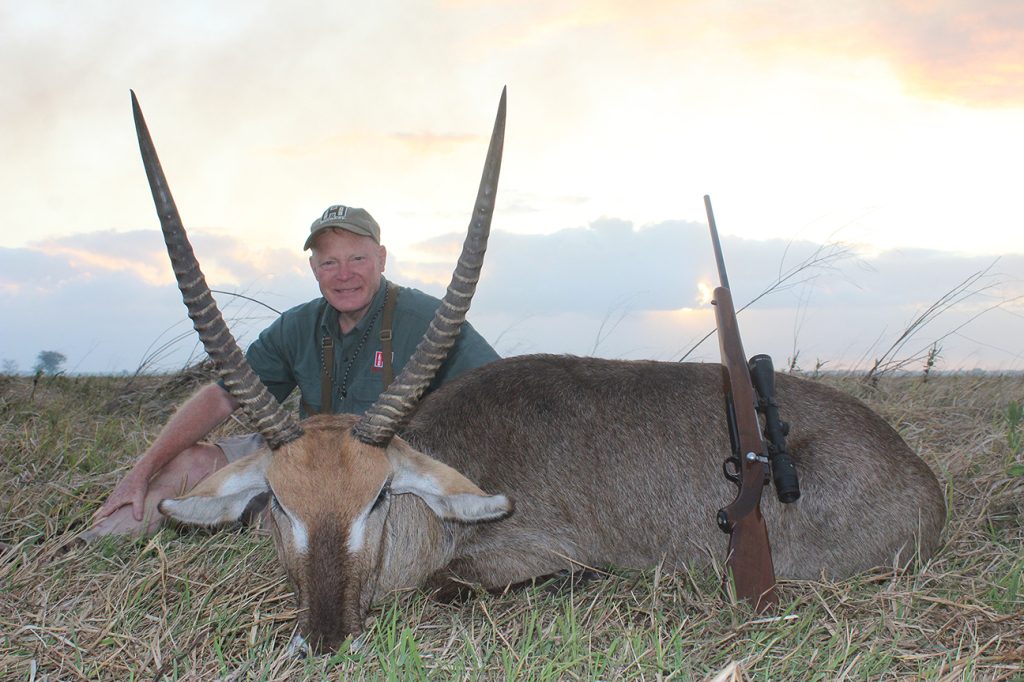
The left-hand Ruger M77 .30-06 with 180-grain Hornady Interlock dropped this waterbuck at about 350 yards on coastal Mozambique’s wide-open floodplains.
When Donna got interested in hunting, I shaved a bit off the butt and reset the recoil pad. Oh, boy, that rifle has taken a lot of African game. Some people are less sensitive to recoil than others. Generations of recruits complained about getting beat up by their Springfields and Garands. If Donna thought that Ruger was a cannon, she never mentioned it, and she shot it well. That said, the .30-06 is powerful and it kicks. I wouldn’t start a youngster with a .30-06, nor is it a wise choice for people who admit they don’t like recoil. When she got her own rifle, I switched her to a .270 and she hasn’t looked back. The switch was for flatter trajectory and lighter rifle, not for less recoil. Ready to go, that .30-06 weighs 8.5 pounds and produces 22 ft-lbs of recoil. Donna’s .270 is a super-light MGA, six pounds loaded and ready. Gun weight matters; her .270 produces more recoil than the .30-06.
Over the years, I’ve gone up and down the bullet scale. That first Ruger really liked 180-grain Nosler Partitions, loaded as fast as I could get them. The Remington shot its best groups with 165-grain bullets. A little faster and flatter-shooting, and on game up to elk, I never saw any difference in performance. The Jarrett shot everything well but really liked a 150-grain Barnes X loaded fast. Once, hunting whitetails in Saskatchewan, I spotted a buck cruising an open snow field behind my stand. No time to range him, so I held on the backline and dropped it into the boiler room. With our current Ruger, I went back to 180-grain bullets, shooting mostly plain old Hornady Interlocks at the standard 2,700 fps. The .30-06 isn’t slow, but at its moderate velocity, good bullet performance is routine. Same lesson that first Ruger taught me 50 years ago: There isn’t much you can’t do with a .30-06 and a 180-grain bullet.
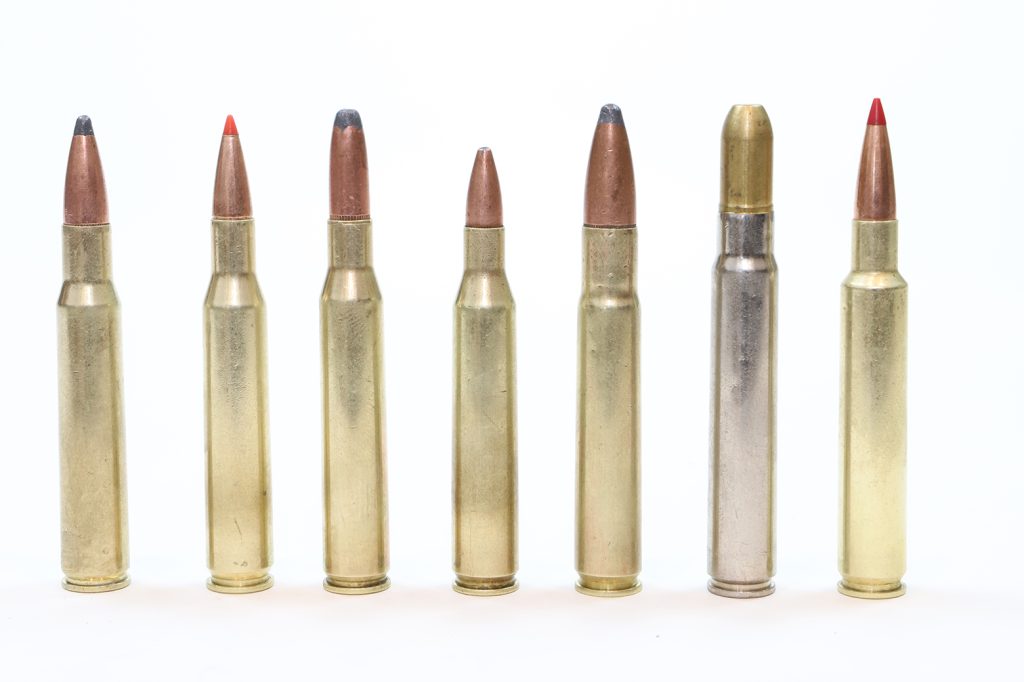
The .30-06 case has been used to create a large family of production cartridges in various bullet diameters; Left to right: .30-06, .270 Winchester, .280 Remington, .25-06 Remington, .35 Whelen, .370 Sako Magnum, .280 Ackley Improved.
As America’s most common cartridge, for many years a new test rifle was likely to be a .30-06. I have no idea how many came and went. Some grouped spectacularly, others not so well, but always good enough. The Ruger Glenfield I used on that Texas buck is the first .30-06 test rifle I’ve seen in a while, which suggests the great old .30-06 is being overlooked in the snowdrifts of newer cartridges.
Let’s finish by remembering where the .30-06 nomenclature came from. One of the fun things I do is teach some classes at daughter Brittany’s She Hunts skills camps for women. In “Bullet Basics” I try to make some sense of our nonsensical morass of cartridge nomenclature. .308 Winchester is clear, .308-inch bullet, introduced by Winchester. .257 Weatherby Magnum, fine. .257-inch bullet, designed by Weatherby, modified by “magnum,” from French for an extra-large bottle of champagne (the ladies love that). Then we have rounded numbers, reversion to blackpowder convention (.30-30, .45-70). And now whimsical names and alphabet soup: Creedmoor, Legend, ARC, PRC. It’s nearly impossible for anyone who didn’t start reading gun magazines in grade school to sort it all out.
The grand old .30-06 is perhaps the most notable. No one ever accused the US military of simple nomenclature. Officially, the new cartridge we adopted in 1906 was: “Cartridge, ball, caliber .30, Model of 1906.” It was soon and forever shortened to “Thirty-aught-six.”
This lightweight Kimber Mountain Ascent in .30-06 produced sub-MOA groups right out of the box. Today the .30-06 doesn’t seem to have a reputation for great accuracy, but the author believes it deserves one.
The blackbuck is a beautiful exotic antelope that is wary and challenging to pursue.
I shot my first blackbuck antelope some 40 years ago. It was a foggy morning in the Texas Hill Country, and the animal was just barely visible at the edge of the fog line, probably 150 yards. Maybe the fog helped, because the animal stayed uncharacteristically motionless while I duck-walked to a handy boulder to take a quick rest. It was an excellent ram, with a coal-black upper body and long, corkscrewing horns.
My most recent blackbuck was taken in June 2025 on my son-in-law’s Texas ranch. Much closer range, quick shot. The horns weren’t as long but he was a nice, mature ram with a good, dark coat.
The author’s most recent blackbuck was taken in Texas in June 2025, using a Ruger No. 1 in .22 Hornet. This was an exceptionally big-bodied ram, weight close to 100 pounds, approaching the upper limit of the little Hornet’s capability.
In between those two I shot two others in Texas, several in Argentina, and one along the Indus River in southern Pakistan. All my Texas blackbucks were estate animals, on game-fenced ranches. In Argentina, all my blackbucks were free range. My Pakistan ram was both free range and on native range. That said, provided favorable habitat and adequate acreage, I don’t think presence or absence of fencing makes much difference with blackbucks.
They are small, nervous, fleet-footed antelopes, using keen vision as a first line of defense, quick to take flight at the first hint of danger. They are also feisty. Males mark their territories with both urine and feces and are quick to take aggressive action when another male intrudes. Which, from my observation, happens frequently. So, also from my observation, they usually don’t stand in one spot for very long.
Blackbuck males are highly territorial and aggressive with intruders. Serious fights are common, although losses from injuries seem infrequent.
That first blackbuck I shot so long ago was taken with a .338 Winchester Magnum. Obviously, I was ridiculously overgunned. I’m not sure why I had a .338 in Texas. Built for me by the late Chet Brown, I think it was a brand-new rifle that I was itching to use. My most recent blackbuck was taken with a Ruger No. 1 in the mild little .22 Hornet. That time, if you suggested I was a bit undergunned I wouldn’t argue. I’d just bought the rifle, worked up some accurate handloads with the Hornet’s original 45-grain bullets. Based on experience with the Hornet on smaller African antelopes, I was pretty sure I could get away with it, provided I waited for a close shot and was careful. I got a quartering-away shot and the little bullet exited the off-shoulder. At the shot the animal took off into thick oaks. As is common with small calibers, we never found blood. Certain of the shot, we took the buck’s line and quickly found him piled up.
The blackbuck, Antilope cervicapra, is a close relative to the gazelles and is very small. References suggest that males weigh from 44 to 126 pounds, averaging 84 pounds. I’ll buy the average, but I’m certain I’ve never seen a blackbuck that exceeded 100 pounds. They offer a small, frequently shifting target. Ideal cartridges probably lie somewhere between my two extremes. More important than raw power: The rifle must be accurate, and it should be handy enough so that you can get it into action quickly. With a blackbuck, when you get a clean, standing shot at comfortable range, better take it.
The blackbuck antelope is native to plains and scrub forests in India, Nepal, and southern Pakistan (which, until Partition in 1948, was part of India). As part of their culture, Hindus don’t molest blackbucks, so there are still some in India and a few in Nepal. Their greatest threat has been habitat loss, from human sprawl and deforestation. They were gone from Pakistan by the turn of the millennium, then reintroduced in the valley of the Indus. With good management, they came back successfully and are again huntable. Southern Pakistan is the only place where blackbucks are hunted in their original habitat.
Pursuing them free range and native range was fun, and an adventure. Hunting celebrity and great guy J. Alain Smith was my partner on that hunt. We crossed the broad Indus River on a wooden boat, powered by an ancient diesel engine, our ship resembling the S.S. Minnow in its best days. Across the river, we walked across cultivated fields and, as promised, we found blackbucks.
This blackbuck was taken in southern Pakistan in 2011. Not a young ram, the horns are excellent, but the tan body color is a mystery.
Mine, an excellent ram, was with some ewes on the far side of a big, plowed field, an elevated levee behind. I went prone on a bipod, then held off while some farm workers walked across the levee behind the herd. J. Alain’s ram was a more typical blackbuck encounter, in brushy country to the north. Animals glassed, quick stalk, put up sticks, take the shot. Which he did, with instant effect.
A difference between J. Alain’s blackbuck and mine: The upper torso on his was dark, mine was tan. With blackbuck antelope, females and young males are always tan on upper surfaces with white bellies. Only mature males have the black upper body, neck and face, with stark white underbellies, and distinctive white rings around the eyes. The horns on my ram were excellent, one of the largest blackbucks taken in decades. Yet it was lacking the glossy black coat that “makes” a blackbuck. J. Alain’s was darker, but still not glossy black like introduced blackbucks I’ve hunted in Argentina and Texas. I can’t explain this; I just haven’t seen enough blackbucks on their native range to have an opinion.
The good news: It’s not necessary to go all the way to Pakistan to hunt blackbuck. From zoo stock, they were first introduced into Texas ranches in 1932. Good move. Today, there are far more blackbucks in Texas than remain on their native range, with the Texas herd estimated to exceed 20,000. Blackbucks are a fixture on Texas game ranches, mostly on estates, also free-ranging on “low fence” properties across the Edwards Plateau and elsewhere. After axis deer (chital), the blackbuck is Texas’s second-most common and popular non-native animal.
Blackbucks were introduced into Argentina a decade earlier, into ideal plains habitat with few predators. Although blackbucks are a fixture on most Argentinean game ranches, they are also found free-range in various areas, sometimes in large numbers, with Argentina’s blackbucks thought to number nearly 10,000. I think my best-ever blackbuck was taken in Chaco, northern Argentina. Later, I hunted them free-range on cattle ranches in La Pampa province. And in southern Buenos Aires province, open-range cattle country, with big herds of blackbucks moving like drifting smoke on the horizon. There have also been introductions into Australia, not with as much success—there are huntable populations in just a couple of spots. With native-range hunting so limited, it doesn’t matter much where you hunt them. Anywhere, the blackbuck antelope is a unique and attractive animal.
This is probably the author’s best blackbuck antelope, taken in Chaco Province in northern Argentina.
Small, nervous, and fast, blackbucks aren’t usually easy to hunt. You get one attempt at a stalk, and then the odds drop dramatically. At least on that day. The fact that they’re strongly territorial is a weakness and an opportunity. Any given part of their habitat looks much the same to you and me, but apparently not to them. Males establish and defend relatively small territories. A good buck seen in a specific area will almost certainly return to that area, so that’s where you start looking. Most of my blackbuck hunts started by going to a place where an extra-large buck had been seen. Interestingly, our pronghorn antelope, only a distant relative, is much the same: Strongly territorial, despite the seemingly unbroken sameness of their habitat.
Among the myriad and diverse ring-horned antelopes of both Africa and Asia, only the addax, native to the Sahara Desert, and the blackbuck grow horns that are both ringed from bases upward, and grow in a spiral. Despite this shared characteristic, addax and blackbuck are not close cousins, their home range thousands of miles apart. With addax, which are much larger, males and females grow similar horns. With blackbuck, only the males grow horns. Females are noticeably smaller and remain a drab tan with white underparts throughout their lives.
Despite their corkscrew horns, blackbucks are not of the spiral-horned tribe of antelopes, so horn length is usually measured on the straight, base to tip, not by following around the spiral. Horn length, in inches, in the upper teens is good, into the lower twenties truly exceptional. Hunting essentially closed in India in 1973. However, throughout the centuries of the British Raj, the Indian subcontinent was a popular hunting destination, and blackbucks were plentiful. There are old records of blackbucks from India approaching 30 inches. I can’t even imagine what a ram like that might look like! Measured on the straight, no known Texas blackbuck has ever grown two feet of horns.
Hunting sea ducks calls for tough retrievers and shotguns with plenty of punch.
Low, gray skies descended almost to the waterline. A feeble sun lay just above the mountain horizon to the south, invisible above the scud. The wind was modest by local standards—15 gusting to 20—but it still made our decoys tack back and forth crazily against the incoming tide. It was just another day of winter duck hunting on Kodiak Island.
Lori and I had been married for just a few months. I’d optimistically billed this trip as a honeymoon. Although she had grown up in a Montana ranch family, she had never done any wingshooting. I knew this would be a challenging way to introduce a beginner to shotguns. However, winter visits to Bob, one of my guiding partners, had become a regular, highly anticipated event. I wasn’t going to miss it, and my bride wasn’t going to be left behind.
Although she was well grounded in firearm safety and had done some target shooting, I suggested that she leave her 20-gauge behind. Sea duck hunting requires more punch. Crouched behind a beach log twenty yards from the waterline, I knew the shooting would be difficult even for a veteran, and I didn’t want her to start off frustrated.
Then Ernie, another member of our team, shouted, “Birds coming from my side!” Stretched out in a line and flying low against the water, they were still a long way out, but I could tell they were surf scoters. The flock veered sharply in our direction. As I heard Ernie fire, I identified a drake by its distinctive facial markings, swung my barrel as fast as I’d ever made it move, and watched the bird cartwheel across the waves. The flock was moving so fast I didn’t even think about a second shot.
“Got one down?” I asked Ernie.
“Yeah, but its head’s up and it’s swimming hard.”
“The dog will get it.” Bob’s Chessie had followed us all the way from camp, and I welcomed his company despite his faults. I’d hunted with Yaeger for years, and while I respected his talent and determination, I also knew that he treated commands as suggestions at best. He had broken at the sound of Ernie’s shot and was already closing on the wounded duck.
“We don’t have to worry about getting my bird,” I said, and we didn’t. The dog had evidently marked that one down too, and as soon as he dropped the cripple at Ernie’s feet he plunged back into the sea, churning off in that direction.
“That looked like a long shot,” Lori said as Yaeger began the return leg of his retrieve.
“It was,” I agreed. “Don’t worry. They’ll be closer soon and you can take my gun and start shooting.”
“How do you know that?”
“Because the tide is coming in.” Although modest by Alaska standards, Kodiak tides are still greater than any in the Lower 48. “In another hour the waterline will be right in front of us. We’ll have to move the decoys, but you should have some closer shots.”
She did. After some predictable missing, she dropped a drake harlequin and immediately demanded that we take it to our taxidermist. Since harlequins may be the most gorgeous waterfowl on the continent, I didn’t argue. Although I felt sure the bears would already be in their dens, I dropped a couple of slugs in my shotgun before we began the hike back through the woods to Bob’s cabin.
Now, thirty years later, Lori shoots at least as well as I do. I love looking at that mounted harlequin and remembering how it all began–on a sea duck hunt.
Sea duck hunting doesn’t have to mean cold, wet, and windy weather, but it often does.
How does hunting over salt water differ from inland duck hunting? Let me count the ways.
I’ve done some saltwater duck hunting along the Texas Gulf Coast and enjoyed it, but most of my experience has come in the North Pacific. Sea duck hunting doesn’t have to mean cold, wet, and windy weather, and I’ve hunted the Texas coast in shirtsleeves. Weather in the North Pacific is another story. Plan on dressing in your best foul-weather gear.
Air temperature isn’t the only challenge. When I lived in Alaska, the Coast Guard estimated that after twenty minutes of immersion in the North Pacific a healthy young recruit would be “unable to participate in his own rescue.” Remember that grim warning when hunting or traveling in a skiff. Paying attention to the tides is crucial along the shoreline. An outgoing tide can leave the skiff you arrived in high and dry, while rising water can cut you off from dry ground.
Sea duck hunting requires more thought than usual in the selection of guns and loads. Inland, I’m a bit of an outlier. When I’m shooting decoying ducks over the little springs and creeks I hunt in the Central Flyway I’m happy with a 20-gauge. It’s easier to handle a light gun when swinging quickly in tight cover, and my banged-up right shoulder no longer enjoys recoil from a heavy load. Most shot opportunities are close, and if they aren’t I don’t take them.
That reasoning doesn’t apply in salt water, where the shots are longer and the birds are tougher. I find sea ducks harder to bring down than the usual mallards and pintails, perhaps because their leaner outline gives pellets less to hit and they have thicker protective layers of plumage and fat. Whatever the case, sea ducks call for more firepower than my usual light duck guns can provide.
It’s best to plan as if you were hunting geese, with three-inch 12-gauge shells, tight chokes, and heavy shot. In contrast to puddle ducks, I don’t hunt geese with anything lighter than No. 2s or chokes less than full. Those are good guidelines for sea ducks, too.
One other important consideration affects my choice of firearms on sea duck hunts. The marine environment can be devastating to shotguns. While I don’t own any shotguns that I could call fancy, most of mine are nice enough to deserve good care. I hate to expose them to salt water. When I lived in Alaska I hunted sea ducks with our standard camp bear gun, a 12-gauge pump that had been handled roughly for years. Even so, I cleaned it religiously after every trip to the coast, as I admit I don’t always do with my other guns after a day of upland hunting .
I’ve always believed in some wisdom from Nash Buckingham: “The best long-distance load for waterfowl is a good retriever.” Since I spend more time fussing with my dogs than with my firearms, I almost have one at my side when I’m wingshooting, no matter what the quarry. The sea presents a lot of challenges to a dog, no matter how tough it has proven elsewhere. I never take a dog to the salt until it has demonstrated endurance, strong swimming, and determination in fresh water.
The choice of dogs is always personal. Anyone familiar with the Chesapeake Bay retriever’s origin story will understand why they are so popular among sea duck hunters. I’ve watched some heroic saltwater retrieves by friends’ Chessies. However, the Lab’s ancestors worked offshore in the Newfoundland cod fishery centuries ago, a background that persists in their genetics. I’ve always been a Lab guy and, with a couple of exceptions, mine have always taken readily to the sea.
Sea duck hunting isn’t all about raging seas and miserable conditions. Back (way back) when I was growing up in Washington, friends and I would rise early, take the ferry across Puget Sound, drive across the Hood Canal Bridge on the east side of the Olympic Peninsula, (years before its 1979 collapse) and fish a couple of under-appreciated little steelhead streams. Then, unless the fishing was fantastic, we would drive north, launch our canoe, and paddle out to the spit at head of the bay. If the tide was right, we’d spend a couple of hours pass shooting a mixed bag of dabblers and sea ducks with an occasional brant mixed in. Oysters grew on the spit, which we would shuck and eat with tabasco sauce and squeezed lemon while we waited for ducks to fly. We never went through a lot of shells, but it’s hard to remember better duck hunting trips.
The tideline is one of our most biologically diverse and fascinating ecosystems. I can enjoy it whether I’m carrying a shotgun, a fly rod, or just poking around in the mud. When I moved back to Montana from Alaska, the thing I missed most wasn’t the moose, sheep, or salmon, but the sea. Hunting the waterfowl that live there is one of my favorite excuses for returning.
Decoying ducks on the tideline is a wonderful way to spend a fall day.
The right knife is a crucial tool for breaking down an animal in the backcountry.
Photo above, from top: Two editions of Benchmade’s TaggedOut folder; Montana Knife Company Stonewall Skinner; and BenchMade MeatCrafter. The colored blades are an option on some knife models.
Eighteen inches of fresh snow blanketed the landscape, wrapping everything in impossible white. A rhythmic swish, swish, sounded from the horses’ legs as they pushed through the snow, following the vivid path of a hundred migrating elk. My friend Jeff and I each had an antlerless elk tag burning holes in our respective pockets and we pressed steadily forward, knowing that at the end of these elk tracks there would be elk.
And so there were, some bedded and others feeding in a mountainside scrub oak swale. We crawled through the snow, rested our rifles on our packs, and dropped two of them. Dusting the glistening snow kernels from our clothing, we slogged down the hill to begin the joyful task of converting our elk into meat. Jeff’s elk was down the hill from mine a hundred and fifty yards, and by and by he hiked up to my position.
“I lost my knife in the snow,” he said.
Fortunately, I had a good spare knife in my pack. Handing it over with a grin I cautioned him against losing that one as well. A couple hours later, we were headed for the truck, this time breaking trail through the snow for our heavily laden horses. Had I not possessed a spare knife we would have been there twice as long, reduced to processing two elk with one knife. It would have been a long, cold hike out in the evening darkness. The moral of the story, of course, is to always carry a spare blade when hunting.
I’ve been blessed to wield knives and process meat from Alaska to Arizona and from California to Africa. I’ve skinned and caped out critters ranging from rattlesnakes to moose, including several hundred each of deer and elk. As a result, I’ve formed some opinions on what makes a great knife. So let’s take a detailed look at knife design and construction. I’ll break this discussion down into three basic categories: hunting, processing, and caping. Each category offers its own set of challenges, requiring separate tools to do the job right. That said, one knife can perform all tasks, and if I were to choose just one for all-around use it would be the hunting model.
As backcountry hunters, we must hold our knives to a higher standard. The primary difference of course, is weight–we can’t afford to pack around a big old Bowie. We must choose cutlery that is light in the hand and on the scale, graceful to use, and possessed of fine steel that will maintain a sharp edge long enough to skin and quarter an elk or moose. Ideally your knife will feel comfortable in your hand–it’s no fun using a knife uncomfortable enough to raise a blister while skinning an elk.
A good hunting knife should be non-slippery when it becomes covered with blood and fat, and I like a small guard or swell at the front of the handle to help prevent my hand from sliding forward onto the blade. Some of the nastiest cuts I’ve seen occur while butchering game happened just that way.
The shape of your blade is important too, since you’ll need to perform myriad tasks with it. A sharp point will make piercing stubborn hide easy. My preference for point design is a drop point, or a very shallow clip point. Avoid aggressive clip points, as they are hard to keep from perforating things you just don’t want to puncture while making your rip cuts.
After piercing the hide, the next thing you’ll need to do is make rip cuts around the lower legs, up to center, and from stem to stern. To make a good rip cut your blade should have a couple inches or more of a straight, very sharp edge running from just behind the curve of the point back toward the haft. (As a note, rip cuts should be made from underneath the hide. Cutting hair rapidly dulls a fine edge, so insert that sharp point mentioned earlier till your blade is buried under the hide. Now lift and push your blade forward, unzipping the hide in a smooth, long cut.)
A successful wilderness hunter doing good work with his backcountry blade.
Your next task while breaking down a big-game animal is to peel back the skin. Here’s where the curve of your blade comes into play. If you examine a dedicated skinning knife you’ll notice that the blade forms a huge curve. We don’t want that, but we do need a well-curved section of blade running from the point back an inch and a half or so. That curve will enable you to handily skin your critter without accidentally slicing the point of your knife through the hide.
A blade shaped as I’ve described will also serve well to remove quarters and backstraps, and trim meat and tenderloins from your game. While doing so, keep in mind that contact with bone will rapidly turn the edge on your knife. Speaking of holding an edge, I’ve used every kind of steel from stainless to Damascus, and in my opinion the new MagnaCut steel makes the best hunting blade for our purposes. It’s tough, corrosion-resistant, and holds a razor-sharp edge very well indeed.
Now that I’ve described the attributes I look for in a wilderness hunting knife, I’ll share details on my favorite models. I have a couple–one for superlight backpacking hunts and the other for hunts when I am on horseback and don’t need to worry about weight quite as much. My favorite superlight knife is the TaggedOut Carbon Fiber folder by Benchmade. It’s a pricey little thing, but it features carbon-fiber scales, CPM MagnaCut steel, a 3.5-inch clip point blade, and weighs only 2.44 ounces. Benchmade also offers the TaggedOut at a significantly lower price point featuring their Grivory (engineered plastic) scales, CPM-154 stainless steel, and an even lighter weight of 2.1 ounces. These knives are my go-to models for every backcountry hunt I make.
For hunts where weight is not so much of an issue (horseback or float hunts) I use Montana Knife Company’s MagnaCut Stonewall Skinner. It’s a fixed-blade 9.25-inch model featuring G-10 handle material, a 4.5-inch blade, and weighing 5.53 ounces. This knife is super tough, gets scary sharp, and feels incredible in your hand. It’s great for breaking down big, thick-skinned game, as well as performing camp chores and tasks.
Note: A hunter’s knives are very personal tools. As you’ve probably noticed, I’m not a fan of replaceable-blade models. I don’t like how they feel and their lack of balance. They are dangerous–I personally know a man who watched a young fellow lose his eye to a flying splinter off a disposable blade. And I just don’t agree with the modern disposable mindset. A good knife will last most of a lifetime. Why leave scattered razor-sharp trash in your wake? Instead, learn how to get your blades shaving sharp–it’s a skill every true outdoorsman and hunter should have.
Processing
The conclusion of every productive hunt should be the enjoyable task of cutting, trimming, and wrapping meat for the freezer. At home, or when on horsepack trips, I use a dedicated processing knife from Benchmade called the MeatCrafter. Sporting a 6-inch upswept trailing-point blade thin enough to be slightly flexible, it’s akin to a filet knife and incredibly handy at trimming, portioning, and shaping meat. I usually avoid boning with this knife because I don’t want to compromise the edge. I keep my hunting knife handy and use that for the boning part of the job.
Often, I will perform this work before departing my wilderness camp, sans the wrapping part. (I bag all the finished cuts in heavy-duty gallon freezer bags, and later remove and double wrap the meat in good freezer paper before stowing it in my chest freezer at home.) This saves significant pack-out weight in the form of undesirable bone, fat, and tissue.
Meat quality is largely dependent upon how well you care for it. It’s of paramount importance to keep the meat clean and free of hair, grime, dirt, and such. It’s also important to get the meat cool as soon as possible after the kill. Take the necessary time to get quality photos, but then skin, quarter, and hang the meat to cool as efficiently as possible. Use every precaution to keep the meat clean.
Caping
Not every hunter will want to cape their animal, especially when they must carry the cape in their backpack for miles to get it out of the backcountry. However, if you’ve harvested a great animal and love shoulder mounts, it’ll be worth the effort. You’ll want to be equipped with a proper caping knife and the skill to do the job right. That skill is one that I don’t have room here to describe; however, I can recommend the proper tools for the job.
To start, use your regular hunting knife to skin the hide up to the base of the ears and skull. and then switch to your caping blade to skin the face. The best blade for this job is long and slender, with a razor-sharp edge and point. The blade need only be two or three inches long, but it’s nice to have a longer handle to provide grip and dexterity. The Mini SpeedGoat from Montana Knife Company provides good configuration for caping, and it’s still substantial enough to use for skinning and quartering in a pinch. Weighing at just 1.2 ounces, this would make an ideal backup knife.
Blades of Note
As a kid I was kicking dirt down the two-track leading to my family’s farm when I spotted a shiny Buck knife in the sand. A fixed blade “fishing knife” model, it sported a thin-ish blade with the tip broken off. I stuck it atop a nearby fencepost and left it for the owner to claim. He never showed, so eventually I took the knife home, ground a point back onto the blade, and used it for many years as my primary hunting knife. It’s tired and worn, and the blade is longer than ideal, but I’ve sure dismantled a lot of game with that old knife.
Another of my favorite experiences with a blade came while following legendary Alaskan guide Phil Shoemaker on a Peninsula brown bear hunt. His client killed a great boar, and as we began to skin it, I pulled a large stone blade from my pack. My close friend and world-class flint knapper Greg Nunn had made it for me, and I’d carried it for several weeks hoping for the opportunity to use it on a bear. I’d been told that a stone blade was ideal for skinning a bear, leaving the hide and hair follicles more intact than a conventional steel blade. This seemed to be true, and we had a great time trying out my stone knife while skinning that bear.