Ursus arctos is one of the most impressive big-game animals in the world.
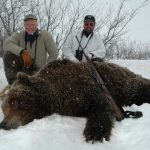
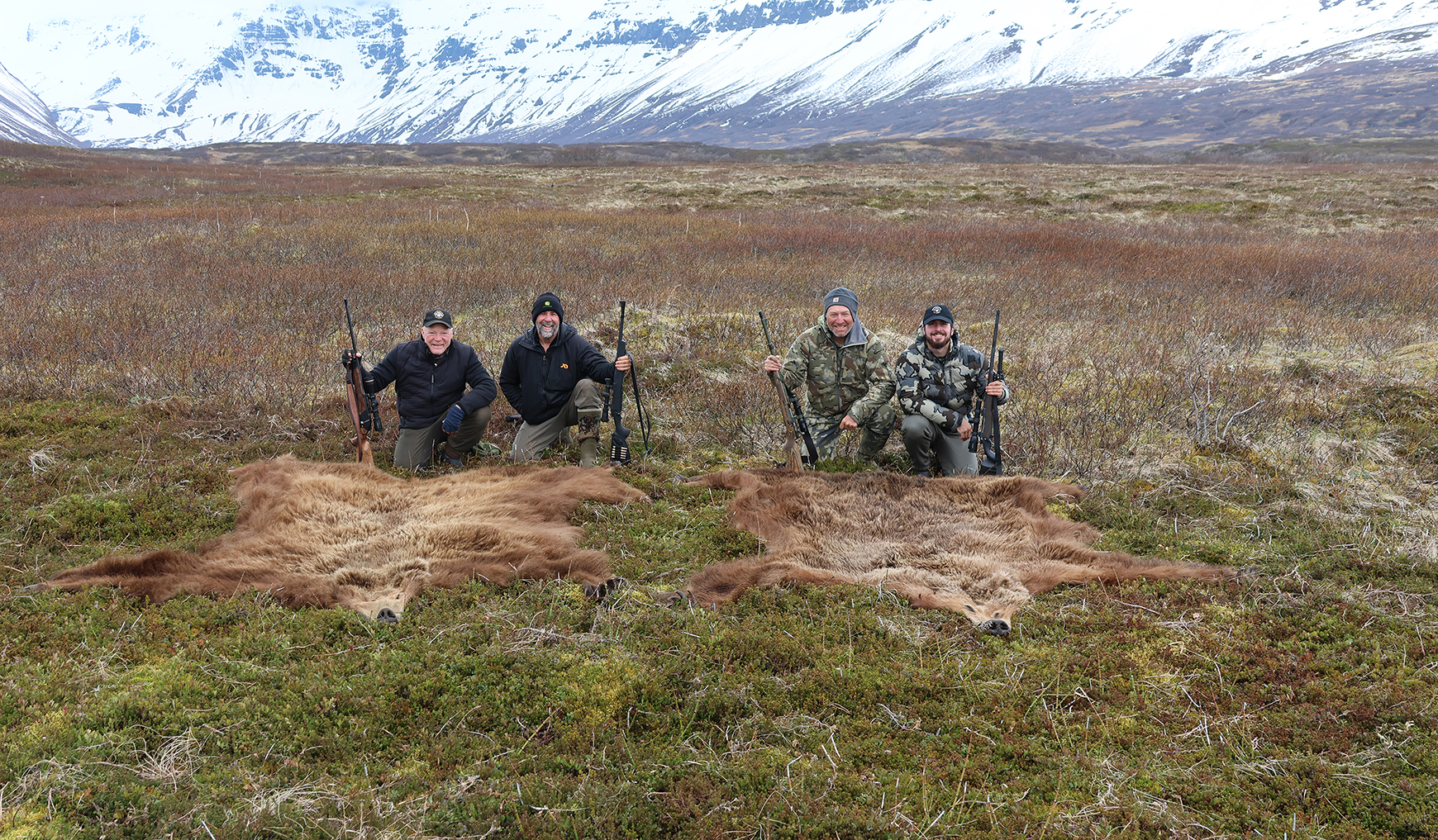
Photo above: Guides and hunters in a Mountain Monarchs of Alaska fly camp in May 2024: Boddington, guide Dave Dye, guide Pete Mayall, hunter Matt Balise. Matt’s bear, on the right, is the largest, squaring well over 10 feet.
What’s the greatest game animal in the Northern Hemisphere? For some, it’s a big elk, for others a moose. You’ll get no argument from me if you pick a wild ram. What about the big bears, the world’s largest carnivores–North America’s only truly dangerous game?
The brown/grizzly bear ranges (today discontinuously) from the Pyrenees of France and Spain east across Eurasia, across what was once the Siberian land bridge to North America, down the western mountains. Almost within living memory, it lived as far south as Mexico’s Sierra Madre, and as far east as Hudson Bay. Across this huge range, the brown/grizzly is the same bear, Ursus arctos.
Out of human compulsion, we separate the brown/grizzly bears into regional groupings. The biggest brown/grizzly bears are the bears of coastal Alaska and, across the Bering Sea, on Russia’s Kamchatka Peninsula. These bears get big because of their high-protein salmon diet in the fall and their shorter hibernation period because of the warm currents from Japan. Although data is sparse, it wouldn’t surprise me if the brown bears from Japan’s northern islands were biggest of all.
As a bucket-list item, many hunters want one big bear. Doesn’t matter if it’s brown or grizzly, just so it’s big. I shot my first grizzly in 1974, in British Columbia. Youngster that I was, I was ecstatic. Although a boar, it wasn’t big.
In 1981 I was the fledgling Editor of Petersen’s HUNTING, and I had a chance to hunt brown bear with the legendary Don Johnson out of Cold Bay, near the bottom of the Alaska Peninsula. On the first day, we saw a bear at great distance. Guide Michael Joe “Slim” Gale insisted it was a big bear. He was right, and we got the bear. Hours later, we got the skin down to a sandbar where Don might be able to land a Supercub. On that sandbar, we laid out the skin, no stretching, for the “Alaskan “square”: 10 feet 8 inches by 11 feet 2 inches. By any measurement, it was a ten-foot bear. With only slight exaggeration, it could be called an 11-footer. The story I wrote was titled “Giants Still Walk.”
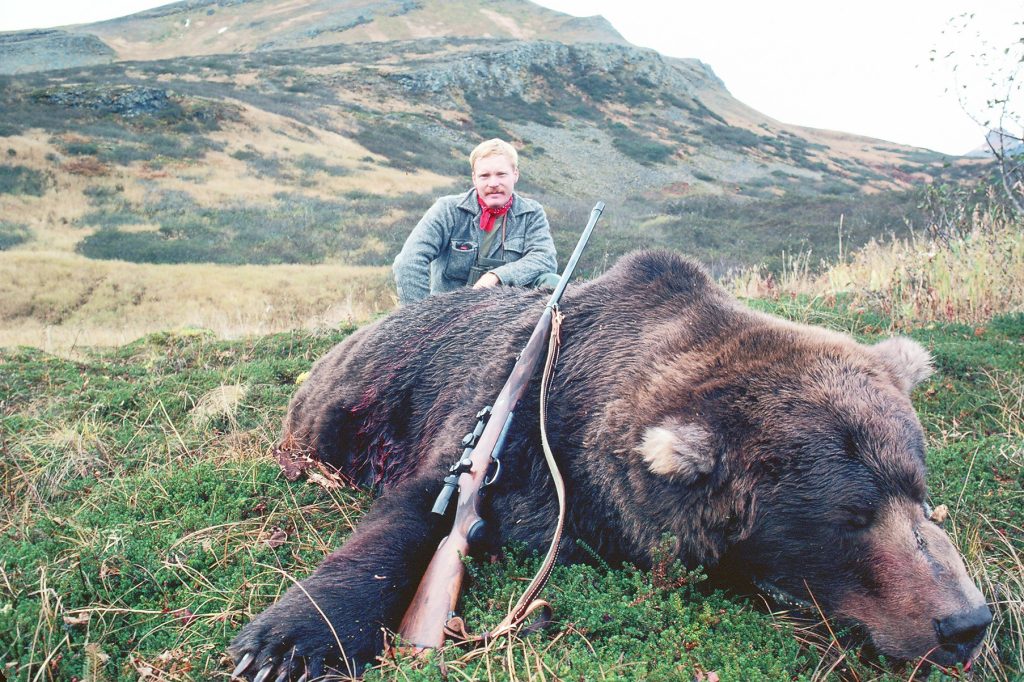
One colleague called me a liar. Another wrote that such bears don’t exist. Yes, they do, but they are rare and you need luck, which I had in October 1981. I have always known I can never beat that bear. Problem is, an encounter with a big bear is such a special experience that I haven’t been able to call it quits.
I did several hunts in southeast Alaska with my old friend Jim Keeline. We never got a brown bear, but that was my fault: I flubbed a shot at a fine bear. It also took me several tries to get a big grizzly in Arctic Alaska; my timing was always too early or too late. Hunting with Dave Leonard, I caught it right on the third try and took a wonderful bear.
I got lucky again in the spring of 1992. At Ronald Reagan’s suggestion, Gorbachev tore down the wall. The world changed, and Russia’s great hunting became available. The Hunting Consortium’s Bob Kern was among the first in, and Joe Bishop and I headed to Kamchatka. At first, it didn’t feel lucky. We hit Petropavlovsk at the same time as a spring blizzard, so no bears were out.
Our outfitter had a TBD, the logistics variant of Russia’s famous BMP armored vehicle. He was proud of it, so I asked how he’d gotten it. Six months earlier, when the Soviet Union dissolved, a Russian colonel wanted a bear rug to take home to his wife in Moscow. They’d made a trade. At the time, I was a lieutenant colonel, commanding an infantry battalion. I had a good laugh pondering what would happen to me if I traded a Hummer for a bearskin.
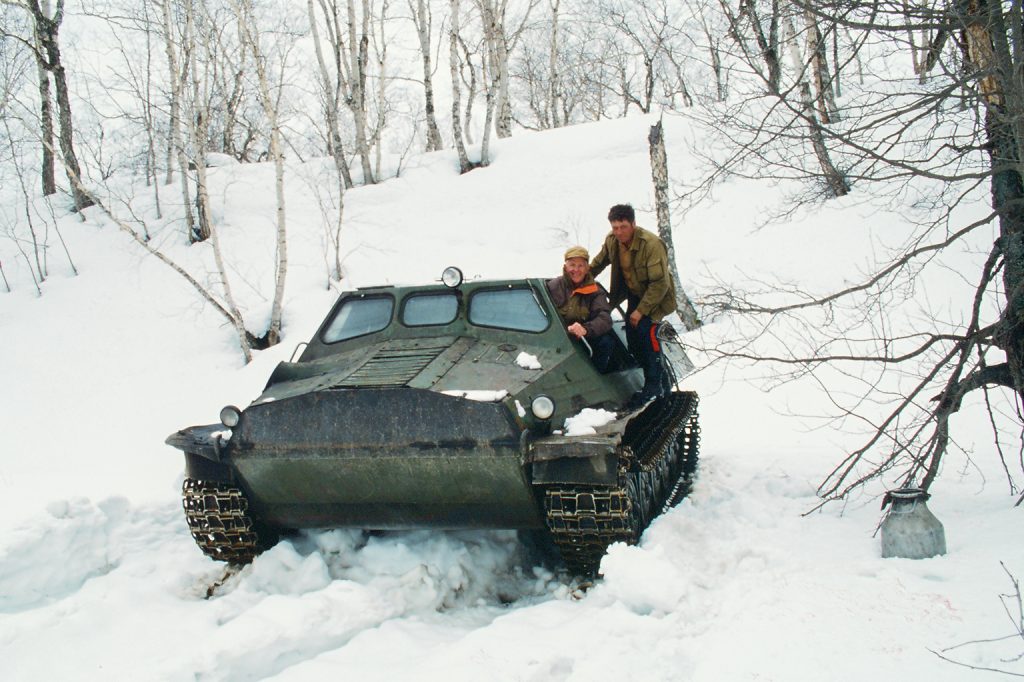
We clanked through the snowy woods in our tank, then did some hunting on snowmobiles and on cross-country skis. Joe Bishop, from Colorado, was an accomplished skier. Me, well, I’d never been on cross-country skis. I took a lot of spills and kept Joe laughing with creative Marine swearing.
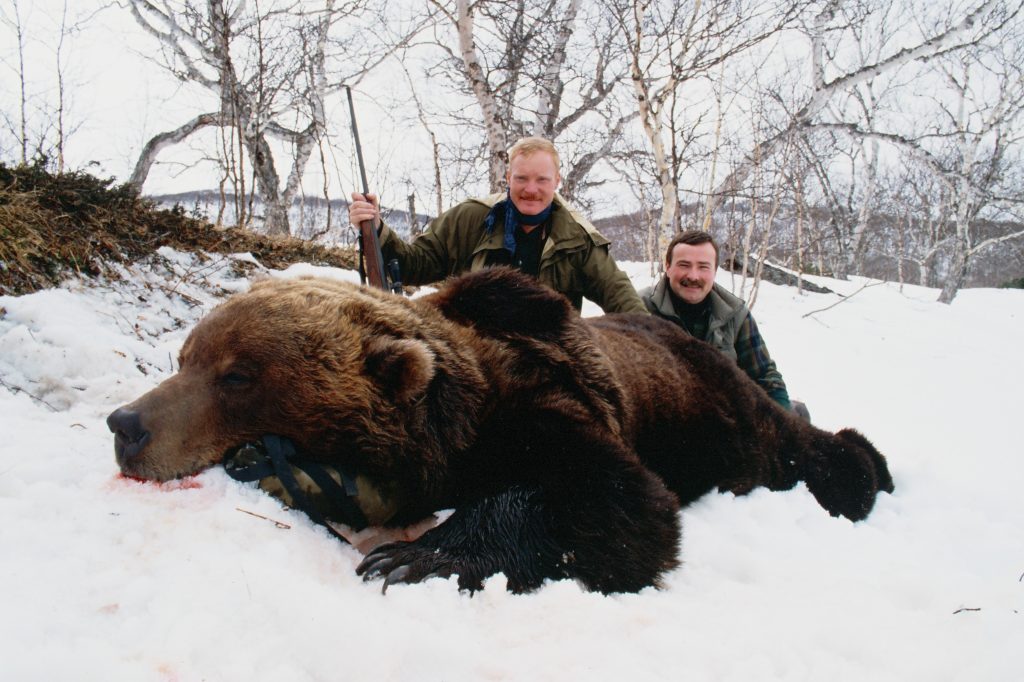
It warmed up quickly. The white stuff receded, I fell down less, and the bears came out. Joe and I both took dandies, Joe’s a big light-colored boar, mine a dark, burly brute with a head like a bucket. Kamchatka Peninsula has the world’s densest population of brown/grizzly bears, with estimates varying from 10,000 to more than 27,000. After skinning my bear, Bob Kern and I laid the skin out flat on clean snow. Although it was a big bear, the best we could get out of it for the “Alaskan square” was 9½ feet. By skull measurement, though, it was the SCI world record for several years. It has now slipped to 24th place in that listing.
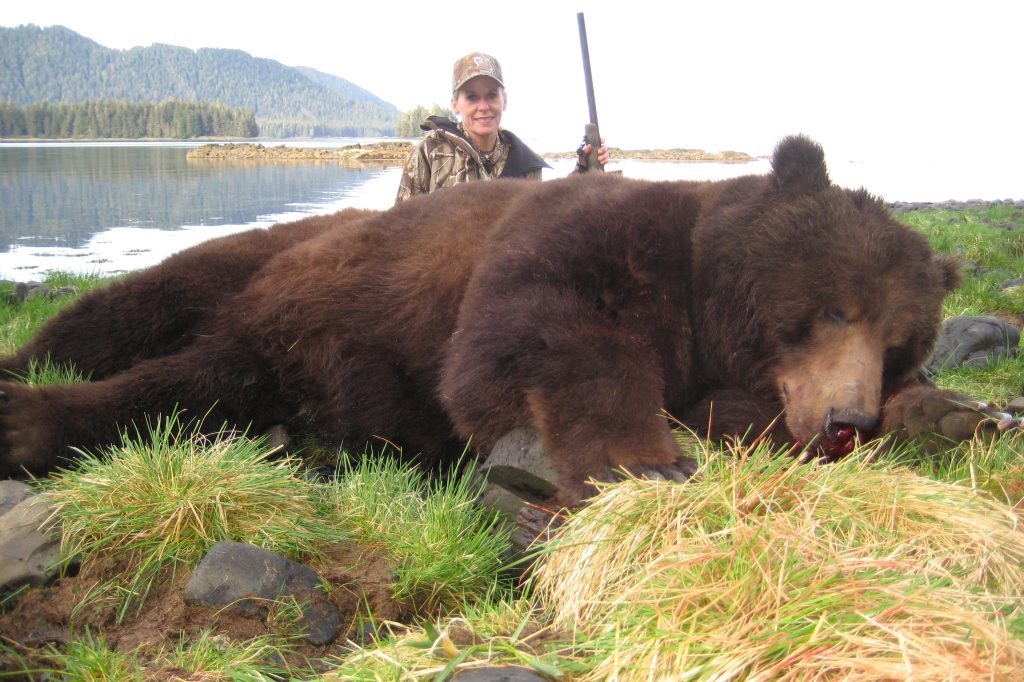
At their very best, I think Alaska produces bigger bears. That’s especially true in the famous areas: lower Alaska Peninsula, Kodiak, Unimak. On my wife, Donna’s, one-and-only brown bear hunt, she took an honest ten-foot bear on the first day, hunting with Alisha “Mutts” Rosenbruch-Decker on the bottom end of Admiralty Island. Hers was Glacier Guides’ largest bear that season.
Since the early 1990s, Kamchatka’s brown bears have offered a sound alternative. While Alaska can produce larger bears, even in the most famous places, not every hunter gets a ten-footer. And the average bear in Kamchatka beats the Alaskan average. We all like to talk about exceptional animals, but a nine-foot bear is a big bear. Anyone who passes such a bear, first day or last, is making a mistake. The Alaskan average is smaller, the Kamchatka average about there.
Overall success is higher in Kamchatka, enabled by the large bear population and snowmobile mobility through most of the spring season. Brown bear hunts in Kamchatka are less costly than Alaska, with a second bear allowed. For thirty years, I suggested to hunters in search of a big brown bear that they consider Kamchatka.
Then the tanks rolled into Ukraine. I had a hunt in Russia planned when the war started. Some hunters went, although in smaller numbers. At the conventions this year, I was delighted when Bob Kern told me he was resuming operations in Russia. His Kamchatka bear hunts have just concluded, and they had a great season with some great bears taken, no problems with permits or firearms importation. Camps, equipment, food, conditions have been significantly upgraded since Joe and I did that early hunt. A retired military man like me, Kern is careful and I’ve trusted him for forty-some years. There’s some hunting I’d still like to do in Russia. I’m making plans, but maybe not for a big bear. I might have scratched that itch for the last time.
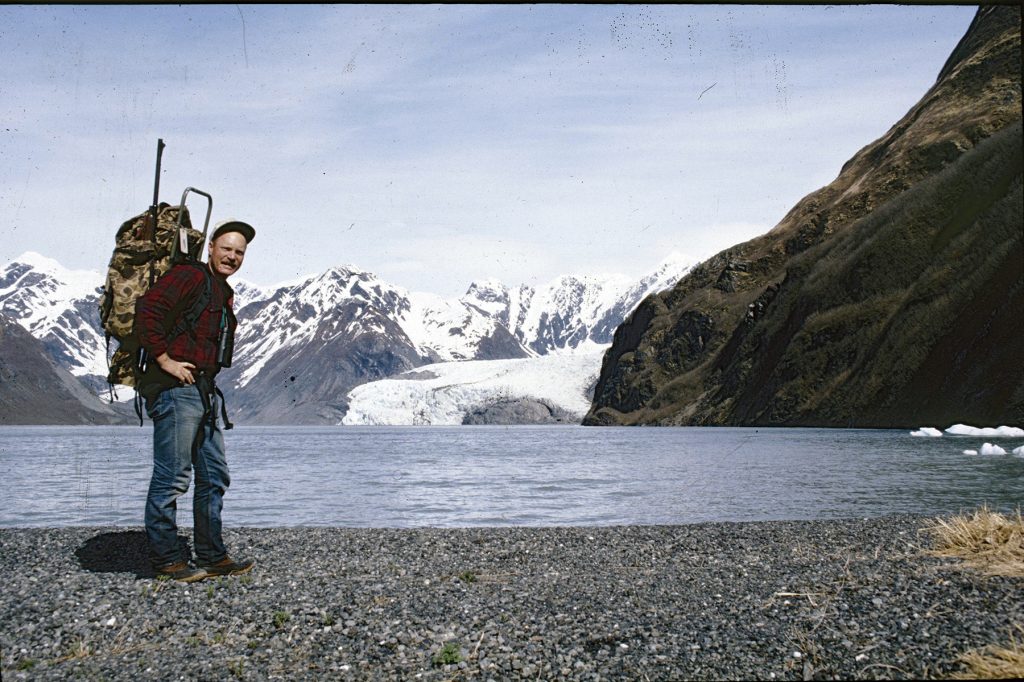
In October 2023, I decided I must have one more encounter with a big bear. I went to old friend Dave Leonard’s area, Mountain Monarchs of Alaska, at the tip of the Alaska Peninsula, hunting in Izembek Wildlife Refuge around the volcanoes, an area famous for monster bears. I saw the biggest, most beautiful bear I’ve ever seen and stalked him three times. By the time we got there, he’d vanished. Then fierce Aleutian weather closed in, sending us back to our tents. The Peninsula brown bear season is “odd-number falls” and “even-number springs.” I could have waited until fall ’25, or I could try again in spring ’24. Since I no longer buy green bananas, I went back six months later.
The weather was kinder and the bears were out. I took a gorgeous, no-brainer boar 24 hours after I landed in spike camp. Twenty-four hours later, my camp-mate, Matt Balise, took an even bigger bear. Mine was under ten feet, his well over.
Alaska produces the biggest bears, and the known “big bear areas” produce most of the giants. Accept as reality: It’s tough hunting, success not given. So, if you want a big brown bear, Alaska and Kamchatka are your primary choices. I doubt I’ll get that itch again. If I do, I’m curious to see how Kamchatka has changed since 1992.