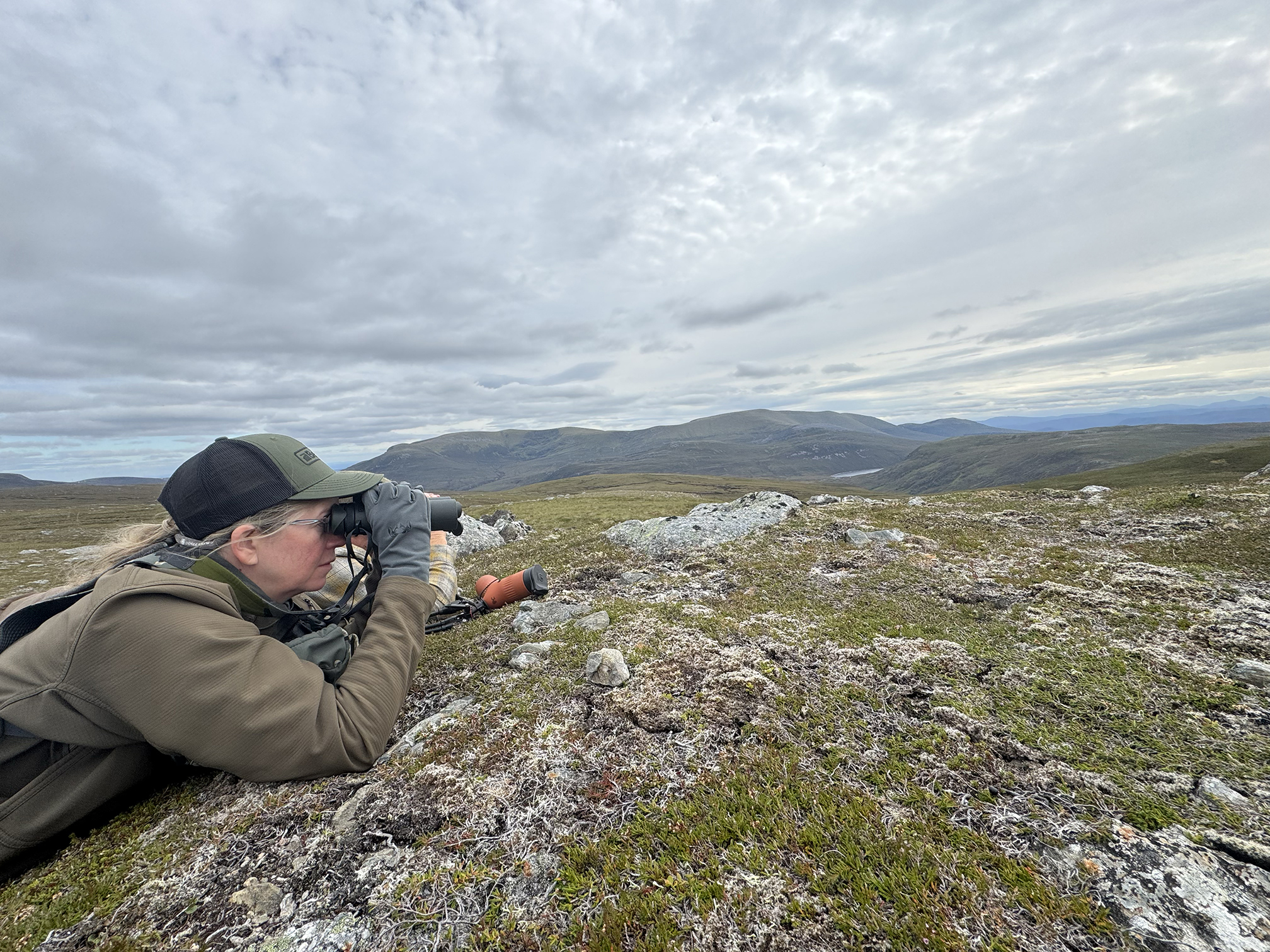
Hunting in the high, rugged hills of Scotland is an immersive experience in the origins and traditions of spot-and-stalk hunting.
Hunting and firearms play a proud and prominent role in the 250-year history of the United States. From Daniel Boone to Theodore Roosevelt, we Americans are justifiably proud of our hunting and conservation heritage. But when it comes to traditions, we’ve arguably got nothing on the hunters of Scotland, who have been roaming their high hills in search of deer since medieval times. Their tweed, it turns out, was the original camo. And they may have actually invented spot-and-stalk hunting.
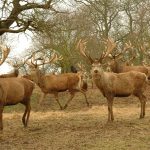
I learned all this and more last summer on a red stag hunt at the beautiful Kildermorie Estate in the Scottish Highlands. Much of this lore came from the estate’s colorful and knowledgeable head gamekeeper, Sam Shepard.
Sam and his assistant gamekeeper, “Mole” Whiting, wear their traditions proudly—and literally. They greeted us on the first morning of our hunt clad in traditional three-piece tweed outfits complete with ties, flat caps, and tall Wellington boots.
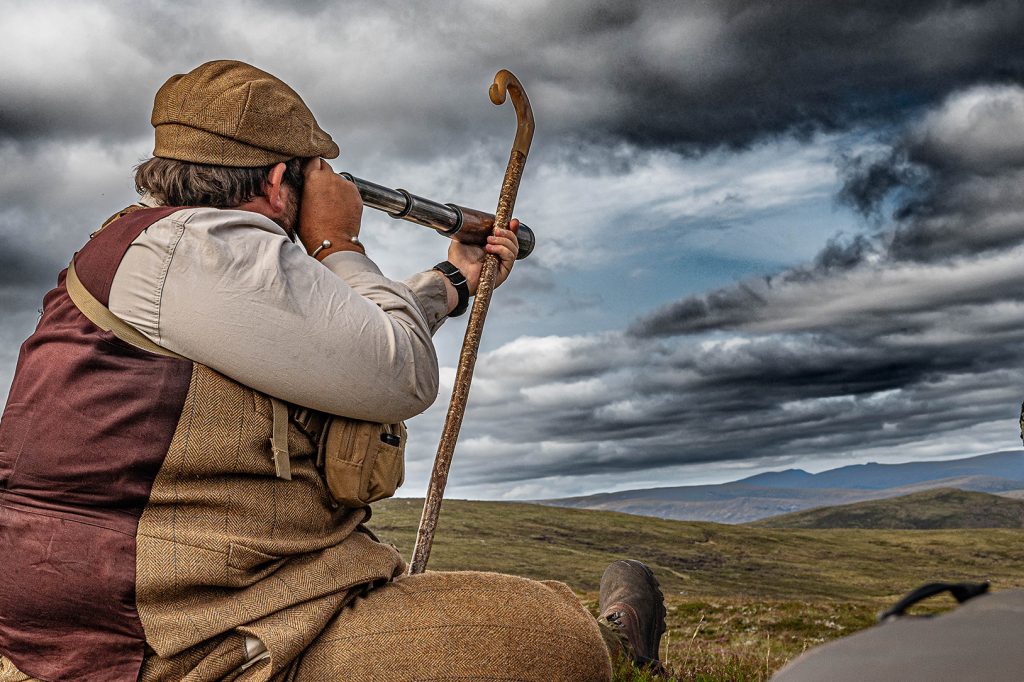
I would learn more about their tweeds later in the week, when we took a morning off from hunting and drove into the little town of Beauly to go to a famous shop called Campbell’s Highland Tweed. This shop, which has been in business since 1858, makes custom tweed suits for the stalkers and gamekeepers on all of the hunting estates in the region. The fascinating thing is that the designers travel to the estates and match the fabric colors and patterns to the specific vegetation on each property, so each estate has its own distinctive tweed—a pattern that becomes, in essence, custom-designed camouflage for hunting on that particular property.
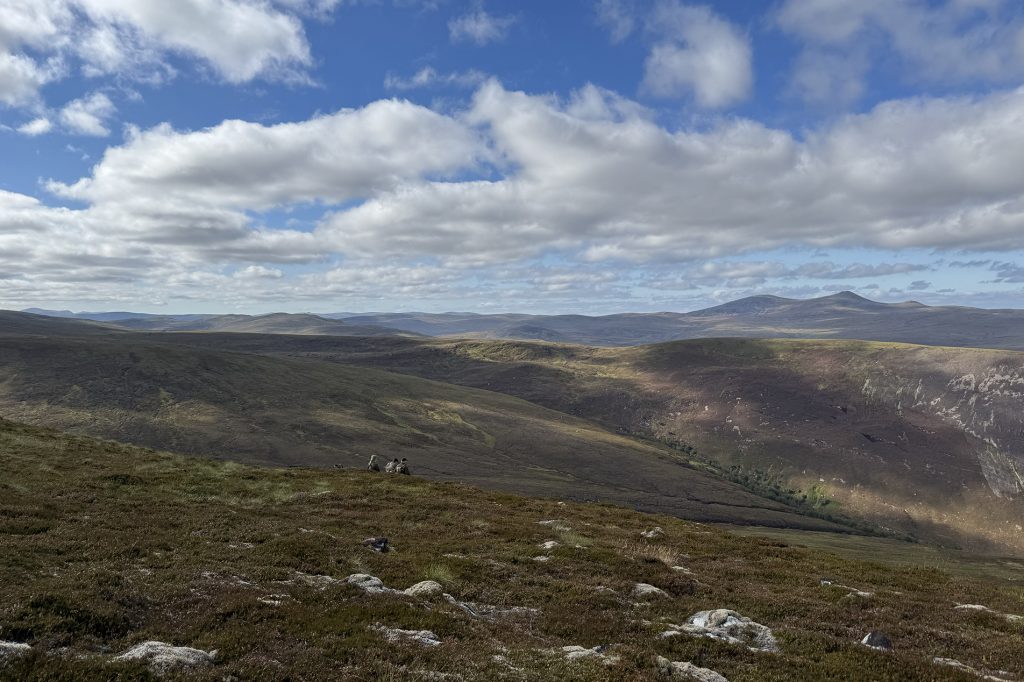
The magnificent Victorian-style stone lodge where we stayed was situated near a large lake, Loch Morie, and surrounded by steep hillsides covered with purple heather. The loch itself was full of native brown trout, and its surface was dark from peat erosion. On one of our first hunting days, three of us followed Sam along a narrow path though the heather from the shoreline of the loch to the top of Meall Beag (Gaelic for “the little round hill”), gaining more than 1,300 feet of elevation in a lung-busting climb.
The views along the way were stunning, but I had to enjoy them through the mesh of my headnet. Our mid-August hunt was plagued from the very beginning by unseasonably warm weather and endless swarms of tiny, biting midges, which not only were annoying to us, but also had driven almost all of the estate’s shootable stags to higher, windier points on neighboring properties. When we got to the top of the little round hill (which didn’t seem so little at that point), we had a magnificent view all the way to the ocean and the distant bristling towers of Ardross Castle.
As we glassed, Sam explained to us how, as head gamekeeper, he oversees year-round habitat work on the 20,000-acre Kildermorie property. His duties include executing prescribed burns, restoring native vegetation, counting deer, culling deer when necessary, and partnering with gamekeepers on neighboring estates to manage the deer herds throughout the region. When hunters like us arrive, Sam turns his attention to looking for the right deer to take in accordance with the region’s management goals—ideally, an old stag past its breeding prime.
Through our binoculars (and Sam’s remarkably bright antique spyglass), we spotted a group of red deer hinds feeding on a bench below us. There was a stag in with them, so we made a long belly-crawl to peek over the rim and take a look at him. Sam pronounced the stag a three-year-old, nowhere close to being a shooter.
Hunting in the Scottish Highlands is no truck hunt. It’s a physical endeavor, conducted on foot in steep, rugged terrain, with the highly switched-on deer generally glassed from afar and taken after difficult stalks that can range from hundreds of yards to a mile or more. This felt quite familiar to me, having done plenty of North American mountain hunts, but Sam believes that it all started in the Scottish Highlands.
In medieval times, big-game hunts were typically conducted by baying an animal with horses and hounds, or by putting on huge drives involving hundreds of beaters and dozens of standers. This started to change sometime in the late 1700s or early 1800s, when wealthy landowners started transforming massive tracts of the Highlands into private hunting estates. The new method of hunting involved a single hunter, either solo or with a guide, finding and taking a stag on foot, on his own terms. Long, strenuous hikes were an integral and important part of the challenge. Ponies were utilized, but only for taking the stags off the hill.
My research backs up Sam’s theory. Huge deer drives—some of them lasting for days—were still the norm in the late eighteenth century. Most historians date the change to the publication of a book called The Art of Deerstalking by William Scrope in 1838. According to Scottish deerstalking blogger Steve Connolly, “It was Scrope who brought to the public consciousness the idea of man versus beast with rifle as a solo pursuit using fieldcraft, and what becomes very apparent as you read his works is that not a lot has changed in the general philosophy and skills required from Scrope’s day some 185 years ago to the present.”
One chilly, foggy (and still midgey) day, our party took a break from hiking and glassing and gathered at a historic warming hut built sometime in the 1800s specifically for deerstalkers and their Highland ponies. There was a small room with a fireplace and a table and chairs on one side, and stalls for the ponies on the other. With fascination, I studied the numerous signatures on the walls, some of them dating to the 1920s and before. We warmed ourselves by a crackling fire and ate our packed lunches where deerstalkers for generations before us had done the same.
On the last day of our hunt, several of us hiked to the highest point on the estate, a windy, rocky peak where stunted heather hugged the ground, only to find that the stags, still seeking refuge from the midges, were on points higher still, well beyond the “march,” or border of the estate. Nevertheless, it was a fantastic hike. It took us past several scenic hill lochs that reminded me of the high-country lakes in Colorado. We spotted numerous groups of restless red-deer hinds and flushed a number of grouse and rock ptarmigan.
Back at the lodge that evening, after being properly “piped-in” to dinner, we tucked in to an appetizer of haggis, neeps, and tatties (meat pudding with turnips and potatoes, the national dish of Scotland). While we were enjoying this, the other hunters in our party told us their tale. They had managed to find a shootable stag and make a stalk, but were ultimately unsuccessful. They described their epic stalk, crawling for a thousand yards through a muddy peat bog, cold, wet, and swarmed by midges.
“What they had,” Sam said with a smile, “was an authentic experience.”
A hunt in the Scottish Highlands, whether you come back with a stag or not, is both a physical challenge and an immersion into a rugged and stunningly beautiful part of the world. It’s also a fascinating glimpse into the roots of some of the hunting traditions that have followed us into the modern era. Considering the way the Scots continue to honor these traditions, stalking deer in the Scottish Highlands is still, quite possibly, one of the most authentic experiences in the hunting world.
Hunting with the Benelli Lupo BE.S.T. Rifle
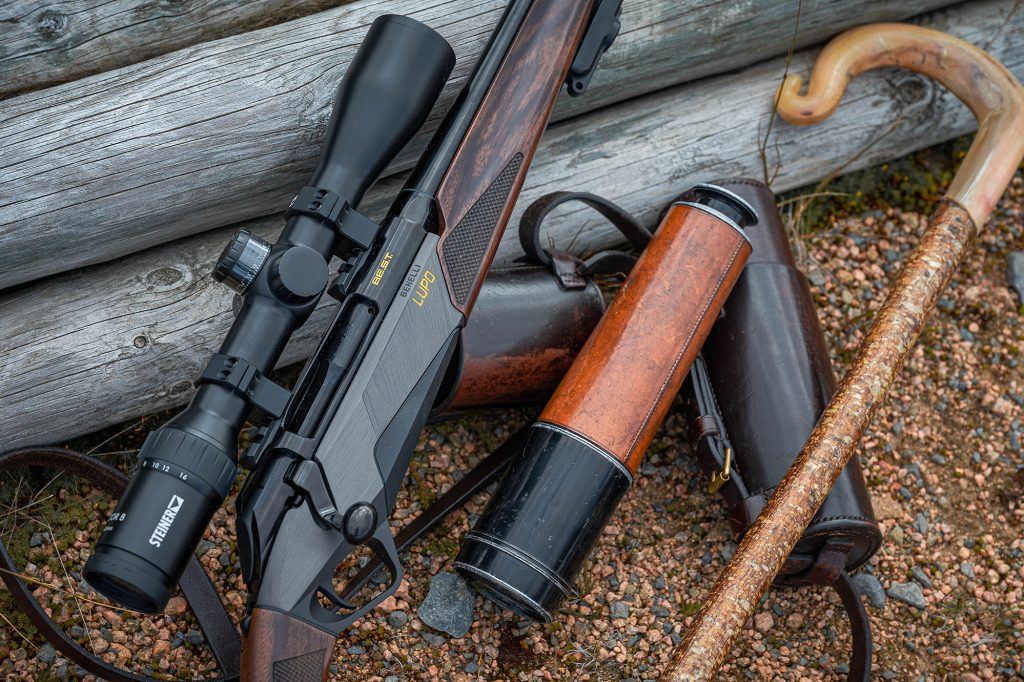
Over the past few years I have logged many hours in the field hunting with a Benelli Lupo, and it has become one of my all-time favorite rifle platforms. There’s something about its mix of the traditional and the modern that just feels right as soon as you pick it up. Not to mention, every single Lupo I’ve ever tested has been an absolute tackdriver.
The Lupo comes in numerous configurations, but if you’re a traditionalist like me, the BE.S.T. model is the er, best choice. These rifles feature premium AA-grade walnut stocks and Benelli Surface Treatment (BE.S.T.) finish, guaranteed against rust and corrosion for 25 years. Beautiful and bombproof is an irresistible combination in a firearm. The rifle I took to Scotland was chambered in .300 Win. Mag. and topped with Steiner’s excellent Predator 8 2-16×42 riflescope, which has an illuminated reticle and a customizable ballistic turret. I didn’t get to test this combination on a Scottish stag this time around, but in the past I’ve taken red stag, blackbuck, and axis deer with the Lupo with one-shot kills, and I would not hesitate to take this combination on almost any hunt anywhere in the world.