A world-traveling hunter shares his best travel advice.
Most American hunters rarely hunt outside of their home states. I am not among “most American hunters.” I travel a lot to hunt, and much of that travel requires flying. It’s a pain, especially today. Since Covid, American air travel has gotten more difficult. There are delays, cancelled flights. I haven’t altered my life. I deal with it. Here are my top five travel tips.
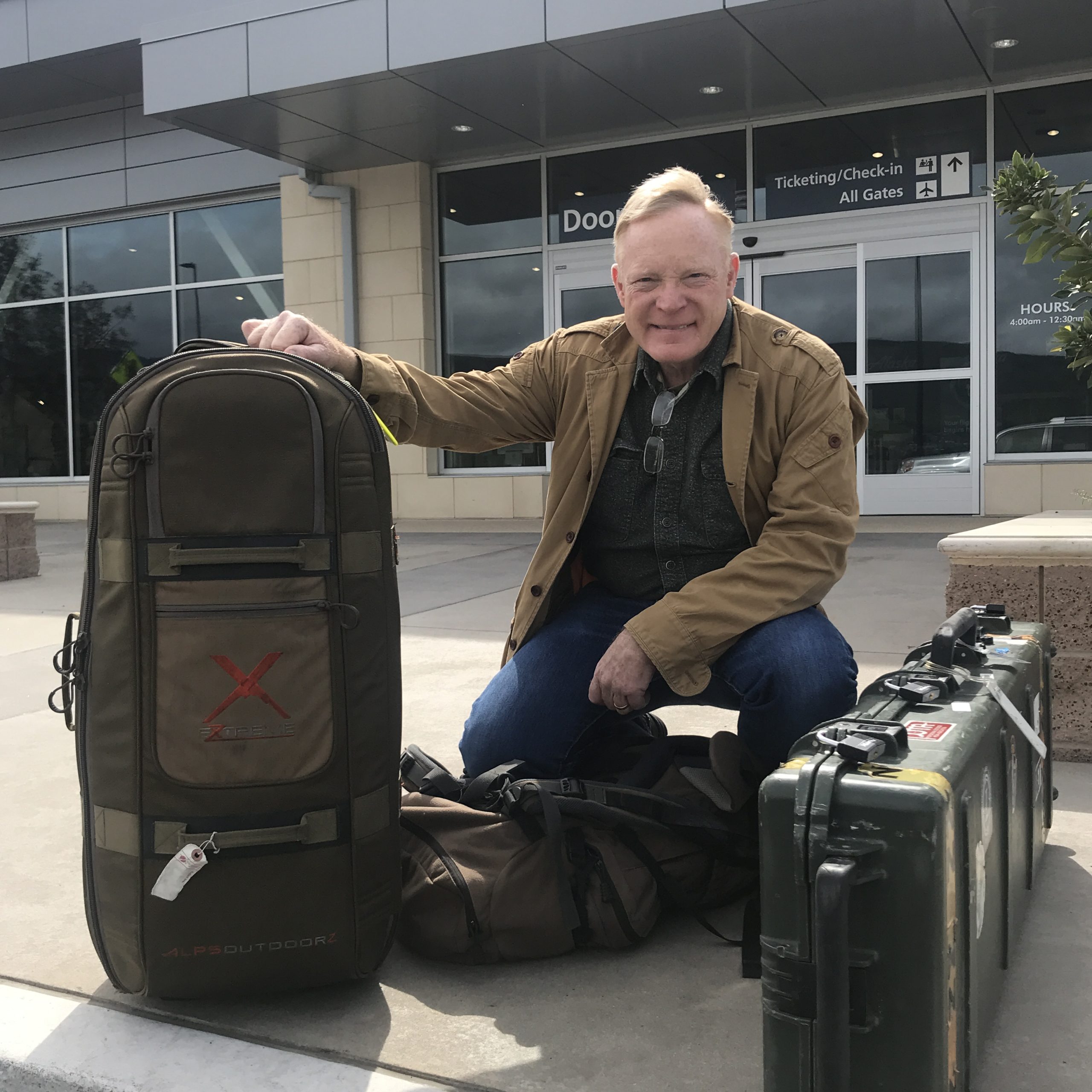
Photo above: The author heading out from his home airport, San Luis Obispo. He’s takng a secure, hard-sided gun case (all lock-holes must have locks in them); a duffel; and computer bag and daypack as carry-on. Although hard-sided luggage is more secure, the author prefers soft duffels for scrunching into tight vehicles and small planes.
1: WATCH YOUR GEAR.
This applies to all travel, by all means. My old Marine Corps buddy and frequent hunting partner, Mike Satran from Oregon, had a health issue so he took the train to his annual hunt in Montana while his buddies drove there with all the gear. They stopped briefly to eat. When they got back in their pickup, all the guns were gone. Other friends have been ripped off in hotel parking lots. Our military has eleven General Orders for sentries. The first one is: “Take charge of this post and all government property in view.” While traveling, your gear is your post.
On a commercial conveyance, you will check your bags, keep the claim check, and make sure you have the airline app on your smartphone, which usually has a “track my bag” function. Bags do get misdirected, but these days, it’s rare.
The biggest travel mistake I ever made was in Nepal in 2011. I flew commercial from Kathmandu to a small airport, grabbed my gear, and watched it get loaded into a helicopter charter to the last village before Dhorpatan Game Reserve. On arrival, the locals greeted us with rhododendron leis, like it was Hawaii. With all the excitement, I didn’t take charge of my gear. I had my rifle case and daypack, but the helicopter was disappearing over the horizon when I realized my duffel must still be in that bird. Yep, it sure was. I now had to hunt for the next fourteen days with only what was in my daypack.
2: PACK YOUR CARRY-ON LIKE IT’S ALL YOU WILL HAVE.
On that trip to Nepal, since I was expecting to trek to our first camp upon landing, I had most everything I needed in that daypack, including one box of shells and an extra layer. Our outfitter, the awesome Mahesh Bushnyat, found me a new toothbrush and a spare sleeping bag. My hunting partner, JY Jones, shared his extra socks and underwear. Otherwise, I was in what I stood in for two weeks. It was still the best mountain hunt I ever did.
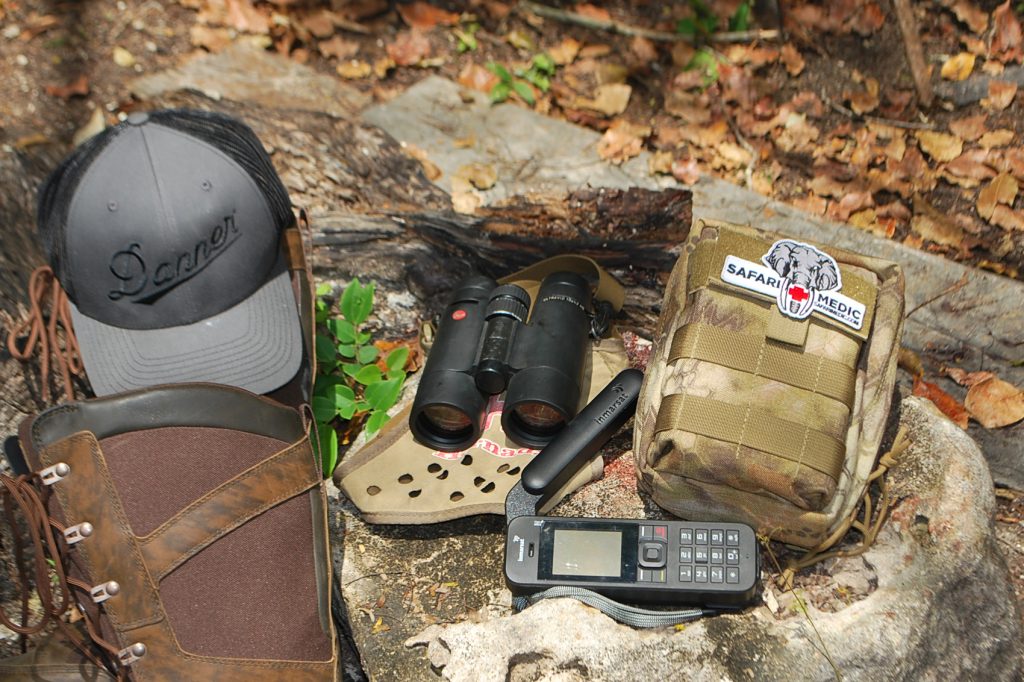
Good lesson. Flights are delayed and cancelled, bags go astray. When flying, pack your carry-on with everything you can’t live without. You can always borrow a rifle. Think about critical medications, extra eyeglasses, one change of clothing, and an extra layer. I carry my binocular and camera in my daypack, since they are too pilferable to put in checked baggage. Plus, a headlamp and spare batteries, and a toothbrush. You cannot have liquids, knives, or firearms-related parts in your carry-on. Just bare necessities. Think about what you cannot live without, and might be unable to beg, borrow, or buy in a remote location.
3: DO YOUR HOMEWORK.
Plan ahead and do the necessary research to figure out what paperwork might be needed. Traveling to another country? It takes time to get a passport. Do you need a visa? In many countries, US citizens do not, but these things change. For visas, I often use a service because you usually must send your passport back and forth, and I’m in near-panic mode while it’s out of my hands. Good outfits can expedite both passports and visas, but it gets expensive. Plan ahead.
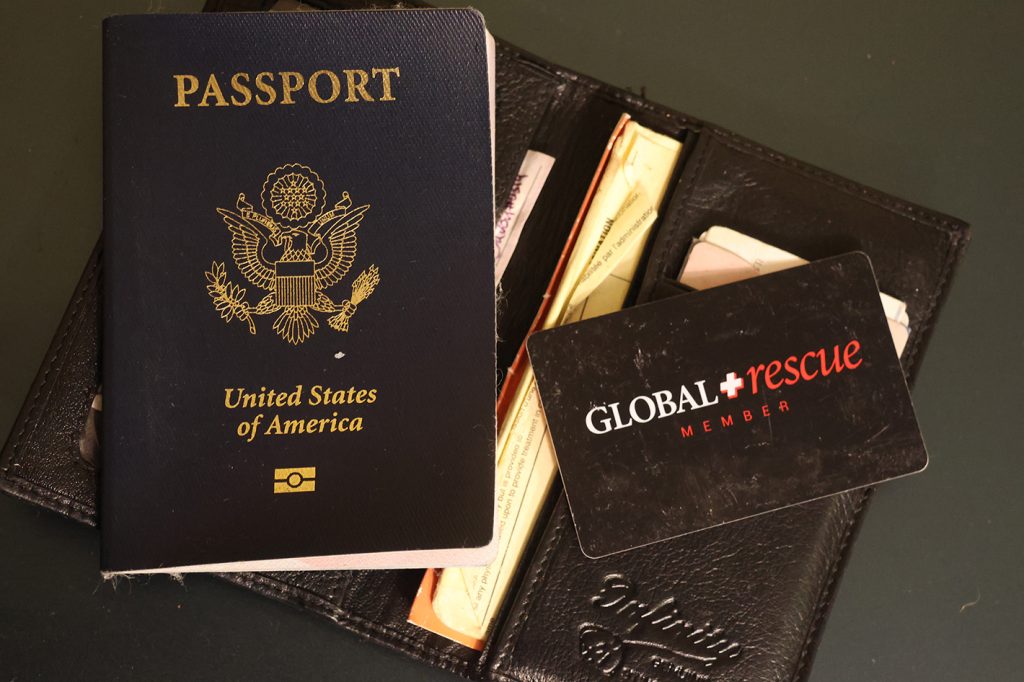
Airplane ticket prices go up and down. Start months ahead and keep checking. Decide early if you’re taking firearms. If you are, then you’ll need to take your firearms to a Customs office and get US Customs Form 4457. In my case, that’s a three-hour drive. Form 4457 proves you owned the firearm when you left the US, thus allowing you to bring it back in. Since most US jurisdictions don’t have firearms registration, almost throughout the world, Form 4457 serves as a “US gun permit.” By our law, the 4457 is good as long you own the firearms. Unfortunately, South Africa requires a 4457 to be dated within the calendar year, so you’ll need a new one if you’re headed there.
If you’re new to the process or headed to an unfamiliar destination, I recommend going through a gun-savvy travel agent. Most international carriers require advance notification if you’re carrying firearms. Some popular transit airports, including Amsterdam and Dubai, require local police clearance to transit with firearms. And others are “no go.” You really don’t want to transit UK with firearms. For this stuff, absolutely avoid cut-rate Internet travel sites. Even competent travel agents may be clueless regarding travel with firearms, but there are experts within our industry who understand the process. Ask your outfitter or booking agent for a recommendation.
Some problems can’t be solved. Various hunting destinations don’t allow firearms importation. Congo and Liberia come immediately to mind. You’ll use “camp guns,” so find out what will be available. In other cases, it’s possible to bring firearms, but so complicated it’s not worth the trouble. Argentina used to be easy, now it’s not. I won’t take guns to Argentina again, and outfitters down there have good firearms. As do outfitters in Mexico. Your Mexican outfitter will assist with gun permits if desired. In northern Mexico, it’s not a problem, but if you must transit Mexico City, then you must go to the police office, and that airport is huge. I’ve done it, and I won’t do it again.
Perhaps the most challenging problems are multi-country itineraries. Sightseeing here, then hunting there. There are multiple firearms regulations to satisfy, plus secure storage while not hunting. For multi-country trips, you’re better off renting camp guns.
4: AVOID TIGHT CONNECTIONS.
Nobody likes to sit around in airports, but flights get delayed. The more time you have, the better your odds. Within the US, I like two-hour connections when possible, and four hours for international connections. I try to avoid the last flight of the day. It’s sometimes unavoidable, but if you miss the last flight, you’re stuck. Just in the past year I’ve been stuck overnight in Chicago, Dallas, and LA. Nothing to be done about it; it’s going to happen now and then.
5: ROLL WITH THE PUNCHES.
Since problems are inevitable, you’ve got to roll with the punches. Fifty years ago, when I landed in Nairobi for my first safari, nobody was there to meet me. I was 24 years old, on my first overseas trip. Near panic, I was trying to figure out the inexplicable pay phone when PH Willem van Dyk appeared and apologized for being late.
Today, with cellular communications, there is no need for panic. Get phone numbers and backups, make comm checks, and make sure you know how to dial international numbers. I still carry a satellite phone for places with no cellular coverage, but now I rarely use it.
If you miss a flight because of a delay or a flight is cancelled, the airline will rebook you. Use the airline apps on your phone. Usually, they will advise you of rebooking long before you can get through the line at the service desk. As soon as you know you have a problem, start using those phone numbers, advising folks of what’s going on, and your new arrival time as soon as you have it. Another phone app you should have is WhatsApp, which allows free voice and text anywhere in the world. Among guides and outfitters, WhatsApp is almost universal.
If a delay leads to an overnight at the airport, if my bags are checked through (always best), I trust the airline to get them on the right plane. Almost always, they do. Remember, you’ve got your toothbrush and other must-haves in your carry-on. Airport hotels are expensive, and I’m cheap. So, depending on how early the next flight is, sometimes I splurge. Or, I find a comfy spot and dig out my laptop or book, both of which are always in my carry-on. I hate the waste of time, but so long as you have comms, it’s not the end of the world. The hunt will go on when you get there.