Sports A Field

Threescore and Ten

At seventy, should you look back upon your “lasts?” or plan your “nexts?”

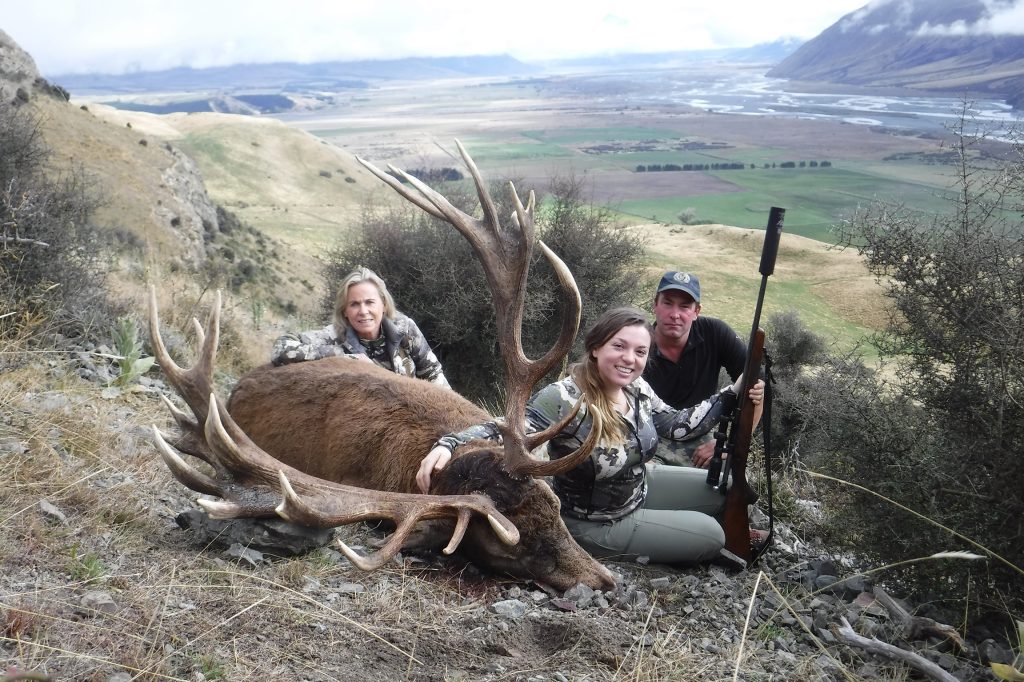
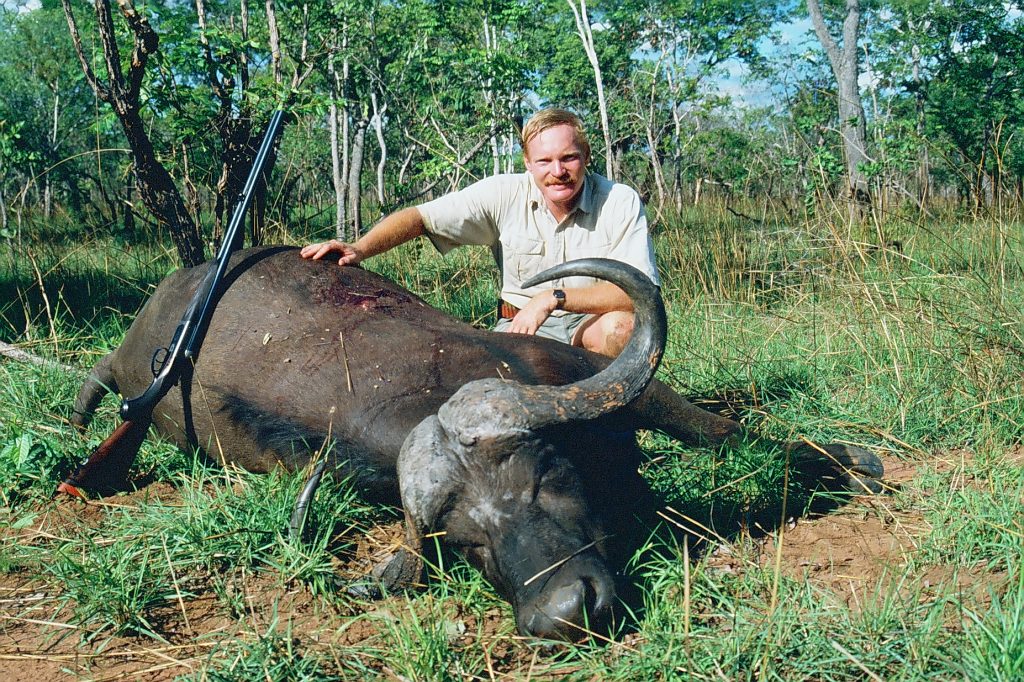
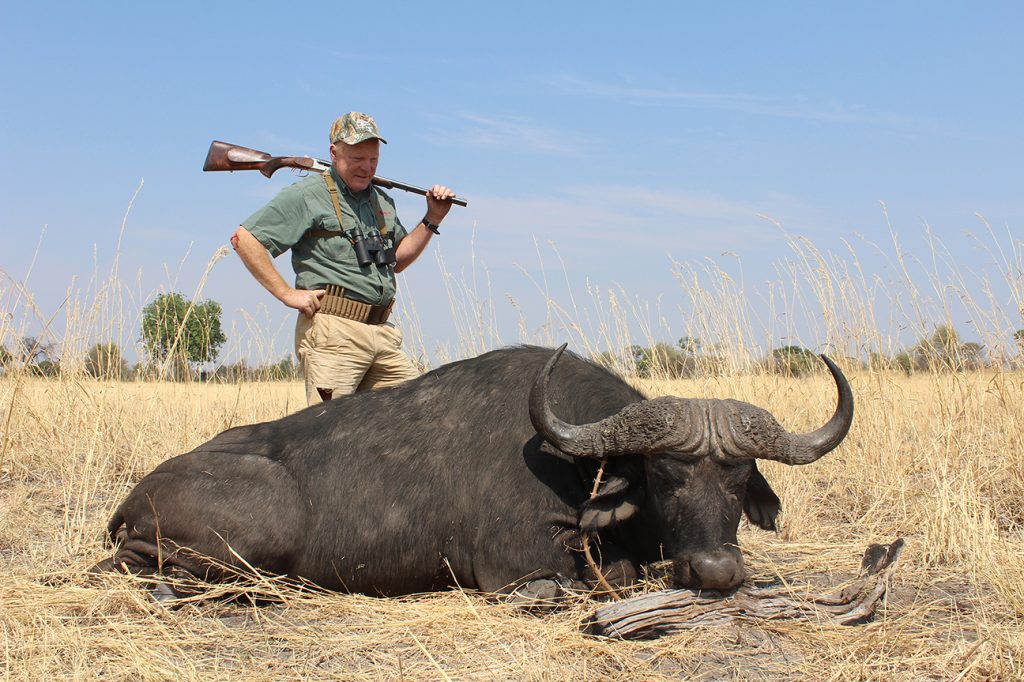
Photo above: Every hunt that leaves you with a multifaceted memory is a successful one. And there inevitably comes a time when there will be more memories than hunts. (c)Trail’s End Media

With apologies to William Shakespeare and his “seven ages of man,” I have my own list.

Mine starts with nineteen, when we arguably become men—women, of course, become women far sooner—nineteen is the ideal age for, according to the late poet-novelist-hunter Jim Harrison, a poet or a warrior. Twenty-one is, well, twenty-one. Twenty-seven lives under the shadow of all those who died at that age, an uncanny percentage of rock ’n’ rollers: Hendrix, Joplin, Morrison, Cobain, Winehouse. Thirty-three carries its own scriptural omen. That takes us to forty, the old age of youth or the youth of old age. Fifty is simply more of the same, except the mountains are, in general, growing steeper.

Sixty-five is a watershed, the twenty-one of senescence, when you believe you may have gotten away with something. Then, only a few years after, many of us realize we have escaped not a thing.

King James’s translators of the Testaments told us that the days of the years of our lives are threescore and ten. And by the time you read this, if I am still here—there being no guarantees for the span of a lifetime for any of us—that’s where you’ll find me, smack-dab up to my ears in seventy.  In the abstract, with a gaggle of active, vital, and oh-so-witty nonagenarians and more than a few centenarians paraded before us—to cast shame on the rest of us for not living up to an ideal?—seventy is no longer considered so old, or a sell-by date. But it is.

“Look at me,” the old man—apparently not yet seventy—said to Robert Ruark’s boy in The Old Man and the Boy. “Here you see a monument to use. I’m too old to fall in love, but I ain’t old enough to die.”

It shows maturity to recognize that being seventy is to be aged. What is not maturity, though, is throwing in the towel.

Last fall, out of concern about the introduction of the Omicron variant of COVID into the U.S., the Biden Administration banned travel from eight southern African nations, five of them—South Africa, Botswana, Zimbabwe, Namibia, and Mozambique—holding the bulk of African hunting.  U.S. citizens could still travel there, and were technically not prohibited from returning home. But travel to and from the U. S. and southern Africa was made more restricted and onerous. A friend of mine, in his seventies, emailed me that he was all set to attend a hunting convention and book his last safari. Now—what a mess!

What struck me was not so much the situation’s being a mess, but that he had settled on going on his “last safari.” Last. If it is the last cigarette or the last sequel to Fast & Furiouslast is a fine word. But last joined to safari or hunt does not in any way spark joy, unless, of course, you’re a vegan or animal-rights zealot.

Last hunts happen for reasons other than personal ones, of course. At seventy, I can remember the last tiger hunts in India, and wanting to go on one badly. At the time of the hunting ban in 1972, the tiger population on the subcontinent was eighteen hundred. After more than thirty years without licensed hunting, there were about a quarter fewer of the big cats. A ban on jaguar hunting followed—as explained in a 2015 Forbes article, bringing jaguar trophies into the U.S. is banned because “the population compared to lions is next to nothing.” As a matter of fact, according to one 2018 scientific paper, the jaguar population across its range is estimated at 173,000.

Safari hunting was closed in Kenya in 1977. Big-game populations then fell there by two-thirds, and the move was apparently judged by the government to be such a rousingly successful conservation strategy that the ban has been extended to bird shooting, too.

Californians voted out licensed cougar hunting in 1990. It is against the law now to bring back to that state even a mountain lion taken legally in another. The wildlife authorities in California today approve more than two hundred depredation permits a year for the taking of cougars that are preying on livestock—far more than the number of hunting licenses that would have been issued. And in China, which once had an exceptional variety of big game, hunting by foreigners has been closed for almost twenty years, and extinction threatens much of that country’s big game due to there being no legal hunters in the field to create an incentive for conserving them. Lifespans are not the only things not guaranteed. Hunting countries can vanish, as well.

In some ways, those lasts—which are out of our individual control and could conceivably be reversed—are easier to take than the kind of lasts that were meant by my friend and his final safari. At seventy, I see my own lasts.

I am not yet ready to give up the hope of going back to Africa, or to stop pursuing deer, pronghorn, or elk. I could hunt another black bear, but I have taken enough. Another grizzly or brown bear hunt is probably no longer in my future, although polar bear, even if I cannot return with the hide, still has—for an agglomerate of personal reasons—a shaving of hope. I know I will never again climb a sheep mountain, or run with hounds giving chase through the woods. I might hunt from an elevated box blind or hochsitz, but I may never again use a climbing stand.

I grow old; I grow old. But it’s not about wearing the bottoms of my trousers rolled, but of learning to strike a balance, to know my limitations. Not every type of hunting was always open to me; it’s just that now there are fewer.  I simply have to pick and choose more judiciously these days. And I can live with that.

I can because I began building memories early, by taking chances. Nobody hunts in Kenya any more, but I risked more money than I should have and hunted there, meeting black rhino in the wild because I went there when I did. The same with China. Just four years ago, I saw the way Burkina Faso could be and is no longer.

I slept out in the Idaho snow with the riding-mules’ hobbles clanging in the dark. In Canada, I watched the biggest whitetail I ever saw slowly cross an old logging road only yards from me and was so excited that I forgot to let off the safety as it dissolved into the forest. Glassing for mule deer on a peak at the edge of Yellowstone, I saw a grizzly sow and her half-grown cub, some distance away, but close enough to alter the entire character of the landscape. In the Northwest Territories, I watched another grizzly, a golden one, its fur so deep it moved in pleats, out on a tundra flat, uprooting a willow bush, probably to get at a single vole. Flying over Alaska in a Super Cub, I looked down to see a caribou cow standing still, belly-deep in a pond, a pack of gray wolves bedded patiently in a circle surrounding the water. 

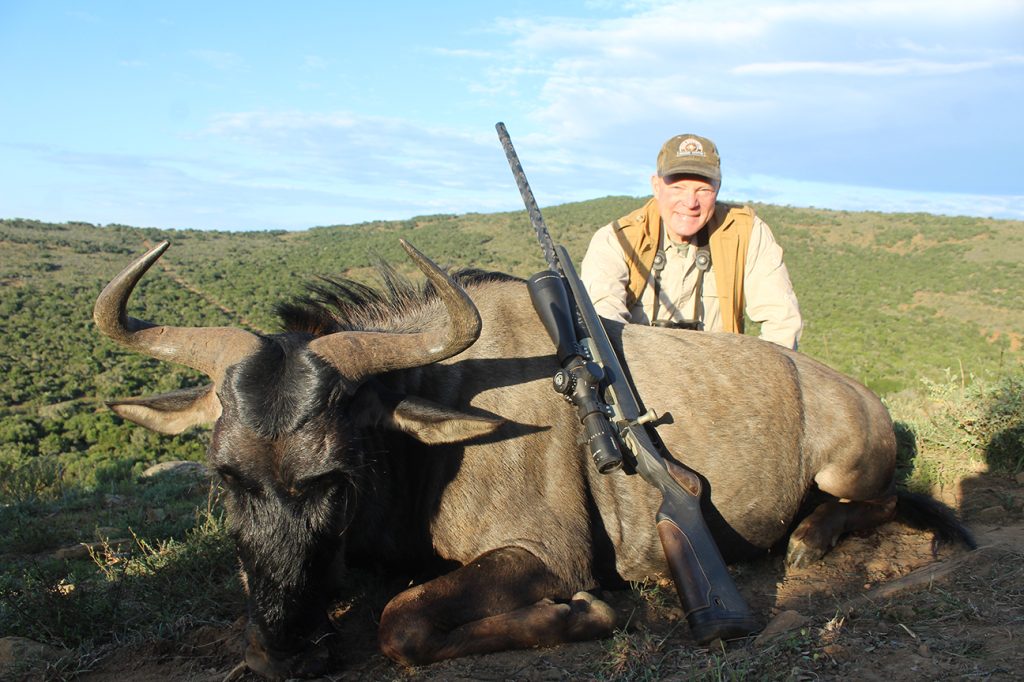
I saw a herd of javelina moving though the cactus across a canyon in Arizona, and when it proved hopeless to get the friend I was hunting with onto the animals—“Where?” “Right there!”—I went ahead and killed a boar with my .220 Swift. I wounded a blue wildebeest in the Waterbergs and trailed it over hot miles of ground with a dog named Jock. We finally jumped it, and Jock was on it in a blur, clamping onto its muzzle. I had to wait to take the killing shot until the bull shook the little dog off into the air. In the sunset among tall trees in the Central African Republic, I sat on a termite hill, drained, looking at the marvelous carcass of a giant eland on the ground as the tracker danced and chanted, and lions began to roar.

I have these memories not only because I was able to put myself in the times and places to find them, but because I made them–the way you frame and side a house. I carpentered them in my mind, and they last, another important meaning of the word. Many hunters seem to remember the taking of the animal, but not much else: not the light, the weather, the travel, the sounds and the voices, how it was to sleep and to awaken in a wild place, the food, the people, the friends. It is as if those hunters read the final page of a mystery and all they know about the book is who done it. 

Every hunt that leaves you with a multifaceted memory is a successful one. And there inevitably comes a time when there will be more memories than hunts. I can’t tell you that you have to make any certain number of memories, because as philosopher Ortega y Gasset said, “I am I and my circumstances,” and not everyone’s circumstances are the same. And quality is very much more important than sheer quantity. I am saying, though, that while you should not be reckless, you should not be afraid to take a chance on having a “bad” hunt, at least once in a while. What’s the option—just because you think it wouldn’t turn out perfectly, not to have gone hunting at all? To have nothing to remember when memories, one day, could be all that you have left?

The other consideration is not to wait too long. The late hunting broker, Jack Atcheson, Sr., had as the slogan for his company: “Go hunting now while you are physically able,” which as slogans go is a pretty sound one. But there is also a case to be made for going when you are mentally capable.

There is a dichotomy to hunting and growing old. Geezers tend to become more hesitant about any number of things, and hunting can be one of them. The converse, though, is that the old have less to lose. Many things are paid for, children have been raised, spouses have gotten the better part of you–or they are happy to see you go, the Japanese having a saying that a good husband is healthy and far away. Even if logic tells us that we have experienced lasts, we don’t have to declare them absolutely so, ahead of time.

At seventy, I am going to do my utmost to think of nexts, to come by new memories, not merely to recycle the old. Is that being realistic? You tell me.

The rest of the Bible verse reads that if by reason of strength we can reach fourscore years, yet most of them are labor and sorrow; for it is soon cut off, and we fly away.

Not to cast doubt upon the Bible, but perhaps that is not the way it has to be, that the next ten years are to be gained solely through labor and sorrow. The only way to find that out is to live those years to the best of one’s ability. And when we do at last fly away, we will have at least carried on as long as we could, as well as we could, spreading our wings.    

A happy man in Africa.
Photo by Thomas McIntyre


Leave a Comment

An Easy Ibex

Is there such a thing?

Photo above: Packing out a Siberian ibex in Mongolia’s Altai Mountains. The Altai can be rugged, but the Mongolians are great horsemen, with horses commonly used for hunting both ibex and argali.

Procrastination is part of human nature. Many of us want to travel to various places and savor various experiences, but it’s easy to put it off. Wait until the last child is out of school, wait until retirement. It seems to me the pandemic gave us a small dose of reality, a better sense of just how uncertain “certain” things can be. My old friend and mentor Jack Atcheson Sr.’s consistent marketing slogan was: “Hunt now, while you are able.”

Always good advice, but it seems to me the Dread Virus forced a lot of us to take a new look at our “bucket lists,” and maybe move forward some of the hunts we’ve been putting off. Hey, there’s a lot of great hunting that’s perfectly practical for folks my age, and a whole lot older, and in worse health or condition. Mountain hunting, however, is something else. I have noticed that the mountains have gotten steeper. I’m happy I did a lot of that in my forties and fifties. I hate to admit it, but there are some past mountain hunts that I shouldn’t (perhaps couldn’t) repeat. Fortunately for me, I don’t need to. There are still some mountains I’d like to climb, but I climbed my share.

Glassing from a rocky ridge in Mongolia’s Gobi. Gobi has rocky ridges rising from a high steppe, but little elevation. Both Gobi argali and ibex are found in rolling country like this.

This past convention season, I talked to a lot of folks considering, if not a first, then a first “out of country” mountain hunt. We all know how crazy prices have gotten for most sheep hunting, but the under-appreciated goat family remains a solid bargain! The experience is much the same. In fact, in many areas, various sheep and goats share the same mountains, and are hunted from the same camps with the same mountain guides. Wild goats aren’t usually as tasty and tender as wild sheep, but the magnificence of a long-horned ibex really does compare well with any sheep, often at a fraction the cost.

But most people’s primary concerns weren’t usually about cost. Most questions were along the lines of: “Do you think I could handle that hunt?”

Obviously, I can’t answer that question. Getting up the mountain is mostly mental. Far more important than age or condition is the will. I can’t evaluate that in a casual encounter, and I know nothing about “underlying conditions” that, by a certain age, most of us have. However, most mountain animals are similar in habit and habitat, but their mountains are not created equal! Some mountain ranges are high, rocky, and steep; other ranges are lower, and some are gentler.

Packing out an Alpine ibex in Switzerland. The Alps are tall and steep, but excellent hiking trails make European mountain hunting much easier than the mountains appear.

Mountain hunters would like us to believe that every hunt for a sheep or a goat is a death-defying cliffhanger. This is simply not true. It is true that goats tend to live in steeper, nastier country. The axiom goes: “Goat country starts where sheep country stops.” However, this is relative; difficulty depends on the elevation and steepness, and also on access. Some mountain hunts are just plain tough. I think of the tur hunts as being among the toughest, simply because the Caucasus range is unusually abrupt and steep. The hunt in Nepal, for blue sheep and Himalayan tahr (one sheep, one goat) is among the toughest, occurring unusually high elevation, and you must walk uphill for days to get into game country. Nepal is a postgraduate mountain hunt!

It is also not true that goat hunts are “always cheaper” than sheep hunts. With few permits, hunts for markhors are among the costliest in the world. From my perspective, I think the two ibexes in Pakistan (Sindh and Himalayan) are expensive, and costs to hunt Bezoar goats (Persian ibex) in Turkey have gone up significantly. Especially now, with Switzerland closed to foreign hunters, the Alpine ibex is frightfully expensive. But there are still a lot of awesome goats at reasonable prices. Rocky Mountain goats die of old age in Stone sheep country, where hunts are a fraction the cost. In Mongolia, Gobi and Altai (Siberian) ibex share their range with argalis, hunted from the same camps, with the same guides, same experience, at a tiny fraction the cost. Likewise, mid-Asian ibex in Kazakhstan, Kyrgyzstan, and Tajikistan, where ibex occupy a larger range than the argalis.

Then there are the Spanish ibexes. At the start of my career, Spain’s ibex herds were at a low ebb, permits almost unattainable. Since then, ibex populations have exploded all over Spain. Today there are about as many permits as can be sold, keeping costs competitive and reasonable. The little chamois offers a wonderful hunt all over Europe. Costs vary with area and subspecies but, with wide availability, chamois are available and affordable.

A nice Gredos ibex, taken in the Gredos Reserve in central Spain. Most Spanish ibex permits are for just three days. Provided weather cooperates, success is expected. Boddington considers the Spanish ibex hunts some of the easiest of all mountain hunts.

So, there are lots of opportunities to hunt various goats without breaking the bank, but few (if any) inexpensive opportunities to hunt sheep. But what about difficulty? “Can I handle this hunt?” Is there an “easy ibex?” Probably not, but actual difficulty depends largely on the mountains themselves, and how you get into them!

Hunting the mid-Asian ibex can be difficult, because their mountains tend to be tall and steep. Some outfitters use horses, but at least in my experience, road access is limited. In Pakistan, the Himalayan ibex is hunted in the north, amid some of the world’s tallest peaks. Tough hunt! On the other hand, the Sindh ibex is hunted in the southwest, in arid Baluchistan, in rocky but low ridges. There, neither the ibex nor the urial sheep offer especially tough hunts.

Hunting Gobi or Altai ibex in Mongolia is usually not especially tough. Gobi live on low hills and ridges above broad valleys, with much glassing done from 4WD vehicles. Neither the Gobi ibex nor the Gobi argali offer especially difficult hunts. The Altai range is higher, with much less access, but the Mongols are great horse people. Horses are commonly used for both ibex and argali, saving a lot of footwork…unless you’re allergic to horses. If you are, mountain hunting may not be for you!

Hunting Bezoar goat in Turkey varies tremendously. Some of the mountains in Turkey, like the Taurus range, are high and steep. However, Turkey’s ibex have also flourished and are widespread today, so difficulty varies. In Turkey, I’ve glassed a lot of ibex from roads and, along the Mediterranean coast, ibex can be glassed from boats (not unlike a lot of Rocky Mountain goat hunting in southeast Alaska). Either way, spotted from a vehicle or boat, it can be a tough uphill pull to get to the ibex, but that depends on your luck. 

A good Bezoar goat (Persian ibex), taken in the Taurus range, southeastern Turkey. These mountains are tall and steep; it was one of Boddington’s toughest ibex hunts, but some of Turkey’s ibex country is lower and gentler.

The Alps can be steep, but European mountains are crisscrossed by hiking trails. Hunting Alpine ibex is generally not high on the difficulty scale; it’s more a matter of cost, because so few permits are available. 

Spain probably offers the consistently easiest ibex hunting I have ever done. Part of this is because there are a lot of ibexes today! Part of it, too, is that Spain is a modern European country with an extensive road network. In Spain (and also in Turkey), we’ve driven to the top and hunted down. Failing roads, there are plenty of good trails.

We crazy mountain hunters have long insisted there are four different ibexes in Spain. Great marketing, but size and horn configuration do vary. Habitat and hunting techniques also vary! In Gredos, we took horses partway in, then walked uphill, encountering plenty of ibex. The Beceite ibex is different, hunted in forested hills, low elevation but a lot of trees in the way. Much glassing is done from roads and, even on foot, the country is not difficult, neither high nor especially rugged. The great Spanish hunter Ricardo Medem was with me when I took my first Beceite ibex…shortly after his heart transplant. He did just fine!

Boddington and the late Ricardo Medem with Boddington’s first Beceite ibex. Medem was in recovery from a heart transplant and he got to the ibex just fine, not a difficult hunt.

Spain’s Southeast ibex occupies the high, rugged Sierra Nevada range. This hunt can be tough, but doesn’t have to be. My Southeastern ibex was taken low, by waiting for a group to come down to feed; Donna’s was taken just up from the Mediterranean, not a difficult hunt. For me, the smallest Spanish ibex, the Ronda, was the most difficult, partly because it is also the most limited in range with the smallest population. That one we did some serious climbing for! But nothing like the climbing I’ve done in the big mountains in Central Asia. With limited exposure, I can’t say the Ronda ibex is consistently the most difficult—but few hunters will start their mountain hunting adventures with this, the smallest ibex.

Whether there’s such a thing as an “easy ibex” depends largely on your luck. But, for most hunters in at least average condition—or with extra determination—the answer to “Can I do this hunt?” is generally yes . . . for some wild goats, in well-chosen places.

Outfitter Alvaro Villegas of Eurohunts and Boddington with his Ronda ibex from southwestern Spain. The Ronda is the smallest of Spain’s ibex and, for Boddington, the most physical hunt…but still not a cliffhanger.

Leave a Comment

Arctos

In search of tundra grizzlies on Alaska’s North Slope.

It was just after two o’clock in the morning, but in the high latitudes of the Arctic, darkness had not fully fallen. Sitting on a knoll a hundred feet above a nameless river that rushed through the gray, treeless tundra, I scanned the empty landscape while raindrops filled the eyepiece of my spotting scope. 

“What do you think?” I asked my nineteen-year-old guide, Geordy Pine. Though young, Geordy has spent much of his life in remote corners of the Alaskan bush and his depth of knowledge of Arctic game exceeds that of hunters twice his age. I waited for a response while he sighed and looked up from his own spotter. 

“It’s getting dark, and this rain and fog isn’t helping.”

“Should we get the others or leave them?” The plan had been to watch for game around the clock since we’d been delayed for a day and a half in Fairbanks and lost that hunting time, but the weather conditions were making glassing futile.

The whole hunting party was wet and tired. We’d let the others sleep and check the weather again at four o’clock. If the rain had stopped and the fog lifted, we would resume glassing for bears. If not, we’d wait until later in the day.

The hunters flew in to a wilderness airstrip, then motored upriver to base camp.

Into the Arctic

The spike camp from which we were glassing that foggy night was in one of the most remote regions of North America. We were on Alaska’s North Slope, north of the Brooks Range and 160 miles upriver from the nearest airstrip. The region is comprised of short-grass tundra that stretches from the town of Point Hope on the Chukchi Sea three hundred miles to Prudhoe Bay and beyond, a huge tract of land with few human inhabitants. Much of the landscape is dominated by hills covered by cottongrass tussocks and braided rivers, and in eons past the whole region was covered by a shallow sea. Because of this, the ground of the North Slope is rich in oil and natural gas deposits—50 billion barrels worth of which had been extracted by 2005—and the steep, rocky cliffs that border the rivers still hold fossils of prehistoric beasts. 

Great beasts still roam this remote, roadless wilderness. Herds of shaggy brown muskox thrive here, and each fall the Western Arctic caribou herd migrates across to the Brooks Range in the south. Wolves are more common and more frequently seen on this wide-open tundra than in forested habitats farther south, and the tracks of Arctic grizzlies are commonly seen on the sandbars along the river channels.

Alaska’s North Slope is a lonely but beautiful place.

Grizzlies were what brought us to the area, but getting so deep in the Arctic is no easy chore.  After our delay in Fairbanks, four of us—Tom Beckstrand, Shawn Skipper, Neal Emery, and I—flew north to an airstrip and loaded our gear into two rubber rafts with jet motors for the ten-hour ride upriver to base camp. The base camp was set on a large gravel island in the river and consisted of three sleeping tents and one dining tent, and from that isolated location we could fan out even deeper into the wilderness. Rafts were the primary form of transportation, but much of the hunting required hiking to the peaks of the low hills and glassing the tundra for hours. 

Arctic grizzlies are smaller than their coastal cousins, with big boars weighing between 600 and 800 pounds. And while the bears are relatively abundant in this remote corner of the Arctic, finding them on the open tundra is challenging. Dense shrubs grow along the rivers, and sometimes these shrub thickets stretch for miles. Bears use this cover for concealment, and finding them requires lots of glassing and substantial luck. 

The morning after Geordy and I had glassed the ridge, the rain stopped and the veil of fog lifted from the river valley. By 9 a.m. I returned to my post on the hill to glass for game, keeping watch over the open tundra to the southwest of the camp. The night before we had seen a couple of caribou far across the tussocks near the base of another hill, but there was nothing moving that morning. 

Shawn Skipper climbed up the hill to relive me and he told me that we were packing up our spike camp to move deeper into the Arctic in search of bears. He also gave me breakfast, which consisted of a Clif bar (I’d missed the morning meal of oatmeal). Following Shawn were Tom Beckstrand, Geordy, and a second guide, Randy.

From base camp, the hunters spiked out on the tundra, spending long days glassing for grizzlies in tough weather.

Tom said he’d already packed my things and broken down my tent, which was a relief. This far from any assistance, we had to work as a team. The unpredictable weather, unrelenting mosquitoes, unreliable animal movements, and a near-total lack of luxuries could easily have resulted in a lot of grumbling, but our group, including our guides, worked hard without complaint. The bears were here—we simply had to find them. 

I headed down the hill and found that, as promised, my gear was packed. The tents were folded and had been carried to the rafts, and the last of the gear was being hustled down to the gravel bar. Because of frequent changes in the weather, it was crucial to keep rain gear handy (rain fell in cascading plumes across the tundra every day, sometimes missing us, sometimes settling in directly above us). I was sorting through my pack to find my raincoat when I saw Tom running down the slope.

“Bear, bear, bear!” 

I dropped my raincoat and ducked behind a screen of chest-high willows on the riverbank. Tom watched the opposite bank while he chambered a round in his.338 Winchester Magnum, and I remained hidden behind the willows with my binocular and scanned the opposite bank. By then, Geordy, Shawn, and Randy had also made it to the shore beside us and all of us were looking in the same direction. 

“There it is,” Randy said as Tom set up on his shooting sticks. Neal also said he saw the bear. I peeked higher over the branches of the willows, but could see nothing. 

Finally, I saw the bear on the edge of the willows across the water. The grizzly emerged from the willows on the opposite bank, its heavy shoulders rolling under its massive hump of muscle. Silver tips on the bear’s chocolate fur highlighted every powerful movement. Its broad head swung a little side-to-side as the grizzly worked its way toward us across the river, closing the distance. 

The bear finally stopped and lifted its head, staring in our direction. Tom was solid on the sticks, and when the rifle cracked and the bullet struck, the grizzly dropped immediately. 

We climbed into the boat and motored across the rushing water to a spit of sand upriver from the bear. There had been no sign of movement since the shot, but with grizzly it’s far better to make a careful approach and ensure that the bear has expired. But Tom’s shot had been well placed, and he had his grizzly.

A long ride into camp.

Close Range

My chance for a bear came through sheer luck, and it taught me several valuable lessons regarding personal safety in the land of grizzlies. Namely, when you’re in bear country you must prepared for an encounter at any moment. Bears can appear suddenly and without warning, and they can be quite close. Such was the case with my hunt. 

We’d seen a grizzly earlier that day while glassing a different section of river thirty miles from where Tom’s bear was killed. That bear was two miles or more away, appearing for a few seconds on the edge of a patch of shrub willows that probably covered thirty acres. Digging the bear out of that would be difficult, and odds were that we couldn’t approach without spooking that grizzly. 

We decided to move, and chose a low hill close to the river as a vantage point. That hill was separated from the water by about a hundred yards of dense willows. When we landed the boat, Geordy stepped out to find that the water was eight feet deep beside the bank. He had to pull himself back in the raft and reposition, and after our landing, Geordy, Neal, Shawn, and I had to fight our way through the shrubs to the base of the hill. It wasn’t a stealthy approach, to say the least. 

The knob wasn’t very high, rising perhaps sixty feet above the surrounding tundra. Geordy was the first one to reach the crest, and he immediately turned and grabbed my jacket. 

“There’s a bear right on the other side of this hill!”

I had my riflescope on low power, and that turned out to be a wise decision, for when I asked Geordy how far away the bear was he said, “thirty yards!” in a harsh whisper. 

There’s a rush of adrenaline that accompanies any encounter with dangerous game at close range, and as I peeked over the crest of the hill, I knew things would happen very quickly. In the willows below I saw only the bear’s blond shoulder hump parting the shrubs like the fin of a shark splitting still water. The bear was moving to my left, and there was just a moment to shoot. I raised the rifle, pushed the safety forward, and when the great bear cleared the willows and paused in an opening forty yards below me, I fired. 

The 225-grain bullet struck hard, dropping the big bear at once. It regained its feet and turned, and I fired again, striking the front shoulder with the second shot. The first shot had done the job, and the second had been insurance, but when Geordy had an issue with his backup rifle and the bear moved again, I fired a third shot. With just thirty yards between the grizzly and us, I decided discretion was the better part of valor. 

The bear was an old boar with scars, a heavy, broad body, and a coat of blond hair that darkened to nearly black on the muzzle and legs. It was a classic Arctic grizzly hunted in the classic method, on foot in the open tundra. 

When the bear was skinned, butchered, and back at base camp, we took some time to fish in the rushing waters of the river that wrapped around the island. Some believe that bear meat is unpleasant and even unpalatable, but those who know how to correctly care for and prepare bears—even Arctic grizzlies—can testify to the fact that the rich, flavorful meat is delicious when cooked properly. With bear meat chilling in the shade and the hide being prepped for the fly-out, we relaxed by casting into the shallows and bouncing spinners over the rocks. 

It was hard to believe that it was nearly midnight because we could still see a long way into the distant hills. I’d never been so far away from civilization, and it was refreshing—especially as the rest of the world was suffering with the coronavirus pandemic and escalating political tensions. Perhaps that’s why hunters seek out places like the North Slope. Life is short, and there are many wonderful places to see. And in some of the most magnificent places, it’s still possible to find true solitude. 

Fitzpatrick and his interior grizzly, taken at close range with a .338 Winchester Magnum.

Optics for Alaska

Hunting in the treeless expanses of the Alaskan Arctic require excellent optics. For this hunt, I used Leupold’s SX-4 Pro Guide HD 15-45x65mm angled spotting scope ($1,039) on a Leupold Carbon Fiber Tripod Kit ($599.99). The setup was light enough to carry up steep hillsides on glassing missions and the Twilight Max HD light management system allows hunters to clearly see objects even in low light conditions. Binoculars are important too since you won’t always have enough time to set up a spotting scope, and the BX-5 HD 10×42 Santiam binocular  ($1,299.99) I used was versatile, rugged, and just-right-sized. 

On my rifle I mounted a VX-6 HD 2-12×42 Leupold ($2,079.99), a scope which has quickly become one of my favorite hunting optics because of its superb light management system, clarity, and versatile magnification range. Lastly, a good rangefinder is a must-have item, and I carried Leupold’s RX-2800 TBR/W which has ½ yard accuracy to a range of 2,800 yards. Being able to range items that far away is a bonus because it tells you just how far you’ll have to hike over tussocks to reach an animal on a distant ridge. 

Leupold’s American-made optics aren’t the cheapest on the market, but they’re clear in low light and extremely rugged, standing up to the abuse of daily carry up and down mountains and frequent drenching rain. Having good optics are critical when hunting the Arctic, and second-rate glass simply won’t cut it under these conditions.

Loaded for Bear

Arctic grizzlies aren’t enormous by bear standards, with big, old boars weighing between 600 and 800 pounds. However, they’re muscular, powerful, and potentially dangerous. For that reason, I used a Savage 110 Bear Hunter chambered in the powerful .338 Winchester Magnum. The rifle is equipped with a fluted barrel and selective muzzle brake that can be turned on and off as needed, and the polymer stock and stainless-steel metalwork is designed to stand up to the harsh elements of northern Alaska, which it did. 

Ammo selection is also critical when hunting grizzlies, and I elected to use Hornady’s Outfitter load with 225-grain GMX bullets. This ammo features sealed, nickel-plated cases that are able to withstand moisture and the monolithic GMX bullet performs reliably even when shooting large game with heavy muscle and bone. With a muzzle velocity of 2,800 feet per second, the Outfitter GMX bullet generates over 3,900 foot-pounds of energy at the muzzle. At 400 yards the bullet is still traveling over 2,000 feet per second and generates over a ton of energy at that distance. 

Topped with a Leupold VX-6HD 2-12×42 scope, this versatile rifle setup is ideal for heavy or dangerous North American game to a quarter-mile or more, making it the ideal setup for hunting Arctic grizzlies. 

Leave a Comment

Devil Birds of Hells Canyon

In pursuit of the challenging chukar partridge on a cast-and-blast river trip. 

The call echoed across the dry, rocky slope high above camp right after sunup. Chuk-chuk-chuk-chuk. Chuk-chuk-chuk-chuka-chuka.

Daren Cole, one of my hunting partners, heard it too. “It sounds like the chukar are laughing at us,” he said.

I was pretty sure he was right as I shrugged into my orange vest, located my shotgun, and studied the steep mountainside looming behind my tent. The vocal gamebirds had been testing our legs, lungs, and willpower for three days, and it looked like they had another graduate-level exam ready for us this morning.

Four of us headed up the mountain, following Ceder, the German wirehaired pointer, who bounded up the grassy slope and began casting back and forth between the rock outcrops and clumps of brush above us. We could still hear chukar calling from the ridgetop. Ceder worked his way higher and higher, and we followed, clambering over red boulders and ducking around thickets of brush. The dog disappeared over the top, and I increased my pace to double time. Hustling over the crest of the ridge, I spotted Ceder. His head was buried in a patch of brush on the edge of the precipice, his motionless rear end and straight tail clearly indicating he was on point.

As my hunting partner Nate Ratchford jumped up on a boulder to the dog’s right, I ran to cover the left. Two chukar flushed to the right with a heart-stopping rush, with just time for Nate to get off one quick shot before both birds put on their afterburners and screamed out of sight beneath a rock ledge. Ceder trotted after them, but by his unconcerned manner, I knew Nate had not connected. We were both panting from the hard sprint over the ridge and grinning from ear to ear.

We were still recovering from the effects of the exertion and the adrenaline rush when Daren and another member of our hunting party, Ashley Thess, caught up with us. We tried to continue our way across the mountain slope into the wind, following Ceder, but the sheer face became steeper and steeper and we soon found ourselves cliffed out. Turning back, we returned to the ridgetop, where we stopped to admire the view of our riverside camp, a collection of white tents and bright blue rafts so far below us they looked like miniatures. I could just see the ant-like figures of our river guides as they worked to strike the tents and pack up the rafts in preparation for the day’s float. 

It was the last morning of a four-day cast-and-blast float trip through the magnificent Hells Canyon. Cutting a jagged slice along the border of Oregon and Idaho, Hells Canyon is the deepest river gorge in North America—even deeper than the far more famous Grand Canyon. Far below where we stood with our shotguns, and well over a mile below the very top of the canyon rim, wound the mighty Snake River, our highway through chukar country. The canyon itself, part of the Wallowa-Whitman National Forest, contains some 214,000 acres of wilderness, almost all of it inaccessible by road. 

These sixteen-foot rafts transported the hunters, their guides, and gear about thirty-four miles down the Snake River.

The difficulty in access, combined with excellent habitat, makes Hells Canyon a top destination for hunting the challenging and elusive chukar partridge. The Snake River is also a world-class fishery. Smallmouth bass and rainbow trout can be caught all year, with hundred-fish days a distinct possibility, and the river also hosts runs of steelhead and chinook salmon in the spring and fall. 

All of this makes it a perfect destination for a cast-and-blast river trip. Our float, outfitted by America’s Rafting Company based in Cambridge, Idaho, took us about thirty-four miles from the launch point just below Hells Canyon Dam to our take-out point at Pittsburg Landing, Idaho. Along the way, we ran some Class IV rapids, camped along the river every night, and fished for the river’s many species–all the while being treated to magnificent scenery and sightings of black bears, bighorn sheep, and bald eagles. Best of all, though, the guides would periodically beach the rafts at likely-looking spots, setting us free to hike up the steep walls of the canyon, shotguns in hand and dogs casting eagerly ahead, in search of chukar. 

Chukar partridge were introduced to the American West from their native range in southern and central Asia, and the high desert slopes of Idaho, Nevada, and eastern Oregon suit these birds to a T. The chukar is an attractive bird, with dark stripes on its side and a banded head and neck with a red bill, but its most striking feature is its ability to run, covering incredibly steep terrain with agility, staying ahead of even the most athletic pointing dogs and earning it the nickname “devil bird” from the often-frustrated hunters who try to chase it.

Because chukar live in such parched terrain, water is key to hunting them. Although it had been an inordinately dry summer in most of the West, we had been unlucky enough to start our float just after a significant rainfall had drenched the Hells Canyon region. The coveys, which would normally be concentrated along the river’s edge this time of year, had no need to fly down to the water, since the numerous rocks and ridgelines high up on the canyon walls still held pools of moisture. And since the birds weren’t coming down . . . well, that meant the hunters would have to go up.

Nate, Daren, Ashley, and I were all first-time chukar hunters, but we had a secret weapon along: chukar-hunting guru Matt Hardinge, who joined us on the trip with his two talented and tireless German wirehaired pointers, Ceder and Summit. On one of our first hunts with Matt, we watched in awe as he and the dogs effortlessly scaled an almost-vertical, brush-choked slope and topped the ridge in minutes. Stumbling and panting in his wake, I was nowhere near close enough when a covey of chukar flushed, seeming to fly in all directions. After a missed shot, Matt and the dogs pursued a couple of the singles, but the birds had quickly learned their lesson and stuck to running, outdistancing even their ultra-athletic pursuers. I was not surprised to learn later that Matt’s other hobbies include rock climbing and mountaineering, which would seem to mesh perfectly with chukar hunting.

Chukar guru Matt Hardinge on the mountain with his German wirehaired pointers, Ceder and Summit.

Despite the overcast, chilly October weather, every day of our float trip was a magnificent blend of relaxation and adventure. Each morning started with a hot, hearty breakfast, followed by some hunting time while the guides broke down camp. Then we’d drift downriver for a couple of hours, our guides expertly steering the rafts through long, slow pools and occasional splashy rapids that bounced the rafts, elicited lots of shouts and laughter, and soaked any parts of our anatomy not covered in rain gear. All the while we were casting spinners for rainbow trout and tube jigs for feisty and abundant smallmouth bass; one memorable morning I landed ten big rainbows. 

After a shore lunch we’d usually try again for chukar, scrambling up the canyon walls on either the Idaho or Oregon side. Once we stopped to marvel at pictographs painted on the rocks—artwork estimated to be 2,000 years old—and several times we passed the remnants of frontier homesteads, the fruit trees they had planted the only thing remaining of their long-ago dreams. 

Afternoons would bring more floating and more fishing, with a well-appointed shoreside camp and a hearty dinner awaiting us at dusk. Once we trolled crankbaits through an eddy to entice steelhead and salmon, and long after dark one evening, we all piled on the rafts and aimed our headlamps into the water as a prehistoric-looking six-foot-long sturgeon was caught and gently released into the dark depths of the Snake.

Chukar hunting in Hells Canyon requires tough hiking on steep slopes, but the birds are there, and the views are well worth the effort.

On the third afternoon, high above the river with shotguns in hand, Nate, Daren, Ashley and I were keeping pace with Matt, Ceder, and Summit across a rocky sidehill, which meant the slope must have been less steep or else we were all finally finding our chukar legs. It was ideal habitat for the birds, and as we passed towering red rock outcroppings, Matt pointed out their ice-cream-cone shaped droppings and a couple of abandoned nests. 

After some time watching the pointers work the slope ahead, Matt made the call to turn around. As we headed back through a jumble of boulders, Nate, who was slightly ahead, spotted a chukar that leaped to the top of a rock ahead of him. As it flushed, another bird erupted from somewhere and flew over our heads. All the shots at both birds were misses, and although we worked back and forth through the area with the dogs for another twenty minutes, we could not put the birds up again.

“Surprising to find only a couple of birds together,” Matt remarked, speculating that another group of hunters might have worked the slope the day before and scattered the covey. 

Fortunately for our palates, he had dropped three chukar the day before, and we enjoyed “chukar bites” that evening: delicious nuggets of chukar meat lightly breaded and fried. They were served alongside a filet of fresh-caught Chinook salmon: a true Hells Canyon surf-and-turf.

The riverside camps were well-appointed, with roomy tents and excellent meals.

Before we shoved off on the last day, our guides rowed us across the river from Oregon to Idaho to give the elusive birds one last try. Ashley and I worked across the slope parallel to the river, flushing a covey of chukar far out ahead of us, where they landed and, naturally, ran uphill. Matt and Nate pursued them to the top of the ridgeline. When a group of birds flushed, Matt got a shot and dropped one, Ceder finding it easily in the rocks and returning it to him with aplomb. That made a total of four birds in the bag over our four-day hunt—all of them Matt’s, and deservedly so. 

As we made the final float down to our take-out point, the canyon widened, opening up new, magnificent vistas around every sweeping bend of the river. I had traded my shotgun for a spinning rod, but between casts I studied the mountainsides, reflecting on my newfound respect for the fascinating “devil bird,” and especially for the mountain-savvy hunters and dogs who pursue them. It was a rare privilege to experience a true fair-chase hunt for wild chukar in one of the most spectacular river gorges in the world.

A wild chukar taken in Hells Canyon by Matt Hardinge.

Benelli 828U

All five of us on my Hells Canyon adventure were carrying 12-gauge Benelli 828U shotguns. Of course, I spent a lot more time hiking with my shotgun than I did actually firing it, an experience that, I’m told, is not unusual in chukar hunting. But I like the 828U so much I previously bought one in 20-gauge and have used it extensively over the past year for shooting clays as well as hunting doves and pheasants. It’s soft-shooting, fits me well, and carries and points like a dream.

A lightweight, well-balanced, and ultra-reliable shotgun is an absolute must when you’re hunting mountain birds in a wilderness setting, and the 828U fulfills those requirements to perfection. It features a patented steel locking system, which eliminates wear and tear on the receiver and hinge that can cause traditional over/unders to fail. By incorporating this system into an aluminum receiver, Benelli’s engineers created a shotgun that is stronger and safer, while still balancing beautifully and weighing just 6.5 pounds.

Fit is crucial in any shotgun, and the 828U includes shims so you can adjust stock drop and cast to your specifications. This shotgun also features Benelli’s Progressive Comfort System inside its walnut stock. The flexible and lightweight polymer buffers compress to absorb recoil energy, making this over/under comfortable to shoot repeatedly, whether you’re gunning for a limit of birds or practicing with a round of sporting clays.

For more information on Hells Canyon float trips and cast-and-blast trips, click here.

Leave a Comment

Backcountry Sustenance

What to eat and drink on a wilderness hunt.

“I got a fish!” I glanced up from my cooking fire in time to see my eight-year-old son running toward me, a willow fishing pole in one hand and a small high-elevation trout flapping in the other. “Can we cook it in bacon?” he asked.

“You bet! Go clean it and we’ll throw it in the pan with the rest.” He did so, and a few minutes later we hunkered hungrily over the fire, salivating and watching our breakfast sizzle in the pan.

Eating well in the backcountry can pose a real challenge, especially if you are living off what you can carry in your backpack. Weight is the biggest issue, closely followed by bulk; it’s hard to carry enough sustenance for five to ten days in the wilderness. You must plan and pack strategically when heading for backcountry territory where a quick run to the supermarket is completely out of the question.

Breakfast in the backcountry isn’t the time or place for a leisurely meal – it should be simple and fast. A couple packages of instant oatmeal eaten right from their envelopes with a bit of water (hot or cold) poured in, a granola or breakfast bar, and a handful of trail mix or dried fruit will go down fast and offer an early morning boost of energy to get you going. A cup of instant coffee or hot chocolate is quick and easy to make, and will warm you nicely when temps are cold.

When you’re hunting and climbing hard– especially with a heavy pack on your back–you need to consume a lot of calories and protein. To that end, carry nutritious foods like jerky, dried fruit, chocolate, trail mix, and salted nuts for your lunch. If you can accommodate the weight, a pack of tuna wrapped in a tortilla makes an awesome lunch, especially if you get the ranch-flavored tuna. If you love peanut butter, you can use that inside the tortilla instead of tuna. A couple of Clif or ProBar energy bars will round out your lunchtime repertoire. I like to graze on these foods all day long while I hunt, hike, and glass.

Freeze-dried dinners have changed the way we dine in the outback. They’re lightweight and compact and easy to prepare. Best yet, they’re nutritious. Carry one freeze-dried meal to eat each evening. You’ll go to bed with a belly full of warm food, which will set you up with energy and stamina for the following day.

All that said, some of my favorite backcountry food is stuff I forage while there. I carry a small roll of fishing line, a couple hooks and a lure or two, and catch fish from small streams. They are delicious cooked over an open fire, especially if you have a bit of bacon to fry them in. If you don’t have a frying pan you can cook them on their backs in some coals. Any kind of meat you harvest while hunting will taste wonderful when skewered on a green stick and roasted over a smoky fire. Carry a tiny container of salt in your pack to add flavor. And keep your eyes out for edible greens, mushrooms, raspberries, blueberries, and such. Just be sure you can identify whatever berries or mushrooms you eat so you don’t consume anything toxic.

Cooking in the backcountry can be really fun. Problem is, while you’re hunting you must be fast and efficient. To that end I always carry a Pocket Rocket stove, a superb lightweight unit that can heat two cups of water to boiling in about 90 seconds. With one you can heat water for Mountain House dinners, morning oatmeal, and perhaps a hot beverage. If you get chilled during a daytime hunt you can stop for a few minutes and quickly brew up some tea or hot chocolate to drink. These superlight stoves run on compact Isobutane canisters. I find that one 8-ounce canister will usually last me three days. Depending on how long you plan to stay in the backcountry, you may need several. A lightweight titanium or stainless steel pot and a “spork” will round out your cook set.

Another way I commonly cook when in remote territory is over a small campfire. With a small pot, I can easily boil water for my food and beverages, roast skewered meat, or fry fish in the coals. If I expect fish to be a significant part of my diet I’ll bring a lightweight frying pan; it’s worth carrying the extra weight in trade for the extra protein I can gather right from a local stream. And a campfire can really help to warm you and dry clothing if weather conditions are bad. Check the regulations for the area you are hunting to be sure open fires are permitted.

Pure Water

Years ago, while scouting a high desert mesa for mule deer, I got thirsty. So thirsty I couldn’t even spit. My canteens were all empty, my mouth felt like it was full of cotton, and I craved water with intensity that I never imagined possible. Fortunately, I was able to find water and purify it, thereby surviving to write this article. Don’t ever let yourself get to that point. Always know where your next water is coming from, and always have a method of purifying that water.

When you’re scouting unfamiliar territory like I was, it can sometimes be hard to know where you will find water. If that’s the case, follow this rule: Always reserve enough water to get you back to your last known water source. If you use up all your water (except for this reserve) and haven’t located another source, it’s time to turn back and re-supply your canteens. If you don’t, you could end up dead. That sounds dramatic, but it’s a real thing. If you get badly dehydrated you can plummet rapidly into a deadly tailspin. First, you’ll feel thirsty. Then you’ll begin to get disoriented and irrationally thirsty. This is a dangerous stage, because clear thinking and solid decisions are critical to your survival. If you don’t get water you will start hallucinating, and if the weather’s hot you’ll suffer heat stroke. Eventually you will die. The happy ending to this dismal diatribe is that if you simply carry enough water and remain cognizant of your next resupply source, you are in no danger.

Fortunately, throughout much of the backcountry regions we hunt, water is readily available. You can fill your canteen at your convenience from any number of sources. Where water becomes critical is when hunting dry, arid areas like America’s desert southwest. In these regions it is imperative that you carry sufficient water to keep yourself hydrated for either the duration of your hunt, or until you can resupply at a local water source. When backpacking this can require careful planning because water is heavy, rendering it impossible to carry more than two or three day’s worth of water.

I have two favorite water carrying devices. The first is a one-liter stainless steel canteen by Klean Kanteen. With it I can carry water, but I can also boil water to purify it, or for a hot meal or beverage. (Just remember to remove the plastic lid before placing your canteen in the coals.) The second is a Platypus water bag. I like these because they are quiet (no sloshing), they fold into nothing when empty, and they are very tough. I carry several.

There are three primary methods for purifying water. The most popular and versatile is a quality lightweight filter pump. These filter out all the water-born nasties, including heavy metal contaminants. The downside to a pump is that it’s heavy, and can be aggravatingly slow to use.

The next method employs a purifying agent such as iodine or chlorine to purify your water. These tablets or drops are very compact and weigh almost nothing, which is a real advantage. The downside? It takes 20 to 30 minutes for the agent to purify your water, (time can pass excruciatingly slowly if you are very thirsty) and they do not remove anything from the water, such as metal or chemical contaminants. If you are collecting water from an old mine shaft, this is probably not the best method.

Lastly, you can boil water to purify it. A few seconds at a good rolling boil will kill all the nasty stuff in the water. Again, however, this method won’t remove metals and chemicals. If I have a campfire I often will use this method of purifying my water, simply because it’s convenient to fill a pot and set it on the coals and forget about it till it boils. Then remove it from the fire, and once it cools pour it into your canteen.

Some of the most satisfying drinks I have ever had came directly from springs, the water flowing crystal clear and icy cold. These are perfectly safe water sources, and there’s no need to purify water gathered from such a source. Just fill your canteen and drink up.

However, if the water ebbs from underground along an intermittent waterway, purify it. Probably it has gathered some unsavory passengers along its in-and-out downstream travel. Likewise, water from lakes, ponds, and streams should always be purified.

Leave a Comment

The Right Month for Muskox

On a muskox hunt, you have many options for timing. Keep the weather, and the daylight, in mind.

At the hunting conventions, it’s part of my job to talk to a lot of hunters. At the conventions just past, both DSC and SCI, I was struck by the number of people who came by the booth asking about muskoxen, some with an expedition booked, others considering a hunt. Makes sense; the Arctic communities have been locked up tighter than most places through the pandemic, but they are ready to get back to business . . . and life.

Me, I think the muskox is just plain cool, a totally unique animal unlike anything else in the world. However and whenever, the muskox hunt is not exceptionally difficult, generally successful, relatively short, and a great opportunity to see their amazing Arctic habitat without, for example, the pain (and cost) of a polar bear hunt.

A big, old muskox bull caught along a shoreline. This bull shows a lot of unsightly summer matting and molting, but this doesn’t really interfere with a trophy mount.

Things have changed. When I was young, a muskox was an almost impossible prize. Canada’s muskoxen were at a low ebb and had been protected for decades. The only opportunity was to draw a permit in Alaska, but it wasn’t an easy draw and, like all drawing hunts, difficult to plan. Canada offered her first modern permits for nonresident sport hunters forty years ago. I jumped at the chance, hunting on Victoria Island out of Holman Island in November.

I don’t say I wouldn’t do that again, but winter comes early up there! It was my first Arctic hunt; the cold was shocking, but I was dressed for it and had no problems. The challenge that late in the year is the short daylight. Most of our travel was in darkness; we had possibly four hours of effective hunting light, not much time to find and take a good bull. In that short window of daylight, I took a wonderful, heavy-bossed bull. The challenge: twenty hours of darkness in a tent on the ice! Again, it wasn’t the cold; my Inuit guides put caribou skins down on the ice, pegged the tent well, and if too much chill crept in, a Coleman stove, lantern, or just candles, quickly chased it away. But, for a guy like me with borderline ADD, the “nights” were awfully long.

Boddington all set for a long, cold ride in the komatik. On hard ice, the sled ride is horribly bumpy, but the hunter stays out of the wind, so it’s not too bad.

In the 1980s and 1990s, muskox numbers blossomed all across the North, and are still increasing. Today there are lots of choices, and long seasons. Nunavut offers Greenland muskoxen on islands, and barren ground muskoxen on the mainland. The latter gets bigger in the body with possibly larger horns (if you’re lucky), but the two races are visually indistinguishable. Alaska has more permits in more areas (still by drawing) for her introduced muskoxen. Greenland is open, with a large, lightly hunted population and some big bulls. Heck, there’s even been some muskox hunting in Russia. 

I’d be the first to say that few of us really need more than one muskox. But, although usually short, it’s an interesting hunt for a fascinating animal. So, being a glutton for punishment, I’ve hunted muskox three times in Canada’s Arctic, and once in Greenland. All at different times! This is not vast experience, but probably more than most who don’t live up there. 

The Arctic is cold! Fortunately, we have much better cold-weather gear today, just pay attention to your outfitter’s recommendations. The two primary restrictions for Arctic hunting are daylight and trafficability. December through February are too dark; May through September you have all the daylight you want (with extra to spare). Travel is a larger issue. Today, most Arctic hunting is done after freeze-up, October through April, with the hunter in a sled (komatik) behind a snow machine. (For polar bear, this is allowed for travel from the Arctic communities, but the actual hunt must be done on foot or by dogsled.) The ride is drafty and bumpy. There will be many hours of that drafty, bumpy ride, but imagine the stamina of your Inuit guide, hunched into the wind. Actually, that’s one of the charms of a late fall/early spring muskox hunt, just observing how wonderfully the Inuit deal with their environment.

Boddington took this big bull on a summer hunt in Greenland. The coat shows very little summer molting, but this varies among individuals.

In summer, after ice breakup, most Arctic hunting must be done from boats, whether along lakeshores (as for much caribou hunting), or ocean waters among islands and shorelines. It’s not my job to determine which is best. All times and areas are good, but there are differences.

My second muskox hunt was in April, with the late Fred Webb. It was still plenty cold, but that’s normal, and you dress for it. Daylight was the big difference–seventeen hours of it! Lots of bumping and freezing in the komatik, but time to travel and look for muskox. For hunting partners, I had Colonels Charles Askins and Art Alphin, both characters and gone now, and Fred Webb himself was a one-man entertainment center. We got cold, but early spring is a marvelous time to see the Arctic. When I did my one and only polar bear hunt, I chose late April, and it was again a magical time, bitter cold but not brutal, and on a rare calm and sunny day, glorious.

Boddington and Major John Plaster with Plaster’s October muskox, taken on an October hunt out of Cambridge Bay, Nunavut. It looks cold, and is, but October, after freeze up, is probably the best time to combine muskox with Arctic Island caribou.

 My third Canadian muskox hunt was in October, out of Cambridge Bay with Shane Black’s Canada North, today by far the largest Arctic outfitter. Ideally, that’s a bit late, bitter cold with daylight shrinking fast. Here’s the deal: Major John Plaster was hunting muskox. I was not; I wanted an Arctic Islands caribou. Because of caribou movement on Victoria Island, this caribou hunt is best done after freeze-up, and even this window is short because these northernmost caribou drop their antlers early. So, we went in October. John got a fine muskox, and I got a good caribou. It was very cold and days were short, but it was much more pleasant than November, with short days but adequate daylight to hunt and be successful, and almost certainly the best opportunity for a caribou/muskox combination.

And then there’s summer hunting. Because of boggy tundra, summer muskoxen are hunted mostly by glassing from boats, then stalking ashore. This hunting is done in Canada and, in the right places, can be combined with caribou. I haven’t done that hunt in Canada, and probably won’t; I don’t think I can find an excuse to hunt another muskox. Donna and I did a summer muskox hunt in Greenland with Bjorn Birgisson’s Icelandic Hunting Club, at the end of July, and we remember it as one of our most enjoyable North American hunts.

Donna Boddington took this huge muskox on a summer hunt. Muskox are hard to judge. As with Cape buffalo, all have similar-shaped horns, but only mature bulls have the heavy boss at the base of the horns.

The muskox, Ovibos moschatus (“musky sheep-ox”) is an amazing animal, perfectly adapted to its harsh environment, with unusual horns, long hair, and a thick layer of underwood (qiviut) that allows it to survive Arctic winters, and was traditionally gathered and knitted by native peoples. Whether your choice is rug, shoulder, or life-size mount, with a muskox the incredible coat is almost as important as the horns. The muskox looks huge, but most of its profile is hair; the animal underneath the fur isn’t as big as you think! On a summer hunt, I was worried about the quality of the skin. Not a problem! Some of the underwool was molted and shaggy but, for taxidermy purposes, summer coats proved just fine.

Year-round, you need luck with the weather, but along the southwestern coast of Greenland, we caught perfect summer weather. The fjords were full of floating ice chunks in fantastic shapes (iceberg “calves”). We glassed many herds of muskox and could be picky, a difficult luxury when it’s well below zero and a storm is coming fast.

Now, the Arctic is the Arctic, and weather is a factor. On that April hunt with Alphin and Askins, we got caught in a storm along the Queen Maude Gulf. Our Inuit guide had a cousin; we broke into his fishing cabin, and waited out the blow for two days while Askins entertained us with stories of the old Border Patrol. In Greenland, we had glorious weather for three days, then moved along the southern coast to hunt reindeer. Weather caught us there, and although successful, we had rain, wind, and fog the rest of the hunt.

In both Canada and Greenland, most summer muskox hunting is done by glassing shorelines from boats, then stalking ashore. On a calm day this is a wonderful way to hunt muskox!

On any Arctic hunt, you’re banking on good weather. Today, numbers are such that success is routine, but it’s common to lose hunting days to weather. After that storm broke with Alphin and Askins we had just a couple days to take three muskoxen. We got it done, all nice bulls, but when you must wait out weather—or know there’s a storm coming—you can’t always be as picky as you’d like. That was the beauty of our Greenland hunt: Mildest time of year, blessed with good weather. We cruised the fjords, glassed herds up on green slopes, with our guides insisting on minimum thirteen-year-old bulls. That’s a rare luxury with muskox hunting in any month of the year.

Leave a Comment

Big Warthogs

Warthogs are common throughout most of Africa, but big ones are never easy to find.

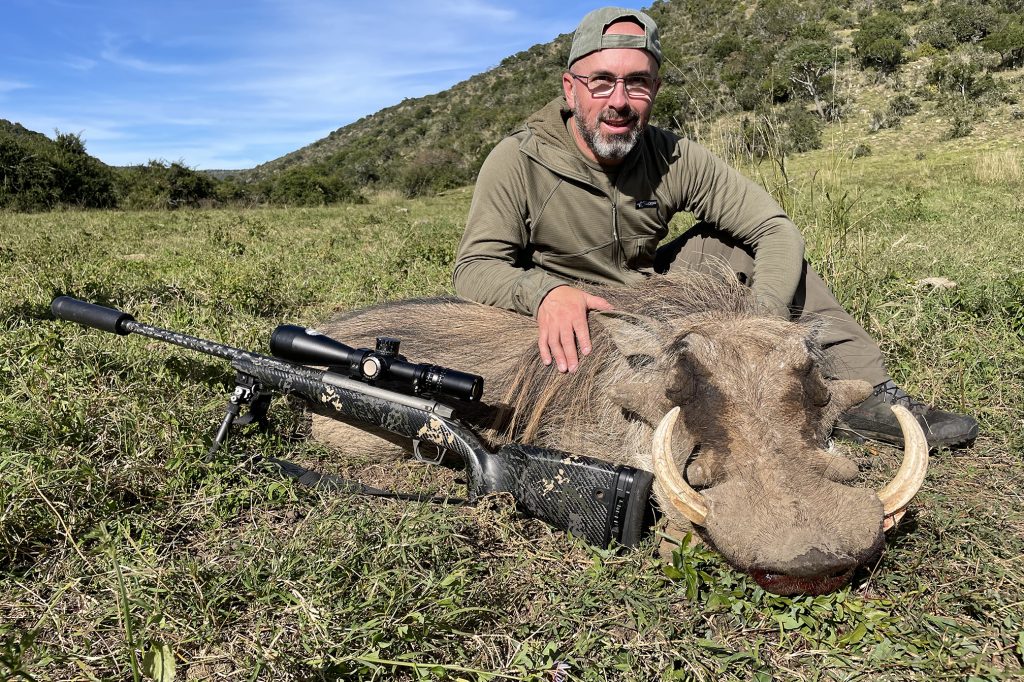
Photo above: This is a young boar, probably about four years old. Warthogs mature slowly; big trophy-class boars are eleven, even twelve years old.

Disney made him famous as “Pumba” in The Lion King. In his landmark work, Great Game Animals of the World (MacMillan 1969) veteran African hunter Russ Aitken described him as “the nightmare that walks like a pig.” The warthog is neither a genial clown, nor ugly, but he is an essential part of Africa. What would a waterhole be if there weren’t warthogs slipping in? What would the African bush be like without a warthog ushering her brood away, tails straight up like antennae?

The warthog is one of Africa’s most widespread animals, found from the Horn of Africa to the Cape, and from Kenya to Senegal. Most warthogs are the common and widespread Phaocochoerus africanus. Only recently, hunters began to separate the desert warthog, P. aethiopicus. This pig is smaller-bodied, with facial differences, found from northern Kenya up through Somalia, Djibouti, Eritrea, and in neighboring Ethiopia. I’ve never shot one, but I had a desert warthog in my sights in 1993, in the Danakil Depression near Djibouti. Didn’t shoot; the desert warthog wouldn’t be recognized by hunters for a quarter-century. Ethiopia produces some spectacular warthogs. The pig I was looking at had good tusks, but short of spectacular. I passed. You don’t know what you don’t know.

Today, I suppose I can live without the desert variety, but I dearly admire big warthogs, scarce and hard to come by! Warthogs are common, and in good areas you see plenty, but big ones are another story.

Sue Lombardo took this fantastic warthog on a floodplain in coastal Mozambique. Length is good, shape is beautiful, a wonderful warthog.

In Maun, Botswana, Debbie Peake has long done the recording of trophies for the game department. She reckons an exceptional warthog is eleven or twelve years old, much the same as a kudu or buffalo. Slow growth puts big animals in short supply. This is worse with warthogs. They use their tusks to dig, so breakage is common, especially in stony areas. Also, warthogs must have water. Catch a dry year and the warthogs suffer more than many species, and older boars seem to go first.

So, you can’t stockpile big boars. But warthogs are surprisingly habitual. If you see a good one, make a mental note of time and place. In the Luangwa Valley this past July, with son-in-law Brad, we saw a monstrous warthog. The stalk almost worked, maybe a half-second for a shot, then gone. That pig was huge. Over the next three weeks we saw him twice more, but no shots were fired. With his general location known, that pig’s luck can’t last forever; I assume somebody will get him!

Not every hunter is like me, always excited by a big boar! Exceptional warthogs aren’t easy to find, but not everyone wants one. Through the course of the long African hunting season, most PHs will know where good boars have been seen, thus where to start when a client wants one. Years ago, David Porter and I were hunting in Mozambique’s Coutada 14 with PH Debbie Visser, who knew about a huge warthog living along a boundary road. The first time we saw him he gave us the slip, but we kept our eyes open and David eventually got him.

Warthogs are usually on license and trophy fees are generally low. Big tuskers are cool, and their meat is good. So, my mantra has long been: “Nobody has enough big warthogs.” I’ll never forget one time I failed to recite it: Selous Reserve, 1988. Paddy Curtis and I came around a little bend, and the most amazing warthog I’ve ever seen stood looking at us. Parentheses of thick ivory almost met far above his muzzle. At the time the trophy fee was a couple hundred bucks! Sure, I was counting pennies, but that moment defines “penny-wise and pound-foolish.” We drove on and kept looking for buffalo tracks.

I still think that was the best warthog I’ve ever seen, but who knows? They’re tough to judge, in part because body size varies. In northern Cameroon in 2008, Guav Johnson and I saw some warthogs moving and caught a flash of big ivory. You don’t go to Cameroon to hunt warthogs, but we’d had a lucky hunt and had taken everything we wanted. I’m a sucker for big warthogs!

Guav directed a quick stalk and we got ahead of the pigs and took another look. The boar looked awesome, so I shot him. It was a nice pig, but not as good as we’d thought: The body was tiny, old, and wasted away. Funny, the sows he was with must also have been small!

Guav Johnson and Boddington with a warthog taken in northern Cameroon. This one fooled us; the tusks looked good, but we didn’t realize he was a a very small-bodied warthog.

Ethiopia is known for big warthogs, but on my two safaris there, I saw nice boars, but no giants. Even in the best places, monster pigs are rare! I looked in the current Rowland Ward Record Book (Thirtieth Edition, 2020) and was shocked: Ten of the Top 20 warthogs are from South Africa. Two are from Zimbabwe, and there is one each from Ethiopia, Kenya, Namibia, Senegal, Uganda, and Zaire. (And two “unknown.”) To some extent, provided good habitat and groceries, the big boys are probably where the larger numbers are.

I’m pretty sure the biggest boars are more likely to be found where year-round water is available; where soil is soft; and where harvest and poaching are controlled. I’ll never forget that monstrous pig I saw in the Selous, but there’s only one warthog from Tanzania (No. 30) on the first page of Rowland Ward, seventy-five entries. Go figure: Big warthogs are where you find them!

I was lucky to get a warthog at all on my first safari, on the Tsavo plains in 1977. It had been dry, and numbers were down; I shot the only good boar we saw. I’ve seen the same in the Zambezi Valley: Lots of pigs one year, then poor rains and fewer pigs the next.

If you asked my advice regarding a really big warthog, I’d go with the numbers: Twenty-six of the top fifty warthogs have come from South Africa, mostly along the Kruger Park corridor. Namibia also has lots of warthogs (and a safari industry second only to South Africa). Any area with big numbers will produce some big ones and Namibia does—but just one in the Top 20, no other Namibian entries on the first page. She is an arid country, with stony ground, but I’ve seen a lot of good warthogs there! Such a disparity in entries between Namibia and South Africa goes against everything I thought I knew, so I kept digging.

I am convinced that, right now, coastal Mozambique is one of the best places to look for a really big warthog. Conditions are ideal: Plenty of water and year-round forage; soft soil; good management for the past thirty years. I’ve seen great warthogs come into camp every time I’ve hunted there, and I’ve shot a couple of them. But you get three-quarters down the second page of the Rowland Ward listings before you come to the first Mozambique entry for warthog, a monster with 16 1/8-inch tusk, No. 130 in Rowland Ward, taken by my old friend Ted Razook in 1963.

A great-looking warthog, taken in Mozambique in September ’21. Boddington used an old Holland & Holland double in .303 British.

This is perplexing! The Rowland Ward minimum is 13 inches on the longest tusk,  but I’ve seen some that size in the skinning shed. Of course, many hunters don’t get their animals measured (I’m one of the worst!). However, when looking for big animals of any species, my advice always includes checking the record books. When you do this, you must conclude that Mozambique isn’t the best place for big pigs–but I know it’s excellent!

There was no sport hunting, so no entries, during Mozambique’s long civil war, from 1975 to 1992. Little wildlife remained after hostilities, and the restart of hunting was slow.  If it takes a decade for a warthog to mature, then few mature warthogs existed until as late as 2012. I was hunting there then. There were shootable warthogs, but they weren’t common. Today the warthog population has noticeably exploded, and bigger pigs are being taken every year. In a week or so in the Marromeu complex, I expect a chance at a big boar.

Obviously, there’s a time lag. After a twenty-year gap—while South Africa and Namibia’s game flourished—Mozambique had some catching up to do! The record books may someday reflect Mozambique’s recovery, but it’s gonna take years. Meantime, I’m convinced the Marromeu area is a great place to look for a big warthog. And, trust me, when I’m there, I’m always looking.

John Stucker used his Sabatti .450/.400 to take this spectacular warthog in coastal Mozambique. With that curve, there’s wonderful length in the pig’s right tusk.

In September I was hunting with Rye Pletts, a great young PH. He knew where some big pigs had been seen, so we looked, looked some more, and kept looking. Mind you, it wasn’t a single-minded quest for a warthog; we were messing with nyala, hunting bushbuck, looking for buffalo. But, every day, at the right times of day, we’d hit a couple of spots, either glassing or walking in.  We caught a couple of glimpses of big ivory, but old boars are wary, and the days slipped by.

We were near the end when we walked into a pan in late afternoon. Several pigs were feeding near some islands of cover. One boar looked good. The stalk was perfect, the wind strong and steady. When we got there the boar was gone, and then he strolled out of a tiny patch of cover and resumed feeding. I was shooting an old double in .303 British, with pop-up tang receiver sight, so needed to get close. We got the shot at about fifty yards, perfect. He wasn’t a Rowland Ward warthog, just a really good boar. But I know there are bigger tuskers around, whether the record books reflect it or not!

Leave a Comment

Tony Archer (1933-2020)

Tony Archer was one of East Africa’s leading professional hunters during the “golden age” of safari hunting.

Photo above: Tony Archer, left, with his tracker Abakuna.

The 1950s, ‘60s, and ‘70s are considered by many to be the “golden age” of safari hunting in East Africa. Very few of the legendary professional hunters of that era are still with us, and this already short list has suffered a significant loss with the passing of Antony “Tony” Archer shortly after his 87th birthday in February 2020.

Tony’s life story easily justifies a book or two, but always averse to any form of self-promotion, Tony regrettably never penned a book about his own life.  Here are a few of the highlights. 

Tony was born in the Kenya Colony of the British Empire in 1933. While still a schoolboy, Tony could already track, stalk, and shoot. He was shooting antelope for the pot at age 8, shot his first buffalo and elephant at age 16, and had taken all of the Big Five other than leopard while still in his teens.

Upon completion of secondary school (high school), Tony entered military service in the Kenya Regiment and underwent training in Southern Rhodesia.  After completing his national service, he joined the Colonial Police Force and served with distinction during the Mau Mau Uprising of the early 1950s. Though he seemed well suited for it, he chose not to make police work a career, and returned to the full-time pursuit of his passion.  

Fluent in several native languages, a keen student of native bushcraft and hunting practices, and curious about all things wild, Tony became a recognized expert on wildlife and wild country. His knowledge was not limited to only the game animals typically sought by hunters but encompassed all aspects of the bush:  the vegetation, mammals, reptiles, and in particular the bird life of Africa.

Joining the prestigious firm of Ker and Downey Safaris, he became a fully licensed professional hunter in 1957. Soon he was one of the firm’s directors as well as an influential member of the East African Professional Hunters’ Association. 

During his 20-plus years with Ker & Downey Safaris, Tony guided many well-known hunters; among them the screen star William Holden, actor Robert Stack, U.S. Senator Lloyd Bentsen, Jack Heinz (the “Ketchup Heinz”), and Prince Bernhard of the Netherlands. Tony was also one of the two white hunters that guided Jay Mellon (of African Hunter fame) during his four months on safari in East Africa.  

No place was too far or too difficult. Tony hunted, or guided expeditions in Angola, Botswana, the Comoros, the Congo, Ethiopia, Djibouti, Kenya, Madagascar, Malawi, Mauritius, Mozambique, Namibia, Nepal, Rhodesia, Rwanda, South Africa, Sudan, Tanganyika/Tanzania, Uganda, Zambia, and Zanzibar. The breadth of his field experience was exceeded only by fellow professional hunter Tony Sanchez-Arino.

Tony conducted or was a key member of numerous expeditions: the British Museum’s expedition to Angola in 1957, the two Machris-Knudsen Expeditions to the forests of western Uganda for the Los Angeles County Museum, the expedition for the Carnegie Museum to southwest Uganda, and the Winnifred Carter Expedition in Botswana for the Royal Ontario Museum of Canada, among others.

By the mid-1960s, elephants and hippos had so overpopulated Uganda’s Murchison Falls National Park that the associated destruction of habitat would soon result in near total loss of their populations in addition to much of the other wildlife dependent on the habitat. Tony was a partner in the wildlife management and consulting firm Wildlife Services Ltd, and the company was contracted by the government of Uganda to reduce the elephant herd by some 2,000 animals, and the hippo population by approximately 4,000 animals. Ensuring that all the meat was utilized, Tony and a small team of fellow professional hunters conducted a very disciplined and methodical operation averaging eight of these massive animals per day over a two-year period, with none of the team members sustaining injury, and importantly conserving the park and its wildlife.  It was quite likely the most successful operation of its magnitude in African history. 

Tony was Vice-Chairman of the East African Professional Hunter’s Association during the tumultuous period in 1977 when Kenya banned hunting and he led the effort (unsuccessful) to have the ill-advised ban overturned. 

While on safari with Bob Kleburg and his daughter Helen in Botswana, Tony guided Helen to a monster lion. Significant effort was expended to bring a scale to camp, and the beast was cut up into manageable pieces over a waterproof ground sheet.  Including 64 pounds of meat in its stomach, the lion weighed an astounding 598 pounds!  It was quite likely the heaviest wild lion ever hunted.

Despite a lifetime of guiding clients to innumerable big-game trophies, and performing animal control work, it is testament to his knowledge of animal behavior, skill as a hunter, and professional discipline that neither Tony nor any of his clients were ever mauled, gored, or injured by their quarry. This is a record that few other hunters can claim.

In the book Inside Safari Hunting, Eric Rundgren, a legendary game control officer, and professional hunter of broad experience, wrote, “Tony possesses a greater natural gift for hunting than any man I know.”

I have tried to limit this discussion to events of interest to the hunting fraternity, but those who knew him well knew Tony also as an honorable, modest, and generous man. He was held in the highest esteem by peers, clients, and friends the world over.

Tony is survived by his wife Betty, son Nigel, and daughter Alexandra, all residing in Kenya.

Leave a Comment

Sheep Week: Virtual and In-Person!

Everyone can join the Wild Sheep Foundation’s Convention and Expo in 2022.

The Wild Sheep Foundation (WSF) kicks off Sheep Week with its total immersion virtual platform going live on Monday, January 10.

Within Sheep Week, the Sheep Show Convention and Expo will begin in Reno, NV, with the Wednesday night Grand Opening Banquet at the Peppermill, January 12, and run through Saturday’s Grand Finale Banquet, the 15th. The Expo will be open at the Reno-Sparks Convention Center that Thursday, Friday and, Saturday the 13th through the 15th. The week-long event will include both the in-person and virtual exhibition halls, raffles, auctions, banquets, youth events, seminars, a sporting clays shoot, and much more.

“Sheep Week is the largest celebration of all things mountain game hunting and conservation in the U.S., said WSF President & CEO Gray N. Thornton. “Our focus is bringing the wild sheep family together, having fun, and raising money for wild sheep.”

The online and nightly banquet auctions will offer nearly $6 million in hunts, trips, art, jewelry, firearms, and equipment, as well as coveted special conservation permits. The virtual expo allows mountain hunters and conservationists from around the world to experience all the excitement and community from the comfort of home or camp, even if they cannot travel to Reno.”

WSF responded to the pandemic travel and large gathering restrictions by hosting a total immersion virtual convention in January 2021. Through the success of this convention and member donations, WSF raised and directed over $6.2 million this year to wild sheep conservation and other mission programs. For 2022, this virtual option will still be available for those who cannot make the trip to Reno. For only $50, virtual attendees will be able to experience all the excitement of the in-person event along with accessing prize giveaways, streaming content, games, and sweepstakes opportunities, along with being entered to win a Desert Bighorn Sheep hunt in Mexico or an extreme spotting scope package from Swarovski.

“Hunting and conservation expos have been a valued part of our hunting culture for decades,” Thornton explained. “In our case, it’s how we raise critical conservation funding for wild sheep, but it’s more than that. Sportsmen and women are a special breed within our modern society. They are keeping alive an outdoor lifestyle and a commitment to wild places and wild things that should be celebrated. Our virtual expo is just one more example of hunters and conservationists finding a way to continue that legacy.”

 Money raised is directed to programs to enhance wild sheep populations across North American and internationally through population enhancements, disease research, herd monitoring, habitat improvements, and other initiatives.

For a complete schedule of events, virtual registration, and other details, visit sheepweek.org

The Wild Sheep Foundation (WSF), based in Bozeman, Mont., was founded in 1977 by wild sheep conservationists and enthusiasts. With a membership of more than 10,000 worldwide, WSF is the premier advocate for wild sheep and other mountain wildlife and their habitats. WSF has raised and expended more than $135 million on wild sheep habitat and population enhancements, education, and conservation advocacy programs in North America, Europe, and Asia to “Put and Keep Wild Sheep on the Mountain®.” These and other efforts have increased bighorn sheep populations in North America from historic lows in the 1950-60s of 25,000 to more than 85,000 today. www.wildsheepfoundation.org.

Leave a Comment

Shots at Spots

How to make sure your leopard is “dead under the tree.” 

Photo above courtesy of Dirk de Bod

Authorities with greater experience have judged the leopard Africa’s most dangerous animal. I do not agree. With modern medicine, a human is likely to survive a leopard mauling. However, the leopard is the most likely of Africa’s dangerous game to hurt you. Usually, this happens because the first shot is not perfectly placed. If it isn’t, things get scary!

I estimate around a thousand leopards are taken annually by safari hunters, and many more by farmers protecting their livestock. In some areas, leopards are still taken with dogs. A chance encounter is uncommon today because most licenses specify “males only.” This means a leopard must be accurately judged before that critical first shot is fired.

Although unpopular today, I support hound hunting because it is the most selective technique. There are at least two opportunities to properly judge the leopard: When the spoor is found, and when the leopard is bayed or treed. Doesn’t much matter what I think; hound hunting remains legal in few areas. Continent-wide, most leopards are taken over bait.

Over bait, the light may be terrible, but the shot will be close, and usually from a good rest. It should be easy, but until you’ve been there it’s hard to imagine the adrenaline rush when a leopard materializes on your bait. Actual misses are rare, but an inordinate number of leopards are wounded, and that’s when trouble starts. I’ve done it. Not good!

When the PH gives the “go-ahead,” your job is to kill the leopard. Unlike many situations with dangerous game, there is almost never a chance for a second shot. You will be jarred by the crash and recoil, perhaps blinded by the flash. On leopard, the shooter rarely knows exactly what happened next.

Heartbeats after the shot, you want to hear a sodden thump, like a bag of wet cement dropped from a building. That usually means the leopard is dead under the tree, the most desirable outcome. Or so I’m told, because I’ve never heard that sound. I’ve taken a half-dozen and witnessed many others. One of mine was poorly hit and recovered in a charge. I don’t want to do that again!

Most of my leopards were well-hit and recovered after brief follow-ups. Except for the fear, this is common with most game animals taken. Absent brain or spine shots, it’s unusual for any game animal to drop in its tracks and stay down. Leopards are no different. Except, with a leopard, you want the cat to be dead under the tree. The follow-up is much different from tracking a whitetail.

A very big leopard from central Namibia. Hunting with dogs, Boddington used a .416 Taylor. The cat didn’t go far but, today, he’s convinced powerful cartridges from about .375 upwards aren’t ideal choices.

A leopard is almost always keyed up, on full alert. The fact that most baits are hung in trees is also a factor. Up in a bait tree, it will usually depart with a mighty leap, if it can. It’s never a good sign if the leopard exits the tree under its own power. This is not definitive; just not what you hope for. In 2007 I shot a leopard in Namibia’s Bushmanland with Jamy Traut. Shooting a Kimber .375, I was confident of the shot on the center of the shoulder. However, the last thing I saw was the cat exiting the scope’s field of view, left and high. We found him dead forty yards into the long grass.

This past July, son-in-law Brad Jannenga shot a nice leopard in Zambia, also with a .375. I was in the blind with a video camera. It was almost déjà vu; the cat exited high and left. Brad was sure of the shot. PH Davon Goldstone and I weren’t because the presentation was odd, the bottom of the chest almost facing us as he crouched over the bait.

Video cameras are useful with leopards; a quick playback can show shot placement. This time, with deep shadow, even with the camera we weren’t certain, but it was clear the cat had launched into tall grass. So, with light fading, we organized and went into that nasty stuff. The cat, hit perfectly and very dead, was nearly invisible until we almost stepped on him.

A huge male leopard captured on a trail camera. This cat is slightly quartering-to, so the best shot is in the center of that big shoulder, about a third up from the brisket/belly line. Such a shot should drop the cat instantly–but don’t count on it!

In a perfect world, you want a nice, broadside presentation. Shot placement on a leopard is no different from anything else: about one-third up from the brisket/belly line on the center of the shoulder. Or, alternatively, just behind the shoulder, following the rear line of the foreleg, no more than halfway up. The latter is a fatal lung shot, but unlikely to drop your big tom “under the tree.” Like most lung-shot animals, a leopard will run a short distance, but no animal can survive a double-lung shot.

I believe the shoulder shot is the most likely to fold a leopard on the spot. Such a shot will surely break the near shoulder and, if the leopard is truly broadside, will penetrate through the chest cavity and break the  far shoulder.

When setting a bait, effort is made to orchestrate that broadside shot. Despite good intentions, this doesn’t always work! In poor light, slight angles are hard to see, and leopards get into weird positions when feeding. Brad’s Zambian leopard was a good example. Essential is to be able to visualize exactly where the chest cavity lies.

With cats, the heart is slightly farther forward in the chest cavity than with ungulates. A bullet through the center of the shoulder, one-third up, will catch the top of the heart. However, when feeding on a hanging bait, a leopard will often use out-stretched paws. This changes the game, and the center of the shoulder may be too far forward. If in doubt, the behind-the-shoulder lung shot is safe, and offers the largest target. Just expect a short period (several eternities) of tense tracking.

What you hit the leopard with matters. In some countries, the dangerous game minimum, .375 or 9.3mm, applies. Game laws must be obeyed, but I am convinced the .375, or any other cartridge suitable for thick-skinned dangerous game, is a poor choice. Cats are tenacious, but the biggest leopard is smaller than a mule deer buck. You don’t need cartridges (or bullets) designed for animals ten times bigger. Nor do you need the low magnification, straight objective scopes that are great for hunting Cape buffalo.

For the quickest results on leopards, I’m convinced you’re better served with cartridges and bullets intended for optimum performance on deer-sized animals. My central-shoulder shot placement on that Namibian leopard, taken with a .375, was perfect. He didn’t go far, but we had bad moments in long grass, light going fast. There’s no way to know, but I will always believe that was my chance to have a leopard “dead under the tree,” and I think it would have happened if I’d made the same shot with a deer cartridge with a lighter, faster, quicker-expanding bullet.

That same season, hunting with Dirk de Bod, Donna took a leopard with a Ruger .30-06, 180-grain Hornady Interlock. Hers was dead under the tree. Maybe she just shot it better, but I believe her .30-06 was a better choice. I also used a .30-06 on a Zambezi Valley leopard. But, with light going fast, I went for the lung shot, larger target, thus safer. The follow-up was done in full darkness, terrifying, but the leopard was dead within seconds of exiting the tree.

Donna Boddington and Dirk de Bod with Donna’s leopard from northern Namibia, dead under the tree with a 180-grain Hornady Interlock from her .30-06.

I love the .30-06, but I won’t pick favorites. Suitable choices run to many dozens! In some countries, 6.5mm is the legal minimum. A Creedmoor or 6.5×55 is plenty of gun, and a .270 Winchester is awesome. Harry Selby once wrote me: “Of the 103 leopards taken by my clients in East Africa, the majority were shot with my .243.” I’m not recommending a 6mm for leopard, but Selby’s rifle was well-scoped, and its accuracy and light recoil improved shot placement.

The great advantage of lighter, faster cartridges: Bullets designed to expand in deer-sized game. If local rules require a .375, consider a light bullet that can be pushed faster: The old 235-grain Speer, Hornady’s 250-grain, Nosler’s 260-grain. And, by all means, put a real scope on the rifle. You don’t need much magnification, but the brightness of a larger objective can be critical, and a lighted reticle speeds aim.

Unabashedly, I am a “big bore” guy, and leopards are dangerous. There are compromises. My first leopard, taken in 1985, is the only leopard I’ve effectively “dropped in its tracks.” The leopard was standing on the ground, and I shot it with a .338 Winchester Magnum with a fast 210-grain Nosler Partition. Quartering to, the bullet entered the on-shoulder and exited the off-hip. The leopard was down so fast I had no idea what happened. This past year, buddy John Stucker, hunting with Dirk de Bod, dropped his leopard under the tree, a feat I have not accomplished. He was shooting Dirk’s .338, loaded with the same fast, light-for-caliber 210-grain Partition. Perhaps just coincidental that both cats dropped to the shot, but the .338 does combine significant velocity with overwhelming power for leopard-sized game.  

My most recent leopard hunts have been unsuccessful (part of the deal). I’d still like to take just one more. I don’t want to use the .243, love the .30-06 (also the .338), but I’d like to take my last leopard with a 7×57. If it was enough gun for Jim Corbett, it’s enough for me–and for any leopard that walks.

Most leopard licenses now specify “male,” with minimum sizes in several countries. Most leopards today are taken over bait, with trail cameras used pre-judge cats. This Zambian cat is a male, but it’s not very big; we didn’t sit for this leopard.

Leave a Comment

tablet

Never Miss An Issue!Subscribe Now: 6 Issues for $34.97

More Details
WordPress Video Lightbox Plugin