Sports A Field

Single-shots on Safari

Are they really a good idea?

When we think of classic African hunting rifles we’re usually thinking of big-bore double rifles or bolt-actions, or perhaps a combination of the two. The other action types, not so much. Despite their popularity (and versatility and utility) in the U.S., semi-automatic sporting rifles are specifically illegal in many African jurisdictions. The slide-action, though still common with shotguns, isn’t as common in rifles as it once was, and is rarely seen elsewhere. In fact, the only slide-action rifle I’ve ever seen in Africa was a battered Remington .30-06 carried by a hunting partner clear back in 1981.

Lever-actions also aren’t as popular as they once were, but millions of Americans have a Marlin, Savage, or Winchester lever-action. I’ve taken lever-actions on several safaris. They performed just fine, and you’d be surprised how many hunting households in Africa also have a lever-action squirreled away. Even so, we don’t think of the all-American lever-action as a classic safari rifle.

The single-shot also doesn’t come immediately to mind for African hunting, but at one time it was a safari classic. Frederick Selous came to prefer single-shot falling blocks on the pattern of the Scottish Farquharson action. Photos of Selous in the field often showed him with one of these elegant rifles.

A decade ago, I used a Holland & Holland single-shot from Bill Jones’s collection. It wasn’t exactly a Farquharson action, but it was a falling block, chambered to 6.5x53R and made for Selous in 1898.

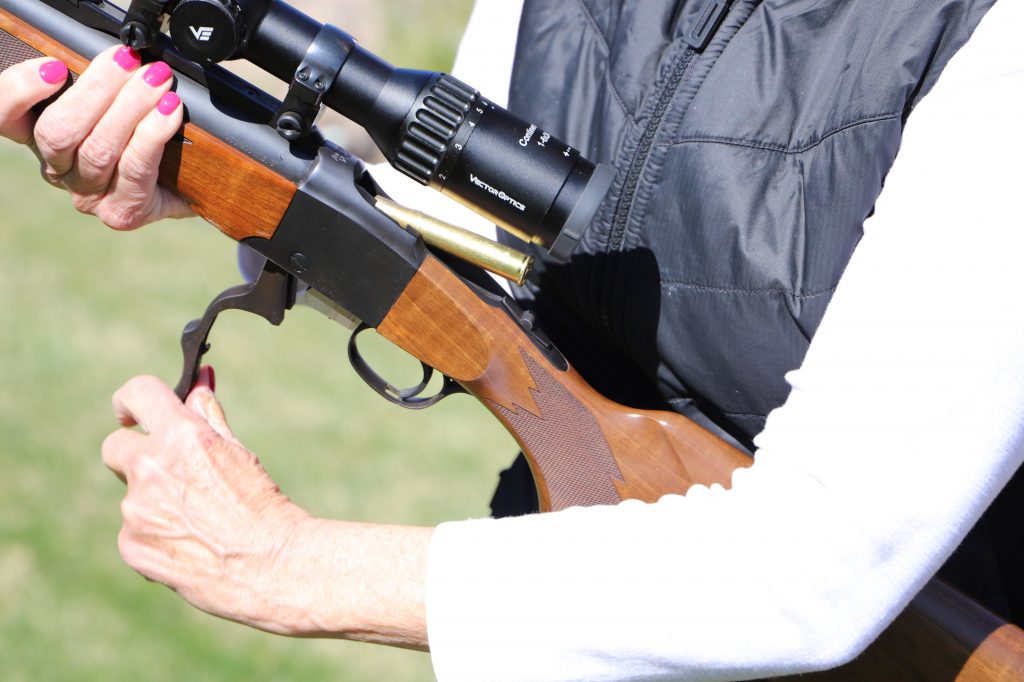
Although never exclusive in their use, I’m a single-shot fan. I’ve always wanted an original “Farkie,” but I’ve never owned one; they’re scarce and expensive. Instead, most of my single-shots have been Ruger No. 1s. Bill Ruger admired the Farquharson, and the influence is obvious. Although production has never been large, chamberings have been myriad, with many variations. The No. 1s I like best are the Light and Medium Sporters and the Tropicals. These all carry rear sights on quarter rib (which doubles as a scope base) and barrel band front sights. They also have barrel-mounted forward sling swivel studs. Mind you, I like all No. 1s, but the Sporter and Tropical models are most reminiscent of the classic British single-shots.

The Dakota Model 10 is even trimmer and more elegant than the Ruger No. 1, but also a lot costlier. Boddington’s M10 in .275 Rigby hasn’t been to Africa yet; hopefully it will make the trip soon.

In my use of single-shots I have not remained true to the Ruger. I admire the trim little Dakota Model 10, also a falling block, but sleeker and even more elegant. I’ve used Dakota single-shots on several safaris, and have a gorgeous M10 in .275 Rigby. I’ve also used the Thompson/Center break-open in Africa. The T/C isn’t as pretty, but it’s inexpensive and the switch-barrel capability is handy.  I took a T/C with .22 Hornet and .270 Winchester barrels on a couple of safaris, a great combination.

So, where might the single-shot fit in on the modern safari? Technically, just about anywhere . . . with reservations! Most single-shots have a two-piece stock, and the fore-end is often attached to the barrel by a screw. These factors aren’t ideal for utmost accuracy. I love my single-shots, but I haven’t used them for much mountain hunting, and I wouldn’t choose one for extreme-range shooting. That said, single-shots are plenty accurate for most hunting, certainly in Africa, and some are tack-drivers.

No matter where you are, the first shot may not be enough and another shot is needed. It will be slower with a single-shot, but I can’t recall problems because I was using a single-shot. Knowing you can rely on just the one shot makes you careful, and that’s good.

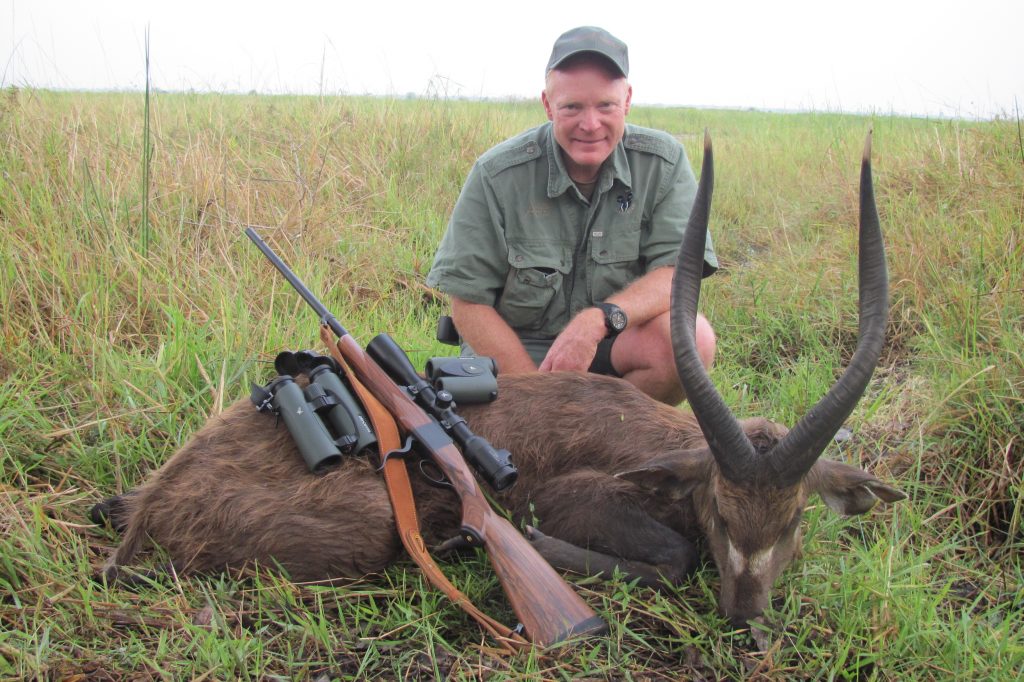
Boddington used a Dakota Model 10 in 7mm Remington Magnum on safari in western Tanzania. Just short of 300 yards, this was the longest shot he has had to make on a sitatunga.

In western Tanzania, hunting with Jaco Oosthuizen, I used a Dakota M10 in 7mm Remington Magnum for a variety of antelopes: topi, waterbuck, bohor reedbuck, my longest shot on a sitatunga, and a really lucky long shot on a side-striped jackal. Ten years ago, I did a “single-shot safari” with two No. 1s: An exceptionally accurate .300 H&H Medium Sporter, and a Tropical in .450/.400 3-inch. We started in Mozambique with Mark Haldane, then went on to northwest Zambia with Pete Fisher. Naturally, the .300 H&H did most of the work. At last light, I took a fine nyala, a tricky shot off sticks. We hadn’t quite gotten to the animal when Haldane stopped and put up the sticks again. “That’s a huge red duiker; you must shoot him.” I did, for a most unusual double.

With non-dangerous game, there are two limitations to using a single-shot. First, a second shot, if needed, will be slower. Second: Unless action is imminent, I never carry a round in the chamber. So, carrying a single-shot requires a mind-set: First cartridge ready, second cartridge handy. When the time comes, you must be able to load quickly! I’ve used Ruger No. 1s for fifty years, so these are not dramatic constraints, but it is a matter of training. You must know where that all-important first cartridge is, and how you’re going to load it on a moment’s notice.

On that Mozambique/Zambia safari, the .450/.400 single-shot was used exactly once, for a Zambezi Delta buffalo, and only one shot was fired. So, let’s talk about the single-shot for dangerous game. Several single-shots are available in appropriate chamberings, so that’s not a limitation. The real question is: How limiting is that “one-shot-only” capability?

Extensive experience with lions is hard to come by today. I have some, but I have never hunted a lion with a single-shot, and I’d just as soon not. As a visiting hunter, I’m not hunting dangerous game alone. However, I prefer cleaning up my own messes. If things get nasty, I have no issues with my PH chiming in, but I’d just as soon he didn’t. In my experience, “pure” one-shot kills on lions are rare; it’s just not the nature of the beast. Also, since you rarely know what the first shot accomplished until it’s all over, is it wise for your PH to dither while you fumble the reload? I think not!

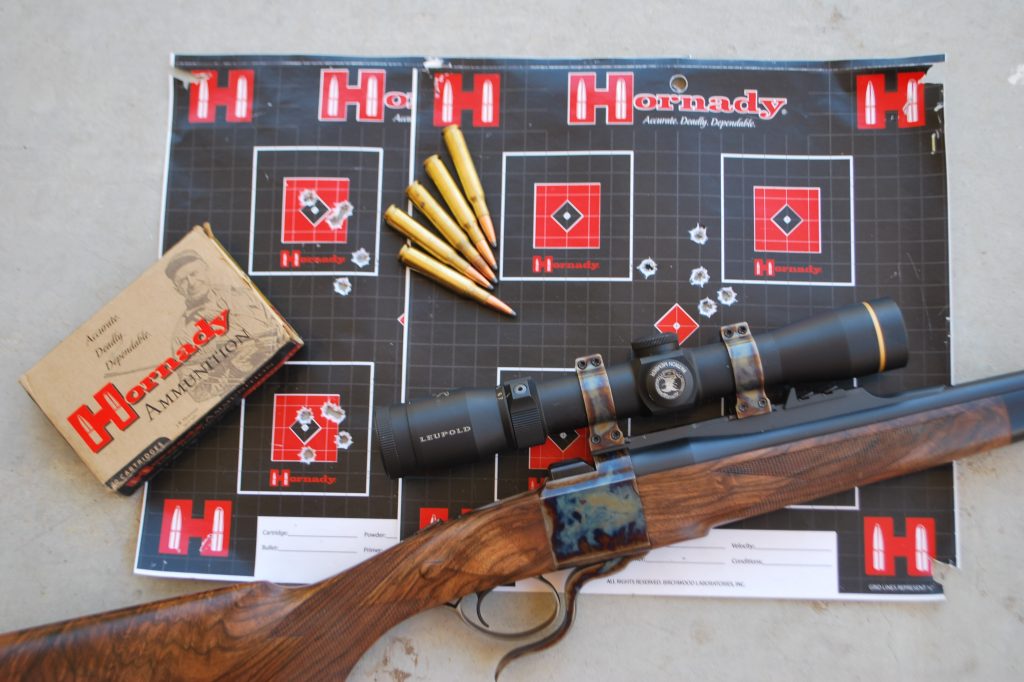
The Ruger No. 1 is unique among single-shots because it has a powerful ejector, throwing cartridge cases completely clear with the lever is dropped. This makes it one of the fastest of all single-shots to reload.

I have much more experience with elephants, but I have also never hunted elephant with a single-shot. My thinking is much the same; things happen fast after the first shot. If it isn’t perfect, or if your experienced PH thinks it isn’t perfect, something must be done–fast! I have no ego-driven issue with backup, and I have flubbed the first shot on elephants. With a double or bolt-action, I’ve always been able to correct my error. With a single-shot, nobody is fast enough.

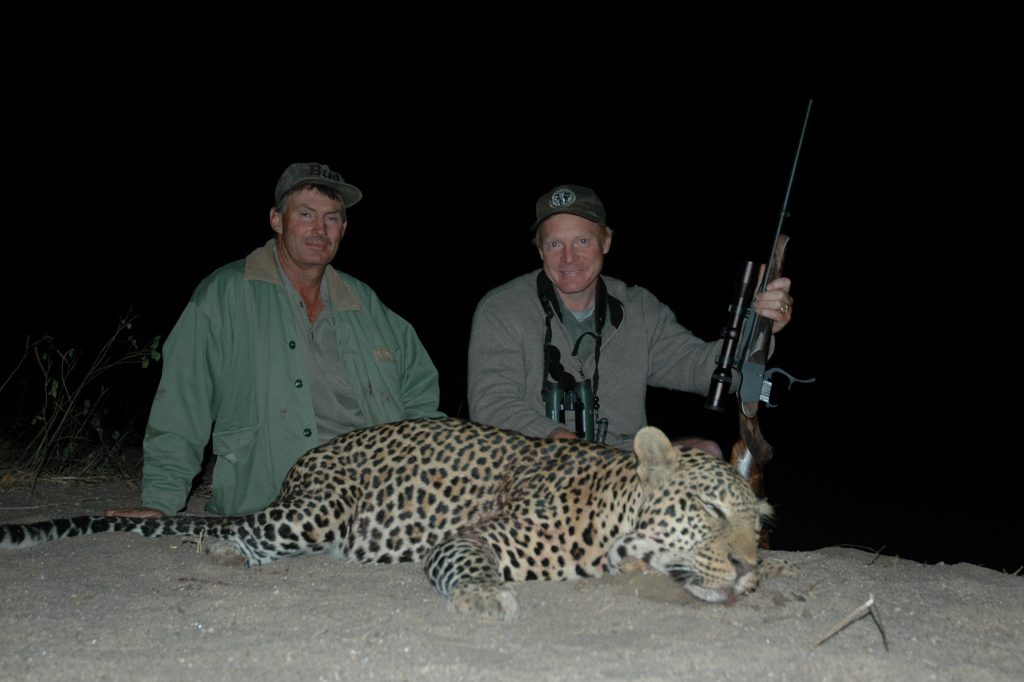
The leopard is a different deal. Most times, there’s only one shot. I’ve hunted leopards with single-shots and would again, especially over bait. You sit there as long as it takes, rifle loaded and ready. The chance for a second shot is very unlikely; you simply must make the first shot count. A single-shot actually helps, because you know you have just one shot.

Andrew Dawson and Boddington with a nice Zambezi Valley leopard, taken with a single-shot .30-06, made by Dakota on a Miller falling block action. With leopards it’s extremely unusual to get a second shot; it’s essential to make the first shot count!

Buffalo, the most plentiful and available dangerous game, are worthy of discussion. The first buffalo I took with a single-shot was in 1995, using a Dakota M10 in .375 Dakota. Hunting in Zambia with Russ Broom, we’d tracked him to his bed. When he got up, I think my shot was good, but the buffalo was still up, and Russ backed me up. Did he need to? We will never know, because I was still reloading and he had a split-second judgment call to make. Russ is not a trigger-happy PH. I agreed with his call to shoot rather than to wait and see what happened next. That is the dilemma to hunting buffalo with a single-shot: You want to do it all by yourself, but second shots matter, and nobody is fast enough on the reload to reliably get a second shot off every time.

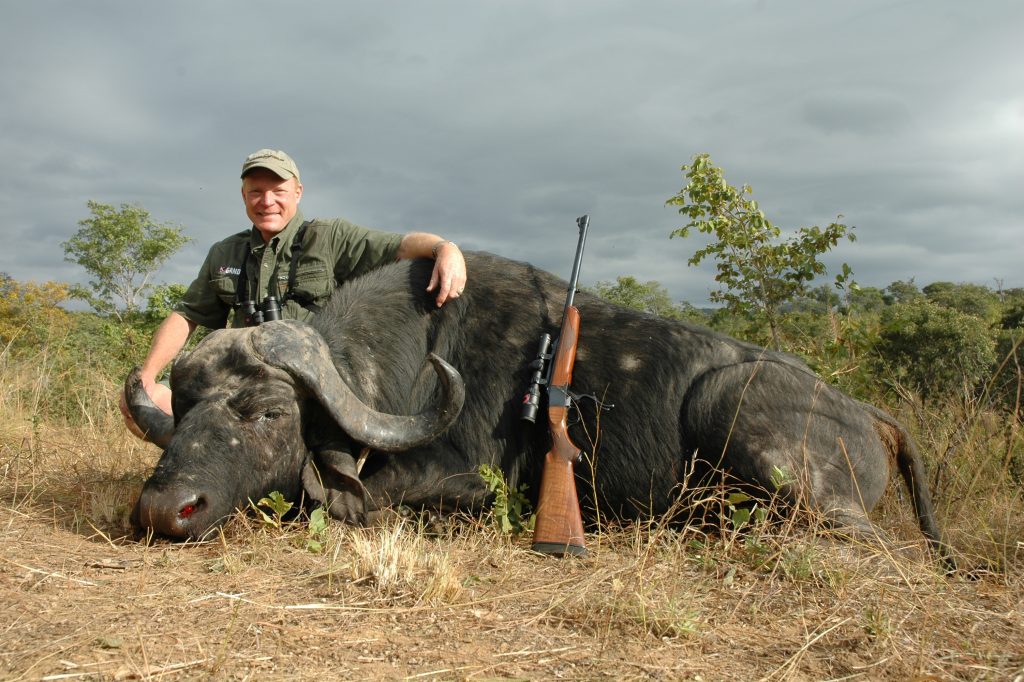
In the last quarter-century I’ve taken numerous buffalo with single-shot rifles. Some have been pure one-shot kills. However, when that happens it usually isn’t a matter of first-shot perfection, but simply that the buffalo is down or masked before a second shot can be fired. Sometimes there’s time to reload. In Mozambique in 2018, using a Ruger No. 1 in .450 3¼-inch, I found myself shooting and reloading on the run; the bull was still up, and I had no idea what that first shot had done.

This is the first buffalo taken with Hornady’s modern load for the .450/.400-3” (.400 Jeffery) cartridge, taken in the Zambezi Valley with a Ruger No. 1, one shot at about sixty yards.

There is a point to be made regarding the Ruger No. 1 as opposed to most other single-shots. Older British rifles were invariably extractor guns. To this day, most single-shot rifles extract but do not eject. This means that the fired case must be manually plucked from the chamber. With his No. 1, Bill Ruger engineered a powerful and reliable ejector!

Does this mean the Ruger No. 1 is the only single-shot suitable for dangerous game? Hardly; Fred Selous would dispute that vehemently. However, because it both extracts and ejects, the Ruger No. 1 is probably the fastest single-shot to reload, and reloading time is critical on dangerous game. Mostly, it comes down to practice: Training and familiarity. Americans are especially bad about “admiring the shot,” firing one shot and waiting to see what happens next. Unfortunately, the single-shot promotes this mind-set, and it’s dangerous. Place that first shot with care, but practice fast reloading!

Leave a Comment

Welcoming New Hunters

After years of decline, hunting participation took an encouraging jump this year.

Photo above: Rupp with her DIY cow elk taken in western Colorado.

The past year has been a tough one all around. Everyone has experienced the challenges of the pandemic in their own way. The hardships have been worse for some than others, but it’s safe to say we’ve all been affected. One thing that has happily remained constant through it all is the great outdoors, and the solace and renewal it brings to those who seek it out.

Like most of us, I didn’t travel this year; I hunted close to home. It proved fun and rewarding. I discovered some excellent dove and goose hunting less than thirty minutes from my house. I also killed my first DIY elk, a cow, in mid-October. As my husband and I packed the boned quarters out of the woods, we were intensely grateful for the fact that we would have a freezer full of excellent meat during a time of uncertainty.

We were hardly alone in this. People all across the country found themselves with more free time or work flexibility, fewer distractions, and an increased appreciation of the importance of self-reliance. As a result, a lot of them tried hunting for the first time–or returned to it after a hiatus. Hunting participation numbers, which have been on a long, slow decline for years, took a sudden jump.

The National Shooting Sports Foundation estimates that hunting license sales increased more than 12 percent in 2020 over the year before. That means there were as many as a million more hunters in the woods this past year. A large proportion of those hunters, according to preliminary stats coming out of several states, were first-timers, and many of those were women and young people.

We don’t know what will happen in 2021, as the world (hopefully) starts to return to normal. For the sake of wildlife agency budgets and wildlife conservation work, which are heavily dependent on hunting license sales, we hope that these new hunters stick with it and continue to increase their hunting skills and enjoy being out in the field.

If you’re one of those new hunters, welcome to the fold. If you’re an experienced hunter, please invite a newbie to go shooting with you, or share your duck blind. You’ll find it’s as fun for you as for them. Other than that DIY elk, the most rewarding hunt I did this year was a goose hunt where I invited a new hunter along and had the pleasure of seeing her shoot (and later skin, cook, and eat) her first goose.

There are lots of other ways to help new hunters. Share some of your extra gear (you know you have some). Treat them to a membership in a reputable organization so they can learn more about the conservation benefits hunting provides. Above all, make them feel welcome. Today’s new hunters are the ones who will carry on a timeless and precious tradition.

Leave a Comment

The 1903 Springfield Sporter

A nostalgic look at America’s classic bolt-action hunting rifle.

Photo above: Barsness’s Springfield Sporter was built by Frank Pachmayr in the 1930s. Originally a .35 Whelen, it was later rechambered to .358 Norma Magnum. 

At the beginning of the twentieth century, the U.S. Army decided it needed a more modern bolt-action rifle. Since 1892, the Army had been using variations of the Krag-Jorgenson rifle, which was chambered for the .30 U.S round commonly known as the .30-40 Krag. Despite America winning the 1898 Spanish-American War in Cuba, it did not go unnoticed that the 1895 Mauser rifles used by Spain could be reloaded far quicker than Krags, which had a rather clumsy, hinge-topped magazine on the side of the action. The 1895s used disposable “stripper-clips” that could be inserted quickly into the top of the action, instantly loading five rounds.

The Army designed a new action, which used stripper clips so similar to the Mauser’s that the U.S. Government had to pay royalties to the Mauser company. The action itself was a combination of Mauser and Krag features, and in 1903 was accepted as the new service rifle.

The U.S. also “designed” a new cartridge for the 1903 rifle, strongly resembling the first smokeless German military round, today known in the U.S. as the 8×57 Mauser. The 8×57 had a rimless case, formed by cutting an extractor groove around the case-head, resulting in a rim the same diameter as the cartridge body.

The 1903 Springfield’s cartridge was also rimless, and in another not-so-astonishing coincidence, featured the same 12mm (.472 inch) rim diameter as the 8×57. The overall case was slightly longer, and used the same 220-grain roundnose bullet as the .30-40 Krag, at a muzzle velocity of 2,300 fps. 

Soon afterward, however, Germany dropped the 8×57’s heavy round-nose bullet, switching to a 154-grain spitzer (pointed) bullet at a muzzle velocity around 2,800 fps. The faster, sleeker bullet extended the 8×57’s range considerably, and the U.S. again followed the German lead by switching to a 150-grain spitzer at 2,700 fps. Officially termed the “cartridge, ball, caliber .30, Model of 1906,” it soon became known as the .30-06. 

Hunters started using the new rifle and round, which resulted in a major secondary industry, converting 1903 Springfield military rifles into sporters. The first and most famous 1903 was ordered from Springfield Armory by President Theodore Roosevelt in 1904. The Armory fitted a custom-made sporter stock, partly fashioned after one of Roosevelt’s Winchester rifles, with a short fore-end, cheekpiece, and commercial buttplate, and replaced the military open sights with Lyman sporting sights.

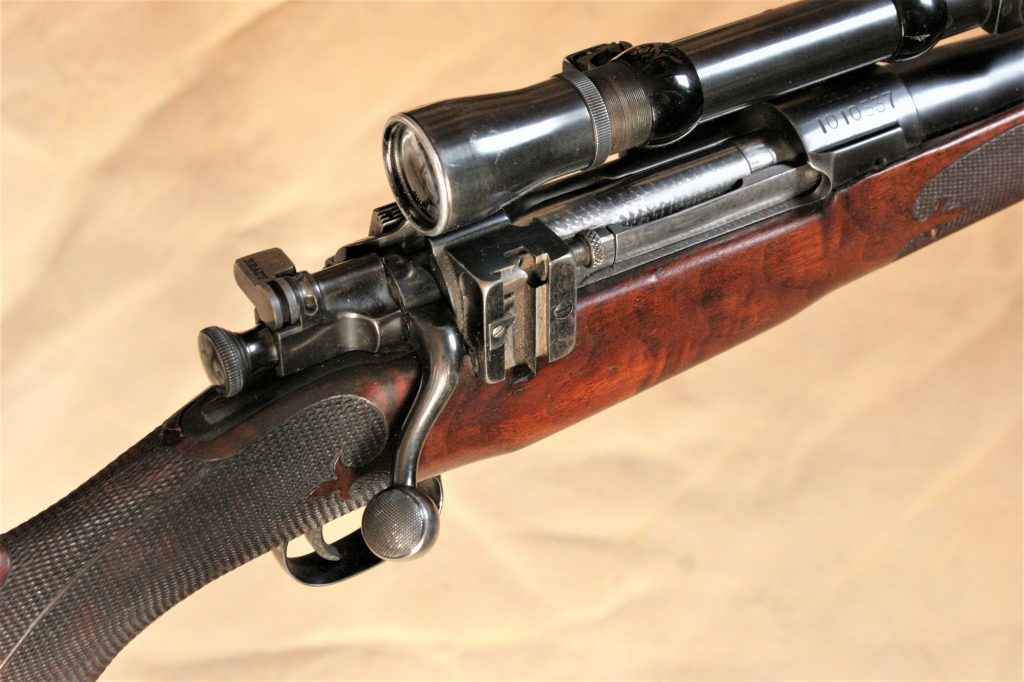
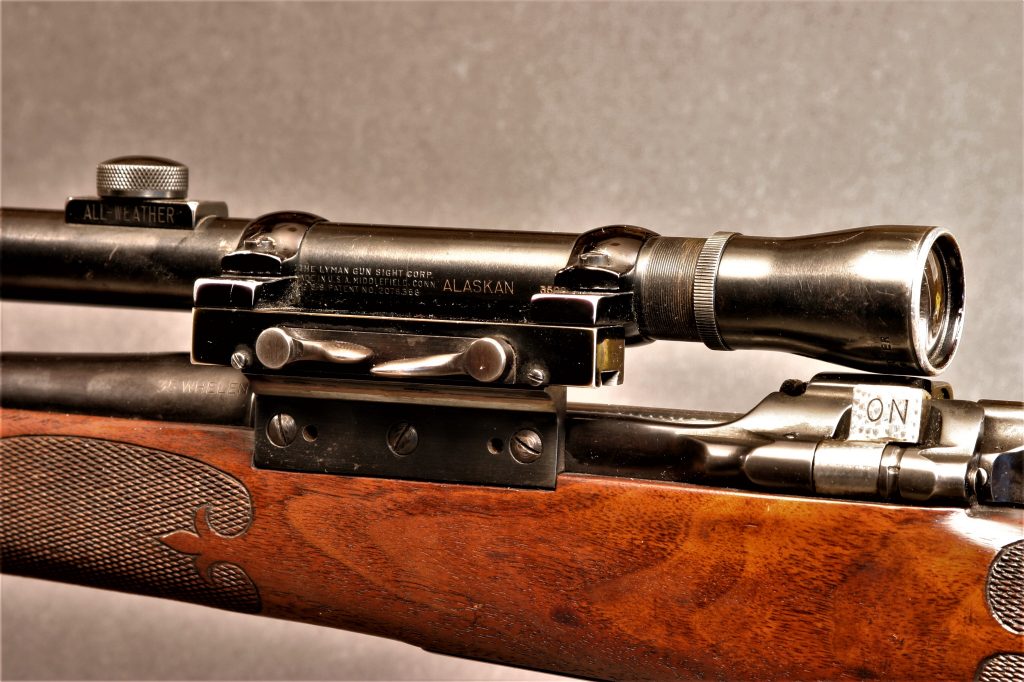
The Pachmayr rifle has an s-curved bolt handle, which just clears the rear of the Lyman Alaskan scope. Typical of Springfield sporters during its era, it also has a Lyman 48 receiver sight, with a removable elevation slide.

Even for America’s commander-in-chief, this work wasn’t free. Roosevelt paid $42.13 for the job, equivalent to around $1,200 today, and in 1905 he took a Colorado black bear with the rifle, using the military 220-grain load. It was also one of three rifles he took on his long, post-presidential East African safari in 1909-10, along with an 1895 Winchester lever-action in .405 WCF and a Holland & Holland .500/.450 double. He used the newer 150-grain spitzer .30-06 ammo; the pointed bullet tended to tumble when hitting game, killing quickly. 

Roosevelt’s book about the safari, African Game Trails, alerted plenty of hunters to the 1903 Springfield’s potential, including Roosevelt’s friend, the well-known author Stewart Edward White, who in 1910 commissioned gunsmith Louis Wundhammer to build five Springfield sporters—one for him, and four for friends.

Wundhammer was born in Bavaria but by 1910 lived in Los Angeles, a hotbed of custom sporting rifles during much of the twentieth century. White’s rifle was apparently the first commercially made Springfield sporter, and of course he also published a book about his 1912 safari.

From then on a 1903 Springfield sporter became the rifle for cutting-edge American sportsmen. The list of well-known Springfield fans includes Ernest Hemingway (who ordered his from Griffin & Howe), and Army officer and author Townsend Whelen, who owned several Springfield sporters made by various gunsmiths.

Eventually even Springfield Armory produced a sporting version, which could be purchased by members of the National Rifle Association. Several thousand were sold from 1924 to 1933. They resembled a plainer version of Roosevelt’s rifle, but had a Lyman receiver sight, the Model 48, developed specifically for the 1903 rifle.

Custom 1903 Springfields attracted such lofty customers partly because most American “authorities” (including Whelen) considered the 1903 a better action than the 1898 Mauser used by many gunsmiths and European firearms companies—not necessarily mechanically, but in manufacturing quality. Military 98 Mausers were made all over the world in vast numbers, sometimes by factories not so concerned about fit and finish, and even some gunsmiths in Germany made Springfield sporters. 

I started slowly falling under the spell of the Springfield after beginning to hunt big game in the 1960s, when the Civilian Marksmanship Program sold a bunch of “war surplus” 1903 Springfields to retail companies. Many local hunters bought surplus Springfields, some using the rifles as-is, especially the less expensive 1903A3 version produced by Remington and the L.C. Smith & Corona Typewriter Company during World War II, which had an aperture sight better for field use than the open sights of the original 1903. 

The 1960s were the last gasp of converting original 1903 Springfields to sporting rifles; by the 1970s, original military rifles started becoming too valuable to convert. I bought my first Springfield sporter in the 1970s, a typical 1960s “garage” job converted for scope use, with a semi-inletted walnut stock and a Canjar custom trigger. I spiffed up the stock a little, and hunted with the rifle for several years.

A quarter-century later I started lusting after one of the classic custom Springfields made before World War II, in large part due my friend Tim Crawford giving me a brand-new book in 2005, Custom Gunmakers of the 20th Century, written by Michael Petrov, a rifle loony from Anchorage, Alaska. Petrov had published a series of articles about custom Springfields for the now-defunct Precision Shooter magazine, which they eventually collected in book form. 

Reading Petrov taught me a lot more about Springfield sporters, and a year later I ran across The One, on the late Ike Ellis’s table at a local gun show. Ike was a fine custom stockmaker who owned a big sporting goods store in Idaho Falls, so he knew his stuff. This particular Springfield had a classic, highly-figured black walnut stock, finely and extensively checkered in a fleur-de-lis pattern, with the requisite Lyman 48 receiver sight and Lyman Alaskan scope in a detachable Griffin & Howe side-mount. 

But it also had white-line spacers between the ebony fore-end tip and grip cap, and a ventilated Pachmayr white-line recoil pad. This seemed odd for a custom rifle typical of the pre-World War II era—until I picked it up and saw “Frank Pachmayr” engraved on the barrel. 

Frank and his father, Gus, were among the very top custom gunsmiths of the pre-World War II era. Like Wundhammer, they were based in Los Angeles, so had plenty of great stock wood from California walnut groves. Frank came up with the concept of white-line spacers before the war, even making some from elephant ivory.

The detachable Griffin & Howe side-mount was considered the ultimate mount back when rifle scopes weren’t as reliable as they are today.

The barrel was engraved “.35 Whelen,” but the tag read “.358 Norma Magnum,” one of the many .30-06-length belted magnums that appeared in the two decades after the war. No doubt the rifle got converted then, when the Whelen was still a wildcat and the Norma a new factory round. The rifle seemed like such a perfect illustration of Springfield sporter history that of course, I succumbed.

Eileen and I ended up in Alaska a couple years later, on our way to open ptarmigan season with our outfitter friends Phil Shoemaker, his wife, Rocky Harrison, and their kids Tia and Taj. Of course Phil knew Mike Petrov, and told him we’d be overnighting at an Anchorage motel. Mike invited us to dinner, and we had a great evening with him and his wife, Janet, much of it among his collection of fine rifles. Mike and I kept in touch, and in 2013 he sent me a copy of Volume Two of Custom Gunmakers of the 20th Century, an even more impressive collection of new and updated information.

Unfortunately, Mike passed away a year later, but through the books his knowledge of Springfield sporters lives on—though they now sell for far more than the original $16.95. For hunters who’d like to learn almost everything about classic Springfield sporters, they’re worth the price. 

Leave a Comment

Rimrock Man

The Early Life of W.B. Carson by Robert M. Anderson

W. Burch Carson is known and remembered for his important work in conducting a thorough, on-the-ground census of the scant remaining population of native Texas desert bighorns in the Texas Trans-Pecos region in the 1940s. His work was invaluable to subsequent restoration efforts for Texas bighorns. But Burch was a fascinating personality in his own right, a consummate outdoorsman and loner who knew the Sierra Diablo, Baylor, and Beach mountain ranges better than anyone else has, before or since, and he was a student of their mysteries—the lost mines, the caves, the cliffs, the ghosts and legends. While Carson left Texas after World War II and became a successful rancher in Arkansas, his early life roaming the hills of West Texas is what shaped his life and outlook.

Robert M. Anderson, who has authored a shelf full of books about North American mountain hunting as well as numerous biographies, was a friend of Carson’s for some thirty-four years. His fascination with Carson’s early life in the Trans-Pecos and his groundbreaking studies of the declining desert bighorn population inspired him to write this book about Carson’s early life in the Texas wilderness. The book, lavishly illustrated with photos of Carson and his adventures, covers much more than his work with bighorn sheep. Anderson recounts Carson’s successful career as a taxidermist, his spelunking adventures, his ongoing search for gold and lost mines in the region, and his research into little-known incidents in the region’s history. It’s a fascinating glimpse not just of a one-of-a-kind, pioneering outdoorsman, but of a remarkable, mysterious, and still little-known region of the American Southwest.

Available from Safari Press.

Leave a Comment

It’s All in the Curve

Tips for judging African plains game.

Judging animals is more art than science. It takes experience, and that means, in unfamiliar circumstances, none of us can be particularly accurate. Ease or difficulty depends largely on the animal. Lacking horns, antlers, or tusks, all predators are tough to judge, and calls are based on body and head shape, even attitude. Sheep aren’t so bad, offering curl and mass. Goats are tougher, especially the varieties with straighter horns. Antlered animals are the easiest; we can count points and estimate spread and mass. African plains game, myriad antelopes of various sizes and horn shapes, is probably the most difficult of all: Simple, unadorned horns offer the least for comparison and, in the early stages of one’s African experience, all are bewilderingly unfamiliar.

Wildebeest are easy: like buffalo, they offer us spread, shape, and mass. Hartebeest aren’t as tough as they appear; you look at mass and horn length between the turns. More importantly, however, look for long and preferably parallel tips behind the last turn. All spiral horns are trickier than at first glance, because so much depends on width and depth of the turns. These, plus shape, are important and, depending on species, length and direction of tips above the last turn often reveal maturity. Gazelles and springboks aren’t easy, but their horns have shape and, on all smaller varieties, we have ear and facial lengths for comparison.

Most difficult of all are straight-horned antelopes without shape, curve, or feature. These include the many pygmy antelopes and, at the larger end, the oryxes. In a good example of “less is more,” the smallest antelopes are fairly easy because horns can be judged against ear length. The bigger they are, the more difficult: steenbok and vaal rhebok are harder to judge than duikers, grysbok, and dik-diks, but the several oryxes are the devil: both sexes have horns, and differences in horn mass between males and females are subtle. At first, they all look long. If you can find me a PH who claims to have never made a mistake on an oryx, I’m gonna call BS.

Then there’s a large group of antelopes with distinctively curved horns. Straighter horns are taller and appear longer, but a lot of invisible length is hidden in the curve, harder to see and harder to judge. Some of these animals are closely related, such as the kobs, lechwes, reedbucks, and waterbucks. Others, such as impalas, sables, and roans, are of different genera, but judging the curve is critical to the decision.

In a few hundred words I don’t pretend I can offer proficiency (nor do I claim to possess same). This is your PH’s job; he sees these animals every day, making and verifying judgments and, always, getting better with experience. It’s useful to study pictures and film, and the various records books. Mind you, I am not record-book-centric; the idea is to take mature animals. The best advice I can offer on any safari is: “Listen to your PH.” However, it’s useful to know what he’s looking for. And why he so quickly discounts an animal that looks just wonderful to you. In the field, looking at live animals, you’ll be surprised how quickly you catch on.

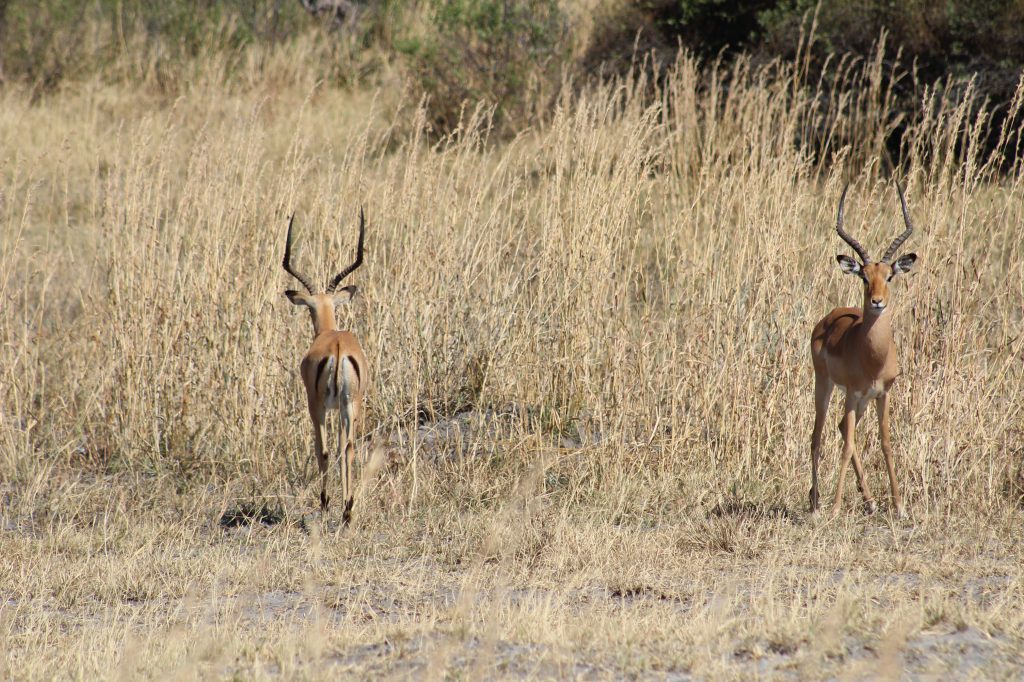
ImpalasWith its lyre-shaped horns, the impala is probably Africa’s most recognizable antelope. The impala’s horns grow out, curve back, and then turn upward. The curve is important and width matters greatly, but what your PH is really looking for is tips that are straight, upright, and parallel, and as long as possible. No indicators are consistent, but parallel tips are usually a mark of maturity, while inward-pointing tips suggest an animal that can grow a bit more.

Going away is a bad angle on almost any animal, but the impala on the left looks good: Long, parallel tips. The ram on the right is long, but he’s narrow, with points still tipping in.
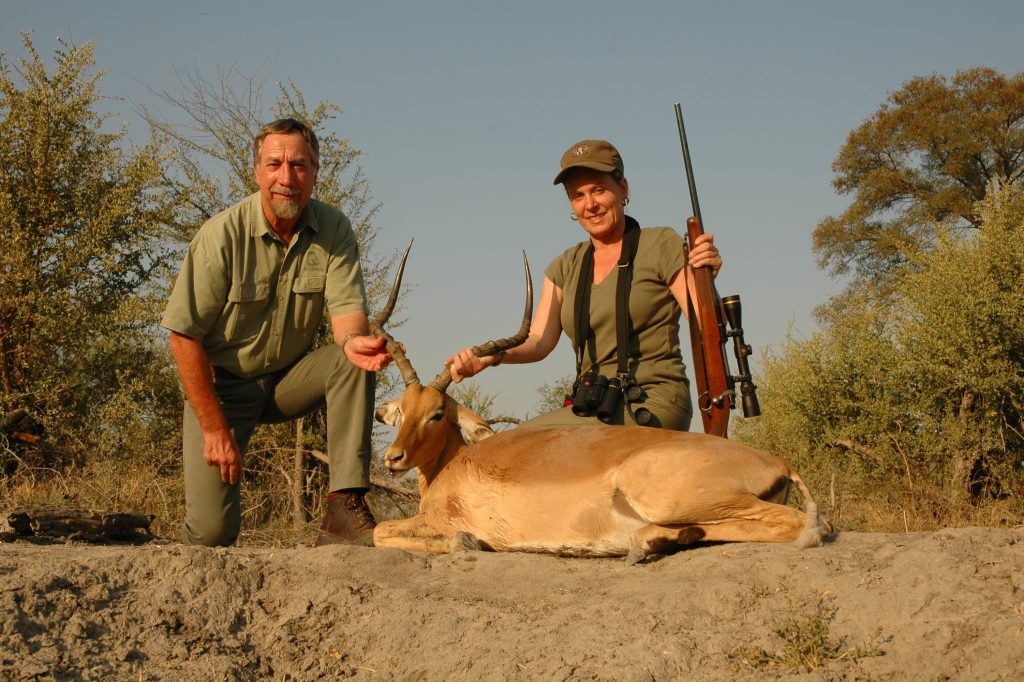
Johan Calitz and Donna Boddington with a nice impala: Wide and tall, with long, near-parallel tips.

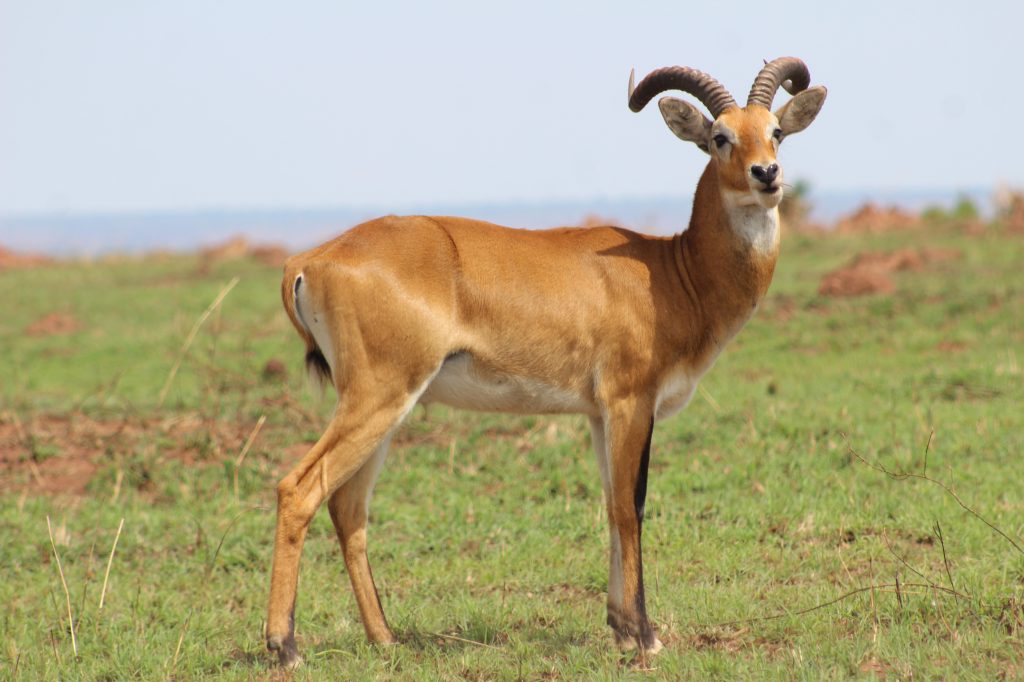
KobsThe several kobs range from Zambia (puku or Vardon’s kob) discontinuously north to the Uganda kob (largest), and then progressively smaller all the way to West Africa. At first glance, a kob looks like an overgrown impala, larger in body with thicker horns of similar shape. Often, they replace the impala as the most common medium antelope, but prefer wetter, grassier habitat. With kobs, length is truly “all in the curve.” You want the initial curve to be outside the ears. Like impala, the tips rise upward from a second turn but with kob the tips conclude with a forward flip, and this final curve is often what separates good from great.

With a big kob, a frontal view will show horns wide than the ears. You still want to see the tips, but on first glance this is what you’re looking for.
With both kobs and lechwes, you want that final “flip” that brings the horn-tips forward. This an excellent Uganda kob.

Lechwes: Although more aquatic in habitat, the lechwe is essentially an overgrown kob. Three races of kob occur naturally from Namibia’s Caprivi up through Zambia, with the fourth (Nile lechwe) far to the north in the Great Sud swamps of Sudan. The lechwe is a robust animal with thick bases and longer horns than the kobs produce. Horn configuration is similar, but the curves are subtler, and the forward flip of the horn-tips is essential for both maturity and length.

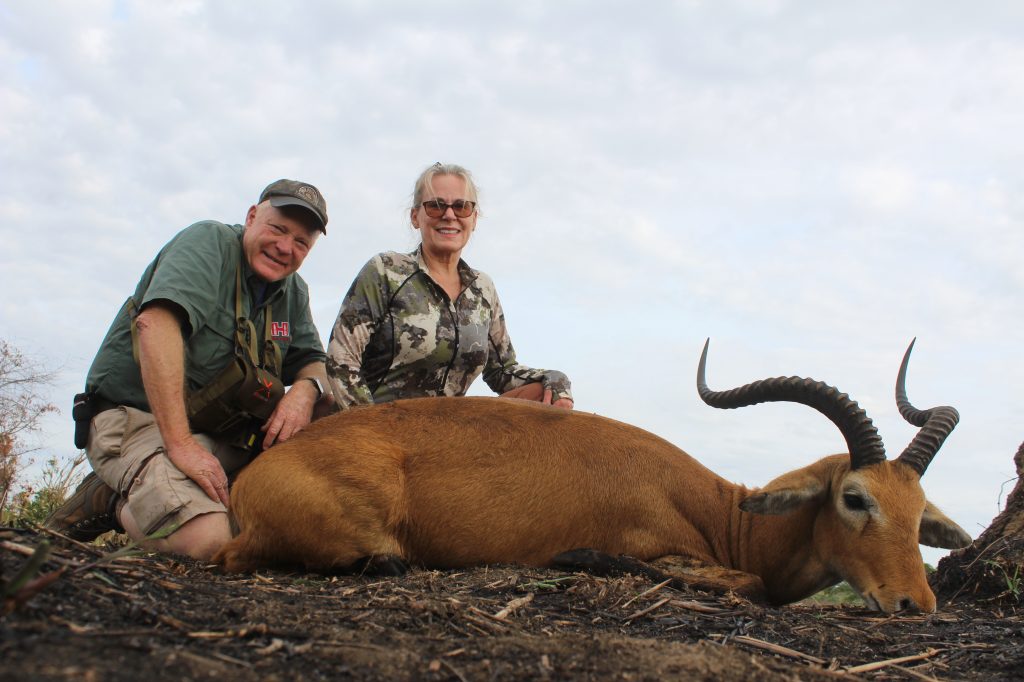
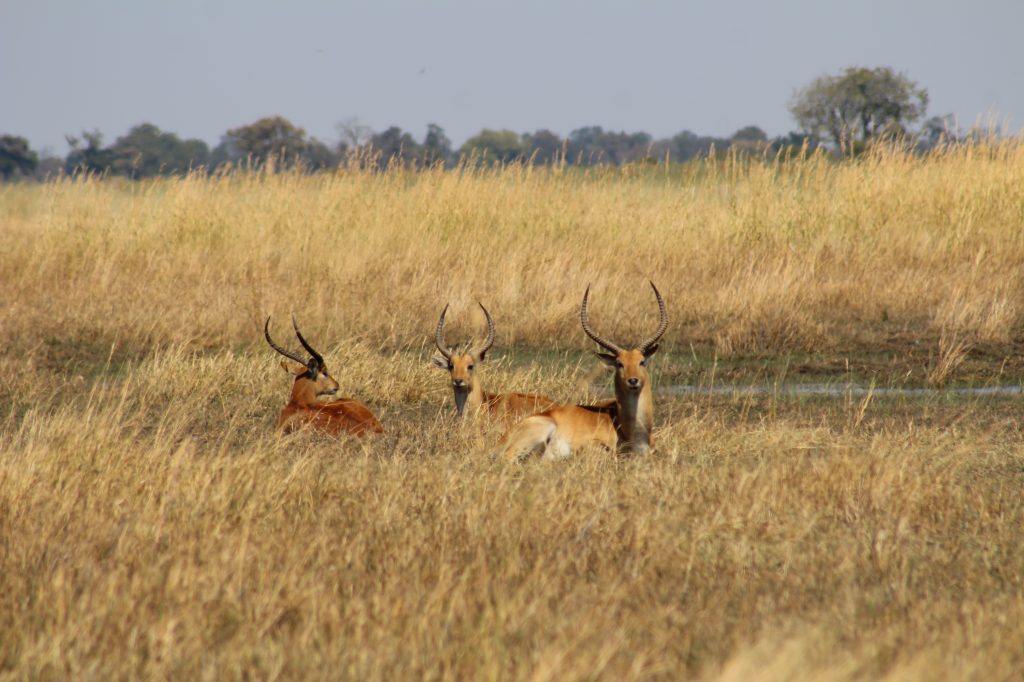
Red lechwe in Caprivi. The bull on the right is impressive, but the left-hand bull is probably bigger…because of the curve that brings the horn-tips forward.
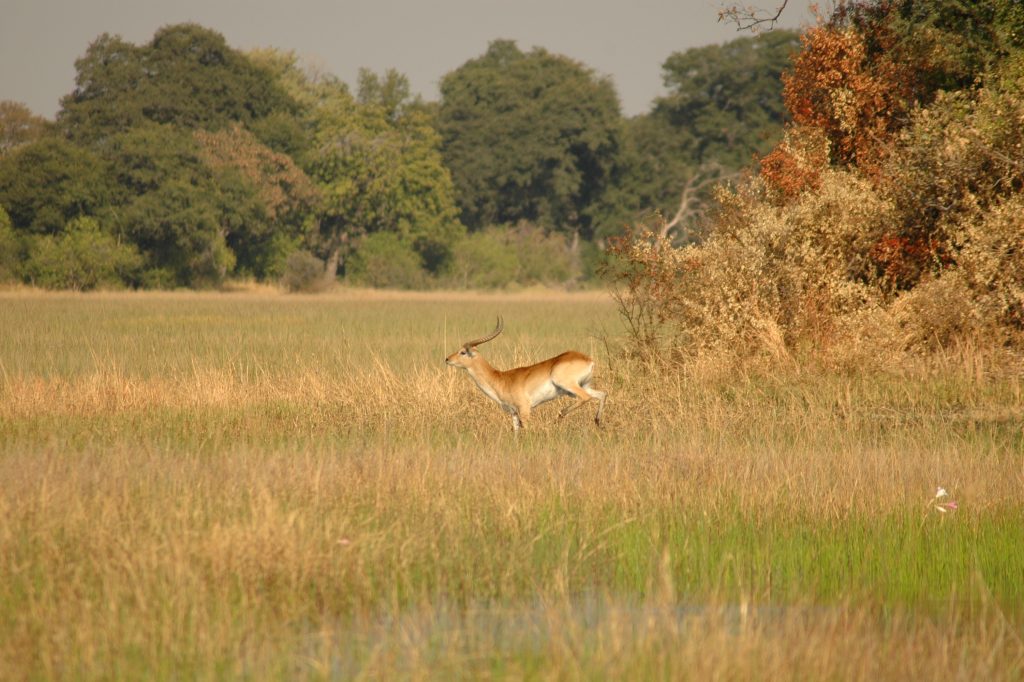
A fine red lechwe in the Okavango. This bull shows the classic final curve that “flips” the horn-tips forward and adds significant length.

Reedbucks: As the name implies, the reedbucks are creatures of well-watered grassy plains and pockets. Smallest are the mountain reedbucks, then the several bohor reedbucks, with the common reedbuck the largest with the longest horns. All reedbucks have a bulbous horn base that is incipient horn, hard to see and useless to judge because it will be boiled away in trophy preparation. Mountain and bohor reedbucks have short horns that curve up and back, then tip forward. The mountain and bohor reedbucks are much easier to judge, because the horns can be easily judged against the ears. 

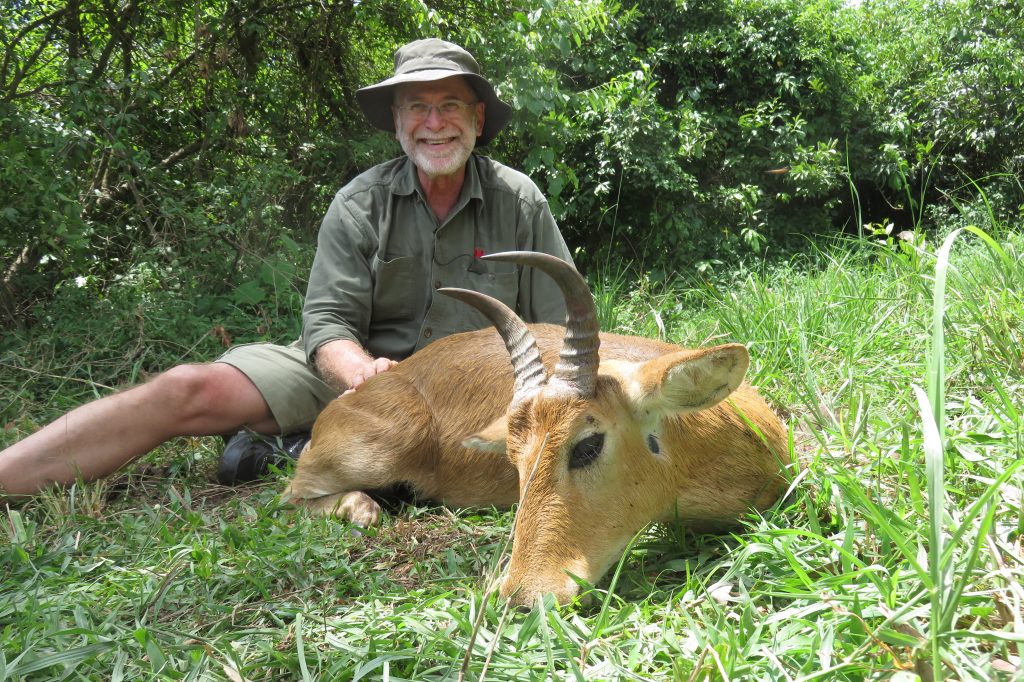
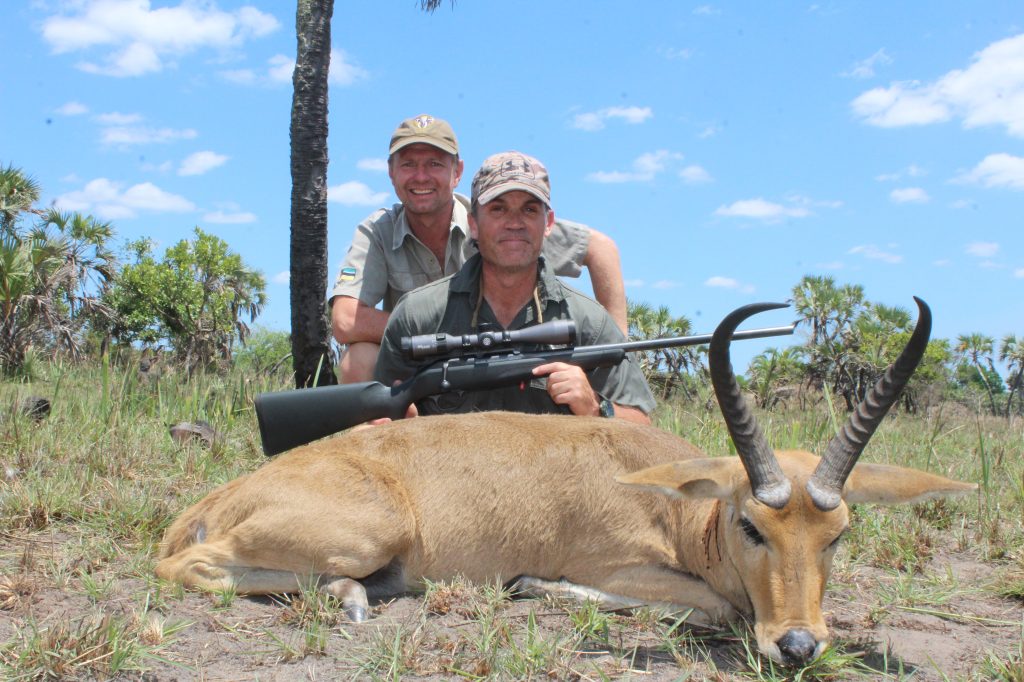
Steve Hornady with an awesome East African bohor reedbuck from Uganda. Bases appear as thick as bases of the ears, and these horns are all curve!

Common reedbucks are twice as large, with twice the horn length, but have wider horns that often grow outward at nearly a 45-degree angle. This is deceptive. For best length you want the tips to curve forward. Again, it’s all in the curve. Blunt, worn tips are an indicator of maturity, but, as with many antelopes, as they age, tip wear often exceeds growth so, regrettably, the oldest reedbucks are often not those with the longest horns.

PH Julian Moller and Bill Owens with an excellent common reedbuck: On this ram, the length is “all in the curve.”

Sables and roans: These animals are closely related, with thick (gorgeous) horns that rise up and immediately curve back into sharp tips that these animals know how to use. The roan is larger in body with shorter, thicker horns: Roan antelopes are “shootable” in the mid-twenty-inch class; sables about ten inches more. Thirty inches is the Holy Grail for a fantastic roan; forty inches is the magic number for sable. Judging this length is the hard part. It’s all in the curve, and the curve varies tremendously. In both species, some animals have a very pronounced “C” configuration, with the horn tips curving down toward the back. Other individuals have horn tips that grow back, almost parallel with the spine, and some horns tip out, offering a bit of bonus in the curve.

Greater length usually comes from horns that sweep back, but these animals are difficult to judge because it also depends on the angle of the initial curve: How high the horns rise before they start to curve back. Unlike all other antelopes discussed so far, the sable-roan group is made more difficult because both males and females have similar horns. Female horns are thinner and usually shorter, but a herd looks like a forest of similar horns. Thickness is subtle, but a dominant bull will stand out in body size, and will typically be slightly apart from the group.

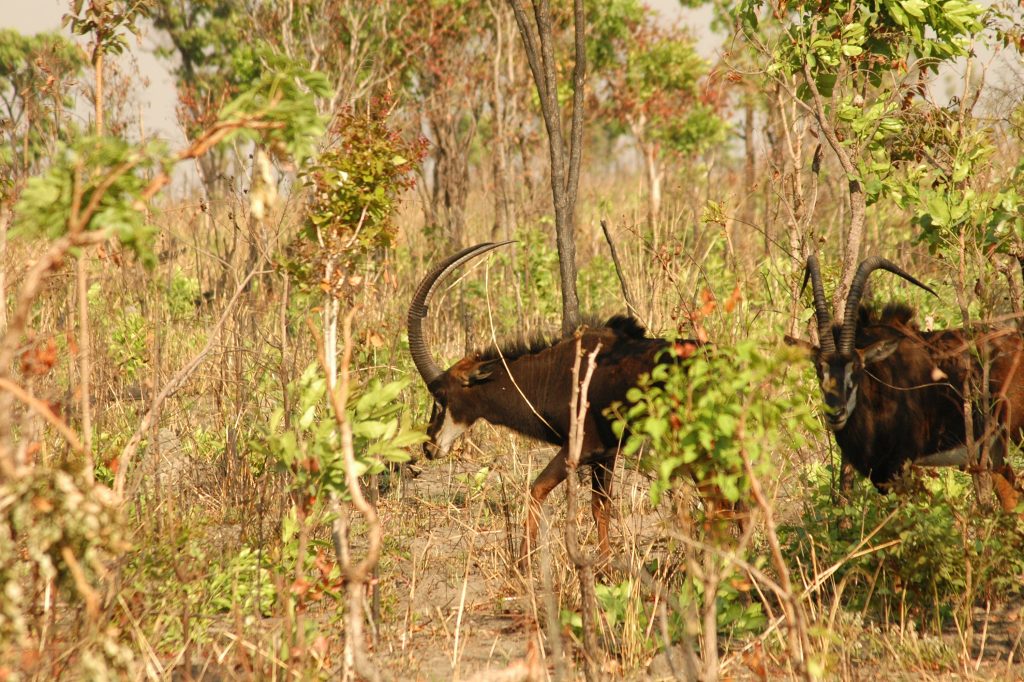
Two awesome sable bulls, both well over 40 inches. The bull on the right is probably bigger; there’s some extra length in horn-tips curving outward.
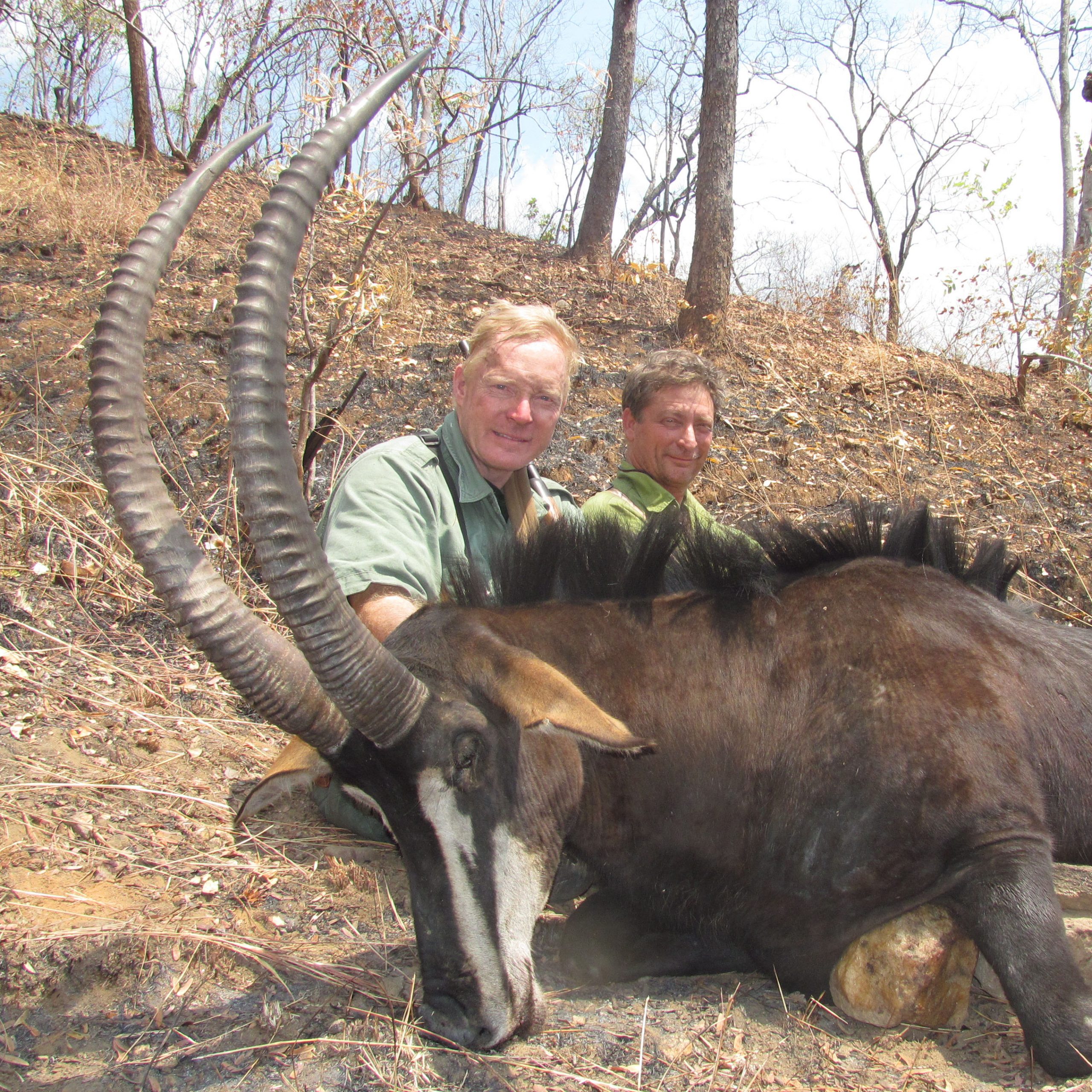
Boddington and Michel Mantheakis with a good Roosevelt sable from Tanzania. This bull is just shy of 40 inches, with classic shape.

Waterbucks: The common waterbuck has the distinctive rump ring; the several regional Defassa waterbucks do not. Only males have horns, and although the races differ somewhat in body size, horns are indistinguishable: Long, heavily ringed, curving up, slightly back, and (preferably) slightly forward. The waterbuck is an attractive and important prize, and one or another race is found in all just about all African hunting countries.

Perhaps because of extreme length with little feature, I find waterbucks the most difficult of this entire group to “guesstimate.” Maybe not as difficult as a gemsbok, but close! Waterbucks become impressive long before they reach maximum horn growth. With almost any game animal, going away is a terrible angle: Everything looks bigger! Full frontal is better, but with waterbucks, almost equally misleading. It’s essential to study waterbucks from the side, because they are perhaps the best example that it’s “all in the curve.”

At first glance all waterbucks are impressive. This bull is going to be a dandy someday, but he’s still young, with horn length in the mid-twenties.

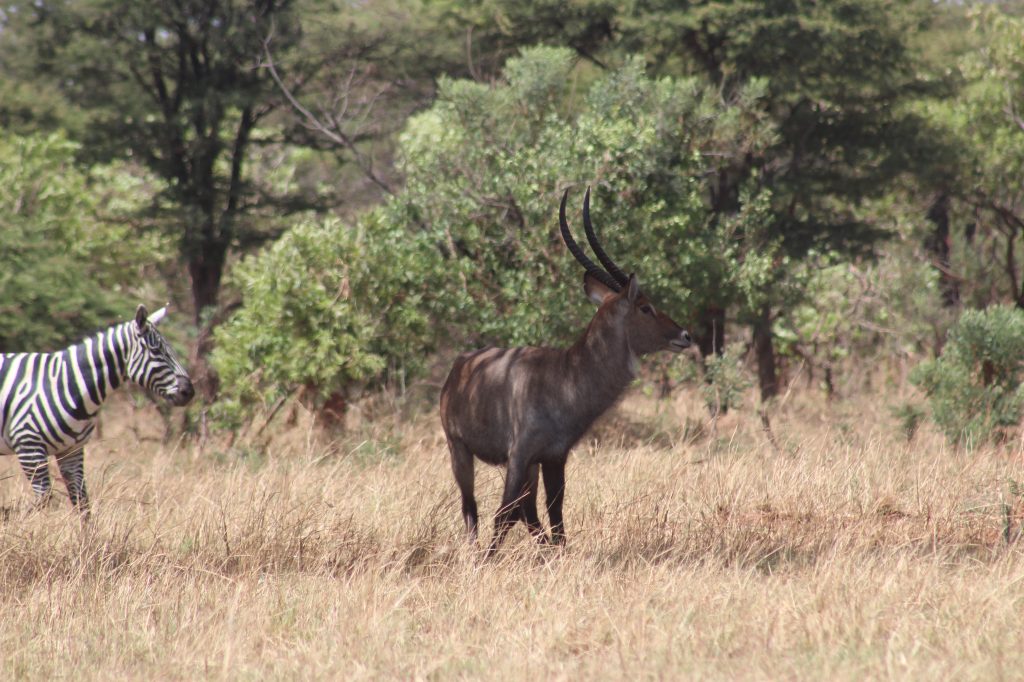
Only from the side can you really see how much the horns slant back, and then gently curve forward to sharp tips. A wide, straight-horned waterbuck can be very impressive and may appear longer, but in order to reach that magical figure of around thirty inches, you almost always need quite a bit of curve.

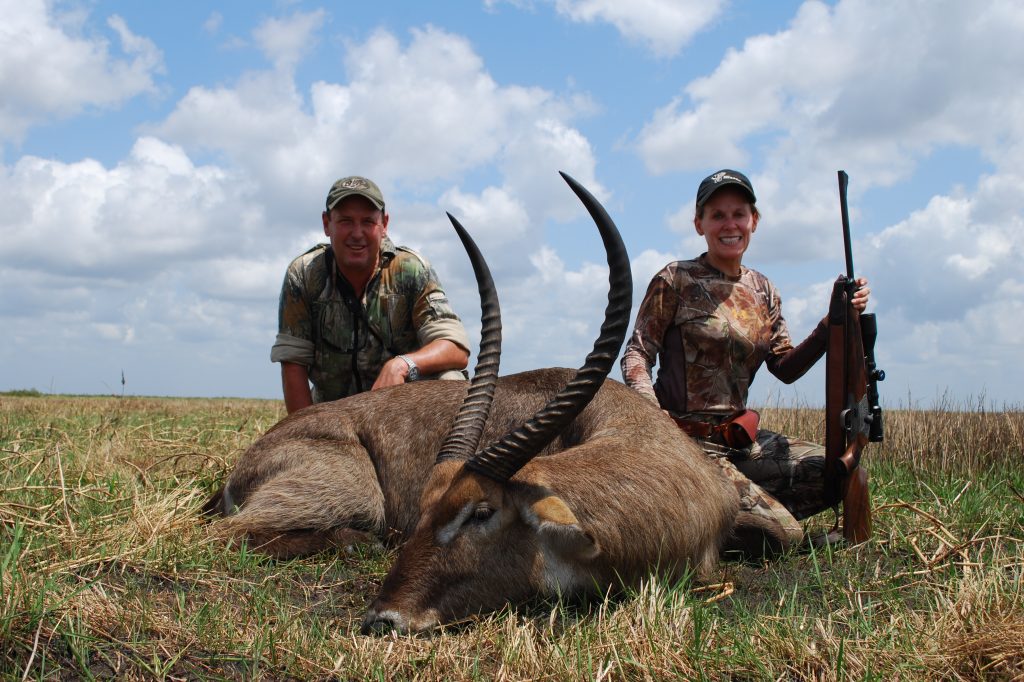
Mark Haldane and Donna Boddington with an excellent waterbuck. From front or rear this bull doesn’t appear as long as he is; it’s the tremendous curve that gives the length.

Making such judgments is your PH’s job. Even the very best won’t get it exactly right every time, but their ability to come close (and certainly determine mature from too young) is art they have studied, and it’s part of why you have hired them. It’s fun to study and learn alongside them but also wise to keep quiet: Final “shoot or don’t shoot” judgment is one of those times when you should listen to your PH.

Leave a Comment

Going Coastal

Face to face with black bear on the West Coast’s largest island.

When we first spotted the huge black bear, it was lumbering down the slope onto a high plateau that had been clear-cut years before. The cut was regenerating with a mixture of high brush and small trees, and the bear had moved out of the heavy, dark timber on the hillside and was walking across the opening in the cool of the morning. It was moving with a purposeful, rolling gait like a fat man on his way to a bar, and even at more than half a mile away, the bear looked big.

Kim Cyr, my guide, studied the bear through his binocular and seemed to get more excited as the minutes passed. “That’s a four-ear bear,” he finally said in a low, awed tone. “Twenty inches, plus.”

Kim had spent the past couple of days coaching me on how to judge a big bear since I’d told him that, frankly, every bear looked huge to me. Kim explained that one of the tricks to judging a particular bear’s skull size was to look at it as it was facing you and figure out how many imaginary ears you could place between the bear’s actual ears. The more ears, the wider the skull and (presumably), the older and larger the bear. Three ears was a shooter. Three and a half was huge. Four . . . we hadn’t even discussed four. Four would be a monster.

I stared, but the bear was moving through the brush and I had trouble getting a good look at its head. I fixed its direction of travel in my mind and lowered the binocular. A grassy, brush-lined, grown over logging road snaked along the edge of the clear-cut. The bear was angling toward it.

“We could sneak up that road and maybe get a shot,” I suggested.

Kim was already getting to his feet. “We’ll take it slow, and try to stay out of sight,” he said. “The bear’s probably heading for the road to feed on some of that grass, so he’ll be there for a while.”

As we catfooted our way up the old road, the breeze blew directly in our faces. The track curved just enough so that the brush along its side shielded us from the bear’s view. As the sun kissed the mountain peaks, the low booming of blue grouse provided an occasional background bass note. I couldn’t believe it: On the third day of my Vancouver Island black bear hunt, with one of my two bear tags already filled, I was stalking a Boone-and-Crockett-class bear under ideal conditions: easy, quiet walking, perfect wind, and good cover.

We took more than an hour to move three-quarters of a mile up the old read, exercising great caution with every step since we couldn’t see the bear’s exact location. I spent the last fifteen minutes on hyper-alert, expecting the bear to step onto the road in front of us at any moment. I’d cranked the scope on my .308 down to its lowest power. Suddenly I froze in place, staring at a tree limb as it moved unnaturally up and down, pulled by the feeding bear on the other side. We had closed the distance to less than twenty yards. The wind was still in our faces, and the bear couldn’t see us as it fed behind the screen of brush and trees. The problem was, I couldn’t see it either. Ever so slowly, I edged across the road, trying for a clear field of view.

Finally I could see the bear, but only its top half. It was intent on feeding, but I hated to shift position at such point-blank range. Even a nearsighted bear would spot my movement.

Kim whispered urgently from behind me: “Shoot!”

Through the scope, only the bear’s back and the upper part of its chest was visible. The rest of the bruin was hidden behind a round, white log. Fearing to shoot too high, I held the cross hairs as low on the chest as I could—just above the log—and touched off the shot.

Confusion reigned after the rifle’s report echoed across the plateau. I worked the bolt and tried in vain to get the bear in my scope again as it whirled and sped across the clear-cut astoundingly fast for an animal of its size, disappearing behind a rise. When it was gone, we looked hard for signs of a hit and found none. The day before, I had killed a much smaller bear at a hundred and eighty yards, so I couldn’t imagine how I could have missed the huge one at twenty.

“You didn’t shoot the log, did you?” Kim asked, at last.

With sinking heart, I walked over to the fallen log. I traced the deep groove cut through it by my bullet and visually followed the shot’s deflection into the soft ground.

I fumed at myself for not thinking. Naturally, at such close range, the path of the bullet would have been a couple of inches lower than my cross hairs indicated. The difference should have been obvious, but it hadn’t occurred to me before the shot. But then I had never expected spot-and-stalk bear hunting to be such a heart-pounding, close-range game.

“We’ll find another bear,” said Kim, encouragingly. Then he added wistfully, “But that one was really big.”

Black bears are found across the continent from Maine to Arizona, from Florida to Alaska. The Boone and Crockett record book lists almost as many huge bears coming from southern California as from northern Pennsylvania, and from many places between and beyond: Minnesota, Alaska, Utah, Newfoundland. I’ve watched bears tearing up rotten logs on the Allegheny Plateau, gnawing on deer carcasses in Canada, and munching spring flowers in Montana meadows.

Many of the places bears live, especially in the East, are heavily forested, and that makes them tough to hunt. You have to hunt over bait, use dogs, organize a drive, or wander around the woods and hope you happen to see one. That’s why I like hunting bears out West, where they emerge from the heavy timber into meadows and clear-cuts and you can spot them and stalk them in some of the most scenic surroundings imaginable.

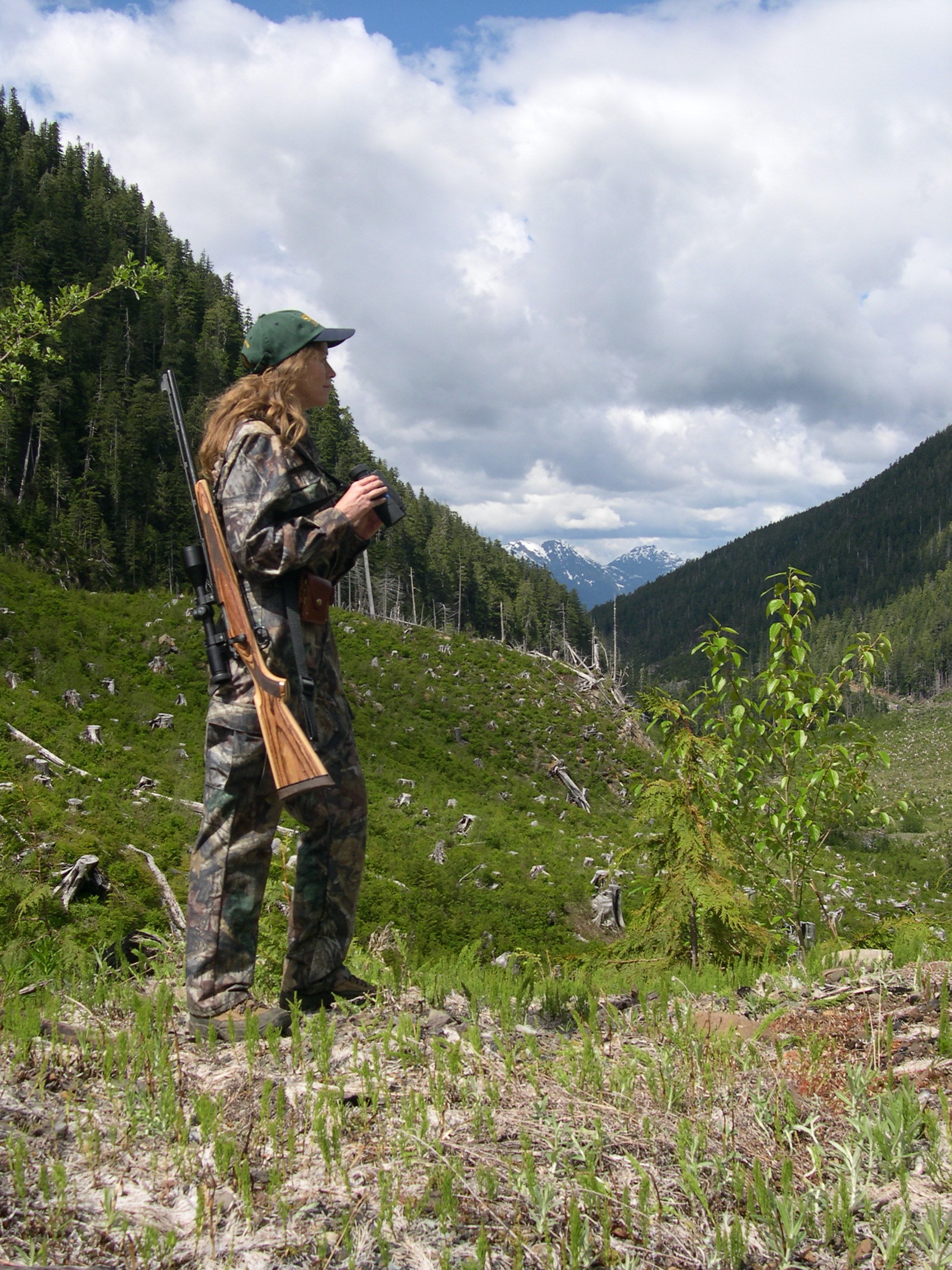
Glassing for bears on beautiful Vancouver Island.

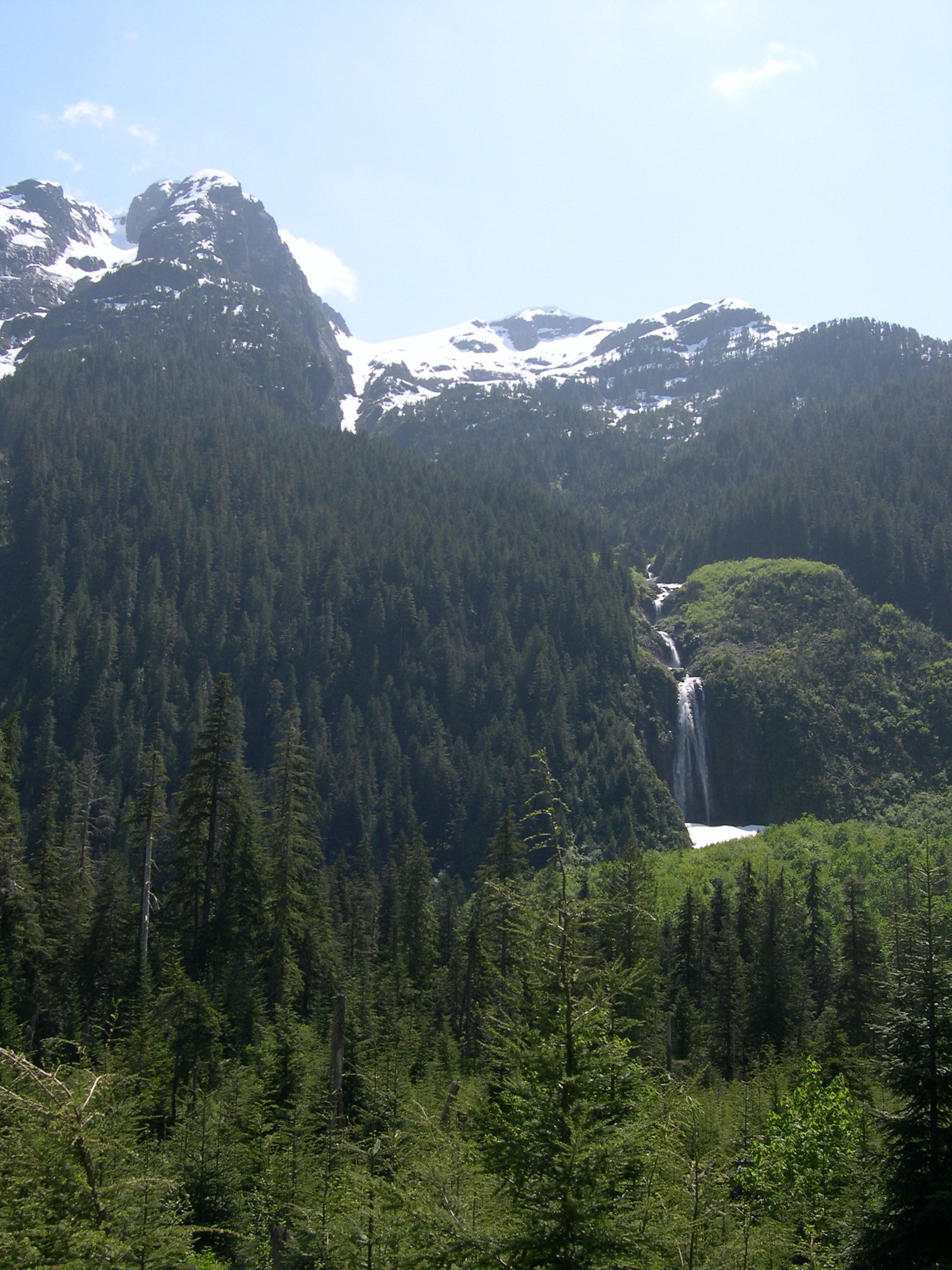
I’d done that before, but never on Vancouver Island, where “scenic” is taken to the extreme. V.I. is covered with thick forests of tall firs carpeting five-thousand-foot mountain peaks that soar straight up from sea level. In late May, those peaks are still snowcapped, with skinny fingers of waterfalls pouring off the cliffs and crashing into snowfields below. The dark forests are checkered with huge clear-cuts that are in turn crisscrossed by old logging roads. The clear-cuts make it possible to spot and stalk the many bears on the island. We saw several bears every day, moving along the creek bottoms, feeding in clear-cuts, and moving up hillsides to bed down in the heavy timber.

And it’s not just that bears are numerous on V.I. They also get big there. There’s no shortage of food in this ursine Utopia, and bears take full advantage of all of it. After their craving for spring grass wears off and summer moves toward fall, they’ll move on to gorging on berries in the slashings, gulping steelhead and salmon in the streams, and even munching crabs on the beaches.

The area I was hunting provided plenty of ground to cover, too. Outfitter Darren DeLuca is the son-in-law of legendary V.I. outfitter Wayne Wiebe, the man who originally put the island on the map as a major bear-hunting destination. DeLuca, an experienced guide-outfitter in his own right, has some two thousand square miles of forests, mountains, and clear-cuts for his hunters to explore, stretching from Herbert Inlet on the northwestern side of the island to Alberni Inlet near the town of Port Alberni on the southeast.

Typically, bear hunters drive the logging roads, glassing, spotting bears, and stalking to within a couple hundred yards for the shot. But many of the roads have been closed to vehicles and seeded, and hunters can also sneak along these tracks watching for bears. That’s what Kim and I had been doing, often encountering bears at less than fifty yards as they foraged in the new grass along the old roads.

Black bears may be ubiquitous, but that doesn’t make them less deserving of respect. It’s true they’re rarely aggressive, but as soon as a bear feels threatened or cornered, it’s capable of wiping that smile off your face in a hurry. So if you’re still-hunting where bears tend to appear in front of you at point-blank range, it pays to stay alert and keep a shell in the chamber.

As the remaining days of my hunt ticked down, Kim and I continued to hunt hard. I saw the waterfalls getting wider, pitching down from the sheer peaks as the spring melt really got underway, and black-tailed deer fed on the new growth along the edges of the clear-cuts. Teal bobbed in small mountain ponds, and hummingbirds zipped around newly grown wildflowers. Spring in the coastal mountains of British Columbia is exhilarating, and for a bear hunter, each new day holds particular promise.

The last evening of the last day of a memorable hunt always seems bittersweet, especially if you’ve still got a tag to fill. I was hoping for another bear, but I also wanted to burn into my memory the look of the jagged peaks and the tall firs, and the way the air smelled like a combination of sea air and pine forest.

Kim and I left the truck at the base of another old logging road, one that snaked up a narrow ravine cut by a raging, ice-cold stream. We’d hunted this same road several times and had seen bears attracted to the green grass that carpeted the long-unused track. At one point we’d even crossed the roaring creek on wet, lichen-covered rocks to look for bear farther up the mountain. This evening, though, we decided to still-hunt along the twisting road as the sun slid toward the west and the end of my stay on Vancouver Island.

On Vancouver Island, stunning scenery is around every bend.

The road climbed through an area that hadn’t been cut, and the big firs loomed close on either side of the road. Clusters of alder brush, devil’s club, and yellow broom grew along the sides of the grassy track. Now and then Kim pointed silently to a bent-over, broken-off alder sapling, and once we stopped to stare in astonishment at a particularly large one that had obviously been torn and gnawed by an enormous bear. Piles of huge, fresh scat littered the road. I settled my boot down carefully with every step, trying to keep the noise of my footfalls to a minimum.

As we eased around a sharp bend, we spotted a big bear just ahead, working its way in our direction through the trees just above the road. It hadn’t seen us, so we dropped down quickly behind an enormous log that lay beside the old road. With my earlier failure fresh in my mind, a solid rest and an unobstructed shot were my immediate priorities. I knelt behind the log, settled the .308 across it, and watched the bear. It was big-bodied and beautifully furred, and as it turned to glance in our direction I saw that there was room for at least three imaginary ears across its skull.

The bear picked its way through the trees, then started down the bank onto the road, heading for our side. Determined to take no risks with the shot, I waited for a broadside angle. My single 180-grain Core-Lokt Ultra round center-punched the bear’s shoulder at 45 yards. The effect was immediate: The bruin simply sank to the ground and rolled onto its back, paws up.

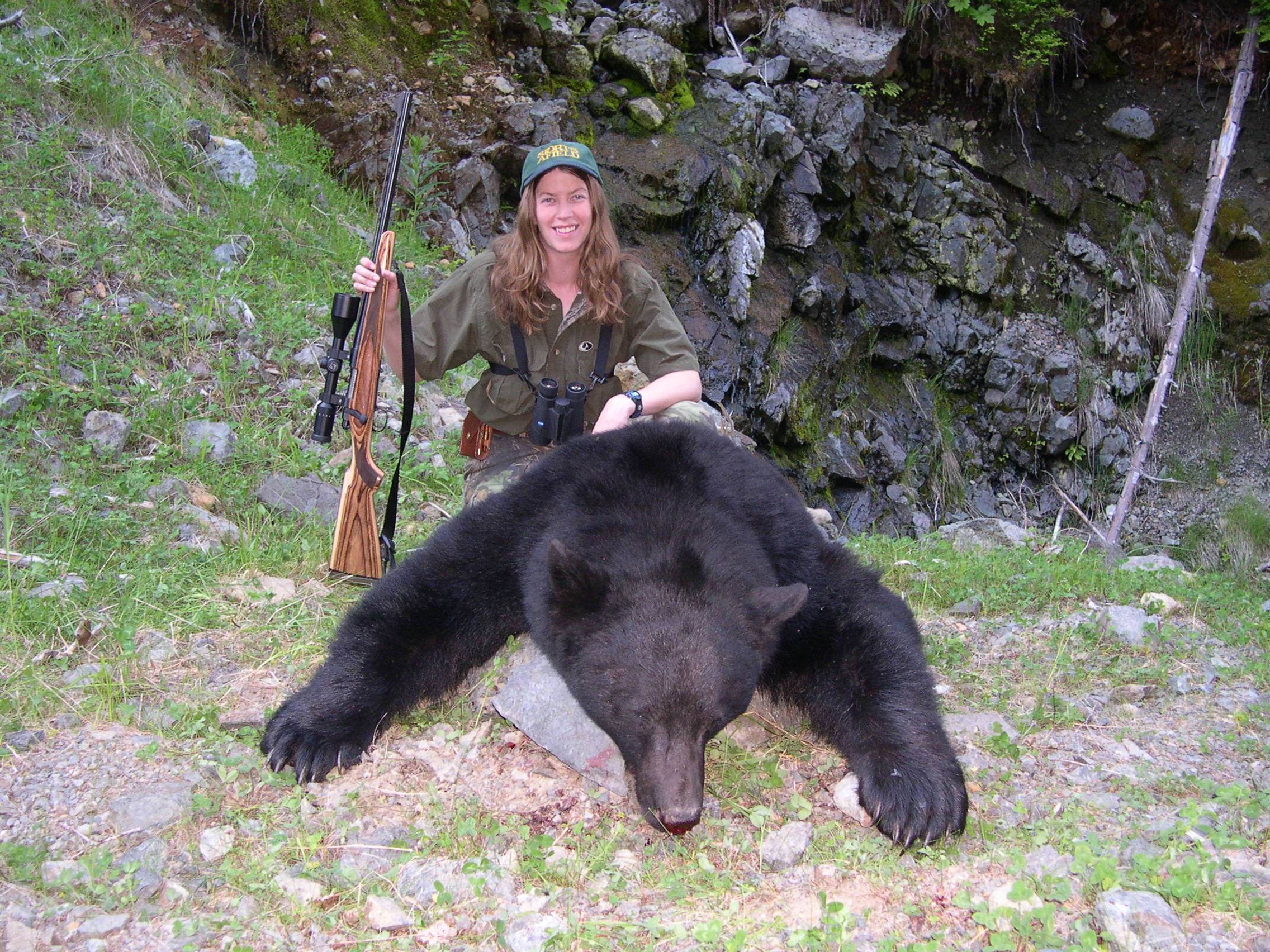
The author with her Vancouver Island black bear.

It was a fantastic bear, a massive old bruin with a beautifully furred hide that squared 6 feet, 6 inches, and a skull that was later officially measured at 18¼ inches. After skinning and quartering, Kim lashed the hide and most of the meat to his packframe. I slid the remaining hindquarter into my pack, secured the rest of my gear on top of it, and hoisted the load onto my back. Heavily laden but happy, we hiked back down the old road in the gathering dusk. The tall peaks of Vancouver Island glowed like church spires against the setting sun, appropriate monuments to honor a magnificent animal.

Contact Darren DeLuca, Vancouver Island Guide Outfitters: 250-724-1533, [email protected]; or visit HuntWild.com.

Leave a Comment

Sports Afield Jake & Hen Turkey Decoy Combo

Realistic decoys to help you punch your tag.

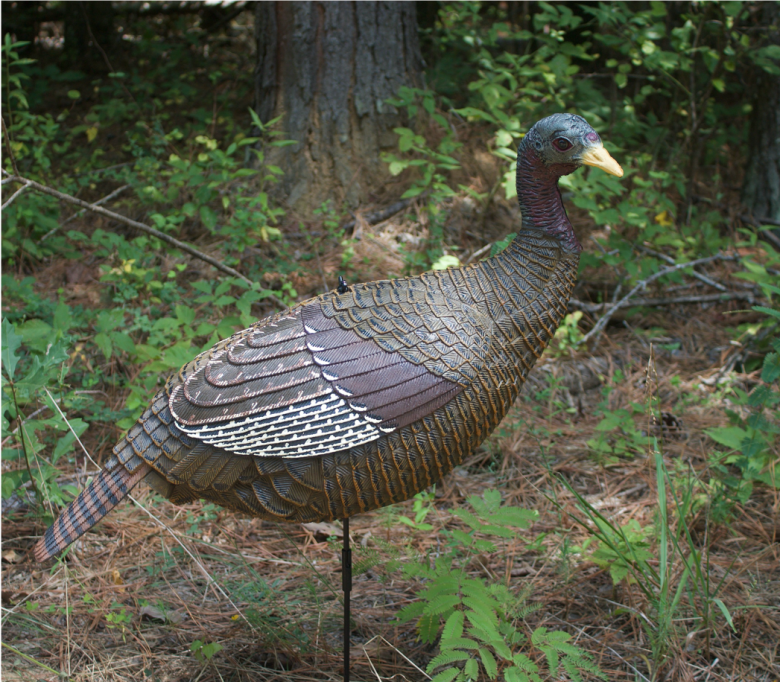
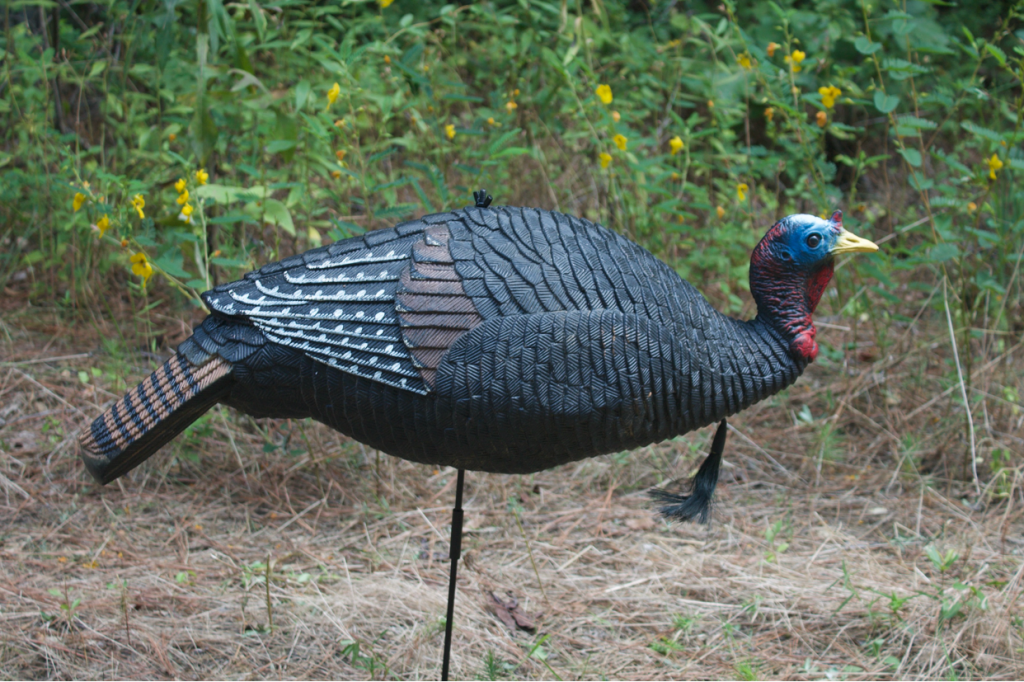
Just in time for spring turkey hunts across the country, Sports Afield Products has introduced its new Jake & Hen Combo set of turkey decoys. This set of two decoys, one jake and one hen, are made of a foldable, rubberlike material that is easy to transport yet snaps back into shape easily. Both come with two-piece metal stakes for easy setup. The hen comes with two stake holes to allow it to be set up in two different body positions, upright or relaxed. Both decoys feature realistic paint and natural, taxidermy-quality eyes. These realistic and attractive decoys will help you punch your turkey tag this season. Available at select Costco Wholesale locations.

The hen decoy can be set up in either the upright or relaxed position.
Both decoys feature realistic paint and natural, taxidermy-quality eyes.

Leave a Comment

A Call for More Nuanced Dialogues on Trophy Hunting

Scientists call on researchers to better define their terms and metrics in studies involving trophy hunting.

Six well-known wildlife scientists recently published a paper in The Journal of Wildlife Management calling on researchers to provide more details and better context when tacking the subject of trophy hunting. Concerned that many studies are being misunderstood or their conclusions misapplied, the authors of “A Call for More Nuanced Dialogues About Trophy Hunting,” propose that any discussions of trophy hunting include a definition of how the researchers use the term “trophy,” details of variables measured, and explanations of the scales applied.

The paper’s authors, Carl D. Mitchell, Vernon C. Bleich, R. Terry Bowyer, James R. Heffelfinger, Kelly M. Stewart, and Paula A. White, express concern that simplistic portrayals of trophy hunting present an incomplete picture and result in the absence of a balanced, objective approach to trophy hunting in some publications. “A more nuanced treatment of these issues is the first step in resolving some debates surrounding this controversial topic,” the authors note. Read the full text of the paper here:

http://sportsafield.com/wp-content/uploads/2021/03/Mitchell_etal_2021_JWM_NuancedDialoguesHunting.pdf

Leave a Comment

What Really Happened to Hugh Glass?

If you’ve seen “The Revenant,” you might think you know. But there are many versions of the story.

Probably the most famous “true story” from the mountain man period of the American West is the saga of fur trapper Hugh Glass. The generally accepted version goes something like this: Attacked by a grizzly, severely mauled, Glass is considered beyond saving and is left behind to die. Two fellow trappers, one of whom is the young Jim Bridger, are paid to stay with him until the end and provide a proper burial. But Glass hangs on. The men are increasingly worried about nearby hostile Indians, who might discover them at any time. So they abandon the dying man, taking his rifle, knife, and other vital gear. Glass is left on his own, deep in the wilderness. But somehow he manages to survive, drinking stream water, eating berries and whatever else he can find for sustenance. His wounds are terrible–he can’t stand or walk–but he slowly gains enough strength to begin crawling over the prairie, aiming for a fort hundreds of miles away. He is driven by a fierce will to live and a burning desire for vengeance on the scoundrels who robbed him and left him for dead.

It is, of course, the stuff of legends, and a great story, which is why the Glass story has been told and retold, first as ostensibly true accounts, then as blatant fiction in novels and movies, most recently The Revenant. “Everyone knows” about Hugh Glass, but as is often the case with what everyone knows, it turns out that much is doubtful or plainly false. In fact, there isn’t one Hugh Glass story, but several conflicting versions. Some historians even believe the whole chronicle is largely made up, a tall tale first spun by Glass and then embellished by others. Let’s take a closer look at some of the details. 

Little is known about Glass’s origins, but it is believed he was born circa 1780, near Philadelphia. At the time of the bear attack he was probably in his mid-forties, which was elderly for a mountain man and explains the frequent reference to him as “Old Hugh,” or “Old Glass.” He spoke of being a sailor in his early years and claimed to have been captured, along with a comrade, by the notorious pirate Jean Lafitte. They were given the option of joining the plunderers or dying; naturally they chose life. After a miserable year with the pirate colony, word came that they were going to be tried as unworthy and executed the next day; so they jumped ship in the middle of the night and swam to the Gulf-coast shore near present-day Galveston. Here they made their way with difficulty, living off the land while avoiding the dangerous Karankawa Indians, who were said to be cannibals.

When they reached the Great Plains they were captured by the Pawnees and slated to be tortured and burned alive. Glass’s companion went first. He was stripped, tied to a stake, and impaled with dozens of pitch-pine slivers, which were then set afire. Glass made himself watch stoically, showing no emotion or fear. When his turn came he bowed slightly and offered the chief a packet of vermilion he’d been (somehow) carrying. The chief found this display of courage and grace impressive. He decided to spare Glass’s life and adopt him into the tribe. By one account Glass lived with the Pawnees for several years before making an escape; another says it was several months. From the Indians he learned survival skills such as how to forage for wild edible plants. Later he entered the western fur trade, eventually enlisting in Major Andrew Henry’s trapping expedition up the Missouri. By late summer or early fall of 1823 he and his group were traveling by foot along the Grand River in present-day South Dakota, heading for the Yellowstone country. It was here he met the grizzly.

A graphic image of the mauling of Hugh Glass.

According to one account, Glass and another man were sent ahead of the group to hunt for game, when he suddenly encountered a “white bear” (as grizzlies were often called) only three yards away. Before he “could set his triggers or turn to retreat, he was seized by the throat and raised from the ground,” then mauled viciously. But other accounts put Glass at fault. Disobeying orders to stay in close file because of nearby hostile Arikaras, Glass “went off of the line of march….and met with a large grissly Bear which he shot at and wounded,” trapper James Clyman recorded in his journal. Then the bear–a sow with near-adult cubs–attacked. In words attributed to another trapper, Hiram Allen, who was at the scene: “…the monster had seized him, torn the flesh from the lower part of the body, & from the lower limbs–He also had his neck shockingly torn, even to the degree that an aperture appeared to have been made into the windpipe, & his breath to exude at the side of the neck.” Allen noted that Glass’s arms and hands were unhurt, and he suffered no broken bones. (This despite the several versions of the story that say Glass later set his broken leg himself.) 

After the bears were killed, the group did what they could for Glass’s wounds, but considered the man a goner. By one account, they then left him to his inevitable death, taking his gun and equipment with them. But in other versions the trappers built a litter and placed the torn man upon it, laboriously carrying him for several days. Glass “retained all his faculties but those of speech & locomotion.” He was “too feeble to walk or help himself at all, his comrads every moment waited his death.” But the tough old mountaineer wouldn’t die. Finally the difficult decision was made to leave him behind. Two men agreed to stay until the end and provide a proper burial–for a fee. (Eighty dollars in one account, $300 in another, or $400–a near fortune for those times.) One man was John Fitzgerald, and the other was a mere boy of 18 or 19. “Bridges,” was the name first reported. Much later–more than 70 years after the event–a prominent historian would use an elderly man’s second-hand recollection to conclude that the boy at the scene was in fact the now-famous mountain man Jim Bridger. This became accepted as part of the story, though some, including Bridger’s main biographer, strongly deny it. (When interviewed in his later years, Bridger recalled the Glass incident but made no mention of playing any part in the drama.) 

In any case, after some days (two, three, or five) the care- givers began to worry. Glass kept hanging on. An escalating fear of nearby Arikaras and the increasing distance from the main band were wracking the men’s nerves. Fitzgerald convinced the youth it was time to depart. Just take Old Hugh’s gun and gear and leave him to his inevitable death, which could come any time now. In two accounts, Glass is asleep when the men slip away, and wakes to the horror of being disabled and alone. In another version, Glass hears them planning to abandon him, but cannot speak. He can only plead with his eyes and reaching hands. 

Some say the two men took everything–gun, knife, pouch, kettle–leaving Glass on a pallet with just his clothes and a blanket. In a different telling, they left a kettle containing his wallet and an old razor–a precious cutting tool he would later use to survive. 

Glass’s reaction varies with the source: 1) “He didn’t despair.” 2) “Oppressed with grief and his hard fate, he soon became delirious.” But then, “visions of benevolent beings appeared…. exhorting him not to despond.” Whichever, he drank water from a nearby stream and ate wild berries to sustain himself. He rested over many days and planned a course of action.

The Crawl

The four original “true accounts” of Glass’s ordeal vary considerably in significant details. In the earliest publication (by James Hall, 1825): “Acquiring, by slow degrees, a little strength, he now set off for Fort Kiowa, a trading establishment on the Missouri River, about three hundred and fifty miles distant.” (Actually, 200 miles.) “It required no ordinary portion of fortitude to crawl…through a hostile country without fire-arms, with scarcely strength to drag one limb after another, and with almost no other subsistence than wild berries.” In Hall’s version as in one other, Glass drags himself the whole way to the fort. 

In a perhaps more reliable rendition by trapper George Yount, who claimed to have gotten the story from Old Hugh himself, Glass did build up his strength by drinking creek water, resting and eating berries. But “one morning…he found by his side a huge Rattlesnake–With a small stone he slew the reptile, jambed off its head & cast it from him–Having laid the dead serpent by his side he jambed off small parts from time to time & bruised it thoroughly & moistened it with water….& made of it a grateful food on which he fed from day to day…After a long period his strength began to revive.” He “crawled a few rods” and then rested, building his stamina. Eventually he “found himself upon his feet & began to walk–Soon he could travel nearly a mile a day.” He fed on buffalo carcasses along the way; and once drove a pack of wolves from a fresh kill, gorging on the raw meat. He ate berries and “nourishing roots” dug from the earth, as he had learned from the Pawnee.

Most accounts agree that he drove himself forward with a near-feverish lust for revenge on the two men who had stolen his rifle and gear before leaving him to die. 

In two versions, when close to collapsing he came upon a band of friendly Sioux, who gave him much-needed food, tended his wounds, and helped get him to Fort Kiowa.

How long was his arduous journey? Some say several weeks, others several months. He was met at the fort’s gate with shock and disbelief; the return of a man believed to be dead and buried, a revenant. He sought out the youth (“Bridges” or Jim Bridger?) who had abandoned him. As the young man quaked with guilt and remorse, Glass decided not to kill him, allegedly saying: “Go, my boy–I leave you to the punishment of your own conscience & your God….but don’t forget hereafter that truth & fidelity are too valuable to be trifled with.” 

The older man, the real culprit, Fitzgerald–who still possessed Hugh’s rifle–had gone to distant Fort Atkinson. Some say Glass spent only a few days at Kiowa before joining a group headed for Atkinson. Others say he spent the winter recuperating and departed in the spring. En route, the men stopped to camp. Glass went off to hunt for food and was barely out of sight when a band of Arikara attacked, killing every white man present. Once again Hugh had defied the odds with an improbable, or spectacularly fortunate, escape from death.

When he finally encountered Fitzgerald, who had enlisted and become a soldier, Glass could not take revenge without Army reprisal, so he only chastised the man for his “shameful perfidy & heartless cruelty–but enough….Settle the matter with your own conscience & your God. Give me my favorite rifle.”

How much of this is actually true? The bear attack and subsequent abandonment seem reasonably well documented, but beyond that, was Old Hugh mainly a spinner of tall tales (like most mountain men of the day), fabricating the many implausible escapes and freely elaborating on his adventures? And how much did the several original “reporters” of the Glass story bend, embellish and fictionalize to make a more dramatic yarn, one ripe with great American values such as courage, grit, self-reliance, prowess, an indomitable spirit–and even, as a capper, forgiveness with a moral lesson? We will probably never know the answer to these questions. But whatever the actual truth, the tale has proved too poignant and arresting to dismiss. Hugh Glass has become a permanent American legend. 

And what of the man himself? In the early spring of 1833, nearly ten years after the bear attack and the survival trek that would make him famous, “Old Hugh” ventured out with two companions to trap beaver below Fort Cass, near the junction of the Bighorn and Yellowstone rivers. As the men were crossing the ice they were attacked, killed, and scalped by a large war party of Glass’s longtime enemies, the Arikaras.     

Author’s Note: For much more detail about the Glass story and legend, see historian James D. McLaird’s excellent book, Hugh Glass: Grizzly Survivor (South Dakota Historical Society Press; 2016). For maps, informational articles and access to the original accounts of Glass’s ordeal, visit hughglass.org

Leave a Comment

The End of the Game

The Selous, Africa’s largest hunting reserve, is being destroyed.

Photo above: The dam construction site at Steigler’s Gorge. Photo: Archive Baldus

The Selous Game Reserve was once Africa’s oldest and largest nature reserve. It was established by Germany in 1896; at more than 31,000 square miles, it was twice the size of Vermont. It was recognized by UNESCO as a World Heritage Site in 1982, one of the most important natural monuments on earth. It was one of the leading hunting grounds in Africa, and hunting proceeds kept the reserve going for many decades.
Tanzania’s government has traditionally held the protection of the country’s rich wildlife in high regard, although in practice conservation performance was often lacking. In the Selous, mismanagement, lack of funds, and bad governance has twice led to serious episodes of commercial poaching, which reduced the rhino and elephant populations. This happened in the first half of the 1980s, and again between 2006 and 2013. 

Germany, together with Tanzanian partners, rehabilitated the Selous between 1987 and 2003. Elephant numbers rose during this period from 30,000 to over 70,000. One of the most important achievements was the introduction of a system of self-financing. The Selous was allowed to retain half of its income and use it for running costs and investment. In the mid-1990s, this was $3 million dollars, 90 percent of which came from hunting. Thus, international hunters, most of them from the United States, safeguarded one of Africa’s last remaining wildlands and facilitated the conservation of its wildlife, including elephants, lions, leopards, and plains game. 
After the project ended, however, the Tanzanian government broke all agreements for self-financing of the reserve. Poachers once again targeted the elephant population, with quite a few senior politicians and officials participating. The elephant population fell from more than 70,000 in 2005 to 13,000 in 2013. Value of the looted ivory: over 100 million Euros.

Another disaster befell the reserve in 2012, when a uranium mine in the southwest of the reserve was permitted. This is against the rules for a World Heritage Site. Tanzania promised, however, that this would be the last major violation of the ecological integrity of the Selous. Nolens volens, the UNESCO World Heritage Committee swallowed the toad. 

Location of the proposed mega-dam in the Selous Game Reserve. Photo: Archive Baldus

President John Magufuli has been in office since 2015. A former minister for roads and infrastructure, he loves large projects and has no regard for nature, neither for its intrinsic values nor for its ecological and economic significance. In addition, he is increasingly turning into an autocratic ruler. In flawed elections last October, his party got a North Korea-like 98 percent of all seats, and he was re-elected.  

As his latest mega-project, Magufuli is having Egyptian and Chinese construction companies build a huge dam with a 2.2 megawatt power plant at Stiegler´s Gorge on the Rufiji River in the heart of the Selous for an estimated 10 billion US dollars. He wants to use the electricity to industrialize Tanzania. Whether that will work is questionable. A serious analysis of the environmental impact, economic efficiency, or financial viability is lacking. What is for sure is large-scale damage to the game reserve. The reservoir alone will flood 500 square miles, including some of the most beautiful and valuable areas of the reserve and one of the last habitats of the black rhino in Tanzania. Another dam is to be built at the northeastern corner of the reserve on the Ruvu River.
The president does not think highly of sustainable hunting. In his eyes, it has no economic significance for the country. He spent one night in the Selous in the VIP suite of a lodge. This suite is equipped with air conditioning, satellite TV, and a Jacuzzi; however, it is mostly unoccupied due to the price. When he heard that the suite cost $2,000 per night, he quickly calculated this for 365 days and all tourist accommodation in the Selous. Compared to that sum, he said, hunting is unprofitable. 

Hunting blocks throughout the country have been released for agriculture under his rule, and others have been declared national parks. The Selous is now divided. The western and southern part, with about 19,000 square miles, has become the Nyerere National Park. Only the smaller, eastern part (about 12,000 square miles) will be hunted in the future. The division was done without the legally required planning procedures. 

Large parts of the new national park could be hunted sustainably, but are unsuitable for phototourism (this region is not attractive for tourists, has a long rainy season, is tsetse- and malaria-infested, and is remote and therefore logistically expensive). The new park has become a financial drain for the Tanzania National Parks Authority (TANAPA), while at the same time the hunting administration is losing millions of dollars in revenue. Only three national parks in the country generate any surpluses at all. All others are lose money and are cross-subsidized. The most money is earned at Kilimanjaro, Africa’s highest mountain. Without the high-priced mountaineering traffic, TANAPA would have had to file for bankruptcy long ago.
To make matters worse, the government has decided, in view of empty coffers, that the three previously autonomous nature conservation authorities: TANAPA; the Ngorongoro Crater Administration; and the Tanzania Wildlife Authority, which covers the hunting blocks and all other conservation areas, must submit all of their revenues to the state. Then  they will receive state subsidies. Such a system existed decades ago. It resulted in a pronounced underfunding of the nature reserves and massive poaching.
In any case, hunting income in Tanzania has fallen by more than half in recent years. There are several reasons for this: Mismanagement of the hunting administration, excessive government taxes and fees, several failed auctions to allocate unused hunting blocks, a trophy import ban by the USA, and now, the coronavirus.
In the meantime, dams and mining are not the end of the story. An extensive program for the construction of a road network is on the way. It is becoming obvious that one of the last largely untouched wilderness areas in Africa is gradually being dismembered. Hunting, with its small environmental footprint, has so far preserved nature. The national park, however, will result in infrastructure, hotel buildings, and roads. Experience shows that such roads are not only used by tourists, but also by charcoal trucks, poachers, and through traffic.

The World Heritage Committee declared the Selous a “World Heritage in Danger” some time ago. At the next General Assembly of the Convention, the 194 member states have to decide whether the status will be withdrawn from the Selous altogether. It seems that the “Outstanding Universal Value” of the Selous Ecosystem has been surrendered by the government of Tanzania. Hope dies last, but today there is little hope left. Hunters are losing one of the last wilderness areas in Africa.—Rolf D. Baldus

Leave a Comment

tablet

Never Miss An Issue!Subscribe Now: 6 Issues for $34.97

More Details
WordPress Video Lightbox Plugin