Sports A Field

The Intriguing Hartebeest

It may not be the most beautiful of Africa’s plains game, but the hartebeest is fascinating and challenging to hunt.

Photo above: A Cape hartebeest. Photo by Dirk de Bod

Among the millions of words I’ve written about African hunting, this is the first piece I’ve devoted specifically to the hartebeest. This is odd, because I’ve spent a lot of time hunting and observing them, and, on most safaris anywhere in Africa, one or another hartebeest is likely to be encountered.

Long-legged and tall in the shoulder, the hartebeest is not among Africa’s more beautiful antelopes. But its thick horns, usually with sharp turns (rather than smooth curves) are unusual and interesting. So is the animal. With a distinctive “pogo-stick” gait (much like the stott of a mule deer), the hartebeest clan is among the fleetest of antelopes, especially over distance, and they are usually wary and difficult to approach.

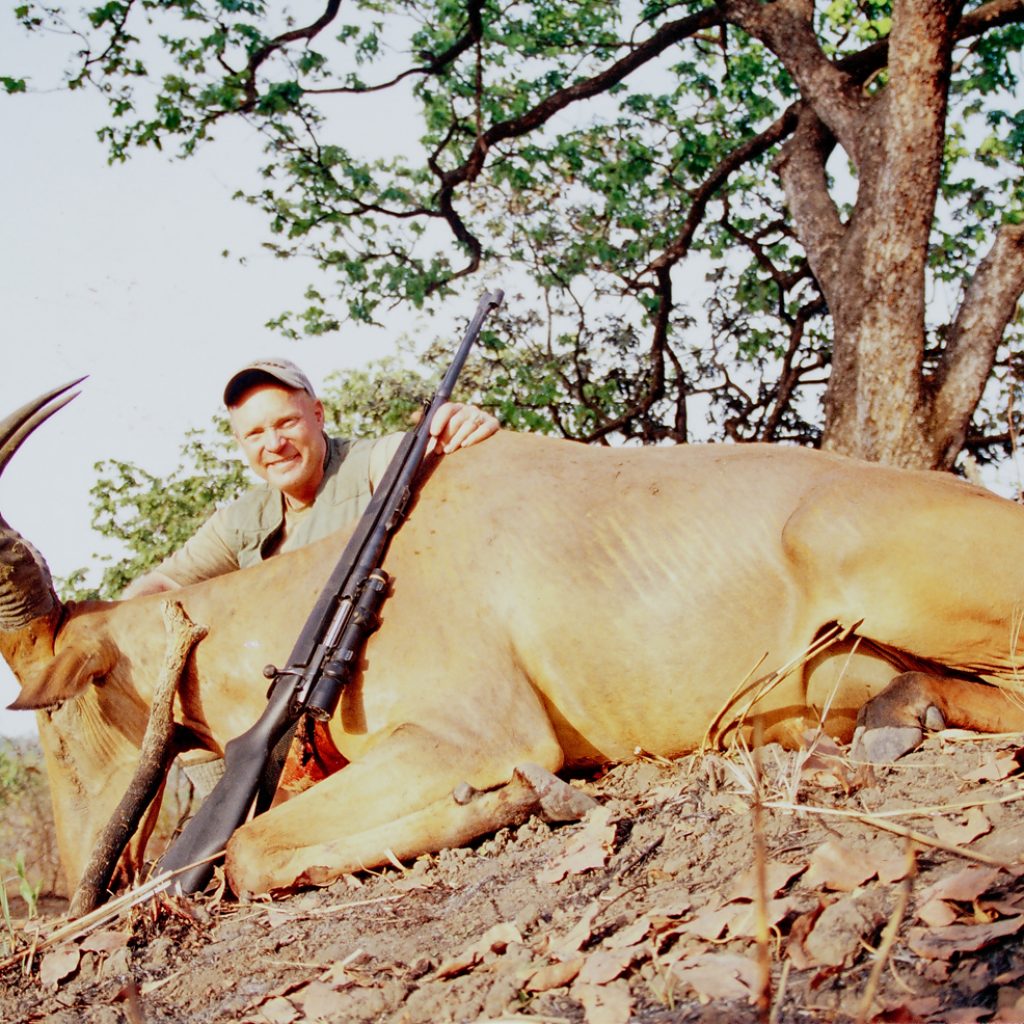
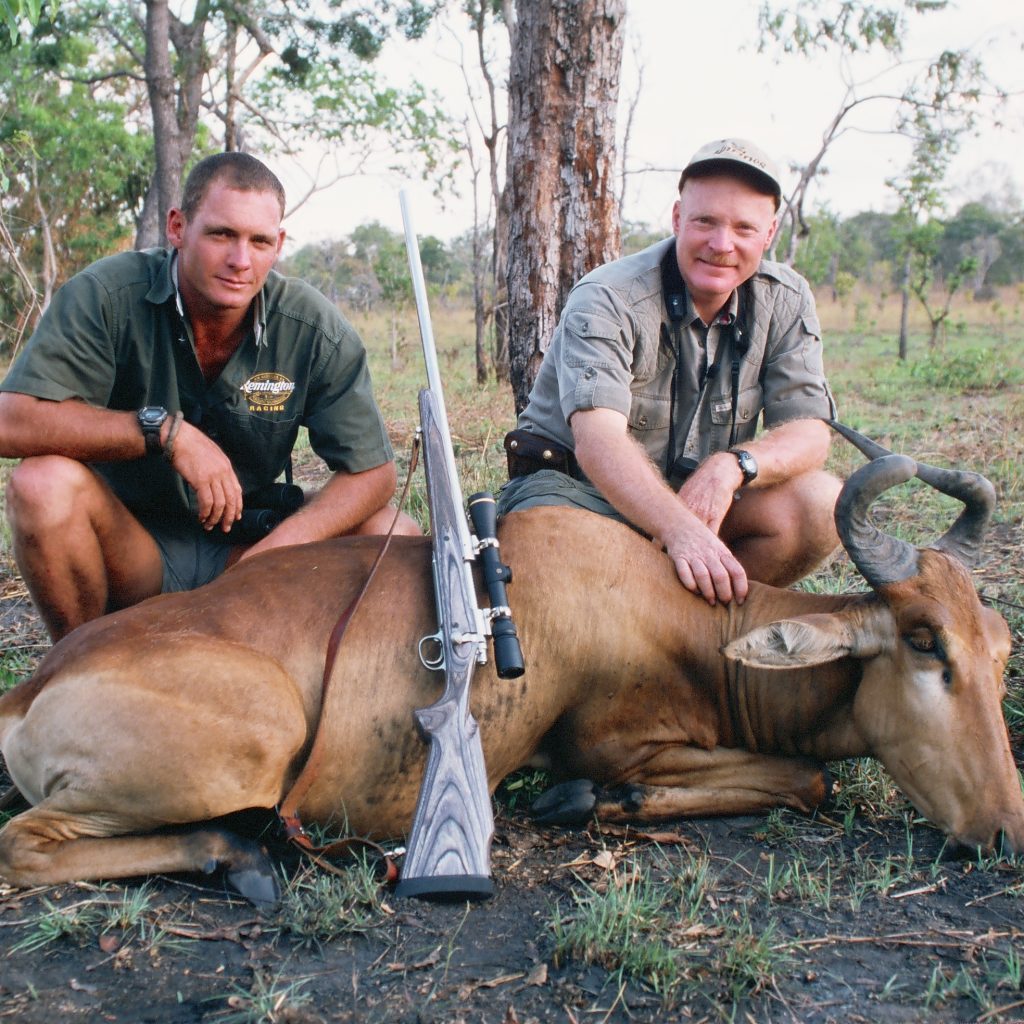
This is Boddington’s only western hartebeest, taken in northern Cameroon in 2004. References don’t consistently validate that this is the largest-bodied hartebeest, but look at this one, giant of a hartebeest!

Relying primarily on vision and mobility for security, the hartebeest prefers open plains or mixed thornbush. Always a grazing herd animal, primary requirements are grass and water. They are not found in the forest zone, and although they do fine in semi-arid country, they are not found in the Sahara. Otherwise, one or another hartebeest is found in most hunting areas. Top to bottom and east to west, the various races of hartebeest (genus and species Alcelaphus bucelaphus) are probably the most widespread of Africa’s large antelopes.

The hartebeest appears slab-sided, narrow through the chest, so they are deceptively heavy. Bulls of the plentiful Cape hartebeest race of southern Africa weigh about 350 pounds. The East African races average a bit smaller, while the hartebeest of Central Africa are the largest, with mature bull up to 450 pounds.

As is often the case with species that have multiple similar races, science and our various hunters’ record-keeping systems aren’t always in accord. However, science and the venerable Rowland Ward book are pretty well in sync, identifying eight “genuine” subspecies. The type specimen, the Atlas or bubal hartebeest, was most recently confined to the Mediterranean coast from Tunisia to Morocco. This has been a tough neighborhood for wildlife, and this race became extinct about 1930. Also questionable is the tora hartebeest, found along the Blue Nile where Eritrea, Sudan, and Ethiopia join. At best, numbers are very low, and some authorities believe this hartebeest is also gone.

The six races currently huntable  are: red or Cape hartebeest, common in Namibia, South Africa, and Botswana; Lichtenstein hartebeest, from central Tanzania south through Mozambique and southwest through Zambia; Coke hartebeest (kongoni in Swahili) from northern Tanzania up through central Kenya; Lelwel hartebeest from Uganda westward to northern Cameroon; and western hartebeest on west to Senegal. All of these hartebeests occupy large ranges and, in general, are not scarce. There is also the Swayne hartebeest, still huntable, but with local distribution in Ethiopia’s Rift Valley.

Complicating things, there are also natural hybrids where major subspecies come together. Neumann hartebeest is a natural hybrid between Swayne and Lelwel, hunted in southwestern Ethiopia; and the Kenya highland hartebeest (not hunted since Kenya closed) is a natural Coke-Lelwel cross. Jackson hartebeest is probably also a Coke-Lelwel cross, occurring from northwestern Kenya into Uganda. Locally, hartebeest in eastern Uganda are called Jackson, but record-keeping organizations consider them Lelwel.

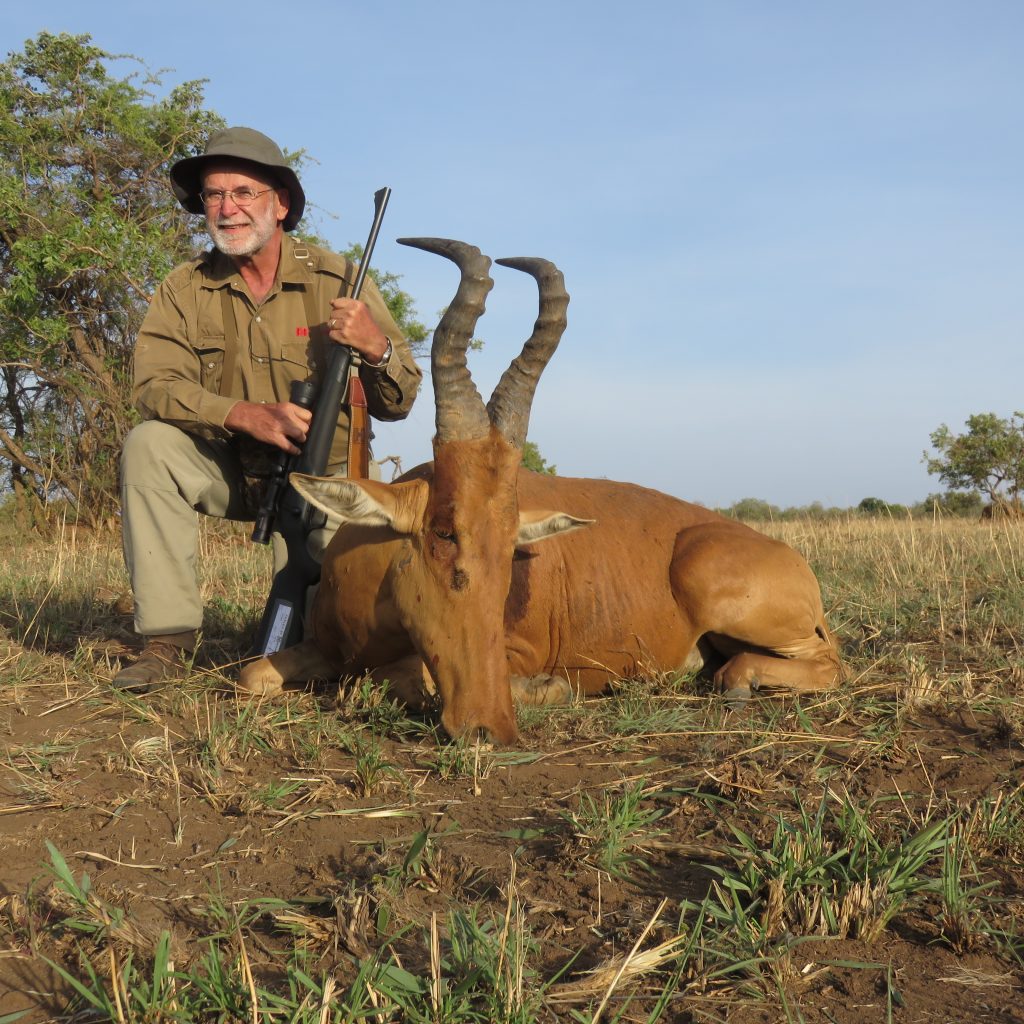
Steve Hornady with a very good hartebeest from Uganda’s northernmost Karamoja District. Locally these hartebeest are called Jackson’s hartebeest, but most record-keeping authorities put them in the Lelwel hartebeest category.

Among the races, normal horn conformation and body color are distinctive, but with too much variance to always be definitive. Cape hartebeest are typically dark mahogany, with thick horns that grow up and back, then bend forward, and finally turn sharply back. Lichtenstein hartebeest are lighter in color, with short, thick horns that typically end with near-parallel tips. The Coke hartebeest, which I only hunted in Kenya, is reddish-tawny with lighter legs and hindquarters, and the weirdest horns of all, growing up and outward, and then turning abruptly up or back. The Lelwel hartebeest is similar in color, but larger, with horns more similar to the Cape variety. Western hartebeest are more uniformly tan, though distinctive with a while line between the eyes, with massive horns, U-shaped from the front, and ending with backward-pointing tips.

Both males and females carry similar horns, so judging is tough. On bulls, the penis is quite far back and not always readily visible, and vegetation often obscures this irrefutable evidence. It takes experience; you must look at many to get the hang of it. The primary means to locate a bull is mass of the horn bases, often almost completely grown together. Females can have impressive horns, but never with the mass.

Regardless of race, hunting hartebeest is a matter of painstaking glassing and then a careful approach, keeping out of sight until within range. When hunting from horseback was common, early hunters noted that, when approached, hartebeest would seem to drift slowly away, but their ability to cover ground was deceptive: The horses would be worn out before any distance was closed. Provided there’s enough cover, whether vegetation or terrain, my experience is you can often close for a shot–the first time. If that doesn’t work, unless you’re desperate for camp meat or a bull appears really spectacular, once hartebeest start drifting away, it’s wiser to wave off and keep looking.

I’ve waved off lots of times, but it never hurts to try. We see a lot of hartebeest out on the floodplains of Mozambique’s Coutada 11. Sometimes distribution of African animals makes no sense: This area is below the Zambezi, which is a major natural barrier. So, I’ve always thought the hartebeest there should be the Cape hartebeest of southern Africa, but they are pure Lichtenstein, stockier and lighter in color. They’re plentiful, but horns are rarely huge. One morning Mark Haldane and I saw a giant, heavy with amazing tips, huge for a Lichtenstein. Well, of course we had to have him, but he was in a big group way out on the floodplain, zero cover and windy. We tried a half-dozen approaches; I don’t think we got within 600 yards.

We let them drift off and settle down, and started walking toward them at an oblique angle, carrying two sets of sticks. Amazingly, we closed to 375 yards. With one set of sticks under the butt, the other under the fore-end, I held a bit high and a bit more into the crosswind and dropped him with a Blaser .270.

Because hartebeest tend to be open-country herd animals, identifying and isolating a bull for a shot is often the hard part, and they are nervous, seeming to have a longer “flight” radius” than many antelopes. So, shots tend to be longer. I’ve taken a fair number beyond 300 yards, farther than usual for shooting in Africa, and always because that’s as close as we could get! That said, I’ve never considered hartebeest especially hardy. Any accurate, well-scoped plains game rifle from 6.5mm to .30-caliber should work fine, and I’ve taken several with 7mms and .270s because those are favorite calibers I often carry.

Since they are relatively narrow through the chest, given a choice I prefer bullets that open fairly quickly but, like everything else, it’s more a matter of shot placement than precise caliber or bullet. And, if shot placement is poor, a hartebeest can give you a long day. Years ago, in the Selous, hunting with Cliff Walker, I made a bad shot on a Lichtenstein hartebeest. The trail took us into a dense thicket line and led us on and on. We jumped the animal several times, too thick to shoot, and now we were losing daylight, and we lost the spoor. I cast one way, Cliff another. The bull jumped up just in front of him and he dropped it at about ten feet with his .577 double. That worked, but usually hartebeest don’t require quite that much power.

PH Cliff Walker and Boddington with a very good Lichtenstein hartebeest from the Selous Reserve. Boddington made a poor shot on this bull and, after a long tracking job, Walker shot it with his double .577.

A hartebeest isn’t usually a difficult antelope to find, but density varies widely. Across several safaris to C.A.R. I never had a chance at a Lelwel, although I finally got a “Jackson” in Uganda. Pretty much the same with western hartebeest: Saw few in northern Cameroon and almost none in Burkina Faso, seemingly the least common of the large antelope present, but I did get a good one on my third hunt in Cameroon. Although the books say the Lelwel is the largest-bodied hartebeest, the one western hartebeest I’ve walked up to was a giant, massive in the body, but that’s the only one I’ve seen up close.

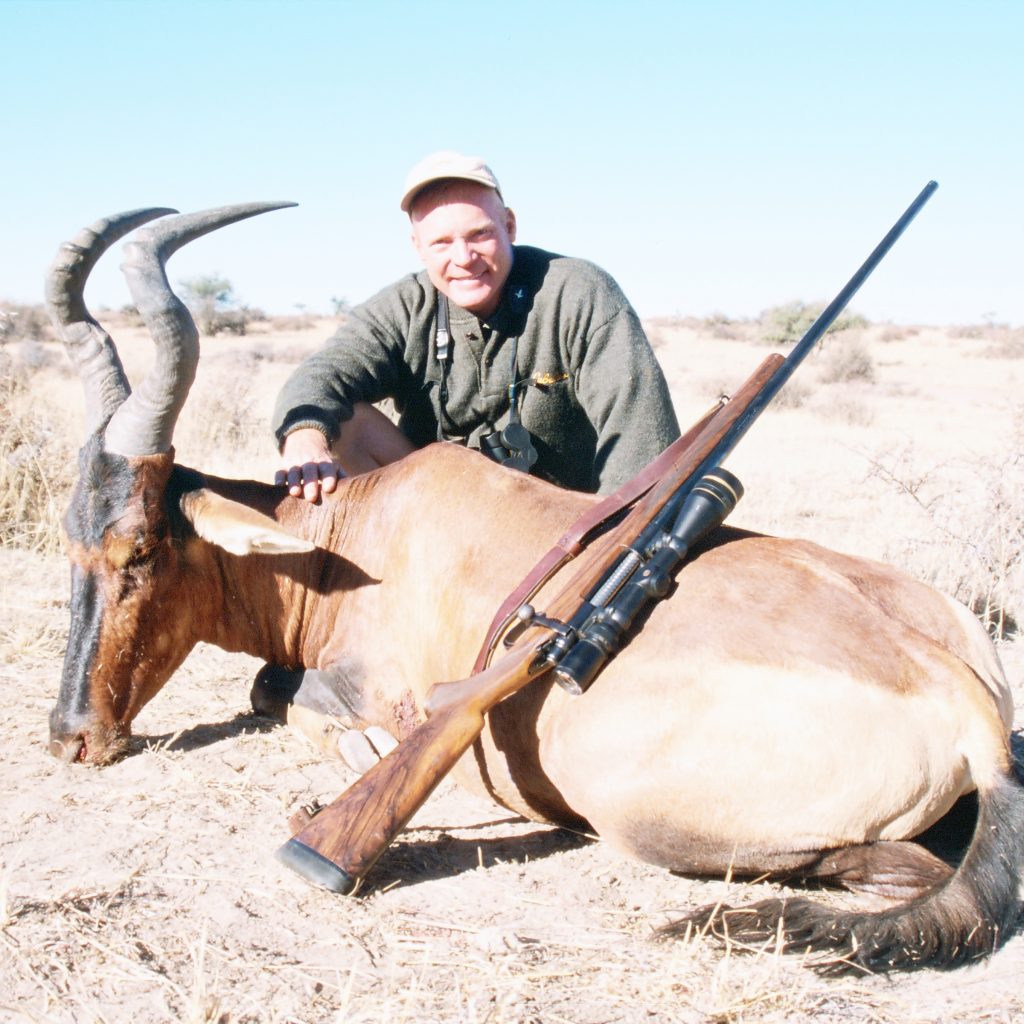
In Mozambique, we can go to the floodplain on any day and see plenty of hartebeest. This is also true of many areas in southern Africa, but some places and times are better than others. Years ago, I was with Dirk de Bod in central Namibia and he told me there was a hartebeest migration passing through just behind the Windhoek International Airport, at the time (and maybe still) an unfenced area. We spent a day there, and there were hartebeests everywhere: Big herds, small groups, hundreds! The end result was obvious so we took our time, looked around, and I got my best-ever Cape hartebeest. Getting a good hartebeest generally isn’t a mission, but it’s usually not quite that simple.

Boddington’s best-ever Cape hartebeest was taken during a migration passing close by the Windhoek airport. This bull has it all, but what you look for are the long tips!

Leave a Comment

Something of Value

Having your firearms appraised helps safeguard your family from getting ripped off after you’re gone.

When I reached Duke McCaa of Gulf Breeze Firearms by phone, he was in the middle of appraising a hunter’s gun collection. This isn’t particularly surprising, considering how many appraisals McCaa does a year and how in-demand his services are. As a licensed appraiser who specializes in firearms and knives, McCaa bounces around the country—from Rhode Island to Washington to Illinois and every other state—providing private gun owners with detailed appraisals of their firearms collections. 

In many cases, these appraisals are conducted after the gun owner has passed away, and McCaa often discovers that the owner never kept detailed records of the guns in the collection—records that could have helped put a more precise value on each firearm. Most gun owners can tell you all about every gun in their collection, where they bought it, where they’ve carried it, and what game they’ve shot with it, and they assume that after they pass away, their heirs will be able to sell it for its true value. But that’s not always the case; McCaa says that there are crooks and swindlers who are only too happy to take advantage of grieving relatives, acquiring collections at a fraction of their value while posing as legitimate appraisers. 

“It’s criminal,” McCaa says. “Many of the owners of these gun collections would haggle for an hour over $20 while making a purchase. When they die, these swindlers prey on their widows.” McCaa says he’s seen family members sell $250,000 collections for $100,000 simply because they didn’t appreciate how valuable they were, and because trusted the word of an appraiser who was ultimately out to scam them.   

Think of a good appraiser as an attorney. They know the rules, they know what you deserve, and they’re willing to serve as a voice of dissent when someone is lying to you. Most gun collectors are passionate about their firearms, and a collection belonging to a family member who has passed likely represents a substantial financial investment, but it also represents an important part of the collector’s life. There may be guns in the collection passed down from older family members. There may be guns that are rare and hard to find. Perhaps there’s a special rifle they carried to Africa a dozen times or maybe it’s the shotgun they used to hunt upland game around the world. Regardless of the size or value of the collection, there are those who would gladly pay your family a fraction of the actual value to make a profit. 

And that’s why you must have your firearms appraised—and the best time to do that is while you’re still alive and kicking. Sometimes the back story makes a big difference in the value of the gun. Was it owned by a prince, a celebrity, or a notable hunter? Was the custom work on the gun completed by an in-demand gunsmith? Having this information makes it easier to evaluate the value of a firearms collection, and that’s easier when the original collector is still able to work closely with the appraiser.

How much are these guns worth? Your neighborhood “gun expert” may provide a lowball estimate in hopes of personal gain. That’s why it makes sense to hire a professional.

“If you have a gun collection, you need to have an inventory, insurance paperwork, and a maintenance schedule,” McCaa says. Compared to homeowners insurance, firearm insurance is relatively cheap—you can often cover $100,000 worth of guns for a few hundred bucks a year—and that’s an important first step in protecting your investment. Having a detailed inventory is critical in case of a loss, such as a fire or theft. 

McCaa, who has earned a solid reputation for being fair, provides clients with a “buy value” for each firearm, a number that is based on substantiated references regarding the value of the gun. A buy value represents a fair selling price. McCaa also offers to buy the gun at a portion of that price or consign it. This way, McCaa’s customers know he is willing to pay a high percentage of the buy value for the gun, or consign it for sale. At that point, the gun’s owner has multiple options—they can sell the gun to McCaa at the agreed-upon price, consign it, or sell it themselves. Whatever they decide, they’ll have a solid understanding of the firearm’s current market value. 

Don’t be fooled into believing that your firearm collection is too small to be of value and doesn’t require an appraisal. “I once sold three guns that totaled $150 in a week,” McCaa says. “That same week I sold one gun for $150,000.”

It’s rare that an appraiser has experience with evaluating both high- and low-cost firearms, and that’s one reason McCaa is in great demand. Appraisers who deal almost exclusively in low-cost firearms may not be equipped to properly appraise or sell a high-end firearm. Conversely, those who deal exclusively in high-end guns like Rigbys, Purdeys, and Holland & Holland firearms may not be able to accurately appraise guns that cost a few hundred dollars.  

Which brings up another point—can’t you simply have a friend who knows a great deal about firearms provide a rough appraisal? Not really, and here’s why: provided you trust the person (and you’d be surprised how many people will be tempted to fib on the price of a gun in the hopes of scoring a good bargain), someone who doesn’t understand true market value of a firearm won’t provide you with accurate figures. 

“I saw an appraisal sheet where the owner filled out the value of a gun at $587.25,” McCaa says. “Well, that’s what he paid for it at the store. That doesn’t necessarily represent the true value.”

McCaa says that he fields several calls a week to appraise collections, and that most of those collections contain 100 guns or more, although he’s done collections that contained far more and far fewer guns. He charges daily costs, including mileage, plus $25 a gun (except in rare cases where an extremely detailed appraisal is required). That’s on par with other leading appraisers, and while $2,500 may seem like a lot to spend having a 100-gun collection appraised, consider this: If those 100 guns are worth an average of $1,000 each, and you sell them for 75 percent of their market value, you’re losing $25,000 for no reason. And 75 percent would actually be a very good return without an appraisal. In reality, you would be more likely to get 50 percent, losing $50,000.

Should you have your gun collection appraised? The answer is unequivocally yes. If you pass away without getting an appraisal, the best-case scenario is that friends or family will offer up their best estimates of the value of your firearms. At worst, criminals will take advantage of your family at a vulnerable time, and the gun collection you worked so hard to piece together will end up helping to line the pockets of someone who has taken advantage of your loved ones. 

For more information on appraisals with Duke McCaa, visit www.gulfbreezefirearms.com  

Leave a Comment

Bear Trouble

Take careful precautions to avoid run-ins with grizzlies if you’re hunting in their stomping grounds. 

Photo above by Vic Schendel

Hunters are most likely to experience bear problems in three broad-category situations: while looking for game, while camping, and while handling, dressing, retrieving, or transporting downed animals. The primary rule when hunting in grizzly or polar bear country is to always be alert for bears, and/or to “stay bear aware.” That these maxims are practically clichés by now is unfortunate, because clichés tend to go right through people’s ears, or at most receive a gratuitous nod. “Stay bear aware, right, got it. Will do.” The advice is good, but a bit too pat and vague to be very helpful.

A biologist friend likes to be a little more specific. He tells Montana hunters, “Think grizzly, and think defensively. Assume that grizzlies are in the area, and that an encounter is very possible. Anticipate scenarios and how you will handle them. Have your self-defense deterrents within reach, and know how to use them in a hurry. Practice with gun and bear spray before you go hunting. Know the guidelines for handling different types of encounters.” 

That’s an excellent start, but to really lower the odds of bear trouble in the key situations, we need to delve into more concrete details. 

In grizzly country, for instance, “being alert for bears” means not only scanning for actual animals near and far, but also looking closely for evidence that bruins are in the vicinity. Bears tend to leave plenty of sign. Claw marks raked into tree bark; tufts of hair stuck in the bark of “rubbing trees” and fence wire; berry bushes bent, broken, and imperfectly stripped of fruit; logs torn apart (by grub-seeking bruins); digs where a bear has unearthed roots or ground squirrels; large, oval bedding depressions in grass or other vegetation; half-buried carcass caches; and of course scat and tracks. Several scat piles in one fairly small area can signal that you are near a bear’s bedding site. 

Fresh tracks are important sign, of course, and it’s worth knowing how to distinguish a grizzly print from a black bear’s. Griz tracks are not necessarily larger, but the claws are usually longer than the toe marks, and the toe marks are jammed tightly together on a fairly straight line. Black bear toe marks are spaced apart and form a noticeable arc from large toe to small, with claw marks seldom longer than the toes. Remember, the idea here is to avoid bear trouble before it happens, so if you are encountering fresh grizzly sign or an abundance of sign, the smart move might be to change course or leave the area entirely and find another place to hunt. 

Be especially alert and ready to defend yourself when hunting in the following high-risk conditions: In thick, heavy cover (where a large percentage of sudden grizzly charges occur); along noisy waterways, especially in tall cover; and on high-wind days. If you are hunting along and suddenly pick up the whiff or stench of a dead animal, don’t investigate. Back up and move well away to avoid the possibility of running into a carcass-defending griz, which could very well react with a defensive charge. 

If you see a bear that hasn’t yet seen you, move out of sight quietly and leave the vicinity. If you see or meet a bear that sees you or approaches, stay calm, don’t call out or yell, don’t run or try to climb a tree, but do stand your ground and prepare your deterrent and/or weapon. If the bear doesn’t approach, slowly move back and away. Stop if the bear comes forward and stand your ground with weapons ready.

For hunters in grizzly country, one of the most potentially dangerous situations occurs after a game animal is down. This should be considered a prime-risk, red-alert time, and treated as such. (The risk is even higher if you are alone.) Have your bear spray at hand and your rifle or sidearm loaded, with a round chambered, and within easy reach. If possible, move the carcass away from thick brush and into the comparative open. If you are alone, stop, stand, and survey the surroundings every few minutes. Stay attuned to natural sounds around you, such as rustling brush, the crackle or crunch of leaves or twigs, alarm-chattering squirrels or scolding birds–any of which might signal an approaching predator. With partners, one person stands armed (with both spray and gun) and ready while the other does the field-dressing. If both people are needed to move or lift the carcass, at least one should keep surveying the surroundings during the effort, loaded weapon(s) within reach. When the gut pile is removed, it should be immediately placed on a piece of tarp or thick plastic drop-cloth and skidded as far as feasible (100 yards if possible) from the carcass. Bears will almost always go for a gut pile first. If you must leave the carcass, or part of it, for later retrieval, mark it with a stick and bright flagging tape. On the return trip, glass the flagged stick from a safe distance. If it has been disturbed, you know a bear might have found the meat. (Even better, attach a motion-detecting alarm device like a Critter Gitter to the carcass. The high-pitched alarm and flashing lights will ward off bears and other scavengers.) Whenever possible, pack rather than drag out game meat. Dragging leaves a scent trail bears can follow. Make plenty of noise while hauling out meat, to help alert and hopefully drive off any bears in the area.  

Another prime time and location for bear trouble is while camping, and in a camp, “bear trouble” can mean more than personal safety. Anyone who has returned from a morning’s hunt to find tents, sleeping bags, packs, camp stove, lanterns, and miscellaneous other (expensive) gear torn, clawed, bitten, crushed, or carried off knows a thing or two about bear problems. I’ve also seen boats, rafts, and even a float plane wrecked or damaged by marauding bruins. (We’re talking about all three kinds of bears here: black, brown, and polar.) Camp-raiding night bears are another, more startling and serious, kind of problem, and the rare camp-invading predatory bear should be considered a possibility. 

Start by positioning your camp wisely. Of course you want to be a good distance from any known bear trails or travel routes. Bears also use human trails, game trails, river and stream banks, and lake shores as travel and foraging lanes, so it’s best not to set up camp too closely to such thoroughfares. Whenever possible, choose a clearing for your tent site and avoid camping close to thick cover. 

Everyone has heard the basic rule: “Keep a clean camp in bear country,” but not everyone realizes what a clean camp really means these days. First comes a sub-rule: Don’t sleep where you cook and eat. Ideally, the cook site should be about 100 yards from the sleeping tent, but this isn’t always realistic. Sometimes 100 feet or less is the best you can do, and that can suffice if the cleanup is scrupulous. Locate your cook site so that you can see an approaching bear while cooking or eating. (Try not to cook or eat near thick cover, or where your view of the surroundings is blocked.) Note the wind direction and remember that a bear is more likely to approach from downwind. Never leave food unattended (even if it’s sizzling in a pan). Despite being large, even cumbersome animals, bears have a way of suddenly appearing out of nowhere, especially when there are edibles to be had. Don’t try to burn or bury leftover food or garbage. What’s left behind in the fire ring or covered underground is enough to attract a bear. Ursid noses are unbelievably acute. They can smell sardines inside an unopened tin; they can pick up meat, fish, or bacon odors from as far as ten miles away, given the right atmospheric conditions. Bears have been known to break into a car and tear out the backseat to get at a food-laden ice chest locked in the trunk.

They also have a peculiar sense of what constitutes “food.” One hunter’s backpack was carried off and torn apart by a black bear because the pack contained a tube of toothpaste, which the bear ate down to the cap. Scented soaps, toiletries, and sunscreens can also attract bears. Inside a tent, crumbs from a candy bar or sandwich, a pack of chewing gum or mints, can be and have been enough to draw in a scent-following bruin. All such items, including canned goods, garbage, game scent, and clothing permeated with blood or food aromas, must be separated from the camp and either hung out of reach in bags or locked up in bear-proof storage containers. For secure tree-hanging, the bagged items should be suspended at least fifteen feet from the ground, and at least eight feet away from tree trunks. Locked bear canisters can be kept on the ground. But remember, although they are “bearproof,” they are not scent-proof. In other words, to a bear they still smell like food. So a bear can should never be kept inside or near a tent. Place it on level ground at least 100 feet away. A covering of clean pots and pans can serve as a bear alarm.

One way to make safe camping much easier, especially for hunters who have game meat or hides to protect, is to use portable electric fencing. Initially, the purist woodsman in me balked at the idea of such contraptions in the wild, but I’ve come to see the sense and value of an electric fence in certain situations. Some modern units weigh less than ten pounds, take about twenty minutes to set up, and have a very good track record at keeping out bears, including large grizzlies, even when game meat or a carcass is lying within the perimeter. (I do know of three cases where polar bears have broken through electric wire and attacked humans. True security while sleeping out in polar bear country usually involves rotational night-watches with armed guards, even when fences are used.) For an excellent review of how electric fencing works and the best ways to use it, check out biologist Tom Smith’s article, “Protecting Your Camp from Bears: Electric Fencing,” available on the Alaska Department of Fish and Game website: adfg.alaska.gov. 

Leave a Comment

Leica Rangemaster CRF

There’s a model that’s right for everyone in Leica’s line of high-end compact rangefinders.

If you’re in the market for a high-quality compact rangefinder, check out Leica’s Rangemaster CRF line, which has a model to fit every taste and budget. All three of these models fit easily in any pocket and feature a rugged, robust design. They are made with crystal-clear, all-glass optics. The 7x magnification is a major advantage when you need to get a good look at game (many other compact rangefinders have magnification ranges of 4x to 6x).

At the top of the line (see photo above) is the CRF 3500.com ($1,199), which uses a high-end Class 3R laser to give precise, fast readings out to 3,500 yards even in bad weather. The latest Bluetooth technology allows you to use it with the Leica app on your smartphone and connect it to the Kestrel Elite or an Apple Watch, taking full advantage of the latest applied ballistics technology even when you’re far from civilization.

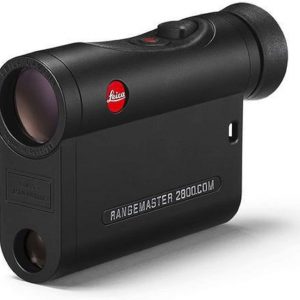
Then there’s the CRF 2800.com ($749), which measures distance to 2,800 yards and can be customized through the Leica ABC Ballistics app on your smartphone, providing you with holdover calculations out to 1,000 yards. You can also connect it to a Kestrel Elite weather meter and it will display windage corrections. The 2800.com and 3500.com are both equipped with full onboard atmospherics to adjust ballistic calculations precisely to your current environment.

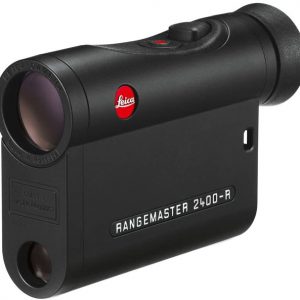
The entry-level model is the CRF 2400-R ($550). Weighing just 6.5 ounces, this waterproof rangefinder is easy and intuitive to use and gives distance readings up to 2,400 yards and the equivalent horizontal range (EHR) as well, for accurate shots in steeply angled terrain.

Learn more at leica-camera.com.


Leave a Comment

Animal Nature

The fascinating, complex, and intelligent behavior of animals never ceases to amaze us.

Photo above by Gary Kramer/garykramer.net

The hunting world is full of contradictions, some more visible than others. One of these is how often hunters, in private, share their wonder at the capacities, intelligence, and emotional expressions of wild animals, and how infrequently they do so in public.  There certainly appears to be an unstated reluctance by hunters to acknowledge or celebrate the intelligence and emotional capacity of animals, especially when there is any likelihood the discussion will drift into a debate over the ethics of hunting itself.  It seems there exists a deeply ingrained fear that discussing the shared capacities of humans and animals is a strategic mistake, and we might acknowledge that, yes, there really is some risk to this. But, will engaging in such discussions always unleash more criticisms of hunting?  Isn’t it possible that demonstrating our careful study and acknowledgement of the complex lives of other animals might lead to a better understanding of hunting and hunters?

When we talk about the minds and emotions of animals, we usually refer to their sapience and sentience.  These are technical terms but are easy to understand. Broadly speaking, sapience encompasses thinking and intelligence, whereas sentience represents the capacity to experience emotions and feelings. Advances in modern technologies, from radio-tracking devices to camera-equipped drones, have been exploding our understanding of both.

Every day we see news features that present us with incredible examples of the amazing thinking and emotional capacities animals of all kinds possess. The constant barrage of new observations into the private lives of animals, combined with scientific advances to probe ever deeper into their behaviors and relationships to other species, is leaving less and less room for those who see animals as fundamentally distinct from humans or driven solely in their behaviors by that catch-all term, instinct. The great seventeenth-century scientist and philosopher René Descartes may have been brilliant, but his belief that animals were machines and incapable of feelings has long been laid to rest.

Hunters need to recognize that the wider public is seeing animals as less and less different from humans, and it isn’t all Bambi’s fault. Through the magic of new technologies, we are all seeing with our own eyes what formerly was hidden from view by distance, darkness, or depth. Hunters must join with this new awakening or risk being out of step, once more, with social change. That, I suggest, is where the real risk lies; not in sharing our own fascination at the thinking and emotional capacities expressed by the animals we pursue. After all, our investment in observing wild animals in their natural state is exceptional by any social standard. Hunters and anglers spend more time trying to understand how animals behave than most people, by far, and are rewarded by experiences and observations that only a small segment of society will ever encounter. That knowledge is something to be celebrated, not hidden.

Many of us are familiar with methods commonly used to determine animal intelligence. Perhaps the most widely known involve mazes and/or boxes, which the animal must figure out in order to be rewarded with food. Sometimes this involves the animal needing only to navigate through a series of twists and turns, while other times it can involve multi-step processes whereby tools must be employed or repurposed, such as pushing a button or lever to access a reward. Another common test is the mirror test, in which animals are exposed to their own reflection in order to determine whether they understand the mirror to be showing them a reflection of themselves. There is truly no shortage of variation to the tests that scientists employ in their search to understand animal intelligence, and their findings have been remarkable.

While most of us have already heard about the intelligence of great apes, a growing body of evidence now points to the intelligence of a much broader array of species. For example, a study published last year revealed that New Caledonian crows are able to engage in complex puzzle-solving and can plan three steps ahead. In the test administered for this study, the crows had to select a short stick from a tube, which they then used to get a stone out of a second tube, which they could use to weight and depress a platform to get a piece of meat. This test revealed an astonishing level of problem-solving and strategizing on the part of the crows.

Outside the lab environment, researchers have also been able to identify intelligence markers by observing animal behaviors–sometimes very sneaky behaviors! For instance, researchers studying squirrels have determined that they are capable of engaging in tactical deception. When they have a nut in their possession and they are certain that they are being watched, squirrels will pretend to bury the nut, going through the entire process they normally would–digging the hole, refilling and patting it down–all the while keeping the nut hidden in their mouth to bury later when they are out of sight.

These are just a few examples of findings from recent studies of animal intelligence. In fact, this entire field of research is snowballing. Across the board, from large mammals to insects, scientists are proving more and more that the thought capacities of animals are far beyond what we had initially assumed, with creatures demonstrating incredibly sophisticated cognition. Indeed, a study of manta rays in 2016 revealed these creatures can pass the mirror test, demonstrating self-recognition, considered a high cognition capacity once thought limited to humans, chimpanzees, and dolphins. Viewed against a historic backdrop in which we consistently distinguished and distanced ourselves from all other animals, these findings are exciting for many, and certainly challenging for some. Almost every hunter I know, however, can relate their own observations of animal intelligence, striking behaviors they have witnessed and struggle to interpret.

Sapience, or intelligence, is only part of the story, however; we must also consider animal sentience. While intelligence has been tested and proven in a variety of species, measuring the emotional capacity of animals has proven a more nebulous target for researchers. Nevertheless, there has been a litany of scientific ventures across a number of disciplines, including many within the field of medical research, which shed new light on the emotional lives of animals. Findings reveal strong evidence in support of animals’ capacity to experience a diversity of positive and negative emotions, including joy, contentment, empathy, grief, sadness, fear, anxiety, anger, and jealousy.

Elephants, for example, have repeatedly been observed displaying grief and mourning over the loss of herd members. In 2016, a doctoral student studying African elephants released a video depicting how, after the death of a matriarch, three different families of elephants came to the site where she had died in order to touch her bones. While we may wonder at the motivations, few observing such behavior doubt that it indicates a sophisticated level of emotionality. Elephants have also been seen protecting the bodies of deceased loved ones from scavengers, standing watch and chasing away any predators that approach. These behaviors have extended to offspring, predictably, and to other members of the herd as well.

In July 2018, a killer whale gave birth to a calf off the coast of British Columbia only to have it die just half an hour later. Visibly distraught by the loss, the mother refused to let go and instead carried the 400-pound calf, keeping it at the surface of the water as she travelled more than 1,000 miles over a 17-day period. Following this journey, it appeared the mother finally accepted the death of her calf, and released it to the ocean depths. The whale’s journey was a media sensation and while some dismissed the unique observation as insignificant, many people, including experienced scientists, did not. Whatever the mechanism behind the mother’s behavior, one has to travel a long way to avoid calling it what we would if a human mother and child were involved: mourning. 

Of course, to those of us who have a pet, these findings are unsurprising. When our dog greets us at the door, wagging his tail, we can see in his eyes and body language that he is happy to see us. Likewise, when he curls up next to us shaking as a thunderstorm rages outside, we know he is afraid and in need of comfort. When we ask him to sit, he understands and responds, but we know his intelligence goes far beyond learned commands. None of us needs a scientist to tell us our dogs are intelligent and can experience emotions; we see this firsthand every day. Nor do we need a psychologist to tell us how we feel about our dogs, or what human word best describes it. Why should we doubt that wild animals possess these same capacities? 

I believe current research is only scratching the surface in our understanding of the lived realities of animals. To me, this is incredibly exciting. I am thrilled at the prospect of learning more about the intelligence and emotional lives of other species, and I am not alone. It is these rich, interconnected layers of existence that speak to the beauty and mystery which are the magic in our world, and in our lives afield. This is something hunters never stop admiring, and must always fight to conserve.

With this in mind, I stand firmly in support of legal, ethical hunting, and I believe this remains the most natural and humane manner in which we can participate in the complex circle of life. I love wildlife; I always have. But I also recognize that we, like every species, must make our way, and I believe we should do so as naturally as we can. Most hunters I know feel the same way. And this love goes far beyond the appreciation of wild meat to a deeper gratefulness for the entire natural system we seek to engage. Many of my fondest hunting memories are not of harvesting a wild animal; instead, they are of simply being in and around the hum and buzz of a wilderness alive with incredible creatures. In the end, what we hunt most is the experience of nature, of being sometimes amazed at our own frailties and always enthralled by the capacities of wild things. 

As hunters and conservationists, let’s celebrate the beautiful and complex lives of all wildlife–those we hunt and those we simply admire–as we wander the wild places we all depend upon and enjoy. We can be excited about knowing wild species think and feel in ways much like ourselves. This does not mean we must somehow remove ourselves from participation in the drama of existence. However, it does mean that we may walk a little more humbly along the way. 

Leave a Comment

The Sports Afield Mystery Ram

No one knows who shot this incredible bighorn, or where it is today.

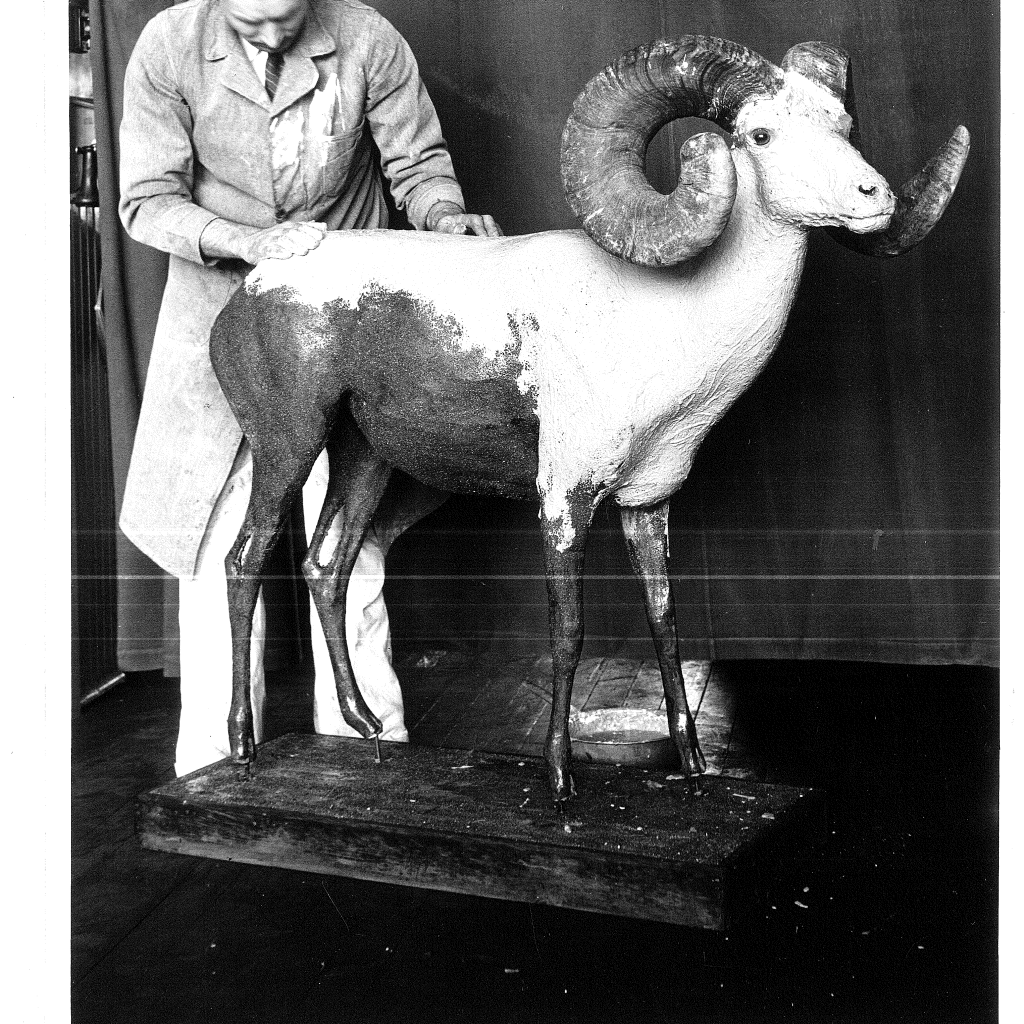
One exciting aspect of running a record book is coming across animals from long ago that seem to be shrouded in a mysterious fog. Photos of this bighorn sheep were discovered recently in the Sports Afield archives, which was recently moved and re-cataloged. Because the photo of this animal was never published in a regular edition of the magazine, it had been overlooked. 

After researching, we discovered it had been published in the 1953 Sports Afield Hunting Annual in a photo essay, with no information as to where it came from or, who owned it. The photos were taken by E.R. Augustin from Livingston, Montana, in the studio of Lenfter Brothers Taxidermy. Henry (Hank) Lenfter is shown. The photos were taken no later than early 1953 (and they may have been taken several years earlier. They show the various steps of mounting a life-size bighorn.

These photos ran in the 1953 Sports Afield Hunting Annual as part of a photo essay explaining the steps for mounting a life-size sheep. No mention was made in the essay of where the sheep came from, but experts estimate its horns would score 200-plus, making it among the largest bighorns ever taken.

Longtime sheep guide and Hunting Application Services proprietor Larry Altimus estimates the ram scores 200-plus points, and several other sheep experts agree that it reaches this magical mark. To put this in perspective, the largest bighorn sheep ever recorded scores 217 2/8 Boone & Crockett points, and the minimum for inclusion in Rowland Ward is 170 points. A grand total of about forty rams have ever been recorded with a score of 200 or better.  

In the 1950s the US was not known for producing rams of this size; in fact, there is only one sheep recorded with a score of 200 points taken in the US before 1990, a ram from Wyoming that goes back to 1883. Only in 1990 did the US produce a second 200-plus ram, which came from Montana. According to Montana sheep aficionado Doug Dreeszen, the Montana bighorn season was closed in 1915 and reopened in 1953. Little is known about the exact season dates that year, but it is unlikely the ram came from Montana. The animal depicted is probably a Canadian ram, likely from Alberta. We have not been able to locate its present whereabouts, and for now it must remain in our collective imaginations, in that “department of mysteries” that every true hunter keeps adequately stocked with hopes and dreams that fuel the will for the next hunt or discovery. 

Leave a Comment

Sports Afield Makes the List… Again!

We are thrilled to announce that for the sixth year in a row, Sports Afield was selected as one of License! Global magazine’s Top Global Licensors. License! Global magazine is the leading publication in the brand-name industry. The editors compile a list of the top global brands each year. We came in at No. 54 for 2021, and it’s exciting to be ranked among Coca-Cola, NASCAR, Major League Baseball, National Geographic, and Lamborghini. Our thanks go out to the network of Sports Afield Trophy Properties brokers, the Sports Afield Consumer Product company, and all the members of Team SA and SATP for their hard work in building and promoting this wonderful brand.

Leave a Comment

Getting Your Goat

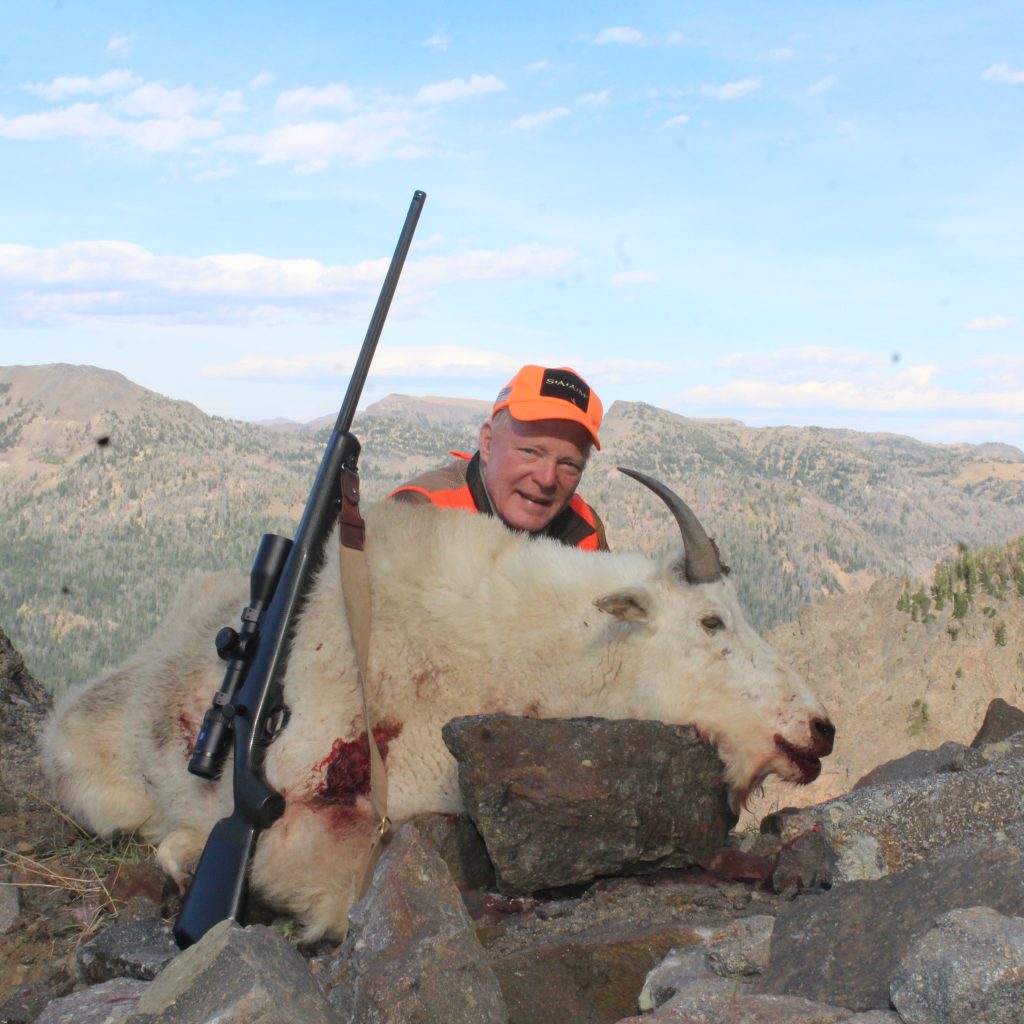
Rocky Mountain goats are magnificent game animals and challenging to hunt.

In the grand scheme of things, hunt plans going awry isn’t particularly important. But, in the spring and summer of 2020, I’m sure most of us saw a lot of carefully-laid plans crumble into viral-ridden dust. It was late May when I got an unexpected surprise: I drew a Rocky Mountain goat tag in Montana, north of Yellowstone Park. This would be great news in any year, but it was especially welcome in this year of pandemic panic.

I made a lot of mistakes when I was young, but among the smart things I did was to start applying for hard-to-draw permits when I was still in my twenties. That was before preference points and bonus points. So, when these systems came in, I was often in on the ground floor. Mind you, in the 1970s I couldn’t afford to apply for all the permits I wanted, but I started with desert sheep in Arizona and Nevada. I still haven’t drawn in Nevada, but I drew in Arizona–thirty years later!

Over time, I added other applications, but I wasn’t systematic. Sometimes I couldn’t afford the downstroke (which is refunded if you don’t draw). Other times I just forgot. So, in 1991, I did another very smart thing: I threw my applications in with United States Outfitters (USO) out of Taos, New Mexico, when they started the first-ever computerized tag application service. Today there are several such services. I can’t compare them because I’ve stayed with USO, but I’m certain that using such a service gives consistency, and for sure has paid off: Three sheep tags, two Shiras moose tags, three Arizona elk tags, and more.

I don’t apply everywhere for everything, but I’ve been in the Montana goat draw since 1991. So, twenty-nine years later, out of a very gray sky, our mail carrier brought a surprise.

Boddington and Mike Hawkridge with a fine B.C. billy. The black glands behind the base of the horns can be seen. Although sometimes obscured by long hair, these glands are the only absolutely certain way to determine sex.

I’ve hunted the Rocky Mountain goat up in British Columbia several times, so I don’t really need another one. I don’t apply widely for our big white goats, but I’ve stayed in the Montana draw for two reasons. Both are weird and personal but, so long as our reasons make sense to us, who cares if they seem rational to anyone else?

In 1990, Jack Atcheson Jr. and I hunted bighorn sheep in one of Montana’s high, rough “unlimited permit” areas, a charming and aptly named place called Froze to Death Plateau. On one side the rim drops to a precipitous face, and we watched several goats cavorting happily on near-vertical rock. They gave us a wonderful show, and I thought it would be cool to hunt there.

It got more interesting when I learned that these were original, native-range goats. The Rocky Mountain goat has been successfully introduced into suitable habitat in many areas, including Colorado, Nevada, Oregon, Wyoming, and the Black Hills, and has done well. However, the Yellowstone Park region is pretty much the southern extent of their natural range. So, in the Lower 48, goats are native only to western Montana, Idaho, and Washington’s Cascades. This doesn’t matter; goats are goats, but a native-range Lower 48 goat sounded especially fun. I stayed in the draw, and now I have a permit.

At this writing the hunt is two months out, so my focus is on getting in shape and, of course, deciding on the perfect rifle and load. I have no idea what the hunt will be like. Maybe we’ll see goats, maybe we won’t…but I expect we will. I’ve hooked up with Ryan Counts of Dome Mountain Ranch, a young horse outfitter near my hunt unit. I’ve hunted goats both ways, by horseback and purely on foot. The older I get, the more interesting horse hunts become. However, my experience has been that a lot of goat country is too rough for horses. Sooner or later you have to tie the horses and climb.

So, there are trade-offs, but I doubt this goat hunt will be significantly different from the goat hunts I’ve done in British Columbia. Typically, I expect goat hunting to be more successful than sheep hunting. In areas where both species occur, goats are generally not as numerous, but are more stationary. Older billies are likely to hang out in a certain area, usually rough and steep, that has a bit of grass (they don’t need much) and security. Find a billy and figure an approach and your chances are pretty good, especially if you can find a way to come in from above.

There are challenges. Good goat country often starts where sheep country stops! Elevation doesn’t matter so much, but goats thrive in cliffy stuff where sheep won’t tread. Before planning an approach, you have to find a goat in a spot where recovery is safely possible. Goats are tougher than sheep. If strength remains, even a well-hit goat will drive for the nastiest, most vertical escape.

A couple of years ago, Donna and I were hunting goats with Ron Fleming’s Love Brothers and Lee outfit in northern B.C. Her goat, a fine billy, was down on gentle shale. And then it made one final kick and started to roll…end over end, for a thousand yards! We got lucky; after just a few revolutions the steep slope was mostly grass. Although the lovely white coat wasn’t white anymore, the horns were intact. In Central B.C.’s Chilcotin Range a friend of mine shot a goat perfectly in a little saddle. We watched in horror as it started to roll…and then slid under a glacier! We recovered it with great difficulty, but one horn was broken off at the base and we never found it.

An older billy can be a large animal, up to three hundred pounds. However, it is strength, not size, that makes our goats tough. Also, they are slab-sided, thin through the shoulders. The answer isn’t a bigger gun. I’m perfectly happy with a .270 or any 7mm, but it’s best to shoot on the shoulder to break bone, and I want a bullet that will open up and do damage, not just punch through. And, no matter what the first shot looks like, be prepared to shoot again quickly. There will be dangerous escape cover nearby, and your goat will head there if it possibly can.

Great goat country in British Columbia. Glass the rocky edges below the snow line!

The other thing about our Rocky Mountain goat:  They are very devil to judge, much more difficult than any sheep. Unlike sheep, both billies and nannies have similar horns. The first challenge is to sex them. Nannies can have longer horns, but bases are thinner. Truth is, this is very subtle! Because of this, both sexes are almost always legal, and there’s no shame in taking a big, lone, long-horned nanny. But the goal is a mature billy and it’s not easy. Billies are often alone, and frequently will have a yellowish cast to the coat, but this is not consistent. Male sex organs are usually obscured by long hair, so the only surefire visual evidence of sex is: Billies have a black, pad-like gland at the rear base of the horns. With binoculars you better be close, but the black gland will usually stand out against the white hair through a good spotting scope.

Determining sex is only half the problem, and not the most difficult half. Accurately judging size is worse. The Rocky Mountain goat got seriously cheated in the horn department. Fortunately, the gorgeous, flowing white coat is at least half the prize. A billy is “shootable” at something over eight inches. Only an inch of horn differentiates OK from good, and it’s only another inch to spectacular! This is complicated by the fact that horns are in synch with body and head size. A young, lone billy will fool you (as will a lone mature nanny). There is no guide or hunter with significant experience who hasn’t misjudged a goat. Fortunately, it’s a matter of pride, not a legal issue.

Because of visibility, specific habitat, and the ease of determining legal animals, goat hunting is fairly successful, and a lot cheaper than sheep hunting. But goat hunting is just as difficult as sheep hunting, usually steeper, and often downright dangerous. And, the Rocky Mountain goat is a uniquely North American animal, with no close relatives anywhere in the world. Standing on a lonely crag, wind blowing his coat, a billy is magnificent. I look forward to hunting him in Montana. I’ve waited a long time for this tag.

Good-looking goat on the left, but is it a billy or a big nanny? Telling the difference isn’t easy…and nobody gets it right every time!

Leave a Comment

Who Wrote for Sports Afield?

Not only famous outdoor writers, but politicians, novelists, and entertainers have graced our pages over the decades.

Photo above: Erle Stanley Gardner (1889-1970), the novelist who created the Perry Mason detective series, was also a frequent contributor to Sports Afield.

Throughout its 133-year history, Sports Afield has published the writings of the nation’s top outdoor experts, conservationists, and gunwriters. Not only that, but articles and stories by U.S. presidents, senators, novelists, captains of industry, and even a famous burlesque entertainer have graced our pages over the years. Below is a list of a few of the more famous names who have had articles published in Sports Afield since its founding.

Russell Annabel: (1904-1979) Alaska’s best known outdoor writer, author of more than 300 articles over 40 years.

Peter Beard: (1938-2020) Artist, photographer, and writer. Author of The End of the Game.

Nash Buckingham: (1880-1971) One of the most widely read and best-loved outdoor writers of his time; authority on upland birds and waterfowl.

Nash Buckingham

Charles Cottar: (d. 1939) Famous African professional hunter and safari operator.

Erle Stanley Gardner: (1889-1970) Famous novelist and mystery writer known for the Perry Mason series of detective stories.

Grits Gresham: (1922-2008) Internationally known sportsman, author, and TV personality. Host of ABC’s The American Sportsman from 1966 to 1979.

Zane Grey

Zane Grey: (1872-1939) Famous novelist known for his Western adventure stories. Author of Riders of the Purple Sage.

Jim Harrison: (1937-2016) Poet, novelist, and essayist; author of more than three dozen books, including Legends of the Fall.

Randolph A. Hearst: (1915-2000) Publishing executive, son of William Randolph Hearst.

Ernest Hemingway: (1899-1961) World famous author and winner of the Nobel Prize in Literature in 1954.

Patrick Hemingway: (b. 1928) Former African safari operator, manager of the intellectual property of his father, Ernest Hemingway.

Herbert Hoover: (1874-1964) President of the United States, 1929-1933.

Dr. Frank Hibben: (1910-2002) Archeologist, professor at University of New Mexico, Weatherby Award winner.

Gene Hill: (1928-1997) Beloved writer of outdoor tales, especially involving dogs and upland birds

Hubert Humphrey: (1911-1978) Vice President of the United States, 1965-1969; Senator from Minnesota, 1949-1964 and 1971-1978.

John Jobson: (d. 1979) Pillar of Sports Afield for 27 years; camping editor for 16 years and hunting editor for 11.

Robert F. Jones: (1934-2002) Novelist, journalist, outdoor writer for Sports Illustrated.

Elmer Keith: (1899-1984) Gunwriter instrumental in the development of magnum handgun cartridges.

Gypsy Rose Lee: (1911-1970) Burlesque entertainer, actress, and author.

Gypsy Rose Lee

Nick Lyons: Founder of Lyons Press, well-known publisher of fishing and outdoor books.

John Madson (1923-1995): Conservationist, journalist, and proponent of tallgrass prairie ecosystems.

Gordon Macquarrie (1900-1956): Oudoor writer known for literary-minded short stories on hunting and fishing and his fictional Old Duck Hunters’ Association.

Thomas McGuane: (b. 1939) Novelist, essayist, member of the Fly Fishing Hall of Fame.

Annie Oakley

Annie Oakley: (1860-1926) Sharpshooter, star of Buffalo Bill’s Wild West Show.

Jack O’Connor: (1902-1978) Author and outdoorsman known for his extensive knowledge of hunting and shooting and for being a proponent of the .270 Winchester.

Sigurd F. Olson: (1899-1982) Author, wilderness guide, and champion of wilderness protection.

Roy Rogers: (1911-1998) Famous actor and singer, one of the most popular Western stars of his era. Known as “The King of the Cowboys.”

P.J. O’Rourke: (b. 1947) Political satirist, humor writer.

Jimmy Robinson: (1896-1986) Longtime Sports Afield writer and editor, shotgunning expert, founder of ATA Hall of Fame, instrumental in the founding of Ducks Unlimited.

Archibald Rutledge: (1883-1973) Author of books and poems about hunting and life in South Carolina. Poet Laureate of South Carolina from 1934 to 1973.

Harry Selby: (1925-2018) African professional hunter best known for guiding Robert Ruark.

Ted Trueblood: (1913-1983) Outdoor writer and editor, conservationist.

Colonel Townsend Whelen

Guy de la Valdene (b. 1944) Writer, photographer, filmmaker (Tarpon, 1974), author of For a Handful of Feathers.

Col. Townsend Whelen: (1877-1961) Hunter, soldier, writer, and rifleman, author of more than 2,000 magazine articles on shooting and the outdoors, developer of the .35 Whelen.

Lee Wulff: (1905-1991) Angler, author, outfitter, and conservationist who made significant contributions to the sport of fly fishing and the conservation of Atlantic salmon.

Leave a Comment

tablet

Never Miss An Issue!Subscribe Now: 6 Issues for $34.97

More Details
WordPress Video Lightbox Plugin