Sports A Field

One Hundred Years of the .270

Jack O’Connor’s favorite cartridge is still a great choice for hunting a wide variety of big game.

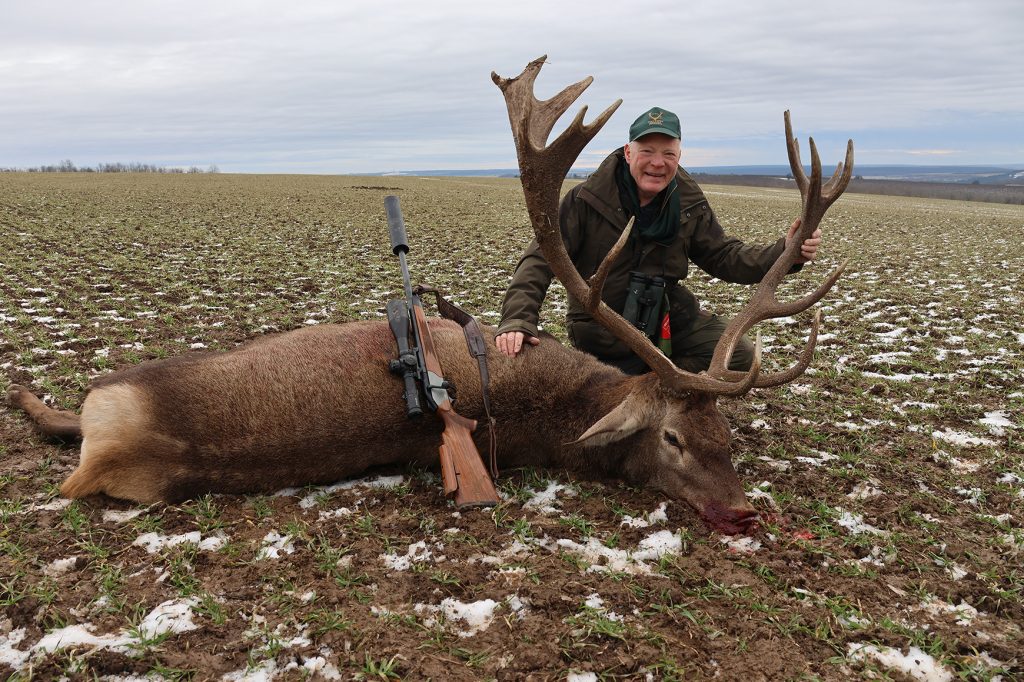
Photo above: The .270 is considered one of the best rounds for mule deer bucks. Barsness guided his friend Jay Rightnour to this public-land buck in Montana’s Missouri Breaks.

There’s been controversy involving the .270 Winchester ever since it was officially introduced by Winchester in 1925. There still is a century later, although the cartridge is still very popular, even after the introduction of so many new—and supposedly better—big-game rounds.

Many hunters looked at the ballistic statistics for the original factory load, a 130-grain bullet supposedly started at over 3,100 feet per second, and decided the .270 was probably a good round for deer-size game, but not anything bigger. Others decided to try it on larger game, including the guy who eventually became known as the godfather of the .270, Jack O’Connor.

At first O’Connor used it on deer, not only in Arizona where he taught college English for a living, but also south of the border in the Mexican state of Sonora. The deer he hunted were both the small subspecies of whitetail called Coues and larger desert mule deer, and he found the .270’s flat trajectory worked very well for the typical open-country shooting. 

By then, O’Connor had already started selling magazine articles to supplement his small salary. By the mid-1930s he was able to quit his college job and start hunting more widely, thanks in part due to magazines helping pay for hunts. He eventually went on a guided packstring hunt in Alberta for bighorn sheep, mule deer, moose and grizzly, planning to use the .270 on the bighorn and mule deer, and the .30-06 on moose and grizzly. 

He and his guide hunted moose by glassing from a mountainside into a creek bottom. But whenever they spotted a bull out feeding, before they could get down the mountain, it would disappear in the thick, shady vegetation along the creek. So early one morning, O’Connor decided to still-hunt alone along the creek. He took his .270, probably because it was considerably lighter than his .30-06, and easier to carry.

O’Connor eventually jumped a big bull and took a quartering-away shot. The moose didn’t drop, so he followed its tracks in the soft ground—finding where it had fallen to its knees, then stood up again. Soon O’Connor got another angling lung shot, and the bull fell dead.

He was using the original 130-grain factory ammo. The Winchester bullet had a very heavy jacket along the shank to help hold the bullet together during expansion so it would penetrate deeper. As he noted in one of his stories about the hunt, “It dawned on me that if a bullet gives adequate penetration it does not have to be particularly heavy in order to penetrate well.”

Eventually he killed a dozen moose with the .270, often using handloads with bullets designed for even deeper penetration. But handloading didn’t become popular until after World War II, partly because ammunition companies saw it as a threat to their sales, so they didn’t market bullets separately.

In fact Philip B. Sharpe’s classic book, Complete Guide to Handloading, published in 1937, states: “For handloading purposes, the major objection to the .270 Winchester is the lack of variety in the bullets available in other than the cast variety. Metal-cased bullets of other calibers do not fit properly.”

This changed during and soon after World War II, as “metal-cased” (jacketed) .270 bullets became more available. Eventually several new companies manufactured bullets for handloaders, including Hornady, Nosler, Sierra, and Speer—all of which started up between 1943 and 1949.

Especially helpful to .270 users was Nosler’s Partition, which many of today’s hunters consider the first controlled-expansion bullet. It featured a soft front core which expanded violently, separated from a harder rear core of by a partition of jacket material, which resulted in consistently deeper penetration.

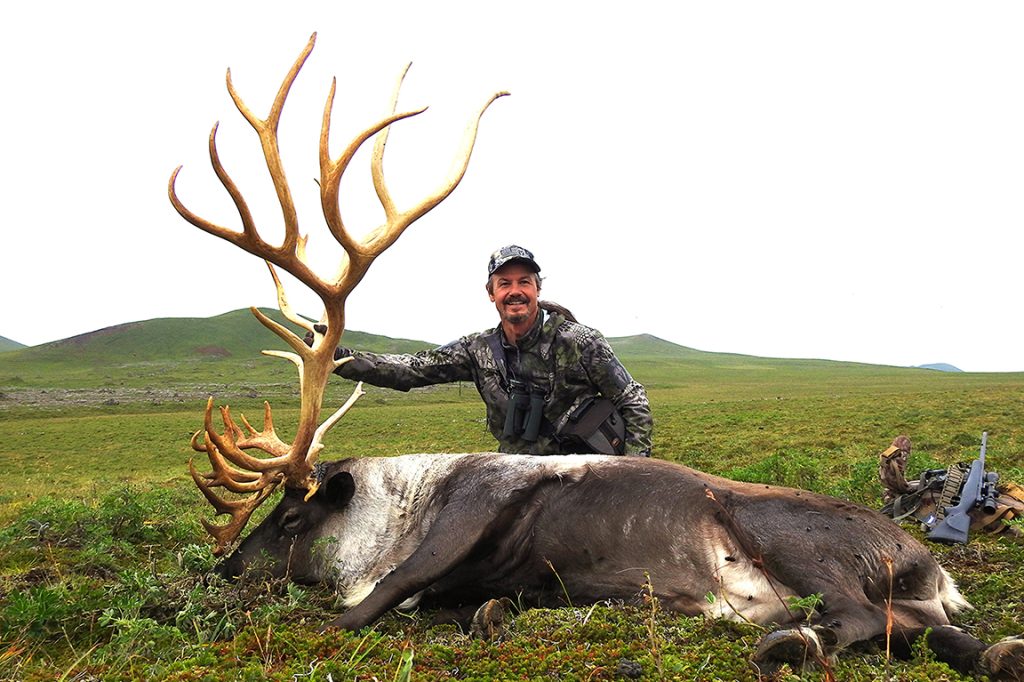
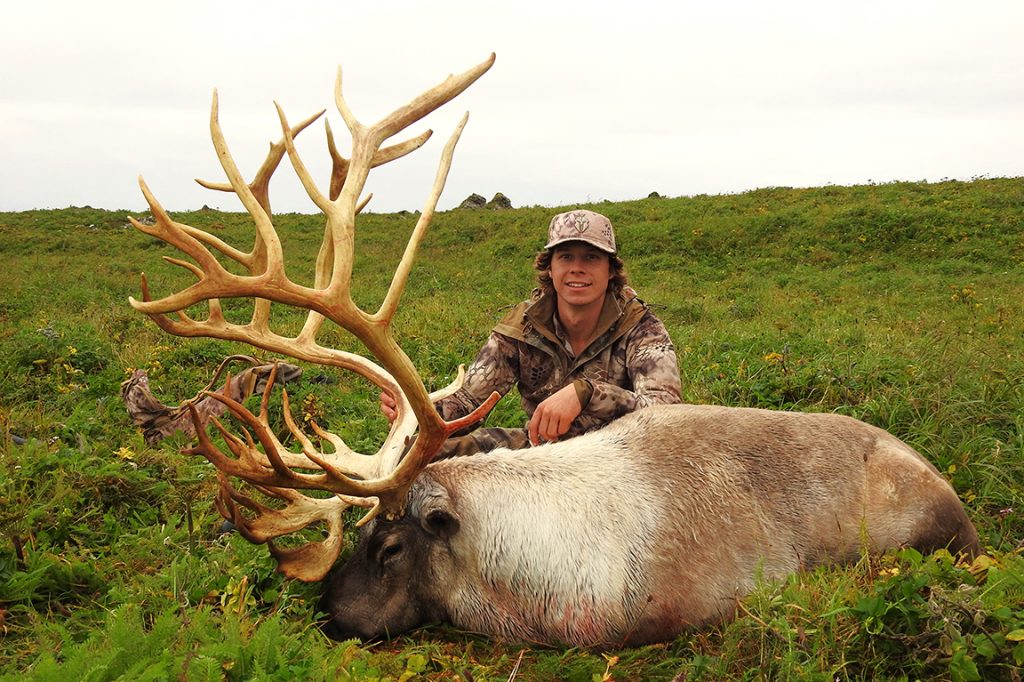
Despite this, and other controlled-expansion bullets developed since then, some hunters still class the .270 as just a deer cartridge. One I know, a widely experienced hunter who’s also developed several custom hunting bullets, thinks the .270 isn’t even enough for caribou. This puzzles me, since I’ve taken a dozen bull caribou from Alaska to northern Quebec, and while mature bulls are about the same size as cow elk, they’re not hard to kill.

Here I should probably describe my experience with the .270 Winchester, since some of you may strongly agree with my friend, so might not want to waste your time by reading further. My first .270, a Remington 700 ADL, was purchased in 1974 at a hardware store in Wolf Point, Montana. With a little tweaking, it turned out to be one of the most accurate factory big-game rifles I’ve ever owned. Its best handload turned out to be the 150-grain Hornady Spire Point, with Jack O’Connor’s recommended load of Hodgdon H4831. (This was the original U.S. military surplus powder, not today’s version.) 

I chose the 150 Hornady because I thought I couldn’t afford Nosler Partitions–and Hornady Spire Points had the reputation of being deeper-penetrating than the other brands of “non-premium” big-game bullets.  This was a few years before Hornady introduced their Interlock bullet, with a thicker ring of jacket brass inside the rear of the jacket, but I did later discover that the pre-Interlock Hornadys featured a harder lead core than most other bullets.

This handload consistently grouped three shots into around half an inch at 100 yards, and on the one occasion I shot it at 300, it put four shots in 1¼ inches. It penetrated well on elk-size game, usually exiting on broadside shots, and often at even steeper angles.

Among the animals taken with it was my first really big mule deer, a mountain buck as big as an average cow elk. He was about twenty-five yards above me on a steep slope, and the bullet entered the front of his chest. After traveling through the lungs, it broke the spine at the rear of the ribcage and exited. 

The next .270 I handloaded for, however, was the one that really convinced me of the round’s suitability on much larger game. It was a Browning A-Bolt, the first rifle a manufacturer ever sent me for article-testing during my early gunwriting career. It grouped almost as well as the Remington, and was also one of the lightest mass-produced .270s available at the time.

Eileen had started hunting a couple years earlier with an old Remington 722 .257 Roberts, the rifle my paternal grandmother used for her big game hunting before she passed away. After that the .257 had wandered around the family, at least four other people taking deer with it, but hadn’t been hunting in several years.

Eileen used it to take several pronghorns and deer, but she wanted to hunt elk too, and everybody said the .257 wasn’t enough. She’d also decided the 722 was heavier than she liked, so we sent Browning a check for the A-Bolt .270.

I developed two handloads, one with the 130-grain Hornady Spire Point, and another with the 150-grain Nosler Partition (which by then we could afford). Both bullets landed in the same group at 100 yards, common in .270s, so she could use the more affordable 130s for sighting-in, practice, pronghorn, and deer, and use the 150 Partitions for larger game.

On the last day of that fall’s big-game season she took her first elk at around 150 yards. The young bull wobbled for a few seconds after the shot, then dropped dead.

The next year Eileen decided she wanted to hunt even bigger game, so she applied for a bull moose tag in the annual Montana lottery. I’d been applying for more than a decade and hadn’t drawn one, but she kept telling friends she was going moose hunting that fall. They’d ask if she was going to Alaska or Canada, and she’d say no, she was hunting in Montana—and they’d laugh. When her tag showed up in the mail, she waved it in front of more than one person, including me.

She’d applied for an area south of Bozeman where I grew up hunting deer and elk—and had seen quite a few moose. We scouted for a couple days before the season opened on September 15th, but daytime temps were in the 80s and we didn’t see any moose.

Dawn of opening day, however, was nice and cool, and before the sun rose over the mountains we found the eating-size bull she wanted, standing quartering away in a willow draw below us, in easy range.

She sat down and aimed for the far shoulder, as she’d learned to do when hunting deer. At the shot the bull took a step, then dropped dead in the middle of second step. The bullet had entered the middle of the left ribs, and ended up under the hide of the right shoulder. It wasn’t a trophy bull, but was mature, with a 4×5 rack not quite three feet in width. Its body was as big as any bull elk I’ve seen on the ground.

A dozen years later Eileen planned to hunt elk on a ranch fifty miles west of where we live. This was the year Barnes Bullets introduced their Triple-Shock X-Bullet (TSX), which has a grooved shank that reduces copper-fouling.

Coni Brooks heard about Eileen’s elk plan, and asked if she’d be willing to field test the 140-grain .270 bullet. She said sure, and I handloaded some to right around 3,000 fps, which grouped well under an inch.

Eileen not only used the 140 on a young bull at 200 yards (which exited), but during the pack-out, a coyote also received one at 250 yards. Some hunters had expressed concern about how well TSXs would expand on lighter game, so Eileen was able to inform Coni it also expanded fine. In fact the only problem with TSXs on elk we’ve seen is that these days Montana elk are so abundant they’re often found in big herds, so you need to be aware of other elk possibly standing behind the one you shoot.

Seventeen years after Eileen got her moose, we were both invited by custom gunsmith Charlie Sisk to an event on a Texas ranch. He’d arranged for her to take a cow bison, and would provide one of his rifles and some appropriate ammo. The rifle turned out to be a .270, and the ammo Federal Premiums with 130-grain Barnes TSXs. The hunt was a real hunt, not one of the too-common shootings of a buffalo in a pasture. 

Eileen took this Texas bison with one 130-grain Barnes TSX, using a custom .270 made by gunsmith Charlie Sisk.

There had originally been three cows hanging together, but one had been taken by another hunter a few days before. We had to track the other pair for two hours through thick, thorny brush and trees before finally getting within 150 yards.

Eileen was shooting off standing sticks, due to all the ground cover, and waited until one of the cows turned broadside before putting the bullet a third of the way up the chest. The cow staggered and went forty yards, leaving a copious blood trail, before falling. Its body dimensions were just about exactly the same–though shaped somewhat differently—as her moose. The meat was also great. 

Another hunter who thinks the .270 works well on game larger than deer is our old friend Phil Shoemaker, the Alaska Master Guide who’s been guiding brown bear hunters on the Peninsula for over half a century.

Phil is willing to guide brown bear hunters who use .270 Winchesters, as long as they use appropriate bullets. One of his clients was a rancher from Colorado whose only big-game rifle was a .270, which he’d used on a bunch of elk. Phil told him to buy a couple boxes of Federal’s Premium ammo loaded with 150-grain Nosler Partitions.

The guy did, and they found a big boar fresh out of its den, with a perfect, unrubbed hide. At the first shot through the lungs, the bear locked up, and dropped to a follow-up shot. The hide squared right around 10 feet, and the skull qualified for the Boone and Crockett Club’s records.

Many rifle enthusiasts are aware that Winchester introduced the .270 in a then new bolt-action rifle they named the Model 54. I even owned a 54 for a while. It came with a Lyman receiver sight. The 54 appeared long before factory rifles came drilled and tapped for scope mounts, and I did not add a scope—partly because the rifle regularly grouped three shots of typical factory ammo and handloads into about 1½ inches at 100 yards. Eventually a friend who’s one of the biggest Winchester loonies I’ve ever known talked me into selling it to him.

One of the advantages of the .270 for the traveling hunter is that factory ammunition is available just about anywhere. One of my habits when traveling to hunt is to visit sporting-goods stores to see what’s available. I can’t remember visiting any shop where .270 ammunition wasn’t available, usually in good quantities. I even found it in the tiny, one-room general store in Sleetmute, Alaska. The .270 is a very popular hunting round in places as diverse as the Western Cape Province of South Africa to Arviat, Nunavut, on the western shore of Hudson Bay. This hundred-year-old stalwart is still right at home in any hunting camp.

John Barsness’s books are available from riflesandrecipes.com.

Leave a Comment

Deer Camp Classics

Thirteen old-time cartridges that are still great choices for whitetail hunting.

Photo above: The author exits a Texas deer stand with a 1950s-era Savage 99 in .300 Savage. Boddington carries this accurate and hard-hitting rifle often on medium-range deer hunts.

Campfire arguments about cartridges are fun. There are lots of great hunting cartridges, and how well you place your bullet is always more important than the rifle and cartridge that propelled it. Still, it’s fun stuff. I’m always curious to see what hunters bring to our whitetail hunts in southeast Kansas; it’s good fuel for campfire discussions.

Our timbered ridges don’t offer long shots, but images of the Yellow Brick Road are unavoidable. Some hunters bring magnums. They work but aren’t essential. The opposite approach: many of our hunters go traditional. Every year, we see 7x57s, .270s and .30-06s, plenty of .308s, All are excellent for our conditions.

This year, we had fourteen different cartridges in our Kansas woods. Multiples were the usual suspects: 6.5 Creedmoor, .270, .308, and .30-06. Cartridges new to our camp included Ryan Orth’s 6mm ARC, Keith Roberts’ 6.8 Western, and Paul Cestoni’s .338 Federal. Magnums were present and they worked. Rodney Cayemburg used his 7mm Rem Mag, Duane Evans had a .280 AI, and Ryan Murray used his .300 WSM.

What’s a “Classic?”

Definitions of classic and antique vary. Google says: “Generally, an item must be at least 100 years old to qualify as an antique.” For a centerfire cartridge to have a hundred-year run isn’t common, but there are numerous centenarian cartridges still in use. Many, I’ve never encountered, but I came up with thirteen cartridges a hundred years old or more that I’ve seen take bucks in recent seasons. Here’s my “baker’s dozen,” by order of age:                    

.45-70 Govt. (1873)

8×57 Mauser (1888)

.303 British (1888)      

7.65 Argentine Mauser (1889)               

7×57 Mauser (1892)            

6.5×55 Swedish Mauser (1894)    

.30-30 Winchester (1895)             

.30-06 Springfield (1906)             

.280 Ross (1906)         

.250 Savage (1915)              

.300 Savage (1920)              

.270 Winchester (1925)                

.300 H&H Magnum (1925)          

Military cartridges often become important sporting cartridges, at least in the countries that adopted them. These went beyond that, achieving international acclaim as sporting cartridges. Left to right, with year of introduction: .45-70 (1873); 8×57 (1888); .303 British (1888); 7.65×53 Argentine (1889); 7×57 (1892); 6.5×55 (1894); .280 Ross (1906); .30-06 (1906).

Oldest is the .45-70 Government. It’s amazing that it’s still with us, but “modern” loads with lighter bullets and smokeless powder render it an effective short-range deer thumper. I’d never hunted deer with it until recently, but when Ruger brought out their 1895 Marlin I took it whitetail hunting. It’s harder-kicking than necessary, but impressive.

A nice Texas whitetail, taken with Ruger’s new Marlin 1895 in .45-70. Although the author has hunted black bear and hogs with the 150-year-old .45-70, this is the first deer he’s taken with the cartridge. With modern loads, the .45-70 is good for at least 200 yards.

“Smokeless” propellant came into use in 1886. Initially, most cartridges were military developments. France was first with the 8mm Lebel (I’ve never fired one). Germany was second, with the 8mm Mauser, technically 7.92×57. Originally with .318-inch roundnose bullet, changed to a .323-inch spitzer in 1903. The 8×57 remains popular in Europe, often compared to our .30-06. It’s harder-hitting because of larger bullet diameter, but not as fast.

Clayton Paul brought an 8×57 to our 2025 Kansas deer camp. It worked, but Clayton is an accomplished competitive shooter, so whatever he shoots, works. Likewise, his son, Ryan Paul, who brought a gorgeous Mauser in 7.65 Argentine his dad made for him. These are the first 7.65 and 8×57 Mausers we’ve had in camp. Both took excellent bucks, one shot each.

At the dawn of smokeless powder, Peter Paul Mauser experimented with variations of case length and bullet diameter to get ideal performance. His 6.5×55 Swede, 7×57, 8×57, and the 7.65×53 Argentine Mauser all became popular hunting cartridges. The 7.65 Argentine may have been Mauser’s best, rivaling .30-06 performance in a shorter case.

This was Ryan Paul’s third time with us, three great bucks, three shots fired. Three days into his hunt, wind right, I put him in his favorite stand, a tall tree stand atop a ridge. Ryan went up there for the day, and texted me about 4 p.m. that he had a good buck down.

Ryan Paul used a 7.65 Argentine Mauser made by his father to take this excellent Kansas buck. Although uncommon in the US today, the 7.65 Argentine may be Peter Paul Mauser’s best cartridge, rivaling the .30-06 in a shorter, more efficient case.

Military developments weren’t exclusive to continental Europe. In 1888, Great Britain adopted the rimmed .303 British. With modern loads, the .303 is similar in power to .308 Winchester. Three seasons back, I carried a .303 in Uberti’s Courteney stalking rifle, on the Browning 1885 action.

The author tries to use his Kansas tag on weird or mismatched buck that other hunters probably wouldn’t want. This tall two-by-two with no eyeguards was taken near the end of a season with Uberti’s Courteney stalking rifle in .303 British, the only time he’s seen that classic old cartridge in a deer camp.

In Cuba in 1898, we took too many casualties to the Spaniards’ Mausers. In 1903, we switched from .30-40 Krag to the 1903 Springfield and the .30-03 cartridge. Three years later, we updated to the .30-caliber, model of 1906 cartridge with a lighter, faster spitzer bullet. The .30-06 remains one of our most versatile hunting cartridges. Every season there are .30-06 rifles in camp.

In 1906 Canadian Sir Charles Ross unveiled the .280 Ross cartridge, chambered in his straight-pull rifle. Intended for the military, the .280 Ross saw limited use with Canadian forces in WWI. Pre-dating belted magnums, with a fat, rimless case, .280 Ross was the first cartridge to approach 3,000 feet per second (fps).

With speed and high energy, the .280 Ross had great appeal as a sporting cartridge. Except: Bullet technology wasn’t up to the velocity. In 1911, Sir George Grey, brother of the British Foreign Secretary, failed to stop a wounded lion with his .280 Ross. Horribly mauled, he died a few days later.

I knew the story, had never seen a Ross rifle. In 2022 Larry Tremaine brought a rare Ross sporter to Kansas. With older rifles, iron sights are a limitation for buck hunting. He pulled it off, took an eight-pointer.

The same season, Ruger collector Lee Newton brought a gorgeous custom Ruger No. 1 chambered in .280 Ross. We had no ammo, but we begged a few cartridges from Larry. At the end of the season, I used it to drop a funky-horned 7-pointer. .280 Ross brass is scarce, but bullets are more problematic. The .280 Ross calls for an oddball .287-inch bullet. Larry and I were both rattling 7mm (.284-inch) bullets down the Ross barrels. Accuracy was sketchy; we needed close shots and got them.

This older seven-point buck, an ideal management buck, was taken with likely the weirdest rifle the author ever hunted with, a gorgeous custom Ruger No. 1 owned by Lee Newton and chambered in .280 Ross. The .280 Ross calls for an oddball .287-inch bullet. He was shooting undersize .284-inch bullets, so accuracy was poor; the shot had to be close.

Civilian Centenarians

In 1895, the .25-35 and .30-30 were companion introductions, the first two sporting cartridges designed for smokeless powder. Although both were popular, the .30-30 came to define America’s deer rifle. Still widely chambered, the .30-30 is perfect for deer-sized game, provided you don’t need range. In Kansas, I often take a .30-30 to certain short-range stands. Only in newer rifles with optical sights because in thick timber, first light comes late and shooting light leaves early.

Boddington used a Marlin 336 in .30-30 to take his 2023 Kansas whitetail. The .30-30 has adequate range for most of his Kansas deer stands. However, at first and last light he doesn’t trust his eyes with iron sights, so he only uses rifles with optical sights.

With internal rotary magazine suited for spitzer bullets, Arthur Savage’s 1899 lever-action was stronger than either the Marlin or Winchester. In 1915 Savage engaged gun designer Charles Newton to develop a cartridge. Based on a shortened .30-06 case, the result was the .250-3000 (.250 Savage), the first commercial cartridge to break 3,000 fps. It could only reach that speed with a light 87-grain bullet. When it worked, it struck like lightning, but, like the .280 Ross, bullet technology wasn’t there and some found it erratic. A slower 100-grain bullet—which Newton had argued for in the first place—proved more consistent, and the Savage lever-action offered Winchester serious competition.

This increased in 1920 when Savage necked the .250 case up to create the .300 Savage. With 1920 propellants it almost equaled .30-06 velocity of the day. The .300 was Savage’s most popular chambering until the late 1950s, when the Savage action was adapted to the .308 family. I have a 1919 .250-3000 rifle, a takedown with flip-up aperture sight, and a 1950s-era .300 Savage with scope. Because of the aperture sight, (and my eyes), I’ve done little buck hunting with the .250. The .300 is a standby for medium-range deer hunting. Much-battered, it groups 1.5 MOA, hits hard, and I enjoy carrying it.

Seeking a faster, flatter-shooting cartridge that kicked less than the .30-06, Winchester pulled out the stops with their .270. In 1925 it was America’s fastest cartridge and is still one of our best deer cartridges. Funny, I’ve never carried a .270 on my Kansas farm. Many of our guests bring .270s, and I’ve used it for deer hunts from Canada to Mexico. For deer hunting under any conditions, the .270 is hard to beat.

Across the pond, also in 1925, Holland & Holland necked their .375 H&H case down to .30, creating the Super .30, what we know today as the .300 H&H Magnum. It has since been superseded by fatter, shorter (and longer) belted and unbelted .30-caliber magnums. Its long, tapered case with gentle shoulder is easy to improve upon. But it produces amazing accuracy, feeds like melted butter, and with goods handloads produces surprising velocity.

In 2024, anticipating the .300 H&H’s centennial, I dug out my Ruger No. 1 .300 H&H, the most accurate No. 1 I’ve ever owned. With the same mindset, Coloradan Kevin Perry brought his .300 H&H to our Kansas camp. His is a gorgeous custom rifle made by his friend, Kevin Weaver. Several days apart, we both took nice bucks from the same stand. No longer chambered in factory rifles, and with dwindling factory loads, the .300 H&H is still a great hunting cartridge. As I’ve often said, you don’t need a magnum for whitetail hunting. But, with night coming fast and dark woods looming, it’s nice to have your buck down on the spot. Doesn’t matter whether it’s a new whiz-bang or an old-timer. What matters is that it does the job.

Relatively few sporting cartridges have reached the hundred-year mark and are still loaded. Those that are included, left to right: .30-30 Winchester (1895); .250 Savage (1915; .300 Savage (1920); .270 Winchester (1925); .300 H&H (1925).

Leave a Comment

From the Forest

From game meat to edible plants to medicines, the bounty generated by our public woodlands is incredibly important.

Photo above: Public forests are obviously crucial wildlife habitat, but they also provide an incredible array of additional benefits. (Photo by VictorSchendelPhotography.com)

Hunters know the feeling: that first peep of grey light, the cool embrace of autumn air, and the familiar blended scents of trees and earth. From first awakening, the senses burn with alertness and expectation, something unique to days where our hunting past becomes our present, an evolutionary marvel reverently awakened in our own lives. You lace up your boots, their creased leather familiar and reassuring. You feel the chill bite at your fingers as you shoulder your rifle, its weight perfectly recalled, its ideal positioning achieved with a mindless roll of your shoulder. You adjust your pack and step into another reality. It is a world where your animal senses matter most, where quiet is the norm, not the exception; and where every sound, just like every breath, is a story in itself. Somewhere ahead, a whitetail buck moves silently through the frost-silvered landscape—and with luck, tonight, your family’s freezer will be a little fuller.

Every year, our public forests are the stage for countless such hunting adventures. But hidden beneath the towering trees and running timelessly along those winding, shadowed trails is another and even greater story—a story of physical and spiritual nourishment, of autonomy and self-reliance, and of deep-rooted cultural tradition. Wild foods and medicines, harvested from public lands, have sustained Americans –native and settler alike–for generations. And today, they remain a vital yet often overlooked bounty, providing food security, economic resilience, and a living connection not only to our natural heritage, but to our natural selves. 

Across the United States, public forests quietly provide millions of pounds of wild meat and fish, edible plants, berries, mushrooms, and medicinal herbs every year. These shadowed harvests are more than curiosities of the backcountry; they are an essential part of community wellness and the outdoor way of life. New research is showing just how important these harvests are and why it’s time to better recognize and manage these gifts of the land.

More Than Timber and Trails

Public forests have always been considered working landscapes, supporting critically important timber harvests and livestock grazing. They have also been recognized as vital for outdoor recreationists and home to an incredible range of wildlife and plant species. Certainly, wild foods and medicines have also been recognized, though far less emphasized, as components of such landscapes; yet, from a historical perspective, these products may actually be considered among the primary benefits of healthy and sustainably managed forests. Recent studies estimate that every year, more than 255,000 metric tons of wild foods and medicines are harvested from U.S. public forest lands. That includes everything from venison and elk meat to wild blueberries, salmon, chanterelle mushrooms, and wild rice, as well as medicinal roots like ginseng and goldenseal. Hunters alone harvest more than 68,000 metric tons of wild meat annually from public forests in the US–enough to provide more than 437 million meals to American families each year (data from the Wild Harvest Initiative). 

Given their scale and importance, these harvests should be recognized, alongside wood products and livestock grazing as major benefits of sustainably managed forests. However, in reality, their contributions have remained far less visible in forest management decisions and wider policy discussions. Although wild foods and medicines are woven through the tapestry of forest harvesting, they’ve often been overlooked or simply taken for granted. This is despite the fact that more than 200 wild species of plants and animals are officially reported as being harvested from U.S. public forests, and consumed by Americans, every year.  While the true volume of these harvests is almost certainly greater than what official figures suggest, such harvests obviously represent a secluded wealth that benefits diverse communities across the rural, urban and cultural landscapes of modern America.

A Deeply Rooted Tradition

Hunters understand—perhaps better than even most other extractive users—that wild-harvesting is not some hip new hobby, nor simply a survivalist throwback; it is a living tradition with roots as old as the forests themselves. Across North America, native peoples, settlers, and rural communities have long relied on wild harvests for sustenance, medicine, and cultural identity. These wild harvests have always been essential to those who depend on the land for survival, as well as those who view it as a rich part of their heritage.

Take Alaska, for example. In Southeast Alaska alone, rural communities harvest approximately 2,055 metric tons of wild food each year, including salmon, berries, moose, and more. Astonishingly, 76 percent of that food depends directly on healthy forest ecosystems. This wild abundance supplies local residents with more than 120 percent of their daily protein needs and contributes about 17 percent of their total caloric intake—a testament to how critical forest foods remain for human health, food security and cultural survival in that region. The annual replacement value of this wild subsistence harvest is estimated between $20.5 and $41.1 million—or about $845 to $1,691 per person—highlighting, also, its practical, economic importance.

And it’s not just Alaska. Across the lower 48 states, millions of hunters, anglers, and foragers participate in the wild bioeconomy, whether they realize it or not. Their freezers are full of wild-harvested foods: wild turkey from oak and pine woodlands; black bear from Appalachian ridges; elk from alpine meadows; white-tailed deer from northern hardwood stands; squirrel and rabbit from backwoods thickets; trout from cold, forest-fed streams. Their tables are graced with hand-picked morel mushrooms, wild huckleberries, fiddleheads, chokecherries, foods that mark the seasons and celebrate the richness of the land. Their medicine cabinets are stocked with tinctures from elderberries and echinacea. Each of these wild commodities has diverse value, including an obvious economic one when replacement costs for commercially produced products are considered.  

Wild foods are also more than just delicious; they are nutritional powerhouses. Wild meat and fish offer lean, protein-rich sustenance packed with vital nutrients. Venison, for example, is significantly lower in fat and higher in essential omega-3 fatty acids compared to grain-fed beef. Wild-caught fish, like salmon and trout, are loaded with heart-healthy fats, vitamins, and minerals. Even wild plants—blackberries, dandelion greens, stinging nettles, and many others—contain higher concentrations of antioxidants and micronutrients than their farmed counterparts. In an age of overprocessed foods, wild harvests deliver the kind of nutrient density our ancestors thrived on and the kind of nutrition we crave, consciously or otherwise.

But for most wild harvesters, the pursuit of wild food isn’t just recreational, nor is it solely about health or even financially driven—it’s a family and community legacy, a tradition passed from generation to generation alongside rifles, recipes, hand-drawn maps, and stories by the fire. So these harvests aren’t just about food or medicine; they are about heritage, hardiness, and the hands-on stewardship of our shared wild spaces. And they are, most powerfully, about family and friendship. That is why remembrances of passed friends and loved ones are laced with such references, and to the times spent and the harvesting talents forged in nature’s spaces.

Hunting is a living tradition with roots as old as the forests themselves. (Photo by Trail’s End Media)

Harvesting and Protecting

Forest food systems don’t just feed people; they help conserve biodiversity. Sustainable hunting, fishing, and foraging require and therefore encourage advocacy for healthy, diverse ecosystems. Managed responsibly, these harvesting activities foster stewardship, habitat restoration efforts, and a deeper personal and wider public investment in protecting wild spaces. When hunters take part in managing healthy deer populations, for example—adhering to regulated seasons, reporting data, funding habitat projects—or when foragers harvest ramps responsibly—following sustainable guidelines, monitoring abundance, respecting regeneration—they become active partners in conservation. Forest food systems remind us that humans are not separate from nature—we are part of it.

Moreover, integrating such wild food and medicine harvests into land-use planning helps diversify the bioeconomy, the range of goods and services we derive from healthy ecosystems. Recognizing wild harvested foods and medicines as legitimate forest products, alongside timber and grazing, strengthens our understanding of rural economies and integrating them helps build resistance against market shocks. Wild harvests complement traditional agriculture and ranching, too. Where cultivated crops can fail under drought or market shifts, wild foods offer an alternative source of nutrition and income. They are a natural insurance policy entwined within managed landscapes, thereby enriching rural economies and helping working lands stay working. 

Sharing the Harvest

One of the most remarkable aspects of harvesting wild food from public forests (and elsewhere)—whether it’s big game, plants, or fungi—is the culture of sharing it inspires. Research from the Wild Harvest Initiative shows that 94 to 98 percent of American hunters share part of their wild-harvested food with others. In forest-rich regions, it’s incredibly common for someone who harvests a deer or a basket of wild leeks to bring a portion home to family, friends, and neighbors—even across long distances. In Alaska, where forest-based food systems dominate, hunters share about 68 percent of the meat they harvest. In Alaska and nationwide, many hunters donate wild game to food banks and pantries, helping to feed those in greatest need. It’s a generosity rarely seen with commercially produced food purchased in stores. But when food is gathered from the land—earned through knowledge, effort, and respect for natural systems—sharing becomes second nature. Why? Because it is, actually, our first nature; reflecting the evolutionary normality of sharing in hunter-gatherer societies. These gifts from public forests don’t just nourish bodies; they also nourish communities and build bonds between people.

Toward More Inclusive Stewardship 

We won’t manage what we don’t value, and we can’t manage what we don’t measure. These are vital lessons of conservation history. If wild-harvested forest foods and medicines are to be safeguarded for future generations, we must assess their true value. This starts with acquiring better data. But, unlike timber cutting, livestock grazing, or even firewood collection, the harvesting of wild nourishment is still poorly tracked on most public forests, in the United States and in Canada. Yet, without knowing how much is being gathered, where, or for what purposes—whether for family meals, cultural practice, or seasonal tradition—it’s difficult to ensure that harvests remain sustainable or that forest management decisions reflect the full range of forest land values and products. A more robust system of data collection would provide clarity and help land managers protect key food and medicine producing habitats and species. In Alaska, for example, integrating detailed subsistence harvest data into planning has led to more effective protections for salmon-bearing streams—an outcome benefitting both local communities and wildlife.

But better data alone isn’t enough. Wild food and medicine must be recognized as legitimate, primary outputs of healthy, productive forests—not just as pleasant extras or overlooked traditions. And, this recognition needs to be reflected in the policy culture of our oversight institutions. Management plans should account for the presence and value of edible and medicinal species in the same way they do for timber stands or grazing allotments. When wild food systems are integrated into land-use planning, it becomes easier to balance multiple uses while supporting broader economic gains, improving biodiversity and heritage preservation, and enhancing local access to essential provisions.

Inclusive stewardship is key. People who rely on forests—whether tribal/indigenous harvesters, rural residents, recreational hunters, or seasonal foragers—should be included in the decision-making processes that involve and affect these landscapes. The insights, priorities, and lived experience of these communities can offer valuable guidance for sustainable management and long-term forest health. Too often, these voices have been absent or sidelined in policy discussions, despite their deep linkages to the land and longstanding contributions to its care.

Ultimately, a resilient forest is a multi-use forest. Timber, recreation, grazing, hunting, gathering—all of these uses are possible, and none need to be exclusive of others. In fact, when managed wisely, these uses can complement each other in many ways. Recognizing the full suite of forest values, and involving a wider range of people in their protection and stewardship is how we move toward wiser, more inclusive and more resilient land and resource management.

It Matters More Than Ever

In a world facing growing pressures on existing food systems, declining biodiversity, and increasing environmental strain, ensuring the ability of public forests to provide wild foods and medicines is more important than ever. These landscapes offer a natural, sustainable source of sustenance and healing that doesn’t require plowing up new fields, draining more wetlands, or disrupting intact ecosystems. Wild harvests also offer something money can’t buy and industrial agriculture can’t provide: nature connection. In a society increasingly detached from the sources of its food, harvesting an elk, gathering a basket of wild asparagus, or brewing pine needle tea rekindles a relationship with the land—a relationship built on gratitude, responsibility, respect… and humility. As all wild harvesters know, these experiences bind us more tightly to the landscapes that sustain us.

Public forests belong to all of us. They are not only sanctuaries for walking beneath cathedral canopies or sleeping beneath stars, nor simply storehouses of lumber or landscapes for pasture. Rather, they are living, breathing ecosystems that feed us, heal us, and root us to our shared natural heritage. Recognizing the value of these hidden forest harvests is not about choosing between timber, wildlife, or recreation. It’s about seeing the full picture—and the full potential—of these crucial landscapes. 

As we look to the future, one thing is clear: the best way to protect what we love is to understand all it provides. Our wild foods and medicines are not relics. They are promises—living proof that with care, respect, and shared guardianship, our public forests can continue to feed and heal us all.

Leave a Comment

A Giant Warthog

There are plenty of warthogs in Africa, but truly huge ones are almost as rare as hundred-pound elephants.

Photo above: Boddington and PH Poen van Zyl with a spectacular warthog, taken in coastal Mozambique on November 16, 2025. With extreme length, nice curve, and good mass throughout, this is the best warthog the author has ever seen. He was shooting a Winchester M88 in .308.

Some of us care greatly about antler, horn, or tusk size. Others, not so much. I’m in the middle; I appreciate an exceptional animal of any species, but I rarely carry a tape. An extra-large animal can sometimes be taken through extreme effort. Hunting hard and long in the right places, looking, sorting, and passing. More often, it happens through blind luck.

In mid-November 2025, I took a huge warthog. Not just my largest–the biggest one I’ve ever seen. Also perfect, with thick, evenly matched tusks forming an attractive ellipse.

Among the hundreds of big-game species, greatness varies. With elephants, the milestone to greatness is 100 pounds of ivory on one tusk. I’ve never seen such a tusker. In days gone by, hunters spent weeks and months tracking elephants in Africa’s most remote corners, hoping for a chance at one. Few ever succeeded.

No one puts in the effort for a big warthog that is expended for a big elephant. Warthogs are common game, sighted daily in most areas. In fact, the warthog is probably Africa’s most widespread animal, found everywhere except the driest deserts and the deepest forests. East to west, Kenya to Senegal; north to south, Eritrea to the Cape. Although rarely at the top of any safari wish list, the warthog is a classic and unique African animal. They are on license in most areas, and most hunters will take one if an opportunity presents itself.

There are lots of good warthogs, and there’s a big difference between good and great. Among the most common animals, such as impalas, and warthogs, it takes an extra-big one to become great. In part, this is because many are taken, so the bar is high. Also, common animals like impalas, reedbucks, and warthogs are primary prey species. With a full suite of predators, not all can live to maturity and realize their full horn or tusk potential.

This is especially true with warthogs because they are long-lived and slow-growing. A huge warthog is eleven or twelve years old. This means it has to beat the odds and evade two and four-legged predators for many years, and must also have the genetics to grow big teeth. In rocky terrain, tusk wear is accelerated and breakage is common. Throughout their vast range, exceptional warthogs are almost as rare as unicorns–or hundred-pound elephants.

Short of great, this is a good boar. Sows can also grow large tusks, so the first thing is to ensure it’s a male. This one is obvious, but from any angle the first thing to look for is the horizontal bumps or “warts” under the eyes, only present on male warthogs.

“Exceptional,” of course, is a matter for conjecture. A lot of warthogs are lopsided, with one or the other tusk broken or badly worn (likewise elephants). Some hunters like that, others don’t. The SCI system uses length and girth of both tusks. Rowland Ward uses the length of the longest tusk. In both systems, the major or upper tusks must be withdrawn from the skull to be measured. With warthogs, the length inside the upper jaw usually adds about two and a half inches to the exposed length. The Rowland Ward world record is a tie between a monster from Sir Edmund Loder’s collection, dating back to 1921, and Chris Kruger’s giant, taken in northwestern South Africa in 1996. Both measured 24 inches.

That’s amazing, far beyond exceptional. Rowland Ward’s records date back to 1892. To this day, Rowland Ward lists only six warthogs with one tusk exceeding 20 inches. None of us are likely to see such a pig. The minimum for entry is 13 inches, a slightly more possible prize, and perhaps a suitable milestone for “exceptional.”

On my first safari, naturally, a warthog was on my list. It had been dry on the Tsavo Plain, and warthogs need water. Over time, I would learn that warthogs suffer in dry years, and big, older boars seem to go first. Although it was good warthog country, we saw few and it was late in the hunt before I saw a decent boar. On that safari, we started up on Mount Kenya and my shooting was awful. Then we moved to the more open Tsavo thornbush. I straightened out and was doing great until the warthog. I missed him running, more than once, then connected. Although not exceptional, he was a good boar, the kind of warthog most of us take and are justifiably proud to have.

Hunting with Julian Moller, the author took this Mozambique boar on the last evening of his 2018 safari. Old and skinny, this boar was worn down on his left tusk, still an excellent warthog.

I’ve had a thing for warthogs ever since, and am always on the lookout for an extra-large one. One of the best places I’ve seen was along the Aoukele River in Chad. Dry country, but there were pools along the river and every pool held warthogs. There was little game in the area, lots of poaching. The local people were Muslims and didn’t eat pork, so they left the pigs alone. My hunting partner Chris Kinsey shot a whopper, and I shot a good boar with one worn tusk. I wish we’d had more; that was a chance for greatness, but I didn’t yet know how rare big warthogs are.

The biggest warthogs in Rowland Ward, the ones with 18-inch-plus tusks, come from all over: Ethiopia, Kenya, Namibia, Senegal, Uganda, Zaire, Zimbabwe, and South Africa. South Africa has produced more big warthogs than all the rest put together. In part, this reflects a numbers game. There is more hunting in South Africa, especially today, than anywhere else in Africa. Warthogs are common, and much of South Africa has developed and thus permanent water. Namibia also has huge numbers of warthogs, and it’s still a numbers game. Any area that has a lot of warthogs will have big ones. However, much of the country is arid, so numbers go up and down. Much of Namibia is also rocky, so worn tusks are common.

Although I’ve always got an eye out for an extra-large boar, I haven’t seen many exceptional hogs. When I have, I’ve usually been hunting for something else of more immediate importance. This is a mistake. Few African animals are as uncommon as huge warthogs. See one and pass, and that opportunity may not come again for a long time.

Over the years, I’ve seen very good warthogs all over Africa. Botswana, Namibia, and South Africa. Tanzania, Zimbabwe, Zambia. In recent years, the best place I’ve seen is coastal Mozambique, around the mouth of the Zambezi. This is interesting because Mozambique is poorly represented in Rowland Ward’s listings.

I put this down to timing. Mozambique’s first hunting period, before her civil war, was short, from 1960 to 1975. Back then, all safaris offered multiples of the Big Five. Less time was taken sorting through the non-dangerous species, and trophy awareness wasn’t what it is today. In the wake of war, not much was left from 1990 into the 2000s. Since then, wildlife populations have been rebuilt by pioneering outfitters managing them with care, conservative harvest, and aggressive antipoaching efforts. Also, postwar, predators were as scarce as prey. 

I started hunting in that area twenty years ago. I’ve seen all the species rebound. Warthogs were among the first because the mosaic of floodplain and forest is ideal habitat. Well-watered, with no periodic die-offs. And soft soil, where boars can grow long tusks. Today, the reintroduced lions take their toll, living primarily off warthogs. Still, it’s normal to see hundreds of warthogs daily. Look at enough warthogs, and there are bound to be a few big ones.

When running, warthogs have their tails up like an antenna. From any angle, you can see the horizontal bump under the eye and identify a male. This is a nice, average boar.

This year, with a small wish list and plenty of time, hunting with Poen van Zyl, I got serious about an exceptional warthog. Poen’s been hunting the area since he was in school, and has a warthog fetish to match my own. He’s guided hunters to many exceptional warthogs, including several in that extra-rarified 18-inch air. He even took one for himself, after the season was over and clients were gone.

So, this year, we put in several days looking for such a pig. We saw one right off the bat, walking out of a pan into the trees. I had the cross hairs on him at 60 yards, as he was walking straight away. Shooting a .308, I probably could have gotten away with the Texas heart shot. But maybe not. I kept thinking he would turn, but he kept walking away, those wonderful tusks curling outside his body.

Even smart old pigs are surprisingly habitual, taking the same paths to and from water, often at much the same time of day unless disturbed. We probably disturbed him, because, despite effort, we never saw him again. We saw two other exceptional pigs, both already running for cover when spotted.

Late one morning we worked a mostly dry riverine, finding reedbuck, waterbuck, the odd bushbuck, and warthogs at every pool. Poen spotted a pig lying in mud at the edge of a pool. Even at distance, the gleam of ivory was obvious. We made a half-circle to get the wind right, came in through some trees, and Poen put up the sticks at 130 yards. The pig was almost facing me, looking as impressive as a hundred-pound elephant. I put the cross hairs under his chin and dropped him. Although Poen’s personal best is a bit bigger, this is the biggest warthog I’m ever likely to get—a trophy possibly even rarer than a hundred-pound elephant.

At the end of a season, clients gone, PH Poen van Zyl took this spectacular warthog for himself. Curve is important to length and this boar has lots of curve; the tusks are nearly two inches longer than the author’s 2025 giant. 

Leave a Comment

In the Reeds

Africa’s various reedbucks are interesting antelopes that make for challenging quarry.

Photo above: This is a very old common reedbuck ram, with ribs and hip bones showing. He’s no giant, but his horns have good shape and decent length.

The first reedbuck I ever saw was in the Matopo Hills of old Rhodesia (now Zimbabwe). We were traveling at speed along a good ranch road through a grassy plain when one of Barrie Duckworth’s trackers made an amazing spot. Not the whole animal, just the upper third of one black horn sticking up among tall grass stems, more than a hundred yards out.

It took me forever to see it, but when I finally did we made a quick approach. When we got close (really close) the buck jumped from its bed and sped away. I missed it more than once as it bounded through the grass, and finally got it down at a couple hundred yards just before it vanished into cover.

The reedbucks, genus Redunca, are a widespread family of antelopes found, in one variety or another, throughout sub-Saharan Africa—but very discontinuously. Reedbucks have short, thick ringed horns that curve forward and taper to needle points. Uniquely, reedbucks have soft, bulbous bases of incipient horn growth, which boil away during skull preparation. They come in small, medium, and large: mountain, bohor, and common reedbucks. They are almost always found in grass or reeds, usually near water. All have fluffy coats of soft, fine hair, ranging from almost yellow to gray, with lighter (sometimes white) underparts, and a longish fluffy tail. All have meat that is tender and tasty, good camp fare. Also, perhaps the reedbuck’s most distinctive feature: All have prominent black glandular spots beneath the ear.

Donna Boddington took this excellent common reedbuck in Mozambique in 2022. In this region, the common reedbuck is the most common medium antelope. This photo shows a clear view of the bulbous bases.

The largest by far, with the longest horns, is the common or Southern reedbuck, R. redundinum. Common reedbuck can weigh up to 170 pounds, so they are almost into the medium-antelope class. The Rowland Ward record is over 19 inches, a giant, but any common reedbuck with horns in the teens is a fine trophy.

They are found in grassy plains from East Africa southwestward but, again, very discontinuously. They were on license when I hunted in Kenya, but I never saw one. I can’t recall ever seeing one in Tanzania, either, though they surely occur. They are found in all the countries of southern Africa, but only in their specific grassy habitat. I’ve seen them in Namibia’s Caprivi and in northern Botswana, just about the only regions in each of these arid countries that offer ideal habitat. In coastal Mozambique, which also offers perfect habitat, they replace the impala as the most plentiful medium-sized antelope, roaming the floodplains of the Zambezi Delta in the thousands.

Despite their numbers, they seem to rarely grow large horns there. In fact, like many common antelopes, big ones aren’t common anywhere. The best place I ever saw to take an extra-large common reedbuck was in hilly, grassy farmland in Natal. However, big reedbucks are rare. It’s an animal that will almost never be on a hunter’s primary wish list, but if you see a big one, better take it if you can. It might be a long time before you seen another like it. The curve of the horn is typically back and up, then curving into forward-facing tips, usually with a wider V than the others.

A good East African bohor reedbuck, taken in western Tanzania. This photo clearly shows the round, black glandular patch under the ear, a feature common to all reedbucks.

The bohor reedbucks are the medium-size variety, much smaller at maybe 100 to 110 pounds, with narrower forward-slanting horns that almost never exceed 12 inches. The bohor reedbuck, R. redunca, is thus the type specimen, I assume because they were identified to science first. They are also yellowish to bronze in body color, but with more muted underparts than the common reedbuck. They range from East Africa westward across the savanna and sahel, north of the forest and south of the Sahara.

We divide the types of bohor reedbucks into regional groupings for record-keeping, but visual differences are subtle and minimal. I shot an East African bohor reedbuck in western Tanzania, and this race seems plentiful and widespread in Uganda. Typically, all the reedbucks are hunted by spotting and stalking, but along the reedbeds of Uganda’s Kafu River north of Kampala, we often see them while sitting in machans for sitatunga.

Steve Hornady took this giant East African bohor reedbuck from a sitatunga blind in Uganda. This is the largest bohor reedbuck—of any race—Boddington has seen.

Steve Hornady took the best bohor reedbuck I’ve ever seen in this fashion. While we weren’t seeing any sitatungas that morning, we had this giant reedbuck feeding in front of us along the edge of a sitatunga haunt. It took some doing to talk him into taking it, but he’s glad he did. 

Off to the west, the Nigerian bohor reedbuck is frequently encountered along riverines in northern Cameroon and Central African Republic (CAR). Again, it’s an unlikely animal to be high on any wish list but it is frequently taken as part of the bag on Derby eland safaris.

Nigerian bohor reedbuck are commonly encountered on Derby eland safaris in northern Cameroon and CAR. This the author’s best reedbuck of that race, a really fine ram.

Westernmost is the Nagor reedbuck, found above the forest zone west of Nigeria all the way to Senegal. Benin and Burkina Faso, neither currently hunted due to political unrest, were the most likely places to take this variety. When I hunted in Burkina Faso I was really collecting countries more than animals, but the Nagor reedbuck was an animal found there I hadn’t taken elsewhere, so we put in the time and I got a really big one.

Differences between the various bohor reedbucks are subtle and vary with individuals, really more a matter of where it was taken. This is a Nagor reedbuck, taken in eastern Burkina Faso near the Arly National Park.

There are two more bohors: Abyssinian and Sudan. The Sudan bohor reedbuck, likely with the longest horns, is plentiful in Sudan’s East Equatoria province east of the Nile. With constant civil war, South Sudan hasn’t been huntable since 1983. Strife continues, so there is not much chance of hunting that one.

The Abyssinian bohor reedbuck is a bit of an anomaly. It is visually similar to the other bohor reedbucks and is definitely not of the mountain reedbuck species, but it’s found up in the Ethiopian high country along with, and at equal elevation to, the mountain nyala. I saw some on my first mountain nyala hunt in 1993, but I didn’t have a license, and I hunted them when I went back in 2000. I assume they must be found in suitable habitat in Ethiopia’s low country, but I have no experience. The Danakil Depression is too dry, and I never made it to the Omo Valley.

The mountain reedbuck, R. fulvorufula, is among Africa’s few genuine mountain species. You don’t really find them up in the rocks like klipspringers. Instead, look for them on grassy knolls and in higher basins, and listen for their sharp, trilling alarm whistle. They are much smaller and very gray in color, again with white or pale underparts. A big male weighs about 55 pounds, with horns shorter and straighter than the bohors. About eight inches is a dandy, above nine inches highly unlikely.

PH Charl van Rooyen and the author with Boddington’s best-ever mountain reedbuck, taken in RSA’s Waterberg Mountains in the northeast. The horns aren’t as heavy as they might be, the but the length is truly exceptional.

We divide them into three regional races—Southern, Chanler’s, and Western. The Southern mountain reedbuck is primarily a South African specialty, found in most mountains and taller hills, with a few spilling over into suitable habitat in surrounding country. Chanler’s mountain reedbuck of East Africa is smaller yet, occurring in scattered mountain ranges in Kenya, Tanzania, Uganda, and probably into southern Ethiopia and Sudan.

I’ve only had one chance at a Chanler’s mountain reedbuck. Michel Mantheakis and I were hunting on the Tarangire Plain in Masailand. That region has a lot of isolated mountains; Kilimanjaro is the largest. We passed by a small but significant promontory and Michel knew there were some reedbucks up there. We climbed up, heard them whistling, and I got a quick shot on a nice buck.

Chanler’s mountain reedbuck are a bit smaller than southern mountain reedbuck. This is an okay ram, the only the author ever had a chance at, taken Masailand with Michel Mantheakis in 1988.

I doubt if the exact range of the Western mountain reedbuck is even known, but there are significant hills—if not mountains—in the Central African Republic and northern Cameroon. We were driving to camp along a big ridge and saw a family group. They are not on license; the only person I knew who got one was Dick Cabela, on a rare museum permit. Very little is known about this reedbuck.

My best mountain reedbuck was taken with Charl van Rooyen in northern South Africa, where Mpumalanga and Limpopo provinces come together. We spotted him bedded above a little face, stalked up from the bottom, and shot him at about 60 yards. We weren’t hunting for a reedbuck. It didn’t matter. Charl knew he was unusually big and insisted we drop whatever we were doing. With reedbucks, when you see a giant, you go after him.

Leave a Comment

The Moose Killer of the Mulchatna

A hunt for a big grizzly in the wild Alaska interior.

June is late for hunting interior grizzlies in Alaska, but last year I took advantage of an extended season in the Upper Mulchatna River drainage designed to take out old, carnivorous boars that had perfected the killing of moose and caribou calves. Some of these bruins had become so effective that they were eating as many as twenty calves in a season. The moose population in the drainage had nose-dived was not bouncing back. So in the spirit of helping the moose, I headed north to look for a big grizzly.

There was an unexpected bonus to the hunt: my old friend, master guide and veteran bush pilot Jerry Jacques would be flying me, along with a packer and guide, to bear camp. I was pleased when Tim Winslow, head operator at Bushwhack Alaska Adventures Talarik Creek Lodge, told me Jerry would be flying us in. Any Alaska bush pilot who has survive tens of thousands of off-runway landings is a careful, cautious pilot, which is not to say Jerry hasn’t had a “hard landing” or two in his many decades of service.

Bear camp on a bench overlooking two lakes and a bog proved the perfect spot for finding the big boar. 

Guide Gary Stewart directed us to a shallow lake an hour’s flight from Taralik Lodge. Its bottom was deep with muck. We discovered this when Jerry’s Beaver slid to a stop a hundred yards from shore. We were already wearing waders, so we stepped out of the plane and began slogging our gear to shore. Gary had packed a luxury wilderness camp: A large Stone Glacier tent with floor and cots; a separate two-man tent for our packer, Jonah; and a variety of food including not just the usual freeze-dried meals, but frozen salmon filets and bacon. There were even three light, comfortable camp chairs from which to glass.

And did we ever glass. Look, look, look for hours, and then look some more. This hunt was all about letting our binoculars do the walking. Spring grizzly boars are famously peripatetic, striding across miles and miles of tundra, taiga forest, bogs, fens, and muskeg flats, looking but mostly sniffing for two things: food and mating partners. To find a killer boar, we needed a room with a view. 

“That tundra bench looks about right,” Gary said after Jerry departed. He nodded me toward a distant opening above the spruce forest hugging the lakeshore. “Clear views of the lakes and bog. Plus all those open ridges above.” 

We hauled the gear up in two half-mile trips along a shoreline bear trail, then 100 feet up, set up the tents, fired up the stove, and began glassing. “Wouldn’t it be wild to spot our bear right from camp?” I said. 

“That’s the plan. But we’ll probably have to move a bit, too. We’ll see.” 

Given the volume of country, backpacking to find a bear would be a high-energy enterprise. But if we didn’t spot a “camp bear” in a day or two, we’d likely have to pack a more spartan camp and hump it to a new location. We had ten days.  

The setting was classic central Alaska wilderness: dry tundra ridges blanketed with crowberry, bearberry, cranberry, and caribou lichen spilling downslope into a spruce, birch, and willow forest. A languid stream flowed quietly through brushy meadows into a small pond that seeped through a flat, mossy cottongrass bog to the main lake where tundra swans battled noisily for nesting territory and small rafts of greater scaup patrolled the open water. They competed with pintails, shovelers, mallards, and green-winged teal. Black-and-white Bonaparte’s gulls flitted like terns, carrying nesting material to boughs atop the tallest spruces while a bald eagle kept a hungry eye on everything. 

“What’s making that call?” Jonah asked at sunrise our first morning. 

“Not sure. Red-necked grebe, I think.” It was. A mated pair entertained us hourly, dragging pond lily leaves and stems into a floating nest. Scaup were building their nests in the flooded shoreline grass.

The three of us spent our first full day atop a tundra flat a quarter-mile from camp, glassing the entire valley plus an open ridge and an intersecting valley some two miles away. After each quarter hour of scouring the empty landscape for bears, it was hard to resist a peek at the lake activity. 

“Those gulls are trying to grab some mallard ducklings,” Jonah announced.

“Seems early for ducklings,” I replied. “The grebes and gulls are still building their nests.”

“Yeah, but there they are. Just popping out of the grass on the edge of the water.” A pair of big herring gulls were hawking over the spot, but the ducklings had apparently burrowed into the vegetation. After the marauders left, the little mallards reappeared on the lake in the hen’s wake.   

As the earth slowly rotated out from under the sun’s glare, we re-hunted and re-shot many of the game animals from our pasts, then began re-catching fish. Meanwhile, Gary never took the binocular from his eyes. The guy was relentless. 

When I commented on the inactivity of this hunt, he said, “You should have been with us last week. Cloudy, rain, and 50-mile-an-hour winds nearly the whole week.” 

“With that enlightenment, I’ll take sunshine, gentle breezes, these glassing chairs, lunch, and inactivity,” I said. “Thank you.”

The view from the camp’s “glassing chairs” covered lakes, forests, tundra ridges, and a long valley. Abundant bird life on the lakes below camp kept pulling the author’s attention away from the bear hills. 

After again scanning all likely and available bear terrain, I turned back to the lake and then spotted a golden eagle and a pair of harriers. There were even robins, looking out of place so far from bluegrass lawns. Gray jays, white-crowned sparrows, and a rare boreal chickadee sang and flitted through. Tree swallows swooped near, catching mosquitoes, we hoped, even though we were well protected under head nets. 

My chief diversion during glassing breaks was slapping mosquitoes from my knee. Something about the black material on my pants attracted them. The satisfaction of flattening as many as fourteen in a whack was addictive. “Your license allows you unlimited mosquitoes,” Gary said.

“There’s a bear!” Jonah said. “Bottom of that far tundra ridge.” 

“Oh, yeah. Big boar on a mission.” It had dark chocolate legs, a blond back, and was easy to spot despite the nearly two-mile distance.

“No sense going after him,” Gary advised. We didn’t argue. This boar showed no signs of pausing, let alone stopping. He was a classic spring boar on the move. “We might move to that farthest open hill to the south tomorrow. That might put us close enough to catch him if he comes back on that route.”

“Or maybe his rounds will bring him past here,” I said.

“Good a chance as any.”

“Hey, there’s a moose. Bull. Coming off the slope into the creek bottom.”

“I see him,” Jonah said. 

Gary focused his spotting scope on the bull. “Good fronts on him already. Looks like three points. Might want to look for him this September.” 

“If that grizzly doesn’t find him first.” Some grizzlies have been recorded killing adult moose almost as easily, if not as frequently, as calves. 

We hiked back to the tents for a late dinner, the caribou lichens crunching underfoot. The tundra was excessively dry, but the lichens were larger and more abundant than I’d seen them in years. The wildflowers – pink crowberry, purple saxifrage, white labrador tea – were few, weak, and drying. The land needed rain. Johan hiked down to the pond for camp water every evening, straining it through a gravity filter. 

After dining and swatting the mosquitoes that had slipped into the tent with us, we decided we would hike to the new lookout point in the morning.  After coffee and breakfast, we stuffed extra food and water in our packs. I’d shouldered my rifle and was just tightening my hip belt when Gary made an announcement over the wilderness intercom: “There’s our bear.” He put enough intensity in the statement that we knew it was no joke. 

The bear, some 700 yards away, was big enough that I didn’t need directions for finding it strolling along the upper lake. “That’s the same bear as yesterday. Let’s go!”

A steady breeze wafted from the east. The bear was marching west. We hurried north to cut him off. Down through the dwarf birch, into scattered spruce, through a willow thicket. We broke out in the wide-open bog without pausing. We had to cover some 300 more yards before the bear covered the same distance and disappeared into a spruce forest. 

It was like walking on a wet mattress, our boots sinking ankle-deep in soggy mosses and cottongrass. The bear flashed in and out of clumps and clusters of willows and young spruce, glancing at us, but showing no signs of spooking. We paused for a short breather, then pressed on until we had closed the distance.

Spomer knelt in the bog and used his portable shooting sticks to steady his 189-yard shot. He’s still wearing the pack and mosquito headnet he had on when the bear appeared. 

“How far?” I didn’t want to mess with my rangefinding binocular when it was the rifle that needed attention. I slipped it off my shoulder, knelt, spread my shooting sticks, and chambered a round in my .338 Federal.

“One-eighty-nine.”

“Stop him.” 

Gary whistled. The bear looked, but kept striding, miles to go before he’d sleep. Gary whistled more loudly. The boar stopped. I settled the reticle on his shoulder, but before I could break the trigger, he resumed his trek and disappeared behind a cluster of birch. Then he reappeared, head swaying, looking toward us. The cross wind held steady. 

“Louder.” I said. Gary blasted out his sharpest whistle yet. The boar stopped and peered at us, and the rifle boomed. 

“Hit him again,” Gary said. The boar was spinning in a tight circle, biting at what had bit, his leg flopping, broken. I’d already racked another round. By the time I launched it the grizzly had all but screwed himself into the bog. My shot went high, but it was enough to inspire the stricken boar to limp for the dense forest. He was behind a few small spruce, going straight away. I had no shot. But Gary had an opening, and I’d already given him clearance to anchor any wounded bear that appeared to be escaping into cover. At the boom of his .375 Ruger, the bear rolled up, hip broken. I put a finisher high in his shoulder, cutting the spinal column. 

All was quiet save the background whine of the mosquitoes. “He’s finished, but refill your magazine and be ready,” Gary said. But there was no need. The boar was most sincerely dead. 

“Look at the head on him!” 

“That’s one big noggin.” Big enough, in fact, to land a spot in Boone and Crockett. The back half of the pelt had been rubbed of all guard hairs, exposing scars and bite marks, one fresh. A chunk of the bear’s upper lip was freshly notched. 

“He either dated a reluctant sow or contested another boar for her favors,” I said. “Wonder how many moose calves he’s accounted for?”

My initial shot had pulverized the front leg. I found the bullet lodged against the hide in the far shoulder pocket. Gary’s shot had broken the bear’s left hip, ending its drive for the woods. 

“Lucky he didn’t get to the trees,” Jonah said. “Man, that’s thick!” 

“We’d have been inside of thirty, maybe twenty feet before we could have seen him,” Gary said.

“Well, thanks to your anchoring shot, we don’t have to worry about that now,” I said. “Let’s get to skinning, then radio Jerry for an extraction. I hear there are fish to chase back at the lodge.”

Spomer’s grizzly was an old boar with a Boone and Crockett-size skull. Imagine how many moose calves he accounted for in his lifetime.

Loaded for Bear

The Parkwest Arms SD-97 in .338 Federal I carried is a welcome blend of traditional and modern. The Mauser-style, controlled-feed short action picks rounds from the five-round, flush, hinged-floorplate magazine with authority, clutches them tightly to the bolt face for straight-line delivery into battery, and extracts them positively. The standing blade ejector kicks empties as fast and far as your cycling action powers them. A McMillan hand-laid synthetic stock requires no weather protection. Nor does the CeraKote finished stainless steel barreled action. It’s perfect for wet-weather Alaska. The slim, trim lines help the rifle slip through cover without snagging. The beautifully balanced rifle carries comfortably and swings into action quickly. The minimal recoil of the .338 Federal loads, a touch less than that of a .30-06 pushing a 180-grain slug, aids the quick follow-up shots sometimes needed on a bear encounter. The rifle’s weight with sling and Leupold VX3HD scope aboard comes to 8 pounds, 7 ounces. Every ounce of is made right here in the USA.

The little-known .338 Federal is a SAAMI-approved, commercial iteration of an old wildcat that simply flares a .308 Winchester case mouth to hold .338-inch bullets. About 47 grains of Winchester 748 powder can drive a 210-grain bullet as fast as 2,530 fps. Ward Dobler of Parkwest Arms loaded 210-grain Barnes TSX to 2,490 fps average muzzle velocity, more than fast enough to do just what it did – break major bones and penetrate to the far side hide of a big, tough grizzly. Older or small-framed hunters looking for good terminal performance without excessive recoil might consider the .338 Federal. It’s a sleeper that deserves to be awakened.—R.S.

The controlled-round-feed Parkwest Arms SD-97 stainless synthetic rifle in .338 Federal proved slim, trim, quick, and deadly. 

Adventure in Alaska

Bushwhack Alaska Adventures is under new management, Kip Fulks and Tim Winslow, who employ an outstanding crew of polite, respectful, serious, and intelligent young guides. Taralik Lodge, perched on a bluff above vast Iliamna Lake, has been a fixture in the area’s hunting and fishing industry for decades. Bushwhack Alaska offers spring and fall grizzly, brown bear, and black bear hunts, fall moose hunts, and seasonal fishing. After the bear hunt, my wife and I sampled grayling, rainbow trout, lake trout, and northern pike action from fast, comfortable boats. We were two weeks too early for the first salmon runs, but those keep the place hopping from early July through September: bushwhackalaska.com.—R.S.

The size of a grizzly’s claws give you some idea of its killing potential.

Leave a Comment

Our Season

Fall is here, and it’s the best time of year.

Best of all he loved the fall, wrote Ernest Hemingway in an epitaph for a friend. Don’t we all? For hunters throughout the Northern Hemisphere, this is our season. Summer heat is abating, leaves are starting to turn, and animals are feeling good.

Like Robert Ruark’s hunter’s horn, autumn sounds earlier for some, later for others. I’m at the farm in southeast Kansas in early October. Fall isn’t here yet, but I’m seeing the first signs: morning temps in the 50s for the first time in months.

We don’t see our deer much through the summer. Sure, they go to agriculture at night, but our country is mostly climax oak forest. There are plenty of good groceries in the woods, especially in this year of heavy rains after four dry years. Just yesterday, we were out checking stands and clearing shooting lanes. We saw a lot of deer, so they’re feeling the fall, too.

The author dreams of having a good tracking snow during his Kansas rifle season. It falls late enough for snow to be possible, but in twenty years this light dusting in 2011 is the only snow he’s seen during that season.

There are rubs in the woods, but we probably won’t see scrapes for a couple of weeks. With all the rain, it’s still so thick and green that trails aren’t yet well-defined. Every year is a bit different, and it always depends on where you are. Far to the north and west, aspens and tamaracks are turning golden and elk are bugling. I’ll be spending the next couple of weeks in elk country, hoping they’re still bugling.

We North Americans don’t have a patent on that wonderful mountain music. A few years ago, I looked out across a valley at a sea of gold, heard bugles drifting up from the trees. Closed my eyes, I thought I was in Montana. Then I realized I was in Mongolia. The trees weren’t tamaracks, but almost: Siberian larch instead of western larch, the bugles coming from Asian wapiti, not the American version I’ll be hunting next week.

Farther west across the great land mass of Eurasia, there won’t be bugling. Instead, from the British Isles and Spain eastward to the Caucasus, the red stags are roaring. Though they are kissing cousins to our elk, their challenge is an altogether different sound, a deep guttural bellow.

The wapiti adapted to Asian steppes and American plains while the red deer were (and are) creatures of forest. I’m told that the elk’s bugle carries better in open country, while the red deer’s roar resonates in thicker cover. Either way, the sounds are amazing. Around the Northern Hemisphere, this is our season, and hunters are working out their strategies.

A nice European red stag from Austria’s Alps, taken in early October. Red deer and wapiti are close enough to interbreed, and both species rut in early autumn. The sound they make is entirely different: The red deer challenge is a deep guttural bellow, aptly called a “roar.”

Depending on latitude, autumn comes at different times, and may be short or long. Much farther north, tundras are bright crimson. I won’t be up there this fall, but at this time of year I remember many fine autumns. I heard from Alaskan buddy Dave Leonard a couple days ago, as he was finishing a fine caribou season down at the tip of the Alaska Peninsula. We caught it perfectly a few years ago, tundras in full color. In 2024, I went up for the October bear season. Still autumn, but late, days getting shorter, best colors faded.

Instead, there was a different harbinger. We camped in a valley that was flooded with ptarmigan, the greatest concentration of any upland gamebird I have ever seen. Glassed at distance or when a flock took flight, it looked like a sea of bright white. Up close, they were still turning to winter colors, russet heads and necks, brown backs, lower bodies and wings Tide-washed to the whitest white. With near-constant wind and rain, we didn’t get a bear that trip. I didn’t pack in a shotgun, but I got a huge kick out of watching the ptarmigan. Now and then a big flock would swoop over our tent, wingbeats loud like breaking surf.

For most American hunters, autumn means deer season. For the majority, that means whitetails. Out West, mule deer. As autumn comes at different times, our various deer aren’t on the same schedules, nor are our seasons. With our southeast Kansas whitetails, we’ll have good pre-rut activity in October, with the peak of the rut usually just before Thanksgiving. If the weather is right they’ll still be chasing when rifle season rolls around a week later.

The rut varies from north to south, usually earlier to later, and sometimes varies within larger states. In the Southwest, Coues deer rut much later than northern whitetails, in January and well into February. Mule deer also usually rut later than whitetails, December into January. There’s a reason why a notorious mule deer poacher was called “Mr. January.”

Here in the States, our hunting seasons aren’t necessarily set for the best time to hunt our various species. Many seasons are pre-rut. Throughout the West, most mule deer seasons come and go before the rut gets serious. Some, like our Kansas rifle deer season and all later elk seasons, are purposefully post-rut. Thanks to our awesome North American Model of wildlife management, game managers walk a tightrope, maximizing opportunity while avoiding excessive harvest. Thus, relatively few of us have the luxury of seasons that coincide with the “best” times to hunt, when our game is most vulnerable.

This valley in Mongolia is blanketed with Siberian larch, golden in early autumn, and filled with bugling Asian wapitis. Many valleys in Montana look and sound the same but the trees are western larch (tamarack), and the wapitis are Rocky Mountain elk.

It doesn’t matter. We all know when our seasons are coming up and we know the challenges their timing brings. Right now, in October, some of you are in the middle of your hunting season. Others, like me, are still looking ahead. Some of us are blessed with long seasons. We can study the lunar calendar and plan on hitting it hard when the moon is dark. Many American seasons are short and we don’t have that luxury. Our Kansas rifle deer season is just twelve days, the timing set in stone for decades. I don’t even look at the moon phase anymore, since there’s nothing I can do about it.

We can’t do anything about the weather, either. We can look up the norms and averages, but we can’t predict what the weather gods will bring. When a hunting season rolls around, it’s often the weather that will make us or break us, perhaps more than any other factor. Now, in early fall, we can look ahead to hunts and seasons still to come and imagine that the weather will be perfect, realizing it probably won’t be. Of course, we’ll play the hand we’re dealt, and hunt as hard as we can.

Nothing wrong with being optimistic, hoping for the best. Too warm makes things tough, and that’s common with these late falls we’ve been having. Hard rain is also bad–just hope that it stops. When it does, it doesn’t matter what time of day; the game is going to move. Strong, gusty wind is probably the worst of all. Animals can’t hear and can’t smell, and will usually hunker down.

Perfect for me is crisp and cool, with a light, steady breeze that I can feel and manage. A good tracking snow would be nice. I remember a couple of mule deer hunts when overnight snow changed the game and got deer moving. Naturally, there can be too much of a good thing. On a mule deer hunt in Alberta we were caught in a terrible blizzard, where the roads drifted shut. We were hunting a great ranch that held monsters, but I doubt we could access 10 percent of the country we had available.

Waking up to a good tracking snow creates ideal hunting conditions almost everywhere.

Northern hunters—and the animals they hunt—are used to extreme cold. I don’t like it, can deal with it if I must, but cold can also be too much of a good thing. On another Canadian whitetail hunt in early November the temp dropped way below zero. I thought it would be wonderful. The deer thought otherwise. It was the first major cold snap, and it shut them down; we hardly saw any tracks until it warmed up a bit.

My southeast Kansas whitetails are fair-weather creatures. For the early December season, still a long way out, I want calm, frosty mornings, warming as the sun comes up. Naturally, I’ll take what we get, and it could be anything. A few seasons back it was perfect the day before opening day. Overnight, a weird warm front came through and it was 75 degrees F at dawn. We couldn’t buy a deer for three days, then it cooled down and we filled our tags. And I’ve seen the opposite: First time it drops into the teens, our deer shut down.

With a foot of crunchy oak leaf litter on the ground, stand hunting is the only option we have. My fantasy is to wake up opening morning to a foot of fresh, fluffy snow. Then, at least in my mind’s eye, I could sneak into his bedroom and give Bucky a surprise. It’s never happened. In the twenty years we’ve had that farm, we’ve never had more than a light skiff of snow during rifle season. Maybe this will be the year. I hope this is also the fall your hunting dreams come true. 

Leave a Comment

Deer of the British Isles

The UK and Ireland are among the best places in the world to be a deer hunter.

Image above: Most of the large red deer in England are in deer parks and on estates, like the ones above. However, there are a few pockets of free-range red deer in England, and there are plenty in Scotland.

If you’re a deer freak, you need to spend some time in the British Isles. I doubt there’s a similar-size region in the world that offers such variety of antlered game. A half-dozen free-range deer species, plus more in parks and on estates.

Throughout the UK and Ireland, bird hunting is the most common field sport. Deer hunters (stalkers in the local lexicon) are a small minority. This creates both problems and opportunities. Without enough hunters to keep them in chec, deer numbers continue to grow, creating agricultural issues in many areas, and escalating road hazards 

If I believed in reincarnation, I’d want to come back as a deer stalker in the British Isles. Unlimited opportunity through a long season. Mind you, there is no “free” public land hunting. Some landowners don’t allow hunting, while others accept that overpopulation isn’t good for anyone, including the deer. Typically, arrangements are made with local deer stalkers to manage the herds. Game meat is sold, with ready markets to restaurants. Thus, deer stalking is a harvest, proceeds defraying crop damage and lease costs. The stalkers I know harvest a lot of deer.

The primary entities of the British Isles are the United Kingdom (England, Scotland, Wales, and Northern Ireland), and the Republic of Ireland. Seasons, species, and situations differ, but there is deer stalking in all, and visiting hunters are welcome. From our smug American viewpoint, we think of gun laws over there as draconian and repressive. Yes, to a degree. No handguns or semiauto rifles. However, temporary permits for hunting are surprisingly simple. I’ve taken rifles into England, Scotland, and Ireland with no problems. Considering the amount of shooting deer stalkers do, if you choose to borrow or rent a rifle, you’ll be handed one well-suited to the country and game. 

Let’s look at deer stalking in the primary entities of the British Isles.

SCOTLAND: Scotland joins England to the north and is more sparsely populated, especially her wild and remote northern highlands. Also, quite far north, there is terrain reminiscent of southern Alaska. Scotland is most famous for red deer stalking, primarily in the north. European roe deer are also endemic, although they thin out to the north. Free-range fallow deer are widespread, but more localized than in England and Ireland. Just before Covid, Donna and I did a marvelous roebuck hunt in Scotland with Michael Gross’s International Adventures. It took place in June in central Scotland, and we hunted several properties, including the late Queen’s Balmoral estate. Gorgeous country, lots of roebucks.

A fine roebuck taken on a summer hunt in Scotland. Boddington took his Dakota M10 in .275 Rigby (7×57). Although some advance paperwork is required, he’s taken rifles to England, Ireland, and Scotland, never experienced difficulties.

In Scotland, the emphasis is on the stalk, and it’s a harvest. On red deer, this can be frustrating, especially for we antler-conscious Americans. Because of both northern climate and genetics, Scottish stags aren’t huge, but you must go in understanding that visitors are rarely allowed to take the best stags. Instead, you’ll take stags with mismatched points or poor antlers. If you’re looking for a giant red deer, Scotland isn’t for you. However, you’ll have a wonderful experience, with lodging ranging from old castles to picturesque local inns.

Taken by the author on his first hunt in Scotland many years ago, this stag is very representative of stags usually taken. Scottish red deer aren’t large, and the best stags are usually spared to continue to breed.

Roebucks are hunted in spring and summer, while red deer hunting focuses on the roar in September and October. Non-native sika deer are widespread in Scotland, free-ranging east to west, primarily in the north. I took a nice sika deer as an adjunct to a red deer hunt thirty years ago. Today, sikas have expanded their range and are a threat to forestry in many areas.

IRELAND:  Ireland was once home to reindeer and the huge Irish elk, both gone for about 10,000 years. Ireland is a separate island and roe deer are not native. They were introduced in the mid-19th century, increased for fifty years, then vanished a century ago. Thus, the red deer is Ireland’s only native deer, joined today by widespread sika and fallow deer. Free-range populations of both species exceed 50,000 animals, though both are spotty. Recently, the Reeve’s muntjac was introduced from England and seems to be taking hold, so may eventually add a fourth Irish deer.

Donna Boddington took this excellent Japanese sika deer free-range in the Wicklow Mountains of southern Ireland, likely one of the best places in the world to hunt sika deer.

Red, sika, and fallow deer are found in both Ireland and Northern Ireland. I haven’t hunted in Northern Ireland, but that northeast corner is said to produce Ireland’s best red deer. Country-wide, there is an issue with interbreeding of reds and sikas, so you could say a hybrid red/sika is yet another Irish deer. We hunted in the low, rugged Wicklow Mountains south of Dublin with the Nolan family’s Glacial Valley Hunting in October, prime time for sika deer to be in the rut.

It was a magic hunt, lodging in a historic country pub nestled between ridges. Sika deer are secretive and sneaky, but there are plenty of them. Naturally, Donna shot a much better sika than I did. While we were there, our friend Megan Fonte took a red/sika hybrid, so I got a chance to examine this “other” Irish deer. Hers was an ancient cull stag with wicked spikes for antlers, hybridization obvious.

Boddington with James Nolan of Ireland’s Glacial Valley Hunts enjoying a pint of Guiness at the traditional Irish pub that served as a fun and comfortable “camp” on a sika deer hunt in southern Ireland’s Wicklow Mountains.

ENGLAND AND WALES: Wales is a block of 22 counties in the west of England. By road or train, travel between England, Scotland, and Wales is transparent. It’s worth noting that game regulations are set by county. Seasons are not necessarily the same, and some counties set a legal minimum of 6mm for deer, while in others a .22 centerfire is legal.

Red deer and European roe deer are the only native deer. The little roe deer are widespread throughout, easily the most numerous deer, overpopulated in numerous counties. Over the years, I’ve done several spring/summer trips for roebuck. With long daylight, typically you have “outings” in the early mornings and late afternoons, with a long break in between. Not all outings are successful, but I’ve shot several roebucks on each trip. Again, it’s a harvest; you shoot what the guide or stalker tells you. Most I’ve taken aren’t large, but England’s rich farmland produces good antlers; there are always one or two good bucks in the mix.

English red deer (Robin Hood’s deer) are potentially bigger than in the rest of the Isles. However, most red deer are on estates and deer parks, with just a few pockets of free-ranging reds. When I was in the run-up for the Weatherby award, I tried desperately to get one. First, down in the southwest corner. Could have shot a spike, but that wasn’t what I had in mind. Then, we went up to New Forest in south-central England. Probably the largest contiguous tract of oak forest in the country, but it’s a patchwork of small holdings. We saw a giant stag on the next property, bigger than any red stag I’ve taken anywhere. We saw him daily, but he never came onto the land we could hunt.

While there, Donna shot a free-range New Forest fallow deer in New Forest. Fallow deer were likely introduced during the Roman occupation, and are the most numerous of several non-natives, widely free-ranging and overpopulated to almost pest numbers in much of central England. Dating back to the Norman conquest, it seems it was in vogue for large landowners of the nobility to have deer parks on their estates.

Donna Boddington took this free-range fallow deer in the New Forest in southern England. Fallow deer are England’s most numerous and widespread non-native deer, also plentiful in Ireland.

Most famous is the Duke of Bedford’s deer park at Woburn Abbey, southwest of London, with records from the 5th Duke of Bedford in 1661. In the late 19th Century, Herbrand Russell, 11th Duke of Bedford, had a keen interest in zoology. He added some 42 different species, including sika deer, Chinese water deer, and Reeve’s muntjac. As the story goes, a huge tree fell during a storm and breached the brick wall surrounding the deer park. This is the likely source of both muntjac and water deer. Free-range muntjacs are now widespread throughout central and southwest England, water deer more localized in farmland near Woburn Abbey.

Sika deer are free-ranging in localized pockets, not nearly as widespread as in Ireland and Scotland. I’ve never seen a sika deer in England, but I haven’t looked for one. In May 2025, I was stalking roebucks in central England with friend Simon Barr and guide Alex Nielson. Lots of roebucks. We saw several muntjacs, but spring/summer is wrong for that little deer. Few bucks are in hard antler, and they’re hard to see in tall cover. Years ago, I did a wonderful February hunt for free-range muntjac and water deer. Late winter is the best time, cover as low as it gets. Hampered by cold rain, my muntjac wasn’t very big; I’d like to do that hunt again.

All free-range sika in the British Isles are considered the small Japanese race, but their origin is unclear and some get awfully big. There are also Manchurian sikas, hog deer, Pere David’s deer, all the rest—and who-knows-what-else—on estates, but that wraps up the free-range picture.

Regardless of species, big animals on estates are costly, though often less than under similar situations in New Zealand and Texas. Because the harvest is essential,and the venison pre-sold, free-range stalking throughout the British Isles is inexpensive and productive. Timing depends on the species and antler cycle, but there is some stalking throughout the year and it’s all wonderful fun.

Guide Alex Nielson and Boddington with a fine English roebuck, taken in May 2025 with a Rigby Highland Stalker in .275 Rigby (7×57). (Photo courtesy Tweed Media)

Leave a Comment

Women Hunt

A program by the Wild Sheep Foundation is changing lives, connecting families, and creating confident, proficient hunters.  

Renée Thornton wasn’t raised in a hunting family, but she cares deeply about where her food comes from. After a decade-long pursuit of trying to find ethically and organically produced meat from small local producers and farmer’s markets, Thornton embarked on a personal journey to become a hunter when she was in her mid-forties. It wasn’t easy, as many other adult-onset women hunters have discovered. As a result of her experiences, Thornton became passionate about engaging with and helping other women learn to hunt.

Her experience led to the formation of the Wild Sheep Foundation’s Women Hunt program, which is both a hunter-skills training program and a social and collaborative effort to help more women find their way into the hunting fields and support those who are already there. As founder and chair of the Women Hunt program, Thornton spearheads an ever-growing network of dynamic female conservation and hunting enthusiasts.

In late 2018, Wild Sheep Foundation (WSF) formed a volunteer committee under Thornton’s guidance to build the Women Hunt program. The committee soon found an ideal partner: FTW Ranch in the Texas Hill Country, home of the highly regarded SAAM hunter-focused shooter-training program. FTW was developing a week-long training course for new hunters called Field to Fork, and they agreed to hold one specifically for women.

The first Women Hunt Field to Fork course was held at FTW in 2021, and it’s now an annual event hosting a dozen women each year. Each participant pays her own travel expenses to get to Texas, but once there, everything is paid for, including the course (normally $4,950, which includes food and lodging), and a package of high-quality women-specific gear donated by program sponsors. 

There are far more interested participants than available spots, so the Women Hunt committee developed an application that requires answering a number of questions about the applicant and her motivations for attending. Typically, 100 to 125 applicants vie for the twelve coveted spots. The committee performs a blind, merit-based assessment of the applications. (Applicants are not required to be members of WSF.)

One of the unique aspects of the application is that it not only asks potential attendees why they want to learn to hunt, but how they plan to give back to the conservation and hunting community once they have completed the course. This, more than anything, is what sets Women Hunt apart from other hunter skills training programs.

“Although the training course currently hosts only twelve women a year, it has a much larger impact because of the giving back,” Thornton explained. “Every graduate has a ripple effect; our graduates have reached thousands of other women. It’s a small group with a large impact.” 

In addition, graduates of the course become part of a family of sorts, and continue to be assisted and encouraged in their ongoing hunting journeys. “We try hard to find them local mentors,” Thornton said. “They get a complimentary membership to the WSF chapter nearest to where they live, and an invitation to engage with other hunters in their region.”

Participants in the Women Hunt course learn to shoot under the tutelage of expert instructors at the FTW Ranch in Texas. (Photo courtesy of Kim Nieters)

I spoke with a number of graduates of the Women Hunt program to learn what spurred them to apply for the course and to get their thoughts on the program. 

Kara Browne’s husband and two teenage sons are all avid hunters, and for years she longed to join them but, as she put it, “I didn’t want to be a project.” Her husband, a WSF member, saw an e-mail advertising the Women Hunt course and forwarded it to her.

“At first I didn’t do anything with it,” she said. “But then I started thinking…. my friends are always taking classes to learn new things. Why not? I filled out the application and sent it in.”

Browne had never shot a hunting rifle before arriving at FTW for the 2023 course, where she trained with a Weatherby rifle in 6.5 Creedmoor, a women-specific rifle that fit her well and that she ended up purchasing. She remembers taking a shot one morning on the range at FTW. “The instructor said to me, ‘Do you know why you missed that shot? You closed your eyes!’ It was such a privilege to have this very experienced person helping me understand what was doing.” 

Beyond the skills training, Browne said it was the confidence she gained from the course that made it great. “Also, the learning environment was ideal,” she said. Although she was one of the older women in her class, she discovered a surprising bond with women in different stages of life, ranging from early twenties to middle-aged. “We were all different. Not just in age, but for example, there was one vegetarian who wanted to learn to hunt so she could eat wild game, and then there was me who had been cooking wild game for decades. But we’d work together on a project, like butchering a deer, and we all were like-minded.”

Browne hunted wild boar during the class. She didn’t get one, but she had a blast chasing them through the hills with her hunting partner. When she got home, there was a week left in the Montana deer season, and she went afield with her family for the first time as a full-fledged member of the hunting party. Her husband and sons were impressed with her newfound skills, and a bit envious of her experience. “It was everything I needed to feel confident,” she said. “Now, on our family’s adventures, I’m one of the hunters. I’m not just following them.”

Hands-on experience in skinning and processing an animal is an important part of the Women Hunt Field to Fork course. A professional chef shows the participants how to turn a deer into a delicious meal. (Photo courtesy of Kim Nieters)

This past October, Browne downed her first animal, a pronghorn, on a hunt with her family in eastern Montana, making a 240-yard shot. “All four of us got one,” she said. “I felt like I was really part of the crew.”

Today Browne volunteers with her local WSF chapter and enjoys connecting with others who care about wildlife conservation. She is also very involved in a local orienteering club. The confidence gained from hunting helped her develop the confidence to head off-trail with just compass and map. “I get so much delight from doing that!” she said.

Suzanne Agan has a Ph.D. in Environmental Science and is a professor at the American Public University System. She grew up with no exposure to hunting and something of an anti-hunting mindset, although an early career stint with the California Waterfowl Association helped her understand how hunting supports wildlife conservation. When her boss at the university asked her to design a course focusing on hunting and wildlife management, she began to research the issue. When she stumbled upon the Women Hunt booth at a conference of The Wildlife Society in 2023, she learned about the program. 

“I was so focused on the science behind hunting and wildlife conservation that I had never really thought about the other aspects of it, including sustainable food sourcing. I knew I wanted to apply and attend the course to get a firsthand perspective on hunting,” Agan said. Although she was initially focused on her job assignment, the questions in the application got her thinking about the personal aspects of it as well as the professional ones.

“The program is so well done,” she said. “The whole thing was all new to me, yet from the first moment I was very comfortable around everyone, instructors and students alike. In the first three days I went from never shooting a rifle to being proficient out to 700 yards. My biggest concern regarding learning to hunt was the possibility of wounding an animal, so for me it was all about gaining confidence in my shooting.”

She especially remembers her first shot at the 700-yard target. After breaking the shot, she searched in the spotting scope, unable to locate her hit. The instructor asked her where her shot hit and she said she didn’t know. He said, “That’s because you blew out the bull’s-eye!”

While she did not shoot an animal during her hunt at FTW, a month after she returned home to Georgia, a friend invited her and her husband to hunt deer on their property. They hunted all day, and toward evening, a buck stepped out of the trees 150 yards away and stood broadside.

“It was a gift,” Agan said. “A gift I never knew I wanted. I didn’t hesitate. I shot it right through the heart. I never would have done it prior to the Women Hunt course. That day changed everything.”

Agan continues to practice her shooting skills, meeting regularly with one of her former FTW classmates at a shooting range; they also hunted together last year and plan to do so again. But Agan’s time in the field with her husband has been another unexpected blessing: “It’s something we do together now. It’s been great for our marriage.”

Agan created the course her boss asked for and now has the joy of teaching a wide range of students, both hunters and non-hunters, about the intersection of hunting and scientific wildlife management. She has also found that being a hunter has significantly benefited her research, which focuses on red wolf recovery in North Carolina. “Now I can relate to the hunters I talk to. It has helped me gain valuable perspective. And just from being in the field as a hunter, I’ve learned so much about deer biology, why seasons are structured the way they are, and how deer interact with predators.”

Hoping to welcome more people like Dr. Agan into the hunting community, Women Hunt recently partnered with The Wildlife Society, which has helped spread the word among wildlife biologists. According to Thornton, some 30 percent of program applications are now coming from non-hunting wildlife professionals.

Suzanne Agan had never shot a rifle before taking the Women Hunt course. A month later, she bagged her first deer. (Photo courtesy of Suzanne Agan)

Although Manitoban Brandi Love grew up in a family of hunters, she never hunted, spending her teen years focused on horses and rodeo events. When her father experienced health problems in 2020, she regretted never having hunted with him. She began looking for hunter-skills training, not wanting her dad to have to teach her.

When she saw the inaugural Women Hunt program advertised on social media, she applied and was selected. After attending the course in 2021, as she puts it, “The door swung open.” Since then, she has hunted bear and elk with her dad every year. She also accompanied her parents on a mouflon hunt in Hawaii and most recently to South Africa for plains game.

But her biggest takeaway is the community of like-minded women she now feels a part of. “My social connections and group of friends have shifted so much since doing this,” she said. “These women all prioritize themselves, which is so beneficial for their entire families.” Love now volunteers as secretary of the Women Hunt committee.

When Paula McClain was growing up, her parents absolutely forbade her to touch guns—they were “man stuff.” She married into a family of avid hunters and anglers, but even with them, it was mostly the men who went hunting. Her husband encouraged her to join them in the field, and she did a couple of times, but she felt fear simply handling ammunition. “I wanted to be independent and self-sufficient, but as a deaf person, I was apprehensive of whether I could really do this on my own,” she said.

Her son Caleb, an avid hunter, found out about the Women Hunt program and encouraged her to apply. She did and attended the course in 2022. “The program was over the top, more than I ever anticipated,” she said. “The instructors were so patient and knowledgeable. Most of the students knew very little. I loved that it was all age groups, all walks of life, all sorts of socioeconomic status. But all of us wanted to know more about conservation and how to harvest an animal the right way, start to finish.” 

During the week, McClain went from being afraid to handle a box of ammunition to ringing steel targets at 1,000 yards, one after another. “It’s a very intensive, immersive experience,” she said.

One of the standout moments of the course for McClain was when the group headed to the meat shed to learn how to skin and process a deer one of the hunters had shot. She flashed back to when she was about ten years old and her uncle had brought home a deer and had hung it up and was skinning it in her parents’ backyard. She asked her mother what he was doing. Her mother told her what her uncle was doing was disgusting, and she was not allowed to even look out the window. 

“But I was always so curious about that, and when we started processing the deer, I thought, I can do this! It’s not yucky at all!  Since then, whenever my son shoots a deer, I always ask him to let me help process it. That moment in the meat shed, I realized that if I can do this part, I can do all of it: learn to shoot a deer and process it and cook it for my family.”

Recently, McClain’s family acquired a deer lease. “I’m not at all nervous now to go by myself, be out there in the dark. I still have a lot to learn, but every outing is a learning experience. I am learning the ways I need to adapt. As a deaf person, I can’t listen for deer, so I have to have heightened awareness in other ways. I am constantly building on the skills I learned in the course.”

McClain is a principal at the Mississippi School of the Deaf and the Mississippi School of the Blind. This gives her a platform to teach conservation concepts to her students and help them learn what it means to take care of animals and their habitat, as well as to show them that outdoor experiences can be enjoyed by everyone, including those with hearing and vision challenges.

Most of all, though, she is thankful for the way her newfound confidence in the outdoors and love of hunting has brought her closer with her family, and especially with her son Caleb, who has become her hunting mentor. She is also excited about an African safari she booked for 2026 in the Limpopo region. “It’s my trip,” she laughs. “But I’ve invited Caleb and my husband and some other family members.”

Kim Nieters is the Vice President of Operations for the Wild Sheep Foundation. Despite coming from a hunting family and having spent a thirty-plus-year career working with hunters and supporting hunting-related causes, she was never a hunter herself. Her father hunted, and although he took her brother along, she was never allowed to go. “It was always boys-only,” she said. 

A decade ago, one of her co-workers took her antelope hunting. She got an antelope, but having no experience with firearms, she was uncomfortable with the gun. “I was more afraid of the gun than I was of hunting,” she said. On a second trip afield, her rifle went off unexpectedly as she was getting set up for a shot. “I didn’t have the safety on, and I had my finger on the trigger,” she said ruefully. No harm was done, but understandably, the experience scared her badly, and she never wanted to hunt again.

But last year when she had the chance to attend a Women Hunt course created for women who work in the hunting industry, Nieters decided to do it. “The opportunity to learn from the best at FTW was something I did not want to miss,” she said. 

The patient, professional trainers at FTW caused her confidence with rifles to soar. “At one point I was setting up for a shot from a sitting position and one of the instructors got behind me and said, ‘We have a floater!’ He was talking about my cheek not being on the stock. We all laughed, but I have never forgotten that. My biggest takeaways from the course were what I learned on that range: Build your house, get comfortable, safety first, and pay attention to what you are doing and don’t worry about what everyone around you is doing.”

Nieters is now a confident shot with the Weatherby rifle she used at the FTW course and now owns, and she plans to hunt deer in Wyoming with it this year. She is especially looking forward to taking her twenty-two-year-old daughter afield in the near future. “I’m so proud of WSF for creating Women Hunt. It is a life-changing program,” she said. 

So what’s next for the Women Hunt program? Thornton is hoping to expand it to offer more learn-to-hunt courses and involve more women. Funding is the major issue. “There is a clamor for us to do more, but we need more funding to do more than one a year,” she said.

She is also in the process of helping to build a Women in Hunting Community, open to all women interested in hunting—first-timers and experienced hunters alike. The idea is to help women find resources and support in their local area along with project opportunities and organizations to join. Women Hunt also hosts a “Beer and Bubbly” social hour at the WSF convention every year, where everyone is welcome.

A third prong of Women Hunt is the Rubye Mayflower Blake Legacy Fund, which has a mission to empower women recovering from traumatic experiences by fostering healing through the transformative power of nature.

There’s no doubt that the participants in the Women Hunt program are having an outsize influence. All the course graduates told me they are strongly encouraging other women they know to follow their hunting dreams. As Paula McClain said, “It’s like that old TV commercial: one person tells two people, and on and on.” 

All the Women Hunt participants I spoke to described the program as a life-altering experience. If you know someone who would be interested in this program, or if you would like to support this important initiative, you can learn more at wildsheepfoundation.org/womenhunt.

Leave a Comment

The Poor Man’s Sheep Hunt

Aoudad hunts are fantastic mountain-hunting experiences.

Photo above:  A fine aoudad from the Davis Mountains of Far West Texas. This ram has excellent horns, but this photo also shows the sheer size of a big aoudad ram, and it shows off the mane and chaps on the front legs.

Want to experience a hunt for a great mountain animal without breaking the bank? Think about aoudad. Properly, the aoudad or Barbary sheep is neither a sheep nor a goat. One genus, one species, Ammotragus lervia is sort of a natural bridge between the two families, with some attributes of both. Personally, I think they’re closer to goats, but the aoudad is a strikingly attractive animal with thick, curving horns, long, luxurious neck mane, and those unique chaps down the front legs. It’s also sharp-eyed, wary, and difficult to hunt.

I may never draw another sheep permit, and there are many mountain hunts I can’t afford. But I can hunt aoudad, and I think they’re awesome. So, every few years I find myself hunting them. The world’s largest population is found in the rugged mountains of Far West Texas. One estimate suggests 25,000, although that could be low. I love to hunt them there, scenery right out a John Ford Western. It’s a real sheep hunt, in many ways like hunting desert bighorns. With two differences: First, you’ll probably see a lot more animals. Second, although the cost of aoudad hunts have increased (like everything else), they’re a fraction the cost of a desert bighorn hunt, and readily available.

This is a mixed herd of aoudad, photographed in March. There are several rams mixed in with ewes and lambs. That’s a very good ram to right of center, another one lying down facing away on the left side.

Far West Texas is hardly the only option. They’re also found farther east, widely distributed in the Texas Hill Country and Edwards Plateau, both on fenced game ranches and free ranging. There are also populations in New Mexico and Mexico. There’s even a herd on California’s Central Coast, introduced by William Randolph Hearst.

In 2001, I hunted native range aoudad in Chad’s Ennedi Mountains, and they are now hunted in Morocco’s Atlas Mountains of Morocco, where some fine rams have been taken recently. I’ve hunted them free range in southern Spain and in arid mountains in South Africa’s Eastern Cape.

Although I don’t hunt them frequently, I’m enough of an aoudad nut that I don’t pass opportunities. In the last year I had two entirely different aoudad experiences. Last year, Jim Craig and I hunted them in Far West Texas with Jim Breck Bean’s High West Outfitters. Craig, from Indiana, has taken more North American wild sheep than anyone I know, but never an aoudad. He won this hunt in a Wild Sheep Foundation raffle so we rallied in Marfa, Texas on a hot September midday.

Most of my Texas aoudad hunting has been in late winter, January into March. Not because the weather was cool, or because that was the best time. Pure convenience, after the fall hunting seasons. Texas outfitters consistently tell me that early fall is best for big rams, when the males gather in bachelor herds. In October 2020 buddy John Stucker and I hunted the Davis Mountains and caught it right. The rams were yarded up in groups up to the dozens. First morning, John shot the longest-horned aoudad I’ve ever seen, an astonishing 37 inches on both horns. Usually, among a forest of horns, it’s difficult to pick out the biggest one. This ram stood out.

Boddington and buddy John Stucker with Stucker’s first aoudad, taken on the first day of a hunt in the Davis Mountains. This is the longest-horned aoudad Boddington has ever seen, over 37 inches on both horns, taken with Christensen .300 Winchester Magnum.

So last September, Jim Craig and I hunted a ranch southwest of Marfa. I’d been there before, on a February mule deer hunt. It’s tall, bluffy country, ideal for aoudad. We saw quite a few and one of our party took a fine ram, so I was excited to be there at the right time.

At first it seemed we were a bit early, still too hot, even at 7,000 feet elevation. We glassed high and low for a day, saw few, then aoudads started to show. There was no indication the rams were gathering, but most of the herds had rams with them. Now comes the hard part. Males and females have similar horns in relation to body size. It takes experience to sort the girls from the boys, and to identify mature rams. Fortunately, our young guide, Creed Cade, grew up in the area and knew his stuff.

On a blazing afternoon we spotted a big herd feeding above a tall cliff, big, dark ram among them. It was Craig’s stalk, so I stayed in the truck with Jim’s wife, LeeAnne. Just as well. The only way up was on the north end of the cliff, tough climb. I’m no spring chicken, and Jim Craig has ten years on me. In the steepest stuff, he was hands and knees both up and down. We heard his shot just before sunset. We couldn’t recover his ram until next morning, which worked out perfectly for me. At dawn, there was another group on the same cliff, mature ram among them. Jim’s ram was a real giant, the second-best aoudad I’ve seen. Mine wasn’t as big, but it was a solid, heavy-horned old ram, exactly what I’d hoped for.

Jim Craig and guide Creed Cade with Jim’s awesome ram, taken on a tough stalk. Boddington believes this is the second-best aoudad he has ever seen.

I love the Far West Texas mountains. Because of numbers, aoudad hunts are highly successful, but not easy. It’s a real mountain hunt; footing is murderous in crumbling rock, spiny cacti everywhere. Farther east, on Hill Country ranches, it’s a whole different experience. 

Hunting aoudad on lower, brushier ranches is in some ways more difficult because there’s rarely enough relief for glassing. But it’s physically easier, often done from stands. It’s not necessarily more successful because aoudads are unpredictable and don’t require surface water. The driest, harshest piece of Texas probably looked like paradise to the first aoudads introduced. Where I hunted them in Chad, it may rain once in a decade.

Over the years, I’ve had Texas ranchers tell me, “I introduced aoudad years ago. Probably some around, but we never see them.” Son-in-law Brad Jannenga had a different problem on his Aspire Wildlife ranch near Hondo. There were no aoudad present until a group appeared in his northwest pasture. Crossed in from a neighbor, for sure. However they got there, they’re not wanted, but they’ve been there for two years. One good ram was shot, and then they learned how to vanish. I’ve hunted them on foot, sat for them, never saw more than a quick flash, no chance for a shot.

By this summer the herd had increased to maybe sixteen unwelcome guests demanding room and board, with at least one good ram among them, others up-and-coming. In June, ignoring the heat and taking advantage of the axis rut, gunwriter friend Lane Pearce brought his godson Kevin Roe and young son Lawson to the ranch to take an axis buck. Lawson got a fine buck the first evening, so with time on our hands we spread out in stands in the northwest pasture, hoping to whittle down the trespassing aoudads.

Good grief, these things had become like ghosts. That pasture holds other species, all seen. Nobody laid an eye on an aoudad. Then, on the last evening, Lane and I sat together, our box blind a sauna in 90-degree weather. Fun evening anyway. A herd of addax fed in front of us, and as sunset approached, whitetails in their red summer coats started to come out.

Lane was on my right, with a long, narrow clearing out his side window. Just after sunset I glanced past him and saw a big tan form at the end of his clearing. Not just an aoudad–a pretty good ram. I had the rifle, and I managed to climb over Lane and get to the window. The ram had good mass and reasonable horn length. But it was standing behind a stout tree, shoulder covered, no shot. Although 150 yards away in failing light, the ram must have seen my movement. In that instant he started to trot. Maybe he would have stopped, but it looked like he was headed out. I was shooting Lane’s Weatherby 307 in 7mm Backcountry. I swung with him, caught up, got to his shoulder when the rifle went off. In recoil, I neither saw nor heard impact, then he was gone into thick stuff.

I’d shot the rifle at the ranch range, knew it was on. I was certain I’d hit him, also sure the height was right. However, I also knew I’d hit him a bit too far back. Aoudad rams are stoutly built and extremely tough. This wasn’t good. I could only hope the 170-grain Terminal Ascent had done its job and exited. 

It was full dark by the time ranch manager Ethan Cook collected us, so we went to camp and gathered lights and thermals. There was not much blood, but young Lawson Roe found it easily. We found the ram almost as easily, down and dead just sixty yards into the brush. As I’d expected, my hit was a few inches too far back, about at the diaphragm, and the bullet had exited. I can’t say it was an aoudad hunt to match the mountains the mountains of Far West Texas, but I was pleased. I’d spent a lot of time hunting that ram.

Boddington used gunwriter Lane Pearce’s Weatherby M307 in the new 7mm Backcountry to take this aoudad on his son-in-law’s Texas ranch. This is not a giant aoudad, just a good, mature ram, taken because aoudads made their way onto the ranch and aren’t wanted.

Leave a Comment

tablet

Never Miss An Issue!Subscribe Now: 6 Issues for $34.97

More Details
WordPress Video Lightbox Plugin