Sports A Field

Use JUST Enough Gun

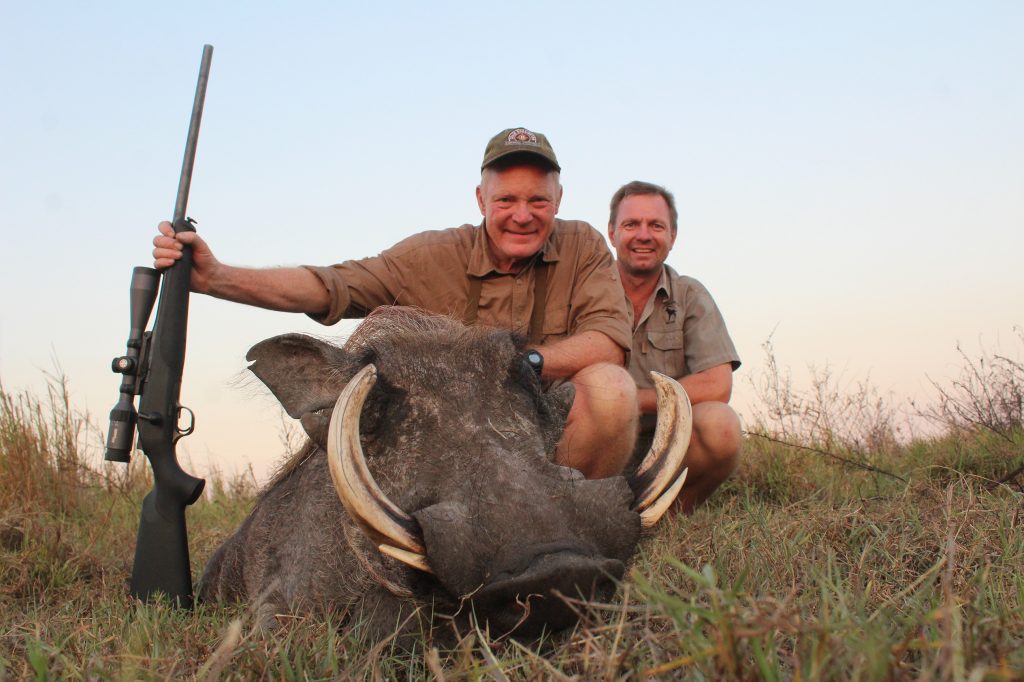
When it comes to calibers for most African hunting, bigger is not usually better.

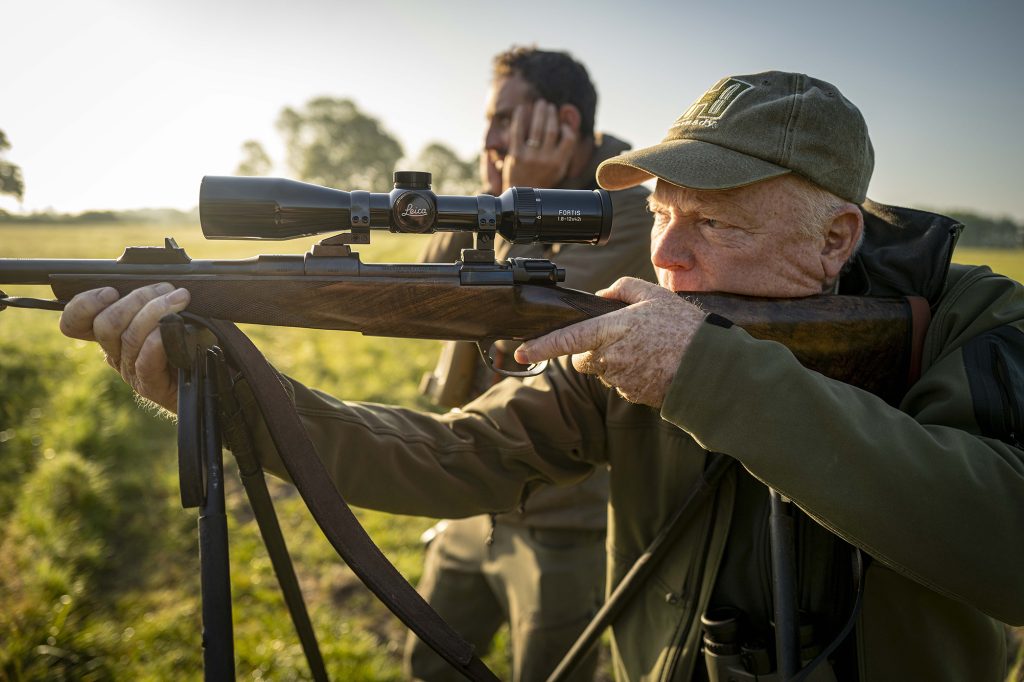
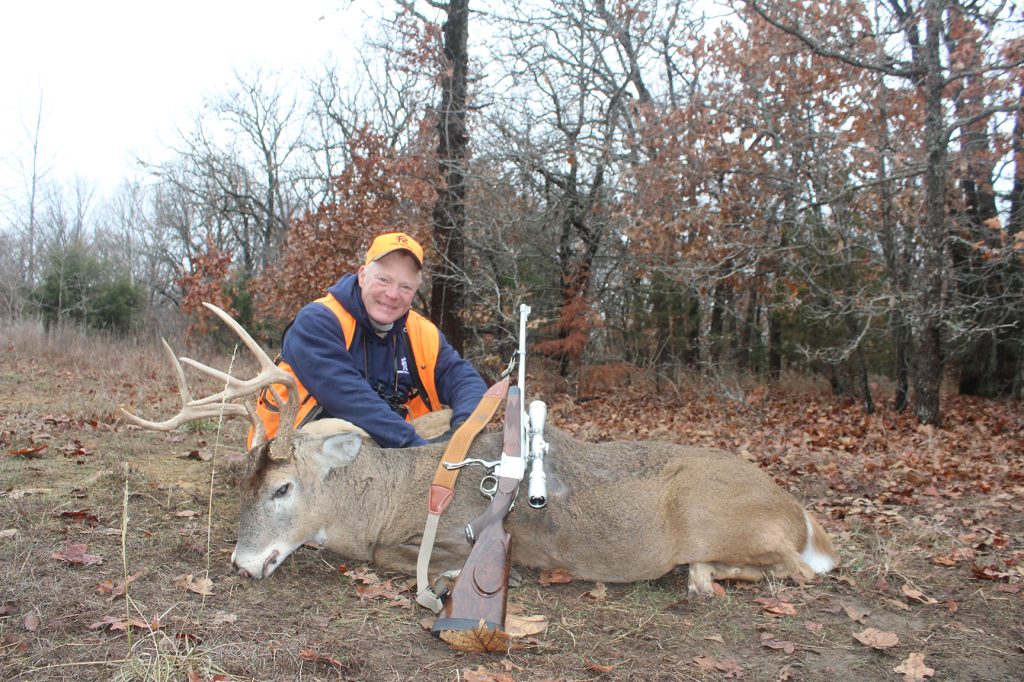
Photo above: While both the .30-06 and .375 H&H are over a century old, they still work very well for most African hunting.

One persistent belief among many American big-game hunters is that African game is harder to kill than similar-size North American game. This is why many Americans choose larger cartridges for their first safari than they would normally hunt with at home, even if they’re only hunting plains game.

This assumption is not particularly helpful for most American hunters, a conclusion I’ve come to after observing quite a few of them in action. This became particularly obvious on a month-long “cull” safari in South Africa on a huge ranch, where two groups of a dozen Americans each spent two weeks. (I spent the entire month.)

We were there primarily to cull animals that were overabundant or had some fault such as deformed or broken horns. But we could also take trophy animals by paying the ranch’s standard fee. In total, the group took 184 animals. 

Most of the hunters brought two rifles. One was chambered for a “deer” cartridge and was intended to be used on smaller animals, mostly springbok. These rounds included cartridges such as the .270 Winchester, 7mm-08 Remington, and .30-06. 

Their other rifle was for “elk-size” African animals such as kudu and wildebeest, ranging from 400 to 800 pounds. Those rounds included various .300 magnums as well as medium-bores such as the .338 Winchester, 9.3×62, and .375 H&H.

My rifles were chambered in 7×57 and 9.3×62. I’d already used the 7×57 considerably in North America for game from pronghorns to a bull moose, and since the 7×57 had a long and splendid reputation in Africa, I decided it just might work. My 9.3s had worked well on several larger American animals, including moose and an Alaska grizzly, and I wanted to use one on African game partly because the 9.3×62 was originally designed as an affordable all-round cartridge for European settlers who farmed and ranched in Africa.

But many first-timers to Africa don’t really grasp is how much shooting can be involved on a single safari. Multi-animal hunts in North America usually involve only two species, such as pronghorn and mule deer, or caribou and moose. But most safari hunters plan on hunting half a dozen or more animals.

Many of today’s safaris also involve plenty of driving on primitive dirt roads, or sometimes off-road, in Toyota Land Cruisers with stiff suspension. This can result in problems developing with scope mounts and occasionally scopes. This is why it’s not uncommon to test-shoot safari rifles occasionally to make sure the scope’s still zeroed. Doing all this shooting with a rifle that recoils more than they’re used to causes some hunters develop a flinch, which doesn’t help shot placement.

A few of the first-time African hunters on the cull safari realized this quickly, and switched to using only their deer rifle after a few days. One example was a guy who’d brought a 7mm-08 Remington and a .300 Winchester Magnum. 

After two days he switched to the 7mm-08, and I was beside him when he used it on a blue wildebeest–often considered the toughest of the elk-size plains game. The range was around 150 yards, with the bull angling slightly away, and the 140-grain bonded bullet landed a third of the way up the bull’s chest, just behind the shoulder. The bull ran sixty yards and fell dead. 

Another guy who soon admitted his “big rifle” was a little too much brought the same combination as I did, a 7×57 and 9.3×62. He’d never hunted with the 9.3×62 before, and he soon started shooting the 7×57 almost exclusively, using the 9.3×62 only on a couple larger animals. 

A few guys brought only one rifle. One chose a lightweight .300 WSM, and by his second week he had developed a flinch and was not shooting well. He finally got a chance at a bull kudu (the animal he wanted most) on the last day of the hunt at 150 yards—and broke its jaw. The kudu ran off over stony ground, leaving only a few drops of blood where it was hit, and couldn’t be tracked. (It was found dead several days later, and the skull and horns were shipped to the hunter.)

On the other hand, the caliber is not as important as the hunter’s familiarity with the rifle.  Another guy who also brought only one rifle brought a .338 Winchester Magnum—which he shot very well. In fact, it was his first-ever big-game hunt, which he’d been talked into by his hunting partner. He’d practiced sufficiently before the hunt, shooting his rifle extensively and from various positions.

I’ve long suspected that one reason African game acquired its super-tough reputation was because of the original jacketed bullets used in smokeless cartridges early in the twentieth century. The most frequent solution to a lack of penetration was to use heavier bullets, partly due to their reduced impact velocity. And some hunters used full-metal-jacket (“solid”) bullets even on plains game in an effort to achieve sufficient penetration. 

One famous example was W.D.M. “Karamojo” Bell, primarily known for his use of solids in the 6.5×54 Mannlicher-Schoenauer and 7×57 Mauser when hunting elephants. But Bell also used the same bullets on lesser African game, sometimes claiming his rifles’ bores had never been “polluted” with soft-nose bullets. Obviously, some of the animals he shot ran a long way when shot with solids in the heart/lung cavity–but Bell never traveled without skilled native trackers.

By the mid-twentieth century far better “controlled expansion” bullets started appearing, and they performed much better. Two new ones had recently appeared prior to my South Africa safari, the Barnes Triple-Shock X-Bullet and the Nosler AccuBond. Since many of the participants handloaded, both bullets got tested considerably, and they worked very well. In fact, the 140-grain 7mm bullet that downed the blue wildebeest was an AccuBond. 

Several years earlier, one first-time safari hunter who heard the claim that African game was exceptionally tough was my wife, Eileen. She’d decided we needed to go on a plains-game safari in 1999, but even though she’d been successfully slaying North American game (including bull elk and moose) with the .270 Winchester since she’d started hunting fifteen years earlier, she decided to take a bigger rifle, one of my .30-06s. 

I worked up a handload with 165-grain Combined Technology Fail Safe bullets, which worked very similarly to Barnes X-bullets and grouped very well. We both used Fail Safes a lot in the 1990s, before Barnes solved the copper-fouling problems with the original X-Bullet by developing the groove-sided TSX.

Eileen used 140-grain Fail Safes in her .270, so she was happy with my choice. They worked so well in the .30-06 that on her first morning in Namibia she took both a trophy gemsbok and kudu, and a few days later, a big blue wildebeest. The only animal she shot more than once was the kudu, which she dropped running, the Fail Safe angling through both lungs. But once down it wiggled some, so she shot it again.  

Her PH, Fritz, declared her the “champion hunter” that evening around the dinner table. (All I’d done that day, while hunting with Fritz’s son Jochen, was take a big eland bull.)

When it comes to buffalo, much of the same thinking applies. Some American hunters doubt the ability of the .375 H&H on Cape buffalo, despite having no experience with buffalo. Often this comes from reading old safari stories, which of course involved early bullets. 

The PH I’ve hunted with most is the now-retired Kevin Thomas, born and raised in what was then Southern Rhodesia and is now Zimbabwe. He killed his first buffalo at age seventeen, and a few years later worked as a buffalo culler on a big cattle ranch before Zim’s safari business started. 

His buffalo-culling rifle was a .30-06 using handloaded 180-grain Nosler Partitions. Herds were hazed toward him by ranch workers, and eventually Kevin shot more than 500, including at least 100 mature bulls with no problems, primarily using chest shots.

When I met Kevin, he was backing up his buffalo-hunting safari clients with a custom .375 H&H. Despite often being seriously outgunned by clients shooting .416s and .458s, he had to follow and finish off quite a few wounded bulls with his “little” rifle.

The reason many buffalo hunters bring rifles chambered for cartridges larger than the .375 is “in case of a charge.” But as Kevin points out, shot placement is everything, and buffalo shot correctly with a .375 rarely charge. Even if they do, his .375 has always stopped them.
Leave a Comment

I Missed!

It happens to all of us eventually. The important thing is to learn from it.

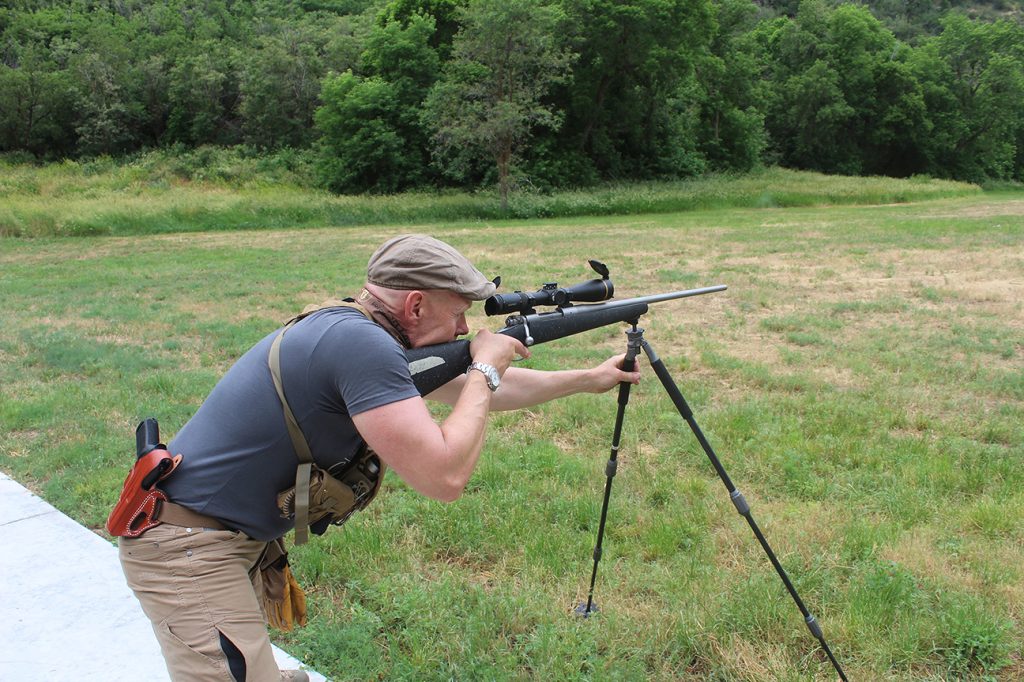
Photo above: A place of shame. From this spot in Arizona, the author missed the best elk he’s ever seen. Although far, he misjudged the uphill angle, held high and shot over. “Hold on hair, never on air.”

Missing is not an easy subject to address. As a young writer, I was advised that stories about unsuccessful hunts—and errors—were to be avoided. Mostly because people don’t want to read about that stuff. As one reader put it, “I can mess up perfectly well on my own; I don’t want to read about you people messing up.”

I get that, but over time we have created unrealistic expectations. Failure, in terms of unfilled tags, is part of the deal, but we don’t talk about that. Two years ago, I was on an elk hunt in Colorado. Tit was third season, too warm, no snow, and the elk were up high. There were six hunters in camp, and no shots fired. Nothing wrong with the hunt; the elk just weren’t there. Not much of a story, so I didn’t write about it. I wasn’t mad about it, there just wasn’t much to tell.

Missed shots, too, are part of the deal. Yeah, I know, our editor will be deluged with letters from hunters who maintain they have never missed. I used to think there were two explanations: He or she has an exceptionally selective memory, or he or she hasn’t hunted very much. Stick around, and it’s bound to happen.

Now that I’m older, I realize there’s a third option. Most American hunters pursue whitetails, and many hunt from the same stands season after season. They know the likely approaches, they know the distances. Provided they take their time, there’s no excuse for a bad shot. Even then, however, misses can happen. In part, I’ve learned this from my Kansas whitetail hunting. On our property, shots aren’t long and all our stands offer a steady rest. And yet, now and again, we have misses. There is lots of airspace around game animals, and lots of excitement when a long-dreamed-of buck appears.

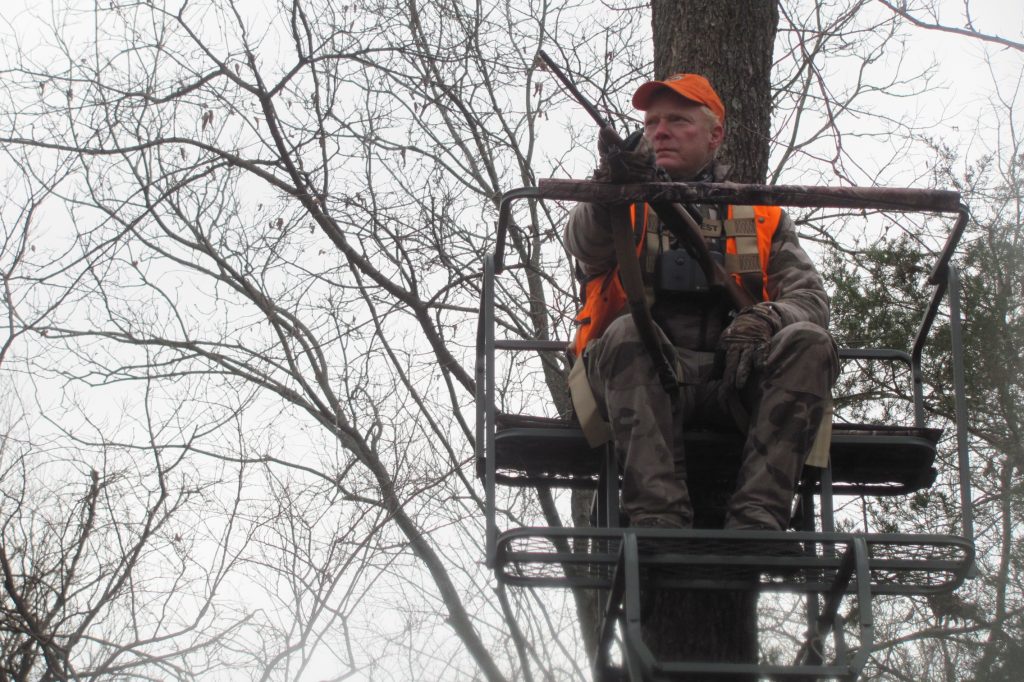
The author’s Kansas treestands offer a steady rifle rest and distances are usually short. It’s not difficult shooting, but excitement and airspace around the animal cause problems. Any shot at game can be missed.

Most hunting is different from stand-hunting for whitetails. Unfamiliar distances and terrain, unexpected field positions. Maybe add some huffing and puffing from altitude or exertion. Suddenly, there is much more airspace around that animal.

Neither unfilled tags nor misses are the worst that can happen. Almost-misses are worse–poorly placed shots that result in a wounded animal. This is stuff we write about even more rarely. Sadly, it happens, also part of the deal, because no one shoots perfectly every time.  Never happened to you? Bless you. Stick around. And remember the Bible teaches us “Pride goeth before a fall.”

I have had many unsuccessful hunts. If there was a story, I wrote about it. In a group, provided some hunters get lucky, there’s usually a story. The good news: Completely skunked camps are about as rare as camps where every hunter fills his or her tag.

I have made errant shots and I have wounded animals. In sixty years of hunting, fortunately, just a few. I have written about them. The hurt, shame, and embarrassment never goes away. Such massive errors still haunt me, as do a handful of spectacular misses, which I have also written about.

Some writers admit their errors, others don’t. No moral judgment implied. A story is a story. We need to be truthful, but within that truth we don’t have to tell everything. Do we?

I was not blessed with a selective memory. Late at night, when sleep won’t come, I relive some of my worst errors. One of these was my first buffalo in Kenya. I could have shot again, but I failed to, making the classic American error of admiring my first shot while a wounded buffalo dove into the bamboo forest, never to be seen again.

Fifty-five years ago, Dad and I drew tags in Colorado’s Maroon Bell Wilderness. Far down a steep slope, I got a shot at a wonderful buck. There were no rangefinders back then and I didn’t understand the uphill/downhill thing. I held too high and shot right over him. Years later, I made the same mistake on a huge Arizona elk. Today, we have angle-adjusting rangefinders, reticles, and turrets that could have helped. Maybe. But both times I broke a cardinal rule: “When in doubt, hold on hair, never on air.”

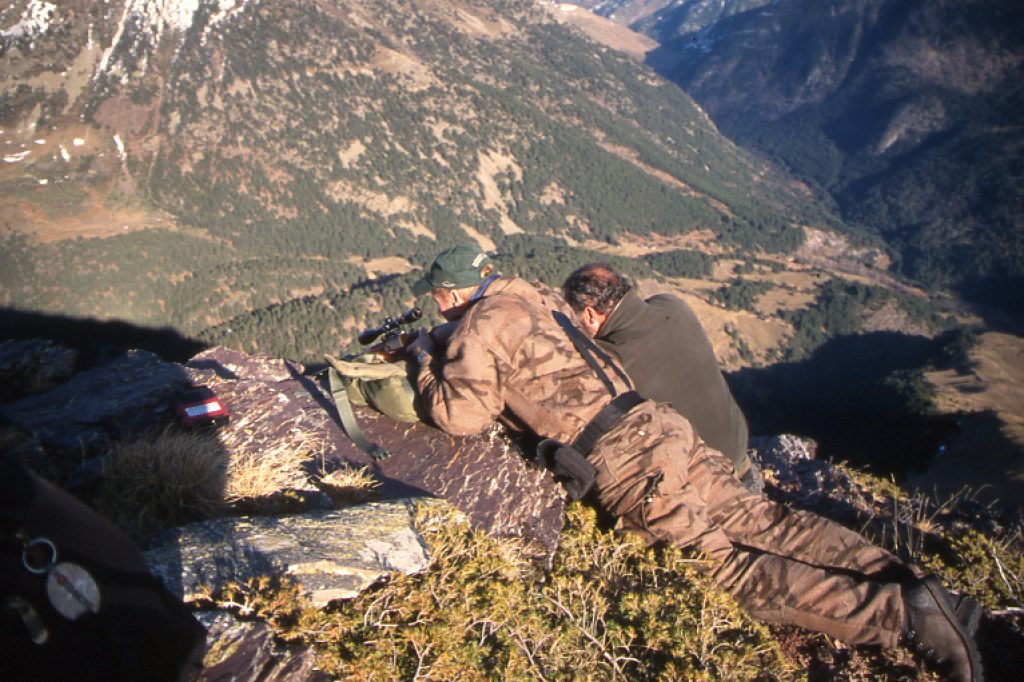
Even with modern rangefinders that compensate for angle, steep uphill or downhill shots are tough, awkward positions and the angle reduces target size. The author made this one, on a Pyrenean chamois in Spain.

I’ve often written about these and other foibles. Right now, I’m on the horns of a dilemma. Recently, I did a red deer hunt in Europe, and took a fine stag at the tail end. The story I wrote omits the fact that three days earlier, I missed a stag. My excuse, if one is needed: I couldn’t figure out how to include that incident within the allowed word count. The omission bothers me enough that, as penance, I’ll tell it now.

That afternoon we fought blizzard conditions in thick timber. At dusk, we spilled out at the bottom of a steep cutline. Two benches up stood a cluster of hinds, with the antlers of a nice stag on the skyline. It wasn’t that far, but no rangefinder can give a reading in a snowstorm. My guide set up shooting sticks and we cleared the ocular lens of snow while the stag remained standing. I got on him, got the shot off, and he ran into the trees.

Dark was gathering by the time we got up there, but tracks were clear in the snow. There was no blood. I felt good about the shot, so I assumed we’d find him in the morning. However, we had cell phone video of the shot, taken over my shoulder, which is very useful under such circumstances. The video gave no indication of a hit. Next morning a search was made, and we found no sign, so the hunt continued to eventual success.

That’s a good story because it was a clean miss. But it’s disturbing because I cannot explain it. Europeans don’t observe shooting hours, so it was getting dim. Blowing snow didn’t help, but the animal was dark against fresh snow, its antlers clean against darkening sky. The scope was bright enough, and I felt steady on the excellent Danish Viper-Flex fore-and-aft shooting sticks. The fact that I missed doesn’t bother me. Not knowing why I missed will bother me for a long time. Rushed, in terrible weather, I wish I hadn’t taken the shot at all.

The fore-and-aft sticks, offering support to both buttstock and fore-end, are amazingly steady. The author is about to drop the hammer on a European roebuck using the Viper-Flex sticks, made in Denmark.

Fortunately, I don’t miss often, but it happens. When it does, that’s my usual reaction: Why did I take that shot at all?

If you’re among the fortunate few who have never missed or near-missed (or can’t remember when it last happened), then the reality is mentally devastating. Yes, it really can happen to you, and eventually will if you hunt enough, especially under varying conditions. There are two things you can do. First, get back on the horse and ride again as quickly as possible. Try to put it past you, accept that it’s part of the game.

Second, and more important, try to understand why you missed. Thirty years ago, in an early book (Shots at Big Game), I devoted an entire chapter to “mystery misses,” the ones that haunt you because you aren’t sure what you did wrong. That red stag is now added to my short list of unexplained errors. First, if you don’t know what you did wrong, check the rifle! Mechanical failures are rare but real; it’s essential to rule them out before continuing. You bet we did that before continuing my stag hunt!   

Usually, if we are experienced hunters and shooters, we know exactly what went wrong. Then the cure is simple: Vow to never do that again. Or spend more time on the range working on whatever position failed you.

Last spring, I spent some time in Europe roebuck hunting. Assisting in a managed harvest, we shot, well, a bunch of deer. I’d just had cataract surgery and lens replacement, and I could see the difference. I felt twenty years younger, was shooting like a champ.

I practice from a lot of positions, and I shoot well off sticks. One common technique I’ve never mastered, however, is shooting off a tall bipod. I suck, cannot avoid a wobble. In Latvia, my guide used a tall bipod. My heart sinks when I see one, and I know I’d better be close. Roebucks are small and a good buck wasn’t close. I struggled to get steady enough and tried to time the wobble to the trigger break and failed. I kicked myself as I wondered why I took that shot.

Rob Gearing of Spartan Precision demonstrates good position with his Javelin tall bipod, body low and weight into the sticks. Despite much practice, the standing bipod is the author’s nemesis; he has never learned to control a serious wobble. From this position, he needs to be close.

The real secret to avoiding misses is to not take any shot you aren’t certain of. What that means varies widely depending on your skill level, equipment, distance, light, weather, wind, shot presentation, and so much more. Unfortunately, we’re all human, and all our equipment is made and used by humans. Sooner or later, most of us get excited, rush shots, misread wind, an animal takes a step, we have a mechanical or optics failure, or all that airspace gets us.  Being sure is the essence of ethical hunting, but (hopefully) rare misses are still part of the game. If you know what happened, it’s good to let them haunt you. Maybe you won’t make that mistake again.

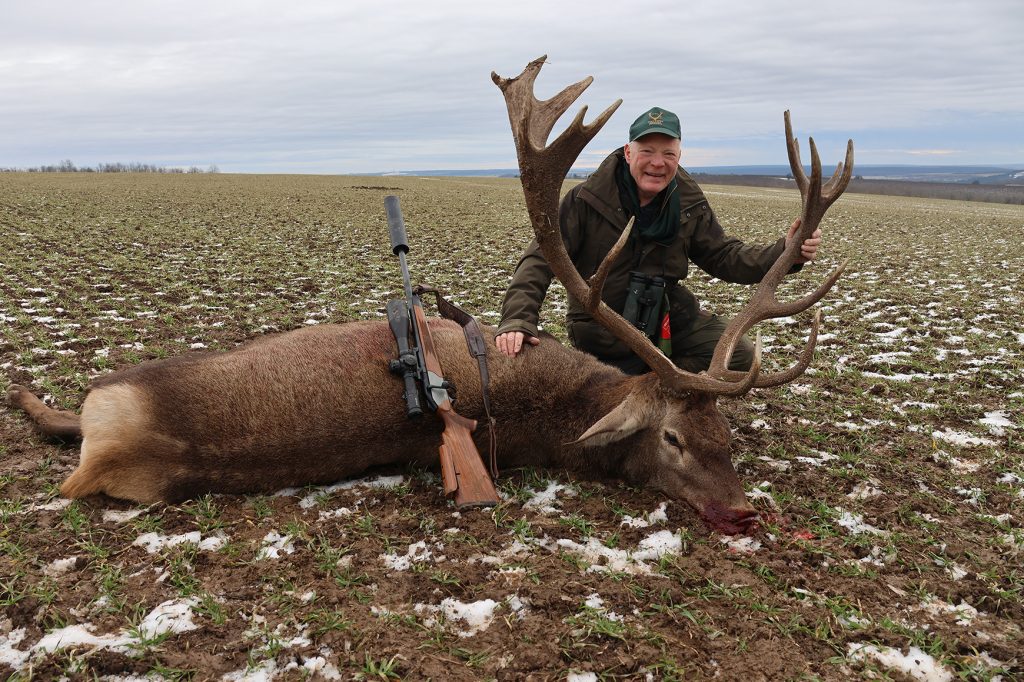
A fine red stag, taken in Bulgaria in January 2026. The author doesn’t like to admit that he missed a nice stag three days earlier.

Leave a Comment

Double Delight

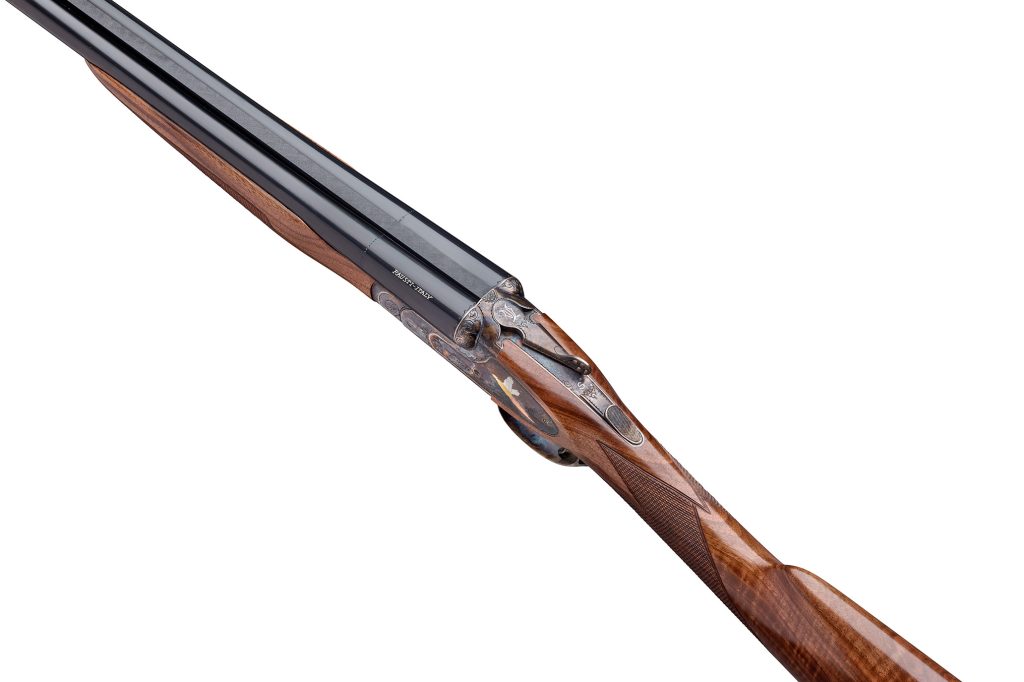
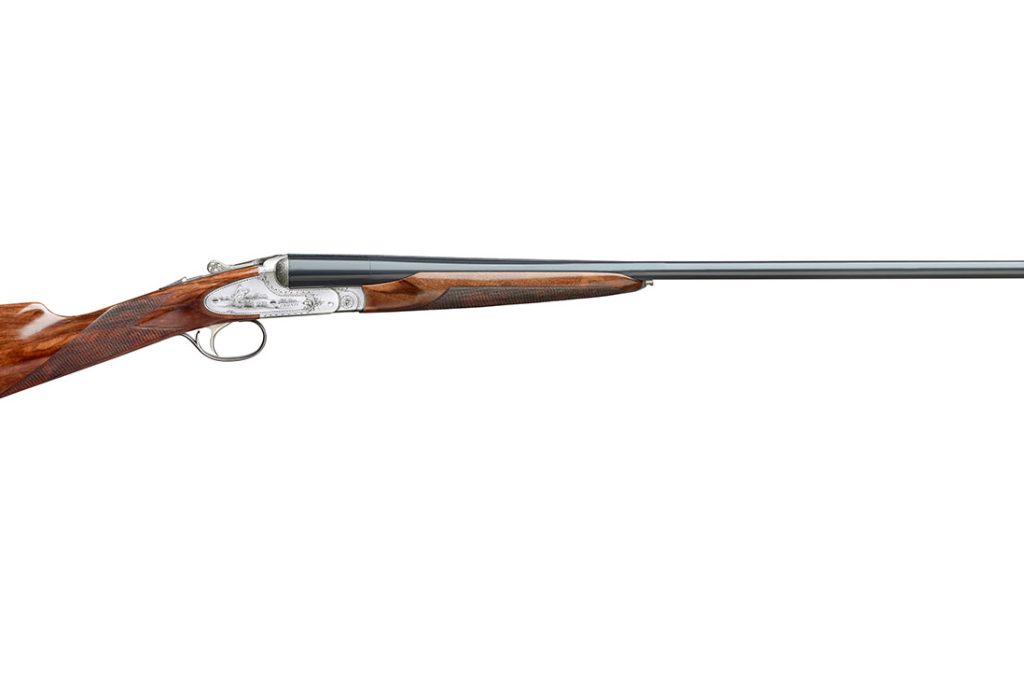
Feast your eyes on two lovely shotguns made by one of Italy’s most respected gunmakers.

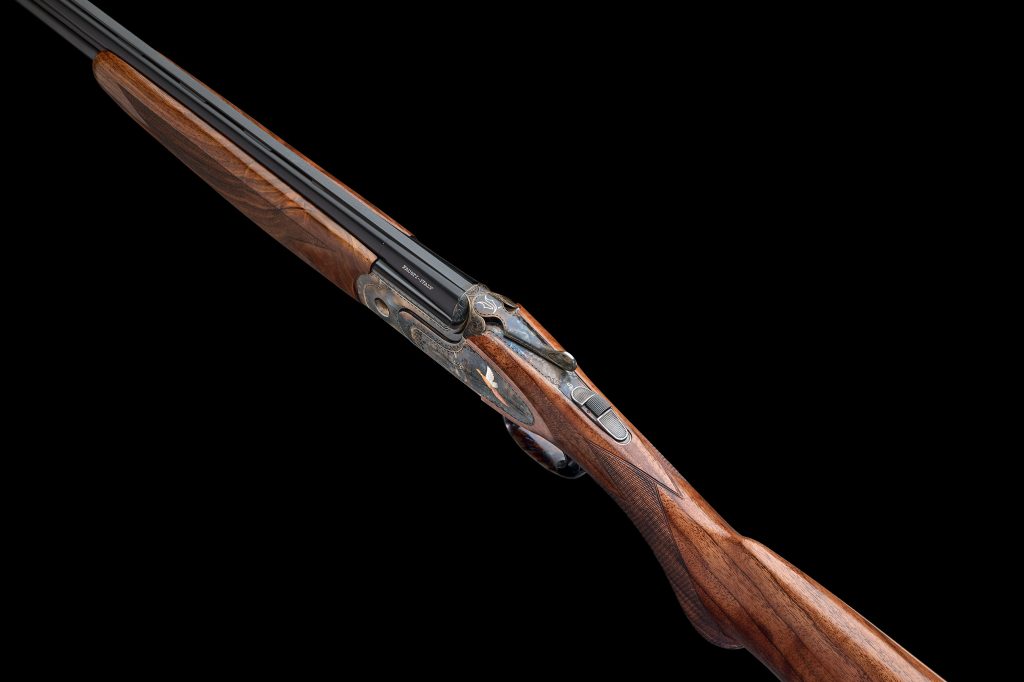
Bellissimo! What else can you say when you look at a pair of Italian-made shotguns as eye-catching as the ones above?

These two beauties—Fausti’s Dea Upland SLX side-by-side and Class Upland SLX over/under–are standouts in the Fausti Arms Boutique line. All of the shotguns in this line are characterized by refined finishes, intricate engravings, and stocks made with selected woods—classy touches that add high-end elegance to the solid quality and reliability that underlie every Fausti shotgun. One hundred percent made in Italy, these guns are the embodiment of precision workmanship and the latest gunmaking technology.

First, a little background on the maker of these lovely doubles. Fausti Arms is headquartered in Italy’s Val Trompia Valley, a region that has been known for centuries as the “Valley of the Gun.” Largely because of the rich iron deposits in this part of the southern Alps, it was here that some of the world’s first modern firearms were built. After World War II, a young gunmaker named Stefano Fausti began designing and building custom firearms in his small shop in the valley. His handmade firearms were among the best of the many gunmakers in the region, and by 1948 he started his own company, which is not only still going strong after more than three-quarters of a century, but is also still owned and run by the Fausti family. 

Company president Giovanna Fausti cites three major aspects that set Fausti shotguns apart from the competition. First, its over/under shotguns are built on a proprietary “Four Locks” action system. Second, every gun Fausti makes incorporates an action and frame that is scaled to the specific gauge. Third, all components on every Fausti shotgun are machined from a solid block of steel, which gives these guns exceptional strength and absolute reliability.

Fausti has a broad product line—more than thirty models– at a variety of price points. Although every gun is built to the same exacting standards of quality and reliability, the higher-end guns in the company’s Boutique line are luxury-level guns with superior stocks and engraving, such as the two doubles featured here. There are two prongs to the Boutique line: some Boutique guns can be purchased off the shelf from a dealer and are usually available the same day; or, for shooters who want a more customized shotgun, Boutique guns can be ordered with customized stocks, finishes, and engraving. 

Fortunately for those of us on this side of the pond, Fausti also has a robust presence in America. The Fausti USA headquarters in Fredericksburg, Virginia, provides a base that allows the company to serve its US dealer network and provide after-sales assistance to US customers.

The Over/Under

The Class Upland SLX is built on Fausti’s exclusive Four Locks system. Pushing the tang lever and hinging the barrels down activates the selective ejectors. The barrel selector for the single trigger is in the tang safety.

The Class Upland SLX over/under embodies all the distinctive elements of Fausti’s Boutique line of over/unders. Available in 12, 16, and 20 gauge, each built on its own dedicated action frame, as well as in 28-gauge and .410-bore, which share the same proportions, all of these guns are perfectly balanced for easy carrying in the field. The long sideplates feature hand-engraved artwork, and there are two finishes to choose from: coin finish or color-case-hardened.

The barrels are offered in a range of lengths from 26.5 to 30 inches, either with fixed or interchangeable chokes. Chromed internally and finished with a deep, uniform black burnishing, the barrels are strong and true. The automatic extractors ensure optimal expulsion of the spent cases and gently lift the cartridges contained in the chamber if it is necessary to unload the shotgun without having fired them.
The Class Upland SLX over/under shown with a silver finish.

The seal between the barrels and the action is entrusted to the exclusive Four Locks locking system, which guarantees reliability and durability over time even when subjected to intense and prolonged use. This system ties the barrel and receiver together via a Purdey-style underbolt that engages both bottom barrel hinges. In addition, twin action projections engage the barrel breech, one on each side. Machined from a solid bar of steel, this system creates an incredibly strong action.

The stock of the Class Upland SLX is made of select oil-finished walnut. The grip can be customized with a choice of English, pistol, or Prince of Wales style. The fore-end is splinter-style with an auget release. It features fine-pitch hand-checkering that offers a secure and comfortable grip. Average weight of these guns ranges from 6.2 pounds for the .410 to 7.3 pounds for the 12-gauge version.

The Side-by-Side

The Dea Upland SLX boasts AAA+ walnut, oil-finished to a satin luster, and extensive scroll engraving.

Dea is the Italian word for “goddess,” and it is an apt name for this superbly built side-by-side. The elegant long sideplates that characterize the Dea Upland SLX are offered in a choice of two finishes, silver (also called French grayed) or color-case-hardened, and these are hand-engraved with a gamebird in flight surrounded by a light ornamentation. The Fausti logo, restyled in silver and placed on the trigger guard and on the opening key, is a distinctive stylistic element specific to this side-by-side.

Like other Fausti side-by-sides, this model features a modified Anson & Deeley-style boxlock mechanism. These actions are beautifully proportioned with scaled receivers, available in 12-, 16-, 20-, 28-gauge, and .410. The 12-, 16-, and 20-gauge guns feature a splinter forearm, while the 28-gauge and .410 are built with a semi-beavertail forearm that ensures a more secure grip with the thinner barrels of the sub-gauge guns.

The single, non-selectable trigger is protected by a long trigger guard that curves rearward to the English-style straight stock. The stock is select high-grade oil-finished walnut, ending with a full rubber butt plate. Barrel lengths from 26.5 to 30 inches are available, and these guns range in weight from an easy-carrying 4.95 pounds in the 28-gauge to 6.8 pounds in the 12-gauge.

Quality Italian double guns–those built to exacting standards on modern machines with exquisite styling represent the pinnacle of the gunmaker’s art. After nearly eight decades of building guns, Fausti knows its business. These two shotguns are proof that precision workmanship based on the latest technology, high-end materials, attention to detail, and skilled craftsmanship can give life to shotguns that are solid and reliable as well as beautiful. They represent a synthesis of passion and ingenuity and make for ideal hunting companions that won’t let you down.

The Dea Upland SLX and the Class Upland SLX, like all of Fausti’s Boutique guns, can be purchased off-the-shelf at Fausti dealers, but if you want a little something extra, you can order them with upgrades like personalized engraving and custom stock fit. Naturally this comes at additional cost and takes a little extra time, but this is a great option for a shotgun made just for you. Either way, you’ll have a shotgun that is reliable, durable, and truly bellissimo. Find your nearest Fausti DIAMOND Dealer at faustiusa.com/official-dealers.php.

The DEA Upland SLX is also available in a striking silver finish.

Leave a Comment

Bolt-Action Beauty

Sauer’s 505 combines elegance, ergonomics, and accuracy into one stunning package.

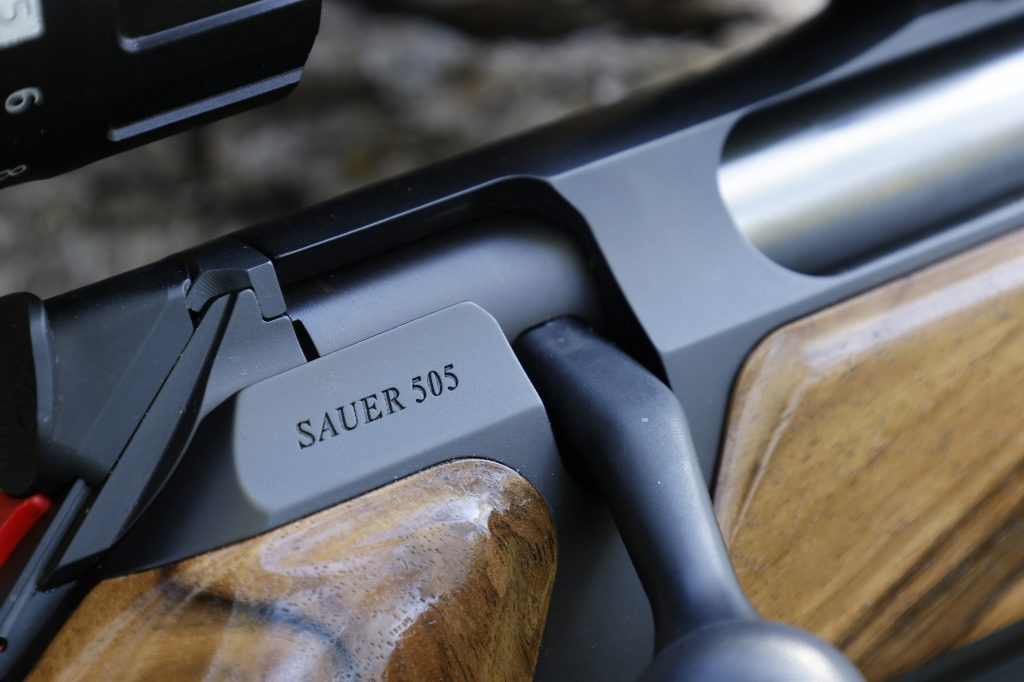
With the new Sauer 505, the switch-barrel bolt-action rifle has come of age. Featuring a nearly perfect blend of traditional lines and function with modular versatility, return-to-zero consistency, and impressive hunting accuracy, this model is, in the company’s words, “designed to be the most beautiful bolt-action rifle in the world.” 

Building on its 270 years of experience, J.P. Sauer and Sohn engineered an ultra- smooth bolt-action on a chassis-style receiver designed so you can quickly swap stocks and barrels without compromising precision or function. Even the simple tool for making all adjustments is integral with the rifle. The Sauer 505 is sufficiently different and innovative to demand close inspection, so let’s do that, starting with the unusual, skeletonized chassis receiver.

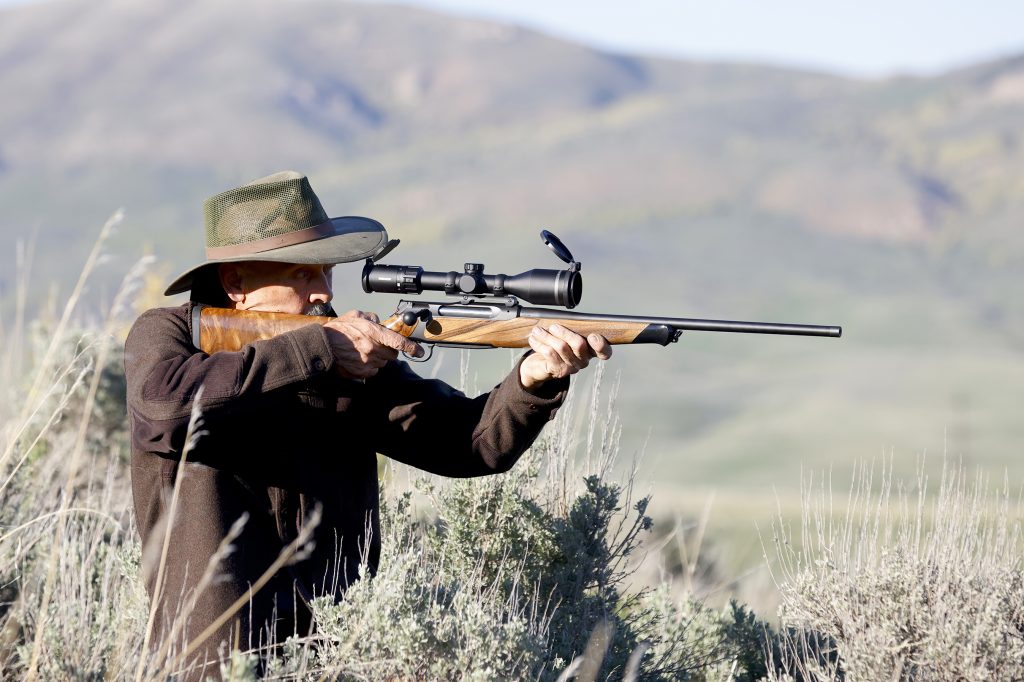
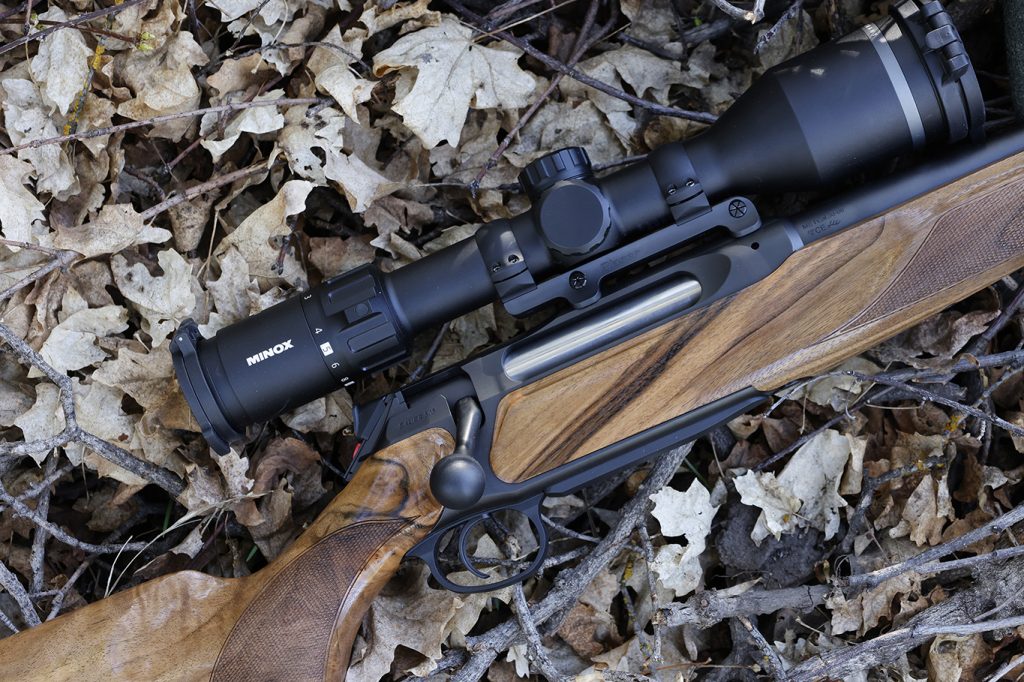
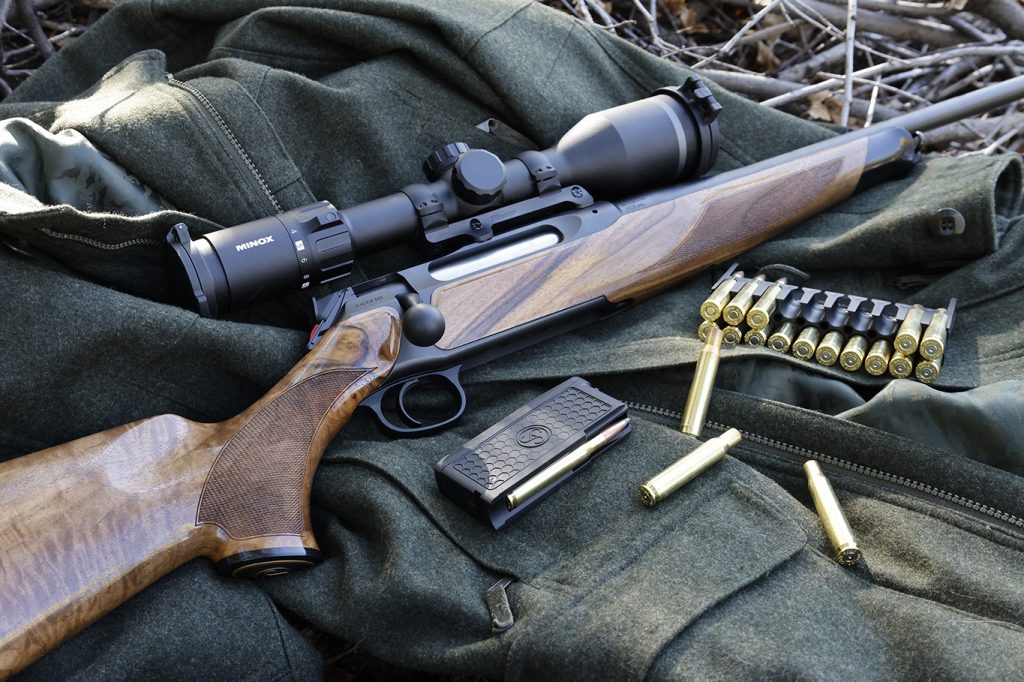
The Sauer 505 is a switch-barrel bolt-action rifle ideal for hunting just about any big-game species in the world—and it’s exceptionally pretty, as well.

Unlike traditional bolt-action receivers, the 505 is neither flat-bottomed like the Winchester M70 nor-round bottomed like the Remington M700 and its many copies. Instead, the 505 includes a lattice-like magazine box integral with the receiver rings and bolt travel rails. These, as well as the trigger housing, scope attachment bases, fore-end stock mounting platform, and barrel-locking clamp, are all milled from a solid block of steel. The base of the skeletonized magazine box includes the front and rear bedding platforms and bolt threads, making this more of a chassis than a traditional bolt-to-receiver ring stock-mounting system. The upshot is that the fore-end attaches to the receiver only, leaving the cold-hammer-forged barrel floating free. 

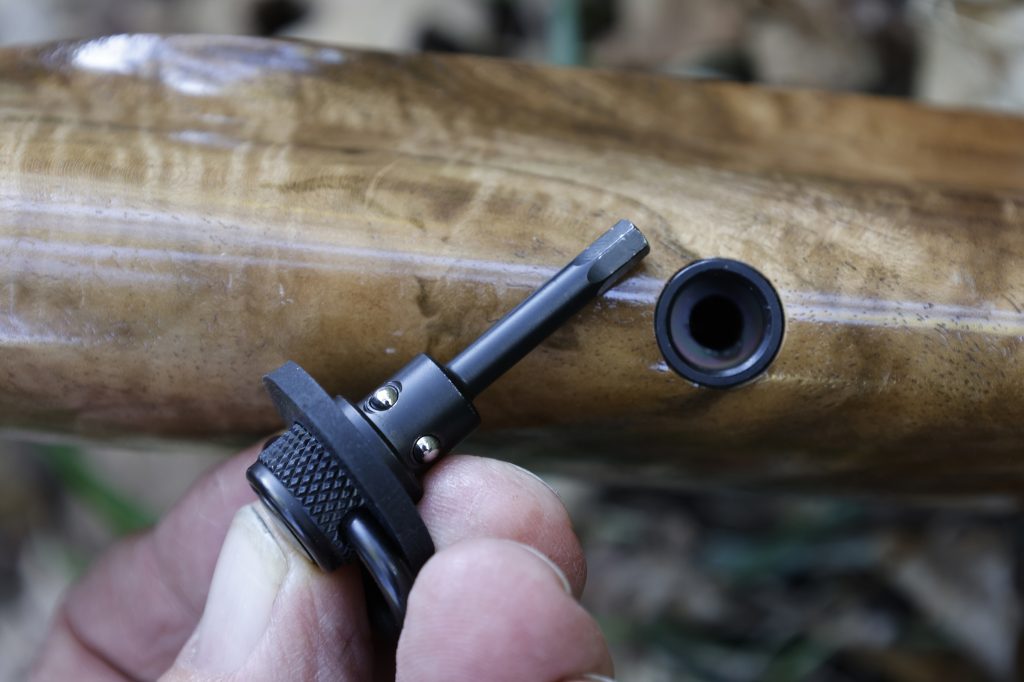
Changing barrels is surprisingly easy. First, remove the sling swivel from the bottom of the buttstock. The base of this is a hex wrench. Place this in the fore-end attachment screw head, push down, and give it a quarter turn to release the fore-end from the barrel clamp lever that protrudes forward from the receiver. Slide it forward to clear it from the skeletonized bottom of the receiver. Using the same swivel hex wrench, slightly loosen the three tensioning bolts under the front receiver ring, push the clamp lever down, and pull the barrel out. Insert a new barrel, close the clamp lever, and re-tighten the screws. Slide the fore-end back over the receiver/magazine box, turn its mounting lock screw a quarter-turn counterclockwise, and return the sling swivel/mount wrench to the butt.

The base of the buttstock’s sling swivel is a hex wrench for removing the fore-end and barrel.

This barrel connection is so tight, precise, and secure that you can maintain nearly perfect return-to-zero with whichever scope you had mounted and zeroed for that barrel and its preferred ammo. The Sauer saddle mount scope rings clamp quickly and strongly into divots integral with the receiver. This means you can zero one scope for your .243 Winchester barrel and another for your .30-06 barrel, and swap barrels and scopes quickly and confidently. All actions are the same length, accommodating nineteen chamberings from .222 Remington through .375 H&H. Barrels are made at 20, 22, and 24 inches, and are threaded and capped.

Augmenting the repeatable accuracy of this system is the Quatro trigger. It’s user- adjustable (using that same sling stud driver) at four weight-of-pull settings from ¾- to 2¾ pounds. On my test rifle, the feel was crisp and the break immediate with no perceivable creep, drag, or overtravel.

The Sauer 505 is a classic turnbolt action, but it is incredibly smooth and easy to operate because it does not cock the firing pin spring. 

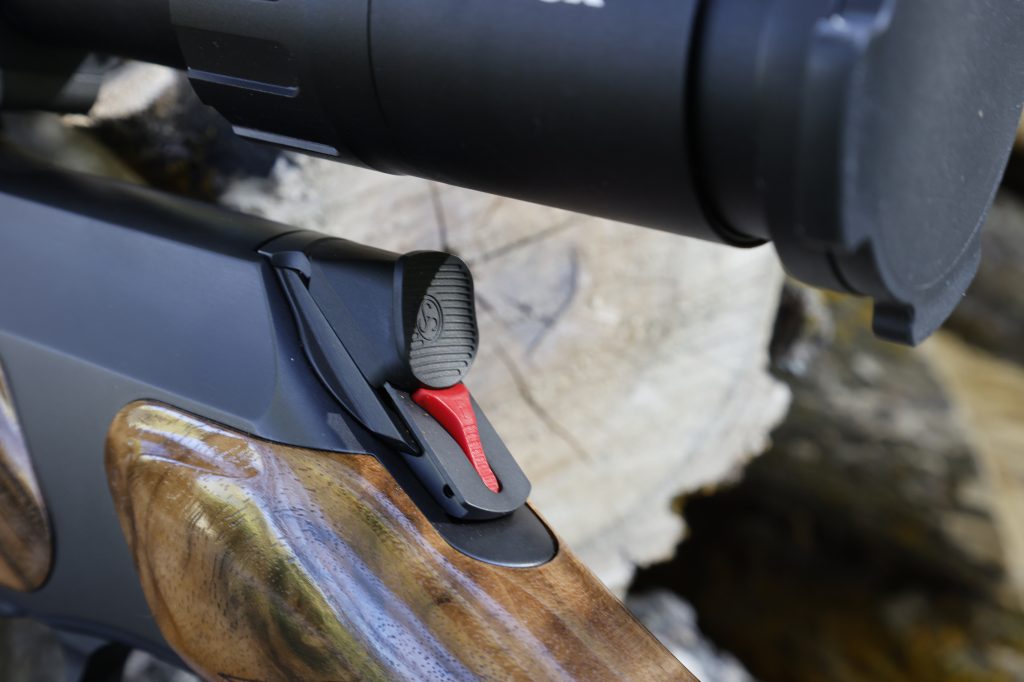
One can’t help but notice the impressive bolt function of this 505. It struck me as the smoothest, silkiest, easiest, and even quietest bolt slide I’ve ever enjoyed. It could be the poster child for the term “buttery smooth action.” Credit this not just to the highly polished bolt body, lugs, and receiver rails, but to the non-cocking nature of the mechanism. The bolt cocks neither on opening nor on closing, but on activation of the safety plunger at the back of the bolt. It is very safe, but it’s not a traditional safety because instead of blocking the trigger and/or firing pin, it cocks and de-cocks the spring that drives the firing pin. The means you can carry a round in the chamber because the firing pin is not “armed” until you push the black cocking device forward with your thumb, exposing the red de-cocking lever underneath–an obvious visual reminder the rifle is ready to fire. 

To de-cock, push down the lower, red button. The one negative about this cocking system is that it’s slightly slower and more challenging to operate than a traditional safety that moves with a quick flick of the finger. After a bit of practice and repetition, however, activating the 505’s cocking device becomes routine and quite easy.

The red button at the base of the cocking button shows that the firing pin is cocked and the rifle ready to fire. Pressing down on this releases the cocking spring to disarm the rifle. 

The 505’s push-feed bolt sports six locking lugs, which give it a short, quick lift. The lugs lock into recesses cut into the breach of the barrels rather than the receiver ring. The non-detachable bolt face is recessed with a large, spring-loaded Sako-style claw extractor and plunger ejector. 

Like most new rifles, Sauer’s 505 uses detachable polymer magazine boxes that load and feed smoothly without denting or bending. A hard push of the recessed button forward of the box releases it. This is unlikely to be accidentally activated, but it can be locked by sliding the push-button forward. The flush-fit magazine holds three standard rounds, or two of the fatter magnum cartridges. An extended magazine holds either five standard or four magnum rounds.

Sauer’s Quick Detach saddle mount allows scopes to be quickly removed and remounted without significant, if any, shifts in zero settings. 

Both the receiver and the 22-inch barrel on my sample were coated with DLC (Diamond Like Carbon), a tough, durable finish that retains a satin luster while protecting against rust. It complements the dramatic figure of the fancy walnut ErgoLux stock. Fine-line, sharp checkering and a nicely swelled pistol grip aid control. A rising comb and raised cheek piece offset felt recoil, and a black Schnabel fore-end tip adds a Teutonic flair that sets this Sauer apart from your typical American bolt-action.

The .30-06 is a classic round for a rifle that just might be the smoothest, slickest bolt action ever manufactured. 

The only flaw I discovered in my test model was slightly rough wood finish in spots, suggesting a rushed job in order to get the rifle in my hands in time for this review. I can’t imagine Sauer would let that finish go out the door on a production model with this grade of walnut. 

This is one pretty rifle, and pretty is as pretty does. With its .30-06 barrel from the bench, this rig punched three-shot groups from 1.5 MOA to as tight as ½ MOA. Its favorite load, a Federal Premium 165-grain Trophy Bonded Tipped, clustered .505 inch at 100 yards. 

The rifle weighs in at a beautifully balanced 7.6 pounds. Topped with a big, bright 2-10x50mm Minox scope, my test rifle tipped the scales nearly 9 pounds, which is a bit heavier than my preferred weight for carrying in the foothills, so if I were setting this rig up for my brand of mountain hunting, I’d choose a smaller, lighter scope. Either way, I’d fill the magazine with those Federals and be set for everything from the mule deer sage flats to the mountain goat peaks.

Three locking lugs in a stack of two result in six lugs securing cartridges in the 505’s chamber. Bolt lift is just 60 degrees. 

Leave a Comment

Little Big Game in the Desert

Our newest “official” big-game animal, the javelina, offers a fun and rewarding winter hunt. 

December in Alaska is a challenging time. I lived there for many years, and although I tolerate cold well, when the temperature dropped below minus 20 I always remembered Jack London’s classic story “To Build a Fire” and stayed inside. Cabin fever is a real phenomenon even though we call it “seasonal affective disorder” now.

One year, I just had to get out. A friend and I flew to Phoenix, rented a car, drove east to Safford, and chatted with the local wildlife biologist. With some new circles on our map, we set off into the desert—way off into the desert, farther than we ever should have gone in a rental car.

After cooking a meal over a mesquite fire and going to sleep under the stars, we rose the following morning set off on foot in search of an animal I’d never even see before—the javelina. The open desert terrain offered an inviting opportunity to pick a high spot, sit down, and glass. I hiked up to the base of a nearby mountain although I didn’t really know what I was looking for. The blue sky and brilliant sun had already compensated for the time and effort of the trip.

At first the desert looked empty, but then I started paying attention. The desert flora was fascinating. In contrast to other thorny habitat I’ve hunted, the cacti were spaced far enough apart for me to walk through them easily. As the birdlife awoke with the rising temperature, I identified several species I’d never seen before: cactus wrens, acorn woodpeckers, even a pair of roadrunners poking around in the mesquite below me. As I hiked over to another ridge, I spotted a fresh cougar track. Cougars had to eat something, didn’t they?

After several hours of glassing, I felt the warm sand invite me to take a nap. Still sleep deprived after all that travel, I nearly accepted. Then I heard an odd chorus of snuffling and grunting in the broken, rocky terrain downhill. Moments later, a dozen animals that could only be javelina appeared from the brush, working their way upward to my left. (The proper term for a group of javelina is a “squadron,” although I didn’t know it at the time.)

Despite my lack of experience with them, based on what I knew about their biology I assumed (correctly, as subsequent encounters proved) that smell was their keenest sense. Light morning thermals had developed, so I had the wind. After noting some landmarks, I began a stalk designed to put me right in front of them as they fed uphill.

That first javelina hunt took place more than forty years ago, and Lori and I subsequently wound up spending our winters in southern Arizona. While we spent most of our hunting time chasing quail with our bird dogs, we were in the heart of prime javelina country, and I hunted them enough to learn a lot more about them. Despite their small size, I always thought of them as big game. After all, I had one tag, hunted them by hiking and glassing, and used my stalking and tracking skills. Furthermore, they were much bigger than quail.

Not everyone agreed with that opinion, but now the javelina has finally earned some of the respect I always thought it deserved. Both the Boone and Crocket Club and the Pope and Young Club recently added the collared peccary (the proper common name for the javelina) to their list of big-game animals eligible for entry into their record books, the first time in years a new species has been added.

Although javelina are commonly referred to as pigs or hogs, that is biologically inaccurate. They differ from true members of the hog family in the structure of their feet, stomachs, and ears. Like feral hogs, they are omnivores that will eat almost anything. They are especially fond of prickly pear. Chewed prickly pear is good indication of their presence in the area, and an abundance of this cactus is a reliable clue to productive javelina habitat. 

Two other peccary species inhabit the New World, but white-lipped and Chacoan peccaries only occur in South America. Reaching weights up to 90 pounds, white-lipped peccaries are larger than our javelina, which rarely weigh more than 50, and they are more aggressive. 

Javelina are abundant in northern Mexico, and I have shot them there incidentally while hunting whitetails. North of the border, hunting opportunities are limited to Texas, Arizona, and New Mexico. Since most of my experience with them has come in Arizona I’ll focus on what I learned about them there, but general principles about their habits and how to hunt them apply wherever they are found.

While desert-adapted javelina can go for long periods of time without surface water, they’ll take it when they can get it. Water sources like springs and stock tank overflows are always a good place to start looking for sign. While glassing from an elevated position is the classic way to hunt them, I’ve not infrequently stumbled into them at close range while hiking. It always pays to remain alert any time you are hunting in a javelina habitat.

Javelina are most active early and late in the day, when it is easy to spot their dark forms moving across the desert floor as they feed. They are much harder to see when they are bedded in the shade at midday, so that’s a good time to take a break and go quail hunting.

Javelina tusks are sharp, and they can put on an impressive threat display when cornered or defending their young. However, unprovoked attacks on people are rare. In Arizona javelina injure a few people every year, usually when a dog is nearby. Adapted to defend themselves against coyotes, javelina can be very aggressive toward dogs especially if their young are present. I was always worried about my dogs when I was hunting quail, so I fitted them with Kevlar vests, which also helped protect them from thorns and cholla.

Despite their small size and the reassuring statistic just cited, javelina, like any wild animal, can be dangerous, especially when wounded. Hunters should always use caution and common sense when approaching a downed animal. Arizona is also home to more venomous snake species than any other state. Although they are less active during the winter hunting season, they’re still there and are much more likely to cause serious injury than javelina, so watch where you put your feet when hunting the desert.

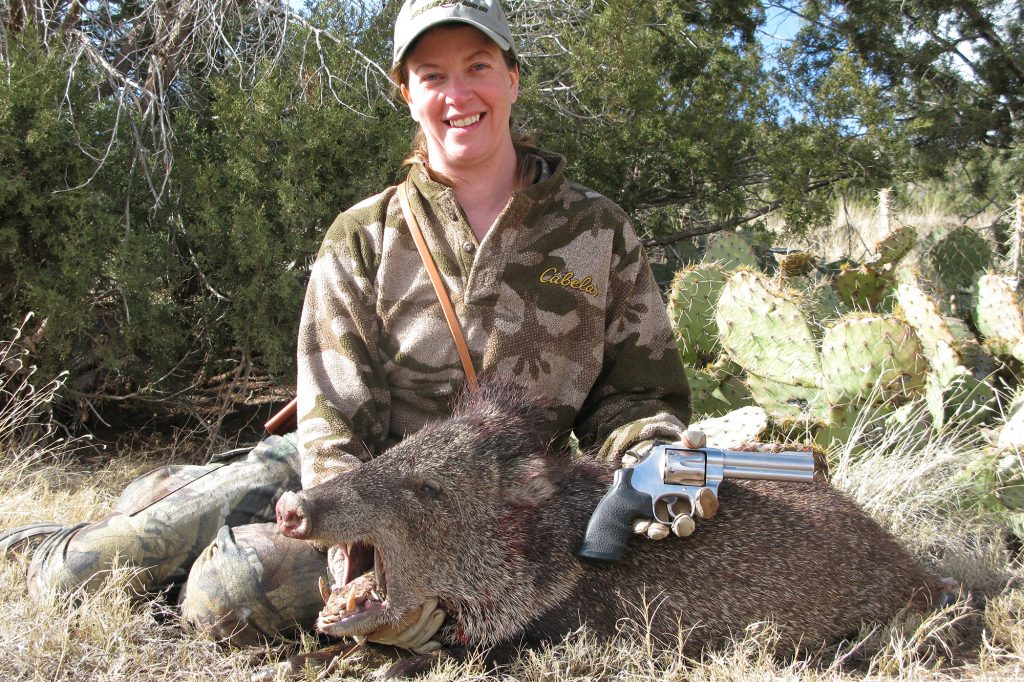
Hunting with a handgun is a great way to pursue javelina. Arizona offers a special HAM (handgun, archery, muzzleloader) season for these animals. (Photo by Trail’s End Media)

Javelina have poor eyesight, and their hearing is no better than fair. As noted earlier, their sense of smell is acute, so wind direction is the most important consideration when planning a stalk. If you can keep the breeze in your face, you have an excellent chance of getting a close shot. This makes them an ideal quarry for bowhunters, especially for those just making the transition from firearms. Arizona also offers a HAM season (handgun, archery, and muzzleloader) after the general archery season, providing special opportunities to hunt with close-range firearms. There is a general firearms season after the archery and HAM seasons. However, the opportunity for close shots invites voluntarily limiting one’s means of take. If you’re not a bowhunter, pack your handgun or muzzleloader and give it a try.

A lot of hunters I know share the misconception that smaller animals like javelina and antelope are easier to bring down cleanly than larger ones. However, javelina are remarkably tough little critters, and proper shot placement is just as important on them as it is on animals the size of moose. I’ve spent a lot more time tracking wounded javelina than I thought I’d need to after marginal hits. After a shot, unless you can see the animal lying dead in front of you, obey all the usual rules. Note the exact spot where you last saw the animal, give it some time, and start tracking carefully.

It’s difficult to discuss regulations since they change frequently and differ from state to state, so this information is just meant to provide general guidelines. As always, hunters need to review current regulations in the area they plan to hunt before heading into the field. Seasons generally take place during the winter, an especially attractive time for snowbound residents of northern states to head to the desert. Arizona requires drawing tags in most districts, although some may be available over the counter for bowhunters. 

Quail aren’t the only species whose pursuit can be combined with a javelina hunt. Deer and javelina seasons often overlap. Javelina habitat offers good opportunities to encounter one of our most challenging big-game animals, the Coues deer. I ran into them frequently when I was hunting javelina, just as I often ran into javelina when I was deer hunting. 

Having been raised in a “you shoot it, you eat it” family, a principle I’ve followed with game animals as diverse as mountain lions and zebras, I’ll offer some comments on the food quality of javelina. Their terrible reputation is easily explained—and avoided with proper management in the field.

Javelina have oil-secreting glands on their faces and above their tails. The musk they produce is oily, tenacious, and odiferous. When stalking, I’ve even smelled them before they smelled me. Javelina meat itself doesn’t differ much from that of other game animals since the musk is all in the hide, but getting even a small amount of this oil on the meat will render it practically inedible.

The trick is to field-dress the carcass without letting that happen, which is easy if you have a hunting partner along. When skinning the animal, one of you should hold and pull on the hide without touching the meat while the other one butchers the meat without ever touching the hide. While you can prepare the meat as you would with any venison, it’s likely to be tough, so turning it into sausage is a good option. A hunting partner once turned his  javelina into pastrami, which was delicious.

One welcome aspect of hunting javelina in Arizona is their abundance on public land. Around 90 percent of the state lies within the public domain and contains a lot of great javelina habitat on BLM and National Forest with the abundant back roads providing access. Many of those roads are barely passable and help may be a long way away, so go prepared with everything you need to change a tire or get out of a ditch. Don’t forget the first rule of desert travel—carry plenty of water.

Back on that rocky hillside forty years ago, the breeze held steady and the javelina and I arrived at the same place at the same time. I didn’t have any cover, but doing nothing more than holding still allowed me to remain undetected. Identifying a mature boar proved easier than I expected, and I sent an arrow through his chest from a range of perhaps ten yards. At the sound of my bowstring’s twang, a chorus of squeals and grunts arose as the pigs tore off over the rim of a dry wash. Keeping an eye on the one I’d shot was like playing a shell game. I didn’t see him fall despite what I felt sure was a solid, well-place hit. A brief tracking job after letting the area settle back down proved that impression correct.

Since then, I’ve spent a lot of time in javelina country. Some of those days ended quickly, with a prompt encounter and a steady breeze that allowed an easy stalk. On other occasions I couldn’t locate a javelina even after glassing until my eyeballs ached. I never failed to have a great time, keeping myself in shape during the long winter, enjoying the weather when the snow was flying back home, observing exotic wildlife, and looking over more public land than I could hunt in a week—or a season.

No wonder I have enjoyed seeing the javelina officially become the big-game animal I always thought it was.

Keeping Score

The Boone and Crockett Club and the Pope and Young Club now accept javelina entries into their record books. Javelina skulls are measured in the same manner that both organizations measure bears and cats–the greatest length and greatest width are recorded to the nearest sixteenth of an inch. Minimum entry scores are 13 14/16 for Pope and Young and 14  5/16 for Boone and Crockett.

Leave a Comment

Grappling with Game Thieves

New research shows that poaching is a huge problem in the U.S.  and proposes some solutions.

Photo above: Poaching is far more widespread and unreported in the U.S. than previously thought. Stiffer penalties that reflect the value of the animal can act as a deterrent. For example, in Colorado, the fine for poaching a 6-point elk is a minimum of $10,000. (Photo by Victor Schendel)

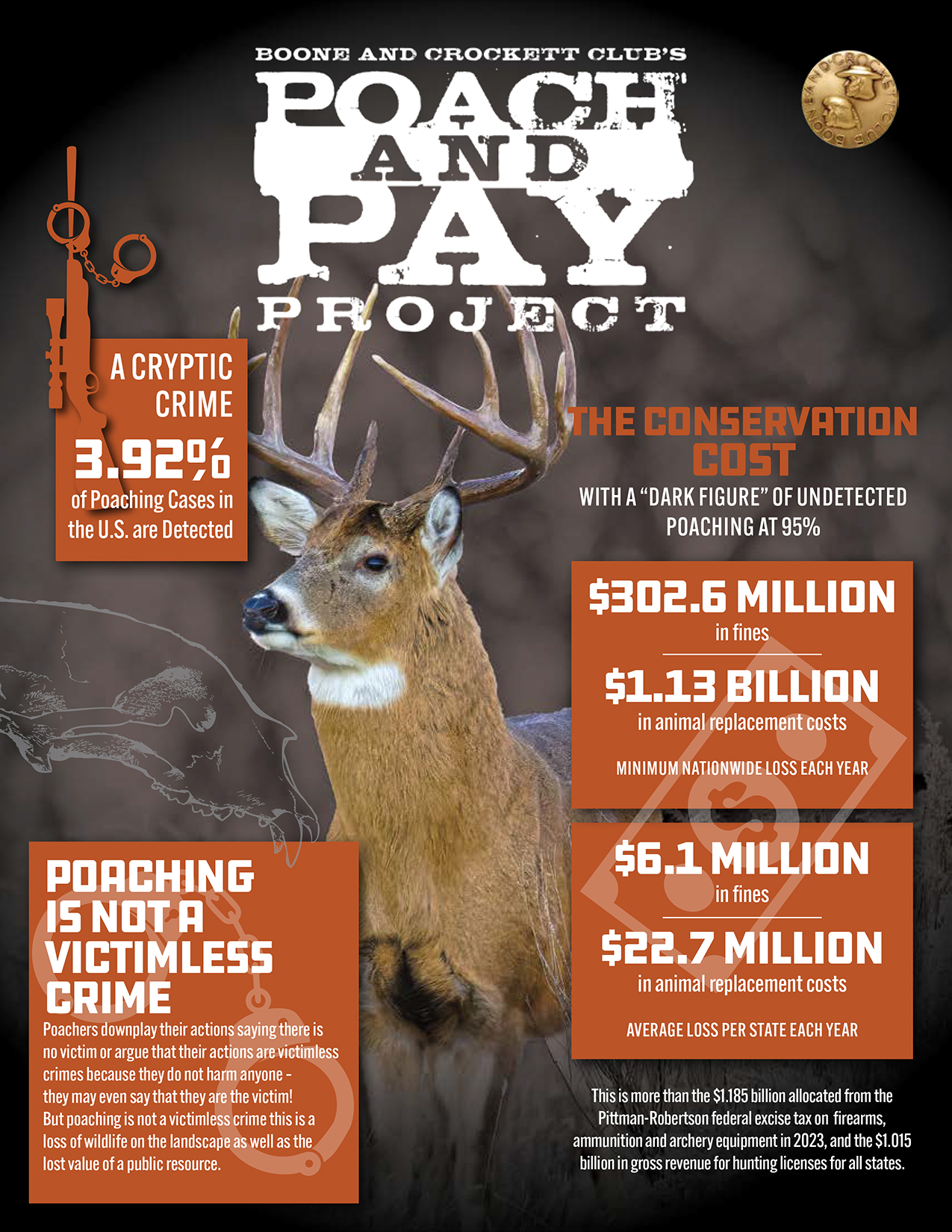
Readers of Sports Afield are likely familiar with the widespread problem of poaching in Africa. But it may come as a surprise that poaching is also a huge problem here in the United States—and it’s taking a large bite out of our game populations and posing a threat to our legal hunting traditions. We are starting to get an idea of the magnitude of the problem with the help of a five-year research project conducted by the Boone and Crockett Club’s Poach and Pay program, the results of which were released in September 2025.

The research, conducted by Jon Gassett of the Wildlife Management Institute and Kristie Blevins of Eastern Kentucky University, was undertaken to quantify the various costs of poaching, estimating factors such as the number of animals affected, the loss of opportunity for hunters, uncollected license revenue for state wildlife agencies, and the replacement cost of poached animals.

A detailed data collection effort and statistical analysis determined that a tiny percentage—just 4 percent, to be exact–of poaching incidents in the U.S. are ever even detected, let alone investigated or prosecuted. This isn’t so surprising if you consider that poaching occurs in areas with few people around, and that there are relatively few conservation officers patrolling our hunting lands.

 The research extrapolated the potential costs of unreported poaching crimes, figuring in the value of the animals lost as well as potential fines that could be levied, to be some $1.4 billon. To put this into perspective, it’s more than the gross revenues from hunting license sales for all 50 states in a year, which is about $1 billion.

“These undetected violations translate into millions of dollars of lost replacement costs, fines, and penalties—resources that could otherwise support wildlife conservation,” the researchers said. “In addition to these direct financial losses, undetected poaching diminishes public trust, reduces hunting participation, and undermines federal conservation funding derived from excise taxes on outdoor-related equipment.”

This highlights the fact that poaching is not a “victimless” crime. Not only do we lose a significant number of huntable animals to poaching, but we also incur a high conservation cost, including the loss of substantial funds that would have generated additional Pittman-Robertson dollars for state wildlife agencies.

Another concern about the widespread nature of poaching is that the non-hunting public has a tendency to equate poaching and hunting, further undermining the positive conservation benefits derived from lawful hunting. Anti-hunting groups often take advantage of this by intentionally blurring the line between lawful hunters and poachers in their posts and fundraising appeals.

Even poachers who are arrested and prosecuted often walk away with only a slap on the wrist or minimal fines. This is sometimes the result of the legal system not considering poaching to be a serious crime. As a result, some states have instituted “restitution penalties” that ensure the state wildlife agency is reimbursed for the loss of a poached trophy animal, giving judges and prosecutors an idea of how much an animal is “worth”—or at least how much to levy in fines. The average restitution cost of a white-tailed deer, for example, is $2,171, and poaching a trophy-class elk can cost a perpetrator as much as $30,000—if they’re caught.

The Poach and Pay research also looked at different types of poaching and the reasons behind it—ranging from ego and financial reward to subsistence and rebellion. The average poacher, it seems, is not out there to augment his or her winter meat. Poaching for a trophy head was found to be the most common behavior at 57.6 percent, followed by “peer-pressure” and “opportunistic” poaching at 43.9 percent.

So what can be done about our huge poaching problem? The researchers identified a number of potential solutions, including beefing up “boots on the ground” enforcement while increasing reporting rates through rewards, anonymous poaching hotlines, and public education campaigns. In addition, some poaching crimes could be reclassified from misdemeanors to felonies, with mandatory minimum sentences imposed. Educating prosecutors and their staffs about the seriousness of wildlife crime and providing training on conservation issues could also help. Developing scientifically justifiable “replacement costs” that are consistent across states and reflect the ecological value of each species is also helpful in deterring wildlife crimes. 

An important takeaway from the Poach and Pay research is that law-abiding hunters are among the most effective tools to deter poaching. Real hunters who follow the regulations and hunt with a fair-chase ethic should recognize that those who don’t are stealing from us—so if you spot illegal activity, don’t look the other way. Get license numbers, make use of tip lines, and call out illegal activity on social media and elsewhere. The researchers identified “public perception and offender shaming” as an effective deterrent to all types of poachers.

“We have long known that poaching is a major problem in the United States, but we didn’t truly understand the magnitude of the problem until this Poach and Pay research,” said Tony Schoonen, CEO of the Boone and Crockett Club. “By quantifying the dark figure of undetected crime, identifying judicial bottlenecks, and presenting a structured deterrent framework, the research equips state and federal wildlife agencies with data-driven strategies to reduce illegal take and protect America’s wildlife heritage.”

The Boone and Crockett Club, founded in 1887, promotes fair-chase hunting and visionary management of wildlife in North America. See the full results of this study here.

Leave a Comment

One Hundred Years of the .270

Jack O’Connor’s favorite cartridge is still a great choice for hunting a wide variety of big game.

Photo above: The .270 is considered one of the best rounds for mule deer bucks. Barsness guided his friend Jay Rightnour to this public-land buck in Montana’s Missouri Breaks.

There’s been controversy involving the .270 Winchester ever since it was officially introduced by Winchester in 1925. There still is a century later, although the cartridge is still very popular, even after the introduction of so many new—and supposedly better—big-game rounds.

Many hunters looked at the ballistic statistics for the original factory load, a 130-grain bullet supposedly started at over 3,100 feet per second, and decided the .270 was probably a good round for deer-size game, but not anything bigger. Others decided to try it on larger game, including the guy who eventually became known as the godfather of the .270, Jack O’Connor.

At first O’Connor used it on deer, not only in Arizona where he taught college English for a living, but also south of the border in the Mexican state of Sonora. The deer he hunted were both the small subspecies of whitetail called Coues and larger desert mule deer, and he found the .270’s flat trajectory worked very well for the typical open-country shooting. 

By then, O’Connor had already started selling magazine articles to supplement his small salary. By the mid-1930s he was able to quit his college job and start hunting more widely, thanks in part due to magazines helping pay for hunts. He eventually went on a guided packstring hunt in Alberta for bighorn sheep, mule deer, moose and grizzly, planning to use the .270 on the bighorn and mule deer, and the .30-06 on moose and grizzly. 

He and his guide hunted moose by glassing from a mountainside into a creek bottom. But whenever they spotted a bull out feeding, before they could get down the mountain, it would disappear in the thick, shady vegetation along the creek. So early one morning, O’Connor decided to still-hunt alone along the creek. He took his .270, probably because it was considerably lighter than his .30-06, and easier to carry.

O’Connor eventually jumped a big bull and took a quartering-away shot. The moose didn’t drop, so he followed its tracks in the soft ground—finding where it had fallen to its knees, then stood up again. Soon O’Connor got another angling lung shot, and the bull fell dead.

He was using the original 130-grain factory ammo. The Winchester bullet had a very heavy jacket along the shank to help hold the bullet together during expansion so it would penetrate deeper. As he noted in one of his stories about the hunt, “It dawned on me that if a bullet gives adequate penetration it does not have to be particularly heavy in order to penetrate well.”

Eventually he killed a dozen moose with the .270, often using handloads with bullets designed for even deeper penetration. But handloading didn’t become popular until after World War II, partly because ammunition companies saw it as a threat to their sales, so they didn’t market bullets separately.

In fact Philip B. Sharpe’s classic book, Complete Guide to Handloading, published in 1937, states: “For handloading purposes, the major objection to the .270 Winchester is the lack of variety in the bullets available in other than the cast variety. Metal-cased bullets of other calibers do not fit properly.”

This changed during and soon after World War II, as “metal-cased” (jacketed) .270 bullets became more available. Eventually several new companies manufactured bullets for handloaders, including Hornady, Nosler, Sierra, and Speer—all of which started up between 1943 and 1949.

Especially helpful to .270 users was Nosler’s Partition, which many of today’s hunters consider the first controlled-expansion bullet. It featured a soft front core which expanded violently, separated from a harder rear core of by a partition of jacket material, which resulted in consistently deeper penetration.

Despite this, and other controlled-expansion bullets developed since then, some hunters still class the .270 as just a deer cartridge. One I know, a widely experienced hunter who’s also developed several custom hunting bullets, thinks the .270 isn’t even enough for caribou. This puzzles me, since I’ve taken a dozen bull caribou from Alaska to northern Quebec, and while mature bulls are about the same size as cow elk, they’re not hard to kill.

Here I should probably describe my experience with the .270 Winchester, since some of you may strongly agree with my friend, so might not want to waste your time by reading further. My first .270, a Remington 700 ADL, was purchased in 1974 at a hardware store in Wolf Point, Montana. With a little tweaking, it turned out to be one of the most accurate factory big-game rifles I’ve ever owned. Its best handload turned out to be the 150-grain Hornady Spire Point, with Jack O’Connor’s recommended load of Hodgdon H4831. (This was the original U.S. military surplus powder, not today’s version.) 

I chose the 150 Hornady because I thought I couldn’t afford Nosler Partitions–and Hornady Spire Points had the reputation of being deeper-penetrating than the other brands of “non-premium” big-game bullets.  This was a few years before Hornady introduced their Interlock bullet, with a thicker ring of jacket brass inside the rear of the jacket, but I did later discover that the pre-Interlock Hornadys featured a harder lead core than most other bullets.

This handload consistently grouped three shots into around half an inch at 100 yards, and on the one occasion I shot it at 300, it put four shots in 1¼ inches. It penetrated well on elk-size game, usually exiting on broadside shots, and often at even steeper angles.

Among the animals taken with it was my first really big mule deer, a mountain buck as big as an average cow elk. He was about twenty-five yards above me on a steep slope, and the bullet entered the front of his chest. After traveling through the lungs, it broke the spine at the rear of the ribcage and exited. 

The next .270 I handloaded for, however, was the one that really convinced me of the round’s suitability on much larger game. It was a Browning A-Bolt, the first rifle a manufacturer ever sent me for article-testing during my early gunwriting career. It grouped almost as well as the Remington, and was also one of the lightest mass-produced .270s available at the time.

Eileen had started hunting a couple years earlier with an old Remington 722 .257 Roberts, the rifle my paternal grandmother used for her big game hunting before she passed away. After that the .257 had wandered around the family, at least four other people taking deer with it, but hadn’t been hunting in several years.

Eileen used it to take several pronghorns and deer, but she wanted to hunt elk too, and everybody said the .257 wasn’t enough. She’d also decided the 722 was heavier than she liked, so we sent Browning a check for the A-Bolt .270.

I developed two handloads, one with the 130-grain Hornady Spire Point, and another with the 150-grain Nosler Partition (which by then we could afford). Both bullets landed in the same group at 100 yards, common in .270s, so she could use the more affordable 130s for sighting-in, practice, pronghorn, and deer, and use the 150 Partitions for larger game.

On the last day of that fall’s big-game season she took her first elk at around 150 yards. The young bull wobbled for a few seconds after the shot, then dropped dead.

The next year Eileen decided she wanted to hunt even bigger game, so she applied for a bull moose tag in the annual Montana lottery. I’d been applying for more than a decade and hadn’t drawn one, but she kept telling friends she was going moose hunting that fall. They’d ask if she was going to Alaska or Canada, and she’d say no, she was hunting in Montana—and they’d laugh. When her tag showed up in the mail, she waved it in front of more than one person, including me.

She’d applied for an area south of Bozeman where I grew up hunting deer and elk—and had seen quite a few moose. We scouted for a couple days before the season opened on September 15th, but daytime temps were in the 80s and we didn’t see any moose.

Dawn of opening day, however, was nice and cool, and before the sun rose over the mountains we found the eating-size bull she wanted, standing quartering away in a willow draw below us, in easy range.

She sat down and aimed for the far shoulder, as she’d learned to do when hunting deer. At the shot the bull took a step, then dropped dead in the middle of second step. The bullet had entered the middle of the left ribs, and ended up under the hide of the right shoulder. It wasn’t a trophy bull, but was mature, with a 4×5 rack not quite three feet in width. Its body was as big as any bull elk I’ve seen on the ground.

A dozen years later Eileen planned to hunt elk on a ranch fifty miles west of where we live. This was the year Barnes Bullets introduced their Triple-Shock X-Bullet (TSX), which has a grooved shank that reduces copper-fouling.

Coni Brooks heard about Eileen’s elk plan, and asked if she’d be willing to field test the 140-grain .270 bullet. She said sure, and I handloaded some to right around 3,000 fps, which grouped well under an inch.

Eileen not only used the 140 on a young bull at 200 yards (which exited), but during the pack-out, a coyote also received one at 250 yards. Some hunters had expressed concern about how well TSXs would expand on lighter game, so Eileen was able to inform Coni it also expanded fine. In fact the only problem with TSXs on elk we’ve seen is that these days Montana elk are so abundant they’re often found in big herds, so you need to be aware of other elk possibly standing behind the one you shoot.

Seventeen years after Eileen got her moose, we were both invited by custom gunsmith Charlie Sisk to an event on a Texas ranch. He’d arranged for her to take a cow bison, and would provide one of his rifles and some appropriate ammo. The rifle turned out to be a .270, and the ammo Federal Premiums with 130-grain Barnes TSXs. The hunt was a real hunt, not one of the too-common shootings of a buffalo in a pasture. 

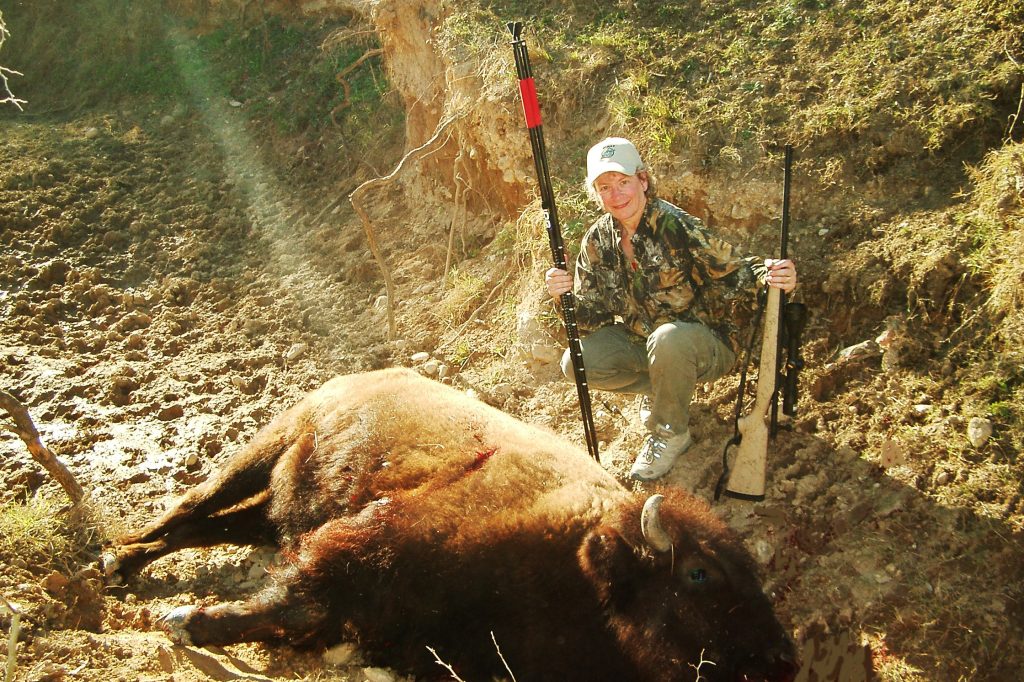
Eileen took this Texas bison with one 130-grain Barnes TSX, using a custom .270 made by gunsmith Charlie Sisk.

There had originally been three cows hanging together, but one had been taken by another hunter a few days before. We had to track the other pair for two hours through thick, thorny brush and trees before finally getting within 150 yards.

Eileen was shooting off standing sticks, due to all the ground cover, and waited until one of the cows turned broadside before putting the bullet a third of the way up the chest. The cow staggered and went forty yards, leaving a copious blood trail, before falling. Its body dimensions were just about exactly the same–though shaped somewhat differently—as her moose. The meat was also great. 

Another hunter who thinks the .270 works well on game larger than deer is our old friend Phil Shoemaker, the Alaska Master Guide who’s been guiding brown bear hunters on the Peninsula for over half a century.

Phil is willing to guide brown bear hunters who use .270 Winchesters, as long as they use appropriate bullets. One of his clients was a rancher from Colorado whose only big-game rifle was a .270, which he’d used on a bunch of elk. Phil told him to buy a couple boxes of Federal’s Premium ammo loaded with 150-grain Nosler Partitions.

The guy did, and they found a big boar fresh out of its den, with a perfect, unrubbed hide. At the first shot through the lungs, the bear locked up, and dropped to a follow-up shot. The hide squared right around 10 feet, and the skull qualified for the Boone and Crockett Club’s records.

Many rifle enthusiasts are aware that Winchester introduced the .270 in a then new bolt-action rifle they named the Model 54. I even owned a 54 for a while. It came with a Lyman receiver sight. The 54 appeared long before factory rifles came drilled and tapped for scope mounts, and I did not add a scope—partly because the rifle regularly grouped three shots of typical factory ammo and handloads into about 1½ inches at 100 yards. Eventually a friend who’s one of the biggest Winchester loonies I’ve ever known talked me into selling it to him.

One of the advantages of the .270 for the traveling hunter is that factory ammunition is available just about anywhere. One of my habits when traveling to hunt is to visit sporting-goods stores to see what’s available. I can’t remember visiting any shop where .270 ammunition wasn’t available, usually in good quantities. I even found it in the tiny, one-room general store in Sleetmute, Alaska. The .270 is a very popular hunting round in places as diverse as the Western Cape Province of South Africa to Arviat, Nunavut, on the western shore of Hudson Bay. This hundred-year-old stalwart is still right at home in any hunting camp.

John Barsness’s books are available from riflesandrecipes.com.

Leave a Comment

Deer Camp Classics

Thirteen old-time cartridges that are still great choices for whitetail hunting.

Photo above: The author exits a Texas deer stand with a 1950s-era Savage 99 in .300 Savage. Boddington carries this accurate and hard-hitting rifle often on medium-range deer hunts.

Campfire arguments about cartridges are fun. There are lots of great hunting cartridges, and how well you place your bullet is always more important than the rifle and cartridge that propelled it. Still, it’s fun stuff. I’m always curious to see what hunters bring to our whitetail hunts in southeast Kansas; it’s good fuel for campfire discussions.

Our timbered ridges don’t offer long shots, but images of the Yellow Brick Road are unavoidable. Some hunters bring magnums. They work but aren’t essential. The opposite approach: many of our hunters go traditional. Every year, we see 7x57s, .270s and .30-06s, plenty of .308s, All are excellent for our conditions.

This year, we had fourteen different cartridges in our Kansas woods. Multiples were the usual suspects: 6.5 Creedmoor, .270, .308, and .30-06. Cartridges new to our camp included Ryan Orth’s 6mm ARC, Keith Roberts’ 6.8 Western, and Paul Cestoni’s .338 Federal. Magnums were present and they worked. Rodney Cayemburg used his 7mm Rem Mag, Duane Evans had a .280 AI, and Ryan Murray used his .300 WSM.

What’s a “Classic?”

Definitions of classic and antique vary. Google says: “Generally, an item must be at least 100 years old to qualify as an antique.” For a centerfire cartridge to have a hundred-year run isn’t common, but there are numerous centenarian cartridges still in use. Many, I’ve never encountered, but I came up with thirteen cartridges a hundred years old or more that I’ve seen take bucks in recent seasons. Here’s my “baker’s dozen,” by order of age:                    

.45-70 Govt. (1873)

8×57 Mauser (1888)

.303 British (1888)      

7.65 Argentine Mauser (1889)               

7×57 Mauser (1892)            

6.5×55 Swedish Mauser (1894)    

.30-30 Winchester (1895)             

.30-06 Springfield (1906)             

.280 Ross (1906)         

.250 Savage (1915)              

.300 Savage (1920)              

.270 Winchester (1925)                

.300 H&H Magnum (1925)          

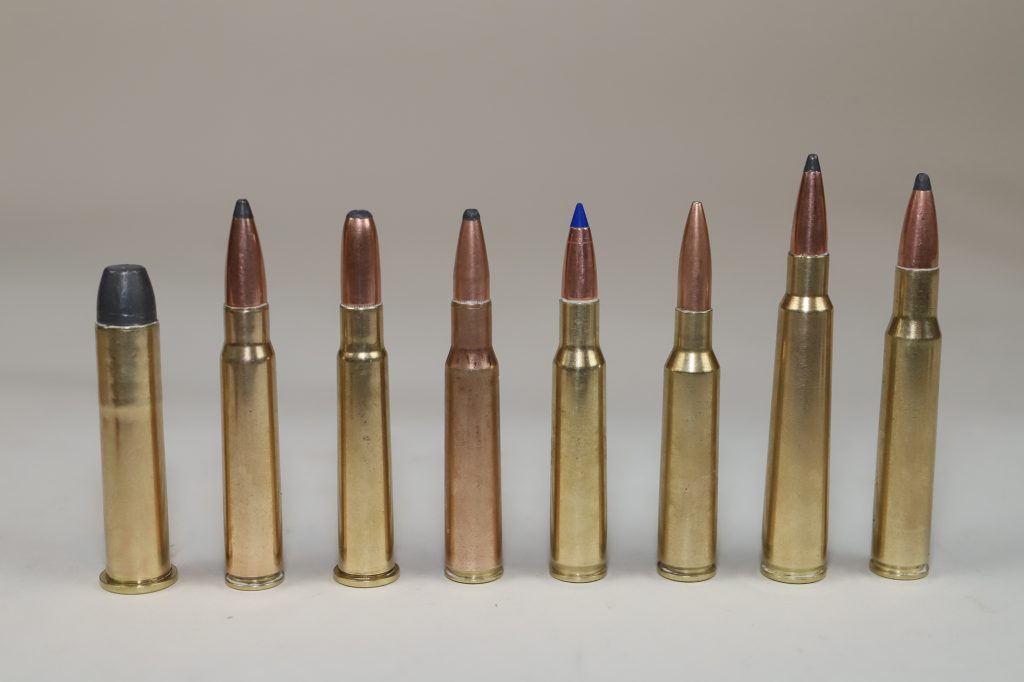
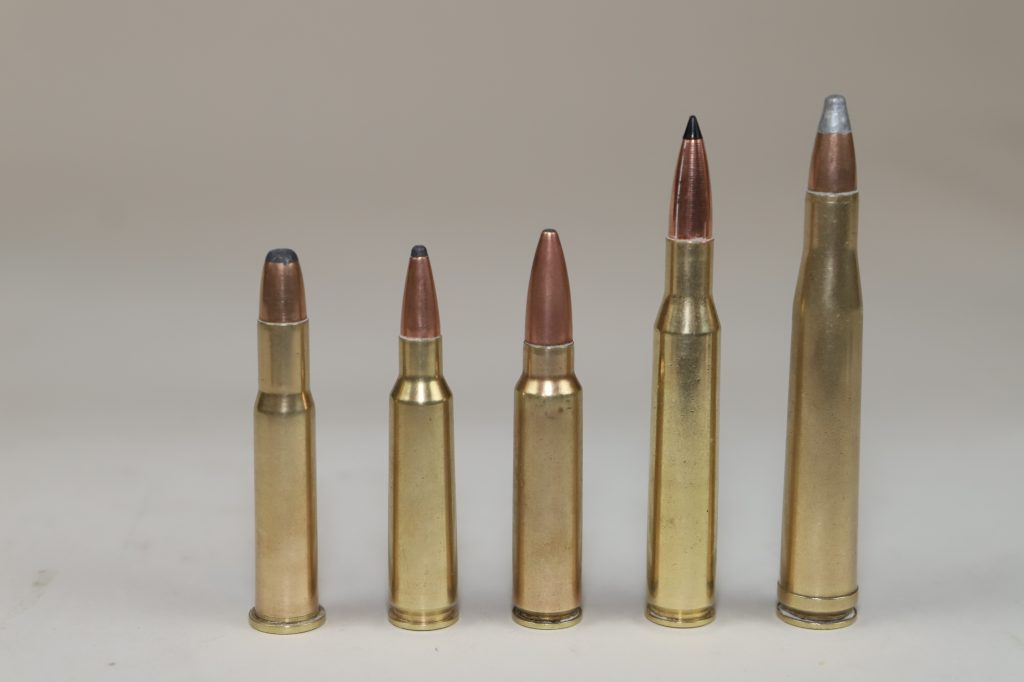
Military cartridges often become important sporting cartridges, at least in the countries that adopted them. These went beyond that, achieving international acclaim as sporting cartridges. Left to right, with year of introduction: .45-70 (1873); 8×57 (1888); .303 British (1888); 7.65×53 Argentine (1889); 7×57 (1892); 6.5×55 (1894); .280 Ross (1906); .30-06 (1906).

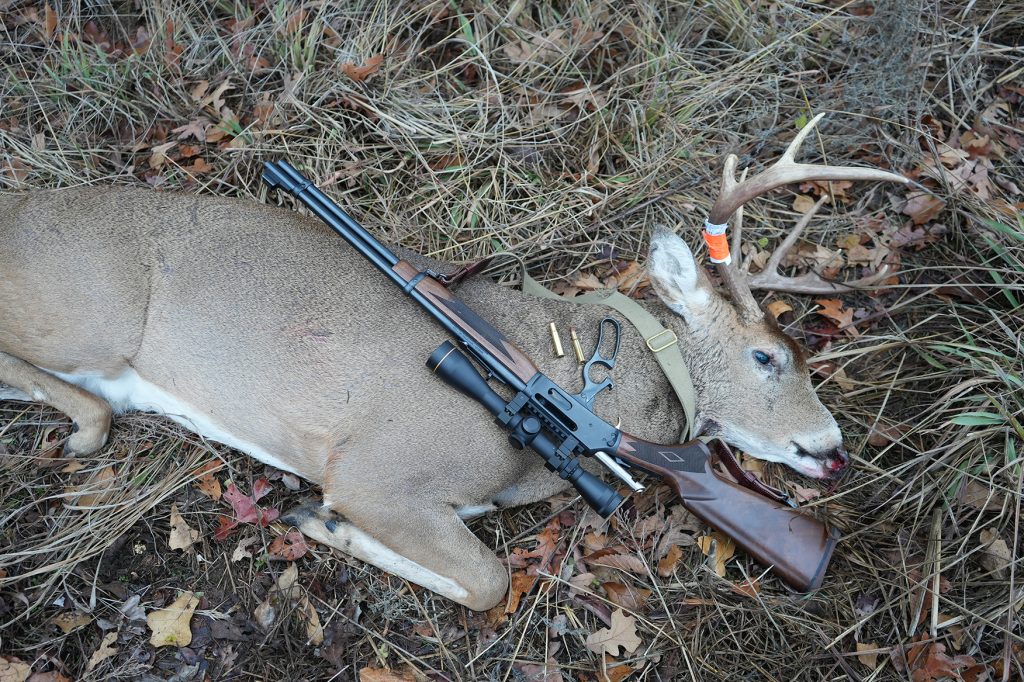
Oldest is the .45-70 Government. It’s amazing that it’s still with us, but “modern” loads with lighter bullets and smokeless powder render it an effective short-range deer thumper. I’d never hunted deer with it until recently, but when Ruger brought out their 1895 Marlin I took it whitetail hunting. It’s harder-kicking than necessary, but impressive.

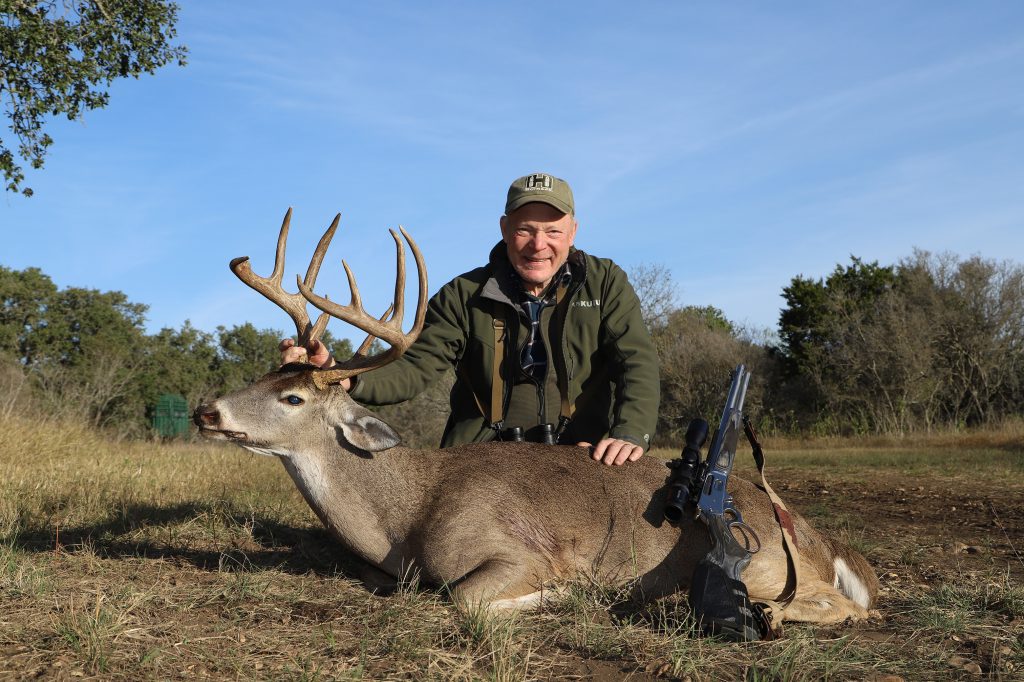
A nice Texas whitetail, taken with Ruger’s new Marlin 1895 in .45-70. Although the author has hunted black bear and hogs with the 150-year-old .45-70, this is the first deer he’s taken with the cartridge. With modern loads, the .45-70 is good for at least 200 yards.

“Smokeless” propellant came into use in 1886. Initially, most cartridges were military developments. France was first with the 8mm Lebel (I’ve never fired one). Germany was second, with the 8mm Mauser, technically 7.92×57. Originally with .318-inch roundnose bullet, changed to a .323-inch spitzer in 1903. The 8×57 remains popular in Europe, often compared to our .30-06. It’s harder-hitting because of larger bullet diameter, but not as fast.

Clayton Paul brought an 8×57 to our 2025 Kansas deer camp. It worked, but Clayton is an accomplished competitive shooter, so whatever he shoots, works. Likewise, his son, Ryan Paul, who brought a gorgeous Mauser in 7.65 Argentine his dad made for him. These are the first 7.65 and 8×57 Mausers we’ve had in camp. Both took excellent bucks, one shot each.

At the dawn of smokeless powder, Peter Paul Mauser experimented with variations of case length and bullet diameter to get ideal performance. His 6.5×55 Swede, 7×57, 8×57, and the 7.65×53 Argentine Mauser all became popular hunting cartridges. The 7.65 Argentine may have been Mauser’s best, rivaling .30-06 performance in a shorter case.

This was Ryan Paul’s third time with us, three great bucks, three shots fired. Three days into his hunt, wind right, I put him in his favorite stand, a tall tree stand atop a ridge. Ryan went up there for the day, and texted me about 4 p.m. that he had a good buck down.

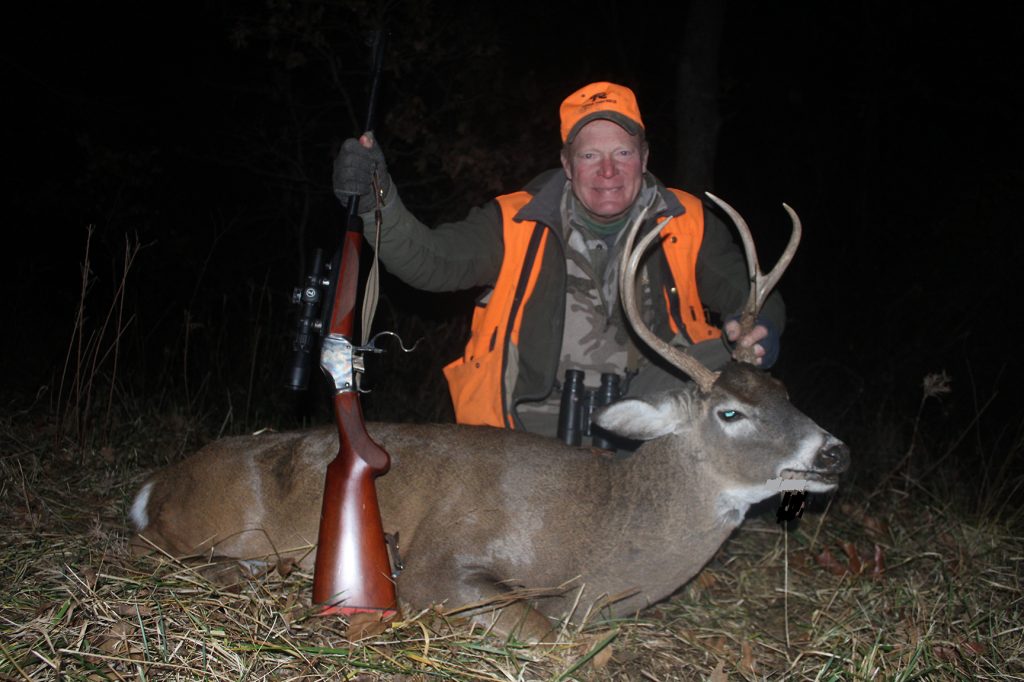
Ryan Paul used a 7.65 Argentine Mauser made by his father to take this excellent Kansas buck. Although uncommon in the US today, the 7.65 Argentine may be Peter Paul Mauser’s best cartridge, rivaling the .30-06 in a shorter, more efficient case.

Military developments weren’t exclusive to continental Europe. In 1888, Great Britain adopted the rimmed .303 British. With modern loads, the .303 is similar in power to .308 Winchester. Three seasons back, I carried a .303 in Uberti’s Courteney stalking rifle, on the Browning 1885 action.

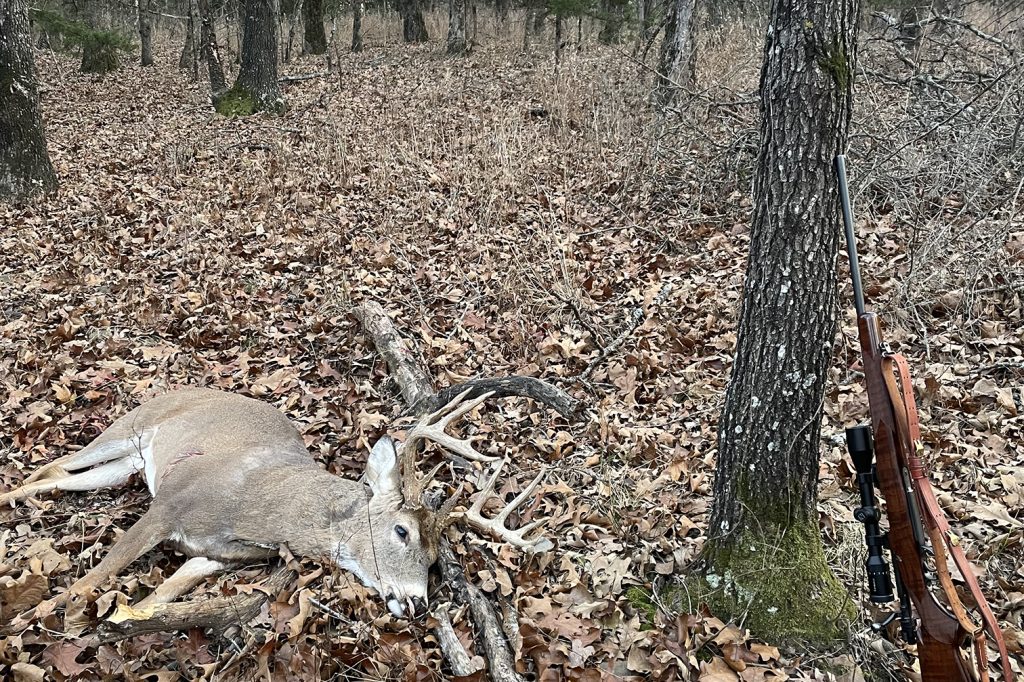
The author tries to use his Kansas tag on weird or mismatched buck that other hunters probably wouldn’t want. This tall two-by-two with no eyeguards was taken near the end of a season with Uberti’s Courteney stalking rifle in .303 British, the only time he’s seen that classic old cartridge in a deer camp.

In Cuba in 1898, we took too many casualties to the Spaniards’ Mausers. In 1903, we switched from .30-40 Krag to the 1903 Springfield and the .30-03 cartridge. Three years later, we updated to the .30-caliber, model of 1906 cartridge with a lighter, faster spitzer bullet. The .30-06 remains one of our most versatile hunting cartridges. Every season there are .30-06 rifles in camp.

In 1906 Canadian Sir Charles Ross unveiled the .280 Ross cartridge, chambered in his straight-pull rifle. Intended for the military, the .280 Ross saw limited use with Canadian forces in WWI. Pre-dating belted magnums, with a fat, rimless case, .280 Ross was the first cartridge to approach 3,000 feet per second (fps).

With speed and high energy, the .280 Ross had great appeal as a sporting cartridge. Except: Bullet technology wasn’t up to the velocity. In 1911, Sir George Grey, brother of the British Foreign Secretary, failed to stop a wounded lion with his .280 Ross. Horribly mauled, he died a few days later.

I knew the story, had never seen a Ross rifle. In 2022 Larry Tremaine brought a rare Ross sporter to Kansas. With older rifles, iron sights are a limitation for buck hunting. He pulled it off, took an eight-pointer.

The same season, Ruger collector Lee Newton brought a gorgeous custom Ruger No. 1 chambered in .280 Ross. We had no ammo, but we begged a few cartridges from Larry. At the end of the season, I used it to drop a funky-horned 7-pointer. .280 Ross brass is scarce, but bullets are more problematic. The .280 Ross calls for an oddball .287-inch bullet. Larry and I were both rattling 7mm (.284-inch) bullets down the Ross barrels. Accuracy was sketchy; we needed close shots and got them.

This older seven-point buck, an ideal management buck, was taken with likely the weirdest rifle the author ever hunted with, a gorgeous custom Ruger No. 1 owned by Lee Newton and chambered in .280 Ross. The .280 Ross calls for an oddball .287-inch bullet. He was shooting undersize .284-inch bullets, so accuracy was poor; the shot had to be close.

Civilian Centenarians

In 1895, the .25-35 and .30-30 were companion introductions, the first two sporting cartridges designed for smokeless powder. Although both were popular, the .30-30 came to define America’s deer rifle. Still widely chambered, the .30-30 is perfect for deer-sized game, provided you don’t need range. In Kansas, I often take a .30-30 to certain short-range stands. Only in newer rifles with optical sights because in thick timber, first light comes late and shooting light leaves early.

Boddington used a Marlin 336 in .30-30 to take his 2023 Kansas whitetail. The .30-30 has adequate range for most of his Kansas deer stands. However, at first and last light he doesn’t trust his eyes with iron sights, so he only uses rifles with optical sights.

With internal rotary magazine suited for spitzer bullets, Arthur Savage’s 1899 lever-action was stronger than either the Marlin or Winchester. In 1915 Savage engaged gun designer Charles Newton to develop a cartridge. Based on a shortened .30-06 case, the result was the .250-3000 (.250 Savage), the first commercial cartridge to break 3,000 fps. It could only reach that speed with a light 87-grain bullet. When it worked, it struck like lightning, but, like the .280 Ross, bullet technology wasn’t there and some found it erratic. A slower 100-grain bullet—which Newton had argued for in the first place—proved more consistent, and the Savage lever-action offered Winchester serious competition.

This increased in 1920 when Savage necked the .250 case up to create the .300 Savage. With 1920 propellants it almost equaled .30-06 velocity of the day. The .300 was Savage’s most popular chambering until the late 1950s, when the Savage action was adapted to the .308 family. I have a 1919 .250-3000 rifle, a takedown with flip-up aperture sight, and a 1950s-era .300 Savage with scope. Because of the aperture sight, (and my eyes), I’ve done little buck hunting with the .250. The .300 is a standby for medium-range deer hunting. Much-battered, it groups 1.5 MOA, hits hard, and I enjoy carrying it.

Seeking a faster, flatter-shooting cartridge that kicked less than the .30-06, Winchester pulled out the stops with their .270. In 1925 it was America’s fastest cartridge and is still one of our best deer cartridges. Funny, I’ve never carried a .270 on my Kansas farm. Many of our guests bring .270s, and I’ve used it for deer hunts from Canada to Mexico. For deer hunting under any conditions, the .270 is hard to beat.

Across the pond, also in 1925, Holland & Holland necked their .375 H&H case down to .30, creating the Super .30, what we know today as the .300 H&H Magnum. It has since been superseded by fatter, shorter (and longer) belted and unbelted .30-caliber magnums. Its long, tapered case with gentle shoulder is easy to improve upon. But it produces amazing accuracy, feeds like melted butter, and with goods handloads produces surprising velocity.

In 2024, anticipating the .300 H&H’s centennial, I dug out my Ruger No. 1 .300 H&H, the most accurate No. 1 I’ve ever owned. With the same mindset, Coloradan Kevin Perry brought his .300 H&H to our Kansas camp. His is a gorgeous custom rifle made by his friend, Kevin Weaver. Several days apart, we both took nice bucks from the same stand. No longer chambered in factory rifles, and with dwindling factory loads, the .300 H&H is still a great hunting cartridge. As I’ve often said, you don’t need a magnum for whitetail hunting. But, with night coming fast and dark woods looming, it’s nice to have your buck down on the spot. Doesn’t matter whether it’s a new whiz-bang or an old-timer. What matters is that it does the job.

Relatively few sporting cartridges have reached the hundred-year mark and are still loaded. Those that are included, left to right: .30-30 Winchester (1895); .250 Savage (1915; .300 Savage (1920); .270 Winchester (1925); .300 H&H (1925).

Leave a Comment

From the Forest

From game meat to edible plants to medicines, the bounty generated by our public woodlands is incredibly important.

Photo above: Public forests are obviously crucial wildlife habitat, but they also provide an incredible array of additional benefits. (Photo by VictorSchendelPhotography.com)

Hunters know the feeling: that first peep of grey light, the cool embrace of autumn air, and the familiar blended scents of trees and earth. From first awakening, the senses burn with alertness and expectation, something unique to days where our hunting past becomes our present, an evolutionary marvel reverently awakened in our own lives. You lace up your boots, their creased leather familiar and reassuring. You feel the chill bite at your fingers as you shoulder your rifle, its weight perfectly recalled, its ideal positioning achieved with a mindless roll of your shoulder. You adjust your pack and step into another reality. It is a world where your animal senses matter most, where quiet is the norm, not the exception; and where every sound, just like every breath, is a story in itself. Somewhere ahead, a whitetail buck moves silently through the frost-silvered landscape—and with luck, tonight, your family’s freezer will be a little fuller.

Every year, our public forests are the stage for countless such hunting adventures. But hidden beneath the towering trees and running timelessly along those winding, shadowed trails is another and even greater story—a story of physical and spiritual nourishment, of autonomy and self-reliance, and of deep-rooted cultural tradition. Wild foods and medicines, harvested from public lands, have sustained Americans –native and settler alike–for generations. And today, they remain a vital yet often overlooked bounty, providing food security, economic resilience, and a living connection not only to our natural heritage, but to our natural selves. 

Across the United States, public forests quietly provide millions of pounds of wild meat and fish, edible plants, berries, mushrooms, and medicinal herbs every year. These shadowed harvests are more than curiosities of the backcountry; they are an essential part of community wellness and the outdoor way of life. New research is showing just how important these harvests are and why it’s time to better recognize and manage these gifts of the land.

More Than Timber and Trails

Public forests have always been considered working landscapes, supporting critically important timber harvests and livestock grazing. They have also been recognized as vital for outdoor recreationists and home to an incredible range of wildlife and plant species. Certainly, wild foods and medicines have also been recognized, though far less emphasized, as components of such landscapes; yet, from a historical perspective, these products may actually be considered among the primary benefits of healthy and sustainably managed forests. Recent studies estimate that every year, more than 255,000 metric tons of wild foods and medicines are harvested from U.S. public forest lands. That includes everything from venison and elk meat to wild blueberries, salmon, chanterelle mushrooms, and wild rice, as well as medicinal roots like ginseng and goldenseal. Hunters alone harvest more than 68,000 metric tons of wild meat annually from public forests in the US–enough to provide more than 437 million meals to American families each year (data from the Wild Harvest Initiative). 

Given their scale and importance, these harvests should be recognized, alongside wood products and livestock grazing as major benefits of sustainably managed forests. However, in reality, their contributions have remained far less visible in forest management decisions and wider policy discussions. Although wild foods and medicines are woven through the tapestry of forest harvesting, they’ve often been overlooked or simply taken for granted. This is despite the fact that more than 200 wild species of plants and animals are officially reported as being harvested from U.S. public forests, and consumed by Americans, every year.  While the true volume of these harvests is almost certainly greater than what official figures suggest, such harvests obviously represent a secluded wealth that benefits diverse communities across the rural, urban and cultural landscapes of modern America.

A Deeply Rooted Tradition

Hunters understand—perhaps better than even most other extractive users—that wild-harvesting is not some hip new hobby, nor simply a survivalist throwback; it is a living tradition with roots as old as the forests themselves. Across North America, native peoples, settlers, and rural communities have long relied on wild harvests for sustenance, medicine, and cultural identity. These wild harvests have always been essential to those who depend on the land for survival, as well as those who view it as a rich part of their heritage.

Take Alaska, for example. In Southeast Alaska alone, rural communities harvest approximately 2,055 metric tons of wild food each year, including salmon, berries, moose, and more. Astonishingly, 76 percent of that food depends directly on healthy forest ecosystems. This wild abundance supplies local residents with more than 120 percent of their daily protein needs and contributes about 17 percent of their total caloric intake—a testament to how critical forest foods remain for human health, food security and cultural survival in that region. The annual replacement value of this wild subsistence harvest is estimated between $20.5 and $41.1 million—or about $845 to $1,691 per person—highlighting, also, its practical, economic importance.

And it’s not just Alaska. Across the lower 48 states, millions of hunters, anglers, and foragers participate in the wild bioeconomy, whether they realize it or not. Their freezers are full of wild-harvested foods: wild turkey from oak and pine woodlands; black bear from Appalachian ridges; elk from alpine meadows; white-tailed deer from northern hardwood stands; squirrel and rabbit from backwoods thickets; trout from cold, forest-fed streams. Their tables are graced with hand-picked morel mushrooms, wild huckleberries, fiddleheads, chokecherries, foods that mark the seasons and celebrate the richness of the land. Their medicine cabinets are stocked with tinctures from elderberries and echinacea. Each of these wild commodities has diverse value, including an obvious economic one when replacement costs for commercially produced products are considered.  

Wild foods are also more than just delicious; they are nutritional powerhouses. Wild meat and fish offer lean, protein-rich sustenance packed with vital nutrients. Venison, for example, is significantly lower in fat and higher in essential omega-3 fatty acids compared to grain-fed beef. Wild-caught fish, like salmon and trout, are loaded with heart-healthy fats, vitamins, and minerals. Even wild plants—blackberries, dandelion greens, stinging nettles, and many others—contain higher concentrations of antioxidants and micronutrients than their farmed counterparts. In an age of overprocessed foods, wild harvests deliver the kind of nutrient density our ancestors thrived on and the kind of nutrition we crave, consciously or otherwise.

But for most wild harvesters, the pursuit of wild food isn’t just recreational, nor is it solely about health or even financially driven—it’s a family and community legacy, a tradition passed from generation to generation alongside rifles, recipes, hand-drawn maps, and stories by the fire. So these harvests aren’t just about food or medicine; they are about heritage, hardiness, and the hands-on stewardship of our shared wild spaces. And they are, most powerfully, about family and friendship. That is why remembrances of passed friends and loved ones are laced with such references, and to the times spent and the harvesting talents forged in nature’s spaces.

Hunting is a living tradition with roots as old as the forests themselves. (Photo by Trail’s End Media)

Harvesting and Protecting

Forest food systems don’t just feed people; they help conserve biodiversity. Sustainable hunting, fishing, and foraging require and therefore encourage advocacy for healthy, diverse ecosystems. Managed responsibly, these harvesting activities foster stewardship, habitat restoration efforts, and a deeper personal and wider public investment in protecting wild spaces. When hunters take part in managing healthy deer populations, for example—adhering to regulated seasons, reporting data, funding habitat projects—or when foragers harvest ramps responsibly—following sustainable guidelines, monitoring abundance, respecting regeneration—they become active partners in conservation. Forest food systems remind us that humans are not separate from nature—we are part of it.

Moreover, integrating such wild food and medicine harvests into land-use planning helps diversify the bioeconomy, the range of goods and services we derive from healthy ecosystems. Recognizing wild harvested foods and medicines as legitimate forest products, alongside timber and grazing, strengthens our understanding of rural economies and integrating them helps build resistance against market shocks. Wild harvests complement traditional agriculture and ranching, too. Where cultivated crops can fail under drought or market shifts, wild foods offer an alternative source of nutrition and income. They are a natural insurance policy entwined within managed landscapes, thereby enriching rural economies and helping working lands stay working. 

Sharing the Harvest

One of the most remarkable aspects of harvesting wild food from public forests (and elsewhere)—whether it’s big game, plants, or fungi—is the culture of sharing it inspires. Research from the Wild Harvest Initiative shows that 94 to 98 percent of American hunters share part of their wild-harvested food with others. In forest-rich regions, it’s incredibly common for someone who harvests a deer or a basket of wild leeks to bring a portion home to family, friends, and neighbors—even across long distances. In Alaska, where forest-based food systems dominate, hunters share about 68 percent of the meat they harvest. In Alaska and nationwide, many hunters donate wild game to food banks and pantries, helping to feed those in greatest need. It’s a generosity rarely seen with commercially produced food purchased in stores. But when food is gathered from the land—earned through knowledge, effort, and respect for natural systems—sharing becomes second nature. Why? Because it is, actually, our first nature; reflecting the evolutionary normality of sharing in hunter-gatherer societies. These gifts from public forests don’t just nourish bodies; they also nourish communities and build bonds between people.

Toward More Inclusive Stewardship 

We won’t manage what we don’t value, and we can’t manage what we don’t measure. These are vital lessons of conservation history. If wild-harvested forest foods and medicines are to be safeguarded for future generations, we must assess their true value. This starts with acquiring better data. But, unlike timber cutting, livestock grazing, or even firewood collection, the harvesting of wild nourishment is still poorly tracked on most public forests, in the United States and in Canada. Yet, without knowing how much is being gathered, where, or for what purposes—whether for family meals, cultural practice, or seasonal tradition—it’s difficult to ensure that harvests remain sustainable or that forest management decisions reflect the full range of forest land values and products. A more robust system of data collection would provide clarity and help land managers protect key food and medicine producing habitats and species. In Alaska, for example, integrating detailed subsistence harvest data into planning has led to more effective protections for salmon-bearing streams—an outcome benefitting both local communities and wildlife.

But better data alone isn’t enough. Wild food and medicine must be recognized as legitimate, primary outputs of healthy, productive forests—not just as pleasant extras or overlooked traditions. And, this recognition needs to be reflected in the policy culture of our oversight institutions. Management plans should account for the presence and value of edible and medicinal species in the same way they do for timber stands or grazing allotments. When wild food systems are integrated into land-use planning, it becomes easier to balance multiple uses while supporting broader economic gains, improving biodiversity and heritage preservation, and enhancing local access to essential provisions.

Inclusive stewardship is key. People who rely on forests—whether tribal/indigenous harvesters, rural residents, recreational hunters, or seasonal foragers—should be included in the decision-making processes that involve and affect these landscapes. The insights, priorities, and lived experience of these communities can offer valuable guidance for sustainable management and long-term forest health. Too often, these voices have been absent or sidelined in policy discussions, despite their deep linkages to the land and longstanding contributions to its care.

Ultimately, a resilient forest is a multi-use forest. Timber, recreation, grazing, hunting, gathering—all of these uses are possible, and none need to be exclusive of others. In fact, when managed wisely, these uses can complement each other in many ways. Recognizing the full suite of forest values, and involving a wider range of people in their protection and stewardship is how we move toward wiser, more inclusive and more resilient land and resource management.

It Matters More Than Ever

In a world facing growing pressures on existing food systems, declining biodiversity, and increasing environmental strain, ensuring the ability of public forests to provide wild foods and medicines is more important than ever. These landscapes offer a natural, sustainable source of sustenance and healing that doesn’t require plowing up new fields, draining more wetlands, or disrupting intact ecosystems. Wild harvests also offer something money can’t buy and industrial agriculture can’t provide: nature connection. In a society increasingly detached from the sources of its food, harvesting an elk, gathering a basket of wild asparagus, or brewing pine needle tea rekindles a relationship with the land—a relationship built on gratitude, responsibility, respect… and humility. As all wild harvesters know, these experiences bind us more tightly to the landscapes that sustain us.

Public forests belong to all of us. They are not only sanctuaries for walking beneath cathedral canopies or sleeping beneath stars, nor simply storehouses of lumber or landscapes for pasture. Rather, they are living, breathing ecosystems that feed us, heal us, and root us to our shared natural heritage. Recognizing the value of these hidden forest harvests is not about choosing between timber, wildlife, or recreation. It’s about seeing the full picture—and the full potential—of these crucial landscapes. 

As we look to the future, one thing is clear: the best way to protect what we love is to understand all it provides. Our wild foods and medicines are not relics. They are promises—living proof that with care, respect, and shared guardianship, our public forests can continue to feed and heal us all.

Leave a Comment

A Giant Warthog

There are plenty of warthogs in Africa, but truly huge ones are almost as rare as hundred-pound elephants.

Photo above: Boddington and PH Poen van Zyl with a spectacular warthog, taken in coastal Mozambique on November 16, 2025. With extreme length, nice curve, and good mass throughout, this is the best warthog the author has ever seen. He was shooting a Winchester M88 in .308.

Some of us care greatly about antler, horn, or tusk size. Others, not so much. I’m in the middle; I appreciate an exceptional animal of any species, but I rarely carry a tape. An extra-large animal can sometimes be taken through extreme effort. Hunting hard and long in the right places, looking, sorting, and passing. More often, it happens through blind luck.

In mid-November 2025, I took a huge warthog. Not just my largest–the biggest one I’ve ever seen. Also perfect, with thick, evenly matched tusks forming an attractive ellipse.

Among the hundreds of big-game species, greatness varies. With elephants, the milestone to greatness is 100 pounds of ivory on one tusk. I’ve never seen such a tusker. In days gone by, hunters spent weeks and months tracking elephants in Africa’s most remote corners, hoping for a chance at one. Few ever succeeded.

No one puts in the effort for a big warthog that is expended for a big elephant. Warthogs are common game, sighted daily in most areas. In fact, the warthog is probably Africa’s most widespread animal, found everywhere except the driest deserts and the deepest forests. East to west, Kenya to Senegal; north to south, Eritrea to the Cape. Although rarely at the top of any safari wish list, the warthog is a classic and unique African animal. They are on license in most areas, and most hunters will take one if an opportunity presents itself.

There are lots of good warthogs, and there’s a big difference between good and great. Among the most common animals, such as impalas, and warthogs, it takes an extra-big one to become great. In part, this is because many are taken, so the bar is high. Also, common animals like impalas, reedbucks, and warthogs are primary prey species. With a full suite of predators, not all can live to maturity and realize their full horn or tusk potential.

This is especially true with warthogs because they are long-lived and slow-growing. A huge warthog is eleven or twelve years old. This means it has to beat the odds and evade two and four-legged predators for many years, and must also have the genetics to grow big teeth. In rocky terrain, tusk wear is accelerated and breakage is common. Throughout their vast range, exceptional warthogs are almost as rare as unicorns–or hundred-pound elephants.

Short of great, this is a good boar. Sows can also grow large tusks, so the first thing is to ensure it’s a male. This one is obvious, but from any angle the first thing to look for is the horizontal bumps or “warts” under the eyes, only present on male warthogs.

“Exceptional,” of course, is a matter for conjecture. A lot of warthogs are lopsided, with one or the other tusk broken or badly worn (likewise elephants). Some hunters like that, others don’t. The SCI system uses length and girth of both tusks. Rowland Ward uses the length of the longest tusk. In both systems, the major or upper tusks must be withdrawn from the skull to be measured. With warthogs, the length inside the upper jaw usually adds about two and a half inches to the exposed length. The Rowland Ward world record is a tie between a monster from Sir Edmund Loder’s collection, dating back to 1921, and Chris Kruger’s giant, taken in northwestern South Africa in 1996. Both measured 24 inches.

That’s amazing, far beyond exceptional. Rowland Ward’s records date back to 1892. To this day, Rowland Ward lists only six warthogs with one tusk exceeding 20 inches. None of us are likely to see such a pig. The minimum for entry is 13 inches, a slightly more possible prize, and perhaps a suitable milestone for “exceptional.”

On my first safari, naturally, a warthog was on my list. It had been dry on the Tsavo Plain, and warthogs need water. Over time, I would learn that warthogs suffer in dry years, and big, older boars seem to go first. Although it was good warthog country, we saw few and it was late in the hunt before I saw a decent boar. On that safari, we started up on Mount Kenya and my shooting was awful. Then we moved to the more open Tsavo thornbush. I straightened out and was doing great until the warthog. I missed him running, more than once, then connected. Although not exceptional, he was a good boar, the kind of warthog most of us take and are justifiably proud to have.

Hunting with Julian Moller, the author took this Mozambique boar on the last evening of his 2018 safari. Old and skinny, this boar was worn down on his left tusk, still an excellent warthog.

I’ve had a thing for warthogs ever since, and am always on the lookout for an extra-large one. One of the best places I’ve seen was along the Aoukele River in Chad. Dry country, but there were pools along the river and every pool held warthogs. There was little game in the area, lots of poaching. The local people were Muslims and didn’t eat pork, so they left the pigs alone. My hunting partner Chris Kinsey shot a whopper, and I shot a good boar with one worn tusk. I wish we’d had more; that was a chance for greatness, but I didn’t yet know how rare big warthogs are.

The biggest warthogs in Rowland Ward, the ones with 18-inch-plus tusks, come from all over: Ethiopia, Kenya, Namibia, Senegal, Uganda, Zaire, Zimbabwe, and South Africa. South Africa has produced more big warthogs than all the rest put together. In part, this reflects a numbers game. There is more hunting in South Africa, especially today, than anywhere else in Africa. Warthogs are common, and much of South Africa has developed and thus permanent water. Namibia also has huge numbers of warthogs, and it’s still a numbers game. Any area that has a lot of warthogs will have big ones. However, much of the country is arid, so numbers go up and down. Much of Namibia is also rocky, so worn tusks are common.

Although I’ve always got an eye out for an extra-large boar, I haven’t seen many exceptional hogs. When I have, I’ve usually been hunting for something else of more immediate importance. This is a mistake. Few African animals are as uncommon as huge warthogs. See one and pass, and that opportunity may not come again for a long time.

Over the years, I’ve seen very good warthogs all over Africa. Botswana, Namibia, and South Africa. Tanzania, Zimbabwe, Zambia. In recent years, the best place I’ve seen is coastal Mozambique, around the mouth of the Zambezi. This is interesting because Mozambique is poorly represented in Rowland Ward’s listings.

I put this down to timing. Mozambique’s first hunting period, before her civil war, was short, from 1960 to 1975. Back then, all safaris offered multiples of the Big Five. Less time was taken sorting through the non-dangerous species, and trophy awareness wasn’t what it is today. In the wake of war, not much was left from 1990 into the 2000s. Since then, wildlife populations have been rebuilt by pioneering outfitters managing them with care, conservative harvest, and aggressive antipoaching efforts. Also, postwar, predators were as scarce as prey. 

I started hunting in that area twenty years ago. I’ve seen all the species rebound. Warthogs were among the first because the mosaic of floodplain and forest is ideal habitat. Well-watered, with no periodic die-offs. And soft soil, where boars can grow long tusks. Today, the reintroduced lions take their toll, living primarily off warthogs. Still, it’s normal to see hundreds of warthogs daily. Look at enough warthogs, and there are bound to be a few big ones.

When running, warthogs have their tails up like an antenna. From any angle, you can see the horizontal bump under the eye and identify a male. This is a nice, average boar.

This year, with a small wish list and plenty of time, hunting with Poen van Zyl, I got serious about an exceptional warthog. Poen’s been hunting the area since he was in school, and has a warthog fetish to match my own. He’s guided hunters to many exceptional warthogs, including several in that extra-rarified 18-inch air. He even took one for himself, after the season was over and clients were gone.

So, this year, we put in several days looking for such a pig. We saw one right off the bat, walking out of a pan into the trees. I had the cross hairs on him at 60 yards, as he was walking straight away. Shooting a .308, I probably could have gotten away with the Texas heart shot. But maybe not. I kept thinking he would turn, but he kept walking away, those wonderful tusks curling outside his body.

Even smart old pigs are surprisingly habitual, taking the same paths to and from water, often at much the same time of day unless disturbed. We probably disturbed him, because, despite effort, we never saw him again. We saw two other exceptional pigs, both already running for cover when spotted.

Late one morning we worked a mostly dry riverine, finding reedbuck, waterbuck, the odd bushbuck, and warthogs at every pool. Poen spotted a pig lying in mud at the edge of a pool. Even at distance, the gleam of ivory was obvious. We made a half-circle to get the wind right, came in through some trees, and Poen put up the sticks at 130 yards. The pig was almost facing me, looking as impressive as a hundred-pound elephant. I put the cross hairs under his chin and dropped him. Although Poen’s personal best is a bit bigger, this is the biggest warthog I’m ever likely to get—a trophy possibly even rarer than a hundred-pound elephant.

At the end of a season, clients gone, PH Poen van Zyl took this spectacular warthog for himself. Curve is important to length and this boar has lots of curve; the tusks are nearly two inches longer than the author’s 2025 giant. 

Leave a Comment

tablet

Never Miss An Issue!Subscribe Now: 6 Issues for $34.97

More Details
WordPress Video Lightbox Plugin