We are thrilled to announce that for the sixth year in a row, Sports Afield was selected as one of License! Global magazine’s Top Global Licensors. License! Global magazine is the leading publication in the brand-name industry. The editors compile a list of the top global brands each year. We came in at No. 54 for 2021, and it’s exciting to be ranked among Coca-Cola, NASCAR, Major League Baseball, National Geographic, and Lamborghini. Our thanks go out to the network of Sports Afield Trophy Properties brokers, the Sports Afield Consumer Product company, and all the members of Team SA and SATP for their hard work in building and promoting this wonderful brand.
Rocky Mountain goats are magnificent game animals and challenging to hunt.
In the grand scheme of
things, hunt plans going awry isn’t particularly important. But, in the spring
and summer of 2020, I’m sure most of us saw a lot of carefully-laid plans
crumble into viral-ridden dust. It was late May when I got an unexpected
surprise: I drew a Rocky Mountain goat tag in Montana, north of Yellowstone
Park. This would be great news in any year, but it was especially welcome in
this year of pandemic panic.
I made a lot of mistakes
when I was young, but among the smart things I did was to start applying for
hard-to-draw permits when I was still in my twenties. That was before
preference points and bonus points. So, when these systems came in, I was often
in on the ground floor. Mind you, in the 1970s I couldn’t afford to apply for all
the permits I wanted, but I started with desert sheep in Arizona and Nevada. I
still haven’t drawn in Nevada, but I drew in Arizona–thirty years later!
Over time, I added other
applications, but I wasn’t systematic. Sometimes I couldn’t afford the
downstroke (which is refunded if you don’t draw). Other times I just forgot.
So, in 1991, I did another very smart thing: I threw my applications in with
United States Outfitters (USO) out of Taos, New Mexico, when they started the
first-ever computerized tag application service. Today there are several such
services. I can’t compare them because I’ve stayed with USO, but I’m certain
that using such a service gives consistency, and for sure has paid off: Three
sheep tags, two Shiras moose tags, three Arizona elk tags, and more.
I don’t apply everywhere for everything, but I’ve been in the Montana goat draw since 1991. So, twenty-nine years later, out of a very gray sky, our mail carrier brought a surprise.
Boddington and Mike Hawkridge with a fine B.C. billy. The black glands behind the base of the horns can be seen. Although sometimes obscured by long hair, these glands are the only absolutely certain way to determine sex.
I’ve hunted the Rocky
Mountain goat up in British Columbia several times, so I don’t really need
another one. I don’t apply widely for our big white goats, but I’ve stayed in
the Montana draw for two reasons. Both are weird and personal but, so long as
our reasons make sense to us, who cares if they seem rational to anyone else?
In 1990, Jack Atcheson
Jr. and I hunted bighorn sheep in one of Montana’s high, rough “unlimited
permit” areas, a charming and aptly named place called Froze to Death Plateau.
On one side the rim drops to a precipitous face, and we watched several goats cavorting
happily on near-vertical rock. They gave us a wonderful show, and I thought it
would be cool to hunt there.
It got more interesting
when I learned that these were original, native-range goats. The Rocky Mountain
goat has been successfully introduced into suitable habitat in many areas,
including Colorado, Nevada, Oregon, Wyoming, and the Black Hills, and has done
well. However, the Yellowstone Park region is pretty much the southern extent
of their natural range. So, in the Lower 48, goats are native only to western Montana,
Idaho, and Washington’s Cascades. This doesn’t matter; goats are goats, but a
native-range Lower 48 goat sounded especially fun. I stayed in the draw, and
now I have a permit.
At this writing the hunt
is two months out, so my focus is on getting in shape and, of course, deciding
on the perfect rifle and load. I have no idea what the hunt will be like. Maybe
we’ll see goats, maybe we won’t…but I expect we will. I’ve hooked up with Ryan
Counts of Dome Mountain Ranch, a young horse outfitter near my hunt unit. I’ve
hunted goats both ways, by horseback and purely on foot. The older I get, the
more interesting horse hunts become. However, my experience has been that a lot
of goat country is too rough for horses. Sooner or later you have to tie the
horses and climb.
So, there are trade-offs,
but I doubt this goat hunt will be significantly different from the goat hunts
I’ve done in British Columbia. Typically, I expect goat hunting to be more
successful than sheep hunting. In areas where both species occur, goats are
generally not as numerous, but are more stationary. Older billies are likely to
hang out in a certain area, usually rough and steep, that has a bit of grass
(they don’t need much) and security. Find a billy and figure an approach and your
chances are pretty good, especially if you can find a way to come in from above.
There are challenges.
Good goat country often starts where sheep country stops! Elevation doesn’t
matter so much, but goats thrive in cliffy stuff where sheep won’t tread. Before
planning an approach, you have to find a goat in a spot where recovery is
safely possible. Goats are tougher than sheep. If strength remains, even a
well-hit goat will drive for the nastiest, most vertical escape.
A couple of years ago,
Donna and I were hunting goats with Ron Fleming’s Love Brothers and Lee outfit
in northern B.C. Her goat, a fine billy, was down on gentle shale. And
then it made one final kick and started to roll…end over end, for a thousand
yards! We got lucky; after just a few revolutions the steep slope was mostly
grass. Although the lovely white coat wasn’t white anymore, the horns were
intact. In Central B.C.’s Chilcotin Range a friend of mine shot a goat
perfectly in a little saddle. We watched in horror as it started to roll…and
then slid under a glacier! We recovered it with great difficulty, but one horn was
broken off at the base and we never found it.
An older billy can be a large animal, up to three hundred pounds. However, it is strength, not size, that makes our goats tough. Also, they are slab-sided, thin through the shoulders. The answer isn’t a bigger gun. I’m perfectly happy with a .270 or any 7mm, but it’s best to shoot on the shoulder to break bone, and I want a bullet that will open up and do damage, not just punch through. And, no matter what the first shot looks like, be prepared to shoot again quickly. There will be dangerous escape cover nearby, and your goat will head there if it possibly can.
Great goat country in British Columbia. Glass the rocky edges below the snow line!
The other thing about our
Rocky Mountain goat: They are very devil
to judge, much more difficult than any sheep. Unlike sheep, both billies and
nannies have similar horns. The first challenge is to sex them. Nannies can
have longer horns, but bases are thinner. Truth is, this is very subtle!
Because of this, both sexes are almost always legal, and there’s no shame in
taking a big, lone, long-horned nanny. But the goal is a mature billy and it’s
not easy. Billies are often alone, and frequently will have a yellowish cast to
the coat, but this is not consistent. Male sex organs are usually obscured by
long hair, so the only surefire visual evidence of sex is: Billies have a
black, pad-like gland at the rear base of the horns. With binoculars you better
be close, but the black gland will usually stand out against the white hair
through a good spotting scope.
Determining sex is only
half the problem, and not the most difficult half. Accurately judging size is
worse. The Rocky Mountain goat got seriously cheated in the horn department. Fortunately,
the gorgeous, flowing white coat is at least half the prize. A billy is
“shootable” at something over eight inches. Only an inch of horn differentiates
OK from good, and it’s only another inch to spectacular! This is complicated by
the fact that horns are in synch with body and head size. A young, lone billy
will fool you (as will a lone mature nanny). There is no guide or hunter with
significant experience who hasn’t misjudged a goat. Fortunately, it’s a matter
of pride, not a legal issue.
Because of visibility, specific habitat, and the ease of determining legal animals, goat hunting is fairly successful, and a lot cheaper than sheep hunting. But goat hunting is just as difficult as sheep hunting, usually steeper, and often downright dangerous. And, the Rocky Mountain goat is a uniquely North American animal, with no close relatives anywhere in the world. Standing on a lonely crag, wind blowing his coat, a billy is magnificent. I look forward to hunting him in Montana. I’ve waited a long time for this tag.
Good-looking goat on the left, but is it a billy or a big nanny? Telling the difference isn’t easy…and nobody gets it right every time!
Not only famous outdoor writers, but politicians, novelists, and entertainers have graced our pages over the decades.
Photo above: Erle Stanley Gardner (1889-1970), the novelist who created the Perry Mason detective series, was also a frequent contributor to Sports Afield.
Throughout its 133-year history, Sports Afield has published the writings of the nation’s top outdoor experts, conservationists, and gunwriters. Not only that, but articles and stories by U.S. presidents, senators, novelists, captains of industry, and even a famous burlesque entertainer have graced our pages over the years. Below is a list of a few of the more famous names who have had articles published in Sports Afield since its founding.
Russell Annabel: (1904-1979) Alaska’s best known outdoor writer, author of more than 300 articles over 40 years.
Peter Beard: (1938-2020) Artist, photographer, and writer. Author of The End of the Game.
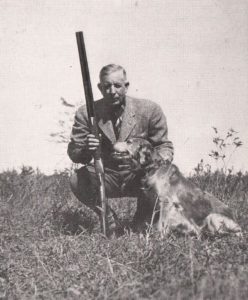
Nash Buckingham: (1880-1971) One of the most widely read and best-loved outdoor writers of his time; authority on upland birds and waterfowl.
Nash Buckingham
Charles Cottar: (d. 1939) Famous African professional hunter and safari operator.
Erle Stanley Gardner: (1889-1970) Famous novelist and mystery writer known for the Perry Mason series of detective stories.
Grits Gresham: (1922-2008) Internationally known sportsman, author, and TV personality. Host of ABC’s The American Sportsman from 1966 to 1979.
Zane Grey
Zane Grey: (1872-1939) Famous novelist known for his Western adventure stories. Author of Riders of the Purple Sage.
Jim Harrison: (1937-2016) Poet, novelist, and essayist; author of more than three dozen books, including Legends of the Fall.
Randolph A. Hearst: (1915-2000) Publishing executive, son of William Randolph Hearst.
Ernest Hemingway: (1899-1961) World famous author and winner of the Nobel Prize in Literature in 1954.
Patrick Hemingway: (b. 1928) Former African safari operator, manager of the intellectual property of his father, Ernest Hemingway.
Herbert Hoover: (1874-1964) President of the United States, 1929-1933.
Dr. Frank Hibben: (1910-2002) Archeologist, professor at University of New Mexico, Weatherby Award winner.
Gene Hill: (1928-1997) Beloved writer of outdoor tales, especially involving dogs and upland birds
Hubert Humphrey: (1911-1978) Vice President of the United States, 1965-1969; Senator from Minnesota, 1949-1964 and 1971-1978.
John Jobson: (d. 1979) Pillar of Sports Afield for 27 years; camping editor for 16 years and hunting editor for 11.
Robert F. Jones: (1934-2002) Novelist, journalist, outdoor writer for Sports Illustrated.
Elmer Keith: (1899-1984) Gunwriter instrumental in the development of magnum handgun cartridges.
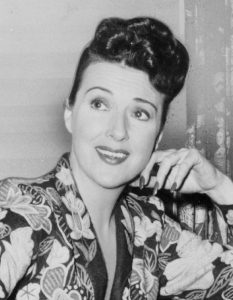
Gypsy Rose Lee: (1911-1970) Burlesque entertainer, actress, and author.
Gypsy Rose Lee
Nick Lyons: Founder of Lyons Press, well-known publisher of fishing and outdoor books.
John Madson (1923-1995): Conservationist, journalist, and proponent of tallgrass prairie ecosystems.
Gordon Macquarrie (1900-1956): Oudoor writer known for literary-minded short stories on hunting and fishing and his fictional Old Duck Hunters’ Association.
Thomas McGuane: (b. 1939) Novelist, essayist, member of the Fly Fishing Hall of Fame.
Annie Oakley
Annie Oakley: (1860-1926) Sharpshooter, star of Buffalo Bill’s Wild West Show.
Jack O’Connor: (1902-1978) Author and outdoorsman known for his extensive knowledge of hunting and shooting and for being a proponent of the .270 Winchester.
Sigurd F. Olson: (1899-1982) Author, wilderness guide, and champion of wilderness protection.
Roy Rogers: (1911-1998) Famous actor and singer, one of the most popular Western stars of his era. Known as “The King of the Cowboys.”
P.J. O’Rourke: (b. 1947) Political satirist, humor writer.
Jimmy Robinson: (1896-1986) Longtime Sports Afield writer and editor, shotgunning expert, founder of ATA Hall of Fame, instrumental in the founding of Ducks Unlimited.
Archibald Rutledge: (1883-1973) Author of books and poems about hunting and life in South Carolina. Poet Laureate of South Carolina from 1934 to 1973.
Harry Selby: (1925-2018) African professional hunter best known for guiding Robert Ruark.
Ted Trueblood: (1913-1983) Outdoor writer and editor, conservationist.
Colonel Townsend Whelen
Guy de la Valdene (b. 1944) Writer, photographer, filmmaker (Tarpon, 1974), author of For a Handful of Feathers.
Col. Townsend Whelen: (1877-1961) Hunter, soldier, writer, and rifleman, author of more than 2,000 magazine articles on shooting and the outdoors, developer of the .35 Whelen.
Lee Wulff: (1905-1991) Angler, author, outfitter, and conservationist who made significant contributions to the sport of fly fishing and the conservation of Atlantic salmon.
Craig Boddington honors one of his heroes, Robert “Pete” Petersen, during a special hunt in New Mexico.
Photo above: Robert E. “Pete” Petersen with a fine lechwe taken in Zambia.
Living legends are so rare that not all of us will encounter even one. It’s probably more unusual when the legend turns out to be 100 percent genuine. Robert E. “Pete” Petersen (1926-2007) was the real deal. Mr. Petersen, as I called him, made a business and a fortune from his passions– cars, guns, and hunting. He is perhaps best known for the Petersen Automotive Museum, and for his publishing empire. Many of the magazines he launched still bear his name. It’s not as well-known that, after the final sale of Petersen Publishing Company (and within minutes of the expiration of his non-competition clause), Pete was also the owner and custodian of this time-honored title, Sports Afield, which he managed for a two-year period together with his friend and long-time right hand, Ken Elliott (1940-2019).
As his business became successful,
Pete could have any firearm he wanted, and his gun collection was amazing;
after his death, a large portion of it went to the NRA, with some of the
highlights on display. But there was collecting, and there was hunting; in the
field Pete rarely used ornate firearms from his collection, relying instead
upon old friends he trusted. To celebrate the sale of his company and his seventieth
birthday in 1996, Pete went on safari to Zambia, and Ken Elliott and I joined him
there, together with Pete’s ranch manager, Gary Williams, and renowned wildlife
artist Doug Van Howd. Pete had a .22 Hornet; he almost always took a Hornet to
Africa. For larger plains game he had a .300 Jarrett. For buffalo he had his
old standby, the wildcat .460 G&A by George Hoenig. Ken had a .460 G&A
Short built by Jack Lott, and his .257 Weatherby.
Among many common interests, Ken and Pete were both quarter-bore fans. Although he didn’t take it on that trip, one of Pete’s pet rifles in later years was a thumbhole-stocked rifle John Lazzeroni built for him. It was chambered to the ultimate .25-caliber, Lazzeroni’s 6.53 (.257) Scramjet, fastest its class, pushing a 100-grain bullet at 3700 feet per second.
The Lazzeroni 6.53 Scramjet, identical to the one owned by “Pete” Petersen.This is the duplicate of the Lazzeroni rifle built for Robert E. Petersen. Long a .25-caliber fan, this was one of Pete’s “go-to” hunting rifles in his later years.The Lazzeroni 6.53 Scramjet, identical to the one owned by “Pete” Petersen.
At this point in his life
Pete could hunt anywhere he chose, but he wasn’t a collector. He appreciated
nice animals, but he loved most the pursuit, and there was no ranking in his
mind. He loved hunting ducks and valley quail, and he’d crawl through the
California chaparral on hands and knees shooting ground squirrels. He used that
Scramjet to take several spectacular pronghorns and deer on his ranch.
Regrettably, Pete suffered a series of health issues, and he never returned to
Africa after that 1996 hunt.
Some time after Pete’s passing, John Lazzeroni saw a couple boxes of 6.53 (.257) Scramjet ammunition for sale on the internet at a good price. On delivery, he was shocked to discover it was ammo he’d loaded for Pete, with “Loaded for Robert Petersen” on the end flaps. That sparked an idea. John Lazzeroni likes thumbhole stocks. I do not but, after all, how many left-handed thumbholes have I seen? A wrong-sided thumbhole is almost impossible to use! So, “Lazz” built me a thumbhole Scramjet identical to the one he’d made for Pete, the idea being that Ken Elliott, Lazz, and I, all sharing serious hero worship for Bob Petersen, would go hunting with Pete’s ammo, and raise glasses in his honor.
Robert E. “Pete” Petersen with a fantastic Boone and Crockett pronghorn, taken in New Mexico with his Lazzeroni 6.53 (.257) Scramjet rifle.
Great idea, but Ken was
dealing with the cancer that would eventually kill him. We discussed hogs in
California or something in Texas, but Ken couldn’t travel, and in late 2019 we
lost him. By now we’d delayed the planned hunt for years, and then came the
pandemic lockdown. In the spring, as things started to open up, Lazz said he
knew of some feral hogs in southern New Mexico. Perfect! I was planning on
driving to Phoenix to see my daughter; Lazz lives in Tucson, so I could swing
down, and we could socially distance our way over to New Mexico.
Mind you, I was
skeptical; there are many unknown pockets of feral hogs, but I’d not heard of
any in New Mexico. As we neared the target area, I got even more suspicious,
because the dry Southwest terrain didn’t look like hog habitat. But, sure
enough, it was real. The population is neither widespread nor large, but there
were pigs. We found them in brush around huge irrigation pivots, wallowing in
wet spots and living in disconcerting harmony with cattle, something I’ve never
seen before.
I insisted John have
first shot with Pete’s ammo and “his” rifle. We glassed a couple of boars near
a shallow waterhole and managed a stalk on a hot afternoon, the pigs snoozing
away next to the cool mud. We got pretty close, but the depression was so
shallow and the pigs were so comfy that there wasn’t anything to shoot at.
Busting them out wasn’t an option, because there were cattle behind, so we had
to watch the shot angles and use the depression as a backstop. The best course
was to wait them out, which kept Lazz ready on the rifle in hot sun for a long
time, one of those deals where I was very happy it was his shot!
The depression was deeper
than it appeared, and there was a third boar that we hadn’t seen. We had a
strong wind in our faces, but one big spotted boar got nervous. We lost him in
an unseen furrow, and then he stuck his head up. The Ballistic Tip was still
going Mach III when it entered at the base of his ear. Pete would have been
proud of his cartridge and the shot.
Using other Lazzeroni cartridges, we shot another big boar that evening, and a couple more the next day. Lazz had a full-size freezer hooked up in his truck, able to be plugged in overnight. We skinned and quartered the pigs at the ranch headquarters, and by the time we got back to Tucson, the meat was frozen.
These New Mexico hogs, though completely free-range, were obviously feral hogs. John Lazzeroni took the first one, using ammo he’d loaded for Bob Petersen and a duplicate of the 6.53 (.257) Scramjet rifle he’d built for Pete.
But the point of the hunt
was, and is, to honor Bob Petersen, so let me tell you a couple of things about
the Chief. Pete was smart, tough, and fair, a wonderful guy to work for. Hot
Rod magazine was his first, printed in his garage, and he passed it out at
local races. When the Korean War broke out, Pete was in the Air Force Reserve
and had orders to report. His business was just starting to take off and he
figured this would be the end of it; he had his duffel packed and was on his
way when his orders were cancelled.
By the time the first
Gulf War erupted, Petersen Publishing was a large company, with all the
trappings. But there was no policy covering what the company would do if an
employee was called to active duty. No reason there should be–at that time,
there hadn’t been a reserve callup for forty years. Bob Petersen established
the policy himself. I was the only employee activated, and Petersen Publishing
took good care of my family. Pete told me he figured that, if his orders to
Korea had gone through, Petersen Publishing Company would not have happened,
and he never forgot. I’ll never forget, either!
During the years I worked
at Petersen’s ,I did some bird hunting with Pete, and some prairie dog
shooting, which he loved. But until the Zambia trip I’d never hunted big game
with Pete. Early on, I’d been warned: “If you ever go hunting with the Chief, do
not shoot a bigger animal than he does . . . or you’re finished around
here!” I had no way to know if this was true, but it was accepted as an article
of faith. After all, I was just one of a couple dozen magazine editors, so our
relationship, though friendly and comfortable, was respectful and professional.
We flew into Lusaka in
the morning and chartered to Bangweulu, arriving just after lunch. We had
divvied up licenses; only Pete and I had sitatunga permits. PH Austin Wienand
suggested we drop our gear quickly, get organized, check rifles, and go to
machans. Pete had a sore knee, so they put me in a pole blind some distance in
the swamp, Pete in another closer to the edge. I doubt if I’d been in the blind
an hour when a huge sitatunga stepped out of some papyrus. I shot without
hesitation—it was a great bull. Then I realized: Pete was unlikely to see one
this size, so I’d just committed career suicide! Worse, by the time we
recovered the animal it was almost dark, so I was keeping the Chairman of the
Board waiting in the evening chill, swatting hordes of mosquitoes.
When we got back to the
truck, with my sitatunga slung on a pole, Pete was waiting with a flashlight, wanting
to see it–and he was soon lying in the mud, happily taking pictures. “Turn the
horns just a bit. Wait, let me get one more!” I was not in trouble–far from it!–and
that legend was pure BS. Bob Petersen was a real hunter, and he loved
every minute of it–win, lose, or draw. He would have gotten a huge kick out of
John Lazzeroni’s “pandemic pig hunt.”
A primer on the most sought-after game animals of the world’s largest continent.
Photo above: When it comes to horn length, the Marco Polo argalis are the world champions.
If you’ve ever dreamed of hunting wild sheep, you probably know about the four North American varieties—Dall, Stone, Rocky Mountain bighorn, and desert bighorn. But it’s Asia, with its towering peaks and remote ranges, that is often considered the true sheep hunter’s mecca. How much do you know about the many types of sheep that live on the world’s largest continent? Here’s a primer on the major categories of Asian sheep.
The argalis are the biggest, baddest, and most impressive sheep in the world. When explorer Marco Polo described the size of their horns after returning from his travels in Asia, people scoffed. But these sheep are plenty real, living throughout the high-altitude open valleys and lofty plateaus of central Asia. Argali is the Mongolian word for sheep, and if you’re looking for superlatives, two types stand out. The Altai argali is, in body size, the biggest sheep in the world, weighing 450 pounds or more. James L. Clark, in The Great Arc of the Wild Sheep, called the Altai argali, which lives in the Altai mountains of Mongolia, the “king of kings of all sheep.” But if it’s horn length you’re after, look no further than Marco Polo’s namesake variety, also called Pamir argali. The Marco Polo argali of Afghanistan, Tajikistan, Kyrgyzstan, and western China grows the longest horns of any sheep, with the world record curling a stunning 75 inches around. Rowland Ward recognizes a dozen different varieties of argalis and SCI recognizes fourteen, with variations in body and horn size throughout their range as well as differences in pelage, with some growing a large white neck ruff in winter. Argalis are found in the central Asian countries of Afghanistan, Uzbekistan, Tajikistan, Kyrgystan, and Kazakhstan, as well as into Mongolia, China, India, and Tibet. Besides the Altai and Marco Polo, varieties of argalis include the Gobi, Kara Tau, Karaganda, Kuruk Tagh, Littledale, Gansu, Sair, Severtozov, Tian Shan, and Tibetan.
The smallest varieties of the wild sheep are mouflons and
urials, which are closely related. Depending on which source you consult,
they are either the same species or two separate ones, and biologists don’t
even agree on exact scientific names.
While they may look and act similar, each variety of mouflon and urial
is found in different regions and habitats, which makes the pursuit of the
different types a most interesting one.
Mouflon (Ovis gmelini) are the smallest of all the wild sheep, ranging from 70 to 140 pounds on average, but they’re arguably the prettiest—or, as James L. Clark puts it, the “best dressed,” with a white saddle patch and white rump patch, and a neck ruff. Many urials also have a rump patch and neck ruff; they also have a white bib and may or may not have a saddle patch. Most hunting authorities recognize Anatolian, Armenian, Cyprus, Esfahan, and Laristan varieties of mouflons. In Asia, mouflons can be found in Turkey, Armenia, and Iran. They are native to the island of Cyprus in the Mediterranean and have been introduced in Europe and other regions.
Mouflon are the smallest of the wild sheep.
As you move slightly farther east in Asia, you’ll find the
urials (Ovis vignei). These are the second-smallest of the wild sheep
after mouflon, and they dwell at relatively low elevations compared with
argalis. Horn shape in both mouflons and urials varies quite a bit. Most
mouflons have horns that curl horizontally toward the back of the head. Urials
such as the Blanford and Punjab varieties have horns that curl in a wide arc outward
on either side of the head like cup handles, and others, such as the Afghan and
Transcaspian urials, have horns that curl forward, more like those of a bighorn.
Rowland Ward recognizes the Afghan urial, Transcaspian urial, Blanford urial, Punjab urial, and Ladakh urial. Two “in-between” sheep, red sheep and Kerman sheep, are considered to be mouflon/urial hybrids.
A Transcaspian urial.
Hunters used to spotting bighorns in the American West or Dall sheep in Alaska will quickly recognize the similarities between these North American sheep and their cousins that inhabit the rugged mountains of Russia. Snow sheep, also called Asiatic bighorns (Ovis nivicola), are about the size of Dall sheep and have similar horns, but are grayish in body color and have shaggier, woolier coats adapted to the harsh winters of northern Siberia. There are three generally recognized varieties of snow sheep. The most widespread are the Siberian snow sheep, which are sometimes broken into several subcategories; Kamchatka snow sheep, found on the Kamchatka Peninsula; and Putorana snow sheep, found in an isolated population in north-central Siberia.
A Russian snow sheep.
Wait, aren’t there also wild sheep on the “roof of the
world”—the Himalayas? Yes—and, well, no. The Himalayan blue sheep, which
has horns that curve horizontally outward, then down and back, is classified as
a “pseudo sheep”—an animal with the biological characteristics of both sheep
and goats. That explains its scientific name, Pseudois nayaur. There are
two other types of pseudo-sheep in Asia, both of them found in China: the
Chinese blue sheep and the pygmy or dwarf blue sheep. The Himalayan blue sheep,
or bharal, can be hunted in Nepal, and it’s one of the greatest challenges on
Earth for the dedicated mountain hunter, for this “sheep” is found at incredibly
high altitudes, often in excess of 18,000 feet. You will have to climb higher
to successfully hunt a Himalayan blue sheep than any other mountain game.
Even during a pandemic, hunters have not stopped caring about and working for wildlife.
Photo above by Vic Schendel
As hunters, we know how crucial wildlife and natural habitats are to the human condition, perhaps now more than ever. And while it’s understandable that wildlife conservation may take a back seat to other concerns during a health and economic crisis, it’s important that this work continues. Unfortunately, funding for conservation is not immune to the economic carnage that is taking place as a result of the current pandemic. The work of hunter-funded conservation organizations is crucial to these efforts, but 2020 is shaping up to be a challenging year for these groups.
Dozens of chapters of Ducks Unlimited, Rocky Mountain Elk Foundation, DSC, Safari Club International, Mule Deer Foundation, and Wild Sheep Foundation, among many others, hold their fundraisers and banquets in the spring. This year, many were forced to cancel the events that raise the majority of their funding. As a result, some have had to cut costs and re-examine their budgets.
Although these cancelled or curtailed fundraisers have left many organizations in a difficult position, most don’t want to sound tone-deaf by sending out pleas for cash at a time when many of their members have also been affected by job losses and economic hardship. So if your own situation permits, this is a great time to send an extra donation or two to your favorite conservation group. If you’re able to, buy some merchandise or raffle tickets, or even treat a hunting partner or youngster you know to the gift of a membership. Not everyone is in a position to do these things right now, but if you are, your help will make a huge difference.
There are dire conservation needs overseas as well. In Africa and Asia, the absence of hunters, guides, and game officials in the field has led to a huge increase in poaching, as well as pressures on local communities and huge disruptions to the livelihoods of guides and outfitters who do so much to protect vulnerable wildlife species. The DSC Foundation’s Hunters CARE initiative is addressing this by providing a rapid-response fund that quickly disburses resources to hunting operators to continue their antipoaching operations. (For details, go to dscf.org)
Crises, difficult as they are, often bring out the best in human nature, and a silver lining in this pandemic is how many people have stepped up to say, “How can I help?” Wildlife as well as people need our support now, and in a time when our front-line workers are so crucial to our daily lives, hunters have always been, and will continue to be, the front-line workers for conservation.
New legislation is a big deal for hunters and others who love the outdoors.
Photo above by Vic Schendel
On August 4, President Trump signed into law the Great American Outdoors Act. This legislation is being called one of the most important conservation initiatives since Theodore Roosevelt’s time, and the greatest commitment to increasing public access and conservation in a generation. It’s unusual to find legislation that is not only bipartisan but also overwhelmingly championed by groups as diverse as Safari Club International, Backcountry Hunters and Anglers, the American Hiking Society, the National Governor’s Association, National Shooting Sports Foundation, Ducks Unlimited, Boone and Crockett Club, and many others.
The new law does two major things: One, it provides full, dedicated funding for the Land and Water Conservation Act (LWCF) starting in FY 2021. Two, it allocates funding to remedy maintenance backlogs on public lands, including national parks, national forests, and BLM lands.
An article in The Hill prior to its passage put it this way: “Big picture, passage of the Great American Outdoors Act would fund countless shovel-ready projects all over the United States, such as repairing roads, trails, bridges and water structures, that would sustain important habitat, increase public access opportunities and get people back to work. This work would bolster America’s robust $778 billion outdoor recreation economy, the source of jobs and a contributor to healthy communities throughout the nation. Countless reasons to support the bill exist, including its diverse appeal across the political spectrum.”
The Land and Water Conservation Act (LWCF), although
not well known to the general public, is one of the most important funding
mechanisms for public lands and parks all over the country. LWCF was created in
1965. It dedicates a small portion of the royalties produced by oil and gas
production on the Outer Continental Shelf for conservation and recreation
purposes. It uses no taxpayer dollars. Over its 52-year history, LWCF has
contributed some $16 billion for lands and parks in all 50 states, making it
the nation’s most important conservation and recreation funding source. Not
only have LWCF funds helped purchase large chunks of public land, they have
paid for baseball fields, playgrounds, and swimming pools in small towns and
inner cities; the idea was to ensure that all Americans would have access to
outdoor spaces and recreation.
The LWCF had one problem: It was originally supposed
to distribute $900 million a year to states for conservation and recreation
funding, but it’s only met that goal twice in its 52-year history. The rest of
the time, some of its funds have been sneakily diverted by Congress for other
purposes. Thanks to the Great American Outdoors Act, that shouldn’t happen
again. The legislation makes the $900 million from the LWCF fund off-limits to
those who want to get their hands on it—something that conservation groups of
all stripes have been trying to accomplish for years.
The maintenance backlog segment of the Great American Outdoors Act is another much-needed piece of the outdoor recreation puzzle, as anyone who has warily approached a crumbling restroom in a forest service campground can attest. This will provide $9.5 billion over five years, with 70 percent allocated to the National Park Service and 15 percent for the U.S. Forest Service. The remainder of that money will be split equally between the U.S. Fish & Wildlife Service, the Bureau of Land Management, and the Bureau of Indian Education.
Remembering a well-known painter of wildlife art and historic hunting scenes.
The world of wildlife art lost one of its giants with the recent passing of John Seerey-Lester of Osprey, Florida. Born and raised in England, John relocated to America in 1980. He loved his adopted country and became a citizen in 2012. He is survived by his wife, Suzie, and his son, John Jr.
With work hanging in the White House, as well as museum collections, private homes, and assemblages all around the world, John Seerey-Lester is world-renowned as one of the top wildlife artists on the planet. He was known for his mystical and mysterious animals, and was frequently called “The Godfather of Wildlife Art.”
John was constantly changing his game, and several years ago he started the “Legends of the Hunt” book series. He wrote all the true stories and he created over 100 images for each of the three books (Legends of the Hunt,Campfire Tales, and The Legendary Hunts of TheodoreRoosevelt). His fourth book, Legendary Hunters and Explorers, will be published later this year. John’s favorite subject to paint was Theodore Roosevelt, and he was the preeminent modern-day painter of the former president.
He was knighted by His Imperial and Royal Highness Archduke Andreas of Austria for his work in conservation. He and his wife, Suzie, received the Simon Combes Award for Conservation in 2014 from Artists for Conservation. The Society of Animal Artists presented him with the Lifetime Achievement Award in 2019. He also received the NRA’s Hunter’s Leadership Forum Award for his work in conservation.
John was generous with his time and talents. He has been Master or Featured Artist for nearly every major wildlife show both in the US and the UK over the past forty-two years. He and Suzie taught wilderness wildlife workshops for the past twenty years, helping new artist as well as professional artists become better at their craft.
John was known for his gifts to conservation and the organizations that were important to him. He was honored to be part of the Boone and Crockett Club, Campfire Club of America, NRA-ILA and NRA-HLF, Artists for Conservation, St. Hubertus, and the Society of Animal Artists, just to name a few organizations.
John was truly a force to be reckoned with. His sketchbooks and sketchpads are filled with ideas that were yet to be painted. His passion was painting, every waking second of the day. His legacy will continue.
Rowland Ward is looking for avid hunting enthusiasts to join its team of certified measurers.
No record book can thrive without a dedicated, devoted group of
measurers. These are the honest, hard-working people whose efforts gather
the data that is published every four years by Rowland Ward in the oldest and
most comprehensive database of game measurements found anywhere.
The modern network of Rowland Ward measurers was established
shortly after World War II. Before that time, all trophies were measured in the
Rowland Ward studio in London, and by a handful of appointed agents around the
world. By 1962, some 70 official measurers had been appointed in Africa,
Europe, the Americas, and Asia. Since those days, the numbers have grown to
hundreds of individuals worldwide. There are official measurers in 62 different
countries and in most U.S. states and Canadian provinces.
Many measurers are hunting enthusiasts and life-long hunters who
make their living in a non-hunting field such as engineering or medicine; others
work in the hunting industry as taxidermists, guides, outfitters, and custom
gun makers. The job is a volunteer one, but all who participate find it very
rewarding. Measurers are the ambassadors of the sport we love so much, big-game
hunting. Being a measurer is an excellent way of keeping in contact with your
fellow hunters in your area, and you are almost certain to see some very large
trophies from the four corners of the Earth over time, as well as visit some
fantastic collections and trophy rooms. The work broadens the measurer’s
personal knowledge base of animals. In addition to being an enjoyable pastime,
however, measuring efforts have a larger goal: to keep a physical record and
biological history of game animals around the world.
To become a measurer, a person must have a clean record and pass
an exam. Rowland Ward has a total of 19 main methods of measuring, plus a
number of sub-methods. Most measurements are relatively simple to do; unlike
other measuring systems, Rowland Ward avoids measuring all tines on such
animals as moose and caribou, which is extremely time-consuming. All
measurement instructions are posted online, as are the method forms.
Rowland Ward measurers get other perks: access to discounted
prices on all copies of Rowland Ward’s Records of Big Game and
discounted subscription pricing for Sports Afield, which carries the
latest Rowland Ward news in each issue.
Interested in becoming an official measurer for Rowland Ward? Contact Carrie Zrelak at Rowland Ward: [email protected].
A Rowland Ward certified measurer handles the tape in the skinning shed while a PH looks on. This will only result in a rough or “green” score, as animals must undergo a 30-day drying period before an official measurement can be taken.
A South American
whitetail shatters the world record.
Photo above: Ricardo Guardia Vazquez with his huge South American whitetail, taken in Venezuela.
The white-tailed deer is considered a quintessential North American game animal; its antlers are unique and have a distinct main beam from which tines mostly grow upward, a configuration not seen in any other deer species, and together with their cousin the mule deer, they form a unique genus in the deer family of the world. Everybody knows they occur in Canada, the continental US, and northern Mexico, but fewer people realize that they are found throughout Mexico and from there into Central America. Whitetail populations are also known to extend all the way into northern Bolivia, thousands of miles south of the US border. Some authorities claim they can be found well into Brazil as far south as the Argentinean border, but this is not widely accepted.
Very
little is known to North American hunters about the “tropical whitetail,” which
is a catchall phrase applied to all whitetails from southern Mexico to central
South America. They are smaller in body and antler size than the more
Northern populations, but the exact number of subspecies is in dispute. South
America is unique in that is has two distinctly isolated populations: one along
its northern West Coast close to the Pacific, and another that runs parallel to
the first but more inland and at higher elevations. Elsewhere, whitetails
are more or less found in a continuous population from northern Brazil all the
way to the Yukon.
Rowland
Ward recognizes four categories of white tailed deer; North American, Coues,
Central American, and South American. Since so little is known about the
more southern races, this seems to be a sensible division at this point in
time.
Recently
Rowland Ward received a tremendous entry from Venezuela by Ricardo Guardia Vazquez
for a South American white-tailed deer that shattered the previous record. With
main beams of 16 1/8 and 13 inches and an inside spread of 12 3/8, this deer
does not seem very big to a Canadian hunter albeit a Coues deer nimrod would
consider it a respectable buck. However, in South America, this is a top
head and, in fact, the biggest ever recorded in Rowland Ward. The typical
frame on this buck is a 3×3 with a non-typical point on the right side for a
total score of 97 3/8.