Sports A Field

Trophy Property of the Month!

Davis Irrigated Farm

Trinidad, Colorado

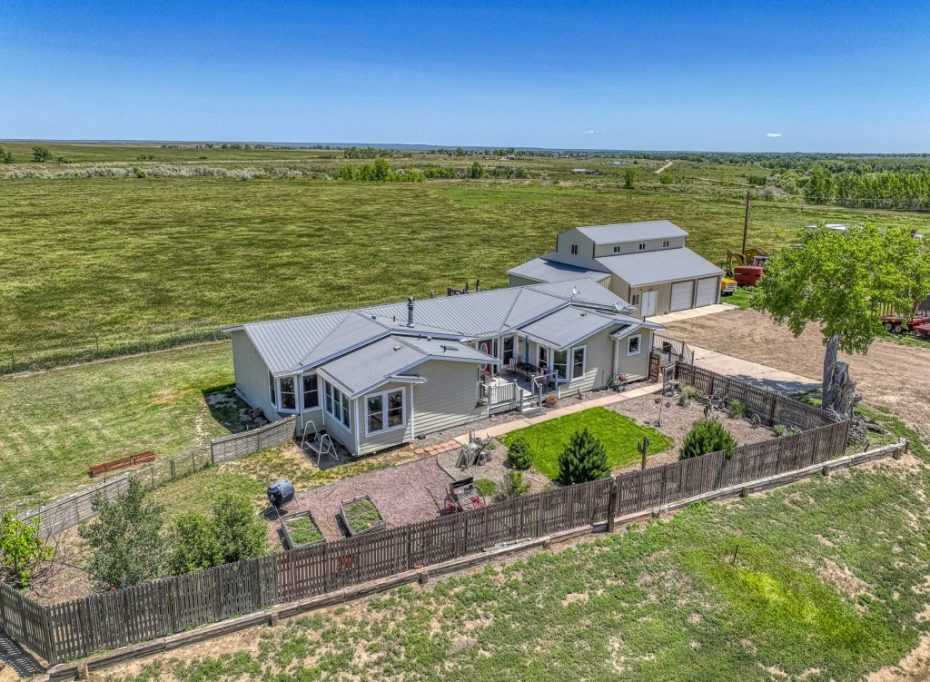
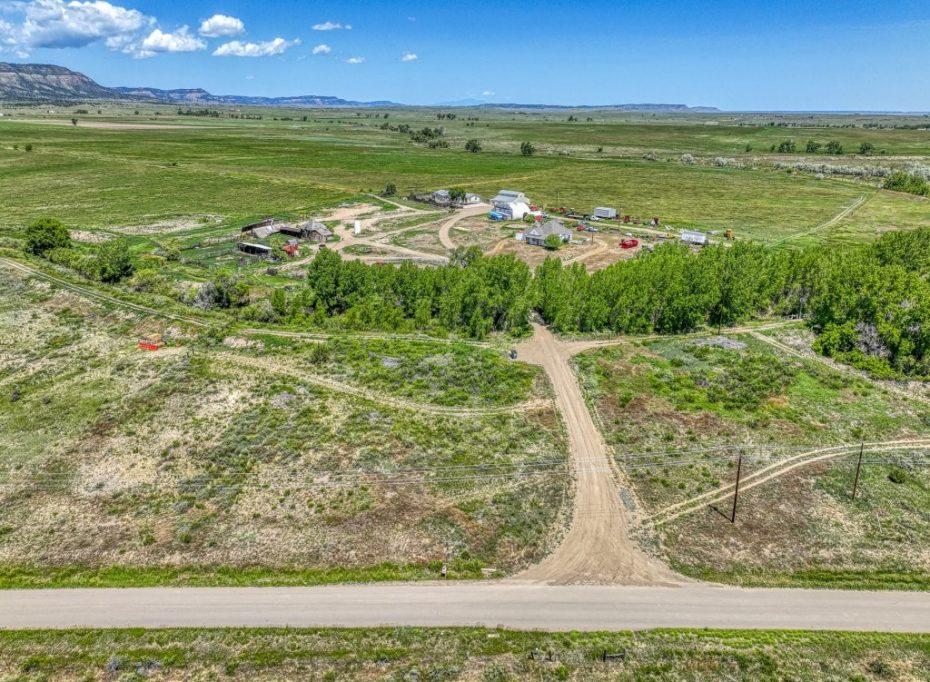
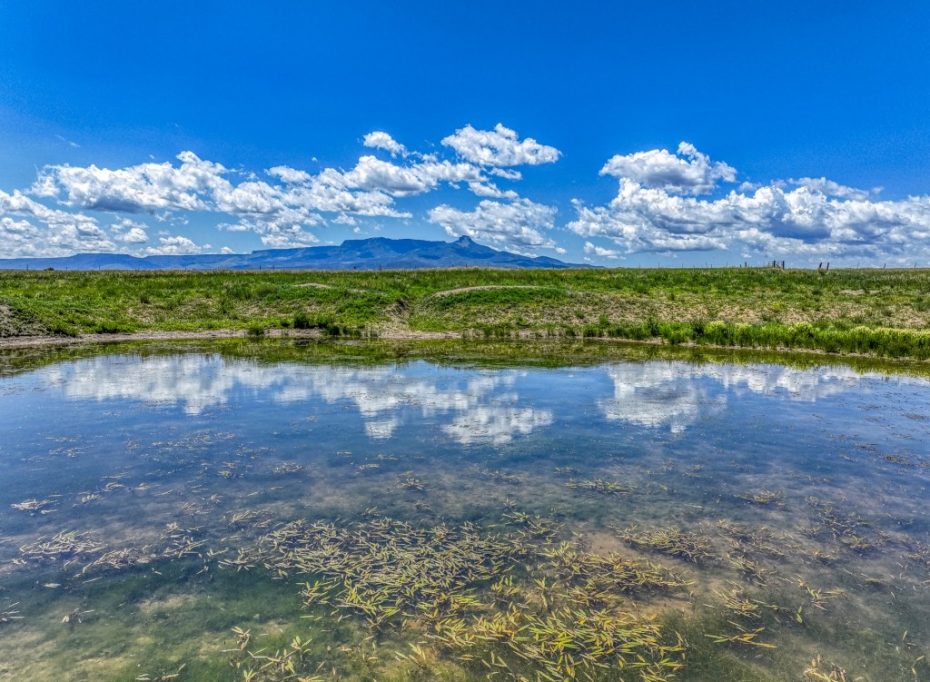
Just seven miles from downtown Trinidad, Colorado, the Davis Irrigated Farm offers a compelling blend of agricultural utility, comfortable living, valuable water rights, and proximity to one of Colorado’s most historic and scenic small towns.


Spanning approximately 227 acres, this working farm includes 167 irrigated acres serviced by a gated pipe system, fed by 625 shares of the Picket Wire Ditch, one of the area’s strongest and most reliable water rights portfolios. With a history of producing two hay cuts per year—and occasionally a third depending on moisture—the Davis Farm holds strong production value for alfalfa or grass hay, with further potential for diversified crops or pasture with modest improvements. The remaining acreage supports livestock grazing, making the property ideal for a full-scale ranching or hobby farm operation.


Owned by the same family for nearly 30 years, this is one of the rare irrigated properties in the region that combines solid infrastructure, generous water rights, and turnkey usability. The farm includes a comfortable, lovingly maintained four-bedroom, three-bath home. The home features an eat-in kitchen, large pantry, formal dining area, spacious living room, a primary suite, guest suite, laundry room, and fenced front yard ideal for gardening.


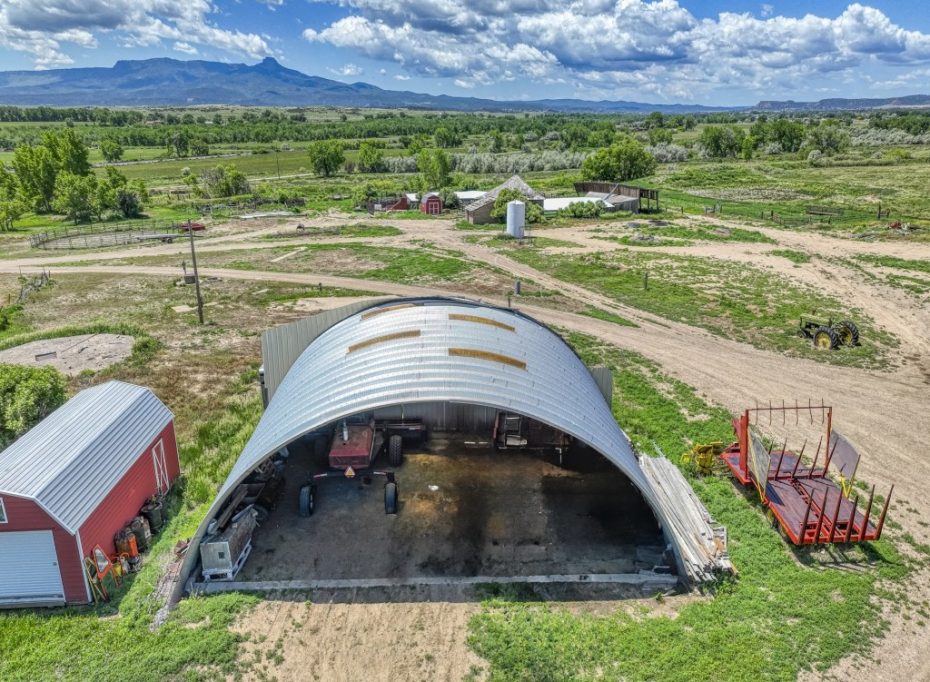
Additional structures include a shop/garage with a concrete floor and massive loft, a Quonset hut for equipment storage, and various barns and sheds. Additionally, there is a vintage 1920s farmhouse on-site that could be restored or repurposed.


Despite its peaceful rural setting, the Davis Farm lies just 3.5 miles from Interstate 25 and is just minutes from key amenities including medical services, restaurants, shopping, and Trinidad Lake State Park. Trinidad itself, rich with frontier heritage and set against the majestic Sangre de Cristo Mountains, is a growing destination for outdoor enthusiasts and history lovers.


Whether you’re seeking a fully operational farm, a self-sufficient rural retreat, or an investment in Colorado land with water, the Davis Irrigated Farm is a property that offers long-term value, production, and potential.

See more details about this amazing property and many more at sportsafieldtrophyproperties.com

Photos courtesy of Sports Afield Trophy Properties

Leave a Comment

Standard Solutions

Do you really need a magnum cartridge when the good old standards still serve us so well?


During the first magnum craze, late 1950s to early 1960s, I was just an impressionable kid. I survived, but it was some years before I could take an unbelted cartridge seriously. Most of us have survived the second, turn-of-the millennium, magnum craze. Over just five years we were asked to accept more than a dozen new unbelted magnums, all with fat cases of varying lengths. Just a few of these have gained significant followings, and some are already gone.

Right now, it seems to me there’s a reactionary trend in the air, back to standard, non-magnum cartridges. Although it’s been around for nearly a decade, Hornady’s mild little 6.5mm Creedmoor has recently skyrocketed and become the shooting world’s poster child. Everybody is making them…and it seems that everybody wants one. Guilty as charged. I don’t have a Creedmoor, but I’ll probably get one this year. I’m waiting for better left-handed availability.

I have used several Creedmoor rifles for various articles, right-handed rifles that I returned. Designed for long-range competition, the Creedmoor is a great little cartridge that, in my experience, has consistently delivered fine accuracy. However, because of all the buzz I think it’s misunderstood. Taking advantage of 6.5mm bullet aerodynamics, it remains supersonic well past 1,000 yards, yet has minimal recoil and blast, great advantages in long-range competition. It is also a fine cartridge for deer-sized game and, with the right bullets, could be used for elk. Except: While it’s a fine long-range target round and a useful hunting round, it is not a long-range hunting cartridge. Designed for mild-mannered efficiency, it just doesn’t have the retained energy or bullet weight for big-game beyond medium range.

Exactly why the Creedmoor has suddenly “caught on” is a mystery. Both the .260 Remington and 6.5-.284 Norma pre-date it and are slightly faster. I don’t have much experience with the 6.5-.284, but among the rifles I’ve used I have found the Creedmoor more “on-average accurate” than the .260. However, that may be more about platforms and ammo than cartridge design. All three of these modern mild 6.5mms have won long-range titles. All are great hunting cartridges. None, because of frontal area, bullet weight, and velocity and retained energy, are truly versatile hunting cartridges. At least in my opinion.

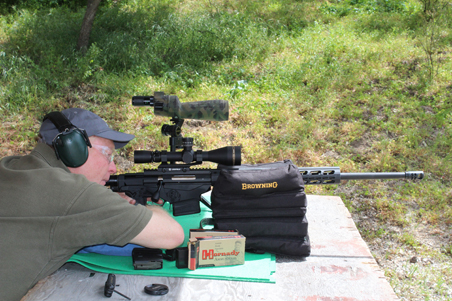
On the bench with a Ruger Precision Rifle in 6.5 Creedmoor. Like all the 6.5mm Creedmoor rifles I’ve used, this one was spectacularly accurate, but while it’s a great long-range target cartridge, it is not a great long-range hunting cartridge.

This is not exactly new. Exactly the same can be said about the great 6.5x55mm Swedish Mauser. Dating back to 1894, it remains popular in Europe and, although rarely chambered in new U.S. rifles, it retains a loyal American following. In the Nordic countries, with heavy bullets, it’s still a standby for moose; over here most of us think of it as a mild-mannered and effective deer cartridge. On average it probably isn’t as accurate as the three newer 6.5mms. As factory-loaded today, it also isn’t quite as fast. Neither matter because no one thinks of it as a long-range hunting cartridge, and few Americans use it for game larger than deer. Thus, as a hunting cartridge, it fills the same niche as the 6.5mm Creedmoor and its peers.

Although I’ve long admired the 6.5×55, I’ve never owned one. I’m sort of fixated on another standard solution that, for me, fills the same niche and does it better. That’s the 7×57 Mauser (aka .275 Rigby), developed in 1892. Yeah, I know, Walter Bell shot bunches of elephants with it, and O’Connor used it for most of his desert bighorns. I don’t see it in either role; for me it’s a fantastic medium-range cartridge for deer-sized game and wild hogs. It’s also a fine cartridge for African plains game, in part because, in Africa, shooting much beyond 200 yards is unusual.

You could switch out the 7×57 for another standard cartridge, the more recent (1978) 7mm-08 Remington. The relationship of the 7×57 to the 7mm-08 is much the same as the 6.5×55 to the 6.5mm Creedmoor. The only possible difference is that, because of both case capacity and action length, the 7×57 has the capability to use 175-grain bullets; the 7mm-08 really does not. I prefer the 7×57 because of history and tradition, but both fill the same purpose: Mild-recoiling and effective medium-range cartridges, ideal for deer-sized game and adequate up to elk.

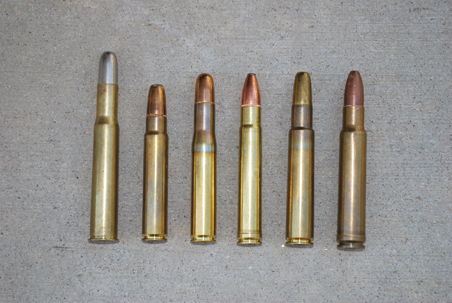
There are, however, three non-magnum cartridges that I do see as general-purpose hunting cartridges. Perhaps not for this current specialized silliness of extreme-range shooting at game, but certainly for almost all of the hunting most of us actually do. Despite the magnum crazes and the current Creedmoor hysteria, standard solutions have long been in place: .270 Winchester, .280 Remington, and .30-06; all based on the .30-06 case.

Left to right, .30-06, .280 Remington, .270 Winchester. These three non-magnum cartridges are among our most versatile options for the majority of big-game hunting in North America and the rest of the world.

Jack O’Connor is best-known as the .270’s champion. From the 1940s he shot most of his sheep (and piles of other game) with the .270. But he owned 7×57 rifles for the rest of his life, so perhaps he came to see it the same way I do. He also owned .30-06 rifles for the rest of his life, and admitted privately that the .30-06 was more versatile than the .270.

I like both cartridges. The .30-06 is probably over-powered for deer-sized game (which includes sheep), but with 180-grain bullets it’s a much better elk cartridge than the .270. That said, my personal longest shot on an elk was made with a .270 and a 150-grain Nosler Partition: Just over 400 yards, one shot and down. The .30-06 is also better for the full run of African plains game. But, that said, Donna and I both have taken a lot of African game with .270s.

Somehow, perhaps because of all the fast .30-caliber magnums, the .30-06 has a reputation as a slow old-timer. It is not. Standard velocity with a 180-grain bullet is 2700 feet per second (fps), adequate though not impressive. However, handload recipes can push a 180-grain bullet beyond 2800 fps, and extra-fast factory loads like Hornady’s Superformance do this right out of the box. If you don’t need the heavier bullet, 150-grain loads at 3000 fps are available. These velocities are close to “magnum” performance—in lighter, more compact rifles, with lighter, more compact ammo.

With 130- or 140-grain bullets the .270 is faster and shoots flatter. It is enough gun for any North American deer that walks, and effective at any sensible range. I think O’Connor was pretty much right: It’s an ideal sheep/goat cartridge…but the .30-06 is more versatile for larger game. If you need to push the envelope, .30-caliber bullets in 200 and 220 grains are readily available and there isn’t much these heavyweights can’t handle.

Now, if you’re looking for the ideal compromise, consider the .280 Remington. Introduced in 1957, it may be the best (or at least most versatile) cartridge based on the .30-06 case. It is faster and flatter-shooting than the .30-06…and slightly faster than the .270 with 140 and 150-grain bullets. It takes advantage of the 7mm’s superior bullet aerodynamics, and can push 175-grain heavyweights at meaningful velocities. Thus it’s just as good for mountain game as the .270, and with heavier bullets it’s almost as good as the .30-06 for elk and such.

The only thing: You must be somewhat of a contrarian to choose the .280 over the .270 or .30-06. Despite its attributes it has never been as popular as its siblings. Selection and availability of factory loads is more limited, and in order to love the .280 you must be prepared to take a lot of guff from your hunting buddies. I don’t mind either limitation; I’ve had .280 rifles and they’ve performed well…but I don’t have one now. Whether I’ll someday have a .280 again or not I simply can’t say, but it’s been many, many years since I’ve been without at least one .270 and a couple of .30-06s.

If you’re looking for a versatile hunting rifle that won’t kick you into next week all three are sound choices. It’s pretty much as Jack O’Connor laid it out so many years ago: The .270 is ideal for mountain game (and, from me, for deer-sized game). The .30-06 is more versatile because it’s better for larger game. Or, split the difference and consider the .280 Remington, provided you don’t mind being a bit different.

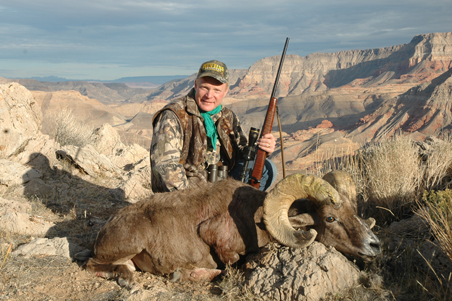
Below: A good Arizona desert sheep taken with a CZ in .270 Winchester at 250 yards. Jack O’Connor was right about the .270: It’s an ideal cartridge for mountain game, and it’s adequate for game up to elk, but the .30-06 is more versatile for larger game.

Leave a Comment

Return of the Markhor

Hunting wild sheep and goats in community-based game management areas in Tajikistan is a win-win for wildlife conservation and local livelihoods.

It’s early morning at the gorge of the Panj River in Tajikistan’s Darvaz Mountain Range; it is still dark and the foreign hunter has to climb a steep, rocky slope. He is assisted by guides of the Hunting and Conservation Alliance of Tajikistan (H&CAT), who know every stone. As dawn breaks, the spectacular mountains on the opposite side of the river appear. Their lower parts are covered by scattered woodlands of juniper, with small and very steep fields in between. Above are snow-covered peaks. Soon the local guides spot a group of more than a dozen screw-horned goats, females with kids from the last season, a few young males, and several mature males with long beards and very long corkscrew horns. But the old male, which had been spotted by the guides few days ago moving over the steep cliffs, is not among them. The guides scan the rocks with the spotting scope and suddenly see a shadow moving between the rocks–a snow leopard. Nearby, between the almond and Judas tree bushes, they see a pair of familiar-looking horns. The searched-for trophy markhor has already become the trophy of another hunter, the ghost of the Central Asian mountains.

During the next few days, the visiting hunter hikes many miles and climbs hundreds of feet. Finally he gets another markhor twelve years of age and with a horn length of almost 50 inches–a very old animal. Meanwhile, one of the rangers who protect this community-based game management area has been filming the snow leopard at its markhor kill. It turns out the big cat did not eat the huge markhor alone, but shared it with his mate. After having long been skeptical of snow leopards, seeing them as enemies and competitors, the managers of the conservancy now understand that the big cats and the markhor and ibex can all thrive at the same time. Although the occasional markhor or ibex is taken by predators, populations of the wild goats have grown and are healthy, structured with a good proportion of mature males. Increasingly these days, markhor are observed in the hillsides along the Panj river upstream from Zighar village, which long had been the border of their range.

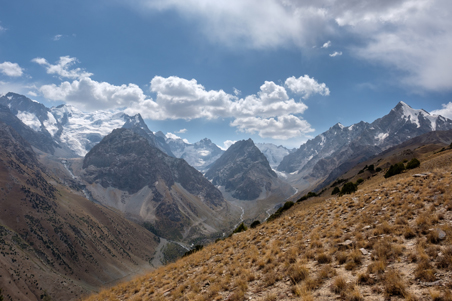
The mountains of Tajikistan are some of the most remote and beautiful in the world.

Population surveys by the Academy of Sciences of Tajikistan, together with government agencies and rangers of game management areas as well as independent scientists and NGOs, revealed that during the last few years markhor numbers have reached historic heights. At the end of the 1990s there were probably less than 350 Bukharan or Heptner’s markhor in Tajikistan; a survey in 2012 revealed that numbers were much higher, with more than 1,000 markhor recorded by the observers. In 2014 in a similar survey, 1,300 animals were observed, and during a partial survey in 2016 in key areas alone, close to 1,450 markhor were spotted. In February and March 2017, another survey took place involving participants from the Wild Sheep Foundation and the Caprinae Specialist Group of the International Union for Conservation of Nature (IUCN). The survey covered those areas of the markhor range in the country known to harbor most of the magnificent wild goats. The surveyors, after assessing and removing all possible repeated observations of the same animals, recorded 1,901 markhor in an area of 213 square miles. Among the recorded markhor, 78 of them were old males eight or more years of age that would qualify as huntable.

What is the background of this conservation success story? In the January/February 2017 issue of Sports Afield, Brad Fitzpatrick wrote about two markhor hunts in Tajikistan outfitted by Shikar Safaris. This article correctly states that the strong interest of big-game hunters has made the markhor an animal of great value to the local people and stimulates its conservation. However, there is a bit more to the story. In the first place, the local people, who stopped poaching and introduced effective protection of the markhor population, deserve the credit.

When I started to develop a project for community-based conservation of mountain ungulates in Tajikistan in 2007, the focus was on Asiatic ibex, a much lower-profile species with less controversy surrounding the hunting of it. Most ibex populations were down because of poaching and lack of any feeling of ownership by the local people. Similarly, Marco Polo sheep were rare or absent in substantial parts of their range, including the protected areas. On the other hand, some hunting concessions were obviously successful in keeping high populations of Marco Polo sheep, thanks to the income delivered by sport hunters. What I heard about the situation of the Bukharan markhor did not sound promising, however. The remaining animals were thought to be largely restricted to a protected area with immense security problems caused by its location along the border with Afghanistan, from where armed smugglers regularly intruded to kill markhor and urial. There were also reports about illegally organized trophy hunts, despite the species’ official protected status and listing under CITES Appendix I.

In 2008, the Mountain Ungulates Project was started with support from the German government and its development agency, Gesellschaft für Internationale Zusammenarbeit (GIZ) GmbH, as well as the Zoological Society for the Conservation of Species and Populations, a German nonprofit specializing in conservation of animal species often overlooked by the general public. In the Pamirs and its southwestern spurs, we met dozens of traditional hunters. These people were considered poachers by officials and most conservationists. We took another approach and recognized their traditions and interest. With our help and encouragement, several groups emerged and registered as legal entities, usually as non-commercial non-government organizations (NGOs). These people agreed not to poach, to protect wildlife, and to rehabilitate the game population, in the vague hope that future legal hunting opportunities would lead to income from hunting and nature tourism. Tajikistan’s government agencies in charge of wildlife assigned to these groups their traditional hunting grounds as game management areas.

By then, in the range areas of markhor, two families already had established small enterprises offering hunting trips for wild boars and Asiatic ibex, M-Sayod LLC and Morkhur LLC. During the next few years another small enterprise, Saidi Tagnob, emerged, as did a local NGO, Muhofiz, which unfortunately so far did not yet become an effective game management entity due to internal conflict and tensions in the local communities. The founders of these small businesses and their staffs were mostly informal hunters in the past. One of them once admitted that he had killed “hundreds” of markhor and never came back from the mountains empty-handed. These people know exactly how poachers access the areas and kill markhor, and they know how to prevent it. They also have a strong connection to “their” animals and they are excellent game scouts.

Regular wildlife surveys in the newly established community-based game management areas soon began to show increases in and stabilization of the populations of mountain ungulates–Asiatic ibex, Marco Polo sheep, and markhor. Now these areas host about 2,000 ibex, 500 Marco Polo sheep, 1,800 markhor, and 50 Bukhara urial, which is closely related to Afghan urial, with 200 more urial in new community-based conservancy areas under development. Hunts for ibex are available every year. In the 2013-14 season, the government by special decree issued the first hunting quota on Bukharan markhor in Tajikistan. Since then, the government, by annual decrees, has issued quotas of six or seven markhor per season.

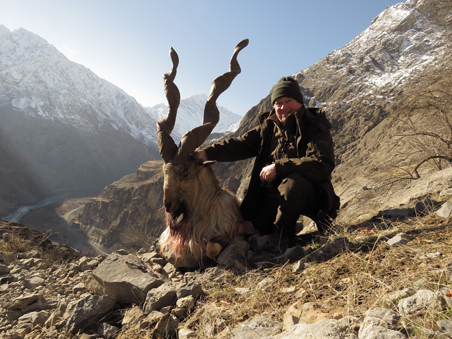
The markhor is one of the world’s most challenging game animals to hunt because the of the rugged country it calls home.

As a result of a roundtable of government agencies, scientists, NGOs, and game managers, organized with support by the German Government via GIZ, the first Marco Polo sheep quota was allocated to the local NGO Burgut this year. This community-based organization managed to rehabilitate the population of this magnificent sheep in an area close to Alichur village in the eastern Pamirs, where it was almost extirpated by poachers. As of this writing, two permits have been sold to American hunters. This will be the first argali hunting in a community-based conservancy ever, and will further boost the conservation efforts by the local traditional hunters and the support by the entire community in this remote mountain region.

Strong and healthy game populations, which offer great opportunities for hunters to experience a memorable hunt and to collect an exceptional trophy, are only possible where the local people protect the wildlife from poaching, regularly survey the status of the populations with involvement of outside experts, and do their best to preserve the entire ecosystem. This is achieved when local traditional hunters feel responsibility for the animal populations, get a substantial share of the money paid by the visiting hunters, and are at the same time accountable for the effectiveness of protection against poaching. Currently more than 150 rangers and more than 100 families directly benefit from income created by community-based game management in Tajikistan. Furthermore, all the other local community members need to see benefits from supporting wildlife conservation, game management and critical habitat, which sometimes comes at the expense of reduced grazing and fuel wood collection and some conflict with carnivores. The small enterprises M-Sayod, Morkhur, and Saidi-Tagnob in the markhor range areas, and the NGOs Parcham, Yoquti Darshay, Yuz Palang, and Burgut in the Pamirs, use the earned income for these purposes. They invest in conservation and in local community development, such as road repair, water supply, children’s education, and more.

Collectively, these organizations, with financial assistance and advice by the International Council for Game and Wildlife Conservation (CIC), have established the nonprofit Hunting and Conservation Alliance of Tajikistan (H&CAT) for joint marketing and contact with brokers and outfitters, for mutual assistance in logistics for hunting and other tourism, and for fundraising for and implementation of joint wildlife conservation and management activities. H&CAT also supports research in the conservancies. A Tajik Ph.D. student, who is studying “traditional ecological knowledge” in this context, was the recipient of the CIC Young Opinion Award in 2017.

Population trends, increasing trophy quality, satisfied sport hunters, income created, and livelihood improvements all add up to a success story for H&CAT, which the CIC in 2014 honored with its prestigious Markhor Award. However, there are also some critical challenges that the entities collaborating within the H&CAT struggle with.

The reputation of Tajikistan as a hunting destination is sometimes called into question by doubtful hunts organized by third parties. These can take the form of illegal offers, which are often difficult to identify as such; hunts in poorly managed areas with a high incidence of poaching and overhunting; and hunters being encouraged to shoot young animals, shoot at unrealistically long ranges, or engage in other unethical hunting practices. There are also rumors about staged hunts and manipulated trophies.

The high prices of hunts, especially markhor hunts, create a lot of interest by various actors to capture as much of the money spent by the hunter as possible. Often hunts are marketed by outfitters who rely on one or several intermediaries who take a substantial share of the money. Thus from a markhor hunt sold, $50,000 may be paid for the permit and logistics related expenses, a large amount may be taken by the broker and involved intermediaries, and less than half of the price of the hunt may actually reach the local small enterprise, which has to pay its rangers year-round and support its community. As the community-based conservancies get more experienced, many brokers, outfitters, and hunters are making direct contacts (facilitated by H&CAT) with the game area managers. This diversity of the market allows for an optimum share of the revenues to reach the local level. On the other hand, there are also intermediaries, which may not contribute to the conservation management of game and its habitats or to local development, but are only interested in quick profit.

Hunts of doubtful scientific justification and legal basis, unethical practices, capture of high shares of hunting revenues by outsiders, attempts to monopolize quotas and take over game management areas–all of these can put at risk the achievements that have been made in wildlife conservation and in the welfare of local communities. This can result in the good managers losing motivation and opportunities for action; and poaching may again become rampant and lead to a fast decline of the just-rehabilitated populations of markhor and other game. Such a situation would hurt hunters first, as they would experience unsatisfying hunting trips with no success, and later might be confronted by bans on hunting and trophy import to their home countries. The seriousness of the latter risk is shown by the recent trophy transportation boycotts by airlines, and by the import restrictions and bans by the US, European Union countries, and Australia on species like lions, elephants, hippos, polar bears, and more. Such a ban on markhor would not only harm hunters and the hunting industry, but would risk the end of this conservation hunting success story.

It is in the hands of hunters, brokers, and outfitters to prevent the bleak scenario described above and to ensure the sustainability of markhor and other mountain ungulates conservation and hunting in Tajikistan. One important part is to avoid unnecessary and costly intermediaries. The community-based conservancies can be contacted via the Hunting and Conservation Alliance (H&CAT, [email protected]), which acts as their joint contact, communicates in English, and takes care of all aspects of the preparation and conduction of the hunt, including all permits, logistics in the country, and assistance with trophy shipping. If you prefer booking via your broker, ask him in what game management area the hunt will take place and if he is in direct contact with H&CAT and/or its partners.

While hunting, you should care about the ethics of hunting. Often local guides feel strong pressure and may encourage hunters to take too young animals or to try risky shots. Hunting should be about the whole experience, but also about the contribution to the conservation of these magnificent creatures and the support of local communities. There can never be a 100 percent guarantee of taking the desired trophy, as some brokers may promise; hunting of free-ranging animals, not farm-raised ones, always includes some uncertainty, and this is a crucial part of the hunt. Trophy hunting should not necessarily target the most beautiful and largest animal, but the oldest one, an animal that has had the opportunity to pass his genes to the next generation. Its horn tips might be broomed or broken, thus being possibly an inch or so shorter than those of another one at the full height of breeding age. Current trophy scoring systems tend to undervalue such old animals and give higher scores to animals that are at the height of their reproductive potential. The best hunters know that it is not the highest score that matters, but the fact that you helped to preserve a healthy and genetically fit population. Never accept any offers to take another, “better,” trophy, as this can trigger killing beyond the quota, and possibly even creation of artificial trophies from animals shot earlier, sometimes bought from local poachers–all with negative impact on the status of the population and the reputation of trophy hunting.

Only responsible hunters can ensure that the incredible experience of hunting in Tajikistan’s mountains will be possible in the future and that markhor, ibex, urial, and argali can thrive together with snow leopards and other wildlife and benefit the rural people of this beautiful region.


Editor’s note: Stefan Michel is a biologist from Germany who has worked in Central Asia since 1993. Since 2008, Stefan, supported by the German development cooperation agency GIZ, has worked in Tajikistan and facilitated the development of sustainable, community-based conservation and management of wild mountain ungulates. He is a member of the IUCN Species Survival Commission Caprinae Specialist Group and affiliated with the NGOs Nature and Biodiversity Conservation Union Germany (NABU) and the Zoological Society for the Conservation of Species and Populations.


Leave a Comment

Red Stags of the Rakaia

Hunting free-range red and fallow deer on New Zealand’s scenic South Island.

The bugle of an elk sends chills up a hunter’s spine because of its wild, wonderful sound so emblematic of the wilderness. The roar of a red stag does the same thing for the same reasons. But the first time you hear a stag roar, you might think you are being stalked by a predator. The sound is deep and guttural, containing a note of challenge that leaves no doubt in the listener’s mind that the animal behind it is ready to take on all comers.

On this April morning, the stag crashing in the thick brush somewhere in front of me was roaring almost continuously, and my guide, Will Patterson, was roaring back. I was kneeling behind my rifle, which I had rested on a set of shooting sticks, frantically dialing the scope from 9X to 3X because there was no doubt we were about to have a red stag right on top of us.

I had caught a glimpse of the stag a moment ago about sixty yards away, storming toward us, before the brush swallowed him again. There was no chance of a shot. Now the stag was directly behind a bush and I adjusted my position slightly and tried to calm the jackhammering in my chest. Will gave one more roar of challenge.  All at once an enormous, copper-coated deer loomed in my scope, coming up over a little rise, head-on at less than forty yards. I tore my eyes from the magnificent, towering antlers and focused on the red hide rapidly filling the scope lens. Holding the cross hairs on the spot where the neck joined the chest, I pressed the trigger of my 7mm magnum.

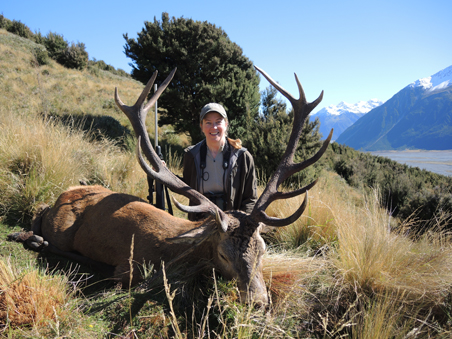
A beautiful free-range “royal” red stag taken on the South Island.

I had heard the roar of a red stag for the first time just the night before, shortly after arriving at beautiful Manuka Point Lodge in the Methven-Canterbury region of New Zealand’s South Island. The lodge, owned by Don and Julie Patterson, is situated at the confluence of the Rakaia and Mathias Rivers–broad, braided streams fed by snowmelt and flanked on both sides with steep mountains and snowcapped peaks. On the point of land between the two rivers is a 2,000-acre high-fenced hunting estate, home to red stags and fallow bucks of eye-popping proportions. The rest of the area—some 23,000 acres of steep, rugged ridges along both rivers–is wild land, magnificent country covered with tall trees, grassy openings, and brushy stands of a shrubby native evergreen called manuka.

This was the area I was hunting in, and as I was soon to find out, it is the stomping grounds of one of the oldest free-range red stag herds in New Zealand. Will and I had taken a hike up the valley the night before, and as dusk fell, roars arose eerily from the dark timber around us. I was thrilled—it seemed I had timed my hunt perfectly for the stags’ rutting period, which peaks in early April.

The history of red stags in New Zealand is controversial. The country’s first European settlers, dismayed by the fact that their new home had lovely wild country but no native big game, formed “Acclimatisation Societies” in the late 1800s with the goal of making New Zealand more like Britain, especially when it came to hunting. They imported and released a plethora of game animals including red stags and fallow deer–as well as other animals of more dubious value such as Australian opossums–all of which thrived in the excellent habitat and friendly climate. Later generations came to have some regrets over these efforts once they realized the importance of preserving native vegetation and habitat, but the game genie proved nearly impossible to put back in the bottle.

An important chapter in this story started right here at Manuka Point, where some of the first and finest red deer in New Zealand were released by the North Canterbury Acclimatisation Society in 1897. In his 1970 book The Red Stags of the Rakaia, author D. Bruce Banwell writes:

“The Rakaia red deer herd … is, without doubt, the greatest herd of red deer in New Zealand …. These were the animals descended from the deer imported from England by the North Canterbury Acclimatisation Society in 1897 and purchased from the then-famed pastoral parks of Stoke Park in Buckinghamshire.

“The ancestors of these great stags from Stoke can be traced back to the wild indigenous red deer of Britain, of which the Highland red deer of Scotland is the only surviving remnant in any numbers. To these animals had been introduced red deer from several parts of Germany, and from this interbreeding developed a type of red deer that, when released in the mountains of the South Island of New Zealand, produced antlers far beyond the expectations of those who were responsible for their purchase.”

The descendants of these deer, brought halfway around the world more than 120 years ago, still populate the steep mountainsides of the Pattersons’ free-range hunting area. As a young man, Don Patterson used to come to the Rakaia Valley with his buddies, camping and hunting, and was captivated by the beauty of the region. In those days, the Rakaia red deer herd was recovering from a period of helicopter culling by the New Zealand government. Over the years, however, the herds began to rebuild.

In 2002, Don realized a long-held dream when he was able to purchase the 25,000-acre property and start a hunting outfit. Now, like many responsible landowners and outfitters in New Zealand, Don works to maintain one of the country’s finest remaining free-range deer herds in balance with the habitat, maximizing hunting opportunities while managing the deer to minimize damage to the native plant communities.

Don’s Manuka Point Lodge is a 100 percent family-owned and -run operation. Don and his son Will do most of the guiding, ably assisted by a cousin, Dave Reese. Don’s wife, Julie, and Will’s wife, Marianne, manage the lodge and turn out magnificent meals, and Don’s other son Ben is a pilot, taking visitors on hunts in other areas and on scenic flights over the Southern Alps. Their beautiful lodge has huge windows opening on a staggering view up the Rakaia Valley; it’s a place where you sink onto a couch, stare at the view, and wish you lived there.

The comfort of the lodge is especially welcome because hunting the mountains above Manuka Point is not for the faint of heart. On the day we called in the stag, Will and I had set out from the lodge before dawn and hiked for several hours, scaling an increasingly vertical slope until I was certain I could not take another step. But the stags were roaring continuously around us, we had a breathtaking view of the braided river far below, and it seemed we could nearly touch the snowcapped peaks across the valley. The climb put us in an excellent position to slip in above the stags and hinds scattered through the manuka below us. As we glassed, we could hear frequent roars and I could see the tips of antler tines moving in the brush.

We moved slowly across the slope, keeping the wind in our favor, but as the morning wore on, the sounds of the stags ceased. Will decided to try to make something happen, and I was impressed with the realistic roar he was able to produce with his voice. Even more impressive was the instantaneous response. The stag’s challenge reverberated through the manuka below us.

We dropped our packs and crawled to where we could see better. The stag was crashing toward us though the brush. I set up the sticks, rested my rifle, cranked down the magnification on my scope, and tried desperately to maintain my composure as the roaring—from both my guide and the stag—grew louder.

When the stag finally came storming out of the manuka brush, my shot, at nearly point-blank range, struck him in the front of the chest and bowled him over backward, and he was kicking his last when Will and I hurried across the side hill to where he was. The adrenaline from the encounter was still coursing through me as I picked up the stag’s head to admire his magnificent antlers. They took my breath away; the twelve points–three lower tines on each antler and a “crown” of three additional points at the top–made him a classic “royal” stag, a prime example of a wild red deer.


The Fallow Buck

While taking the magnificent royal stag was plenty of excitement for one hunt, there was more to come. At one point on our long slog up the mountain that morning, Will and I had stopped to catch our breath and glass, and in doing so spotted a lovely cream-colored fallow buck far below. I had never seen a fallow deer before and was intrigued by its spotted coat and odd-shaped, palmated antlers. After I killed the stag, Will suggested we try for the fallow—an offer I certainly couldn’t refuse.

The next morning, as we approached the area where we’d spotted the buck the day before, we saw that he was still there, prancing restlessly near a small herd of does. We made what I thought was a great stalk through the manuka, but as we closed the distance to less than 200 yards, the buck vanished around the side of a small hill. We crept over the crest as quietly as we could, but couldn’t spot him anywhere.

We sat there for a while and glassed into grassy spots and patches of thick brush. We spotted several more red stags, including a nice 8-point, and were intrigued for some time by an especially deep-throated roaring in a manuka-choked swale above us. We glassed it hard, but never saw the stag that was making the racket, and our fallow buck never reappeared.

Undaunted, we were back at it in late afternoon, watching the fallow deer’s favorite spot, but he never showed. It turned out to be an incredible evening, though, with red stags roaring from the brushy hillsides and fallow bucks croaking like bullfrogs. These sounds of the rut surrounded us as we hiked out under an almost-full moon rising in a pink sky over the snowcapped mountains flanking the Mathias Valley.

We returned the following evening, but the wind was squirrelly, so we decided to circle and come in high above the fallow’s favorite spot. We climbed the steep slope and found a place to sit in a patch of mountain daisy where we had a good view of the little knob where we had first seen the deer. It was quiet for a long time, and then, about an hour before dark, the buck appeared out of the brush below us. He spent ten minutes or so furiously beating up a manuka bush with his antlers, but the cover around him was so thick I didn’t have a shot.

Finally he stepped clear and stood broadside at 200 yards. I was already set up on my shooting sticks and had the cross hairs focused on him, so I took a deep breath and squeezed the trigger gently. The deer took off like a rocket, running full-tilt straight up the knob so fast I could not get on him for a follow-up. He vanished over the crest.

We grabbed our gear and headed down the hill, crawling through a thick patch of manuka that turned out to be the buck’s core area—a den of muddy trails and scrapes beneath the canopy of brush that had hidden him so well. On the other side of it, we climbed the knob and as I cast back and forth on the other side, I quickly found him, piled up dead from my single shot. He had run a little more than 100 yards.

It was the largest free-range fallow buck ever killed at Manuka Point, and Will and I were thrilled that our patience in hunting him over several days had paid off. We carried the buck out under the light of a full moon shining over the mountain peaks. Around us, red stags roared and fallow bucks croaked, joining their voices in the spine-tingling chorus of an autumn night in New Zealand.

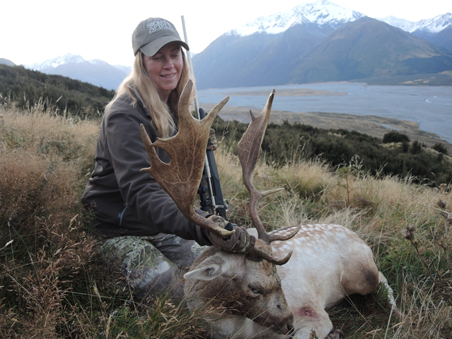
This fine fallow deer, which the hunters first spotted while stalking the red stag, was an unexpected bonus. 


Gear For New Zealand

I took my old reliable Remington 700 in 7mm Remington Magnum on my New Zealand hunt. This time, though, I fed it something new: Hornady’s Precision Hunter ammo loaded with the brand-new 162-grain ELD-X bullet. To say this ammunition performed well would be an understatement. The shots at the two animals I took could not have been more different: a 40-yard shot into the chest of a heavy, amped-up red stag, and a 200-plus-yard broadside shot at a much smaller, thin-skinned fallow deer. The results on both were dramatic, with the stag literally bowled over backward and the fallow expiring with a single shot after a headlong rush. I became an immediate fan of the ELD-X.

I felt pretty eagle-eyed with Swarovski’s new EL Range binocular, which allowed me to easily spot stag antlers sticking out of the manuka brush and fallow deer moving through the trees—sometimes even before my sharp-eyed guide did. It’s easy to range game or nearby landmarks with the touch of a button as you’re glassing, with no need to carry a separate rangefinder.

Kuiu clothing is my go-to gear for any mountain hunt. It’s lightweight, which is great when you’re packing for an overseas hunt, and extremely versatile for a wide range of weather conditions. My Chinook jacket, Attack pants, Chugach NX rainwear, and Ultra Merino base layer all got lots of use and proved their worth many times over on my New Zealand trip.—D.R.


Hunting and Traveling in New Zealand

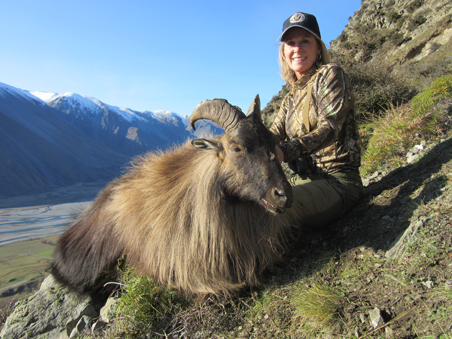
The family-owned and operated Manuka Point Lodge is truly a jewel of New Zealand hunting and is located in one of the most scenic spots I’ve seen on the South Island—which is saying a lot! Not only do the Pattersons offer both free-range and estate hunts for red stag and fallow deer on their magnificent property, they can also take you on a high alpine adventure for Himalayan tahr, chamois, Arapawa rams, and many other species. All Manuka Point hunts are scrupulously fair chase. For details, see www.manukapoint.com or e-mail [email protected].

New Zealand is one of my favorite countries in the world to visit. Not only does it have beautiful scenery, abundant game, and excellent hunting, its people go out of their way to be friendly and welcoming to tourists—hunters included. It’s easy to bring your own rifle; simply fill out the online application and your firearm permit will be waiting for you at the police office when you land in Auckland. (Manuka Point Lodge also has excellent rifles for rent should you prefer not to bring your own.)

My flight arrangements on Air New Zealand were made by Esplanade Travel, an established agency specializing in travel to the South Pacific and accustomed to working with hunters. Esplanade can also arrange additional tours, and you’re doing yourself a disservice if you don’t see some of the sights before or after your hunt. On this trip I spent a couple of days in Christchurch, rode the TranzAlpine train over the southern Alps to Greymouth, then flew up to the North Island and spent several enjoyable days hanging out with my relatives on the beautiful Coromandel Peninsula. I can’t wait to go back.—D.R.


Leave a Comment

Sports Afield SHOT Show Party

Scenes from the annual Sports Afield SHOT Show cocktail party.

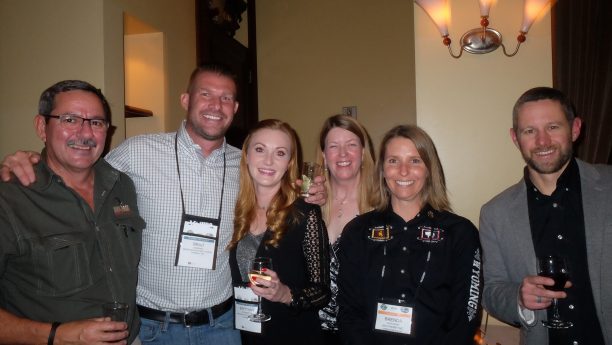
Sports Afield held its annual SHOT show cocktail party on January 24 at the Venetian Resort in Las Vegas, Nevada, during the 2018 SHOT show. We hosted numerous contributors, advertisers, licensees, industry partners, and friends to thank them for a great  2017 and share exciting news about our plans for the year ahead. Our thanks to those who attended, and we hope to see you all again next year!


Good times and good conversation.


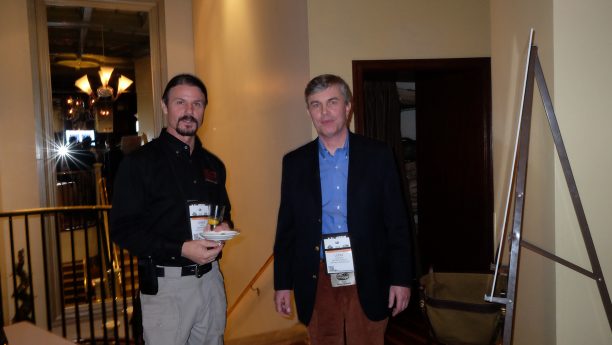
Sports Afield Director of Sales and Licensing James Reed, left, and Publisher and CEO Ludo Wurfbain.


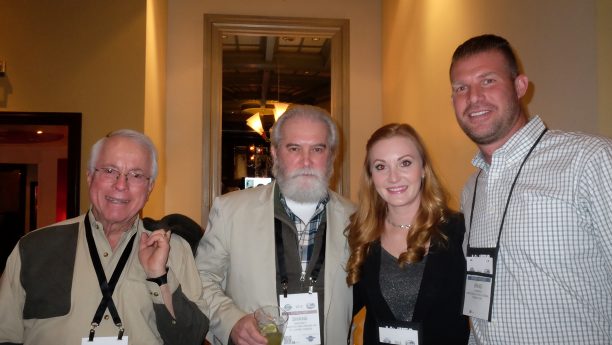
John Jackson, Shane Mahoney, Brittany Boddington, Brad Jannenga.


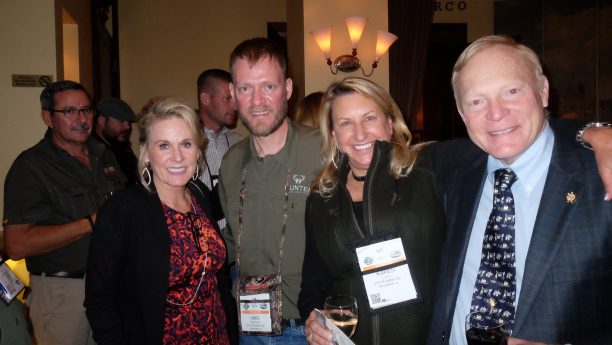
Donna Boddington, Mike Nischalke, Karen Lutto, Craig Boddington.


Gun guys! Kerry O’Day and Doug Turnbull.


all photos copyright Sports Afield


Field Editor Ron Spomer and Betsy Spomer.


Diane Carver, right, designer of the Sports Afield knife line, with Kimi Jensen.


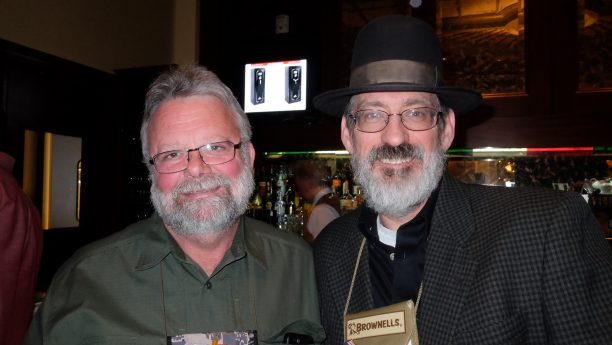
Dirk DeBod, Brad Jannenga, Brittany Boddington, Diana Rupp, Brenda Weatherby, Adam Weatherby.

Leave a Comment

Safari Press Book Sets World Record

Craig Boddington’s new book fetches record sale price at auction.

On January 3, 2018, the world’s most exclusive band of international big-game hunters gathered in Dallas for the 61st Annual Weatherby Award dinner to honor one of their own, Craig Boddington.  This year’s recipient is, arguably, also one of the hunting world’s best-known gun writers, and Craig’s latest work, From the Cape to Kasserine, was one of the night’s sixteen auction items, donated to help replenish the coffers of the Weatherby Foundation.

Usually auctions at hunting banquets are yawn-worthy.  The pace for the first thirteen auction items followed the standard scenario of nearly reaching the estimated value. Some excitement but no frenzy. Then From the Cape to Kasserine came on the block. What did the audience know about this book that would cause them to bid in such a radical departure from the standard?  Here’s what the auction program detailed: From the Cape to Kasserine was donated by Safari Press and Craig Boddington, was handmade from the skin of a water buffalo, had extensive gilt and debossing on its cover, and had a retail value of $975.*

Out of print Safari Press books are well known for garnering very high prices with collectors at auctions, but even these top out at $5,000 to $7,000 for the rarest.

As the donators of this book held their collective breath, From the Cape to Kasserine immediately surpassed its established retail value of $975.  The donators let out a sigh of relief, hoping against hope that the book would double its stated value.  It did that . . . and more.  Two thousand dollars, three thousand dollars, and suddenly, the auctioneer hurtled into double-digit figures.  Did someone actually bid, “Ten thousand dollars”?  Electricity surged through the room. Who would pay ten thousand dollars for a new book? The attendees strained to see who was bidding.

Craig Boddington with the Weatherby Trophy.
Then Alain Smith, the evening’s emcee, interrupted the frenzy to give an enthusiastic and detailed description of the book and to make an announcement. The tumult halted momentarily as he told the audience that Ludo Wurfbain, Safari Press’s publisher had asked the twelve living Weatherby Award winners in attendance that evening to sign the book.  Obviously that helped.

Smith handed the floor back to the auctioneer, and from various parts of the banquet hall the four hunters still bidding against each other resumed their battle.  When the bid reached twenty thousand dollars, one of our bold bidders dropped out.  When From the Cape to Kasserine reached twenty-seven-and-a-half-thousand dollars, the third bidder dropped out, and when it reached thirty thousand dollars, it was finally over.  Yes, you read that correctly: From the Cape to Kasserine sold for the remarkable price of $30,000.

Usually auctions at hunting banquets are sedate affairs.  Not this auction.  Not for this book.  The crowd broke out in a thunderous applause amid calls of jubilation, joy, and encouragement, for the book was a 100-percent donation for the Weatherby Foundation. The money garnered in the auction that night will be used to educate American youth to the values of hunting and conservation.  A worthwhile enterprise to spring from a remarkable evening.

The editors of Safari Press believe this to be the highest price ever paid for an in-print hunting book.  A new world record.


Note: This is an extremely limited edition—just twenty-six, full-leather copies were made.  Handmade of dark brown buffalo hide, From the Cape to Kasserine features a debossed map of Africa on the front cover and two contrasting red leather stars that place Kasserine and the Cape on the map. Matte gilt lettering and artwork adorn the cover of the book. Inside the book are brown and red marbled French endpapers. The book is housed in clamshell box covered in high-quality wax-impregnated cloth and lined with the same brown and red marbled French endpapers found in the book.  It is limited to 26 lettered copies A-Z and it was copy W that sold during that evening.  This leather edition is now sold out.  The limited edition of 500 cloth-bound signed, numbered and slipcased copies is still available. Please click here for more information

Leave a Comment

Where to Hunt in 2018?

There are six continents to choose from, and all of them have great hunting.

Hard on the heels of the holidays comes convention season. Dallas Safari Club (January 4-7, Dallas), Safari Club International (January 31-February 3, Las Vegas), and Wild Sheep Foundation (January 18-20, Reno) are three big ones, but there are plenty more of all sizes. These are great places to meet outfitters in person, but whether you’re a convention-goer or not, the early months of the year are prime booking season for outfitters the world over. That means it’s prime shopping season for hunts! So, if you’re in the market for a hunt in 2018, you have many choices.

I thought it might be interesting to compare “average” hunting conditions across the six continents that offer hunting opportunities. But with this comes a caution: By definition, a continent is a very large land mass, so it’s difficult to generalize. Texas, Wyoming, and Yukon, for instance, all offer North American hunting…but most of us will understand that hunting conditions in these three areas aren’t exactly the same. This applies to all the continents, but perhaps there are some commonalities.

North America holds some of the world’s most diverse hunting. From the jungles of southern Mexico to the Arctic you can find just about every climate and habitat type. However, and this may surprise some, North America probably offers some of the world’s most difficult hunting. This is due in part to the North American Model of Wildlife Management, which, almost uniquely in the world, holds wildlife as a public trust resource. Mexico is a bit different, but in Canada and the United States wildlife is neither privatized nor owned by the government; it belongs to all of us, and we have relatively free access to millions of acres of public land. This system brought North American wildlife from tattered remnants a century ago to relative plenty today.

It also created the world’s largest hunting culture. Our wildlife managers must carefully allocate the resource, maintaining as much opportunity as possible. This is because wildlife management is primarily funded by hunters through license fees. Here in North America, hunters must compete for opportunity. Effects differ from place to place, but end results include relatively short seasons and, for scarcer resources, limited permits allocated by drawings. We in North America live with this system (most of us cherish it, and we should!) and never even think about it. We understand that our wilderness hunting is tough stuff and we know that a lot of our hunts will not result in the taking of game. Hunters I’ve encountered from elsewhere are often bewildered by our unique North American situation.

Despite a dense human population, there’s a lot of wildlife in Europe. Also, a lot of tradition. Hunting was once the province of the landed gentry; today much European wildlife is privatized or essentially owned by the government. Either way, wildlife is considered a cash crop. Compared to North America, European hunters are relatively few in number, and in general are accustomed to paying dearly for their passion. Management is intensive and effective, and often by age class.

Things are slightly different in each of Europe’s fifty sovereign countries, but across Europe it’s common to be accompanied by a competent gamekeeper who often has sole say over what animals may be taken. It is not always allowed to take the largest animal you see—and sometimes you don’t want to. Trophy fees are often based on size, and may escalate dramatically with really large specimens. These concepts—not always being able to take an animal you like, and paying extra if you get lucky—are foreign to American hunters, but the European system works. Most hunts are relatively short—many permits are only good for three days—and success is extremely high. Because there are fewer hunters to accomplish the desired harvest, seasons tend to be long by our standards, and many areas offer some combination of species.

Every European country has its own unique culture and cuisine, and on most European hunts both will be enjoyed. There is very little real wilderness on the European continent, so “hunting camps” as we know them hardly exist. Some outfitters operate from lodges, but the norm is small country inns. We speak of “hunting vacations,” but a lot of hunting in North America is extremely hard work. Most European hunting is not, and often really is a relaxing vacation. On the other hand, while fenced estates are not uncommon, most European hunting is free-range; the secret to their success is simply that European game management is excellent.

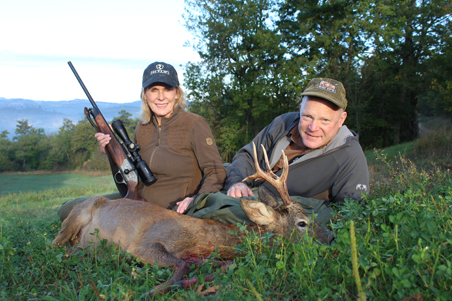
Donna and Craig Boddington with Donna’s exceptional European roebuck. The roebuck has never been successfully introduced anywhere else; it’s a true European exclusive.

Things are quite different in Asia. Typically, governments exercise almost full control, and wildlife is considered a cash crop. There are some bargains here and there, but on a per-animal basis Asian hunting is probably the most expensive in the world. In my experience, little wildlife remains near population centers. There is a great deal of wildlife in Asia—but you can expect to spend long hours getting to the hot spots.

Once there, it’s usually worth the journey. Most Asian hunts target one or two species, and most are successful for the primary quarry. Since wildlife is essentially sold to visitors, seasons tend to be long, and there are often additional opportunities you may not have thought of. Of course, the Asian land mass is gigantic and conditions vary widely. The most organized hunting in Asia, with the most competent and experienced guides, is probably found in Azerbaijan, Mongolia, Nepal, Pakistan, and Turkey. But in many situations camps are rough, food is unfamiliar, and language and cultural barriers can be extreme. Asia is a region for serious and experienced hunters, and it’s essential to be patient and roll with the punches. Chances are you’ll get your game, and of course Asia holds many of the world’s greatest game animals, but you probably won’t enjoy every single minute of the experience.

South America had a great deal of interesting native wildlife, but recovery is far behind our continent. Bird shooting is legendary, but opportunities for big game are limited. Introduced red stags are hunted in Chile, and tropical whitetails are hunted in Peru, but most of the big game hunting is confined to Argentina…and most of it is for about a dozen introduced species. This is not all bad: Red stag were introduced a century ago, and Argentina offers some of the very best free-range red stag hunting in the world.

That said, big game hunting in Argentina is a mix of fenced estates and free range…however, almost all species can be hunted free range if preferred. Red stag is the big attraction, but Argentina has excellent blackbuck, water buffalo, and fallow deer…and in the north native species include capybara and brocket deer. It is a friendly country, very European in culture, with English widely spoken. Most hunting will be from lodges, and this is probably no place for vegetarians; Argentinean beef will feature prominently on the menu, along with their famous Malbec red wine. What’s not to like?

The South Pacific isn’t really a continent but a region, including the continent of Australia. Australia and New Zealand are the primary hunting areas, but New Caledonia and Papua New Guinea are on-again, off-again, primarily for excellent rusa deer. A challenge for this region is virtually all huntable species were introduced. There is great variety, but the populations are often widely scattered—and ideal seasons may differ. The primary exception to this is New Zealand, where any combination of Himalayan tahr, chamois, red stag, fallow deer, and more is readily available. However, you’ll accrue serious frequent flier miles if you try to hunt multiple species in Australia and New Zealand.

Both countries offer both free range and estate hunting for all species. New Zealand is especially famous for huge red stags, but it’s only fair to say that the really big stags are consistently estate animals. Free-range stag hunting is fantastic, especially during the roar…but antlers are usually modest. Tahr and chamois are well-distributed in the South Island’s high country, offering one of the world’s best mountain hunts in incredibly gorgeous country.

Donna Boddington with a good Himalayan tahr, taken with Chris Bilkey on New Zealand’s South Island. The scenery in this area is straight out of Lord of the Rings…there must be hobbits somewhere near.

In Australia the Northern Territories’ water buffalo is probably the biggest draw and offers a marvelous Outback experience. There are usually some wild boars around, but combination hunts are more difficult. Queensland and southern Australia both offer multiple varieties of deer…just be aware that these areas are vast distances apart! In New Zealand lodge accommodations are common; in Australia hunting is often in the back-of-beyond, so a genuine bush camp is more likely.

Africa offers the greatest variety of wildlife remaining on Earth. Understand, however, that it’s a very big place, and with about twenty countries open to hunting situations vary considerably. Also understand that, although Africa holds over a hundred varieties of antelope alone, not all are found in any one area. However, most African hunting areas will offer ten or a dozen different species…and a few hold twice that.

Although Namibia and South Africa are the only two countries that offer hunting for the entire Big Five, both are primarily plains game destinations, and both offer a mix of free-range and estate hunting. Elsewhere on the continent game ranches range from rare to nonexistent…but hunting “wild Africa” tends to be more expensive than hunting on private land in the south.

Thanks to a century of safari tradition African camps are consistently excellent, although there are huge differences between well-appointed lodges in the south and tented camps in the forest zone—and everything in between. One of the great advantages African outfitters have is they can get help—and offering local employment is an important aspect of the safari industry. So, realistically, you will probably be better looked after in an African hunting camp than anywhere else in the world.

Unlike most destinations an African safari is usually based a “wish list” of several species. Hunting is successful because most African professional hunters are extremely competent, and if you do your homework you’ll land up in a game-rich area. That said, some animals are more difficult (and less common) than others. Almost no one will have opportunity at all species in a given area, but most hunters take the majority of their primary animals…and perhaps a couple they didn’t think about.

So, is Africa the best continent of all for hunters? That depends altogether on what interests you! Africa is great, but that’s not where you’re going to find a big mule deer or a grizzly bear…or a Marco Polo argali… or a big red stag… or, well… it’s a big world, and the hunting is good on every continent.

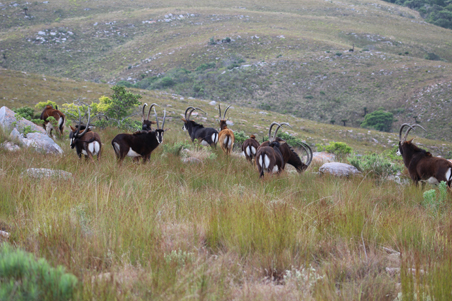
No other place can rival Africa for variety. This is a nice herd of sable antelope, just one of more than a hundred varieties of antelope.


Leave a Comment

The Big Chill

Hypothermia is a serious condition, and it doesn’t just happen in frigid temperatures.

The first of several important misconceptions about hypothermia is that it means “freezing to death.” That’s not accurate. Hypothermia is the loss of core body heat to a level that impairs normal muscular and mental functioning, endangering life. If not treated and reversed, hypothermia can worsen until the victim, no longer able to generate internal warmth, becomes semiconscious or unconscious, is extremely vulnerable to cardiac fibrillation, and eventually dies from heart stoppage.

You can begin having the signs and symptoms of mild hypothermia with a core-temperature drop of only a couple of degrees–and it doesn’t take much to fall to that mark in conducive circumstances. This leads to another common misunderstanding: that hypothermia is mainly an extreme-cold, frigid-weather issue. Of course heat loss is a danger in the deep cold, but it can be as much or more of a problem in less obvious conditions. When various factors combine–such as moisture, comparatively cool temperatures and/or wind–a person can become hypothermic virtually any month of the year, and in a surprising array of locations. For instance, in a recent study of 428 cases of accidental hypothermia, 69 of them occurred in Florida, not a place most people associate with cold.

It’s also important to understand that hypothermia is not just about getting too cold at the core and dying from the lack of necessary heat. That can happen;, but the more frequent way people die from hypothermia is by perishing from its side effects or symptoms. Even when one is mildly hypothermic, coordination and cognition are impaired. Clumsiness, stumbling, falling, thinking unclearly, making poor decisions–these are all by-products of core heat loss. Many deaths seemingly caused by “accidents” and bad choices are actually a result of the victim’s addled, hypothermic state.

Dangerous heat loss occurs in stages, with varying signs and symptoms. Mild hypothermia begins with a small drop in core temperature, usually signaled by the sensation of feeling cold and shivering, which is the body’s way of generating internal heat. At about 96 or 95 degrees F, shivering becomes more constant and involuntary. The person might have goose bumps, numb hands, and be unable to perform complex or fine-skill manual tasks.

The transition or drop to moderate hypothermia usually occurs as core temperature lowers to about 90 degrees F. At this stage shivering is intense, coordination is obviously impaired, the person may stumble, act confused, move in a slow, labored way, have difficulty speaking and show signs of amnesia, apathy, or withdrawal. At approximately 88 degrees shivering stops, so internal heat can no longer be generated. Muscle coordination is poor, the person may no longer be able to walk and will be confused, possibly incoherent and irrational. Victims at this stage are past being able to save themselves or act appropriately on their own behalf, and will most likely die if not rescued and treated to reverse their condition.

Severe-stage hypothermia starts when core temperature lowers to about 82 degrees F, involving much-decreased heart and respiratory rates, muscle rigidity, loss of awareness, and semiconsciousness or unconsciousness. The heart becomes dangerously “irritable” (easily stimulated into ventricular fibrillation). From here through profound-stage hypothermia, the details are medically technical and all bad news. If untreated the result is cardiac failure and death.

One of the best ways to avoid these grim states is to detect the signs and symptoms of core heat loss as early as possible. First responders and rescue workers are taught to watch for the “umbles:” stumbles, mumbles, fumbles, and grumbles that indicate a decrease in motor coordination, cognition, and consciousness. At an early enough stage, you can even detect these in yourself, especially if you also feel very cold and are shivering. In what might be called “hypothermic conditions” it’s always a good idea for partners or groups to agree to periodically monitor each other for umbles, shivering, and other clues that hypothermia may be occurring. If a person can’t easily count backward from fifty and/or walk a straight heel-to-toe line for thirty feet, it’s time to suspect the onset of dangerous heat loss.

What are “hypothermic conditions”? As noted, extreme cold and moderately frigid air temperatures are pretty obvious environments, but hypothermia can occur whenever the body is losing more heat than it can replace. This usually involves one or more of the following elements: moisture, moderately cool to cold air temperatures, and wind–coupled with clothing inadequate for the conditions. If it’s 50 degrees and you get soaked in a rain and the wind is blowing, and all you have is a light, sodden jacket for insulation, you’re in hypothermia territory. A hunter damp from rain, snow, or sweat who becomes stranded overnight in moderately chilly temperatures is at a high risk for hypothermia, if unable to stop continual heat loss.

Briefly, there are four main ways we lose heat: radiation, conduction, convection, and evaporation. Radiation is direct heat loss from a warm body to a cooler environment. In cold weather you can radiate a lot of heat from your exposed head and neck. A warm hat that covers your ears and a neck gaiter or scarf can mean the difference between heat maintenance and hypothermia. Conduction is heat loss through direct contact with a colder surface. Avoiding such contact when possible or placing insulation between yourself and colder surfaces are the obvious solutions. Water conducts heat away from the body 25 times faster than air. Thus the great danger of getting wet in a cool to cold environment, and justification for the survival slogan: “Stay dry to stay alive.” Convection is heat loss caused by air moving around you. This can be a breeze or wind, amounting to the well-known wind-chill factor; or it can be a “wind” effect created by your movement, as in a boat or other vehicle. The antidote for convective heat loss is shelter found or made, including the “personal shelter” of appropriate outer shell clothing. Carrying two or more heavy-duty, yard-size garbage bags in your survival kit can also be lifesaving in this regard. Even if your clothing is wet and cannot be dried, encasing yourself in the plastic bags (using them as a “vapor barrier,” one for the lower body, one with eye and mouth holes for over your head and upper body) will help you dry out while keeping convective and conductive heat loss to a minimum. Evaporation of sweat or water on your skin has a cooling effect and pulls heat from your core. This is another reason to stay dry, not only from external causes, but also from sweat buildup. In very cold air another seldom-recognized cause of evaporative heat loss occurs during basic respiration, especially when heightened by strenuous physical effort. A simple way to reduce this type of lost heat is to breathe through a face mask or scarf.

Obviously, having proper clothing for the conditions is a basic way to prevent hypothermia. For example, a good rainsuit or outer shell, moisture-resistant pants (no denims), adequate gloves and footwear, a middle layer of fleece, a warm shirt, and wick-dry polypro undergarments. If hypothermia conditions exist or could occur, it’s wise to carry extra undergarments and socks, so that you can replace wet clothing with dry if necessary.
Other advance prep should include fire-making gear, two or three commercial hand warmers, the aforementioned garbage bags, a balaclava or face mask in very cold conditions, and a few energy bars, high in sugar, for quick-burst metabolic fuel that will help heat your core more quickly and effectively if you do begin to get shiveringly cold.

How do you proceed if you or a partner appears hypothermic?

Treatments and responses vary depending on the stage of the problem. Contrary to popular belief, for mild to early-moderate hypothermia, one should not attempt to rewarm the victim with external heat application (in the form of chemical heat packs, hot water bottles, heated rocks, another person’s warm body, etc.). Here’s why: your sense of being cold or warm is more a result of skin temperature than core temperature. Cold skin cues the brain to signal a shiver response, generating inner heat. If you warm a shivering hypothermic person’s skin, the person will stop shivering (and stop generating necessary heat at the core), while actually losing additional heat because of dilated blood vessels near the heated skin. So the attempt at external rewarming actually leads to becoming more hypothermic, not less. The general field rule is: no direct external warming unless the person has stopped shivering (can no longer shiver) in an advanced-moderate to severe stage of hypothermia.

To treat mild to moderate hypothermia, first reduce heat loss. This can mean adding layers of clothing, changing wet clothing for dry, bundling the victim in an insulating wrap, finding or making shelter and warming the immediate area with a fire. Next, add fluids and fuel. Warm to hot (not scalding) liquids help reheat the inner core, and also add fuel calories if the liquid contains sugar or other nutrients. No alcohol, however, since it’s a vasodilator that will only increase heat loss. Also avoid caffeine, a diuretic that furthers dehydration, which worsens hypothermia. Eating a candy or energy bar, spoonfuls of peanut butter, gorp–whatever you have for survival food–will provide calories for rewarming. If water can be boiled by fire or stove, breathing in warm steam can bring additional heat to the core.

For more advanced, severe and profound hypothermia, the situation is much more serious and delicate. Insulate as well and fully as possible in clothing and wraps, making sure the person is dry. Don’t try to give fluids or food to anyone who is badly altered mentally, or who is semiconscious or unconscious. For those who have stopped shivering, external heat can be applied, especially to the major arteries. Chemical heat packs, hot water bottles, or hot towels can be placed at the neck for the carotid, in the armpits for the brachial and in the groin for the femoral arteries. Handle the victim carefully, since rough handling can trigger heart disfunction and failure. Evacuation and hospital rewarming are vital at this stage. Because the “irritable” heart is so easily disturbed, do not attempt CPR on a hypothermic person who appears dead unless you are certain there is no pulse or respiration. These may be hard to detect because of the severely reduced heart and breathing rates. Again, evacuation is usually the best remaining option. As wilderness medical expert, Dr. Eric Weiss advises: “Never assume a profoundly hypothermic victim is dead until the body has been warmed and there are still no signs of life. Rarely, a victim who is without detectable signs of life, and presumed to be dead, will recover when rewarmed.”

Leave a Comment

On The Front Lines

DSC’s Frontline Foundation supports people injured or killed in the war against poaching.

Illegal wildlife trafficking is conservatively estimated to be worth a minimum of $10 billion per year, globally. More moderate estimates place the figure at closer to twice that amount. Either way, illegal trade in wildlife and wildlife products is, today, one of the largest black markets in the world, ranking alongside illegal drugs, weapons, and human trafficking. Every day, scores of animals, some endangered, are illegally killed by poachers, often for a single body part–a tusk or a bone–that can be illegally sold for a huge amount of money. The scale and reach of this criminal enterprise should not be underestimated or misunderstood. There are fewer and fewer lone gunmen hiding in the shadows. These have been replaced by transnational organized crime syndicates operating across international boundaries and killing animals en masse to the global detriment of wildlife, nature, and society.

The system is complex and well organized. Small-scale and regional-level syndicates manage poaching and trafficking operations on the ground and pay poachers and couriers to acquire and deliver animals and animal parts. These syndicates create and support trafficking networks, and usually also distribute weapons to poachers, as well as bribes to local law enforcement. Reports of locals being coerced into service as wildlife poachers or ivory couriers by regional syndicates, even by such extreme means as kidnapping, are not uncommon. International wildlife traffickers lead the larger enterprise; they typically support regional criminal groups, supply weapons and money, and bribe government officials. They obtain illicit wildlife products from the regional groups and smuggle them to major departure points or receive shipments from abroad and smuggle them to destination markets. The money feeds corruption at all levels. Often, it is the same group trafficking in drugs, arms, humans, and illegal wildlife.

These illegal markets are threatening many wildlife species, but consequences are especially severe in Africa, home to many of the world’s most iconic animals and host to much of the world’s organized commercial poaching. Many African wildlife populations have already been decimated, threatened with extinction or, as in the recent case of the Western Black black rRhino, wiped from the face of the Earthout. On average, three3 African rhinos are killed by poachers every day. But it is not just the charismatic mammals that fall prey to poaching and illegal trafficking. Nearly 20 tons of pangolin scales were seized from illegal shipments originating from Africa between 2013 and 2016, and in 2016, more than 5,300 kilograms of illegal ivory and rhino horn, and more than 16,000 trafficked reptiles, were seized at airports, either in passenger baggage or cargo shipments. Many species simply cannot withstand this slaughter. The lion has been extirpated from seven African countries, the total population of Grevy’s zZebra stands at just about 2,000 individuals, and fewer than 900 mountain gorillas remain in the wild; yet poaching threatens all of them.

How has this problem become so widespread and destructive in Africa and elsewhere, despite advances in international laws and policies, as well as anti-poaching technologies? Weak governance is almost always a factor and is exacerbated by regional poverty, high unemployment, and lack of state funding for wildlife management and protection activities. Currently, about 90 percent of African protected areas are unable to finance themselves and, in most cases, little government money is available to assist in anti-poaching efforts, including the employment of well-trained, well-equipped, and properly supported enforcement officers. It’s one thing to ban or limit trade in a particular species, but another to effectively enforce this, especially in countries where training and funds for enforcement are lacking. At the national and regional level, effective law enforcement to reduce and prevent poaching is now a critical need. Without effective “boots on the ground,” there can be no success in combating illegal wildlife use internationally. As President Lincoln once affirmed, laws without enforcement are just good advice. Well, dDisappearing wildlife does not need advice or even just purposeful laws; it needs action, swift and sure.

Professional hunters (P.H.s) conduct sport-hunting safaris, most often in Africa, and are typically required to accompany foreign hunters. They, like game rangers and scouts, frequently work in remote wilderness areas under dangerous conditions, usually where communication is a serious challenge and resource support is not easily accessible. Africa’s professional hunters regularly participate, often as volunteers, in anti-poaching patrols alongside game rangers and scouts, facing off against threats ranging from masked gunmen on the ground to so-called “heli-poachers,” armed with automatic weapons and firing indiscriminately from the air. The rangers, P.HH.s, and their assistants commonly choose to disregard their own personal well-being for the greater good, understanding fully that the conservation of Africa’s wildlife is meaningful to much more than their own livelihoods. These individuals make tremendous sacrifices, regularly placing their lives at risk to ensure a global heritage– – the conservation of Africa’s wildlife and protected areas.

Those on the front lines of African wildlife conservation are waging a war that is relentless and unforgiving, and that it is taking a physical and emotional toll. There are injuries and there are fatalities. Globally, the estimated number of individuals killed while engaged in anti-poaching activities has climbed past 1,000 in the last decade. That’s an average of 2of two people per week, every week, dying on the front lines of conservation. It illustrates just how devastating the losses due to poaching can be, not just to threatened wildlife populations or the success of sustainable wildlife programs, but also in terms of human fatalities and impacts on families and communities. In the event of serious injury or death of a primary breadwinner, the hardships placed on family, especially in regions where individuals are unlikely to have health insurance, life insurance, or disability coverage, can be disastrous.

In 2014, Dallas Safari Club identified this humanitarian issue as a critical need for the international hunting community to address. The Club moved swiftly and introduced the DSC Frontline Foundation, a Texas-based, non-profit organization founded in the spirit of St. Hubert, the Patron Saint of Hunters. The Foundation stands in support of those men and women who put themselves in danger, or expose themselves to significant risk, for the direct benefit of wildlife and those who value it. Since its inception, the Foundation has provided financial assistance to eligible professional hunters, guides, and outfitters (and members of their staffs) who have been seriously injured while providing professional hunting and guiding services. In 2015, its mission was expanded to encompass P.H.s and their staffs, as well as government game rangers and scouts, who are injured while participating in anti-poaching efforts.

And the DSC Frontline Foundation didn’t stop there. It also created a separate fund to assist surviving family members lies of P.H.s, game rangers, and scouts who are killed while performing anti-poaching duties, a humanitarian gesture that acknowledges our shared struggle for wildlife conservation and demonstrates a deep appreciation and respect for the victims and their families. Embodying its motto and putting words into action, the DSC Frontline Foundation truly does “Stand up for those who stand in front.”

The international hunting community owes a debt to the men, women, and families who have suffered so directly in conservation’s cause. Indeed, we all do,; whether we hunt or not. Wildlife is a legacy for all of humanity. A well-supported field force is essential if our efforts to curb poaching and conserve African wildlife is to succeed. We can’t all fight on the front lines. However, by helping support the DSC Frontline Foundation, we can stand beside those who do.

For more about the DSC Frontline Foundation and how to help, see www.dscfrontlinefoundation.org.

Leave a Comment

Land of Enchantment

New Mexico has wide-open spaces, spectacular sunsets, and tons of pronghorn.

Opening day of antelope season dawned sunny and warm on the high plains of northern New Mexico, where the welcome signs at the state line tell you you’re entering the “Land of Enchantment.” It had been an unusually wet summer and the rains had left behind cattle ponds filled to the brim, lush waves of blue grama grass as high as your knees, and abundant herds of pronghorn dotting the sprawling ranchlands. We had gotten an early start, driving northeast two hours from Las Vegas, New Mexico, to the vast landholdings of the M&M Cattle Company, for which a coveted landowner tag for a buck antelope was tucked safely in my pocket. Now we were glassing a large group of more than twenty of the distinctive tan-and-white animals before the sun had even cleared the eastern horizon.

“Mostly does,” said Robbie Trujillo, my guide. “But it looks like four bucks on the far side of them. Feel like taking a walk?”

“Absolutely,” I said, pleased. Too many antelope hunts I’ve been on involve mostly driving around. It’s undoubtedly the best way to cover ground, but it’s much more fun to explore the high plains on foot and try to sneak into range of an unsuspecting antelope.

Half an hour later we were crouched in the grama grass while a dozen pronghorn does moved around us, feeding on both sides of us as we sat motionless, discussing the situation in low tones. None of the bucks we had glassed earlier were visible, and we speculated that they were probably hidden just beyond a small rise. A large, beautifully furred coyote loped in to check out the situation, and one of the does promptly ran him off. Affecting little concern, the coyote trotted casually past us, pausing just 120 yards from me before meandering away.

“Today is that coyote’s lucky day,” I said. Taking a shot at him would risk spooking the antelope herd.

Robbie grinned and shook his head. “He has no idea.”

Eventually we were able to work our way around the group of does and glass into a wash beyond them, but we spotted only one small buck. We continued, making a wide circle across a huge roadless section of the ranch as we worked our way back, glassing carefully from the top of each rise and the edge of each section of broken ground. We took several hours to make the loop, spotting more does, a few small bucks, several mule deer, and another coyote, this one off in the distance. It was a beautiful morning with an abundance of sunshine and a few puffy clouds giving definition to New Mexico’s magnificent skies.

The pristine, unpopulated landscape stood in contrast to the high-tech way I’d found this hunt. After coming up empty on the draw tags I put in for this spring, I’d turned to a new hunt-booking website called BookYourHunt.com. I’d surfed around for promising hunts, found this one, and reserved it. Three months later, as I returned to the truck after a fine morning’s hike on a game-rich ranch in New Mexico, I was very happy I’d done so.

Robbie and I decided to head to another part of the property to try our luck. Passing some cattle pens and a couple of old buildings, we were soon back out on the endless green of the high plains, which were now starting to shimmer with mirage, making glassing more difficult. Nevertheless, it was impossible not to spot the big buck antelope running full-tilt across a low hillside. A moment later, without even a pause to consider his action, he simply dropped to the ground and lay there for about ten minutes, shaking his head periodically to discourage the flies. Soon he was up again, running full tilt for no apparent reason, then once again dropped to the ground where he rested for a time.

“Do you suppose he’s trying to outrun the flies?” I asked Robbie. All of the antelope we’d seen had been plagued with swarms of flies buzzing around their heads, another by-product of the wet summer.

“I have no idea,” he shrugged. “I’ve never seen one behave like that before. He’s kind of loco.”

Loco he might be, but he had a nice set of horns, so we decided to see how close we could get. We waited until he had bedded down again, then began walking straight toward him, trying to be nonchalant. We closed the distance from well over a thousand yards to five hundred, then four hundred. At 350 we dropped to our hands and knees and crawled forward until our rangefinders read 305. I set up on the sticks, but I had trouble getting comfortable. Something about my setup wasn’t working. When I squeezed off the shot, it kicked up dirt well underneath the buck, and he was up and running again. While I wasn’t happy about the miss, I was relieved it was, at least, a clean one.

We continued our pursuit of the buck, but my shot had only accelerated his crazy behavior. He continued to run and occasionally bed, and we walked when he ran and crawled toward him when he bedded down. We stayed in sight of him for more than two hours, but never again would he let us approach within 300 yards.

Eventually we decided to return to the truck and regroup. We had covered many miles already, and the trudge back to the truck was a long one. I had long since drained my water bottle and was looking forward to raiding Robbie’s cooler of ice-cold Gatorade.

As we sat on the tailgate and drained our drinks, we discussed our next move. Robbie had more than done his job, getting me within shooting distance of a very fine antelope—it was my own fault I had mucked it up. Still, we knew there were other nice bucks on the ranch, so we decided to continue our drive through this section of the property to see what we could see. As we passed a creaking windmill several small bucks looked up at us in alarm, but relaxed as we continued on past. We glassed scattered herds of does as we approached an old, abandoned house surrounded by a few trees.

The buck we spotted beyond the old house was far different from the loco buck. He was relaxed, glancing at us between indulging in mouthfuls of the lush grass. We began our stalk with great care, hoping he would maintain his calm demeanor. As we closed the distance, the antelope bedded down in the tall grass, much to my delight. The morning’s pleasant temperatures had given way to a blazing hot afternoon, and the sun beat mercilessly down on Robbie and me as we crawled on hands and knees, then on elbows, slowly moving in on the buck. Flies buzzed around our sweaty faces, and big grasshoppers leaped away on either side every time I placed a leather-gloved hand between bunches of grass.

Then the antelope stood up, looking at us. I eased the rangefinding binocular to my eyes and read the distance quickly: 250 yards. We stopped and I pushed the Bog-Pod out ahead of me and rested my rifle across it. This time I felt rock-solid as I eased a round into the chamber and slid the safety off. I held for the shoulder and squeezed off the shot. The buck took a few steps, then tipped over backward and lay still.

He was a fine, mature specimen, with good prongs and tips that bent inward in a perfect heart shape. We took photos quickly, eager to get him (and ourselves) out of the sun. The big shade trees around the abandoned ranch house were an ideal spot to skin and quarter the fat buck, and we placed the meat in coolers as quickly as possible, where it could be iced down and kept cool for my journey home the next day. An enthusiast of all wild game meat, I was thrilled with the abundance of steaks and roasts this antelope would provide and happy to have been given a chance at him after missing his loco counterpart, who probably would not have tasted quite as good as this one, anyway.
As we headed back toward town, driving into one of New Mexico’s spectacular sunsets, dozens of pronghorn gazed at us from the tall grass on both sides of the road. The Land of Enchantment really does have an irresistible appeal, especially if you’re an antelope hunter.


This fine antelope was taken with a Sauer XT 100 in 6.5 Creedmoor, using Nosler 140-grain ballistic tips.

BookYourHunt.com

The new website called BookYourHunt.com offers something I’ve never found before—a way to search for hunts for almost any species around the world and compare outfitters, features, and prices across the board. This year, since I had no hunts scheduled for the fall, I decided to try it out.

First, I signed up for a membership on the site, which is free. I was looking for hunts within driving distance of my home in Colorado, so I started with the map page. The map was populated with little dots, showing me hunts close by and in neighboring states. I began clicking randomly, finding some elk hunts in my home state, antelope hunts in New Mexico, whitetail hunts in Iowa and Missouri, and antelope, deer, and elk in Wyoming. I focused on the whitetail and antelope hunts with guaranteed tags. With the cost breakdown shown right there on the screen, I knew right away if a hunt was in my price range or not.

Once I found this promising-looking New Mexico antelope hunt, I clicked on “Ask the Outfitter A Question” and sent outfitter John Chapel a list of questions. In less than forty-eight hours I got a friendly and thorough response from him through the website’s chat feature.

I chose my dates, clicked the “Reserve” button, and almost immediately received an e-mail from Elena of the BookYourHunt.com team, congratulating me for booking my hunt and offering to help with any questions or problems. That made me feel confident and secure about my hunt plans—and that’s an important aspect of BookYourHunt.com. You’re not on your own, stumbling blindly through a foggy internet world; the site employs a highly competent staff that jumps in to answer questions, solve problems, and make sure you have a good experience. After booking on the site, I then had ten days to send my 50 percent deposit directly to the outfitter. It couldn’t have been easier.—D.R.

Leave a Comment

tablet

Never Miss An Issue!Subscribe Now: 6 Issues for $34.97

More Details
WordPress Video Lightbox Plugin