Sports A Field

Hug A Hunter

A pro-hunting public relations campaign is providing an example of how to get a positive message out to non-hunters.

If hunting–and by extension, healthy wildlife populations–are to continue, we absolutely must enlist the support of the general, non-hunting public. In PR-speak, we need to “sell” hunting to the non-hunting world.

Hunters are losing the public-relations war for a stupid reason: We’re not even showing up. Fact is, the majority of people still support hunting, or simply don’t have an opinion one way or the other. But that’s going to change, and not in our favor, if hunters don’t start engaging the general public in an approachable way to let them know that what we do matters.

You’ve seen the other side’s emotion-filled public-relations campaigns, which convince well-meaning but uninformed people that wolves are endangered and the last polar bear has already floated away on the last patch of (Photoshopped) sea ice. We’ve got the facts on our side, so why aren’t we playing the game?

A lot of industry organizations and hunting groups are involved in efforts to bring more hunters into the fold, but despite their best efforts, these programs reach a relatively small number of people. What we really need is a big, sweeping, cutting-edge public-relations campaign that tells the story of hunting and its benefits to wildlife conservation and the world at large.

That’s why I was thrilled to discover there is a least one entity out there doing exactly that–in Colorado. Colorado’s Wildlife Council came up with an interesting and effective PR campaign to educate the public about the benefits of hunting, a campaign that should be emulated nationwide.

The heart of it is a series of TV ads called “Hug a Hunter” (they have “Hug an Angler” ads, too). These ads are light, fun, and do a great job of getting a positive message out to non-hunters.

One ad shows a hiker walking on a wilderness trail up a gorgeous mountain. On the peak is a hunter, glassing. The voice-over says, “Coloradans are proud of the wildlife and natural beauty in Colorado. And we have hunters and anglers to thank for helping support it. So if you love protecting Colorado and its natural beauty, go ahead and hug a hunter.” The hiker walks up to the bemused hunter and gives him a hug.

Another ad discusses the economic benefits of hunting to Colorado’s rural towns and small businesses while showing a camo-clad hunter serving breakfast to patrons in a small cafe and getting a hug from one of them at the end. (Watch the ads here.)

What I like about these ads is that they don’t lay it on too thick. They don’t drone on and on with statistics. They don’t take themselves too seriously. They make a simple point, do it quickly, and do it in a feel-good way that leaves the viewer smiling.

According to Hugahunter.com, Colorado’s Wildlife Council (the entity charged with this outreach) is funded by a 75-cent surcharge on each hunting and fishing license sold. The council hired an advertising agency to create ads that convey a simple message: “Once you understand everything hunters and anglers do for our state, you may want to give them a hug.”

A campaign like this needs to happen nationwide. It’s time hunters stopped losing the PR wars. At the very least, it’s high time we started showing up. One state has now provided an example of how it can be done.

Learn more about the Colorado program at www.hugahunter.com. To learn how you can help bring this program to your state, see http://nimrodsociety.org.

Leave a Comment

Eating Eden to Extinction

Understanding the African bushmeat crisis.

Explaining the differences between hunting and poaching is something most hunters have had to do at some point. Asked by people honestly confused over the distinction between these two activities, we smile perhaps and then explain that not only is poaching illegal and a serious crime, it is unsustainable and depletes wildlife populations–the polar opposite of the legal, highly regulated, and sustainable wild harvest derived through recreational hunting. While the media often plays loosely with these terms, hopefully the majority of North Americans understand the differences between them. Yet hunting, as we know, is a complex topic and seldom are issues surrounding it straightforward. There are many world views, not just those of North Americans, and all of them feed the media’s characterizations of what hunting really means. And what the public understands hunting means will determine hunting’s future.

So take a deep breath, step back, and take a world view. Then, maybe, just maybe, on a global scale, the issues of hunting, poaching, and wildlife sustainability are not so clear after all, for any of us. For example, what about unregulated hunting that is not illegal in many countries but which is often definitely unsustainable? Is it poaching? And what if that over-hunting stems from cultural traditions hundreds of thousands of years old, and contributes heavily to the food security and livelihoods of entire communities? Is that defensible? Aren’t most hunters and a majority of North Americans in obvious support of hunting for food and of traditional, local communities and their well-being? Yet, what if that hunting for sustenance by those communities was also endangering entire species and ecosystems? Are we still in support them? In other words, where does bushmeat harvest fit into our personal views about hunting, poaching and conservation? Does where we stand on these issues depend on where we sit?

The term “bushmeat” is traditionally defined as “the meat of African wild animals as food,” African forests and savannas being commonly referred to as “bush.” It is now well established that hunting for food and livelihoods has negatively affected numerous wild animal species, particularly vertebrates, in tropical and subtropical areas of Oceania, South America, South and Southeast Asia, and over-hunting for wild meat in Sub-Saharan Africa is now considered a major and growing threat to biodiversity in the region. The U.S. Fish and Wildlife Service has concluded that the most immediate threat to the future of wildlife in Africa is, in fact, the consumption of and illegal trade in bushmeat, judging this problem more detrimental to wildlife conservation efforts than even habitat loss.

Bushmeat consumption targets a wide array of species, including some that are currently listed as endangered. Left unchecked, bushmeat harvests will inevitably lead to extirpation of these life forms. Small, isolated populations of highly endangered animals are especially vulnerable and can be disproportionately affected, as in the case of Great Ape species. We need to remember that such losses remove not just the animals themselves from ecosystems, but also their functions. Species function as prey for other species, as seed dispersers and forest rebuilders. Thus, reductions in certain species can have far-reaching impacts on numerous others, domino impacts that accelerate biodiversity loss and place ecosystems in crises of instability. It is now estimated that more than a quarter of all mammal species hunted for bushmeat are threatened with extinction. This is a massive conservation challenge and one all hunters should be concerned about. Hundreds of thousands of African animals are being killed annually for bushmeat, almost always by trapping and snaring. Recent reports estimate as much as 5 million tons of bushmeat are being harvested annually across the Congo Basin alone, for direct local consumption and for sale in larger urban markets.

As North American hunters and wildlife advocates, our first reaction to this news may be one of outrage, quickly followed by righteous indignation. Surely, we think, those people need to stop what they are doing. Wildlife is being depleted, species are being endangered. We must do something! For the less informed, the issue can be even more confusing and colors the debate over poaching and hunting and undermines their willingness to consider hunting as a conservation practice. In fact, it encourages their view that all hunting is conservation-negative. Yet, we all need to remember this harvest is all about food and livelihoods, and in many cases, may not be in conflict with any national conservation laws at all, though in some cases it clearly is. Regardless, these individual hunters need the wild food they harvest and the income they derive from its sale. No, their hunting may not be as sustainable or as well-regulated as our recreational hunting here in North America, but it is far more urgent and essential. So, solving this problem and informing the many perceptions around it will not be easy. Complicating things further is the fact that, today, there are two types of bushmeat hunters in Africa.

First, there is the traditional bushmeat hunter whose ultimate goal is to feed himself and his family. He typically resides in a very rural area and has lived and worked in conditions most Westerners would describe as “extreme poverty.” As much as 85 percent of his family’s total protein is sourced from bushmeat and he may still struggle to meet the family’s basic nutritional requirements. While he may sometimes trade meat for other foods or goods with friends and neighbors, his focus when hunting is subsistence, not profit. He hunts “for the pot,” so to speak, and his interactions with local wildlife closely resemble those of his ancestors. His choice of wild meats may not always coincide with the typical North American palate, but his primary motivations are universally understood. He does not have the luxury of choosing whether he would prefer a grocery store alternative. He hunts for food and eats to live.

Then there is the commercial bushmeat hunter. Bushmeat has become big business, a luxury trade, and for those involved in supplying the meat, hunting is now a livelihood choice. While some of the animals killed may still be used for subsistence, the primary motivation for this type of bushmeat hunter is income and profit, two motivations North Americans should surely understand. This hunter provides for himself and his family through organized, profitable, sometimes unregulated, and sometimes clearly illegal trade. He is less likely to live in as extreme poverty as the first hunter, though he is likely familiar with it. He kills large numbers of animals when possible, often during migrations when millions of animals travel vast distances across various parts of the African continent, at times leaving protected areas and straying onto community land where they may be killed by hunters without fear of legal consequences. The commercial hunter cleans and stacks his kills, sometimes piling hundreds of carcasses to await pick-up by his employer’s agent, to be transported across geographic and political boundaries. He, in turn, receives his weekly paycheck.

The markets are not just African. Commercial bushmeat hunting forms the basis of a multi-billion-dollar international trade, involving hundreds of species, from antelopes to rodents, from elephants to bats. Once exploited because of low cost, tradition, weak law enforcement, and/or lack of food alternatives, bushmeat now supports a sophisticated commercial trade run by international criminal syndicates. The dramatic increase in bushmeat value in recent years has been spurred by demand from growing urban populations throughout Africa, coupled with the increasing demand for bushmeat products by established cultural communities internationally. An estimated 7,500 tons of bushmeat enters the European Union each year and, while North American numbers are harder to come by, we know that it’s becoming more common to find bushmeat, especially from primates, at clandestine markets in urban centers across the United States and Canada. This commercial trade is often facilitated by logging ventures (whether legal or illegal) that create new roads and offer easy access not only to remote wildlife habitat and better transport routes, but also to new pools of impoverished rural hunters from which to draw recruits.

It is not difficult to comprehend the motivations of either the first or the second hunter. We may not agree with either of them entirely, at least in theory, and we may feel inclined to judge the second hunter more harshly, but neither circumstance is outside our comprehension. And it is easy to imagine how the first hunter for subsistence becomes the second hunter of commerce. Whether a person lives in Africa or North America, food and income are necessary to survival, and the ease with which these may be secured greatly affects quality of life. One makes the most of what one has.

For the international community to effectively engage this issue, it is not enough to demonstrate that bushmeat hunting, especially for commercial trade, is unsustainable, that it is depleting wildlife populations and endangering iconic species. The fact is that bushmeat remains a necessity for many, and it is, understandably, difficult to feel concern for wildlife and some distant future when day-to-day living is a struggle. International criticisms and directives, without offering viable solutions, will never solve the bushmeat crisis. To find solutions, we must first understand not just the problem, but its roots. Do we need enforcement of hunting quotas and better endangered species protections in Africa? Yes. Do we believe that cultural reliance on bushmeat may have to change to some degree? Yes. Should we create educational programs to alter public perceptions and educate the future consumer base for bushmeat? Of course. But above all else, we must address the concerns of average citizens who, like us, worry about feeding their families and about finding and keeping a job that pays well but who, unlike us, live amid Africa’s wildlife and the immediate challenges and opportunities it presents.

Relieving the bushmeat crisis will bring long-term benefits to wildlife and people and is a laudable goal for these reasons alone. It will also help remove one more factor contributing to public confusion over hunting’s conservation value.

Leave a Comment

Where to Find a Big Brown Bear

Brown bears are found in many parts of the world, with the biggest in Alaska and Kamchatka. But don’t delay.

If a brown bear hunt is on your radar, don’t wait much longer. Anti-hunting political pressures recently caused bear hunting to close in such places as British Columbia and Romania, regions with strong bear populations, long established hunting traditions, and successful conservation programs. Never mind about science and sustainable use or the fact that the IUCN Red List of Threatened Species lists brown bears as a species of Least Concern. Blind emotionalism is driving this train. And it’s not good for the bears: In recent years Croatia has permitted an 8 percent harvest of its brown bears by sport hunters, while neighboring Slovenia, which does not allow sport hunting, killed 20 percent of its bears via government culls to address citizen complaints.

Arguably the largest bear species in the world, the brown bear is unarguably the most widely distributed. Forget black bears and polar bears; brown bears are the ursine dispersal champions. Starting from ancient cave bear ancestors some 800,000 years ago, brown bears evolved in central Asia and dispersed around the northern hemisphere. The fossil record indicates they moved into Europe about 250,000 years ago and spread from Ireland to the Atlas Mountains of north Africa. They fished and prowled, dug and foraged, hunted and bred from the seashores of Norway across Russia and down into Syria, India and Tibet. They padded across Siberia, through Korea, and somehow managed to populate the northern islands of Japan, probably swimming, perhaps ice skating down from Sakhalin Island before hopscotching up the Kuril Islands toward Kamchatka. From their Arctic outposts at the northeast tip of Russia, they could gaze across to Alaska on a clear day. They must have liked what they saw because they crossed over perhaps 100,000 years ago, then spread east to Hudson Bay. After the last glacial retreat roughly 13,000 years ago, they pioneered south down the Rockies, Cascades, and Sierras into Mexico and east into the Great Plains, where Lewis and Clark first encountered them.

Not surprisingly, given their size and proclivity for anything edible—including grain, garden vegetables, cattle, lambs, and the shepherds that guard them—brown bears have been harassed and killed by us puny humans throughout history. And vice versa. Probably more vice versa. Until firearms became powerful and reliable enough to stop raging 300- to 1,500-pound bruins, we mostly avoided the big bears. Nonetheless, our ancestors managed to wipe the monsters from Britain by 1,000 AD. Nature herself, via a thick sheet of ice, probably froze them out of Ireland during the last glacial advance. More recently we cleared them from North Africa by 1890, from California by 1922, and across most of western Europe outside of the larger mountain ranges.

Less surprising than where these apex predators have been extirpated is where they have not been. Despite intense eradication efforts in the nineteenth and early twentieth centuries, brown bears persist in parts of Spain, France, and Italy. They continue through Scandinavia and the Caucasus and hang on in Turkey, Iran, India, and Japan. They still roam the mountains and forests of western Europe. Romania alone supports an estimated 6,000 Eurasian brown bears. Worldwide their population numbers 200,000 if you count all subspecies such as North America’s interior grizzly. And that makes a hunter’s heart sing. If there’s anything a sport hunter loves more than hunting it’s the healthy and continuing productivity of wildlife in wild places.

Finding a place to hunt brown bears is surprisingly easy. A quick online search uncovered ten options in Alaska, Russia, and Estonia. The most popular destinations for brown bear hunting are Alaska and Russia, especially Kodiak Island and the Kamchatka peninsula, destinations widely known for growing the biggest bears on the planet.

The world-record North American brown bear was taken on Kodiak Island in 1952. Its skull measured 30 12/16 B&C points. The world record Kamchatka brown bear, taken in 2013, scored 30 11/16 SCI points. Body sizes for these and related Kodiak and Kamchatka beasts have been estimated and exaggerated for years, but reasonably verifiable top weights come in around 1,500 pounds. Nose to tail lengths prior to skinning might break 10 feet, possibly 11, but tales of 13-footers abound. You are welcome to believe what you wish. Most hunters find the sheer mass of a 10-foot bear more than sufficient for awe.

For a size comparison, the SCI record Romanian brown bear is listed at 26 10/16, fully 4 inches smaller than the Big Two. The biggest Romanian bear by weight reportedly went 1,058 pounds.

Almost all of Alaska’s record- book browns come from Kodiak Island and the nearby Alaska Peninsula. Russia’s Kamchatka bears also roam the coasts of the Okhostk Sea, including Sakhalin Island just north of Japan. These are the regions to hunt if you’re looking for the biggest bears, and if that doesn’t sound fishy to you, it should.
These two locations produce the world’s largest brown bears because of their pipeline to the sea—a salmon pipeline. The volcanic mountains of both regions, part of the Pacific Rim of Fire, create snowpack reservoirs that feed thousands of runoff streams. Hundreds of millions of salmon swim, spawn, and die here every year, many of them in the jaws of hungry bears. These are the best fed bears in the world, and they use a minimum of energy to earn that privilege. If they live long enough, they grow huge.

The size and abundance of these bears—plus the wild, unspoiled wilderness in which they live—attracts intense hunter interest. This leads to high prices and limited opportunities. Alaska’s best big bear hunting units can be hunted by limited entry tag only and then but once every four years. Kamchatka hunts are less tightly limited, but slightly more challenging and expensive to reach. All of this creates what some consider even better and less expensive brown bear hunting opportunities elsewhere.

Much of coastal Alaska from Ketchikan north and west around the state has abundant brown bears. They’re big, but not record-book big, so they are less expensive to hunt and tags are more readily available. In some units you can buy a tag every year. Guide/outfitter fees run from $8,000 up to $16,000. Compare this to coveted Kodiak and AK peninsula hunts running from $20,000 and up.

Some Russian brown bear hunts northeast of Moscow in the Kirov region are being advertised at $72 per day for room, board, and guiding plus a trophy fee from $1,000 to $1,900. These can be spring or fall hunts, usually conducted over oat fields or bait from blinds, but some spot-and-stalk hunts are possible. Hunts in Russia’s Lake Baikal region north of Mongolia are running at daily rates of $188 plus $2,000 if you take a bear. Gun import fees, flights, Visas, CITES permits and bribes/tips always add expense, but Russian guides have always proven welcoming, effective, and fun, in my experience.

I’ve seen Swedish brown bear hunts advertised for $10,000 Krona, which is about $1,260 US as this is written. Finland hunts are advertised at $3,659 US. Tags are strictly limited in both countries. The Swedes, by the way, often hunt with dogs. Something different.

Success rates always vary by region and outfitter. Alaska harvests have been ranging from 0 to 50 percent depending on unit, but that includes do-it-yourself resident hunts. The overall average is about 25 percent. One outfitter who has been setting up Russian bear hunts for more than two decades claims his clients enjoy success rates close to 100 percent. Do your own research, but if you want to indulge in a hunt for the largest land predator on Earth, get going. The anti-hunting movement isn’t getting any weaker.

Leave a Comment

In the Land of the Bear

A new book of exciting stories about hunting brown bears in Russia.

The cover photo of Denny Geurink’s reminiscence, In the Land of the Bear, is corny. Stuffed bear. Staged models. But that’s OK because many of the reminiscences in this entertaining book are corny. And  that’s OK, too, because this corn is irresistibly fun.

In the early 1990s, Denny Geurink was a schoolteacher and regional editor for Field & Stream magazine. That position landed him an invitation from a local travel agency tasked with exposing U.S. hunting writers to Russian hunting opportunities. The Soviet Union was dissolving and U.S. dollars were being welcomed into the mysterious Land of the Bear.

What Geurink discovered on his inaugural trip was a vast land similar in forest habitat to the Michigan Northwoods he’d been hunting since childhood. Different, however, were the abundance and size of Russian brown bears, moose, elk, and grouse. In a rural country with vast wilderness where the proletariat were not allowed to own rifles, animals had grown old and huge. Geurink was so impressed he went back for more. Soon he was taking a variety of American and Canadian clients with him, including former astronauts and four-star generals.

Amid anecdotes of roaring stags, charging moose, and man-eating brown bears in this book, Geurink sprinkles familiar touchstones from the Cold War that are oddly comforting, probably because we’re still here to remember them. From Siberia to Crimea, from the threat of nuclear annihilation to gulping vodka with KBG agents, Geurink and his clients take us on a reaffirming ride through the last half of the 20th century and an uplifting peek into the promise of the 21st. En route we find universally familiar characters from hunting camps anywhere: The Lawyer. The Know-It-All. The Whiner. The Tough Cookie. And the welcoming, kindly country folk who open their homes and share their meals with powerful, oversized, gun-toting Americans they’d been taught to fear for most of their lives. Through all of this and the universal language of the hunt we discover the wildlife, the wilderness, the country, the bureaucrats, the bribes, and the humble country folk who are the real Russia. This is hunting “In The Land of the Bear.”

Go to www.targetcommbooks.com for content details about IN THE LAND OF THE BEAR and ordering information.

Leave a Comment

Gun Travel Travails

Traveling with firearms is usually not a problem… until it is.

Traveling with sporting firearms isn’t getting any easier. On the one hand, this is understandable; ours is a strange world these days, and people are nervous. On the other hand, although some airlines and airports have unique rules, the basics haven’t changed. Follow the rules, have the paperwork, allow plenty of time, and you shouldn’t have trouble.

Within the United States the basics are the same: Your firearms must be unloaded, and, if possible, disassembled. These days, we add trigger locks. Firearms and ammunition should be separated, and firearms should be in a secure hard case with all the lock holes filled with locks. Ammunition may be in checked bags, no more than five kilograms (eleven pounds). In Europe and within South Africa, a separate ammo case must be locked and checked separately.

Airline rules can change, however, and not all carriers allow firearms. Check the websites carefully or use a gun-savvy travel agent. Within the U.S., New York City’s airports are problematic: When checking in and out, the Port Authority must inspect firearms. Theoretically transit is OK, but recently there have been checked gun cases pulled for inspection. If possible, it’s best to simply avoid JFK or La Guardia if you are traveling with firearms. If it’s unavoidable, have your ducks in a row and allow plenty of time.

There really isn’t much paperwork required, but you better have it and know the rules. In Italy we had our consular permits, easily obtained. 

International destinations vary. Some airlines refuse to transit firearms through the U.K. Again, it’s theoretically possible, but best to avoid. Always consider the “what-ifs,” such as delayed or cancelled flights. Gun-friendly connections in Europe include Amsterdam, Frankfurt, and Paris; in Asia, Dubai and Istanbul. Some of these airports require advance police clearance. I’ve done this in Amsterdam and Dubai; their systems work, but this is another step that takes planning and time.

Ticket agents have every right to determine whether you will be allowed to transit and will be allowed entry at your final destination. So, where possible (and for sure where required) insist on having your permits e-mailed to you before departure. Print them and have them ready. In many key destinations, including Namibia, South Africa, and Zimbabwe, you get your gun permit on arrival—but you can print and fill out the form before you go and have it ready. If you run into a problem, keep your cool. Take as many deep breaths as necessary to stay polite, and ask for a supervisor. Above all, ensure you allow plenty of time to check in and plenty of time for connections. Two hours is minimal, and three is much safer.

Little of this is new, but it’s good advice, so I’m still wondering why I didn’t take it on my last trip! The more complex your itinerary, the more chances for error,  which is how I nearly got into trouble this last go-around. Donna and I had planned two back-to-back hunts in Europe, first a roebuck hunt in Italy for both of us, then an ibex hunt in Spain, with only Donna hunting. After Spain she was going home and I was going on to Mozambique. All three outfitters have good rifles available, but we opted to take our own. In Mozambique the actual permit is issued on arrival, but your outfitter needs the details in advance. Italy and Spain have similar rules: Their consulates gather info (invitation letters, firearms specifics, passport photo, current U.S.  hunting license, etc.) and issue authorization.

Although foreigners hunting in Italy is new, their Consulate was responsive and efficient; we had Italian temporary permits in less than a week. Spain has the largest outfitting industry in Europe, so the process should be routine, but our nearest Spanish Consulate (in Los Angeles) ignored both phone calls and e-mails until it was too late. Our Spanish outfitter, Pablo Carol, told us such things have happened before. The police might issue permits on arrival; the worst case scenario was they would keep our firearms locked up until we departed. Note: I do not recommend traveling with firearms without full clearance, but at this point we were stuck, so took our chances.

The Italian authorities at the Rome airport were wonderful; in five minutes we were on our way with sincere wishes for good hunting. Spain’s Guardia Civil was also wonderful. We brought all the paperwork for the consular permits, and they almost issued them, but it was late and an officer with enough rank wasn’t present. We could come back the next day, or they would keep our firearms until departure. Rather than lose a full day of hunting, we chose the latter option and Donna shot her ibex with a borrowed rifle.

In Spain Donna obviously did fine with a borrowed rifle, in this case a very heavy .338 Lapua. Donna isn’t very tall; borrowed rifles are usually too long in the stock, so she always prefers to bring a rifle that fits…but sometimes there’s no choice.

Back at the Madrid airport, we collected our gun cases and ammo with no problems. Donna made her midday flight to the States, and I had an evening flight on Iberian Airlines to Johannesburg connecting onward to Beira on South African Airways. And that’s where the real trouble started.

Iberian Airlines refused to check my bags onward to Beira. In part it was a travel agent error, with the Iberian and SAA tickets not properly linked. But it was more than that, in that Iberian maintained they had no baggage forwarding agreement with SAA—even though I had it in the fine print on my itinerary. They further maintained that firearms could not be transferred, only checked point-to-point. This is not true, but no amount of discussion would sway them. Rather than keep trying and wind up getting arrested, I took my deep breaths and accepted my fate: I was going to South Africa, even though that was not my final destination.

Here’s where complacency compounded the error. I’ve gone “in transit” through Johannesburg’s O.R. Tambo airport many times. I know the drill and how long it takes, so I had allowed a tight connection of just 90 minutes, much shorter than I recommend. It should have been fine, but now I had to enter South Africa, collect my bags, get a temporary South African permit, recheck at SAA, and exit South Africa. There was virtually no chance I’d make my flight to Beira. I did have all necessary phone numbers. I called my Mozambique outfitter, Mark Haldane, and told him I was likely to miss the Beira flight and thus the charter from Beira to camp. Turns out he had been in Johannesburg and would also be on the Beira flight. I called travel agent Barb Wollbrink several times. She was unable to fix the Iberian problem, but she called Henry Durrheim of Rifle Permits in Johannesburg. The South African gun permit process is simple and I often do it myself, but with time so critical, I’d have a better chance with a permit service.

Recognizing the upcoming hassles and unnecessary costs, this was probably the most stressful flight I’ve ever made, but we left Madrid precisely on time. With long flights this often means an early arrival; we landed a half-hour early, so now there was a chance! I was quick off the plane, but the immigration line was long. My duffel was on the carousel when I got there; I threw it on the trolley and trotted for the exit. One of Henry’s folks was waiting, so we dashed to the police office, where my rifle and ammo cases were waiting. October is past peak safari season and nobody else needed a permit. I filled out the form, secured the permit, and we headed for the SAA desks.

Haldane was at the gate and we were exchanging progress reports—the Beira flight was delayed ten minutes. This just might work!

At SAA I got much-needed help: The young ticket agent told me that she didn’t think I could make the flight…but she was willing to try. “Sir, can you run?”

Oh, yes! First to the police kiosk, drop the rifle and ammo, then to the security line. Amazingly, that young ticket agent met me there and steered me through diplomatic clearance! Saying, “Sir, now we must run,” she grabbed my computer bag and took off on ridiculously long legs.

Huffing and puffing, I managed to keep her in sight…barely! The bank of gates for most African flights is down a long set of stairs flanked by up/down escalators. The young lady hit the crowded down escalator. I hit the stairs and passed her…just as they were calling my name on the loudspeaker. I shouted my name and spotted the gate as I flew down the stairs. The boarding area was empty, the bus outside full—but Haldane was at the door, chatting up the gate agents, a delaying action that probably kept those doors open for extra moments.

Amazingly, all my luggage arrived on the plane with me. Clearance in Beira was no problem and the charter flight was waiting. Before noon the next day I shot a fine old buffalo bull, so I guess I had the last laugh!

I will never travel on Iberian Airlines again. However, in retrospect, my travel agent was trying to save me money, so I accepted a risky itinerary. I know better, so it was really my fault. An extra overnight in Johannesburg, a new charter flight, and the loss of at least one hunting day would have been costlier. Delays happen anyway; so long as you have communications it’s always possible to “make a new plan”—but with all international travel, and especially with firearms, it’s wise to play the “what if?” game.

Just the day before I lost an all-day battle with Iberian Airlines and had to enter South Africa, get a gun permit, and recheck onward to Mozambique. Against major odds it worked, I made the flight, and early the first morning took a fine old buffalo. I got the last laugh—I guess—but it was much too close.


Leave a Comment

Trophy Property of the Month!

Our featured Trophy Property for November is the Ford Creek Guest Ranch in Lewis and Clark County, Montana. This is a once in a lifetime opportunity to own a 4 acre parcel at the confluence of the Bob Marshall Wilderness (1.5 million acres) and the Scapegoat Wilderness (240,000 acres).  And if access to that much public land isn’t enough to whet your appetite, consider this: you won’t have another neighbor for 2 miles in any direction.

Since 1955 Ford Creek Outfitters have offered fair chase game hunting experiences for Elk, Mule Deer, Whitetail Deer, Bighorn Sheep, Mountain Goat, and Mountain Lion—with Boone and Crockett and Pope and Young Bulls and Bucks taken regularly.

This property includes the most powerful USFS Resort/Special Permit package in the Bob Marshall Wilderness Complex encompassing 350 square miles of premium trophy hunting area.

This is an honest to goodness turnkey business opportunity, including all outfitting and lodging equipment, stock and tack to operate.

For more information about this property, and other Trophy Properties, visit www.sportsafieldtrophyproperties.com

Leave a Comment

Bear Hunting: Fall or Spring?

What’s the best time of year to plan a hunt for a black or brown bear?

I just got back from a September bear hunt in New Brunswick. For a Westerner there’s a lot of good bear hunting much closer to home, but I’d long wanted to see New Brunswick’s big forests. It’s a historical hunting area, too, popular with Eastern hunters for generations. Theodore Roosevelt hunted there, as did the great African hunter, Frederick Selous, on one of his North American jaunts.

The hunt was with Dave Winchester (Winchester’s Sporting Camps), bought on a whim at an SCI auction. He gave me a choice between fall and spring; I chose fall, partly because it suited my schedule, and partly because of the fall colors. Turns out Winchester has been operating in New Brunswick for forty years. His camp is a cluster of snug cabins, and he knows his woods and his bears. His baits were well-sited, overlooked by good, solid stands, and on arrival the bears were hitting the baits like crazy.

I left a week later without a bear. I don’t go bear hunting every year, but bears are kind of a thing with me so I’ve hunted them a lot, in a lot of places, and by most techniques. Thinking back, I believe this was the first time that I’ve blanked on a dedicated black bear hunt. I guess I was due. Sure, I would have liked to take a New Brunswick bear, but I’ve shot plenty of black bears, so it’s not the end of the world.

I’ve hunted black bears—specifically—in both fall and spring. Likewise brown/grizzly bears, but that’s a lower percentage deal; I’ve failed (and been successful) in both spring and fall. Obviously I’ve hunted black bears more than the big bears. The hunts are a lot more available and affordable. Black bear hunts have been both guided and unguided, but since I’ve never lived in grizzly country all my hunts for the big bears have been guided. It’s important to plan carefully, picking the right area, a great outfitter, and going at the right time. With all bears, a major point of discussion is which is better, spring or fall?

Sometimes there’s no choice. Spring bear seasons aren’t nearly as common as they used to be. But, given a choice, which is better? Since I just got beat on a fall hunt it may appear that I’ve answered that question. So let’s examine why, in a great area with a fine outfitter, I didn’t get a bear in September 2017. It’s simple: Expectations and weather. The first two days I had seven bears on the bait I was sitting…I’m pretty sure there were repeats, but at least four were different bears. Two were small and two were shootable, but I’ve shot a lot of black bears and I elected to wait. Then it started to rain and never really stopped. I sat through mist, drizzle, and downpour and bears were still hitting the bait—but apparently during breaks in the weather, even if in the middle of the night…not while I was there.

The bear stands in New Brunswick were sturdy and reasonably comfortable. In most bait hunting you sit from mid-afternoon until dark, when bears are most active.

I tend to like spring bear hunting, but in part that’s because no other big game seasons are open. You’re there to hunt bears, which is always the best approach. But fall hunting can be very successful, too. Mind you, I’ve thrown away a wastebasket full of fall bear tags—but a black bear was usually an add-on or extra while I was hunting caribou, elk, goat, moose, sheep, whatever. It happens, but I’ve personally never filled one of those “extra” tags while hunting for something other primary animal. Until now I’ve done well on dedicated fall bear hunts.

It does depend on the technique. Depending on the area, black bears are generally hunted with hounds, over bait, or by spot-and-stalk technique. With hound hunting I don’t think it makes any difference. Bears move and feed and leave scent, and it doesn’t really matter if the movement is nocturnal because good hounds can easily pick up a trail that’s several hours old. Density of bears and good dogs matter. Baiting counts on a bear’s appetite, its greatest weakness. Just out of the den bears are hungry and there isn’t yet much to eat, so it’s easy to get them on bait…but fall bears are trying to slab on fat before hibernation and they’re hungry too. Baiting works fine in both seasons.

Both hound hunting and baiting developed in forested regions where spot-and-stalk hunting is almost impossible. This is important to understand before you take the currently popular position that both techniques are unsporting. If spot-and-stalk is the technique, then my experience is that bears are more visible in spring than fall…but it depends on the bear. Almost all brown/grizzly bear hunting is spot-and-stalk. It’s more difficult, with fewer bears in bigger country, but the big bears are somewhat less nocturnal than black bears…and a grizzly or brown bear hunt is more likely to be very specific, and of longer duration. Carry a grizzly tag in the fall while you’re hunting other game and your chances are slim…but go into good country and specifically hunt bears and your chances go way up.

Availability of food is very important. In the spring you glass for bears on slides, meadows, beaches, even roadsides where the first new green comes up. Winter-kill carcasses are popular, and in some areas the first thing a bear tries to do in the spring is make a kill…and then it will cover it up and snack on it until nearly gone. In the fall bears come to berry patches and stuff themselves. One fall in British Columbia’s Skeena Mountains during a bumper-crop berry fall I counted thirty-two sightings of grizzly bears between September first and tenth. Some were surely repeats, but many were not. That’s a lot of grizzlies! In Alaska and coastal B.C. fall salmon runs are major draws…but there are spring runs for suckers and other species. Some areas have unusual situations. In Arizona, prickly pears are ripe in September; the purple fruit is irresistible to bears. In some agricultural areas bears become unrepentant crop raiders. Fall or spring, you hunt food to find bears.

Spring bears are lean; fall bears are heavier…and with less carrion and more berries, the meat is probably better. As for quality of coat, that’s a grab-bag. Most bears come out of the den with excellent fur, but as the spring warms they apparently get itchy. At some point in the spring—different from spring to spring—coats become patchy and “rubbed.” This condition lasts until early fall, when they start to grow their winter coats. The very best hides are probably late fall, just before hibernation…but that’s not consistent. I shot my best-ever bear years ago on the Alaskan Peninsula, a giant of a brown bear. The coat wasn’t patchy, but it was thin. Tooth section aged the bear at 29 years, a very old bear–maybe just too old to grow another good coat.

I want to go back to New Brunswick and try again. Maybe I’ll try spring, but not because I’m convinced it’s better. Rather, because spring bear season is a special and unique time. If you’re deciding between spring and fall, do your homework. It depends on the area, the food, the technique…and, above all, planning enough time and really concentrating on bear hunting.


One of Boddington’s best black bears was taken on a fall hunt in North Carolina. In that area the bears come into corn fields, making fall an ideal time to hunt them.


Leave a Comment

Dream Land

How to purchase the hunting property you’ve always wanted.

For many of us, hunting is our escape from the overcrowded urban centers where we work, from the rush of traffic and the frenetic pace of city life. Pursuing game is about being immersed in nature and leaving behind the stress of deadlines, traffic jams, business meetings, and corporate boardrooms. Increasingly, passionate hunters are investing their money in hunting properties—their own private places of solace from the mayhem of daily life.

But hunting property is just that—an investment. And, as with any investment, you want to be certain that you are spending your money wisely. The reality is that not all properties—even those within the same county—are created equal. And, unfortunately, there are unscrupulous individuals out there who have no problem swindling hopeful hunters out of their money and turning the purchase of a dream property into a nightmare.

For that reason, Sports Afield has teamed with a group of trusted brokers to help simplify the process of hunting land purchase. Jeff Switzer, President and Managing Broker of Rocky Mountain Ranch and Land (www.rmranchland.com), and Derrick Volchoff, Accredited Land Consultant at Trophy Class Real Estate (www.trophyclassrealestate.com), shared with me a few important things to consider before, during, and after the land sale to help streamline the purchase process and to help you make certain you’re getting the most for your money.

Before You Buy

Prior to making the first call to a broker, you need to define what you want in a property and recognize the potential pitfalls of purchasing land without doing your homework. Volchoff recommends setting your goals early so you have a clear image in your mind of what you’re looking for. Will the land be for personal use, for family and close friends, a hunting club or partnership, or an investment that will offer a financial return from mineral and timber rights? Will you be hunting, fishing, or both? What about off-road use for ATVs, motorcycles, and snow machines? Will you kayak or boat on the property? Is there a potential for immediate return on investment and, if not, is that something that could prevent you from purchasing the property?

Like Volchoff, Switzer recommends that you examine the key elements that are most important in a property very early in the purchase process. Since he works primarily with properties in the western United States, Switzer says that water is a critical—and often overlooked—element when selecting a hunting property.

“Water can come in many forms including lakes, ponds, rivers, streams, or marsh areas,” Switzer says. But, he adds, there’s a difference between water and permanent water, and buyers need to understand that.

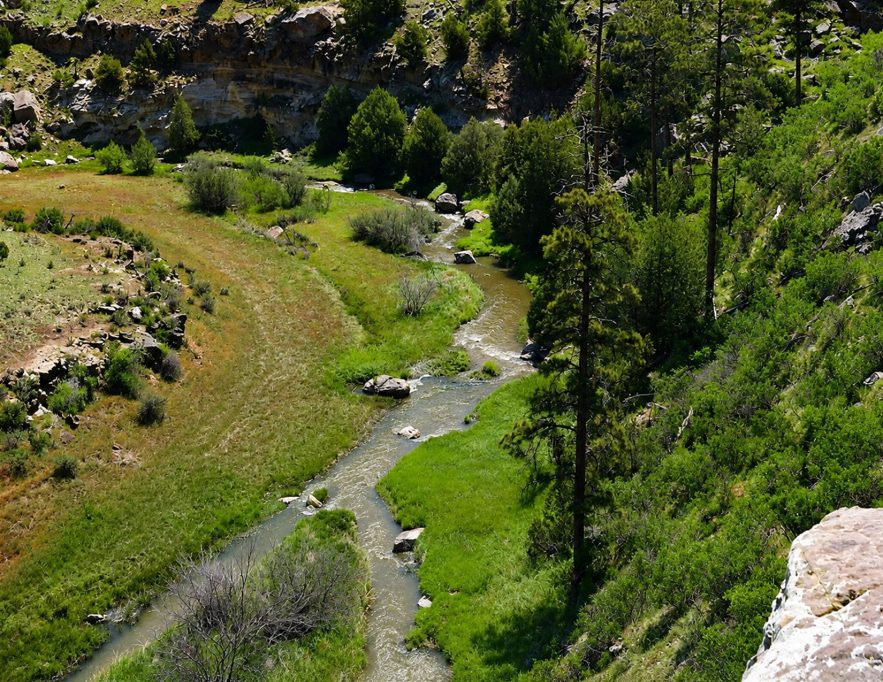
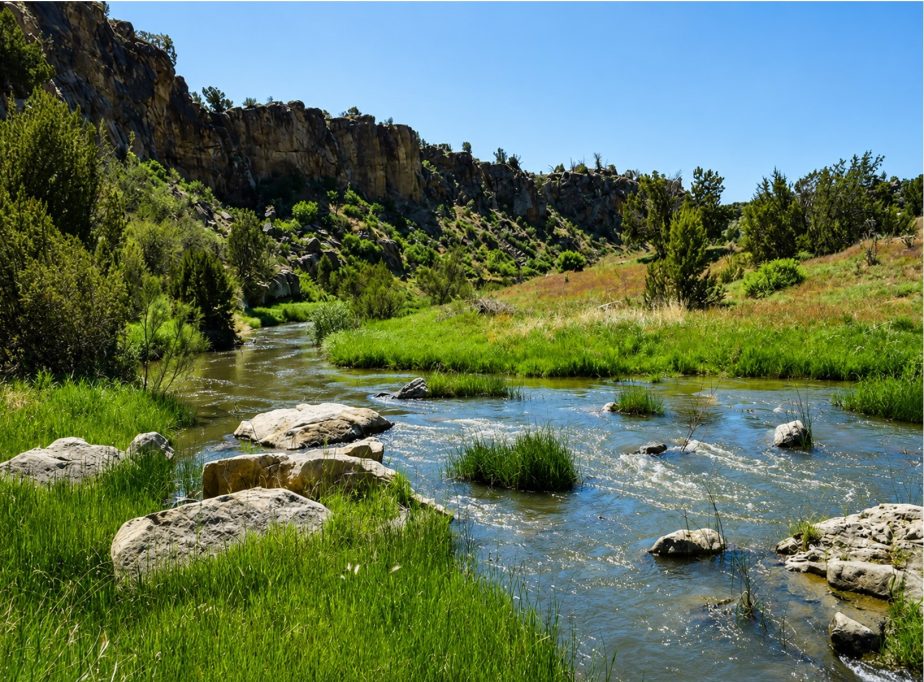
“It could also be only a seasonal creek bed that carries water during the spring snow melt and during rainy months. The presence of water on or near a hunting property is critical to attracting and holding game in the area. Some properties can also be enhanced through the development of springs, wells, ponds, or water tanks.”

Switzer also lists a host of other key elements that you’ll need on your land for optimum game numbers. Cover and forage are critical elements, regardless of where the property is located, and the required cover varies by species. Big-game species demand cover from the elements and good calving habitat. Upland birds also require cover, and waterfowl will—generally speaking—require some water. Forage is critical because, simply put, game animals don’t hang around areas where there’s nothing for them to eat. Figuring out what a particular game animal or bird eats and determining whether or not those forage sources can be found on the property you’re eyeing are critical first steps to make certain you don’t buy a hunting property that’s devoid of the game you want to hunt. Simply finding an elk or deer track is not proof positive that the land you’re considering purchasing holds those animals in large numbers or during the fall hunting season. Simply because a property’s listing exclaims Deer! Elk! Wild Turkey! does not mean that those species are abundant on the property—or that they are there year-round. In my home state of Ohio, abandoned pasturelands (many of which are listed as phenomenal whitetail deer leases) are overrun with species like bush honeysuckle that provide cover but very little food for deer. The whitetails that live on those properties must seek food sources outside the borders of the plant monoculture abundant honeysuckle yields. While it’s entirely possible that your neighbor is getting weekly trail camera images of great bucks, you’ll have to do some property improvement before you’ll hold a lot of good deer on a property overrun with that invasive plant.

Property size and layout are also particularly important, says Switzer. Of course, property size is often limited by budget, but a five-acre property that is secluded and provides forage and cover for game will be more productive than a ten-acre property without food, water, or cover. Property size also dictates return on investment from timber and mineral rights. Switzer says that it’s critical that hunters understand the limitations of hunting small property, especially when pursuing big game. While a hundred-acre parcel of woods in Ohio almost certainly has some whitetail deer year-round a piece of land that same size in Montana may only see elk very late in the year when they’re pushed down from higher elevations by heavy snow. If that Montana elk property is where you want to hunt bulls during the fall bugling season, well, you’re out of luck.

Unless, of course, your property abuts public hunting land. Having the American public at large as your next door neighbor can be a good thing or a bad thing. One of the best scenarios, Switzer says, is if your parcel of hunting land adjoins public land that receives very little hunting pressure because access is limited. Expect those properties to fetch top dollar and vanish from the market in a few days. But if you happen to land one of those properties next to a fantastic, limited-access hunting area with thousands of acres of public property you’ve done quite well. If, however, the property you are considering purchasing adjoins public land with lots of access and lots of hunters your odds of tagging out at your vacation property are usually less. Speaking of access, Switzer also suggests determining whether or not the property is close to a major highway or, worse yet, bisected by a busy road. If so, you’ll run that risk that game will be spooked by road noise and that you’ll have to deal with trespassers and poachers.

If neighboring properties are owned by private individuals you’ll need to try to determine what problems might occur from activity on adjacent land.

“Adjoining properties can have a major impact on the presence of game on your property,” Switzer says. He suggests mapping your hunting property to determine what’s going on at the perimeters. Switzer also says that it’s critical to determine the property’s history and to take the time to research state regulations and hunting statistics for the region or county. What are the odds of success? What species are legal to hunt, when are hunting seasons and are there any special regulations or benefits for landowners?

Then there’s the other crucial aspect—price. How much can you spend? If you’ve got plenty of financial backing then you’ll be able to cast a broader net and pay extra for amenities like established water points and more modern and spacious living areas.

The scenery is stunning–but make sure there is plenty of game in the area, too.


Contacting a Broker

Both Switzer and Volchoff emphasize the importance of finding a certified, qualified broker. Volchoff recommends asking your broker about his or her education and accreditations. Are they an Accredited Land Consultant (Or ALC, a designation through the National Association of Realtors)? And, Volchoff says, a great hunting property realtor should have one more important qualification: sporting experience.

“In other words, does the dog hunt?” Volchoff says. There are a lot of hunters, there are lots of certified brokers, but if you are actually purchasing land on the assumption that it is suitable for hunting it helps to have a broker that’s experienced enough to, say, determine whether a tracks in the dirt road on a property they are selling were made by elk or domestic cattle.

Volchoff also says you’ll want to ask about the broker’s service area and recent transactions, and to negotiate and sign an agency agreement identifying your expectations and broker responsibilities. Understand what your broker charges and be prepared to pay accordingly.

Once that’s done, Volchoff recommends establishing the price range for vacant and improved properties (he recommends staying open to both) with your broker. Set a time frame for purchase, and be certain that you have the funds available.

“Be prepared to pull the trigger,” Volchoff says. “The most desirable properties sell quickly.”

To that end, he recommends working covertly. You’ll need to complete research and identify your options, but consider your property search simply another form of hunting.

“Trophy properties are like trophy game,”Volchoff says. “Too much activity in the zone will limit your success or invite unwanted competition for your target property.”

Using public records (county tax information, hunting statistics, satellite mapping) will help you prepare for the next step—and on-site visit. Your broker will help you access the property via vehicle, ATV, or on foot, but take a very close look at the land. Be sure it’s what is advertised and look to be certain that it has what you want. If it does, act quickly. Your broker will help you prepare and offer, and, with any luck, your hunt for the perfect piece of land will be successful.

For more information, visit www.sportsafieldtrophyproperties.com.


Leave a Comment

An American Classic

The lever-action hunting rifle is as American as shootin’ irons can get.

Photo above: Among the traditional Winchesters in Barsness’s collection are (top) a .25-35 Model 1894 rifle made in 1898, with a 26-inch octagon barrel; a Model 64 .30-30, a fancier version of the 1894; and a Model 1886 in .33 Winchester, the first and only smokeless cartridge chambered in the 1886.

Lever-action hunting rifles are an American institution. While lever rifles have been manufactured and used elsewhere in the world, America’s hunting and military history encouraged the development of a fast-firing repeater with a magazine capable of holding plenty of ammo.

Before self-contained cartridges were developed in the mid-19th century, most American muzzleloaders were relatively small-caliber, so hunters and soldiers could carry more round balls. This changed when the western edge of European settlement crossed the Mississippi River, and hunters commonly encountered larger animals such as elk, bison and grizzly bears—the reason for the famous, larger-caliber rifles made by the Hawken brothers of St. Louis. But the small-caliber, light-ammo tradition still held east of the Mississippi, partly because “big game” mostly meant deer and black bears, and partly because that’s where most of North America’s early wars were fought.

Like most rifles, lever-actions were developed primarily for military use, and the technology was such a sudden, huge leap forward that some people feared for the future of human existence. European firearms designers concentrated on bolt-actions, because their military tradition involved massed troops firing at other massed troops. America’s military tradition was less rigid, partly because many soldiers were militia rather than professional soldiers, and often hunters used to acting independently. The first major lever-action success, and the rifle that became the mechanical basis for most later American lever-actions, was the Henry, with a tube magazine under its barrel holding 16 rimfire cartridges.

The Henry was a refinement of the Volcanic Rifle, a lever-action using a .41 caliber bullet that was also the “cartridge.” A deep hole in the back of the bullet was packed with black powder, then sealed by a percussion cap. In one of the ironic twists of firearms history, the Volcanic rifle evolved from a failed lever-action handgun, produced by the 1852 partnership of Horace Smith and Daniel Wesson, before they started making the first of their revolutionary cartridge revolvers. The Volcanic lost money, and Smith and Wesson sold the company to a group of “venture capitalists” put together by a clothing manufacturer named Oliver Winchester, and renamed the New Haven Repeating Arms Company.

New Haven’s head engineer, Benjamin Tyler Henry, then designed a more powerful .44 caliber rimfire round and an improved rifle. While .44 seems like a large caliber today it wasn’t then, and in fact the Henry’s major lever-action competition, the Spencer, used rimfire rounds loaded with .56-caliber, 350-grain bullets—but the Spencer’s magazine was inside the rifle’s buttstock, limiting capacity to seven rounds. While the Spencer cartridge was obviously more powerful, the .44 Henry was enough for hunting deer and fighting humans, and more Henry ammunition could be carried by a hunter or soldier.

The Henry saw some use by Union troops late in the War Between the States, when it famously became known to Confederate soldiers as “that damned Yankee rifle that can be loaded on Sunday and fired all week.” But technological change was rapid in the early days of cartridge rifles, and the Henry was only produced until 1866, when the renamed Winchester Repeating Arms Company introduced an improved rifle with a brass rather than iron receiver, named the Model 1866.

This first Winchester, nicknamed the “Yellow Boy,” was such an enormous success that it remained in production until 1899. Aside from being a very popular North American hunting rifle, over 50,000 were sold to various European armies, along with millions of rounds of .44 Henry ammunition.

Winchester continued to introduce new lever-actions throughout the 1800s  on the basic mechanical plan of the 1866, with an ammunition loading gate on the right side of their steel receivers. Most were larger actions, in order to handle centerfire cartridges that kept growing longer, culminating in the John Browning-designed Model 1886. Big enough to handle the .50-110 black powder cartridge, the 1886 was also strong enough for smokeless powder.

In the 1890’s Winchester continued to introduce new lever-actions, all designed from the ground up to handle smokeless, from the small Model 1892 in .25-20 to the box-magazine 1895 in .405—which became famous as Theodore Roosevelt’s “lion medicine.” In between the Model 1894 appeared, the most popular lever-action ever made and still in production over 120 years later. (While the 94 has been chambered for cartridges from the .25-35 to .38-55, it became semi-synonymous with the .30-30, originally called the .30 Winchester Center Fire.)

By then other companies started making inroads into Winchester’s lever-action dominance. In 1870 John Marlin had started making rifles similar to the Winchesters, and in 1895 Arthur Savage introduced a sleek new design, a “hammerless” rifle with a 5-round rotary magazine inside the action. Neither Marlins nor Savages immediately rivaled the popularity of Winchester lever-action, but had features that, over the next several decades, became more important to hunters.

Entering the 20th century, Winchester lever-actions had two potential flaws, one the tube magazine used in all but the Model 1895, requiring blunt-nosed bullets. In tube magazines, the new “spitzer” (pointed) bullets being introduced in military ammunition could set off primers of other rounds during recoil—but spitzers shot far flatter, making accurate shooting possible at much longer ranges.

In the 21st century, of course, Hornady introduced spitzers with soft synthetic tips for tube magazines, but the blunt bullets necessary a century ago didn’t really matter much until telescopic sights started becoming more popular—which revealed another flaw in Winchester lever-actions: All ejected fired cases straight up, so scopes had to be side-mounted, not an ideal aiming arrangement. Both the Marlin and Savage lever-actions ejected to the side, leaving plenty of solid steel on top of their actions for scope mounts, and spitzer bullets could be used in the Savage rotary magazine.

Eventually, of course, bolt-actions started taking over the hunting market, especially after World War I when so many returning American soldiers had grown used to 1903 Springfields and 1917 Enfields. Winchester’s only “new” centerfire lever-actions during the first few decades of the 20th century were minor variations on earlier models, including 1935’s Model 71, a slightly modified Model 1886 chambered for only one round, the .348 WCF. The 71 had the bad luck to appear at the lowest ebb of the Great Depression, and only six years before American entered World War II, and factories were converted to making military firearms.

After the war scopes took over, and though some lever-actions could be easily scoped, more hunters bought them due to tradition than practicality. Some eastern deer hunters still preferred light, iron-sighted levers like the Model 94 Winchester and Marlin 336, and some bear guides liked big-bore levers, but eventually far more hunters viewed lever-actions as semi-antiques, partly because they supposedly weren’t as accurate as bolt-actions.

This isn’t necessarily so. Over the decades I’ve owned a pair of levers that shot as well as any of my bolt-actions except my benchrest rifle, a Savage 99-EG  in .300 Savage and a Browning BLR .30-06. However, neither had a trigger pull as good as most bolt-actions, though after working the 99’s over it wasn’t bad. Still, even many hunters who use lever-actions don’t usually choose them for trophy hunting—and I confess to being one. Mostly my levers go on “fun” hunts, for varmints or meat.

In fact my very first big-game animal, a mule deer doe, was taken with a Marlin 336 .30-30—my father’s rifle, purchased partly because his eyesight was so bad he absolutely needed a scope. My shot was so close the 4x only showed a slightly fuzzy view of the deer’s shoulder area, and I probably could have killed the doe without any sights at all. Aside from that first deer, all my hunting with traditional, outside-hammer lever-actions has been with iron sights, while my Savage 99’s have mostly used scopes.

Some hunters do use levers for trophy hunting. When a friend and I decided to do an iron-sight safari in Botswana in 2003 my primary rifle was a Ruger No. 1 in .375 H&H, but he took a Winchester 1886 in .50-110, loaded with black powder and hard-cast bullets. It was a package deal for Cape buffalo and four species of plains game from warthog to kudu, and we both took the same animals with no problems—though he put several more rounds into his buffalo, after having pretty much anchored it with the first shot. He also took an impala at over 200 yards, adjusting the “ladder” on the buckhorn rear sight for the range.

There’s no reason not to use an accurate lever-action with spitzer bullets and a modern “turret” scope for longer-range hunting. You might get some weird looks from fellow hunters, especially those who refuse to hunt with anything but a synthetic- stocked, stainless-steel bolt rifle and who think anything less is almost as much of a handicap as a longbow. That obviously isn’t true, as thousands of hunters taking big-game animals with “primitive” lever-actions have proven over the past century and a half.


Barsness’s first big-game animal, a mule deer doe, was taken with a scoped Marlin .30-30.


Leave a Comment

Image is Everything

A new initiative aims to help hunters put their best foot forward.

The headline caught my eye right away when it came over my Facebook feed: “I Hunt, So @#&! Off!” Yeah, I had to read that one. It was an excellent short essay put out by the Boone and Crockett Club (B&C) pointing out why that’s really not a good response when someone questions or criticizes you for being a hunter—tempting as it might be to say it. We hunters tend to be independent cusses who would prefer not to deal with people who don’t get what we do. Unfortunately, that all-too-common attitude is not helping our cause one bit.

The essay is part of a new initiative by B&C called “Hunt Right—Hunt Fair Chase.” It’s a series of well-written pieces examining hunters’ image, ethics, and the history and meaning of fair chase. The initiative is meant to spark thoughtful discourse among hunters about how we present ourselves to the world at large. Granted, “thoughtful discourse” tends to be in short supply in the internet world and especially on social media these days, but B&C is doing an excellent job of helping hunters think about our image and how we can put our best foot forward. I urge you to check it out for yourself at www.huntfairchase.com.

B&C may be best known for its record book, but its founders were also the original creators and arbiters of the fair chase ethic, and the organization continues to promote and uphold these high standards. Judging from the comments on some of its posts, some fear that discussing ethical questions will lead to “dividing” hunters. I don’t believe that is the case. As the saying goes, we are all in the same boat, but if someone in the boat is shooting holes in the bottom… well, the whole thing is going to sink.

This effort is particularly timely in light of the preliminary results of the 2016 National Survey of Hunting, Fishing, and Wildlife-Associated Recreation, which have just been released. Hunter numbers are not getting any stronger. The survey showed that a mere 5 percent of the U.S. adult population went hunting in 2016. Hunting participation actually decreased 16 percent between 2011 and 2016, a number the survey stresses is “not statistically significant,” but it’s certainly not good news, either.

Many hunters don’t seem to realize it, or don’t want to, but hunting is a privilege, not a right. This is especially important to remember because we are such a minority, and we must respect the fact that it is a privilege if we want hunting to continue for the long haul.

Fortunately, we have a lot going for us. The vast majority of hunters are principled, ethical men and women who genuinely care about wildlife, habitat, conservation, and their fellow human beings. Hunting has been proven over and over to be a force for conservation and the best way to maintain healthy wildlife populations. But all that won’t matter if we can’t get the general public to see hunting as a force for good.

Of course, we’re never going to convince virulent anti-hunters that hunting and hunters are anything but evil, and it’s pointless even to try. But they’re not the ones we need to talk to. The vast majority of people in the world today are not hunters, but they don’t necessarily have a problem with it. They need to see hunters in their true light—fine, upstanding people who follow the laws and hold themselves to a high ethical standard. We grumble that the media won’t show us that way, but if they won’t, we have to lead by our actions, tell our own story, and tell it right.

Leave a Comment

tablet

Never Miss An Issue!Subscribe Now: 6 Issues for $34.97

More Details
WordPress Video Lightbox Plugin