Sports A Field

Enough Gun

How do you know how much gun is enough?

Many friends and colleagues in the business are primarily gun writers, while others are primarily hunting writers. I am a bit of both: I love sporting firearms, and I’m an avid hunter. So a favorite campfire argument (and writing topic) concerns the suitability—“adequacy,” if you will—of various cartridges for specific field applications.

An old African adage is to “use enough gun.” Although not directly attributable to Robert Ruark, it made a great title for a posthumous collection, published in 1965. I tend to follow that advice, and if I err it’s usually on the side of caution. So, regardless of the cartridges or game discussed, any article on the subject is probably going to draw comment. Invariably, at least one will start with: “Karamoja Bell shot over a thousand elephants with his 7×57…” I don’t know where this story got started, but for sure it is perpetuated by folks who haven’t taken time to actually read W.D.M. Bell’s works.

Just the other day, once again, I saw in another publication a reference to Bell’s “1,011 elephants” with the 7×57. For me this is like fingernails on a blackboard, because it just isn’t true. Bell left us excellent books on his exploits, still great reading today, and he identifies the rifles he used often enough that reality is clear. Bell was a smallbore guy, and the .275 Rigby (a.k.a. 7×57) was a favorite…but he used a lot of other rifles. His largest one-day bag was taken with the .318 Westley Richards, a .33-caliber firing a 250-grain bullet. Because ammo was so available, he used the .303 British a great deal, 215-grain .311-inch bullet. After World War I he returned to Africa just once, and his battery included a .400 Jeffery double and a .416 Rigby bolt action.

Today Bell’s preferences for elephants no longer matter. He was a great marksman and athlete, hunting in an altogether different time, and history has spoken: Most of his choices are illegal today, below the statutory minimum. But this isn’t about Walter Bell, or even about using “enough gun.” Rather, how can you know how much is enough?

The .30-06-based .370 Sako, a 9.3mm cartridge, shown with 286-grain Barnes expanding and solid bullets…the left-hand bullet was recovered from a buffalo; the right-hand bullet was recovered from an elephant. Both were “enough gun.”

This is actually difficult. In any hunting situation there are broad parameters of “adequacy,” with a wide selection of suitable calibers and cartridges. In Oregon last year my friend Tim Lesser shot a black-tailed deer with his pet .375 Ackley Improved. We can probably say that he was overgunned, but he certainly got the job done…so too much gun seems a lesser sin than not enough, which can result in wounded game. Today it’s common for .22 centerfires to be legal for deer. I don’t think they’re perfect, but with today’s heavy bullets designed for deer hunting they are adequate. Based on experience in Africa on small antelopes such as steenbok I’m totally convinced that, regardless of velocity, the .17s are not adequate for deer. Their light, frangible bullets, intended for varmints, just don’t have the penetration. Cartridges below .22 centerfire generally remain illegal for deer, and I think this is a good thing.

Let’s look at some larger animals. As large and potentially dangerous beasts, African buffalo tend to fall under the same legal minimums as elephants, in most countries either 9.3mm (.366) or .375. I’m sure these are enough, but since I believe in adhering to game laws I have little personal experience with lesser calibers on African buffalo, a couple with .33s and that’s about it. Ruark wrote that he had taken buffalo easily with his .30-06, and I saw a buffalo taken very cleanly with a single 156-grain solid from a 6.5x53R (not all countries have minimums), and of course many buffalo were taken with such light calibers in the old days.

The Asian water buffalo is bigger than the Cape buffalo, but few jurisdictions have legal minimums. Australian market hunters tended to use .303s and, later, .308s. I do have some experience here. In the Philippines we used an M14 with 7.62mm military ammo—which is all we had available. In Argentina I’ve taken water buffalo with the 7×57 (with 175-grain solid); and also the .300 RUM (with 200-grain Swift A-Frame) and .350 Remington Magnum (with 225-grain Barnes X). There were no problems, and for sure bullet selection makes a huge difference. However, in all cases this was pushing the envelope, not “erring on the side of caution.” Obviously there was enough gun to kill the animal, because that’s what happened…but was there enough gun to stay out of trouble if things didn’t go quite right? I think not.

Big bears are much the same, except that no North American jurisdictions I’m aware of set different minimums for grizzly, brown, and polar bear than for other native big game. I’ve always figured the .33s and .375s were about right, and certainly have been in my experience. Especially with grizzly, which is more often a target of opportunity than the others, hunters often use what they have. Jack O’Connor took a number of mountain grizzlies with his beloved .270…but when he went for Alaskan brown bear he used a .375. After taking a sheep in southern Yukon I tried hard to get a big grizzly we’d seen, and the only rifle I had was a .270 WSM. I didn’t get a shot, but I probably could have made it work.

On the other hand, the only problem I’ve ever had with a big bear was with a .300 Winchester Magnum and a good 180-grain bullet. Bullet performance is critical, but shot placement is everything, so isolated bad experiences are not definitive. However, as recounted in my recent Deadly Encounters book, veteran B.C. guide Cy Ford was killed by a grizzly his hunter had wounded with a 7mm Remington Magnum. The bear also died…but not soon enough. Traditionally, Inuit hunters loved the .222 Remington, a fact that is cited almost as much as the W.D.M. Bell myth…but, over the years, a lot of Inuit hunters went out on the ice and never returned. So I’m not going to waver on this. Soon I’m going to B.C. to hunt a grizzly, and I’m taking a .338 Winchester Magnum, a sound and sensible choice.

Potentially dangerous animals alter the rules, so let’s talk about some large non-dangerous beasts. The eland is Africa’s largest antelope and the world’s largest non-dangerous animal; a big bull outweighs any buffalo. I doubt anybody has shot “a lot” of them, but I’ve taken over a dozen. I have mostly used .375s; in my view they really are perfect as a combination of ranging ability and power for such a large animal.

In 2016 Boddington used a .300 Winchester Magnum with 200-grain Hornady ELD-X to take this Cape eland, Africa’s largest antelope. Over the years he’s taken most of his eland with .375s, which work perfectly—but he’s not convinced that much gun is essential.

Is that level of power really needed? I don’t know. Just a couple weeks ago, hunting with Frontier Safaris in South Africa’s Eastern Cape, I shot a nice Cape eland bull with a .300 Winchester Magnum and a Hornady 200-grain ELD-X bullet. We never found a drop of blood, but we found the eland down within a hundred yards. I’m reminded that Donna shot a big eland bull with a .30-06 and Federal 180-grain Trophy Tip; and daughter Brittany shot one with her 7mm-08 with 140-grain Nosler Partition. No problems with either, so while a .375 gives me great confidence on eland, maybe it isn’t really essential.

The biggest bull moose are a bit lighter than eland, but still very large animals. Because they’re a food staple in the North many hunters have taken more moose than I have, and most are probably shot with whatever general-purpose hunting rifle is available. My experience is that moose are not especially hardy but, more importantly, they are long-legged, but slab-sided, so do not require as much bullet penetration as elands or buffaloes. Most of mine have been taken with .33s and .35s (which work decisively), but I’ve seen moose taken quite cleanly with .270s and I’ve used .30-calibers with no problems.

Often it seems that moose react slowly upon receiving a bullet, standing or walking away, and then lying down. I shot a big Alaskan moose at close range with a .416 Remington Magnum…he didn’t go anywhere, but didn’t seem unduly impressed by all that power. The most dramatic effect I’ve ever seen was a Canadian bull my Dad shot in the heart with his .308 Winchester: Straight down and dead in its tracks. This would lead one to believe that the .308 Winchester is the best moose gun ever invented. Maybe, but no animal reacts the same upon receiving a bullet…and the other two great variables are shot placement and bullet performance. So it’s always dangerous to fixate on isolated incidents, whether good or bad, and better to make your choices based on a consensus of experience. There’s always a broad range of perfectly suitable choices, but experience-based knowledge is out there and available.


Moose often react slowly upon receiving a bullet; this bull was not especially impressed by all that power. Although the moose is a big animal, Boddington is convinced that larger cartridges aren’t necessary.


Leave a Comment

Something Special

Special-run rifles are a great way to own an interesting and accurate rifle without the cost of a true custom job.

Some hunters believe they have only two choices when it comes to rifles. The first, and most obvious, choice is one of the many factory models cranked out like coffee-makers. This isn’t a bad thing, because despite the illusions of hunters who still yearn for the days of “handcrafted” factory rifles, on average, today’s CNC-machined rifles shoot far more accurately right out of the box. Many actions are designed and built for finer accuracy, are often fitted with better barrels, and a high percentage have more-stable synthetic stocks. They’re also available in a wide array of weights, suitable for anybody from Himalayan mountaineers to artillery officers.

The second choice is to order a real custom rifle, one made just for us. Unlike a rifle put together with aftermarket parts, wood-stocked customs take far more time (and money) to create. Albert Einstein once noted, “When a man sits with a pretty girl for an hour, it seems like a minute. But let him sit on a hot stove for a minute — and it’s longer than any hour. That’s relativity.” Waiting for a wood-stocked custom rifle can be like sitting on a hot stove for years.

Luckily, between “boring” factory rifles and exciting/painful custom rifles lies a broad spectrum of other hunting rifles, including so-called “special runs” available from some factories. These usually offer combinations of features not offered in standard factory models, whether chamberings, stocks, or barrels, or they might have fancier wood. Their price is normally somewhat higher than standard factory rifles, but not anywhere near the price of a true custom.

Over the years I’ve owned a number of special-run rifles, and all have shot very well. This might simply be attributed to today’s overall trend toward finer accuracy (including better bullets), but after analyzing my range notes, the special-runs have indeed shot noticeably better than most of their “parent” factory rifles.

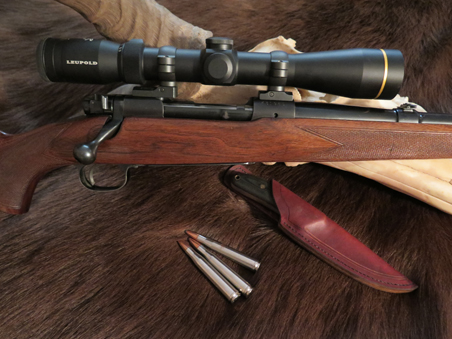
A good example would be my Winchester Model 70 Featherweight .270, acquired during a fundraising auction at the Jack O’Connor Hunting Heritage and Education Center in Lewiston, Idaho. The 75th anniversary of the introduction of the Model 70 was celebrated by special runs of two grades of O’Connor Tribute rifles. Mine, of course, is the lesser grade (otherwise I couldn’t have afforded the auction) but it’s still a really nice-looking rifle. The Center had acquired several Tributes to use in fundraisers, and still had four left to choose from. Since there wasn’t a shooting range handy, my choice was based on the figure in the stock wood.

After I got back to Montana, however, it wasn’t long before the rifle made a trip to the range. Its very first group at 100 yards, shot with Norma’s 150-grain Oryx factory load, measured 0.40 inch. Not every group has been that small, of course, but the rifle shoots so accurately it’s moved all my other .270s down the road, and often gets used to test-fire new components. The new “Wonder Powder” (as O’Connor would have called it) for the .270 is Alliant Reloder 26, which easily gets 3,000 fps with 150-grain Nosler Partitions from the 22-inch barrel, with groups averaging around ¾ inch. (I also hunt with this rifle, something that’s shocked a few people. One guy insisted, “You don’t hunt with a rifle like that,” a statement I suspect would offend Jack O’Connor.) In fact, part of the reason I kept bidding on the rifle was hearing from several other Tribute owners about how well their rifles shot.

At the other end of the beauty spectrum is a Tikka T3 Super Lite in .260 Remington, part of a special run put together a couple of years ago by Whittaker Guns, a big store outside of Owensboro, Kentucky (www.whittakerguns.com). The place is run by Darrik Caraway, a rifle loony with a very good feel for what hunters want, the reason you shouldn’t visit Whittaker Guns without money. This special run of T3s was put together just before Tikka upgraded to the T3x, and the Super Lites are the fluted-barrel version of the standard Lite.

This Tikka T3 Super Lite is part of a special run commissioned by Whittaker Guns in 2014. Tikkas have the reputation for fine accuracy anyway, but 6 3/4 pound rifles don’t always shoot like this.

This run included synthetic stocks finished in Mossy Oak camo, which would give O’Connor a case of his well-known “vapors”—but as a sheep hunter he would have appreciated the weight, 6 3/4 pounds scoped. He’d also have to like the accuracy: The .260’s first 100-yard group was also shot with factory ammo, and three 140-grain Remington Core-Lokts went into 0.44 inch. Of course, it hasn’t shot that well with every kind of ammo, every time, but its primary handload averages around 0.6 inch. Like the .270 Tribute, this is without any tweaking, either of the stock’s bedding or trigger pull.

Darrik Caraway’s latest inspiration is a special run of Tikka T3x Lite stainless rifles in .22-250 Remington, but with a 1:8 rifling twist to accommodate longer, heavier bullets with high ballistic coefficients, for hunting both big game and varmints. They should arrive about the time this column appears in print.

Another very accurate special-run rifle was a Ruger No. 1AH in .25-06 Remington from Lipsey’s, a wholesale firearms distributor. The 1AH was itself a special model, with the small Alexander Henry fore-end combined with a light-contour 24-inch barrel, but the wood was also specially selected European walnut.

Over the half-century since Ruger No. 1s were introduced they’ve have had a mixed reputation for accuracy, but the problem was mostly solved when Ruger started hammer-forging their own rifle barrels in the early 1990s. Early testing with several bullets resulted in a three-shot group of 0.39 inch with 75-grain Hornady V-Maxes and Accurate 4350 powder. I’m always suspicious of single three-shot groups, so I loaded up some more ammo—and four three-shot groups averaged 0.53 inch. The rifle also shot 100-grain Barnes Tipped TSXs and 120-grain Nosler Partitions into groups measuring well under an inch.

These days all Ruger No. 1s are limited-number “special runs” from Lipsey’s, with new configurations each year. There are six chamberings for 2017—.243 Winchester, 6.5 Creedmoor, .270 Winchester, .275 Rigby (7×57), .308 Winchester, .35 Whelen, and .44 Magnum. The most interesting to “modern” shooters might be the 6.5 Creedmoor with a 28-inch barrel, and to traditionalists the .275 Rigby with a medium-weight 24-inch barrel and open sights. (For those hunters who feel the need to use “correct” ammunition, Hornady makes both brass and ammo headstamped .275 Rigby.)

I’ve owned several other special-run rifles that shot better than average for their make and chambering, leading me to suspect they’re put together with more care than everyday production rifles. Somewhat understandably, the manufacturers I’ve asked about this are reluctant to make any firm statements—although they often smile a little when answering. After all, there’s some variation even in carefully made rifles, and perhaps more importantly, among shooters. Leading customers to expect above-average performance would no doubt result in a certain percentage of disgruntled customers.

In the meantime, I’ll keep looking for more special runs myself, as do many other hunters. Some even anticipate them, making requests or even starting to guess, for example, what new configurations of the Ruger No. 1 will appear next year. The guessing and anticipation is almost as interesting—though not as painful—as waiting for a custom rifle.

Leave a Comment

Boddington Wins 2017 Weatherby Award

Congratulations to Craig Boddington on winning the 2017 Weatherby Hunting and Conservation Award!

 
Craig Boddington has been named the 2017 Weatherby Award winner. The Weatherby Award is a prestigious hunting award that is based on these criteria:  the number and quality of the collected species, the amount and type of conservation effort put forth by the individual throughout his/her lifetime, and the hunter’s personal character, hunting ethics, and integrity.   It takes dedication, sportsmanship, a high level of ethics, and over-the-top hunting accomplishments to win this award.  Craig, as the 61st Weatherby winner, has joined the ranks of the privileged few ever to attain this pinnacle in the hunting world.
 
Born in Kansas in 1952, Craig Boddington is a hunter and an author of international repute. A veteran of over one hundred African safaris, he also has extensive hunting experience in North America, Europe, Asia, and the South Pacific. The author of twenty-six books on hunting and firearms, Craig has also written in excess of four thousand magazine articles on the same subjects. He has used his hunting trips as field experience for his writing, gathering information about hunting, fauna, ballistics, and firearms wherever he travels. His extensive experience with firearms and calibers has given him insight into what does and does not work and has made him a leading expert in the field.
 
He began his outdoor-writing career in college and continued after graduation while on active duty in the Marine Corps. After leaving active service, he joined Petersen Publishing Company in 1979, where he served as an associate editor for Guns & Ammo magazine; as an editor for Guns & Ammo Specialty Publications; as an executive editor for Petersen’s Hunting magazine; and from 1983 to 1994 as editor of Petersen’s Hunting magazine. He currently is executive field editor for the Outdoor Sportsman Group and a frequent contributor to other major publications, including Sports Afield and Safari magazines. His professional awards include Leupold’s Jack Slack Writer of the Year (2006) and the C. J. McElroy Award from Safari Club International (2008) and the Conklin Award (2009).
 
In recent years, Boddington has become active in outdoor television, serving as cohost for Petersen’s Hunting Adventures and Guns & Ammo TV and as host of The Boddington Experience. In 2005 Boddington retired from the U.S. Marine Corps after serving thirty-one years on active and reserve duty.
 
When he isn’t hunting, Boddington and his wife, Donna, divide their time between California’s Central Coast and a farm in southern Kansas. He has two daughters, Brittany and Caroline.
 
The 2017 Weatherby Award will be presented to Craig Boddington at a black-tie banquet on 3 January in Dallas.  For more information on the Weatherby Award and the banquet, please visit WeatherbyFoundation.com. Please join us in wishing Craig Boddington our heartiest congratulations on winning the hunting world’s most prestigious award.

Leave a Comment

A Letter From 1898

Sports Afield subscriber Tom Hellgeth sent us this letter, written by Sports Afield’s founder and original editor, Claude King, dated May 3, 1898. It’s a fascinating glimpse into the early years of the magazine.

Leave a Comment

Taking a Non-Hunter on Safari

Great ideas for fun things to do before and after your safari in South Africa.


In the past when a non-hunter went on safari, there usually wasn’t much for the companion, or observer, to do except trail along with the hunter, sit in camp with a good book, or, where available, go with a camp employee to visit villages or shop.

 
Times have changed, though, and these days there is a wealth of opportunities for adventure in Africa. This article will take a good look at some of them. South Africa is a common destination for hunters, so we’ll start there and cover some of the side trips, mini-vacations, and travel destinations in that country. We will also discuss how hunting lodges have changed over the past decade or so.

 
Then and Now: Hunting Lodges I went on my first African safari in 1995. I stayed in a tent in the bush where the shower was operated by a young boy filling a five-gallon bucket with water that had been heated over an open fire. To wash, you called “shower” and the bucket was lowered down by rope and pulley, then filled with water that smelled of the wood in the fire. The bucket had a shower head attached to the bottom, and you showered by turning on the valve, getting wet, shutting off the shower head, soaping, and then turning the valve back on to rinse off. The tents were tastefully furnished with a bed, a dresser, and that’s about it. Mine was additionally adorned with a bright blue spider that lived up high where the sides joined the roof. My wife didn’t care much for this decoration, but I managed to calm her nerves by saying, “Don’t worry about him living up there. ‘Course you might want to be a little concerned when he’s gone.” For some reason, it got very cold in the tent that night.

 
Meals were cooked on a 3’x3’ steel plate placed over one corner of the fire pit. The cook could do anything from fresh bread to kudu steaks on that plate – and it all tasted wonderful. The food’s taste wasn’t harmed at all by the few ashes that managed to collect on whatever was on the menu.

 
These days, things have changed. Bathroom facilities are much improved. Safari camps are more likely to be lodges, and have much more for a non-hunter to enjoy. There are guided day trips to local villages and towns, animal viewing and photography, dancers around the campfire, swimming pools, and the food service is excellent – even the steel plate is gone. South Africa South Africa offers something for everyone. It’s modern cities have excellent dining and a thriving art scene. There are diamond mines to visit, vineyards to sample, mountains to climb, and huge game reserves like 7,523 square mile Kruger National Park (3.5 times larger than Delaware.). There are seventeen different regions in South Africa, and we’ll see what each one has to offer. We’ll look at half of them in this post, and then cover the remainder in a later one.


Sometimes just seeing what street vendors have on offer can make for a delightful afternoon.

Cape of Good Hope

The Cape of Good Hope is a rocky headland on the Atlantic coast of the Cape Peninsula. It’s a 19,000-acre section of Table Mountain National Park. Contrary to common thinking, the Cape is not the southernmost point on the African continent. That honor belongs to Cape Agulhas, 90 miles southeast. The Cape of Good Hope is home to numerous animals, including the bontebok, red hartebeest and eland. Chacma baboons are the animals most associated with the Cape, and are a major tourist attraction. There are miles of hiking trails and many beautiful deserted beaches. The Cape is the legendary sailing waters of the Flying Dutchman, a storied 17th-century ghost ship crewed by long-dead sailors. It is cursed to sail the ocean forever.

 
Cape Peninsula

When in Cape Town a round-trip drive down Cape Peninsula makes a great side excursion. The trip takes you along the False Bay coast where you can visit Kalk Bay, a small fishing village, and Boulders Beach, a sheltered beach between granite boulders near Simon’s Town. The beach is home to jackass penguins that live on the protected beach. The rugged coastline along the peninsula is one of the most scenic in Africa. Take a drive along the Misty Cliffs, located between Scarborough and Witsands, where you can windsurf or kite surf. Don’t forget the sunblock.
Horses and camels can be rented at Noordhoek Beach. Sometimes whales are visible, and seals and otters are common. There are many cottages and B&Bs to stay at, and there are a number of cottages available inside the Cape Point Nature Reserve on Olifantsbos Beach. While there, hike the shipwreck trail in company with the local bonteboks. Checkout the remains of a Dutch coaster that wrecked there in 1963.

 
Dolphin Coast

The Dolphin Coast (North Coast) on the northern coast of South Africa is located less than one hour north of Durban in KwaZulu-Natal Provence. It’s on the Indian Ocean, and is bordered by the Tongaat River near Ballito and the Umhlali River. It’s known for its large pods of bottlenose dolphin right offshore.

 
Durban and KwaZulu-Natal

Durban has some of the most beautiful beaches in the world. They extend all the way to the Dolphin Coast to the north, and down the Sapphire Coast into the Eastern Cape. KwaZulu-Natal has two World Heritage Sites – the uKhahlamba-Drakensberg Park and iSimangaliso Wetlands Park. It’s also the location of the battlefields of the Anglo-Zulu and Anglo-Boer wars. Historical sites include Isandlwana, Blood River, and Rorke’s Drift.

 
Mpumalanga and Kruger National Park

Mpumalanga (where the sun rises) is South Africa’s wildest province. It consists of both Highveld and Lowveld. The southern half of Kruger National Park is in the latter region. Other major tourist attractions include the Sudwala Caves and the Blyde River Canyon. Kruger National Park and surrounding private game reserves are home to all of the Big Five – Cape buffalo, elephant, leopard, lion, and rhino. Stay at one of the game reserves and you are guaranteed luxury accommodations, excellent service, and lots of African animals just outside your door.

 
Noordhoek

This area is a suburb of Cape Town approximately 22 miles to the south of the city. It can be reached from the spectacular coast road, Chapman’s Peak. It has a picturesque shoreline and a long pristine white beach. The century-old wreck of the steamship Kakapo is on the southern end of the beach.

 
South Coast

The South Coast area of KwaZulu-Natal is a popular destination that stretches all the way from Amanzimtoti beach just outside Durban down to Port Edward. Its 125-mile length encompasses the vacation towns of Margate, Palm Beach, Ramsgate, Scottburg, and Trafalgar. The area has some of the country’s finest beaches backed by natural jungle and palm trees. There are numerous nature reserves, trails, swimming activities, including snorkeling and diving, and two of the country’s best golf courses.

 
Setting up Side Excursions while in South Africa

Because most hunters on a South African safari aren’t really familiar with the country other than some of the hunting camps or game ranches, it best that anyone seeking side trips use the services of a hunt broker who is knowledgeable about what’s available. The broker should have references, and a comprehensive web site that answers all your questions. I’ve been working with John Martins at Discount African Hunts: www.discountafricanhunts.com for more than two years. He, and his web site, will provide you with all the information you need for a hunting or camera safari, and can tailor a safari and side trips to your personal requirements.

Below: Bathroom facilities on safari sure have changed over the years! At top, a well-appointed bathroom at a modern safari lodge. Below, a traditional shower setup with a five-gallon bucket.

Leave a Comment

Traveling to Argentina with Firearms

What you need to know before you head to Argentina’s Cordoba region with your own shotguns.

In June 2016 and again in May 2017 I flew to Buenos Aires for a bird hunt. A lot of confusion has surrounded gun importation into Argentina since the rules changed in early 2015. I thought readers might like to hear from somebody who walked the walk.

My booking agent had filled out the required RENAR (Argentina police) forms in PDF format and sent them via email to me before the trip. I printed out a few copies, and when I checked in with American Airlines these helped because the agent could find nothing in her computer about importing guns into Argentina, and if you can present an official-looking form it tends to put airline agents at ease. Some reports say you need a consular permit from the nearest Argentina embassy or consulate, but on my trip no such form was required or asked for. You do need a consular permit in order to bring a semi-automatic firearm into the country. Make sure you have this or your gun will be held back as you enter Argentina. I learned this from a fellow hunter who did not have this permit—his gun was returned to him when he exited the country.

I connected via Dallas to Buenos Aires without a problem and my guns came out with the regular luggage once I landed at the Ezeisa Airport (EZE). I went to the RENAR (police) office, which is after immigration but before you get to customs, and had my paperwork processed quickly and efficiently in twenty minutes. However, I then went to Argentine Customs and there a second set of papers had to be generated, and this took nearly two hours. I then had to wait for two more hunters in our party to come in via another flight.

Before they cleared Customs, it was too late to make the connecting flight with Areolinas Argentinas (AAR) from Newbery airport (AEP) to Cordoba airport (COR) since AEP is at the other side of Buenos Aires and it can take two hours to travel between the two via car. A change of ticket was not too bad ($100) but there was more bureaucracy required to get the guns on the internal flight. During this process we were assisted by a ground agent, Sandra, who was arranged for us by our booking agent. The ground agent also arranged a shuttle for us between the airports, although you can easily take a taxi or van. Once in Cordoba, the guns arrived quickly and we were off to the lodge.

On the way back we had to check the guns in with police at COR and had to get them through another police check after we arrived in AEP. We traveled via car back to EZE where we first checked the baggage in with the airlines (minus the guns) then got our gun cases sealed at RENAR and Customs (allow one hour) and then the guns get delivered back to the airline and get put on the conveyor belt. When you pass immigration on the way out you need to present your RENAR form, which has been stamped to verify the guns left Argentina.

All in all the process is pretty bureaucratic, but if you have some patience it can be done easily. I recommend you use a booking agent for your hunt if you bring your own guns and that you engage one of the services that helps you clear the guns at EZE, arrange transport between EZE and AEP, get your guns on the plane at AEP, and do the same on your trip back.

Things to remember:

1) Allow at least five hours from the time you land at EZE and your departure time at AEP when traveling with guns.

2) In 2017 the RENAR forms came to me in editable PDF format which means you can fill in the information on line, save the form, and send it back. There was, however, a flaw in the PDF set up and the forms (8.5×14 inches) would not “auto shrink” to an 8.5×11 when printed, so be careful and load your printer with the right paper, or the bottom part of the form is cut off.

3) Before you leave the RENAR offices in EZE make sure that your RENAR copies have original stamps and signatures (they make at least four copies and not all copies have original stamps/sigs) and keep these papers with you till the end when you hand one copy clearly stamped by RENAR to immigration, as you leave the country. You get this copy by having your guns inspected and sealed as you check in for your flight. You will not be able to leave the country unless you have this stamped copy as Immigration has in its computer records that you entered the country with a gun.

4) Ask your agent about taking flights from EZE to COR; this saves three hours and cost. AAR domestic schedules from EZE are not always convenient but on the way back from COR we could have taken a direct flight to EZE and saved time. Ask your agent to check the schedules back from COR to AEP or EZE; if you can land directly at EZE it will save time. In 2017 we took the direct flight COR-EZE and it was much better and quicker.

5) Have two copies of your RENAR papers and passport with you at all times, especially when hunting; you could be stopped by a police check (which are routine).

6) As you enter the country you will also get a paper from Argentine customs with your guns registered on them. You will need this paper as you check out of Argentina just like the RENAR form. So do not lose it and, again, have it on you at all times.

7) Finally, I have heard from several Argentina-bound hunters that the connections between the USA and Santiago, Chile, or Lima, Peru, are excellent. From there LATAM airlines flies regular flights to Cordoba. All accounts have that entering and departing with guns via Cordoba is much easier than Buenos Aires. I am going to try it myself next year. Make sure your airline will transfer guns to LATAM before booking, or book entirely with LATAM.

Argentine police, security, and customs officials are courteous and helpful. Obviously, the customs agents at EZE could learn to process paperwork faster!—Henry van den Broecke

Leave a Comment

A Canoe Trip From 1909

This interesting old photo from 1909 was sent to us by Sports Afield reader Richard Propsom. He wrote, “Ran across an old photo of my grandfather in 1909 on a canoe trip from Sturgeon Bay, Wisconsin, to New Orleans via the Fox River and Mississippi River.  One of the photos shows them with the St. Lawrence canoe and emblazoned on the side it says “Read Sports Afield.”  A local paper indicates they may have been promoting the magazine along the way.  The picture shows Edward Ollinger on the left and Henry (Happy) Propsom on the right. Not sure where picture was taken, but based on the clean pots and pans and gear, maybe at the start of the trip. Interesting  how some camping gear has changed and others not so much. We still have the canoe paddle and the Dutch oven.”

1909 Sturgeon Bay, WI. to New Orleans La. – Edward Ollinger (left) and Henry Propsom (right)

High Adventure Birds

In search of the world’s most exotic wild turkeys.

The wild turkey is probably the second-most popular game in the United States, following deer. I tend to think of all turkeys as “big-game birds.” We call them, not much different from rattling in a buck or bugling in an elk; and we pattern them, and sometimes stalk them. Usually we take them on the ground, so we deliberately aim at them, focusing on shot placement (head and neck), which is different from all other bird hunting.

Part of the popularity is the spring season, the most exciting time to hunt gobblers and a time when most seasons are closed. Part, too, is the availability. In my lifetime turkeys have increased from remnants into millions, now returned to all former range, and found in many areas that never had them. As with deer, most turkey hunters hunt close to home, but there is a growing group of traveling turkey fanatics who set goals to hunt different varieties in different areas.

There are four distinct subspecies of turkeys in the United States, with distinct plumage. In the days when turkeys were scarce, game managers weren’t always careful about which turkeys were introduced where—California, for example, had no turkeys but now has three varieties (and a lot of hybrids). The Eastern wild turkey is the probably the most widespread, native to the eastern half of the country. Merriam’s turkey is the bird of the Rockies, now spilling over on both sides. When turkeys were nearly gone Rio Grande turkeys remained primarily in Texas, but now are widespread from the Gulf Coast up through much of the Great Plains.

Within the U.S. the rare bird is the Osceola gobbler, found only from central Florida southward. For Florida hunters this is their bird, but for turkey hunters elsewhere getting an Osceola gobbler can be tough. I concede that I’m not a very good turkey hunter: The Osceola gobbler gave me fits! It’s a tropical bird with an early mating season. I found them much less vocal than the others, and thus the very Devil to hunt. Of course, the Osceola isn’t “my bird,” so I had to travel across the continent to hunt them. This made failures extra-painful.

The Osceola turkey of Florida proved Boddington’s most difficult. The climate is very tropical, and he found these birds to be less vocal than other varieties. For him it’s a long trip to Florida to hunt them and he had multiple failures before being successful.

Hunting your own backyard birds is one thing, but most of us have only type of turkey within easy striking distance. Hunting somebody else’s turkeys, the “other” turkeys, usually takes planning, effort, and travel.

For quite some time many hunters have focused on taking one each of all four U.S. turkeys—but in fact there are two more native North American turkeys. The colorful ocellated turkey, quite different from all the rest, is found in southernmost Mexico and on into Central America. The tall, rangy Gould’s turkey is concentrated in Mexico’s Sierra Madre Mountains, now with a small population established on the U.S. side. Recognizing there is a growing group of avid, adventurous, and traveling turkey hunters, the National Wild Turkey Federation (NWTF) has compiled listings of fully six different “turkey slams.” Their Grand Slam is one each of the four U.S. turkeys. The Royal Slam adds a Gould’s turkey. The Canadian Slam is Merriam’s and Eastern in southern Canada only, and the Mexican Slam, similarly, is Rio Grande, Gould’s, and ocellated taken in Mexico only. Then there’s the World Slam, one each of all races of wild turkeys.

You can check out these listings by going to www.nwtf.org/hunt/records/slams, where links will lead you to their listings of registered slams. I was shocked to learn that more than three hundred hunters have registered World Slams with NWTF. Quite a few of these avid turkey hunters have registered multiple World Slams—the highest number I saw was eight, credited to bowhunter Michael Jefferson. Oh, one more slam: The U.S. Super Slam requires taking one turkey in every U.S. state except Alaska (our only state that has no turkeys). Six hunters are known to have accomplished this amazing feat!

This last lies far beyond my wildest aspirations and, honestly, sounds like work. But at least one each of all six is a worthy goal that will take you to some interesting places—even if, like me, you’re not a particularly avid turkey hunter. In the course of a long hunting career the four U.S. birds sort of came along although, having been beaten pretty badly twice, I admit the Osceola turkey became a mission. The two Mexican birds, however, require specific expeditions for almost everyone.

The ocellated turkey is hunted primarily in Mexico’s Yucatan Peninsula, with some opportunity in adjacent Guatemala and Belize. The ocellated turkey is smaller and brightly colored, so different that it was once thought a separate genus, now considered a separate species of the turkey’s Meleagris genus. This is jungle hunting, hot and thick. These birds don’t exactly gobble; down there they call it singing, primarily done on the roost in mornings and evenings. Although occasionally taken by ambush or stalking, the primary hunting technique is to roost birds by sound in the evening, then stalk just at first light. Interestingly, this is exactly the way the big capercaillie grouse is hunted in Europe!

They are not easy; in four hunts in Mexico’s Yucatan I’ve shot exactly one! However, hunting ocellated turkeys in good country isn’t as unsuccessful as that sounds. Most of the time I was also hunting other jungle game such as brocket deer, devoting only part of the time to turkey hunting. My own interests aside, the turkey hunting market is avid and active; down there the ocellated turkey is the outfitters’ big draw. Success is not assured, but the local guides know how and where to look for turkeys; most hunters who really concentrate on the ocellated turkey will be successful.

While all the other races are subspecies the ocellated turkey of the Yucatan Peninsula is a unique species, smaller and more brightly colored. Hunting this turkey in its jungle habitat is a real adventure.

Until the spring of 2017 the one turkey I’d never hunted was the Gould’s turkey. Gould’s isn’t the heaviest, probably because of diet…but they are definitely the tallest, big birds with large heads and a huge tail fan. Some permits are now available in Arizona, but the Gould’s turkey is readily hunted in Sonora’s Sierra Madres.

In years gone by I’ve done a number of Coues deer hunts in Gould’s turkey range. I saw turkeys only once or twice, so I had the impression that hunting them might be extremely difficult, sort of a post-graduate turkey hunt. In the right place definitely not! I hunted with the Mossberg folks with Tall Tine Outfitters, not much more than an hour south of Nogales on Mababi Ranch. This was a very special place, where wildlife had clearly been looked after. It wasn’t just a great hunt for Gould’s turkeys…it was one of my very best turkey hunts! The only times I’ve ever seen more turkeys were Rio Grande turkeys on carefully-managed Texas ranches.

I had no idea what to anticipate, but I suppose I was expecting non-vocal birds, not like ocellated turkeys, but more like Osceola turkeys. Not so! These Gould’s turkeys acted like plain old wild turkeys caught at the peak of their springtime ritual. They gobbled, they strutted, they came to calls…and there were lots of them!

We had a full five days to hunt, but by the end of the third day four of us had seven nice gobblers between us, astonishing. Mossberg’s Linda Powell was the only holdout, and she opted to not take a second bird—her gobbler completed her fourth world slam! This is another feat beyond my wildest aspirations, but I’m glad that I now have at least passing experience with all six of our big-game birds. Who knows, maybe someday I’ll become a real turkey hunter!

This Gould’s turkey is about to give a decoy a drubbing. Although mature this gobbler had a scraggly beard so the hunters didn’t shoot him…but they eventually had to chase him away to keep him from ruining the decoy!

Leave a Comment

Lions At The Picnic

Increase your awareness of your surroundings by consciously training yourself to see what you’re missing.

Elspeth Huxley, author of The Flame Trees of Thika and other worthy books on Africa, once recalled a family picnic in Kenya, an hour of eating and children playing in an open area bordered by a circle of brush. Only after photos of the outing were developed did the picnickers see two lions hunkered rather plainly in the thicket, watching from no more than thirty yards away. Huxley, who grew up in rural Kenya, thought this a good lesson on the need for more rigorous awareness, especially in Africa, where potential dangers can abound.

Psychologists call not seeing what’s in front of us “inattentional blindness,” and warn that it is more common than most people realize. Sometimes the extent of perceptive failure can almost defy belief, as in the famous Gorilla Experiment at Harvard. Here student subjects were divided into two teams—white shirts and black shirts—and told to toss two orange basketballs back and forth. Forty-five seconds into the game, a woman in full gorilla costume walks directly through the scene. Amazingly, 56 percent of the players, intent on their basketball tosses, failed to see the gorilla. In another version, the gorilla comes in, pounds her chest and walks off, in view for a full nine seconds. Yet—again, hard to believe—only 50 percent of the players noticed the intruding ape.

The experiment is a startling example of how blind to our environment we can be at times, especially when we are focused on specific tasks, or when we have a lapse in general attentiveness. Perceptual limitation tends to worsen even more during emergencies, when narrowed vision is a common reaction. We sometimes literally cannot see (or hear) anything other than the immediate threat or focus of our attention. Countless people have died or become gravely injured when a simple and easy escape from danger was obvious to onlookers but went unnoticed by the oblivious victims.

This can occur in non-emergency situations, as well. A common problem for hunters is tunnel vision—being so focused on a game animal or a track line that we can’t or don’t see anything else but the target of our desire. My bear-biologist friends often complain about hunters who simply don’t see obvious tracks, rubs, scats, and other signs of nearby grizzlies because they are so locked in and focused on the elk, deer, or moose they are after. Worse still are the (thankfully uncommon) hunters who are so hyped for game they “see” an antlered animal where one doesn’t exist. Horses, people, and even vehicles have been shot by hunters who swore they shooting at a buck or bull. Some of these cases defy plausibility, yet they do occur.

The antidote to all of these perceptual failures, and a good way to become both a better hunter and a more effective survivor, is to first become aware of your awareness by making it a subject of mindful concern. How well and fully are you paying attention in a given moment? How well have you been paying attention in the last few minutes or quarter-hour? Asking yourself these questions on a periodic basis can be educational, and can also help you tune back in to the present with renewed and sharpened clarity.

Situational awareness. Military, law enforcement, and an increasing number of wilderness survival schools now emphasize this concept as primary and essential. Situational awareness is a conscious taking in and evaluating of the immediate environment, with an eye both for what’s actually there, and also what might ensue, good or bad. Some people assume that such a view must entail a negative or even paranoiac view of life, but that’s a misunderstanding. The idea is to do what is usually termed a “situation scan” or “environmental survey” that (again, consciously and intentionally) looks at more than just the central claim on ordinary attention. One simple technique is the survival sweep, a usually brief but focused scanning from side to side, bottom to top, while looking for potential trouble, or ways out of trouble should something go wrong. Do this periodically as you move along, and especially when entering a new or changed environment, whether it is a narrow, rocky canyon or a jetliner taking you to Africa. As you get on the jet (or into any confined space, for that matter) scan for the nearest exit or way out in case of an emergency.

Inferential awareness. Last year while hunting elk in remote western Montana backcountry I suddenly caught a whiff of something unpleasant. I was on a narrow game trail, approaching a stand of thick timber, with a slight breeze in my face. The smell deepened and intensified into the heavy stink of carrion. I didn’t investigate, but turned around and quickly got out of there. This was prime grizzly country, and I wasn’t about to risk walking into a griz bedded down atop a cached elk or mule deer. I hadn’t seen much bear sign in the last two days, but there was no point in taking a risk. The smell was enough of a warning in that situation. Similarly, the alarm calls of a gray jay or Clark’s nutcracker, or raven, or the chattering hysteria of a spooked pine squirrel, can tell the aware hunter that something is up. Sometimes you can follow the alarm noises to track whatever is on the move—maybe a bear or a mountain lion or an elk, or another hunter. Other times, the lack or sudden cessation of a sound— birds stop chirping, frogs quit croaking—can be of equal inferential value.

Awareness tips and tricks. One key to “seeing” better outdoors (more fully, with less inattentional blindness) is to recognize visual patterns such as the predominant verticality of a forest or swath of tall grass and then scan and inspect for anything that breaks or alters that pattern, which in this example would mean anything approximately horizontal. In a mostly still habitat, look for motion, however small. Many times I’ve spotted a bedded animal because a slight ear flicker gave it away. Tail flicks and twitches are another common giveaway. It’s also helpful to note color and shade contrasts. A glistening black eyeball might be all you see (at first) of a bear in the brush or a snake blending with fallen leaves on a trail. Here’s a counterintuitive tactic that can make it easier to pick up motion, however small, within a larger setting: Relax your eyes and let them unfocus slightly so that you are taking in the larger view as though through a soft wide-angle lens. By not focusing on any particular area, your eyes are more able to pick up movement in the entire field of vision. Once movement is detected, you can zero in on it with renewed focus. Most people don’t use their peripheral vision to its full ability and range. For instance, in dim light or at night it’s often easier to make out objects by shifting from a straight-on stare to peripheral scanning.

In many advanced martial arts systems a standard posture for multiple-attacker encounters (with attackers coming from both sides) is standing sideways to the assailants while looking slightly downward and ahead, maintaining soft, open focus (that is, not focusing on the ground or any other object). This expands your peripheral-vision range, letting you pick up any motion that occurs on either side, in front and well behind (though not directly in back of) your position. In effect it allows you to see in several directions at once. The same technique can be used in many danger, emergency, and survival situations and is worth experimenting with and practicing until you can use it at will.

Awareness training: The best survival schools these days include both conceptual and practical teaching in “awareness expansion” and ability. Most hunters probably aren’t going to put themselves through formal training, but there are a number of fairly simple tips that can help anyone develop better awareness. Step one is to become aware of your awareness. This means also becoming aware of your unaware lapses and tendencies. It’s very easy for the modern technologized human mind to drop into daydreams, frettings, distractions, and other semi-trancelike states. Catching yourself and shifting back into awareness mode is an essential training exercise. Another is consciously observing, which means timed periods of looking at small, even minute details that would be overlooked in normal unaware mode. An aid to this exercise is framing, wherein you impose an artificial (or actual) limiting frame on a section of reality and then examine it with slow and deliberate care, noticing things usually neglected such as textures, shade contrasts, color variations, patterns within patterns, and so on. Also try changing points-of-view periodically. Outdoors, we tend to mainly view the world from standing head-height, so alterations in physical perspective, such as getting lower and closer to the ground, or changing angles relative to the light source, can be surprisingly revealing (especially when tracking or trailing game, for instance), allowing you to see important details that might otherwise be missed.

Leave a Comment

Trade Them To Save Them?

The fate of the rhino may rest on the decision of whether or not to allow commercial trade in rhino horn.

In the early twentieth century, there were an estimated half million rhinos on Earth. By 1970, there were approximately 70,000 and, today, only about 28,000 rhinos survive in the wild. All five species of rhinoceros are listed on the International Union for the Conservation of Nature’s (IUCN) Redlist, with three out of five species listed as “critically endangered.” Although these animals have roamed the earth for 40 million years, their fate is now inextricably tied to global trade decisions, one more indication of how much their world and the world of wildlife conservation itself have changed.

Humans, for medicinal and aesthetic reasons, have coveted rhinoceros horn for thousands of years; a lust for rhino horn is nothing new. In Greek mythology, rhino horn was believed to facilitate water purification. In the fifth century AD, ancient Persians believed the horn could be used to detect poisoned drinks. This belief found favor in the royal courts of Europe and persisted among Europe’s elite into the eighteenth and nineteenth centuries. In China, the ornamental use of rhino horn dates back to at least the seventh century. In the sixteenth century, Chinese pharmacists prescribed dissolved rhino horn powder for snake bites, hallucinations, typhoid, headaches, vomiting, and “devil possession.” Of course, we now know these claims of medicinal powers for rhino horn are completely false. Currently, it is illegal to trade in rhino horn, though it remains more valuable per ounce than gold. According to IUCN’s African Rhino Specialist Group, since 2008, poachers have killed at least 5,940 African rhinos for their horns—nearly two animals per day on average. Despite intensified enforcement efforts, public awareness campaigns, global petitions, celebrity advocacy, increasing media attention, and political pressure, the situation with rhino poaching has reached a crisis point. It is likely that somewhere, as you read this, a dead or dying rhino is being defaced with a chainsaw for its horn.

Rhino horns are made of keratin, the same material found in human hair and fingernails. The center consists of dense calcium deposits and melanin that strengthen and protect the horn against sun exposure. While extensive testing has determined there is no medicinal value associated with its consumption, rhino horn remains a common and prized ingredient in traditional Chinese medicine (TCM), which is now practiced in seventy countries outside China and Southeast Asia. In TCM, rhino horn is used in combination with Chinese herbs to reduce “hot blood,” balance body temperature, eliminate toxins, and reduce fevers. In 1993, the Chinese government banned trade in rhino horn as part of an ongoing effort to end the use of endangered species in traditional Chinese medicine. Taiwan and South Korea followed suit and also implemented bans. Despite this, many traditionalists continue to use rhino horn because their ancestors used it and reported success.

Cultural practices die hard, don’t they? However, even ancient Chinese medical texts suggest botanical substitutes for rhino horn in the manufacture of traditional remedies. To leverage this cultural alternative, partnerships between TCM practitioners and international conservation communities have grown in recent years. Many representatives are now working together to educate practitioners and consumers about the availability of acceptable substitutes for rhino horn. At the same time, they work to inform people of the conservation impacts of poaching and illegal trafficking of endangered animals.

While this strategy offers some hope for a decline in the use of rhino horn in traditional Chinese medicine, two new markets have recently emerged to reinvigorate demand, and both are concentrated in Vietnam. Just ten years ago, there was no evidence of rhino horn use in that country. However, in the last decade, the nation has experienced rapid economic growth, an increase in disposable income, and a rapid increase in cancer rates. Vietnam now appears to be the leading destination for illegal rhino horn, which is being promoted in that country as a cure for cancer. IUCN’s Wildlife Trade Monitoring Network, TRAFFIC, refers to this as a “sensational urban myth.” Rhino horn has also been popularized in Vietnam as a “hangover cure” for the nouveau riche, increasing its value as a status-conferring gift or bribe among Vietnam’s elite. While TRAFFIC does report arrests of Vietnamese nationals involved in illegal trade and pseudo-hunting of rhino in South Africa, no seizures of illegal rhino horn have been made in Vietnam itself since 2008, suggesting the country is doing little to police the illegal trade within its own borders. To emphasize this point, in 2010, the Javan rhino became extinct in Vietnam, the last known animal having been shot and its horn removed presumably to feed the illegal market flourishing there.

With a great international demand fueling a thriving black market, many have asked the question, “Why not make rhino horn trade legal? Regulate it, and render poachers and their illegal trade irrelevant.” After all, you don’t actually have to kill or even harm a rhinoceros to harvest its horn. It typically takes less than ten minutes to safely dehorn a tranquilized rhino and the horn grows back and can then be trimmed or harvested regularly, typically every twelve to twenty-four months. Furthermore, dehorning is, in itself, an effective disincentive to poachers. So, legal horn trade and rhino conservation would seem to make perfect partners.

International trade in rhino horn was a hot topic at this year’s CITES Convention of the Parties (CoP). CITES is the Convention on International Trade in Endangered Species of Wild Flora and Fauna. Established in 1975, it represents a binding international agreement established between 175 countries whose aim is to ensure that international trade in wild animals and plants remains sustainable and does not threaten their survival. CITES imposed its first global ban on international trade in rhino horn in 1977.

In October this year, at CITES CoP17, Swaziland, a small and financially strapped African nation, proposed reopening its trade in rhino horn. The country presented a plan that included the immediate sale of 700 pounds of its stockpiled rhino horn, which would generate an estimated income of $10 million USD, followed by subsequent sales of 44 pounds per year during each year to follow. According to the plan, 44 pounds per year could easily be harvested from live rhinoceroses as part of ongoing antipoaching (dehorning) efforts. Without monetizing its rhino horn stocks, Swaziland pointed out, it might soon be unable to continue its antipoaching measures.

Despite the fact that most rhino range countries, like South Africa, Namibia, and Zimbabwe were in support, many wildlife advocates condemned the idea and a strong majority rejected Swaziland’s proposal. Moreover, CITES members voted to reject all proposals to sell rhino horn (and elephant ivory), whether seized from poachers, obtained through natural deaths, euthanasia of problem animals, or harvesting from live animals. Why? Because many conservation groups share the view that any legal trade would stimulate demand, allow legal trade in horn to provide cover for illicit trade and thus complicate law enforcement efforts. They further point to well-known political corruption in a number of selling and buying countries, and express strong doubts that legal regulation is even possible.
Advocates for legal trade argue differently, insisting that rhino horn is a renewable resource. They believe legalizing international trade would entirely undermine the black market, establish legitimate use and trade, promote economic growth, and positively impact human livelihoods in some of the world’s poorest countries, and do all this without negative conservation consequences. If the sale of horn were legal, advocates argue, rhino ranching would yield more profit per hectare than any other form of agriculture, thus safeguarding wildlife habitat, while simultaneously producing incentives and funding for conservation efforts. Those who are pro-trade also cite advances in DNA technology, which now make it possible to track a horn or its parts from rhino to consumer, thus increasing the likelihood of effective monitoring and trade regulation.

Both sides make compelling arguments.  And while both sides also agree that more law enforcement is needed, both agree that enforcement alone is not enough. We need something more and that something is an incentive to keep living rhinos with us; not incentives to poach them. Sustainable use and legal trade have proven manageable and effective incentives globally for conserving many wildlife species. Why not for rhinos?  Trading their horn legally may be a tough choice for some, but may well be our only hope. Losing our fight to save rhinos is no choice of all.

tablet

Never Miss An Issue!Subscribe Now: 6 Issues for $34.97

More Details
WordPress Video Lightbox Plugin