Sports A Field

Two Great Elephant Books

A pair of the greatest elephant-hunting books ever published are now back in print.

Safari Press recently reprinted two of the great elephant-hunting classics of the post-World War II era. These extraordinary books, Kambaku by Harry Manners and Bell of Africa by W.D.M. Bell, are autobiographical tales of two of the most adventurous hunters who ever walked the elephant trails of the Dark Continent.

Kambaku is the life story of Harry Manners, one of the greatest elephant hunters of all time. Harry was born in South Africa, and his family moved to Portugese East Africa, now Mozambique, when he was six. Harry shot his first elephant when still a teenager, using a 10.75mm Mauser. The bull had tusks of more than 80 pounds per side, and Harry was hooked.

He began his market-hunting career in 1937 and continued until 1958, when commercial ivory hunting was closed in Mozambique. With his beloved .375 H&H he hunted buffalo for meat and elephants for ivory during this period. Thereafter, he was the first professional hunter to be employed by Safarilandia, the company owned by the famous hunter Werner von Alvensleben. Kambaku, which means “Old Bull Elephant”) is mostly about Harry’s years in the commercial ivory trade, when he lived and hunted in an area he referred to as Shangri-La. The book includes many excellent black-and-white photographs from those days. Among his many magnificent trophies was an incredible pair of tusks that weighed 185 and 183 pounds, the fourth-largest African elephant tusks ever recorded.

Few men have lived a life of adventure as daring and courageous as Walter Maitland Dalrymple Bell. Born in 1880 near Edinburgh, Scotland, he made it to Africa for the first time before he was even seventeen years old. After some false starts and a detour to the Yukon, Where he mined gold and shot game for the mining camps in the Klondike, he was able to return to Africa by enlisting in the Canadian Army and getting sent to fight the Boer War.

After the war ended in 1902, Bell made his first ivory-hunting expedition. He developed a taste for the trade, and subsequently spent sixteen years making what are generally considered the greatest ivory-hunting expeditions ever conducted by a single hunter. He hunted in Kenya, Uganda, Abyssinia, Sudan, the Lado Enclave, Ivory Coast, Liberia, and the Belgian Congo. He became known throughout the continent by his nickname, “Karamojo” Bell.

Bell was an outstanding writer with a flair for describing his adventures and the extraordinary people he met along the way. He began writing Bell of Africa, his third and last book, in the late 1940s, but he died before it was completed. Colonel Townsend Whelan took over the editing and finished the book, which contains some revised sections of Bell’s earlier books but is, for the most part, made up of all new material.

This book contains Bell’s own original drawings that depict scenes from his youth as well as his much-praised sketches of where to place brain, heart, and lung shots on elephants. Bell was a superb marksman who emphasized the importance of precise shot placement, which made possible his use of smaller-caliber rifles for elephant hunting. The drawings he made, based on his many years of experience and extensive study of elephant anatomy, were for a long time the only anatomical studies of the position of an elephant’s brain that were available to hunters.

Both books are now available from Safari Press: safaripress.com; 714/894-9080.

Leave a Comment

The .45-70: Still Going Strong

New bullet designs and construction have given new life and new versatility to the venerable .45-70 Government.

While big bore lever-actions have long been a favorite of deep woods whitetail hunters, 21st Century reloading components and ammunition have made the .45-70 much more versatile and easily capable of taking moose and elk out to 250 yards.

As a young man growing up in British Columbia in the 1960s, I had little exposure to lever guns or the cartridges associated with them. If I did see someone with a lever-action it was either an old Savage Model 99 in .308 Winchester or the then-racy Winchester Model 88 in .284 Winchester. Bolt-actions were the norm and young big-game hunters usually started out with a budget-priced “sporterized” Lee Enfield in .303 British and aspired to eventually move up to a new Parker Hale bolt-action chambered for .30-06.

The old .45-70 Government was something I had read about, but had never actually seen, and it wasn’t until the mid-1970s that I finally saw one in use for the first time. As was the general consensus of pretty much anything you read on the cartridge in those days, I believed the .45-70 to be a cartridge for close-range work, shooting a big, heavy bullet with the trajectory of a brick.

I was elk hunting in the Kootenay region of southeastern British Columbia and had located a small meadow with lots of elk sign. Wanting to get a better handle on when the elk were coming and going, I found a comfortable spot to glass and settled in for the evening vigil. About fifteen minutes before the end of legal shooting light a few cows and calves began to filter out of the spruce trees on the far side of the meadow and were soon followed by a raghorn bull.

As it turned out, I was not the only one who had noticed the elk sign. While watching the young bull through my binocular, I saw him stagger from the impact of a bullet as it slammed into his right shoulder, and simultaneously heard a loud report. The bull stumbled forward a few yards, fighting to stay on his feet, and piled up. Moments later I spotted the lone hunter as he exited the forest edge, walking slowly towards the downed elk.

My elk hunt was definitely over, so I stood up, whistled to get the hunter’s attention, and then walked over to meet him at the elk. As I approached the hunter and the downed elk, my focus shifted from the bull to his rifle, as it was not the type of firearm you usually saw being carried by an elk hunter in the Canadian Rockies. Turned out the lucky hunter was carrying a Sharps reproduction chambered in .45-70 Government and he had made a 250-yard shot with open sights, using a heavy cast bullet. Needless to say, I was impressed by both his shooting and the real-world performance of the rifle and cartridge on a big-game animal that has a bit of a reputation for being rather tenacious.

Designed for use in the Model 1873 “Trapdoor” Springfield, the .45-70 was originally called the .45-70-405, which stood for the cartridge being .45-caliber, using 70 grains of black powder behind a 405-grain cast lead bullet. This load produced a velocity of about 1,300 fps in the long-barrel version of the Springfield that was carried by the infantry. A reduced load with 55 grains of black powder, with a muzzle velocity of 1,100 fps, was used in the shorter-barrel carbines carried by the cavalry.

As is usually the case with cartridges designed for military use, many thousands of veterans developed an appreciation for the .45-70 and it quickly gained popularity with sportsmen in the United States. In order to meet the new demand for rifles in this cartridge, manufacturers quickly began producing rifles chambered for the .45-70, rifles which helped define an era, such as the Sharps 1874, Winchester’s Model 1885 High Wall and Model 1886 lever-action, and the Remington Rolling Block. These were followed a few years later by Marlin releasing the lever-action model M1895.

Even when using the simple, paper-patched cast bullets available at the time, the .45-70 was an extremely potent round and gained a reputation for being very effective on large, tough game such as the plains bison and grizzly bear. Through the 1880s and 1890s, the .45-70 was arguably the most popular big-game cartridge in the USA. Initially the commercial designation for the cartridge was .45 Government, but it was later changed to .45-70 U.S Government and eventually shortened to .45-70 Government or .45-70 Govt.

With the development of smokeless powder, “high velocity” sporting cartridges arrived in the 1890s. In the early stages of their development the smaller caliber smokeless cartridges encountered many problems with bullet design—increased velocity caused some to fall apart on impact and failed to give adequate penetration. Others, beefed up in an attempt to counteract that problem, penciled through game without creating a large enough wound channel.

Eventually, however, bullet designs improved and many of the performance issues were overcome. The twentieth century’s newer generation of hunters embraced the high-velocity smokeless cartridges and the practical implications of a flatter trajectory. The writing was on the wall, so to speak, and the popularity of the old big-bore blackpowder cartridges began a steady downhill slide. Marlin discontinued the M1895 in 1917 and Winchester discontinued production of the 1886 rifle in .45-70 in 1935.

For about four decades the .45-70 teetered on the edge of extinction, kept alive mostly by a few handloaders and blackpowder enthusiasts. Too good to die, the .45-70 finally got a new lease on life during the 1970s. Marlin began manufacturing the new model 1895; Ruger offered the chambering in their classy No. 1 single-shot rifles, and Shiloh Products Inc. of New York began producing Sharps rifle reproductions.

The reintroduction of Marlin’s new model 1895 in .45-70 drew a lot of attention from bear hunters and guides, who immediately recognized the benefits of this fast handling powerhouse. Not too long after my encounter with the Sharps-packing elk hunter I had my second encounter with the .45-70.

I was guiding fall coastal grizzly hunts in British Columbia. We hunted the big bears by slowly wading up shallow tributaries of coastal rivers, where the bears had gathered in large numbers to feast on the fall salmon runs. The floatplane arrived with supplies, our two bear hunters, and their gear. Once the hunters were settled in at camp, we put up a target to check their rifles and I found out that the hunter I would be guiding was packing a new Marlin M1895 in .45-70. This generated a lot of discussion, as most clients at that time were carrying shiny new Weatherby Mark Vs or Remington Model 700s chambered in one of the popular fast-stepping magnums.

As it turned out, the .45-70 proved to be very much up to the task at hand. The hunter killed a big boar, dropping him in his tracks at forty yards and then quickly worked the lever and put in an insurance round. It was over rapidly and it gave me a new appreciation for both lever guns and the centenarian cartridge.

With .45-70 ammunition, the strengths and weaknesses of the various rifle actions are used to split reloading data for the .45-70 into three categories. The weakest are the Trapdoor Springfields and early lever-actions and single-shots. The next category is the higher-pressure loads for the modern lever action rifles like the post-1972 Marlin M1895. The third category and highest-pressure loads are those for the Ruger No.1 single-shot rifle or custom bolt-action rifles built on modern actions.

All .45-70 ammunition produced by the major U.S manufacturers is loaded to very safe pressures for use in antique arms. To some extent, this precaution has limited the popularity of the .45-70, but as many older firearms are still in circulation and in use, low-pressure factory ammunition is an unfortunate necessity so manufacturers can protect themselves against litigation.

Maximum pressures in factory loads are typically limited to 28,000 CUP or 28,000 PSI so that they will work safely in all categories, and in truth, most factory loads do not come anywhere close to that pressure. Reloading guides usually suggest maximum working pressures of 40,000 CUP for the second category of higher-pressure loads for the Marlin M1895 lever-action, and 50,000 CUP for ammunition used in the Ruger No. 1 and custom bolt-actions.

Remington, Winchester, and Federal all produce loads for 300-grain jacketed bullets with velocities between 1,600 and 1,800 fps in 22- to 24-inch barrels. In the new Marlin M1895 category, 300-grain bullets can be safely driven at 2,200 to 2,300 fps and in the Ruger No.1 category at 2,400 to 2,500 fps. Needless to say, there is a marked difference in the trajectory with the significant difference in velocities.

Many question whether there is a significant enough difference in the pressures that can be handled by the robust Marlin action and the Ruger No. 1 to warrant three distinct load categories, believing that the number of pressure-related categories for reloading could be simplified to just two: low and high velocity. With that in mind, I have noticed that several publications have, in fact, started to do just that.

With traditional cup-and-core style bullets, the weights that have usually been offered in factory ammunition are 300, 350, 400, and 405 grains. More recently Hornady introduced the 325-grain FTX. The lighter bullets were intended for deer-size game and the heavier bullets for larger game, such as elk, moose, and bears.

As mentioned earlier, factory loads have always been rather anemic due to potential liability issues. An example of this is Remington’s load with its 405-grain soft point. The advertised velocity was just over 1,300 fps, but in reality, usually chronographed at about 1,200 fps. Even the newer and highly touted Hornady LeveRevolution ammunition with its 325-grain FTX rubber-tipped bullet chronographed at just over 1,900 fps in my Marlin 1895 Classic.

Getting the true potential out of the .45-70 has traditionally only been possible for handloaders, but there are a couple of smaller ammunition manufacturers that are producing ammunition that increases the old cartridge’s performance to a whole new level. One of these companies is Buffalo Bore Ammunition of Salmon, Idaho. They offer a load with a 405-grain jacketed bullet at 2,000 fps and a 300-grain load at 2,350 fps.

The many new mono-metal bullets being offered by the bullet manufacturers has also created additional options and improved downrange performance for the .45-70. Mono-metal bullets are long for their weight when compared to conventional bullets, with increased sectional density and in some cases higher ballistic coefficient. The expected performance of mono-metal bullets in the field is much different than that of conventional jacketed bullets. They typically provide a wider wound channel than conventional heavy-for-caliber .45-70 bullets as well as superior penetration.

Barnes offers handloaders its TSX bullets in 250, 300, and 350 grains. Buffalo Bore offers its ammunition in two different loads with Barnes TSX bullets, the 300-grain TSX-FN at 2,350 fps, and the 350-grain TSX-FN at 2,150 fps.
Recently Hornady introduced a 250-grain mono-metal bullet with a flexible rubber tip called the MonoFlex and are offering it in their LeveRevolution ammunition.

Another company that is now offering a line-up of exciting mono-metal bullets designed with the .45-70 in mind is Cutting Edge Bullets of Drifting, Pennsylvania. Their solid brass, precision machined, .458 caliber Lever+Raptor bullets come in 250, 295, and 370 grains. These bullets are designed to create a massive wound channel and provide maximum penetration.
Those who prefer to use heavy-jacketed bullets in the .45-70 also have many options these days from a number of premium quality bullet manufacturers such as Hawk, North Fork, and Swift. Commercial cast lead bullets are also available from several companies in a variety of weights and bullet shapes, and, of course, Lee, RCBS, and Lyman offer all the equipment necessary for those who would prefer to roll their own.

Garret Cartridges of Texas is a custom ammunition manufacturer that offers .45-70 loads with specially designed hard cast bullets. Their Hammerhead bullets have a wide meplat and are available in their ammunition in weights from 420 to 540 grains. These bullets provide hunters using their .45-70s on large, heavy game with outstanding penetration.

The .45-70 has been typecast for many years as a cartridge that shoots big, heavy bullets at very modest velocities and is therefore a cartridge only suitable for close-range hunting in heavy cover, despite the fact that it was originally designed and intended to be used by the U.S. military at ranges up to 1,000 yards. Despite untold improvements in reloading components over the years that have breathed new life into many old cartridges, the .45-70’s inherent potential has been deliberately suppressed by manufacturers of commercial ammunition due to liability issues.

New bullet designs and construction offer significant improvements in the .45-70’s downrange performance. While it has only been possible for handloaders to tap into these improvements in the past, custom ammunition companies are now offering ammunition that capitalizes on the newly available components and the .45-70’s inherent accuracy, extending its useful range by at least 50 yards.

In the not-too-distant past the .45-70 was considered to be at its best inside 150 yards, with 175 to 200 yards being about as far as a prudent hunter should consider shooting. With a bit of practice and the right ammunition, there is no reason why the .45-70 cannot now be used effectively out to 250 yards. And that makes this grand old cartridge viable for the majority of hunters, as most big-game animals are taken inside of 200 yards year in and year out.

The .45-70 Government is much more versatile than many realize, and with the right bullets it is capable of cleanly taking the biggest game animals in North America, including the big bears, moose, and bison. It has been used many times by hunters for plains game in Africa and has successfully taken all of the Big Five. Few cartridges have survived and maintained their usefulness as long as the .45-70.

This past fall I had the pleasure of hosting a hunter from southern California on a black bear hunt. Aaron’s rifle of choice was a Shiloh Sharps in .45-70, shooting a heavy 512-grain hard cast bullet with a .3-inch meplat that he had cast himself with a Lyman custom mold.

It was definitely a case of déjà vu. Forty years had gone by since I had watched that young bull elk get hammered by a heavy cast bullet from a Sharps replica in .45-70.

Just two days into his bear hunt, at last light, Aaron squeezed the trigger on his Sharps and sent that heavy cast bullet on its way. The bullet smashed a shoulder and traversed the chest cavity of the big bruin, which then ran a few yards and collapsed. Some things just work.
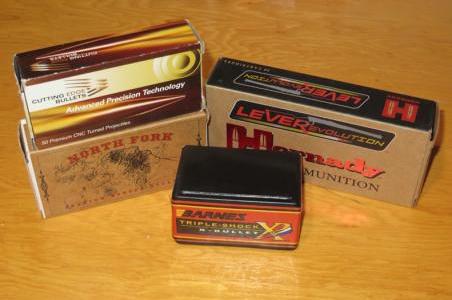
In recent years bullet and ammunition manufacturers have introduced premium bullets and ammunition that bring new life to the .45-70. New lighter mono-metal bullets and increased ballistic coefficients offer superior downrange performance.

Leave a Comment

The Hunter’s Bookshelf

Collecting great hunting books is an enjoyable way to further your appreciation of the hunting tradition.

Like many hunters, I was fascinated with sporting literature from a very young age. Great works of hunting literature such as Ruark’s Horn of the Hunter and Capstick’s Death in the Long Grass provided hours of enjoyment and offered an opportunity to share in experiences that I was sure I would never get to experience first-hand. For many of us, books like these inspired dreams of adventure in far-off lands.

I still have my copies of those books as well as many others, and I still venture back to those exotic places through their pages. Over the course of the last century, some of the greatest hunters and literary figures have chronicled their lives in the field, and today we are fortunate that many of these texts still exist. From Theodore Roosevelt’s African Game Trails to Jim Corbett’s Man-Eaters of Kumaon and J. A. Hunter’s Hunter, these works serve as a unique historical collection of sporting literature and a glimpse into the lives of famous hunters from a bygone era.

Today, there is a robust market for classic works of sporting literature, and some of the earliest editions of these classic titles are worth a great deal of money. The works of authors like Hunter and Corbett, along with Russell Annabel, Archibald Rutledge, Jack O’Connor, and a host of other famous names in sporting literature, command a high price among collectors. Finding these works of classic literature can be difficult, but like the search for Hemingway’s kudu in The Green Hills of Africa, the pursuit is part of the experience.

Great hunting books provide hours of enjoyment during the times you can’t be out in the field.

According to Ludo Wurfbain, owner of Safari Press and publisher of Sports Afield, it is still possible to find these books in secondhand bookstores around the country. But, as with the hunting landscape, times have changed, and the competition from large online markets has resulted in a reduction in the number of such bookstores. The odds are getting slimmer that you’ll stumble upon one of the great works of the world’s most famous sporting authors collecting dust on store shelves. The rise in online bookstores, however, has made these classic books more accessible, and if you’re simply looking for a copy of a long-lost classic to read for your own enjoyment, online bookstores provide a simple and affordable option.

“If you’re looking for a reading copy, Ebay, Amazon, Good Reads, and other online marketplaces will likely have the books you seek,” said Wurfbain. But, he warns, these outlets aren’t always the best place to purchase collectible books. That’s because sometimes the high value of collectible first editions prompts sellers to overstate the condition of the book, and the authenticity of the work may be questionable.

“Collectible books may sometimes be sold with fake pages, they may have pages removed, or they may not be in good condition,” Wurfbain says. “But reprints and reading copies are usually fine.” If you’re purchasing a book simply for entertainment, these online stores make the master works of sporting literature accessible and easy-to-find, and often you’ll have a copy of the book you want in a few days. The search for collectible books is more complex. There are only a few copies of the most desirable first editions, and these works command a high price among collectors.

“Condition is everything,” says Wurfbain. The most valuable works will be first editions that are in prime condition and have a jacket, and they are worth a premium. Some of the classic editions have watermarks that verify their authenticity, and this adds to the value. Signed copies from the most notable authors will cost even more, and these books will be rare treasures that are hard to locate. But for the collector, that’s all part of the process, and adding a vintage classic to the bookshelf in your trophy room is a special event.

Most hunters can only name a handful of titles that have been published on hunting, but in a 2004 journal article Wurfbain noted that there have been approximately 4,800 English-language titles published on hunting over the last two centuries. The bulk of those titles, as one might expect, were written on the topic of North American hunting (about 1,600). Europe was the second-most-popular destination for English-language sporting authors, and until 2004 there had been approximately 1,300 titles written on the subject.

Asian hunting has been the topic of about 1,000 works, but there have been very few titles published since 1970 that were devoted to hunting in Asia, primarily a result of the closing of much of the continent’s most famous hunting grounds. Corbett and Kenneth Anderson wrote eloquent and popular works on their time hunting man-eaters in India, but that country has since closed to hunting and although there is still plenty of opportunity for hunting across the continent of Asia, very little modern writing focuses on that topic.

Africa, despite its popularity as a hunting destination and the famous titles devoted to the pursuit of game on that continent, ranks fourth, with 850 titles published on the topic. There have been books written on hunting in other locations such as the South Pacific and Central and South America, but those works are far fewer in number than the titles that have been devoted to the four destinations listed above.

With so many texts on so many different subjects, it would require a lifetime commitment to collect even a sizable portion of world’s sporting literature. The topics and destinations are diverse, as is the writing style and quality, but there are plenty of great works on hunting to keep even the most ardent reader busy when they’re not in the field. Deciding which works you’ll seek out and add to your collection is largely a matter of personal taste, and often the best resource is other hunters who appreciate sporting literature.

“You will often hear other hunters recommend books,” Wurbain says. “Someone will ask, ‘Have you ever read Horn of the Hunter by Ruark?’ Authors will often mention other books in their own writings, and members of your hunting or shooting club may offer suggestions on the books they’ve read.”

Wurfbain has his own personal collection of favorites, a list of some of the greatest works ever written on the subject of hunting. Among his personal picks are Hunting and Fishing in Alaska by Russell Annabel, Gene Hill’s Sunlight and Shadows, and the works of Archibald Rutledge and Jack O’Connor. In African hunting literature, he suggests Capstick’s Death in the Long Grass, Ruark’s Horn of the Hunter, Karamojo Safari by W.D.M. Bell, and J.A. Hunter’s timeless autobiography Hunter. Of the classic books on Asian hunting, he suggests Corbett’s Man-Eaters of Kumaon and The Man-Eating Leopard of Rudraprayag.

For those who are seeking out reading copies of these books, most of them are widely available at reasonable prices. If you’re a serious collector, though, getting your hands on the title you want in good condition can be a difficult and sometimes costly task. With some first editions fetching upwards of twenty thousand dollars, the rarified market for highly collectible works is limited. But it’s a very special experience to hold a signed original copy of one of the master works in your hand. In addition, books are an easily hidden investment.

“A robber might come in your house and steal your flat screen television and your coffee maker off the kitchen counter, but they’ll walk right by your signed first edition of Hunter that is worth five thousand dollars,” said Wurfbain. “There aren’t ten criminals in the world that know what that book is worth.”

Classic hunting books are a sound investment, and they should be treated as such if you’re a serious collector. By and large, books don’t require special care, and as long as they are placed flat or standing upright and aren’t exposed to direct sunlight and insects, they’ll generally maintain their condition. There are, however, some important considerations with regard to collectible books. They should never be written on or in, and pages obviously should not be torn or dog-eared. One of the greatest risks to the pages of classic books is acidification, which results when acids from other objects such as newspaper clippings or photographs bleed onto the pages of a book, so never store anything in a collectible book. And be careful who you allow to handle your collection.

“You don’t want your grandkids thumbing through the book with dirty hands or kicking your mint-condition originals around the trophy room like soccer balls,” said Wurfbain.

Wurfbain suggests that book collections be protected on a rider on your homeowner’s insurance if the investment is very large. Usually, he says, riders on existing policies are relatively inexpensive and offer peace of mind against loss or damage.

Whether you’re collecting reading-copy hunting books for entertainment or amassing a valuable library of the world’s finest hunting literature, there are thousands of titles available to occupy your time. Those of us who appreciate the thrill of the hunt and great writing are fortunate that hunters past have taken the time to record their experiences for us to share. Many of us will never have the opportunity to hunt in the places that they describe, and in some instances the hunts described are a thing of the past, but owning a collection of sporting literature ensures that, on any given afternoon, we can escape into the wild and relive some of the greatest hunting stories ever told.

Leave a Comment

Jack O’Connor: An Outdoor Legend

This new DVD is a must-have for anyone who is a fan of Jack O’Connor, and those who don’t know much about O’Connor will find it fascinating as well. The film is an in-depth look at O’Connor’s life, from his childhood in Arizona through his later years when he became a globetrotting hunter and the most famous gunwriter in America.

Never-before-seen footage of O’Connor’s hunts, shot by himself and his hunting partners with a 16mm movie camera and provided to the filmmakers by the O’Connor family, provides a fascinating glimpse of O’Connor and his family and friends in the field. Most interesting is the footage of his many wilderness pack trips into the Yukon, British Columbia, and Alberta in search of wild sheep, grizzly, mountain goat, and black bear. Because these trips occurred before the advent of bush planes, they were many-week affairs that required long horseback rides into rugged mountains and pristine wilderness, and the glimpses of O’Connor and his guides packing mules, hauling out game, and relaxing near their canvas tents are windows into another time. There’s also footage of O’Connor’s many African safaris, his shikars to India and Iran, and his hunts for antelope and deer in Wyoming and Idaho.

The filmmakers have framed this historic footage with the story of O’Connor’s life, using an extensive collection of black-and-white and color photos to give the viewer an in-depth look at the O’Connor family through the years. O’Connor scholar Buck Buckner and biographer Robert Anderson provide commentary and insight into the writer’s life and tell the stories of his various hunts and the effects his growing fame through the years.

This film is an insightful record not just of the life of a remarkable man, but also of a time that could be called the golden age of big-game hunting, when men like O’Connor were exploring new hunting lands and opening the eyes of outdoor magazine readers to the wonders of the wider hunting world.

Produced as a joint venture of Safari Press and Safari Classics Productions, this one-of-a-kind video belongs in every serious hunter’s collection. Running time: 2 hours. $29.95 from Safari Press: 800/451-4788; safaripress.com.

Click here to buy this DVD from Safari Press.

Leave a Comment

Rifle Review: Weatherby Vanguard Camilla

Weatherby’s new rifle for women is accurate, elegant, and fun to shoot.

It’s not surprising to me that many of the women I know shoot Weatherby rifles. Their excellent quality and accuracy aside, Weatherby rifles are often built with Monte-Carlo-style stocks, which tend to fit women better than the more traditional straight stocks on many American rifles. Because women tend to have proportionally longer necks than men, female shooters tend to prefer a higher comb, especially on scoped rifles, since it allows for faster target acquisition.

Perhaps it was only natural, then, that Weatherby would decide to take the next step and build a rifle specifically to serve the rapidly increasing numbers of female hunters and shooters in the field today. The new Vanguard Camilla Rifle—“designed by women, built by Weatherby”—incorporates a high comb, along with a number of other features that make this rifle amazingly comfortable to shoot. The buttstock is angled away from the body, which is a better fit for the female anatomy and nestles easily into the shoulder. The slim pistol grip has a shorter grip-to-trigger reach, ideal for slightly smaller hands, and the 13-inch length of pull (LOP) and slender fore-end reduce overall weight and length without compromising feel and balance. I found that the combination makes this a super-fast-handling rifle that is also easy to carry.

Weatherby’s new Vanguard Camilla rifle.

At 5’7”, I can easily handle a rifle with a standard LOP, so the Camilla feels slightly on the short side for me. However, it came quickly and easily to my cheek and I had no trouble mounting and shooting it accurately from standing, kneeling, and sitting positions. That’s partly because the high comb and reverse-angled buttstock fit my anatomy so well. I asked a more petite friend to shoot the rifle, and she also commented favorably on the fit, so it seems Weatherby has hit a sweet spot with the stock design that will work for a wide range of body types.

With its 20-inch barrel, the Camilla weighs 6.25 pounds without scope. Like other rifles in Weatherby’s Vanguard line, it has a match-quality, two-stage trigger, a three-position safety, hinged floor plate, and comes with a sub-MOA accuracy guarantee when premium ammo is used. Available calibers include .223 Remington, .243 Winchester, 7mm-08 Winchester, and .308 Winchester. MSRP is listed at $849.

Practicalities aside, this is a lovely rifle. The satin-finish Turkish A-grade walnut with fleur-de-lis checkering and rosewood fore-end and grip caps is simply elegant. The barrel and action have a matte, bead-blasted, blued finish. I mounted a Burris Veracity 2-10×42 scope on my test model, a .308. I sighted in the rifle with Winchester 150-grain Power Point loads and shot consistent 1-inch groups at 100 yards; the groups shrank to just under an inch when I switched to Hornady’s 150-grain BTSP.

Camilla, in case you’re wondering, was company founder Roy Weatherby’s wife, and the new rifle’s name is an appropriate nod to the origins of the company, which is still family-owned and run. Along with the rifle, Weatherby has launched an initiative called Women of Weatherby, which provides web-based resources and a community platform for female hunters to gather and share their experiences.

Kudos to Weatherby for recognizing and filling a crucial niche in the fast-growing world of women hunters with a thoughtfully designed rifle that is accurate, elegant, and fun to shoot.

Leave a Comment

Saving the Selous

The elephants of the Selous need help, and hunting is critical to their survival.

When Benson Kibonde left his position as chief warden of the Selous Game Reserve in Tanzania in 2008 he thought the days of rampant ivory poaching in Tanzania were long past.

A 1976 survey showed that there were 110,000 elephants in the Selous, but by the mid-1980s that number had been cut in half, and if poaching continued at that rate elephants likely would be completely wiped out in the reserve by the early 1990s. But in 1987, the Frankfurt Zoological Society stepped in and provided the funding necessary to wage a full-on war on the gangs of poachers operating in the Selous. The condition of that funding, though, was that a retention program be put in place so that half of the funds generated by the reserve (85 percent of which came from hunting) would be returned to the park to aid in anti-poaching efforts through the purchase of new equipment and by providing salaries for rangers. This agreement became Tanzania’s first community-based conservation program, and it turned the tide on poaching. The 1989 survey showed that there were approximately 30,000 elephants in the reserve. By 2006 that number had more than doubled to 70,000.

Kibonde was integral in these restoration efforts, and by the time he retired as chief warden in 2008 after having served in that position since 1994, he felt certain that the future of elephants in the Selous was vouchsafed. He transferred to a training facility in northern Tanzania where he instructed young game scouts, but in 2012 he was called back to the Selous by the Tanzanian government. What he found was appalling.

Infrastructure in the reserve had almost completely collapsed during his four-year absence and the scout vehicles, many of which were aged when Kibonde left the park, were in a state of disrepair. The 250 scouts who were asked to cover 21,000 acres of land hadn’t been paid in months (the funds generated by the retention fund, as established in 1987, had been put on hold). Each scout was working just ten days a month, so the doors of the Selous lay wide open to poachers.

Kibonde was shocked. Morale was low, local poachers were bragging about their exploits and getting rich, and the Selous elephant population was once again being depleted. Kibonde knew he had to act quickly.
“After assessing the situation, I raised an alarm with the conservation partners, particularly the hunting companies,” Kibonde said in an article in Hunter’s Path in 2015. “I requested them to come to our assistance by waging an all-out war against poaching.”

With the help of hunting companies operating in the reserve, Kibonde almost single-handedly began righting the ship in the Selous. He recruited scouts from the Pasanisi Training College and, through donations and government assistance, ensured that they were getting paid. His teams began by refurbishing the out-of-commission vehicles and started opening roads back into the reserve that would allow scouts to engage poachers. The number of scouts climbed from 250 to 680, and they began working twenty days a month instead of ten, which meant that the number of patrol days in the park rose from 30,000 in 2008 to more than 163,000 in 2014. The patrol units are now based in permanent camps in the reserve, and in areas where there are large numbers of elephants the camps are positioned at close intervals that allow anti-poaching teams to respond quickly to any illegal hunting in the park. The number of vehicles was raised from twenty to forty, and by the end of 2016 Kibonde hopes that he will have sixty vehicles in place. Since his return, he and his team have refurbished six road graders and nine heavy trucks to ease scout movement in the park.

The German Development Bank is scheduled to provide additional funding, and until it does the Selous Elephant Emergency Project (SEEP) has been established as a stopgap to help contain poaching until funding resumes. The advances Kibonde has made are not welcomed by everyone, particularly the poachers, who just a short time ago had free range in many parts of the reserve. There have been confrontations over the last several years, and some of Kibonde’s scouts have been injured, but he says the message to the poachers is clear and pointed.

“We taught the poachers a lesson that we would no longer tolerate their self-imposed immunity to the conservation laws,” says Kibonde.

Based on the late 2014 census of elephants in the park, Kibonde’s work has helped elephant populations rebound. That’s thanks in large part to the hunting community, which helped support Kibonde’s efforts on the ground in the reserve.

“The hunting companies have contributed to our efforts against poaching and are still contributing a lot,” Kibonde says. “Some have provided vehicles, others funds for paying monthly allowances for 100 volunteers, while some have supported us by making their vehicles available for transporting scouts to patrol areas. I thank all those who have participated in this painstaking struggle.”

Kibonde is a major proponent of sport hunting for elephants and says that hunting and the funds it generates are critical to the survival of the elephants of the Selous.

“It is imperative that tourist hunting continues in the Selous for two main reasons. The first reason is that hunting companies and hunters have helped to control the poaching situation in the reserve through direct involvement. Secondly, 85 percent of the Selous retention scheme funds come from hunting. If any amount of the hunting revenue is compromised, the registered success in anti-poaching efforts could be seriously jeopardized.”

In 2014 the U.S. Fish & Wildlife Service banned importation of sport-hunted ivory from Tanzania, a ban that, Kibonde says, is a major blow to elephant conservation in the reserve.
“This move is a disaster for the Selous, as most of its income is directly or indirectly dependent on elephant hunting,” says Kibonde. “If our remaining 15,000 elephants are wiped out in the very near future, this ban would be a major reason.”

The future of elephants in the Selous and across Tanzania depends upon how closely international governments heed Kibonde’s words. To stem the tide of poaching, he says, he needs hunting and the funds it generates. In 2013, Kibonde officially retired, but he has remained in the Selous working to ensure that the borders of the park are safeguarded against poachers who would wipe out elephants for immediate financial gain.

To learn more about SEEP, visit cic-wildlife.org.

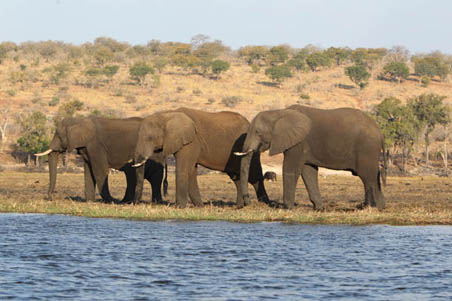
African Elephant (Loxodonta africana) by GaryKramer.net, 530-934-3873, [email protected]

Leave a Comment

.270 vs. .30-06

Comparing two tried-and-true big-game cartridges.

The two most popular big-game cartridges among American hunters remain the .270 and .30-06. Neither are exactly new; the .270 was introduced clear back in 1925, while the .30-06 passed its centennial seven years ago (wow!). Both cartridges have seen their ups and downs. Their popularity, at least in new rifle sales, slipped a bit during the first magnum craze of the late 1950s and 1960s…and slipped again around the turn of the millennium with the introduction of an amazing array of new unbelted magnums.

The 7mm Remington Magnum and .300 Winchester Magnum, both introduced in the early Sixties, have made their bones and probably still stand as the world’s most popular magnum cartridges. Some of the new magnums have gathered significant followings, while others introduced barely a decade ago have nearly died away. But from what I see in correspondence and talking to hunters at conventions—and what I actually see in hunting camps—it appears to me that those two old warhorses, the .270 and .30-06, have won through and remain top choices among American hunters.

Well they should. Both are wonderfully versatile cartridges that do their work with little fuss. Thanks to their long popularity the load selection is vast, and most factory rifles are so chambered. Both cartridges are superb for the big game most Americans hunt—deer—and both are adequately powerful for elk, black bear, and even moose. Neither is perfect for everything. Hunters in search of our biggest bears are better served with more powerful tools, and for serious long-range work in big country something that carries more energy farther downrange might be appropriate. For big bears, I prefer a fast .33-caliber with a heavy bullet; for larger sheep and goats in big mountains I usually select a fast .30-caliber (my preference is the .300 Weatherby Magnum).

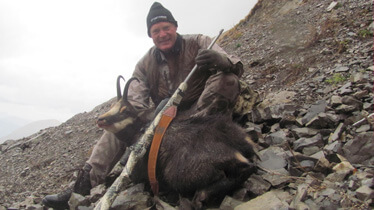
I used the new Kimber Mountain Ascent in .270 to take this chamois in France. The load was Hornady’s new American whitetail 130-grain load and the distance was 400 yards. Jack O’Connor was right about the .270’s virtues as a mountain rifle.

However, I use both the .270 and .30-06 quite a bit, and during the fall hunting seasons just past I used both cartridges. It was a busy season; game taken with these two cartridges included both whitetail and mule deer, caribou, and elk here in North America; and a chamois in Europe. Unless one has very specialized needs either cartridge will do pretty much anything an American hunter needs to do…as they have, collectively, for darn near 200 years. But, just supposing you’re in the market for a versatile hunting rifle, which of the two cartridges should you select?

If, like the majority of American hunters, you’re primarily a deer hunter, I don’t think it makes much difference. Both are adequately powerful enough for any deer that walks! The .270 produces less recoil and definitely has a flatter trajectory, so purely as a deer cartridge I’d lean toward the .270. Because of its better ranging abilities it’s a better pronghorn cartridge, and its long-time champion, Jack O’Connor, swore by it for the mountain sheep he loved to hunt.

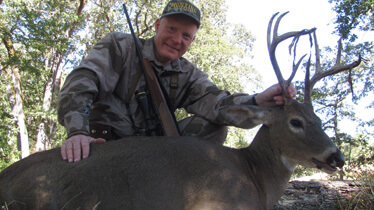
In October 2012 I used a Savage .30-06 to take this Columbian whitetail in Oregon. Considering a small deer in open country the .270 probably would have been a better choice, but there are few situations in North America that either cartridge can’t handle.

The older I get the more I have to concede that Professor O’Connor was dead right. The .270 is not only a great deer cartridge. It really is truly excellent for mountain game, and it’s perfectly adequate for game at least up to elk. However, although O’Connor never exactly said this in an article, he did concede privately that the .30-06 was more versatile!

With a good 150-grain bullet at around 3000 feet per second the .30-06 gives up relatively little ground to the .270 over normal game ranges. With its heavier 165 or 180-grain bullets of larger diameter the .30-06 definitely hits harder. I do tend to lean toward larger calibers, and I must admit that I was long skeptical of the .270s adequacy for elk. So skeptical that I was well into my 40s before I ever tried that cartridge on elk! Uh, I was wrong. Especially with the great bullets we have available today the .270 is just fine for elk…but I remain convinced that the .30-06 is better for elk, and certainly better for moose and bear. The .30-06 isn’t fancy or flashy, but with a 180-grain bullet it’s a real thumper.

I have used both cartridges quite a bit in Africa, and both are excellent for a wide range of plains game. That said, I do think the .30-06 is much the better African cartridge. The flatter trajectory of the .270 is rarely needed over there, but because of the tremendous variety of game—and the fact that you really don’t know what you might encounter in a given day—the awesome versatility of the .30-06 with a 180-grain bullet becomes a clear favorite. On the other hand, it does generate a fair amount more recoil, especially with the heavier bullets. Most people can learn to shoot it well, but the .270 is a good choice for beginners and shooters of smaller stature, while the .30-06 may not.

So, which one for you? Both are versatile and powerful cartridges, and both shoot plenty flat enough for most purposes. If you hunt in mountains or more open country the .270 is probably the better choice; if you mix a fair amount of larger game with your deer, or you’re thinking of African plains game down the road, then the .30-06 might be better for you. The good news: Both cartridges are winners, and you can’t go wrong with either of them…as millions of American hunters have known for generations.

Leave a Comment

Leading the Way

Many of today’s wildlife management professionals don’t understand hunting, but efforts are underway to change that.

I remember a wildlife biology class I took in college. The class was full of people who were interested in animals, but who didn’t seem to have ever spent much time outdoors. When I showed up for a field trip to a local forest one misty day wearing camo rain gear, I attracted some strange looks from my peers. My professor, however, caught on right away, asking me if I was a hunter. When I said yes, he had me point out buck rubs and deer trails to the other students, most of whom simply stared in amazement. My professor wasn’t a hunter himself, but he recognized that my background had already given me a general understanding of some of the concepts he was trying to get across.

There was a time when most biologists, foresters, land managers, and other resource professionals came from the ranks of hunters. Many of them grew up hunting, and their experiences helped develop their interest in their chosen field. But that doesn’t happen as much any more. Many intelligent and otherwise highly qualified people who know nothing about hunting are entering these fields and getting high-level jobs at state wildlife agencies, where they make decisions about many of the issues that affect wildlife and hunting.

A 2004 survey of university wildlife departments by the Wildlife Management Institute showed that fewer than half of all students graduating with wildlife and natural resource degrees have ever hunted, and most don’t even know a hunter or understand why people hunt. Of equal concern, many of the instructors in high-level natural resource programs at universities appear to have little or no knowledge of, or interest in, hunting. This translates into a large number of current and future leaders and decision-makers of state and federal agencies who don’t understand how hunting and conservation are intertwined.

Ten years ago, a group of resource professionals realized the problems this might cause in the future. The Wildlife Management Institute, with the support of the Max McGraw Wildlife Foundation, started holding a series of workshops for students in wildlife management programs who had no exposure to hunting. The effort grew into Conservation Leaders for Tomorrow (CLfT), a professional development program designed for both students and professionals who are already working in the wildlife management field.

To date, CLfT has conducted eighty-two workshops, providing crucial conservation education to more than 1,200 participants. The four-day workshops that CLfT provides are free, requiring only a few days of the student’s or professional’s time, but they are having a dramatic impact. They don’t aim to turn a nonhunter into a hunter–the goal is simply to provide the participants with insights as to why hunting is important from a biological, social, cultural, economic, and recreational standpoint, and how it relates to conservation. The classes include both classroom and field time, and students get some exposure to safe firearms handling, shooting, and hunting techniques.

Exit surveys from the program show that 95 percent of CLfT participants now “get” why hunting is so important to conservation, and understand its cultural and economic roles in society as well. A few of them have even become hunters themselves.

This is one of those efforts that, while it reaches a relatively small number of people, stands to make a disproportionate difference to the future of hunting in America. To learn more, visit www.clft.org.

Leave a Comment

Safari Dreams

Planning An African Safari

Have you thought about going to Africa, but assumed that it was too expensive, too hazardous, or too difficult? Ever since I returned from my first safari, I have been asked a number of basic questions about these and other issues by fellow hunters who are considering such a trip. If you haven’t been to Africa, the answers to these queries may surprise you.

Isn’t an African safari incredibly expensive?

Depending on where you go and what you hunt, hunting journey to the Dark Continent is not nearly as expensive as you might think. I won’t pretend it’s cheap–the trophy fees, airfare, taxidermy, tips, and incidentals do add up–but an African safari is much more accessible to the average person now than it has ever been.

Most hunters choose a plains-game hunt for their first safari. These hunts typically allow a hunter to shoot a variety of antelope species–kudu, gemsbok, and impala, just to name a few–and they tend to be exciting because of the sheer variety of game available. There are usually two costs to take into consideration for such a hunt. The daily rate in many areas is quite reasonable, and it generally covers all of the expenses of a day on safari–your food, lodging, vehicle, and the services of your PH (professional hunter, or guide), tracker, and skinners.

In addition to the daily rate, every time you shoot an animal you’ll be charged a trophy fee. The trophy fees for animals I shot on my recent safari ranged from $300 for a warthog to $1,000 for a kudu. You might shoot three or four species–or a dozen or more–on a plains-game safari depending on your financial resources, your goals, and the amount of game in the area.

Many safari agents are now offering “package” hunts. These hunts incorporate the daily rate and trophy fees into one “flat” fee for the hunt–which is closer to the way we’re used to paying for guided hunts in the United States. Often, these hunts are excellent deals.

The other major costs of a safari include airfare to Africa (in my case, $2,100 round-trip from Los Angeles to Windhoek, Namibia), and the cost of packing and shipping your trophies home and the taxidermy that follows. One good thing is that if you’re taking a family member such as your spouse, your costs (other than airfare) won’t necessarily double–often, the daily rate for two people is only slightly more than for one. Many safaris are happy to accommodate a nonhunting guest for a fee.

Today it’s possible to go on an African safari and shoot half a dozen species of plains game for much less than you’d pay for a good used car. For example, Cabela’s Outdoor Adventures recently offered an African-safari package deal that included eight trophies for $4,700 (not including airfare). Many North American deer and elk hunts cost significantly more.

Isn’t Africa dangerous?

While most people no longer seriously believe they’ll be in danger of being boiled and eaten by cannibals, they do worry about political instability, terrorism, and the like. It’s one of the reasons I chose Namibia for my first hunt–it’s a safe, stable, and fairly modern country. Of course, all travel involves some risk, and every country is different, so it’s important to get up-to-date information on your destination. But the bottom line is this: Good safari operators make the safety of their clients a top priority. Clients who run into problems are unlikely to return, and that’s not good for business. You’ll probably be met by someone from your safari company as soon as you step off the plane and then whisked off to the friendly confines of your hunting area.

Good safari operators are also concerned about your health. Camps tend to be clean, and most PHs are highly trained in first aid, so if you’ve chosen your safari company wisely you should be in good hands. There is a risk of malaria in many areas, but preventative drugs will keep you safe from this disease during your hunt. Most travelers to Africa secure a prescription for an antimalarial before they leave home, and begin taking it several weeks in advance of their trip. Tell your doctor where you are planning to travel, and he or she should be able to prescribe the proper drug for you. You might also need to get a vaccination or two, although none were required for my trip to Namibia. The Centers for Disease Control and Prevention (CDCP) offer up-to-date traveler’s health advisories for most countries (cdc.gov/travel).

Of course, if you have a chronic health condition, you should check into the availability of medical care in the area you are going. Also, contact your health insurance provider to find out if your coverage applies when you are traveling abroad. If it doesn’t, you can purchase additional insurance to cover you during your trip.

Won’t I get bitten by a snake or charged by a lion?

Africa is home to a wide variety of venomous reptiles, including some of the most dangerous snakes in the world. However, most safaris are conducted during the African winter, when snakes are less active. That’s not to say that there won’t be any snakes around, but it’s extremely rare for hunters to even see a dangerous snake, much less get bitten by one.

Despite what you read, it’s also unlikely that you’ll be threatened by a big-game animal on your safari. Even hunters who are targeting these species rarely experience a charge–when they do, it is usually because a poor shot was made. Many of the areas the first-time safari hunter will visit on a plains-game hunt don’t even have lion or buffalo.

Is there anything left to hunt in Africa?

I am amazed at how many people seem to think all the animals in Africa are endangered. They’ve heard horror stories and they figure Africa is a dusty wasteland devoid of game. But in southern Africa today, thanks in a large part to game ranching and the recognition of the economic value of game and hunting, most game species–particularly the antelopes–are thriving. For an American hunter used to spotting an occasional deer or elk in a day of hunting, the variety and amount of game in Africa are impressive.

Isn’t it hard to get guns into Africa?

I was pleasantly surprised by the lack of hassle I experienced getting guns into both South Africa and Namibia (although I did experience some long waits at airports). Largely, this was the result of being well prepared.

All African countries have different regulations, and your safari operator and travel agent should be able to help you secure the proper forms and applications. Before you go, you will need to secure a signed and stamped U.S. Customs form 4457, which serves as proof of ownership of your firearms. Some countries will issue you a gun license, good for the duration of your stay, when you arrive at the airport. In other cases, you may have to fill out forms in advance so your PH can take care of the legalities for you. Be sure to ask your PH and travel agent specifically about what is required.

How do I find a reputable safari company?

This might be the most difficult question to answer, not because there aren’t any good safari companies, but because there are so many. Start your research by talking to people you know who have been there. Other good sources are North American-based booking agents who handle arrangements for African safaris; advertisements on the Web and in magazines such as Sports Afield; and places where outfitters exhibit, such as the annual conventions of Dallas Safari Club and Safari Club International and other large outdoor shows. Write or call a number of different companies for information, compare prices, ask detailed questions, and get a list of references.

What country should I hunt in?

Thirteen countries in Africa are open to big-game hunting, with more creating experimental hunting programs, but the most common destinations for first-time plains-game hunters are South Africa and Namibia. These countries have plenty of game and a large number of well-established safari operators who cater to plains-game hunters.

Do I need to buy a new rifle?

Probably not, if you’re going to be hunting only plains game. Do you have a deer rifle, especially something in the .30-caliber class? If so, and if you shoot it well, it may be the best choice for your safari rifle. The .30-06, in fact, is one of the most commonly used calibers on the continent. In many cases, even lighter rifles are acceptable. One hunter on my safari shot a dozen species–including some elk-size antelope–with his .270. It’s worth noting that this hunter was careful about his shot placement and loaded the rifle with premium bullets.

How will I get my trophies home?

Your safari company should be set up to handle the nuts and bolts of preserving your trophies and having them shipped to you after the safari is over. Again, this is something you should ask your PH when you set up the hunt. If you decide to have your trophies shipped to a taxidermist in the U.S.A., you’ll probably have to pay a fee to a taxidermist in Africa who will salt and preserve the heads and hides and crate them for shipping. When they arrive in this country, you’ll have to pay for the shipping and see that they get to your taxidermist for final preparation. You’ll probably want to hire a customs broker to help you through this process–for a fee, they’ll take care of all of the paperwork and hassles. The other option is to leave your trophies with a taxidermist in Africa and have the completed mounts shipped to you. Consult your safari operator for recommendations.

Where can I get more information about going to Africa?

An excellent basic book on this subject is Safari Guide II, which examines all facets of African hunting country by country. Other books on specific safari-planning topics include Safari Rifles II by Craig Boddington, which is the ultimate guide to choosing the right gun for your trip; and The Perfect Shot by Kevin Robertson, which tells you how to make well-placed shots on animals you may have never seen before. All of these books are available from Safari Press: 800/451-4788 or www.safaripress.com.

Leave a Comment

The Lost Lions

How the most famous man-eaters in the history of Africa ended up in the city of Chicago.

The man-eaters of Tsavo, as they can be seen today on display in the Field Museum in Chicago. Photo courtesy of the Field Museum.

If you’ve read John Henry Patterson’s famous 1907 book, The Man-Eaters of Tsavo, or seen the 1996 movie starring Val Kilmer called The Ghost and the Darkness, then you’re familiar with the story of the Tsavo lions.

If you don’t know the story, here are the basics: In March 1898, the British were building a railway bridge over Kenya’s Tsavo River. The project was led by Lt. Col. John Henry Patterson. Over nine months of construction, two maneless male lions terrorized the camp, dragging workers from their tents and eating them. Patterson made repeated attempts to trap and kill the lions, but they outwitted him endlessly. Patterson finally succeeded in December of that year, killing first one and then, twenty days later, the other. No one knows exactly how many people succumbed to the lions in the meantime; there may have been as many as 135 victims.

What happened to the lions afterward, however, is not as well known. Patterson, who left Kenya some time later, had both lions made into rugs, with the skulls still inside the skins, and they spent twenty-five years on the floor of his London flat. In 1923, Patterson arrived in Chicago on a lecture tour. The then-president of the Field Museum in Chicago, who attended his talk, approached Patterson afterward and asked if he still had the skins. Patterson said yes, and a deal was struck: The museum bought both of them for the princely sum of $5,000 (the equivalent of $68,950 in 2014 dollars).

The skins had to be shipped from London, and when they arrived the taxidermist in charge of the project, Julius Friesser, must have been dismayed as they were in very poor condition. Still, he was able to remove the skulls from the skins. Then Friesser used the hides to create full-body mounts. Because of the terrible condition of the hides, he had to be creative. A large amount of the skin had been trimmed off to create the rugs, and that is probably why Friesser mounted one of the lions in a crouching position, since he didn’t have enough skin to cover the belly. The other lion appears to have been much larger in the original photograph than in its mounted form, which indicates the taxidermist also had missing or damaged skin to contend with on this animal.

Otherwise, the mounted lions appear remarkably similar to the photos shown in Patterson’s book. Both were completely maneless—they had only tiny tufts of hair where manes would have normally been.

In the 1920s, having the Tsavo lions on display was no doubt quite a coup for the museum, since nearly everyone at that time was familiar with the story of Patterson’s intrepid feat. Over the years, however, the tale of the Tsavo lions faded from the collective memory, and museum workers, who no doubt saw little value in the nearly hairless, unremarkable-looking old mounts, relegated the Tsavo lions to a far corner of the museum where they languished, forgotten, for more than fifty years.

Enter Bill Stanley, the current Director of Collections and Collection Manager of Mammals for the Field Museum. Stanley grew up in Kenya, where, he says, everyone knows the story of the Tsavo lions. No one, however, had any idea where the mounts were, or even that they still existed. When Stanley arrived at his new job at the Chicago museum in 1989, he was amazed to discover the mounts in a dusty glass case in a dark corner of the museum. He realized exactly what they were when he read the yellowed, typewritten label stuck to the case. Stanley tried to get others at the museum excited about what they had, but like their predecessors, most had never heard the story and were uninterested in the moth-eaten old mounts.

It was Stanley’s chance encounter with representatives from Paramount Pictures, who happened to be visiting the museum, that brought the Tsavo lions to the public’s attention once again. The studio representatives, looking at other lion displays, mentioned a movie they were working on. When Stanley realized the movie—The Ghost and the Darkness—was about the Tsavo lions, he showed them the old mounts, at last finding an interested party. At the end of the movie, director Stephen Hopkins included a mention that the lions were in the Field Museum.

As soon as the movie came out, museum patrons began clamoring to see the mounts. In no time, the Tsavo lions were cleaned up, placed in a diorama, and moved out of their dusty corner and into a prominent place in the museum.

Since their rediscovery, the Tsavo lions have been the subject of intensive study and DNA research. Some scientists have attempted to analyze tissue samples to determine how many humans the lions actually ate, and others have worked to develop theories regarding what may have caused the lions’ unusual predatory behavior.

“There is still a debate about why they were attacking,” said Stanley. “It’s possible that rinderpest [a cattle disease] killed all the buffalo in their area and they had to resort to a different prey. It’s also possible that because the railway line was built on an old slave trail where many people had died over the years, lions in that region had developed a taste for humans.”

The actual reasons may never be known, but the Tsavo lions and the many other preserved mammals in the Field Museum are helping scientists work toward a better understanding of wildlife and wildlife behavior. While museums don’t tend to use as much traditional taxidermy in their displays as they used to, Stanley says mounted animals, particularly older ones, are still crucial to the research process.

“I can’t even describe how valuable [having these older mounts] is for DNA research,” he said. “In reality, less than 1 percent of what is in the museum building is actually on public view. But it is all available for scientists to study, and what goes into our public displays and dioramas comes out of what we learn from those old skeletons and skins.”

Leave a Comment

tablet

Never Miss An Issue!Subscribe Now: 6 Issues for $34.97

More Details
WordPress Video Lightbox Plugin