Sports A Field

Get a Degree in Outfitting

A groundbreaking program at Kansas State University is training students for outdoor careers.

Kansas State University’s Wildlife and Outdoor Enterprise Management (WOEM) program is the first and only Bachelor of Science four-year degree program in the United States that trains students to become hunting and fishing outfitters, gun and hunting club managers, resort managers, and provides training for careers in other outdoor adventure-related pursuits. Combining wildlife science with business and management, the WOEM program is a separate department within Kansas State’s College of Agriculture, Department of Horticulture, Forestry & Recreation Resources.

Located in Manhattan, Kansas, “K-State” is one of the nation’s most respected universities for wildlife biology and related studies. While wildlife and fisheries management is part of the course of study, the WOEM degree diverges in that it includes business, hospitality management, and training in outdoor skills. Under the direction of Dr. Thomas Warner and Dr. Peg McBee, experienced educators and outdoorspeople, the program was instituted in 2009. So far all graduates have found jobs in the outdoor industry, which speaks volumes about the degree and the dedicated young people pursuing it.

I’ve been fortunate to have spoken to the students in Manhattan, and this fall four students—three men and one woman—joined us at Timber Trails Ranch in southeastern Kansas for a few days of whitetail hunting and a series of seminars we arranged for them. These are really impressive young folks, looking forward to careers in the outdoor industry. Make no mistake, this is a serious course of study, with a six-month internship required to attain the degree. For information on this unusual program visit www.hfrr.ksu.edu/woem.

Wildlife and Outdoor Enterprise Management students gathered at Boddington’s Timber Trails ranch in December for some whitetail hunting.

Leave a Comment

Good for the Bird, Good for the Herd

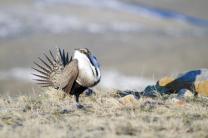
The Sage Grouse Initiative helps a game bird, improves big-game habitat, and even helps ranchers feed their cattle.

An impressive 4.4 million acres of habitat for sage grouse has been restored in just the past four years as a result of public/private partnerships through the Sage Grouse Initiative (SGI), according to a new report issued by the U.S. Department of Agriculture. Most of this work has been done through SGI’s partnerships with private landowners who find that the work done to preserve habitat for the wild birds is also beneficial to their rangelands and provides better grazing and food availability for their livestock.

“We’re working with ranchers who are taking proactive steps to improve habitat for sage grouse while improving the sustainability of their agricultural operations,” said Undersecretary for Natural Resources and Environment Robert Bonnie.

Efforts range from establishing conservation easements that prevent subdivision of working ranches to improving and restoring habitat through removal of invasive trees, especially conifers. More than a third of the easement acreage is in Wyoming, which contains 40 percent of the sage grouse population. In Oregon, more than 100 ranchers removed conifers from 200,000 acres of key nesting and wintering habitats for sage grouse, which also improved the forage available on their grazing land.

“American ranchers are working with us to help sage grouse because they know they are helping an at-risk bird while also improving the food available for their livestock,” Bonnie said. “As the saying goes, ‘What’s good for the bird is good for the herd.'”

What’s good for the bird is also good for herds of elk and mule deer, too, since these big-game animals share 40 million acres of key habitat with sage grouse. Crucial elk winter range, in particular, overlaps with core areas of sage grouse habitat.

The conservation programs funded by the 2014 Farm Bill mean that another $200 million will be added to sage grouse conservation efforts over the next four years.

SGI was launched in 2010 as a new paradigm for keeping the sage grouse off the Endangered Species List by using partnerships to get the most out of every dollar spent on conservation. Learn more at www.sagegrouseinitiative.com.

Leave a Comment

Wild Country

Reflections on the fiftieth anniversary of the Wilderness Act.

My first wilderness elk hunt was ten years ago, but I still remember it vividly. There was the fourteen-mile horseback ride from the trailhead north of Missoula to the snug collection of canvas wall tents that formed our elk camp in the Scapegoat Wilderness. From this base, we rode out every morning—sometimes spending three or four hours coaxing our mounts up faint trails into backcountry canyons—and then tied the horses to logs or pine trunks. We spent the idyllic September days hiking up eight-thousand-foot peaks, bugling from canyon rims, and skidding down timbered slopes in search of elk.

Fifty years ago, in 1964, the Wilderness Act created the mechanism to preserve areas like the Scapegoat and its better-known neighbor, the Bob Marshall Wilderness. In the act, lawmakers undertook to create a legal definition of wilderness, and they put it this way: “Wilderness, in contrast with those areas where man and his own works dominate the landscape, is hereby recognized as an area where the earth and its community of life are untrammeled by man, where man himself is a visitor who does not remain.”

When it was signed into law by President Johnson, the legislation designated 54 places spanning some 9.1 million acres as wilderness areas. Today there are more than 750 areas covering nearly 110 million acres.

“If future generations are to remember us with gratitude rather than contempt,” President Johnson said, “we must leave them something more than the miracles of technology. We must leave them a glimpse of the world as it was in the beginning.”

The idea of wilderness may not be as politically popular today as it was in September 1964, when the Wilderness Act passed Congress in a landslide, but it’s still a concept supported by hunters and nonhunters alike. Although wilderness is sometimes seen as “locked up,” it’s actually just the opposite. Unlike most private land today, these areas are open to all who possess the ability and motivation to get there, regardless of their economic circumstances. They’re open and available, but they’re not easy to get into—-that’s the whole point.

Wilderness has practical value as well. Areas that are “untrammeled by man” tend to be very good for wildlife. The space, breeding ground, and habitat for wildlife that wilderness areas provide helps create healthy wildlife populations that spill over onto the surrounding land, allowing more tags to be issued and more hunting opportunities to be created for all—-even those who never set foot on the wilderness proper.

True wilderness hunts are traditional, classic experiences that are nearly impossible to replicate elsewhere. Aldo Leopold probably said it best: “Wilderness areas are first of all a series of sanctuaries for the primitive arts of wilderness travel, especially canoeing and packing. I suppose some will wish to debate whether it is important to keep these primitive arts alive. I shall not debate it. Either you know it in your bones or you are very, very old.”

It was tough to ride out of the Scapegoat on the last day. My horse was ready to head back to the trailhead and easier living, and part of me was, too. Still, it would have taken very little persuading to get me to ride back to that wilderness camp and stay much longer. But we couldn’t do that, for the very reason that the place was so enticing: We were just visitors, and could not remain.

Leave a Comment

A Pioneering Outdoorswoman

Augusta Wallihan was a hunter, wildlife photographer, adventurer, and conservationist.

When I first saw the photograph of Augusta Wallihan entitled “Grocery Shopping,” I was intrigued and had to find out more. Who was this woman, dressed in the garb of the late 1800s and standing over a very nice mule-deer buck with a skinning knife and a Remington Hepburn rifle, exuding an air of confidence and competence?

As it turns out, Wallihan was even more interesting than I imagined. She and her husband, A.G. Wallihan, were among the first serious wildlife photographers in the United States, photographing deer, elk, bighorn sheep and myriad other big-game animals around their home in western Colorado. They gained international recognition for their photography and become influential conservationists as well.

Augusta Wallihan, nee Higgins, was born in Wisconsin in 1837 and made her way out West with her first husband. When that marriage failed, around 1880, she headed to Colorado to join her brother, Thomas Higgins, who had partnered with another Wisconsin expat, Allen Grant (“A.G.”) Wallihan, in a cattle venture. Wallihan family lore says Augusta and A.G. somehow ended up snowbound in an isolated cabin for several months, and to salvage their reputations they got married in April 1885 in Rawlins, Wyoming. At forty-eight, Augusta was twenty-two years older than A.G.

They homesteaded in the tiny town of Lay, Colorado, west of Craig, and A.G. became the town postmaster. While they owned a lot of land, they apparently weren’t cut out to be farmers. A.G. enjoyed hunting, though, and Augusta soon learned to shoot and also became a very successful hunter, keeping their larder well supplied with fresh meat.

It was a chance encounter with missionaries traveling through the region that led the Wallihans into photography. The missionaries had a camera with them, and Augusta traded them a pair of homemade buckskin gloves (maybe similar to the ones she is wearing in the “Grocery Shopping” photo) for their camera. Neither Augusta nor A.G. had any training in how to use it, but they quickly taught themselves the basics.

Photography in those days was in its infancy, and the cameras were massive, weighing ten pounds or more and mounted on tripod legs; most challenging of all, though, were the long, slow shutter speeds that required subjects to remain still. That made wildlife photography impractical, and most “wildlife” photos of the day were of mounted animals in dioramas. The Wallihans, skilled hunters living in a wildlife-rich paradise, had the opportunity and the ability to get close to living wildlife in order to photograph it-—but there was still nothing easy about it, and they often were lucky to get a single good photo of a deer, elk, or bighorn sheep in an entire day of attempts. After long days afield, they spent their evenings developing the negatives on glass plates.

Augusta was, by all accounts, a forceful personality, in contrast to her more laid-back husband. Nevertheless, they made an excellent team. While most of the photographs were credited to A.G., those who knew them said that their photography was a team effort. She was likely the driving force behind the increasing success of their careers, too; before long, their wildlife photographs were being reproduced in newspapers around the country, and they even had two books published. Both of the books, Hoofs, Claws and Antlers of the Rocky Mountains (1894) and Camera Shots at Big Game (1901) are credited to Allen G. Wallihan, but it’s certain the photos they contained were a team effort. As the Wallihans’ fame spread, they were invited to exhibit their photos at the Paris World Exposition of 1900. They exhibited again at the St. Louis World’s Fair four years later, and this time won a bronze medal for their work.

Augusta became widely known as an expert hunter and crack shot. In 1895, according to one source, she was invited to the Sportsman’s Expo at New York’s Madison Square Garden, where she hosted the Hunters’ Cabin. That had to be quite an honor. She was also something of an outdoor writer. I found an article she penned in the October 1895 edition of Recreation magazine entitled “How I Got My First Deer.” After telling the story of stalking her first buck and dropping it with a single shot, she casually mentions that she has since dropped thirty-one deer with her Remington, “only wounding three and losing none.”

Perhaps the most amazing thing about Augusta and A.G. was their concern for wildlife conservation at a time when it was the fashion to thoughtlessly eradicate as many animals as possible. In fact, it was one of the main motivations behind their photography—the Wallihans were sure that the wild game around them would soon go extinct, and their photos might be all that would be left. Their concerns were not unfounded, as commercial hunters operated indiscriminately throughout the West in those days, transporting wagonloads of meat to the cities where it was sold.

As the Wallihans wrote letters and articles calling for conservation measures and controls on hunting, they found themselves on the vanguard of a conservation movement that began to take hold around the turn of the century, led by visionaries such as Theodore Roosevelt and George Bird Grinnell. Thanks to these efforts, hunters of today still have the opportunity to hunt and photograph the same big-game animals that Augusta Wallihan did more than a century ago.

Special thanks to the Museum of Northwest Colorado (www.museumnwco.org) in Craig, Colorado, for the images and information in this article, which appears in the Nov/Dec 2014 issue of Sports Afield.

Leave a Comment

Sustenance

It’s time to welcome a new generation of health-conscious meat-eaters into the world of hunting.

Photo above: Rupp with some steaks and roasts she procured in Pennsylvania last fall (still in their original packaging).

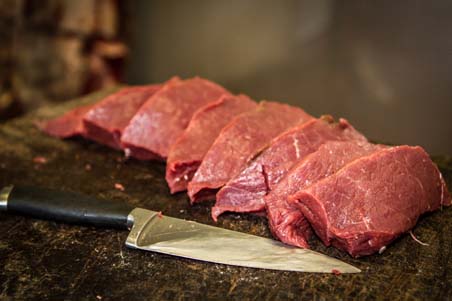
Years before I got my first hunting license at the age of twelve, I was–at least in my own young mind–a crucial part of the process of putting our family’s yearly venison in the freezer. It was my job, you see, to wrap. As Mom and Dad cut up their deer into steaks, chops, and roasts, I’d sit next to them with my trusty plastic wrap, freezer paper, tape, and Sharpie. First I’d wrap the meat tightly in plastic wrap, making sure no air was left inside. The thick, white freezer paper went on next (Mom showed me how to do the cool-looking butcher’s fold), and I’d tape it down securely. Next, I’d write with the marker whether it was Mom’s or Dad’s deer, the cut, and the date, and embellish the package with little drawings of deer.

Fast-forward thirty-some years to southern California, where an eclectic group of friends gathers on our back patio while my husband grills up elk and moose backstraps from our freezer. I’ve long since traded the paper and tape for a Foodsaver and abandoned my nascent career as an artist, but I still love the whole process of turning a game animal into a delicious meal. Even more, I enjoy the comments from my nonhunting friends: “This is delicious!” “Hey, I thought it would be gamey!” “Sure, I’ll have seconds!”

Popular interest in wild game as a food source has undergone a meteoric rise lately, fueled by bestselling books by the likes of vegan-turned-hunter Tovar Cerulli (The Mindful Carnivore) and celebrity chef Georgia Pellegrini (Girl Hunter), as well as articles such as “Hipsters Who Hunt: More Liberals Are Shooting Their Own Supper” on Slate.com.

All this is great news for hunting. As I know from those backyard wild-game barbecues, people who are not otherwise favorably disposed to the idea of killing an animal turn out to be fine with it if they get to eat it and it tastes good.

In fact, some experts say this phenomenon is bringing a whole new demographic of health-conscious and environmentally ethical adults into the ranks of hunters. That’s right; hunting (for food, at least) is becoming–gasp–hip! And why not? Wild game is healthy, low-cholesterol, lean protein with no added hormones or antibiotics. In a recent survey, Responsive Management reported that 68 percent of hunters surveyed identified obtaining local, natural, or “green” food as an influence in their decision to hunt.

State wildlife agencies aren’t ignoring this trend. For the first time since the 1980s, resident hunting license sales are on the rise, and some wildlife managers are crediting the increasing interest of young urbanites in eating wild food as at least a partial driver of thhis participation. They’re responding by reaching out to this demographic with new programs like “Hunt, Fish, Eat,” a food-centered adult hunter ed program offered by the Indiana DNR, and “Gourmet Gone Wild,” a program started by the Michigan DNR in partnership with Michigan State University and the Boone and Crockett Club.

Talking about memorable wild-game meals takes me back to a camp in the Yukon wilderness several years ago where sheep backstraps were sizzling in a pan on a camp stove. I had just pulled an exhausting all-nighter helping my guide pack out my magnificent Dall sheep. As I sat there, tired and hungry, salivating as the meat cooked, I considered the complicated truth about hunting: The sustenance we ultimately derive from the chase is as much spiritual and emotional as it is physical, but it all began, long ago, because we needed to eat. And we still do.

Leave a Comment

The Price Was Wrong

Threats from antihunters have now cost Namibia’s rhino conservation program hundreds of thousands of dollars.

In January, at a banquet at the Dallas Safari Club (DSC) convention, something historic and important happened in the annals of hunting as a conservation tool. A permit to hunt a black rhino was auctioned to the highest bidder, fetching a cool $350,000–100 percent of which went straight back into the rhino conservation program in the nation of Namibia, where the hunt will take place.

You probably heard about the controversy surrounding the auction. In the real world of scientific wildlife management, there actually wasn’t much controversy at all about the idea–every important international scientific wildlife organization, including the U.S. Fish & Wildlife Service (USFWS), Convention on International Trade in Endangered Species (CITES), and the International Union for the Conservation of Nature (IUCN), agreed that auctioning the permit was a sound idea for conservation and that the money it would raise would be of tremendous importance to Namibia’s rhino conservation program. The hunt would target a specific old male—one that was past its breeding prime and had become dangerous to the young rhinos in its herd—and the money raised from hunting this single, selected rhino would contribute to saving the overall black rhino population.

Namibia hoped that auctioning a permit in the USA would push the price of the permit (and the money going back to its conservation program) to extraordinarily high levels. Unfortunately, it also brought the antihunters out of the woodwork. No amount of explaining the science behind using carefully controlled hunting as a conservation tool could placate the screaming masses who poured their energies into thousands of virulent Internet posts. They were not attempting to raise money to help rhinos–far from it. They were only attempting to stop the hunt.

The online attacks escalated into death threats to DSC members and their families. Whoever purchased the auction tag, it was made clear, would be the target of threats not just to themselves, but to their families and businesses.

Understandably, many potential high-dollar bidders pulled out. You can’t blame them for not wanting to put their family members and employees at risk. And suddenly a tag that at one point might have sold for as much as a million dollars had almost no takers.

Fortunately, several brave and generous DSC supporters stepped into the breach, and the hunter who did purchase the tag (for what is still a record-setting amount), should be considered a conservation hero. One of the loudest detractors of the rhino hunt was Bob Barker, the anti-hunting former host of The Price is Right. Responding to him on CNN’s Piers Morgan Live a few nights after the auction, the hunter said he wanted to tell Bob that, with regard to the rhino permit, “the price was wrong.”

He was correct. This auction should have raised a lot more for conservation, and the only reason it didn’t is because of the shortsighted tactics of closed-minded people who don’t understand wildlife management.

There’s a silver lining, though. Hunting, conservation, and the relationship between them has been in the news for months as a result of the controversy. Many people who might not have previously understood this relationship do now. The haters aside, I believe that the majority of nonhunters out there are reasonable people who care about wildlife and can separate facts from emotion. Let’s make sure we keep reminding them how hunting benefits conservation–and let’s not wait until the next rhino auction to do it.

Leave a Comment

Incredible Journey

Wyoming’s mule deer migrate some 150 miles every year.

If you think of wildebeest in the Serengeti when you think of large mammal migrations, start thinking a little closer to home. Scientists have discovered that the longest known migration of mule deer—an incredible 150-mile journey between winter range and summer range—occurs every year in western Wyoming. The deer move from low-elevation winter range in the Red Desert near Interstate 80 to the high mountains surrounding the Hoback Basin in northwestern Wyoming. They spend some four months on their journey, negotiating sand dunes, lake and river crossings, multiple highways, and more than a hundred fences.

Biologists discovered the phenomenon when they placed GPS collars on twelve deer in the Red Desert in 2011 and followed their movements through spring 2013.

Increasing levels of energy and housing development, recreation, and traffic on busy highways poses major threats to mule deer movements, as well as to similar migration routes used by pronghorn antelope. Findings from the study will help conservationists plan projects that will keep these migration routes open.

“Migration corridors and habitats where big-game animals rest and forage during migration are critical pieces in a complex habitat puzzle that is key to the health of populations of mule deer and other big-game animals,” said Ed Arnett of the Theodore Roosevelt Conservation Partnership.

“If we do not safeguard all the pieces of that puzzle, including important habitats associated with migration, big-game populations likely will decline and impact both our outdoor traditions and our hunting-based Western economy.”

Learn more at www.migrationinitiative.org.

Leave a Comment

A Visit to Bristol Bay

Hunters, anglers, and other conservationists continue to fight a proposed mine in Alaska’s game-rich Bristol Bay region.

Flying over southwest Alaska, I’m surprised at the sparseness of the landscape. It’s not the jagged mountains and snowcapped peaks I’ve been imagining since Scott Hed of Sportsman’s Alliance for Alaska invited me to come along on a fact-finding trip to King Salmon, Alaska. The tundra, pocketed with lakes and cut by rivers, looks more like Minnesota than the alpine environment I imagined.

On the flight out of Anchorage, Scott and I are joined by Ben Bulis, President of the American Fly Fishing Trade Association; Rich Hohne of Simms Fishing Products; and our host, Jerry Shultz, a Dallas Safari Club Life Member and owner of Rapids Camp Lodge. The plan is to take a look at the proposed Pebble Mine site, talk to locals, and get a sense of what the proposed site means to the people and environment of the Bristol Bay region of Alaska. Oh, and we might try to fish a little, too.

The background on this mine bears repeating. In 1988, a mining company discovered a large deposit of copper, molybdenum, and gold fifteen miles upstream from Lake Iliamna, the largest lake in Alaska, approximately 200 miles southwest of Anchorage. In 2001, the claim was purchased by Northern Dynasty Minerals, which has been exploring and seeking to develop the site since then. Because of the low-grade ore quality, the most efficient way to mine the site is an open pit-style mine. The proposed pit mine at Pebble would be approximately two miles wide, 1,700 feet deep, and require two earthen dams to hold the waste rock in man-made lakes. The largest of these proposed dams would be over four miles long and 740 feet tall, bigger than the Three Gorges Dam in China.

Additional infrastructure including a port on Cook Inlet and over 100 miles of roads crossing twenty streams would have to be built to support mine operations.

Unfortunately for Northern Dynasty, this region of Alaska, known as the Bristol Bay watershed, is also home to the largest wild salmon run in the world; in fact, all five Eastern Pacific species spawn there. The Kvichak River, which drains from Lake Iliamna and is downstream from the mine site, is home to the largest sockeye salmon run in the world. Because mining is an industry with a poor environmental track record, to say that this proposed mine has been a hot topic would be an understatement. On one side, you have millions of dollars invested into an environmentally questionable project, promising thousands of jobs and money to a traditionally low-income area of Alaska. On the other, you have an environmentally sensitive area that hosts one of the last great salmon runs in the world and boasts a $1.5 billion commercial and sport fishing industry that employs 14,000 people. So which side should we choose to support?

After touching down in King Salmon, the next three days are a blur of flights, fishing, bears, too much food, and late night discussions. We spend two days fishing legendary Alaskan rivers like the Moraine and Little Ku, and what looked to me from the air like barren tundra is truly a paradise. It is clear, cold rivers and lakes teeming with fish, bears feeding and then disappearing into the brush like ghosts. You’ve heard the expression “keystone species,” but you can’t understand its true meaning until you see the connection that salmon has to southwest Alaska.

While we’re there, we visit with locals, tourists, guides, and business owners, many of whom wear “No Pebble Mine” hats or shirts. The one phrase we keep hearing is, “If people could just see it for themselves…” By the time we board our flight back home, we understand. If everyone could see this place for themselves, the Pebble Mine would have been stopped before it started.

There is no doubt–this a complicated issue, but for me it comes down to two simple choices: throw caution and common sense to the wind, or draw a line in the sand and stand up for one of the last truly wild places in the world. I’m proud to tell you that Dallas Safari Club has joined over 1,000 hunting and fishing groups and businesses from across the country including Sportsman’s Alliance for Alaska, AFFTA, Simms Fishing Products, Trout Unlimited, Conservation Force, Pope and Young Club, Sturm Ruger & Co., and the Theodore Roosevelt Conservation Partnership in their opposition to the Pebble Mine.

In late September, a few weeks after getting back to Dallas, Anglo American–an English company and the major investor in the Pebble Limited Partnership–announced that it is withdrawing all funding from the Pebble Mine project. Even more recently, Rio Tinto, which oversees billions in pension fund investments for both California and New York and is a major investor in the Pebble Limited Partnership–was asked by the Comptrollers of each state to withdraw its $25 million dollar stake in the project.

Yes, this is exciting news in the fight to save Bristol Bay, but it brings to mind an expression from boxing: “You don’t stop punching until the other guy is on the mat.” I encourage you to get involved in the fight against Pebble Mine.

To learn more, visit: www.SportsmansAlliance4AK.org,
www.SaveBristolBay.org, www.PebbleScience.org.

Leave a Comment

Sports Afield Acquires Assets of Cabela’s Trophy Properties

The Ultimate Source for Property Listings for Outdoor Enthusiasts

Sports Afield, America’s oldest outdoor magazine, has announced the acquisition of the assets of Cabela’s Trophy Properties, LLC, the real estate listing arm of Cabela’s. The new company, known as Sports Afield Trophy Properties (SATP), is a broad-based network of property listings, and is the ultimate source for the outdoor enthusiast’s recreational property needs.

For ten years, Cabela’s Trophy Properties (CTP) has been the leading source for recreational property listings, with a network of experienced brokers who are recreational real estate specialists and who live, breathe, and understand the outdoors. By retaining this experienced broker network and high-quality Web site, Sports Afield Trophy Properties expects a seamless transition to providing the same excellence in property services customers have been used to under the CTP brand.

Sports Afield Trophy Properties participating brokers know the areas and territories they service, including the wildlife species, climate, water sources, hunting and fishing opportunities, and other local conditions. SATP will be supported by a broad-based marketing campaign, including an extensive, searchable Web site database, national advertising on television and in a wide variety of print media, a dedicated catalog, and syndication with numerous property-listings Web sites.

“Sports Afield Trophy Properties will be partners with qualified independent real estate brokers around the country to market recreational properties for sale,” said Ludo Wurfbain, CEO of Sports Afield Trophy Properties. “If your passions are hunting, fishing, hiking, or equestrian sports, or you are just looking to purchase property in the great outdoors as an investment, our participating brokers can help you find the property of your dreams. We are pleased and excited at this opportunity to acquire this excellent listing service from one of the greatest outdoor names in the country and plan to continue to build on its success.”

“Sports Afield is part of the outdoor heritage of the United States and Cabela’s. Cabela’s got its start from an ad placed in Sports Afield by Dick Cabela in 1961,” said Tommy Millner, Cabela’s Chief Executive Officer. “They are perfectly situated to continue the success of Cabela’s Trophy Properties, which we are turning over to them to more fully focus on our core retail businesses.”

Sports Afield is the oldest outdoor magazine in America and one of the most recognized outdoor brands. Established in 1887, Sports Afield stands for country living, conservation, and the wise use of natural resources. It is a name that carries the assurance of the highest quality products, services, and outdoor experiences. With a dedicated and concentrated audience of outdoor enthusiasts, Sports Afield is ideally positioned to connect North America’s most active and affluent sportsmen and women with the properties of their dreams.

Learn more at www.sportsafieldtrophyproperties.com.

Leave a Comment

Elephant!

The Renaissance of Hunting the African Elephant

Craig Boddington’s hotly anticipated new book on the African elephant is out, and not surprisingly, it’s an excellent read. While there has been plenty written about elephant hunting in the glory days of the early twentieth century, there are few books out that tell the real story of hunting the big tuskers today.

Boddington, who has been hunting elephants (and plenty of other game) all across Africa for twenty-five years, gives the reader detailed information on how elephants are hunted, including tracking, approaching, and judging ivory. Detailed chapters on elephant rifles and cartridges, as well as bullet performance and penetration and an illustrated discussion of shot placement are included. There are chapters on each of the major countries in which elephants are hunted: Botswana, Mozambique, Namibia, Tanzania, and Zimbabwe. The entire book is laced with beautiful full-color photos that capture the magnificence of elephants and elephant country.

Elephant!, however, is more than just an instructional resource. Boddington talks about the history and heritage of elephant hunting on the continent, tells stories of some of his most exciting elephant hunts, and takes a honest look at what the future might hold. This is valuable and fascinating insight from one of the most knowledgeable hunting writers of our time.

Limited edition of 1,000 numbered, signed, and slipcased copies. $100 from Safari Press: 800/451-4788.

Click here for more information and to purchase this book.

Leave a Comment

tablet

Never Miss An Issue!Subscribe Now: 6 Issues for $34.97

More Details
WordPress Video Lightbox Plugin