Sports A Field

The Changing Face of the African Safari

Over the course of sixty years, safaris have undergone a radical transformation.

Story and photos by Harry SelbyOver many years, the word “safari”–that magical word which brings to mind high adventure in the wilds of Africa, immortalized by Theodore Roosevelt, Martin and Osa Johnson, Ernest Hemingway, and Robert Ruark–has become synonymous with a hunting/photographic expedition involving sportsmen and women from across the world.

A safari in the earliest days of East Africa, prior to the outbreak of World War I, was known as a “foot safari.” It would consist of a group of a hundred or more people, including a number of visiting hunters, one or more professional hunters, local gunbearers, cooks, and skinners, but the majority would be porters who carried loads made up of tents, camping equipment, and food for the entire group. Everyone walked, as horses and donkeys would not survive due to the dreaded disease-carrying tsetse fly infesting most of the hunting areas.

The origin of the safaris I will discuss in this article, however, coincided with the use of motor vehicles on safari sometime in the 1920s. These safaris typically numbered from twelve to twenty people, and they were completely self-sufficient, willing and able to cope with whatever situation might crop up. The professional hunter and his clients rode in a hunting car and a baggage truck followed, carrying everything required to set up camp wherever one chose–staff, fuel, foodstuffs, tentage, medical chest, camping furniture, cooking utensils, and china tableware; later, even refrigerators were provided.

Safari vehicles on the move in Masailand in the 1940s.

The professional hunter was truly the “captain of the ship” and the success of the entire safari, its well-being, and even the lives of the group depended on his decisions. A competent professional hunter was of necessity knowledgeable and a pleasant companion, at times a diplomat, a doctor, and a mechanic; hunting was second nature to him. Furthermore, he required a sound knowledge of the country and the local people, leadership qualities, self-reliance, and the ability to handle a difficult situation, especially when the clients were often men controlling huge business empires and who were used to giving the orders, not taking them.

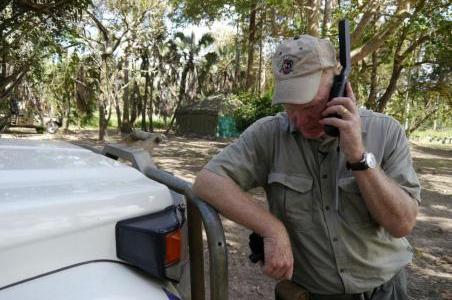
When a safari left Nairobi for perhaps one or two months in the field, there was no easy way to contact the Nairobi office even in an emergency. If an accident should occur, or a member of the party became ill, recovery would follow in time. If the situation was very serious, one of the small single-engine aircraft stationed in Nairobi would need to be summoned, and even that in itself was no simple matter as in the remote centers where there might be a phone, which sometimes worked, long delays of many hours could be expected. In many cases, a makeshift landing strip would have to be cleared, and then dragged with a large bush attached to the hunting vehicle in order to smooth it sufficiently for an aircraft to land.

For urgent incoming messages, safaris relied on an arrangement with the local Nairobi broadcasting station that after the nine o’clock evening news an urgent message could be transmitted to a safari in the field. An announcement prior to the news broadcast advised that there would be a message for a certain group or individual, resulting in a very tense twenty minutes of news while the group waited for the message, which usually was not good, and then the frustration of being unable to reply to it.

During the late 1950s and early 1960s, two-way HF radios became available and made a tremendous difference to the isolated safari in the field; in fact, their arrival on the scene could be considered one of the two fundamental landmarks in the history of safari, together with the advent of the four-wheel-drive vehicle.

Mobile Safari

As all traveling was by vehicle, it could take three days of hard driving to reach the intended hunting grounds in southern Tanganyika (now Tanzania), Western Uganda, or the Southern Sudan from Nairobi, but it would be interesting, seeing colorful people from various tribes such as the Masai, Samburu, and the Dinka; extinct volcanoes; snow-capped mountains; beautiful lakes; forests of huge baobabs; and historical sites such as the compound shared by Livingstone and Stanley near Tabora. If the route should cross the Serengeti after skirting the rim of wildlife-rich Ngorongoro Crater, one would see, if the annual migration was in full swing, unbelievable numbers of wildebeest, zebra, antelopes of various species, and gazelles on the move, followed by prides of lions and other predators.

On long trips, the hunting party would bivouac beside the road in order to get going again early the next morning, and, amazingly, a very acceptable meal would be forthcoming from the cook within a couple of hours of having halted for the night. There would be a breakfast of bacon, eggs, toast, and coffee the following morning, before the safari got under way again.

The safari staff usually rode atop the loaded baggage truck.

Eventually, on reaching the hunting area, the camp would be erected by experienced hands and made habitable in a matter of hours. In this way, it was possible to move very freely and rapidly from area to area, especially as there were no concessions in existence, or blocks to be booked, and quotas were unheard of. Hunting was lawful anywhere so long as the area was not a game reserve, national park, or private land. If the safari moved into an area and found it was disappointing, it pulled up stakes and moved on.

The number of animals allowed on each hunter’s license was overly generous, having been formulated at a time when the early foot safari would require meat for eighty to 100 people over several months. For example: twelve buffalo, twenty zebra, twenty wildebeest, twenty kongoni, four lions, unlimited leopards, and equally generous numbers of all other species. Elephant and rhino required a special license even then, as the elephant ivory and rhino horn could be sold.

The complacent colonial government controlled from London took a long time to initiate a reappraisal of the entire licensing system, and that didn’t happen until some years after World War II. It often required tact and a firm hand on the part of the professional hunter to prevent abuse by trigger-happy individuals.

In those early days, the time factor was not as important as it is today. Safaris often lasted for two months or possibly three. I would estimate that a third of the entire safari would be spent traveling from one hunting area to another, and many hours would be spent getting the heavily laden vehicles freed from the clutches of either tenacious mud or heavy sand.

Remember, too, that safaris did not have four-wheel-drive vehicles, so a lot of hunting was done on foot, which took time and was hard work. It was generally agreed that 100 miles, plus or minus, would be walked for every elephant taken with tusks of 90 pounds or more. I remember spending a whole week at Kondoa Irangi in Tanganyika clambering up and down steep, rocky hills until a kudu was finally bagged.

In those days, more emphasis was placed on the entire safari experience–photography and bird shooting, for instance–rather than just the collecting of trophies. Naturally, clients expected to get good trophies. It was the collecting of them that provided the thrill, and a fine trophy was the reward for a memorable hunt. Today, the burning question as soon as a trophy is bagged often is: “Will it qualify for the record book?”—sadly, sometimes, irrespective of how it was hunted.

As hunting pressure increased in the most accessible areas, some pioneering and resourceful professional hunters cut tracks or built makeshift bridges to get into virgin country and escape the ever-increasing number of safaris entering the field. There were occasions when an entire day might be spent manhandling the two-wheel-drive safari vehicles over a soft sand riverbed. Several days might be spent erecting a makeshift bridge.

If a previously used river crossing had become too deep to ford with a hunting vehicle, and you needed to hunt the opposite side, you simply removed everything from the vehicle, including tools and spares, disconnected the battery, drained all oil and fuel, and then, using the heavy rope every safari carried, your crew, possibly assisted by locals, pulled the vehicle through the river, sometimes completely submerged.

After a night to dry out with the drain plugs removed, the oil and fuel were refilled, the battery reconnected, and the hunt continued. The hunters would cross the river morning and evening between camp and hunting car by dugout canoe or wading; the hunting car stayed on the other side of the river until the safari was ready to leave that area, at which time it was pulled it back through the river again.

Miracle Workers

The professional hunter was, at times, called upon to perform near-miracles mechanically and medically, as a few incidents that took place on my safaris will illustrate. I remember one cold, windy night on the Serengeti at one o’clock in the morning, soldering the leaking radiator of the baggage truck carrying the camp equipment. I heated the soldering iron in a fire made of wildebeest dung, as there was no wood. Our supper had been prepared the same way.

One evening at Ikoma, after traveling for three days from Nairobi, one of the skinners was bitten by a snake as he opened up his bedroll. He became hysterical, so I had him rushed to the mess tent, where the only bright light on the safari was kept, to examine the bite. I found two fang punctures, indicating a bite from a venomous snake. I proceeded to administer the antivenin shots to the protesting man, oblivious to the fact that four wide-eyed clients were watching the whole performance. Next morning he was sore, but OK; either the antivenin had done its job or he had received a “dry” bite, as I understand sometimes happens.

On one safari, we were camped south of Ngorongoro in the vicinity of Lake Eyasi in Tanganyika. Our camp was situated a couple of hundred yards from a steep-sided donga (ditch), at the bottom of which flowed a small stream. When we drove into camp about midday after one morning’s hunt, Juma, my headman, informed me that the truck was in trouble at the river.

It transpired that the truck had been driven there with two of the staff in order to fill the water drums on the back. The driver walked back to camp. When the drums were filled, the men called to the driver to retrieve the truck. He was a bit slow, and a young lad, the cook’s helper, climbed into the cab and while fiddling with the controls, pressed the starter button.

The truck was parked in reverse gear, and unfortunately the engine fired instantly and the truck rolled backward over the bank into the stream, winding up with all wheels in the air. That was what met my horrified gaze when I walked to the spot. We were miles from nowhere, and there was no radio in camp in those days.

The safari truck overturned in the riverbed, miles from nowhere.

We had to fend for ourselves, so for the next day or two while we were hunting, the camp staff busied themselves digging one bank down sufficiently to allow the truck to be hauled up.

When this was completed, we attached the big rope to the far side of the truck and to the rear of my hunting car on the opposite bank. When all was ready the hunting car, assisted by our crew and a number of friendly locals to whom we had given meat, hauled on the rope and, fortunately, we were able to turn the truck back on its wheels, and finally pull it up the bank.

I will never forget one unfortunate safari: Shortly after we had crossed into Tanganyika from Kenya, the baggage truck did not arrive when I stopped for it to catch up. I had a foreboding that all was not well, and a couple of miles back I found it lying on its side, having rolled over after having gone into a skid aggravated by the shifting weight of the men perched on top of the load.

As I drove up, Juma came forward, and in reply to my question, “Is anyone dead?” he replied, “Only one.”

Two other men were badly injured, and after getting the truck back on its wheels I instructed Juma to pitch a tent beside the road for the clients. I then took the two injured men and the corpse back into Kenya in the hunting car. The injured men I left at the reasonably sophisticated hospital in Narok, in Masailand, as traveling was very painful for them. I phoned Nairobi telling them what had happened and asked that replacements be on hand. I then carried on to Nairobi with the body of the unfortunate skinner.

When I returned to the safari, we hastily packed up and carried on across the Serengeti to Banagi, where we bivouacked. I had been without sleep for sixty hours.

Changing Times

During the 1950s, hunting areas in Kenya came under increasing pressure as more clients decided to hunt in Africa and more “occasional” hunters took up professional hunting, some with limited experience. The Game Department tried to lessen the pressure on the game populations, especially the Big Five, by allowing the taking of only one of the Big Five per week of safari. Should a hunter want licenses to hunt all five, the safari must last at least five weeks. This measure helped to some extent, as with the advent of the four-wheel-drive vehicle, hunting became easier as remote areas became more accessible and some clients tried to collect huge bags in the shortest possible time.

During the late 1950s, the “block” system was introduced in Kenya: the country was divided into numbered blocks. It was necessary to reserve the chosen block sometimes months in advance, with no idea of what would be found there when the safari finally arrived. If the game situation was really disappointing, the safari had to wait until its next block booking became available before moving on.

Other changes were making themselves felt as well. East Africa was in a state of political flux; Kenya had experienced six or seven years of the Mau Mau insurrection, and independence from Britain was the goal of all three East African territories–Kenya, Tanganyika, and Uganda, and independence was being actively negotiated by their representatives with the British government. No one had any idea what a post-independence East Africa would be like, especially after the Congo debacle.

In the early 1960s, I moved with my family to Bechuanaland (now Botswana) and opened a branch of Ker, Downey & Selby Safaris there. Our company was granted two very large tracts of land known as “concessions” in which to conduct hunting safaris. One was adjacent to the Okavango Delta, and the other was in the northern Kalahari.

The distances between camps in these concessions was not great, and I soon realized that a more efficient method of operation would be to have static camps, fully staffed, at strategic locations. The clients, together with the hunter and hunting vehicle, would move from one camp to another, thus reducing overhead by literally halving the staff that had been required to pitch and break camps during the days of the mobile safari.

One supply vehicle would do the supply rounds periodically, thus eliminating the situation where a truck remained idle for long periods in each camp. This arrangement worked very well, and in fact it had been in operation in Mozambique and Angola for some time, before politically motivated insurgencies erupted there.

Due to a number of factors, the traditional mobile safari was gradually on its way out in the East African countries where it had originated. Border controls on individuals, vehicles, equipment, and firearms, and the transfer of funds between newly independent states became a problem. Safaris did continue to flourish in Kenya for some years after independence in 1963, often ranging as far north as the Sudan, until, unexpectedly, the Kenya government closed all hunting in 1977. Safaris already in the field were summoned back to Nairobi, and hunting has remained closed there ever since, effectively putting an end to the “classic East African safari.”

Harry Selby with his safari crew and several clients in Kenya in 1950.

After independence in 1961, Tanzania, previously Tanganyika, created a state-owned and controlled safari organization which prohibited private safari companies from conducting safaris. The venture was not a success.

For some years, Botswana was one of the very few countries in Africa where no independence struggle was taking place. Rhodesia, Angola, Mozambique, and South-West Africa were all coping with bush wars. Eventually, as the political and security situation improved in those countries, and South Africa joined the ranks of countries offering hunting safaris, the “static camp” became the only way to go
When privately owned safari companies were allowed to resume operations in Tanzania after the disastrous attempt to establish a state-controlled organization, a similar system of static camps was employed there, except that a hunting car remained in each camp and aircraft were used to transfer clients and their hunter from one camp to another.

To establish a static camp, it was necessary to have an exclusive lease on the area, so concessions or some form of lease on specific blocks became the norm in most countries where the land was government-owned. In some countries, large privately owned ranches became “game farms” where the emphasis was on breeding game animals rather than domestic stock. Static hunting camps were established on these ranches to accommodate visiting hunters.

Initially, these static camps consisted of the standard safari tents with a flush toilet and shower enclosure attached to the rear. Semi-permanent structures were provided for the mess and the kitchen, which was equipped with the necessary furniture and a gas stove.

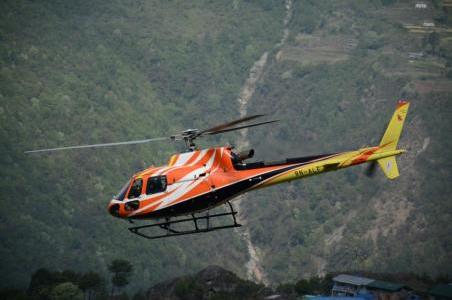
As time progressed, the camps in some countries became more sophisticated being erected on wooden decks, with regular furniture and in many cases electric power for lighting, ice making, and refrigeration. VHF radio contact with base became standard in all camps and in many of them a satellite phone is provided. Today, some clients bring their own satellite phones, and many camps are within easy reach of airfields and helicopters are available on call should an emergency occur.

Moving clients over short distances is usually accomplished by vehicle, but where long distances are involved, aircraft are used. This cuts traveling time considerably, resulting in significant savings to the client and allows for more time to be spent hunting, making it possible for hunters who previously had been unable to spare both the time and the money to undertake an African safari to do so. Now most safaris are between ten and twenty days long.

Air travel today is so available and quick that within a couple of days of leaving home, the clients are in the hunting camp, and as they have possibly read all about safaris or been to one or more conventions, they arrive with their wish list in one hand and, possibly, the record book in the other, ready to begin hunting.

The hunting will be intensive because of the short time available, and any mishap such as the hunting vehicle getting badly bogged down or malfunctioning might be regarded by the clients as time wasted. In some cases they might even expect a refund.

The professional hunter will be under considerable pressure to “produce”—and, greatly to the credit of the present-day PHs, successful hunts and very fine trophies are being brought in.

The clients, unless camped in tribal areas, will see very little of Africa or its people, other than a few hanging around the airport where they landed before leaving by vehicle or aircraft on the way to the camp.

I realize that the only way game will survive in Africa is to pay very handsomely for its existence, and the only way that can be achieved is by bringing in more hunters, photographers, and general tourists, all attracted by Africa’s magnificent wildlife, all bringing money into the country, thus demonstrating to the local people that the wildlife is more valuable on the hoof than in their bellies. To achieve that situation, permanent camps and air transport are essential to make it affordable, both in time and cost.

It was inevitable that “safari” had to change, and it will continue to change in order to exist. Africa itself has changed out of all recognition both physically and politically, and the old-time self-contained safari would have no place to go in today’s Africa. There are hunters today who would prefer to have experienced the sense of freedom of an old-time safari, as I am sure there were those who went on safari many years ago who would have preferred something along the lines of what is offered today. The two experiences are as different as night is from day; the only feature common to both is the name. . . that magical word, “safari.”

Leave a Comment

A Lesson from Kenya

Hunting has been closed there since 1977, and wildlife is worse off than ever.

The BBC reported last week on new research in the Journal of Zoology that shows that wildlife populations in the famous Masai Mara reserve in Kenya have crashed in the past three decades (read the BBC story here). According to the report, numbers of impala, warthog, giraffe, topi, and Coke hartebeest have declined by more than 70 percent. Even fewer animals survive outside of the reserve, where buffalo and wildebeest have all but disappeared.

The team of scientists looked at data gathered since aerial monitoring of Kenya’s wildlife began in 1977. “We were very surprised at what we found,” one of the researchers told the BBC. “The Mara has lost more than two-thirds of its wildlife.”

Hunters familiar with the history of wildlife conservation in East Africa will note the significance of the date 1977. That’s the year that Kenya, formerly the top destination in Africa for safari hunters, closed all big-game hunting in the name of preserving its wildlife. Hunting there has never reopened. Nor, apparently, has much wildlife been saved.

Next door in Tanzania, which has taken Kenya’s place as the leading hunting destination in East Africa, companies that lease hunting concessions employ hundreds of local people, run continuous antipoaching patrols through their areas, and ensure through their businesses that the country’s abundant wildlife remains worth a great deal of money to the Tanzanian economy. Tanzania’s wildlife model is by no means perfect, but its abundant herds of elephant, buffalo, and antelopes speak for themselves. As the saying goes, when wildlife pays, it stays.

Leave a Comment

Mental Fortitude: A Party in Pakistan

Sometimes it’s the hardships and challenges we experience on hunting trips that make our adventures truly memorable.

If you’re going to hunt in some of the world’s most remote places, you’d better be prepared for some unexpected adventures. Being a hunter with a restless spirit, I can’t seem to get enough of the both the joys and hardships that come with hunting the world’s far-flung regions. Here are a few of the most memorable tests of my “mental fortitude” I’ve experienced to date.

A Party in Pakistan

Now I don’t speak a word of the Pakistani language, but when I was stranded by weather in a high-mountain village not far from the Afghanistan border, with an official trying to extort $1,000 from me with a great deal of yelling and pointing, I understood the word “Taliban” very well.

I’ve always had a thirst for adventure in far-flung corners of the world, while unfortunately not having adequate finances to support this habit. Therefore I’m always bargain-shopping for inexpensive hunting trips, and since I have many outfitter friends I’m always the first to volunteer to be a “guinea pig” for an exploratory hunt into a new area. Sometimes these are areas where they need to see if the quality of the game is good enough, or maybe find out if the terrain is too extreme to take a “real” client. This has led to some uncomfortable, extreme, and even dangerous situations, but I’ve found that by keeping a positive mental outlook through all the trials and tribulations, the rewards can be beyond compare.

Such was the case in Pakistan. An outfitter friend of mine had a leftover tag for a Himalayan ibex. He offered it to me at a great price, and off I went to Pakistan. Upon arrival in Islamabad, I went to retrieve my luggage only to find my rifle had made the trip and nothing else. Normally that would be good news, except my ammo didn’t make it, and nowhere in Pakistan can you buy ammo for a .300 Ultra Mag. All I had to wear were the clothes on my back; luckily my thermal underwear, optics, and cameras were in my carry-on bag.

What my friend didn’t tell me was I would be hunting out of a high, remote village not far from the Afghanistan border, and I would be the first paying client ever to hunt there. I layered on my thermal underwear, kept my positive attitude, borrowed a rifle, and got a beautiful Himalayan ibex.

The local villagers were the most gracious hosts I’ve ever met, but the government wildlife agent who was supposed to issue me a free transport tag for the ibex wasn’t. When we went to get it, he wanted $1,000 for the “free” tag. He thought I was a rich American hunter and didn’t realize I had come on a discount “buddy” deal on a reconnaissance hunt. Not only was I not going to give him $1,000 for a tag that wasn’t supposed to cost anything, I didn’t have $1,000 anyway. That’s when he proceeded to yell that he “will have the Taliban come shoot this man!”

Well, that made things a little uncomfortable. With the weather turning bad and all flights to Islamabad cancelled, I was now stuck in a town on the Pakistan/Afghanistan border, locked away in a little hotel with outside doors so thin you could lean on them and fall through. I was told not to leave my room for any reason without my bodyguard, and to keep my curtains closed and not even step out on my balcony. Plus, I was running out of money, fast.

The next morning, I was escorted to the hotel restaurant to eat breakfast when a man came in, yelling at the top of his lungs. He went up the stairs and straight to my room! He began beating on the door to my room, still yelling. I was terrified, just waiting for the explosion, when everyone around me started laughing. It seems he was looking for his wife–who wasn’t in my room, by the way. Luckily, I wasn’t either, or I probably would have been preparing to fend off this man with my bullet-less rifle. I don’t know which is worse, the Taliban or a jealous husband!

I needed a way out of this situation, and the sooner the better. My guide made plans for me to buy a goat that would be slaughtered for a meal, arranged a musical program in the hotel, and invited some local dignitaries, including the official who was holding my ibex transport permit hostage. They arrived at my hotel room stone drunk on some local mulberry moonshine they’d brought in from the Kalish villages. They were falling over each other, laughing, yelling, and demanding I drink with them. My guide shook his head, indicating I shouldn’t drink the stuff, so I filled my glass and smiled. When they were distracted, I would slide the full glass under my bed and my guide would slide me an empty one.

After several glasses hidden successfully under the bed, they were happy and decided it was time to eat. As we stood up, one man fell and knocked over the TV. Another official got to laughing so hard he fell off the bed backward and got stuck with his head between the bed and the wall! The rest jumped on the guy who fell on the TV and we had a big dogpile of men laughing and wrestling in the middle of my room. My guide and I had to climb across them and the beds to pull the guy stuck headfirst between the bed and wall out of his predicament.

We finally had supper and attended the musical program. After having to dance with the crowd, I finally made it to my room. I was glad it was over, and the gambit had worked—I was now in possession of my transport permit! That uncomfortable yet entertaining night had saved my bacon.

But the next morning again brought bad weather. The morning flight was canceled for the fourth straight day. That left only one possible flight, at noon, to get me to Islamabad in time to make my flight out of Pakistan. Upon arrival at the airport, my heart sank at the sight of hundreds of people trying to get on this same flight. I was just standing there, feeling sick to my stomach, when here came three men who had been at the party. They introduced themselves as a local chief justice and civil justice, and the president of the airline. They thanked me for the party and the great time they had. I then told them of my predicament. Next thing I knew, I had a first-class ticket out of there. Thank goodness for moonshine and a not-so-fortunate goat!

Leave a Comment

The Last Bite

A European Hunting Tradition

One of the many charms of hunting in European countries is the importance of tradition. Age-old rituals meant to honor the game animal and the hunter are still practiced in many regions.

A roebuck from Austria and the “last bite.”

One of these traditions is the letzebissen, or last bite, which is practiced in Germany, Austria, Holland, and some Eastern European countries. The animal is placed upon a bed of leaves as a sign of respect, and a sprig of vegetation is placed in its mouth. Another sprig of greenery is placed in the successful hunter’s hatband to let others know of his or her good fortune. And if you hunt in Germany or Austria, you will hear the term “Weidmannsheil,” which functions as a good-luck sendoff as well as a form of congratulations when you return with that telltale sprig of vegetation in your hatband.

Leave a Comment

Featured Destination: The Chugach Range

These magnificent mountains in southern Alaska are a sheep-hunter’s mecca.

The state of Alaska is larger than many countries. You’d need a fat book, if not a small library, to describe all of its lands and many hunting opportunities.

Let’s limit our exploration to just one small corner of The Great Land, the Chugach Mountain Range, which covers an area “only” 300 miles long by 100 miles wide, running west to east from Anchorage to the Canada border. That’s roughly 30,000 square miles of floor space and considerably more if you add the vertical terrain—and most of the terrain is vertical.

These young, rugged mountains leap from the east edge of Anchorage and heap one atop another almost nonstop to the Copper and Chitina River valleys on their northeast edge. Many peaks stretch above 11,000 feet. Mount Marcus Baker towers to 13,176 feet. Such elevations tend to wring moisture from the air, and there’s plenty of moisture blowing up from the soggy south coast of Prince William Sound and the Gulf of Alaska. An average of 600 inches of snow falls in parts of the Chugach Mountains each year, one of the highest totals on earth. Prince William Sound averages 150 inches of rain annually. Both the Chugach Range and some of its 150 glaciers plunge hundreds, even thousands of feet into the sound, creating a formidable barrier to exploration. Nevertheless, the first highway into Alaska’s interior passed from the port town of Valdez through the heart of the Chugach Mountains.

Valdez, which might be more accurately named Valdez-aster, given its history, was christened by Spanish explorer Salvador Fidalgo in 1790, an odd reminder of the once long arm of Spain. In those days the Russians and British were also prying into the coastal corners of recently discovered Alaska, mostly bent on extracting furs. Americans didn’t really get involved until after the Civil War, when Secretary of State William Seward convinced Congress to vote 2.5 cents per acre to buy Alaska from cash-strapped Russia, then stinging from the expenses of waging its Crimean War against France and Britain. “Seward’s Folly” indeed!

Ice-free Valdez didn’t amount to much until 1898, when construction began on the Richardson Highway, the first road leading north to interior gold fields near Eagle and later, Fairbanks. The Alaska railway from Anchorage to Fairbanks stole much of this traffic by 1920 and the ALCAN Highway stole more after World War II. Valdez settled into life as a sleepy fishing village on the ragged but visually stunning edge of the vast Chugach Range until its first disaster. On March 27, 1964, a 9.2 earthquake, the second-biggest ever recorded, sent a 220-foot wave through Valdez Inlet. A big slice of the waterfront fell into the bay. The remains of the village were moved to more solid ground four miles away.

By the late 1970s, Valdez was again booming thanks to construction of the Trans-Alaska pipeline and its terminus at Valdez. Tanks there store more than 9 million barrels of oil. On March 24, 1989, three days shy of twenty-six years after the 1964 earthquake, the Exxon Valdez departed Valdez oil terminal and struck Bligh Reef, spewing roughly 500,000 barrels of crude oil into the sound.

Despite all these man-made developments, plus the growth of Anchorage on the western edge of the Chugach, virtually no development occurred within the mountain range itself. There were no major ore discoveries, no more highways nor railroads built, no farms or ranches or cities established. The Glenn Highway was laid along the Matanuska and Tazlina Rivers on the north edge of the range, but the mountains themselves remained the lonely haunts of the wilder denizens of Alaska, in particular Dall sheep, the Chugach’s claim to fame.

The second-largest Dall ram ever recorded by Boone and Crocket was collected in the Chugach Mountains by Frank Cook in 1956. Its right horn, the longest ever measured on a Dall, curled 49 4/8 inches from a 14-inch diameter base. If some five inches hadn’t been broomed from the left horn, Mr. Cook’s Chugach ram would stand as the world’s best.

The third and fifth biggest Dall came out of the Chugach, too. To this day, hunters lust after a chance to pursue a dream Dall of their own in the Chugach. It isn’t easy. Permits to hunt a mature ram must be applied for and won in an annual lottery, and nonresidents must hire the services of an experienced guide/outfitter. Given the size and severity of these mountains, a guide is a wise investment. There aren’t many gentle valleys, but plenty of steep cliffs, rockslides, fog, blizzards, and 150 glaciers. Big glaciers. The Matanuska Glacier is twenty-seven miles long and four miles wide. The Tazlina and Columbia glaciers are even larger. This is no region for the unprepared or timid.

The bulk of the Chugach’s sheep, and the best of the rams, are concentrated in Game Management Units 14C and 13D, plus the Knik Glacier corner of 14A.

A magnificent Dall ram taken in the Chugach Mountains.

The southern and eastern sections of these mountains are too wet and snow-covered to support sheep. Here, according to Dave Crowley, Cordova area wildlife biologist for the Alaska Department of Fish and Game, mountain goats predominate on the cliffs and alpine regions. Black and brown bears roam the coast and the dense Sitka spruce and hemlock rainforests of GMU 6. Black-tailed deer flit through coastal forests on several islands. Ten-inch goats with lush pelts are common, but not where they are easily accessible. You’ll need a guide “in the know” with the ability to get you into the back corners for a trophy.

Crowley said brown bears run eight to nine feet here, smaller than on the Alaska Peninsula and Kodiak Island, but tags are easy to obtain and the season is long. Black bears are also plentiful, and moose, though not abundant, are big in the Copper River Delta area.
“There may be only about 1,200 moose, but in GMU 6A over the last years, the antlers I measured went from an average of 60 to 69 inches,” Crowley said. He also noted there were no caribou at all in GMU 6. A few are hunted in GMU 13, the northeastern slope of the Chugach, by permit only. Wolves, wolverines, and interior grizzlies round out the big-game species.

Other wildlife includes pikas, marmots, snowshoe hares, and ptarmigan. In the deep fiords and in the sound swarm five species of salmon, halibut, sea otters, seals, sea lions, and whales. The 700,000-acre Copper River Delta hosts the largest spring concentration of migrating shorebirds in the world, some thirty-six species, and the world’s entire population of dusky Canada geese nest in the area.

Taken as a whole, the Chugach country is a representative cross-section of Alaska’s natural riches, and one of the world’s great sheep-hunting destinations.

Chugach Facts and Figures

Part of: United States
Size: 300 miles wide, 100 miles long, 30,000 square miles.
Highest point: 13,176-foot Mt. Marcus Baker
Annual Precipitation: Up to 150 inches rain in Prince William Sound, up to 600 inches snow.
Snow Cover: Varies by elevation. Roughly mid-October to mid-May above treeline (1,800 feet on south slopes.)
Habitats: Alpine tundra, alder thickets, muskeg, coniferous rainforest, delta wetlands, tidal coasts and bays, rocky streams and big rivers, permanent snowfields, and 150 glaciers.
Freshwater Fish: Chinook, chum, coho, pink, sockeye, Dolly Varden, rainbow trout, cutthroat trout.
Native Peoples: Athabascan natives, the nomadic Dena people, hunted the valleys and edges of the Chugach for thousands of years, sometimes trading with the coastal Eyak people around Prince William Sound.

Leave a Comment

Head North Without the Hassle

Take the Canadian Firearms Safety Course for stress-free border crossings.

American hunters traveling to Canada often encounter long lines, confusing firearms regulations, and hidden fees. But if you hunt in Canada often, there’s a way to avoid all of that.

Now you can prepare ahead, and cross into Canada with a firearm while dealing with less paperwork and fewer hassles. The key to easier border crossings is to complete a Canadian Firearms Safety Course (in Canada), pass a written test, and then file an application for a possession and acquisition license under the Canadian Firearms Act. After you pay a $55 test fee, and then a $70 application fee (at the time this was written), you’ll receive a card that will permit quick processing through lines when you reach the border and want to cross with your firearm. The at-the-border fees will also be waived.

Hunters completing the Canadian Firearms Safety Course.

The Canadian Firearms Safety Course takes approximately eight hours to complete. Don’t be surprised to find questions about suicide, obsolete cartridges, and questions about revolvers and other handguns-even though you cannot take handguns into Canada. Much like U.S. firearms and hunter education courses, the Canadian version covers hunting with groups and basic safety principles. The Canadian firearms safety course goes into deep detail on cleaning a firearm, and provides information on a five-shot magazine restriction.

For more details, call the Royal Canadian Mounted Police at 800-731-4000. You can also e-mail questions and requests for forms or course details to: [email protected].

Leave a Comment

The North American 27

The Ultimate To-Do List?

The so-called “North American 27” is based on the categories of North American game animals as recognized by the Boone and Crockett Club since 1971. The traditional North American 27 consists of the following animals:

Stone sheep, Dall sheep, desert bighorn, Rocky Mountain bighorn; brown, grizzly, black, and polar bear; barren-ground, Quebec-Labrador, mountain, and woodland caribou; mule, white-tailed, Columbia black-tailed, and Coues deer; Alaska-Yukon, Canada, and Shiras moose; as well as bison, muskox, cougar, jaguar, pronghorn, American elk, walrus, and Rocky Mountain goat.

To make things confusing, B&C traditionally recognized two walrus (Atlantic and Pacific) and two muskox (barren-ground and Greenland), which actually makes 29 different animals. Hunters have only ever counted one walrus and one muskox, hence the North American 27.

Recent changes to the B&C record book have altered the number even further. In 1999, B&C dropped the Greenland muskox category but added central Canada barren ground caribou, Sitka blacktail, and Roosevelt elk, bringing the total to 31 categories. The 2005 record book also includes Tule elk, making it 32. But traditions die hard: Most hunters still refer to the “North American 27.”

Leave a Comment

Bringing Home the Bacon

Hunters have an obligation to make sure their game meat is cared for and used, even when hunting far from home.

Once upon a time, a hunter hoisted his deer over a saddle and led the horse home proudly. Or he merely dragged it from the woods to shed or smokehouse. Then came decades of carrying game home on fenders and hoods, with the carcasses slowly cooking atop big Detroit motors.

Nowadays some of us are lucky enough to lay our game in the back of a cool pickup bed for the trip home, but, increasingly, many of us fly to our hunts, and that throws a wrench in the works. How do you get raw steaks, chops, ribs, and roasts from Alaska to Alabama?

To the embarrassment and shame of the fine traditions of hunting, most outfitters provide elaborate trophy care, directing clients to expediters and taxidermists to assure hides and horns get prompt and professional treatment, yet they ignore meat. Prior to a hunt last fall, our outfitter provided a page replete with names, addresses, and phone numbers for taxidermists. Not a sentence was devoted to meat. This overemphasis on trophies plays into the hands of antihunters and gives nonhunters more reasons to question our sincerity when we claim we hunt for food as much as antlers. It’s time we put our meat where our mouths are.

On a recent hunt, my partner and I were shocked when our guides tried talking us out of taking the quarters from the moose we’d shot. “No one’s ever taken any home before,” they insisted.

“Are you kidding? This is moose, the beef of Alaska! It’s fantastic eating.”

“Not this rutted, stinking bull. It’ll be disgusting.”

“We’re taking it. All of it.” Grudgingly, they started helping us butcher and pack, but didn’t give up trying to convince us to abandon an entire shoulder (because the bullet had gone through it) and a ham (because there was some contusion damage, probably from a fight with another bull). We trimmed away small amounts of bloodshot meat to reveal perfect muscle underneath.

The final straw broke when we pointed out the tenderloins. “We ain’t going into the guts for that!” the guides howled. We showed them how to reach them by sawing through three ribs and the spine without touching the internal organs. For three nights in moose camp, we gorged on some of the world’s finest red meat, introducing our poorly educated guides to the delicacy. We suspect they won’t be abandoning moose tenderloin in the woods again.

This abdication of responsibility for bringing the fruits of harvest to the table continued back in town, where we found no facilities (boxes, coolers, freezers, etc.) for assisting successful hunters with getting their game home. Everyone we queried seemed dumbstruck at the very idea, despite living in a gateway to the wilderness through which dozens of big-game hunters passed each fall, dribbling money in their wake.

With the generous assistance of a local woman who handled trophy transfers for area outfitters, we ultimately packed the meat in boxes and coolers and shipped them home, where the “rutting, stinking” moose proved satisfactorily delicious.

If you, too, hope to enjoy the gustatory rewards of your field labors, plan early and carefully, beginning with your guide/outfitter. Let it be known you are collecting meat as well as memories. Ask what, when, and how the outfitter intends to help you preserve and transfer said flesh from camp to airport. Coolers, temporary storage, complete processing services, shipping boxes, shipping services—whatever they are, be sure to arrange things well ahead of time.

What follows may prove a bit “earthy” for genteel readers. Buck up. Blood and guts are the reality of hunting, eating, and living for everyone, even vegetarians (who merely remove themselves as far as possible from the death of the animals sacrificed to grow their vegetables). If you can’t stand thinking about dismembering animals, you shouldn’t be hunting.

It is perfectly acceptable and fairly economical to ship raw game meat as checked baggage on commercial flights. Since you’ll likely have at least two bags of gear already, you’ll pay an extra baggage fee and/or overweight fee for additional coolers, usually $50 to $100 per item. Airlines vary in this, so check their Web sites carefully. It doesn’t hurt to print out this information in case the agent checking you in has different ideas. Generally you can fly meat home for between $1 and $2 per pound.

Because weight matters, you should trim carefully, removing bones and fat. Often game hangs in camp long enough to develop a protective, dry surface layer. Sometimes surfaces get a bit “high,” as the polite call it. Don’t assume this has ruined everything. Old hands who understand the value of hanging game to age it know that beneath any ripe surface lays perfectly healthful, tender, tasty meat. I’ve personally trimmed as much as an inch of overly ripe meat from moose hams to uncover the finest roasts my dinner guests have ever praised. Area foxes and magpies found the trimmings equally satisfying. In Nature, nothing is wasted.

Because meat is dense, a small cooler will easily handle 50 to 70 pounds–but check with your airline to find out the maximum weight allowed. One trick is to pack your clothing into such a cooler, along with a thin duffel bag, when flying to the hunt. On the return, transfer the clothing to the duffel and use the cooler for the meat. This saves buying another cooler locally (if you can find one.) Carry a roll of duct tape for sealing the cooler lid after it’s inspected. As additional precaution against leaking, place meat in strong, unscented leaf bags and seal them tightly before placing the works in the cooler. Ice, dry or wet, is not permitted. Don’t fret over this. Once meat has been thoroughly cooled and its surface dried, it will remain good within a cooler at room temperature for several days. To test this, trim the surface away at home and sniff the meat beneath. It should smell fresh.

Highway travel makes meat hauling simple. Fill your coolers and head home. Unless weather is unusually warm, ice isn’t essential, but if you insist on it, place it on the bottom of the cooler with the meat wrapped in waterproof plastic bags. Getting meat wet encourages bacterial growth. Keep it dry.

If your game promises more edible bulk than you can handle, determine to whom you can donate the extra and how this will be accomplished. Many outfitters have standing arrangements with local food banks, families, or Hunters for the Hungry organizations. Some require processing fees for this service, others include it in the cost of the hunt. Be prepared to cover the cost. Last fall, Scott Denny of Table Rock Outfitters in Cheyenne helped me donate a mule deer to a facility that made jerky and shipped it to our troops overseas. Outfitters in wilderness areas usually know rural families who welcome donated meat. Sometimes guides eagerly take it for themselves and friends.

A neat, simple solution is to have your game processed locally and shipped to your door. Most big-game country supports mom-and-pop butcher shops ready to convert your game into steaks, roasts, burger, jerky, and sausage. Ask your outfitter for recommendations, but check them out carefully. Ask for references: Some sloppy butchers grind dirty meat and hair right along with clean meat. A few still mix various hunters’ game, doling it out by weight rather than ownership. If you bring in 200 pounds of well-cared-for elk meat, you might get back 160 pounds of someone else’s less-than-clean elk meat.

Such shenanigans inspired me to start processing my own meat thirty years ago, but last year, on recommendation from outfitter John Way of Paws Up, I left an elk with wild game butchers in Missoula and was pleasantly surprised. My elk was aged, trimmed clean, cut, and ground to perfection.

Shipping charges for finished meat can be steep. The stuff is heavy and should be shipped overnight or second-day air to prevent spoilage. You never know in which hot room or truck a box of burger might languish. Check FedEx and UPS before shipping meat.

Leave a Comment

Grizzly Defense

What’s the best way to defend yourself if you run into a grizzly while hunting—or if a grizzly tries to run into you?

Nearly all authorities on the subject agree that the first two words to memorize in this regard are “pepper spray.” I’m fully aware that some hunters associate pepper spray with politically correct, granola-eating, New Age, tree-hugger crapola. “Just give me my gun,” these guys brag, “and I’ll drop any charging griz like a sack of rocks.”

Other hunters are less fanatical on the subject, but simply have serious (and understandable) doubts about the efficacy of a spray can to stop one of the largest and most dangerous animals in North America. Doesn’t it just make sense that a high-caliber bullet is more potent, and more effective in a life-or-death situation?

It’s a reasonable question, and by no means should hunters dismiss the power and value of their firearms, as we’ll discuss later. But as is so often the case when it comes to bears, the answer is more complex than it might first appear.

Studies by biologist Stephen Herrero and others indicate that pepper spray works on charging bears about 90 to 96 percent of the time. Mark Matheny, a hunter who was seriously mauled by a grizzly several years ago while deer hunting north of Yellowstone Park, and who subsequently began a career devoted to bear self-defense and the manufacture of UDAP pepper spray, explains how a mere blast of cayenne aerosol can stop an angry griz:

“First, with a charging bear the loud hissing and billowing cloud startles them, lessening or turning their aggressive intentions into a state of surprise or even defensive evasion. When a bear hits the wall of fog and breathes it in, his sense of smell is instantly shut down, which confuses any animal. Chemically, pepper spray is an inflammatory agent, an irritant, that gets into the bear’s mucus membranes, causing temporary blindness, choking, and difficulty breathing. In many cases, they go off hacking and coughing.”

For those who believe a gun is still a better bet to stop a bear, Matheny adds:

“Some people think a .44 magnum or large-caliber rifle is going to have the ‘power’ to stop a bear. But you’re talking about a bullet not much wider than a writing pen hitting a vital area. That’s assuming you even get a bullet off. Most times when someone with a firearm is attacked, they don’t get a shot off. You’ve got to get the gun up, aim, and fire. With pepper spray, you can fire right from the holster, putting up a wide stream, even a fog, of deterrent. You can respond instantly and the likelihood of hitting the bear is much greater.”

Another compelling reason for the use of pepper spray instead of bullets is that many grizzly charges are not full “attacks,” but are only attempts by the bear to discourage and intimidate human intruders. For instance, if you surprise a grizzly feeding on an elk carcass (possibly your elk carcass), the bear might charge without intending actual contact, its purpose being to simply drive you away.

Of course, for those who aren’t expert at reading bear behavior, it’s fair to ask, “How am I supposed to know whether the bear means business or is just bluffing?” Which is precisely why pepper spray is a better alternative to a bullet in most situations. With the spray, you can very likely discourage the bear without worsening the situation or elevating it to an irreversibly deadlier level. If the bear breaks through the spray blast, and you’re an armed hunter, you still have your gun as a last resort. But if a sprayed bear veers off, the encounter is over. No one is hurt. Conversely, if your first line of defense is a gunshot, and you shoot at the bear, the results will almost always be more severe. If the bear was only bluffing, you’ve now either killed or wounded a bear unnecessarily. Also possible is that by wounding it you’ve turned a bluffing bear into a seriously enraged one, intent on killing you. Another scenario: You shoot at an attacking bear and–because they come so fast, unbelievably fast if you’ve never experienced it, often catching you in utter surprise–you simply miss. The bear is on you. What you missed with bullets you could have easily hit with deterrent spray.

But aren’t there times when you should shoot, or perhaps must shoot? While pepper spray is generally considered the best primary, first-choice bear defense, you wouldn’t want to make the same mistake as the hunter in Wyoming’s Bridger-Teton National Forest who, when charged by a sow grizzly with three yearling cubs, allegedly threw his high-powered rifle at the bear and pulled out a can of pepper spray, which by that time failed to stop the attack. The hunter was mauled until his partner shot and killed the 475-pound animal. Later, from his hospital bed, the hunter said he didn’t want to shoot the bear because he feared going to jail (for killing an endangered species) and losing his hunting privileges.

The reality is, if a grizzly attacks, sometimes you have to shoot, and, further, you would be foolish not to. That is why I think of pepper spray as “the first line of defense, when feasible.” If there’s no time to hit the spray button (and with the canister mounted pistol-fashion on your belt, you can aim and fire from the hip in mere seconds), or if you spray and the bear keeps coming, you have little choice but to shoot. With a grizzly still far enough away to dissuade, you can try a shot into the air or into the ground near the animal, hoping the muzzle blast or bullet noise will stop or turn the charge. But with a close, fast-incoming bear, don’t waste time with a warning shot. Aim for the deadliest point you can find. On a close-in, charging bear, this will probably be the face or upper chest. Often full-attack grizzlies lower their heads as they come in, so that’s about all you have to aim at. More than one Alaskan guide of my acquaintance suggests aiming for the snout–a high shot goes into the upper skull or even over the top, into the neck or spine; and if the bear hops or you shoot low, you have a chance at the throat, chest, or even a shoulder or leg, all of which can stop the animal, if only long enough for you to aim and shoot again.

Although this is legitimate self-defense, it clearly is not a desirable outcome. That is why Mark Matheny likes to tell hunters, “Spray ’em, don’t slay ’em.” He points out that too many close-encounter grizzlies are killed unnecessarily; which is not only bad for the bears, but also for hunting’s already precarious social image. Long-time bear biologist Chris Servheen agrees, calling the unnecessary killing of grizzlies by sportsmen nothing less than “a threat to hunting.”

In the end, the ideal is to protect yourself while sparing the bears, whenever that’s possible.

Leave a Comment

Book Review: The Mindful Carnivore

A Vegetarian’s Hunt for Sustenance

Tovar Cerulli seems an unlikely hunter. Although he spent his childhood summers in New England fishing for trout and hunting for bullfrogs, he left such pursuits behind in his teens and, in an attempt to avoid killing and harming animals, became a vegan by the age of twenty. Some ten years later, in the face of declining health and increasing doubts about his meatless lifestyle, Cerulli came to the conclusion that a far more honest way to confront the truth about his impact on the natural world was to face it directly and take personal responsibility for the animals he realized he was killing anyway. He became a hunter.

The Mindful Carnivore: A Vegetarian’s Hunt for Sustenance is a book about Cerulli’s personal quest to come to terms with his meat consumption and his struggles with questions of morality and differing worldviews, but it’s also a gripping account of a man slowly teaching himself how to hunt–the challenges, the questions, the frustrations, and the disappointments that came with entering the New England deer woods and learning the basics of hunting, season after season–and what happened when it eventually came together. Any hunter who has taken this difficult journey will feel a connection.

Along the way, Cerulli examines questions that should interest hunters and nonhunters alike: Is vegetarianism really harmless? How much impact do our food choices have on the world around us? Is the issue of food perhaps the best way to bridge the gap between hunters and nonhunters and start a serious dialogue that could return hunting and eating wild game to the respected lifestyle it once was?

A gripping look at some of the central questions, both practical and philosophical, of human existence, this book is bound to make you think, not just about hunting but about the way our lives and all of the food we consume are connected to the larger picture. Read this book while you’ve got a venison stew simmering, and when you’re finished, pass it along to someone who doesn’t hunt.

Available for $26.95 from Pegasus Books and Amazon.com.–Diana Rupp

Leave a Comment

tablet

Never Miss An Issue!Subscribe Now: 6 Issues for $34.97

More Details
WordPress Video Lightbox Plugin