Sports A Field

Franken-Wildlife

The rise of cloned game animals presents troubling ethical questions for hunters.

The photo above, from Montana Fish, Wildlife and Parks, shows the sheep nicknamed Montana Mountain King, which was illegally cloned using tissue from a Marco Polo sheep by a Montana rancher who was later sentenced on federal wildlife charges.

In October 2024, a Montana rancher was sentenced to federal prison time and charged a hefty fine for illegally cloning a giant hybrid sheep, afterward referred to as the “Montana Mountain King.” Using testicles and other tissues illegally imported to the United States from a Marco Polo argali (Ovis ammon polii) hunted in Kyrgyzstan, the rancher contracted a laboratory to create cloned embryos, which he then implanted to ewes on his ranch, eventually resulting in an impressive male specimen tailored for the captive trophy hunting industry. He then worked with co-conspirators to use semen from the cloned animal to impregnate various other sheep and create hybrid specimens of large body and horn size for illegal sale to captive hunting facilities in various other states.

Despite the rather vainglorious title ascribed to this artificial outcome of an entirely illegal process, this story illuminates an explosive issue with broad implications for the entire conservation world, and for the hunting community specifically.  Cloning—once the realm of science fiction—has become a reality. It now forcefully presents us with tantalizing possibilities and troubling ethical dilemmas as we ponder both nature’s future and the future of hunting in a rapidly changing world. With advancements in biotechnology, the realistic prospect of cloning animals for conservation, hunting, scientific research, and other purposes forces all of us to consider the implications of such Frankenstein-esque possibilities. We must now weigh these considerations, not only in the light of our own personal ethics and convictions but from the vantage point of our very perceptions of what wildlife is, and of nature itself. 

Cloning has a long history. It began in 1885 when Hans Adolf Eduard Driesch showed that by shaking two-celled sea urchin embryos, it was possible to separate the cells and thereby develop two separate embryos. This spiny demonstration of artificial twinning was followed in the early 1920s by Hans Spemann’s famous salamander experiments, which resulted in the first instance of nuclear transfer, where the nucleus (DNA) from an embryonic cell of one organism is transferred into the ovum (egg cell) of another, eventually creating an organism identical to the donor. In 1984, Steen Willadsen created the first cloned mammals–three sheep–using this process. 

The real breakthrough, however, came in 1996 with a sheep named Dolly, the first mammal created by somatic cell nuclear DNA transfer; in other words, using the genetic material from an adult body cell nucleus, not from an embryonic one. This innovation considerably expedited the genetics pathway involved, enabling cloning without the need for embryonic cells. Subsequent experiments rapidly expanded cloning’s pace and scope leading to cloned deer and efforts with a variety of endangered species like black-footed ferret, Przewalski’s horse, gaur, and banteng, among others. 

Supporters argue that the technology could revolutionize conservation. Certainly, cloning endangered animals could bolster struggling populations, while so-called de-extinction projects could potentially return lost species such as the Tasmanian tiger or woolly mammoth. Yet rebuilding nature is not a game of Legos, where the preformed shape fits perfectly onto a specific form or space. There are many risks, pitfalls, and shortcomings that face the artificially created organism. Cloned animals, though they may physically resemble their wild counterparts, can struggle to survive in natural systems and may not always help in addressing issues such as the loss of genetic diversity in depleted wildlife populations. Ecosystems are constantly changing, and the wild species residing within them must also change if they are to survive and achieve resilience in the long run. It is far too early to tell exactly how well cloned animals can partner with this complex ecological dance.   

Furthermore, many conservationists worry that cloning efforts, particularly for purposes of “re-creating” extinct species, though exciting at one level, actually divert critical resources away from far more effective and proven conservation strategies such as habitat restoration or preventing illegal harvesting and trade. In addition, de-extinction efforts raise many ethical concerns. Even if researchers succeeded in recreating a woolly mammoth, for example, birthed presumably by an African elephant, how would such creatures adapt to today’s environments, particularly when we consider habitat and climate change? With Arctic systems already under tremendous pressure, could reintroducing such an animal have unintended consequences for both the introduced beast as well as other species? 

And then there are the welfare concerns for the animals themselves. Cloning often results in health issues for the surrogates as well as for the cloned animals themselves such as large birth sizes, organ defects, and premature aging.  Generally speaking, cloned animals, genetically engineered for traits like larger size, faster growth, or increased disease resistance, are more likely to experience problems such as organ defects and premature aging, as well as altered (and sometimes unpredictable) behavior. Dolly the Sheep, for example, had to be euthanized at the age of six years due to progressive lung disease. These issues undermine cloned animal’s survival and raise ethical questions about the harm inflicted during the cloning process. When it comes to cloning, what benefit for what risk is the equation that looks for a solution in the conservationist’s mind.

Cloning has already demonstrated some potential to conserve endangered species like Przewalski’s horses and black-footed ferrets. Both these species recently faced near-extinction due to a combination of habitat loss, unregulated hunting, and disease. In both cases, the remaining species population had been reduced to just a few individuals and thus the species’ genetic diversity had significantly narrowed. With the successful application of cloning technology, genetic diversity–a vital component of long-term species survival–was significantly increased. Today, the populations of both species, while still endangered, are steadily increasing. 

In the context of broader conservation efforts, cloning technology also has the potential, at least, to play an important role in mitigating the effects of habitat loss and climate change. As these two factors continue to threaten biodiversity, cloning may be seen as a complementary tool to traditional conservation strategies. Climate change, for instance, is causing shifts in ecosystems and altering the conditions under which many species live. Some species are unable to adapt quickly enough, leading to a decline in population numbers. Cloning could theoretically help by preserving and reinforcing genetic diversity in species that are at risk of being unable to adapt to rapid environmental changes.

In theory, cloning could also aid in the restoration of ecosystems by helping to re-establish key species that are essential to ecosystem health, such as pollinators, apex predators, and herbivores. This could, in turn, support the overall biodiversity of an ecosystem, possibly making it more resilient to environmental stresses. On the other hand, there is concern that rather than improving the function of current ecosystems, reintroduced wildlife created by cloning could actually disrupt existing ecosystems or outcompete native species for food, territory, or mates. This could lead to significant and unforeseen consequences, especially if the cloned animals have traits that make them unusually resilient, aggressive, or highly competitive. 

In addition to ecological risks, the practical challenges associated with cloning, such as its low success rate and high costs, make it a less viable solution compared to more established and cost-effective conservation strategies. Cloning is an intricate, resource-intensive process that often involves a high level of failure. A large number of cloned embryos must be created to achieve even a small number of viable births and the surrogates implicated in the processes also face higher mortalities.

And, regardless of outcomes, reintroducing cloned individuals into the wild does not automatically resolve the underlying issues that may have led to a species’ decline. Habitat loss and climate change still pose monstrous threats, and cloning technology alone cannot reverse larger environmental factors. For cloning to be truly effective as a conservation tool, it can’t be a shortcut or a standalone option. Instead, it must be part of a broader, integrated approach that includes sustainable practices that address the root causes of biodiversity loss.

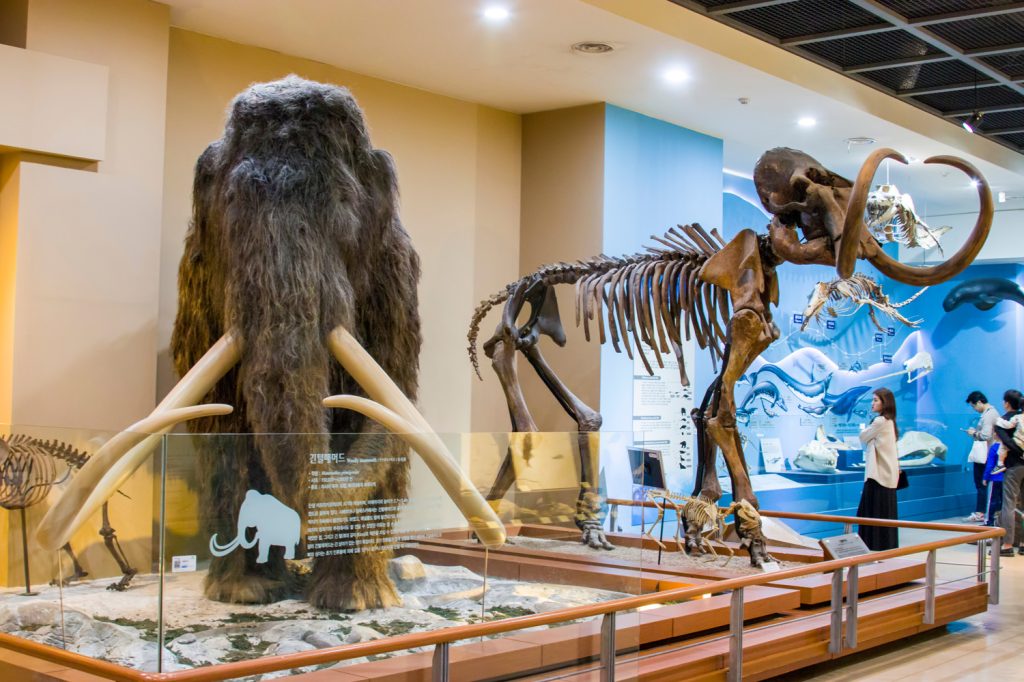
Cloning technology could be used to re-create extinct animals such as the woolly mammoth, but such efforts are likely to have unintended consequences.

For hunters, the opportunities and risks associated with cloned wildlife are particularly noteworthy. While cloning could eventually allow for increased harvests for some species, critics argue that the practice, especially if used widely, risks commodifying and devaluing wildlife, morphing our hunting tradition into a purely transactional experience, especially where cloning is used to create animals with desirable traits for hunting in controlled environments This shift could fundamentally alter the cultural and spiritual significance of hunting, raising concerns about cloning’s long-term impact on the community’s values and on public scrutiny and acceptance.

In some ways, certainly, the rise of cloned wildlife challenges the core tenets of the North American hunting community. Organizations like the Boone and Crockett Club and the Quality Deer Management Association, for example, have openly criticized genetic manipulation, often pointing to grotesque outcomes, such as deer bred with antlers exceeding 500 inches that cannot lift their heads to a natural position, let alone evade pursuit in any meaningful way. In their arguments, these organizations emphasize the importance of fair chase and the benefits of long-term preservation of natural ecosystems rather than the creation of artificial ones.

For individual hunters, cloned game introduces complex decisions. Would the majority of hunters pay a premium for genetically engineered game, or would they reject such practices as an affront to tradition? The economic implications are also significant. The exotic wildlife industry in the U.S. generates billions annually, and cloning could amplify this trend. Yet, as cloned animals proliferate, their availability might erode the value of genuine hunting experiences, undermining the connection to nature that draws many individuals to the practice.

As cloning technology continues to progress, hunters and conservationists face critical choices. Will cloned wildlife coexist with traditional hunting practices, or will it upend them entirely? For some, the prospect of “Franken-wildlife” raises alarm bells about the loss of authenticity and the ethical treatment of animals. For others, cloning offers a chance to rethink how humans interact with nature, blending innovation with tradition.

By advocating for ethical guidelines and collaborating with scientists and policymakers, hunters can help integrate cloning as a complement to conservation. Establishing clear boundaries for the use of cloning technology will be essential, and public education will also play a vital role in shaping the future of cloned wildlife. Raising awareness about the benefits and risks of cloning can foster informed decision-making and promote dialogue among stakeholders. This collaborative approach can help align technological advancements with the values of sustainability and respect for nature that underscore the North American hunting community.

The rise of cloned game is not just a scientific milestone–it is a challenge to the values that define hunting and conservation. In the end, the question is not just whether we can clone wildlife, but whether we should. The answers will define the balance between innovation and tradition, shaping the legacy we leave for future generations of hunters and wildlife enthusiasts. As the story of the Montana Mountain King reminds us, the stakes are high, and the choices we make today will resonate not just in our community, but across North America, and the world, for many years to come.

Leave a Comment

Hunting North of 60

Canada’s northern territories are among North America’s greatest big-game destinations.

Photo above by GaryKramer.net

The roar of the Super Cub’s engine filled the big valley as the little plane blew by us, climbed slowly above the buckbrush, and headed down the vast drainage, gradually disappearing from sight. My hunting partner and I stood silently for a few minutes, soaking in the breathtaking beauty of our surroundings. We had arrived at our remote hunting destination at that magical but very brief period when the North Country is transformed by the fall colors of the willows, mountain alder, and dwarf birch.

I will never forget that moment, even though it took place more than forty years ago. It was not only the start of a fantastic week of hunting that resulted in my taking a magnificent mountain caribou, it was also the beginning of a lifelong infatuation with Canada’s North Country. This is the vast wilderness comprised of the Yukon, Northwest Territories (NWT), and Nunavut, an area that lies north of the 60th parallel and encompasses close to 1.5 million square miles.

People are few and far between north of 60, with a total population of approximately 130,000 people for all three territories combined. That is barely enough people to populate a midsize suburb, or to put it in perspective, it’s about 0.087 people per square mile. But the true picture doesn’t come into focus until you consider that about half of those people live in the three territorial capitals of Whitehorse, Yellowknife, and Iqaluit. 

The big-game hunting in Canada’s north is as diverse as the topography. From the spectacular, glacier-covered St. Elias Mountains in the southwest Yukon to the vast barren lands west of Hudson Bay, to the stark islands of the High Arctic, there are unique and exciting big-game hunting opportunities for many of North Americas most iconic big-game species.

Sheep and Goats

The Yukon and NWT offer excellent opportunities for sheep hunters. Dall sheep are the primary focus of nonresident hunters and are found in most of the mountain ranges of the Yukon from its western border with Alaska east to its border with the NWT and the Mackenzie Mountains. The NWT offers excellent Dall sheep hunting in the Mackenzie Mountains west of the Mackenzie River. 

What some hunters do not realize, however, is that the Yukon offers excellent Stone sheep hunting as well. When Stone sheep are mentioned, most hunters automatically think of British Columbia, not realizing that the range of these sheep extends north of the 60thparallel into the southern part of the Yukon. 

The range of the Fannin sheep, a hybrid between Stone and Dall sheep, extends even farther into central Yukon. 

Limited mountain goat hunting is also found in the Yukon and the NWT. Mountain goats are found in the southernmost part of the Yukon in suitable habitat from the Klondike region in the southwest corner adjacent to Alaska and BC to the southeast corner boundary with the NWT, and in the southern half of the Mackenzie Mountains in the NWT.

Dall and Stone sheep are one of the main reasons hunters book hunts in the Yukon and NWT. Sports Afield editor Diana Rupp took this old Dall ram in the Yukon in 2008. 

Alaska-Yukon Moose

The Yukon and the NWT offer excellent hunting for big Alaska-Yukon moose and are one of the primary reasons nonresident hunters head north. Moose outfitters are spread over most of the Yukon, but the nonresident moose hunting in the NWT is restricted to west of the Mackenzie River in the Mackenzie Mountains. 

Depending on the terrain, moose hunts may be conducted by boat, ATV, or on horseback. In some cases, there are backpack hunts. When I see backpack hunts for Alaska-Yukon moose advertised these days, it reminds me of years gone by when I’d be guiding a backpack sheep or caribou hunt and the hunter would exercise his option to shoot a bull moose. That was in the bad old days when the guide was all things on whatever hunt was assigned. Besides guiding the hunter and taking care of the game he shot, you were also the wrangler, farrier, cook, dishwasher, nurse, skinner, tracker, and packer. A big bull moose on the ground meant a lot of hours packing the meat, cape, and antlers out to a place where the outfitter could get to it with his plane, in addition to the original target of a sheep or caribou.

These days, backpack hunts usually include a strong young man as a packer, and many horseback hunts also include a wrangler to round up the ponies in the morning and saddle them. If the hunts are operating out of a semi-permanent camp with wall tents or cabins, a cook is generally doing what cooks do, which further lightens the load for the guide. Things have changed, and in a good way.   

Caribou

There are four different types of caribou to hunt north of 60: mountain caribou, barren-ground caribou, Central Canada barren-ground caribou, and Peary caribou. Boundaries can vary a bit, depending on the record book, so I am going to just give a general description as to where the different types are available. A hunter needs to do their own due diligence for the actual specifics of the boundaries.

Mountain caribou are found in the Yukon east from the border with Alaska and south of the Yukon River, to the NWT border, and in the NWT west of the Mackenzie River. Mountain caribou hunting is a fantastic hunt and is usually by horse or backpack. On the early season hunts especially, you will quickly learn how they get their name, as you will be in sheep country. 

Barren-ground caribou are hunted in the Yukon north of the Yukon River and west of the Mackenzie River, while Central Canada barren ground caribou are east of the Mackenzie River in the NWT and all the mainland in Nunavut, as well as Baffin Island. The Peary or Arctic Islands caribou are found on the islands of the High Arctic.

Most Central Canada barren ground caribou hunts are conducted by boat on the numerous big lakes in the barrens. Hunters will beach the boat periodically to climb onto a ridge and glass. This is a very enjoyable hunt, but the weather can be extremely variable and rough boat rides are unavoidable at times. As most hunters are aware, these caribou have experienced a big drop in numbers and the NWT closed the season over a decade ago, but there are still opportunities to hunt them in Nunavut.

Hunting the Peary caribou is something I have always wanted to do, as they are a unique, small variety of caribou. Unfortunately, there are very limited opportunities to hunt these little caribou due to the extremely remote area they inhabit, and permits are few.   

Wood Bison

It is surprising how many hunters do not know about the exceptional hunting available for wild wood bison in the north. There are wood bison herds in both the southwest Yukon and the southwest area of the NWT near Great Slave Lake. These are big animals, and a mature bull can be several hundred pounds heavier than a mature plains bison bull.

There is one outfitter in the Yukon that offers hunts to nonresidents. The NWT herd suffered a big di- off about a decade ago due to anthrax, which resulted in the season being closed. The herd has been increasing, however, and a few permits have been issued in the last couple of years to resident hunters, so hopefully in the not-too-distant future, outfitted hunts will resume. I took my wood bison bull in the NWT prior to the anthrax problem occurring, and when you get one of those huge bulls on the ground, it brings new meaning to the saying, “When you pull the trigger, the fun stops and the work begins.”

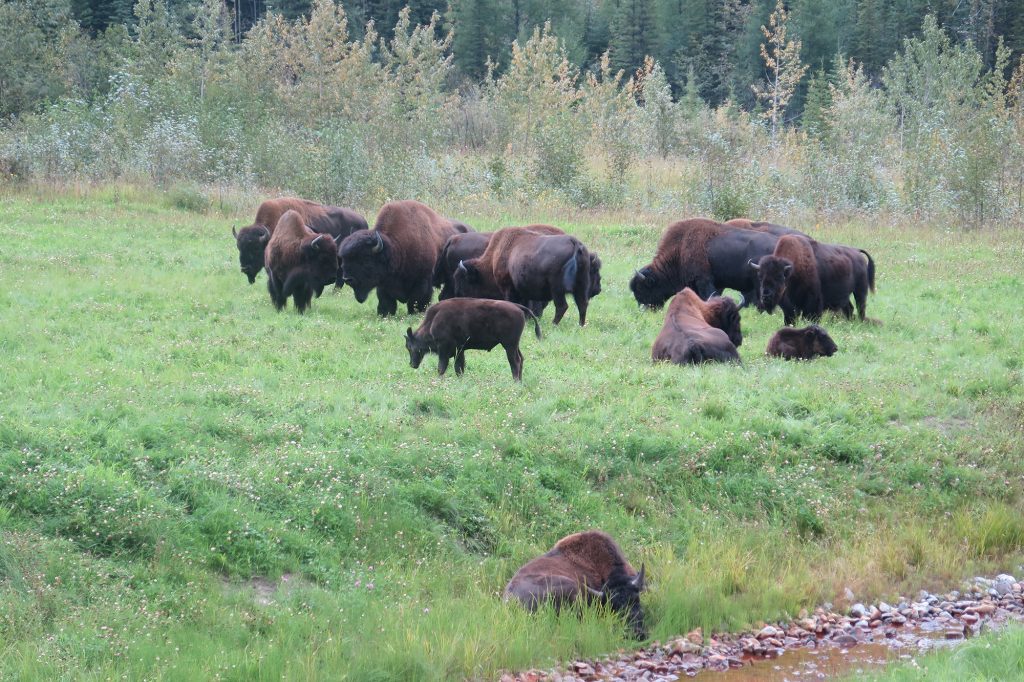
Wild wood bison herds are present in both the Yukon and the NWT.

Muskox

Muskox hunting is available in the NWT and Nunavut, both on the mainland and the Arctic islands. The mainland muskox is larger than those on the Arctic islands. I have only hunted muskox on the Arctic islands and hope to hunt the mainland bulls when time and money permit. Muskox are prehistoric-looking beasts, and the meat is very good.

Muskox hunting is made available to non-residents via the local Inuit Hunters and Trappers Associations in the various communities. It is a fun hunt, and usually hunters have the option of a fall hunt during August/September or a spring hunt in March/April. Fall hunts are great for those who do not like the cold, but if you want a true Arctic experience, the spring hunts will certainly give you a taste of what winter is like in the Arctic.

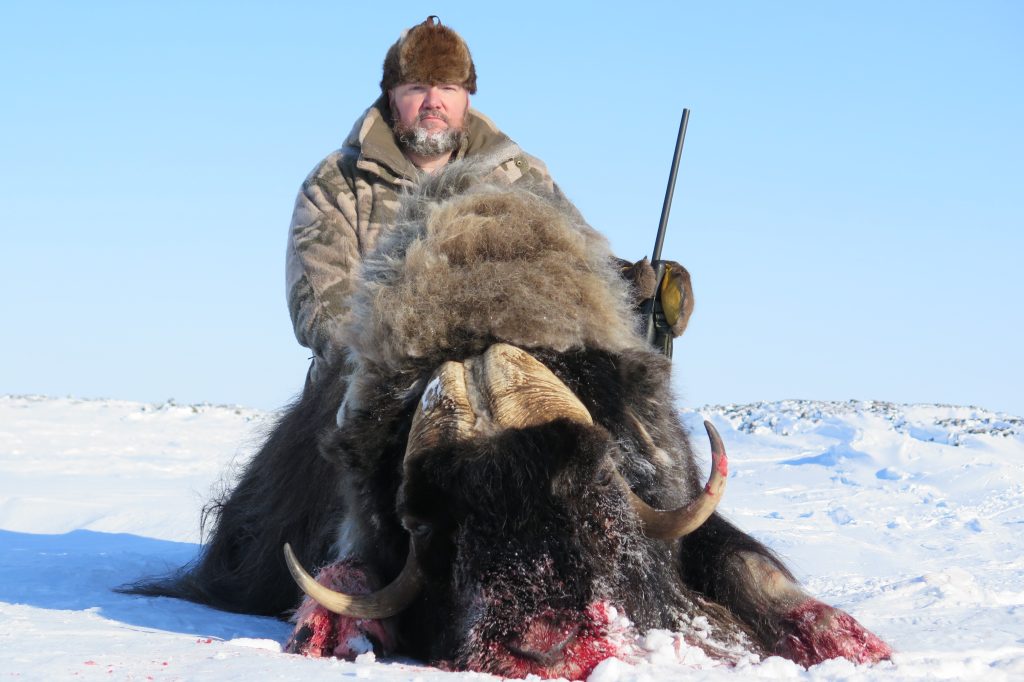
The prehistoric-looking muskox is found in the barren grounds and Arctic Islands of both the NWT and Nunavut. 

Toothy Creatures

Grizzly bears are found throughout the Yukon, the mainland of the NWT, and Nunavut, as well as some of the Arctic islands. The grizzlies in the Yukon and the Mackenzie Mountains of the NWT are the regular interior or mountain grizzlies most everyone is familiar with, while the grizzlies that inhabit the barren grounds or tundra of the NWT and Nunavut are referred to as barren-ground grizzlies. 

Outfitters currently offer both spring and fall hunts for grizzlies in the Yukon. In the NWT there is no nonresident grizzly hunting permitted in the Mackenzie Mountains, but a limited number of nonresident hunts are offered for barren- ground grizzlies in the barren lands of mainland NWT and Nunavut. These hunts are through the local Hunter and Trappers Associations of the First Nations and Inuit communities that are assigned an annual quota. It is worth noting that north of 60, in the “territories,” is currently the only place left in Canada that you can legally hunt grizzly bears.

I have had a fair amount of experience with the barren-ground grizzlies while guiding Central Canada barren-ground caribou hunts, and they are incredibly beautiful bears with wonderful coats that tend to be lighter colored. They also usually have bad attitudes and act much more like their white brothers. These bears are also continuing to expand their range, with bears being seen farther north in the Arctic islands, while others are being seen farther south in northern Saskatchewan and Manitoba, and northern Ontario around James Bay.

Contrary to what the anti-hunters would have you believe, polar bears are doing just fine. The big white bears are present in the extreme north of the Yukon near the Arctic Ocean, and in the coastal regions of the NWT and Nunavut, as well as the Arctic islands. Inuit communities are issued annual polar bear quotas, and the communities offer some of their quota to be used for guiding nonresident hunters by local Inuit guides. 

Polar bear hunts are typically conducted in the spring during March and April when the long daylight hours provide increased hunting time. This is a true Arctic adventure with highly experienced Inuit hunters using a sled and dog team.   

Black bears are abundant in the Yukon and the NWT south of the treeline, but very few outfitters offer standalone black bear hunts, choosing instead to offer them as an incidental trophy while pursuing other big game.

Both wolverines and wolves are found throughout the Yukon, the NWT, and Nunavut. Generally, they are hunted as creatures of opportunity, and outfitters encourage hunters to buy the tags in case opportunity knocks while they are on a big-game hunt for moose, caribou, muskox, or what have you. I have always encouraged hunters I was guiding to purchase these tags as well, as they are relatively inexpensive. I have seen a lot of wolves and wolverines over the years, generally when I was guiding someone who didn’t buy the appropriate tags and quickly came to regret it. While I do not know any outfitters that offer a hunt specifically for wolverines, many offer winter or early spring wolf hunts. 

Why head north of 60? To be sure, there are still large chunks of huntable land in the northern parts of the four western Canadian provinces, but it’s not like it used to be. Resource extraction from logging, mines, and oil and gas exploration have created access to a lot of country that was once extremely difficult to get into. There has also been a big increase in the human population over the last few decades, especially in British Columbia and Alberta, which naturally means there are a lot more people using the backcountry. 

When I first started guiding in British Columbia in the late 1970s, you could pack into the backcountry with a client for a two-week hunt and never see another person the whole time you were gone. The only signs of civilization you would see was the occasional jet flying overhead. We didn’t realize how good we had it, and assumed those areas would be the same for many years to come. Now, you will meet resident hunters hiking down the horse trails, and every lake that is big enough for a small float plane to use will have a group of people camped on it.

Canada’s northern territories, on the other hand, encompass an incredible amount of land but still have very small populations. Roads are few and far between, and the long, cold winters discourage all but the hardiest souls from moving there. I have been fortunate enough to have spent many months of my life hunting north of the 60th parallel, both as a hunter and while guiding other hunters, and I just never get enough of it. If you, too, want to experience exceptional big-game hunting in truly remote country that meets the true definition of wilderness, look north of 60.

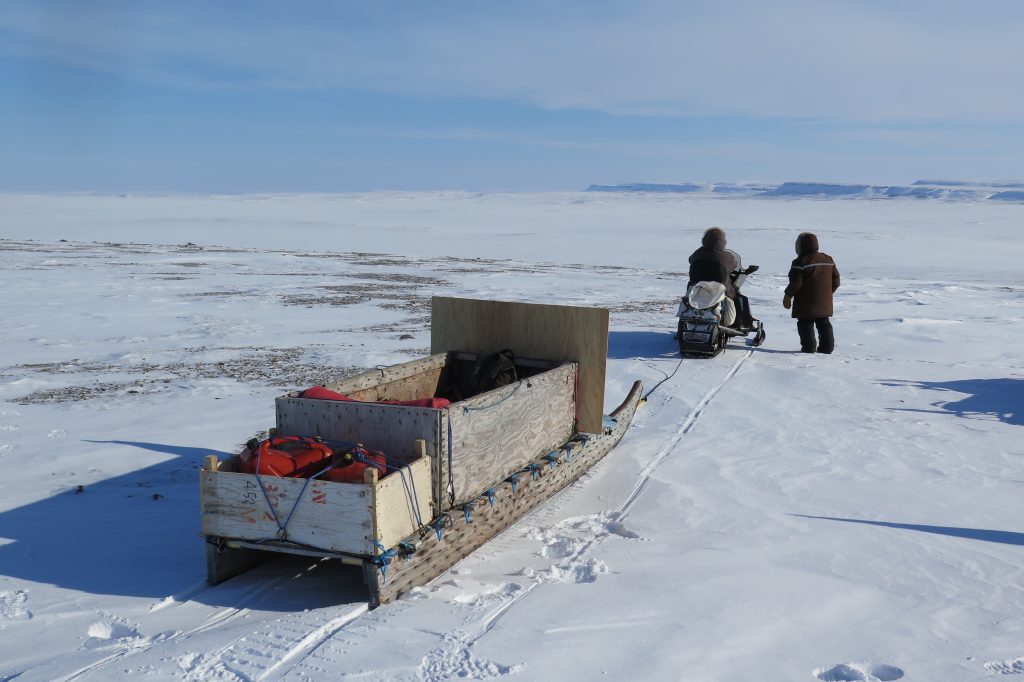
Inuit guides use snowmobiles and sleds to hunt musk ox and provide support for dog teams when hunting polar bear on spring hunts during the months of March and April. 

Leave a Comment

Building a Better Bullet

Even old familiar big-game bullets have been tweaked and improved over the years.

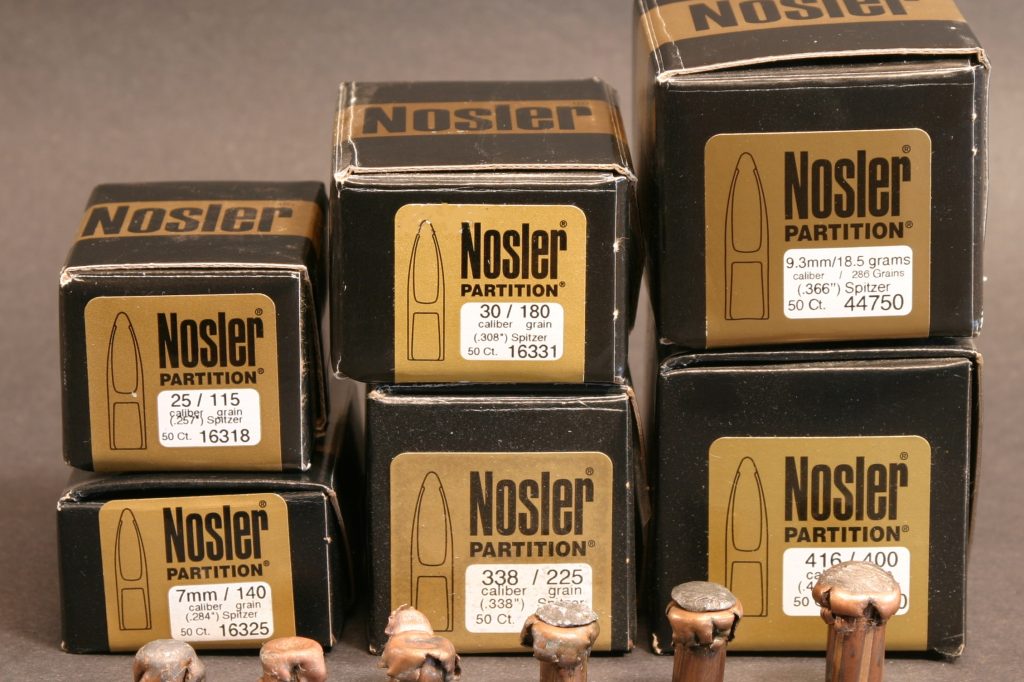
Photo above: Many hunters are obsessed with how much weight a bullet retains. All of these bullets were recovered from various big-game animals. They retain varying amounts of their original weight, yet all of them obviously resulted in a dead animal.

While some hunters try every new big-game bullet that comes out, others stick with one or two because they’ve always worked well for them. But even “old” bullets can change, sometimes considerably, partly due to bullet manufacturers tweaking the basic design to improve them, whether for field performance or more efficient manufacturing. I’ve used many different bullets, but in the last thirty years I have probably used more Barnes X-Bullets and Nosler Partitions than anything else. Both have changed markedly over that period.

Partitions appeared in 1948, and were designed to retain around two-thirds of their weight, with a softer front core that fragmented to increase tissue damage. The jackets were lathe-turned, but in the late 1970s Nosler started impact-extruding Partitions to speed production. I can’t say whether this improved accuracy or performance, because I started using the original Partitions only a few years before the extruded version appeared. Both 130-grain bullets in the .270 Winchester and 200-grainers in the .30-06 grouped three rounds into an inch at 100 yards, which back then was considered very good. None of the 130s were recovered from deer or 200s from elk, so I don’t know how much weight they retained. 

Retained weight became a major factor many big-game hunters considered after 1986, when the original Barnes X-Bullets appeared, since they often retained all of their original weight. Randy Brooks told me that he originally designed the X-Bullet to lose its petals, because he’d previously used Nosler Partitions and believed the front-end fragmentation helped them kill more quickly, as John Nosler intended.

But quite a few hunters started bragging about how X-Bullets retained 100 percent of their weight, or close to it—apparently equating this with “killing power.” Randy believed the customer is always right, so he started designing X-Bullets to retain their petals, partly by using the purest copper he could purchase, which made them less brittle. 

This retained-weight belief also resulted in other bulletmakers modifying their bullets, among them Nosler—though not all of them announced such changes publicly. In January 1998, I killed a bull bison on a Wyoming ranch when the temperature was minus-11 degrees Fahrenheit. The rancher warned me that in subzero temperatures, bison metabolisms slow down, so they often don’t react quickly to correctly placed shots.

Just about all copper-based monolithic bullets featured grooved shanks. Barnes started doing this with their Triple-Shock X-Bullet in 2004.

I used my first .375 H&H, a British Whitworth made on a commercial 98 Mauser action, with 300-grain Partitions handloaded to around 2,550 fps. The bull stood broadside at 80 yards, and per the rancher’s instructions, I aimed just behind the front leg, about a quarter of the way up from the bottom of the chest. At the shot, the bull grunted and took a couple of steps forward, so I put another bullet in the same area. The bull backed up a couple steps, and fell very slowly.

We found both bullets under the hide on the far side. One retained 87.7 percent of its weight, and the other 88.7 percent–very close to the 90 percent many 1990s hunters considered the acceptable minimum. By then I’d recovered a number of other Partitions from big game in calibers including .25, .270, 7mm, and .30, and their retained weight ranged from 53.7 percent to 80.3 percent, an average of 65.8 percent.

So why did the pair of 300-grain .375s retain so much weight? I asked the folks at Nosler, who explained the recent retained-weight trend persuaded them to redesign heavier Partitions in calibers over .30 by moving the partition further forward. The .300-grain .375 also featured an even harder rear core to resist deformation. (They also said they often tweak their bullets based on testing at the factory and field performance.) 

After the bison I recovered other heavier, larger-caliber Partitions from bigger game. The least percentage of retained weight was 80.5 percent, a 225-grain .338 from a big bull muskox, after breaking the near shoulder. The highest percentage was 95.2 percent, a 400-grain .416 from broadside rib shot on a water buffalo. 

Barnes X-Bullets have also changed considerably since they were first introduced. The most obvious change occurred in 2004, when the Triple-Shock X-Bullet (TSX) appeared with its multi-grooved shank. This solved the problem of excessive copper-fouling inside rifle bores. In 2007 a plastic tip was added, resulting in the Tipped TSX, which increased ballistic coefficient and resulted in more consistent expansion.

Plastic tips have been used on some big-game bullets going back to the 1950s. Originally they were intended to prevent the tip-flattening common to softnose bullets due to recoil-pounding inside bolt-action magazines, so the tips were often rounded. But in the 1980s they became sharply pointed to increase ballistic coefficient. 

Originally, pointed plastic tips were added to already existing lead-core spitzers, including Nosler’s Solid Base, with a typical lead core inside a one-piece jacket with a heavy base, resulting in the Ballistic Tip. Around the same time Hornady also added a tip to its popular Interlock Spire Points, calling the bullet the SST. 

But the plastic tip resulted in more violent expansion in both bullets due to the large hollow-point required for inserting the tip’s shank. This often resulted in reduced penetration, so both bullets were tweaked to fix the problem, primarily by using harder lead alloys for the cores. Both bullets still expand easily, but they also penetrate very well. 

In some “harder” bullets, however, a plastic tip aids expansion at longer ranges, where velocity drops. The Barnes LRX is a higher-BC version of the TSX, designed for hunting at longer ranges. When LRXs appeared, some hunters guessed the easier expansion resulted from annealing the front end of the bullets, but actually it’s done through changes in the hollow point where the tip is inserted. 

Some hunters worried LRXs wouldn’t penetrate as well as TSXs. I’ve been using LRXs in the 6.5 PRC and .30-06 for several years now on game up to elk, and all have expanded and penetrated similarly to TSXs. In fact, none has been recovered, although one stayed inside a big cow elk after a frontal quartering shot just inside the left shoulder. It ended up somewhere in the intestines, where two companions and I searched but never found it.

As far as I know the essential design of Swift’s excellent A-Frame bonded bullet has not changed since it was developed in the 1980s. The A-Frame has a partition jacket made of pure copper, with two cores of pure lead, so doesn’t fragment much, usually retaining around 90 percent of its original weight. But the ballistic coefficient isn’t very high, so eventually Swift introduced a plastic-tipped, boattail bonded bullet called the Scirocco for longer-range hunting. It worked very well, and was eventually tweaked to open less widely and penetrate deeper.

Another trend in bullet design also started 1990s: More manufacturers started field-testing bullets extensively on game before introducing them commercially. Before then, most companies assumed new bullets would work well simply because they’d designed so many previous bullets, so they only tested them in “media,” either wood pulp or ballistic gelatin. But good performance in media didn’t always translate to good performance on game, one good example being Winchester’s Silvertip Supreme, a boattail version of the original Silvertip. On game it came apart frequently, which is why it only lasted a few years before being replaced by the Fail Safe, which acted a lot like the Barnes X-Bullet on game, but cost a lot more to produce. That is why it disappeared soon after the TSX appeared.

I know all this partly because over the years I’ve been invited, along with other gun writers, to field-test a number of new bullets before they were introduced. Such test-hunts have occurred from Canada to Africa, although Texas is a particularly popular destination since it provides a lot of opportunity for culling deer and feral pigs. Sometimes the new bullets are tweaked after such hunts before they’re finally released for sale, and that’s one reason today’s big-game bullets work so well on game from deer to Cape buffalo.

During the 1990s Nosler changed the position of the partition on heavier, larger Partitions, resulting in more retained weight.

Leave a Comment

Selous Gets Lost

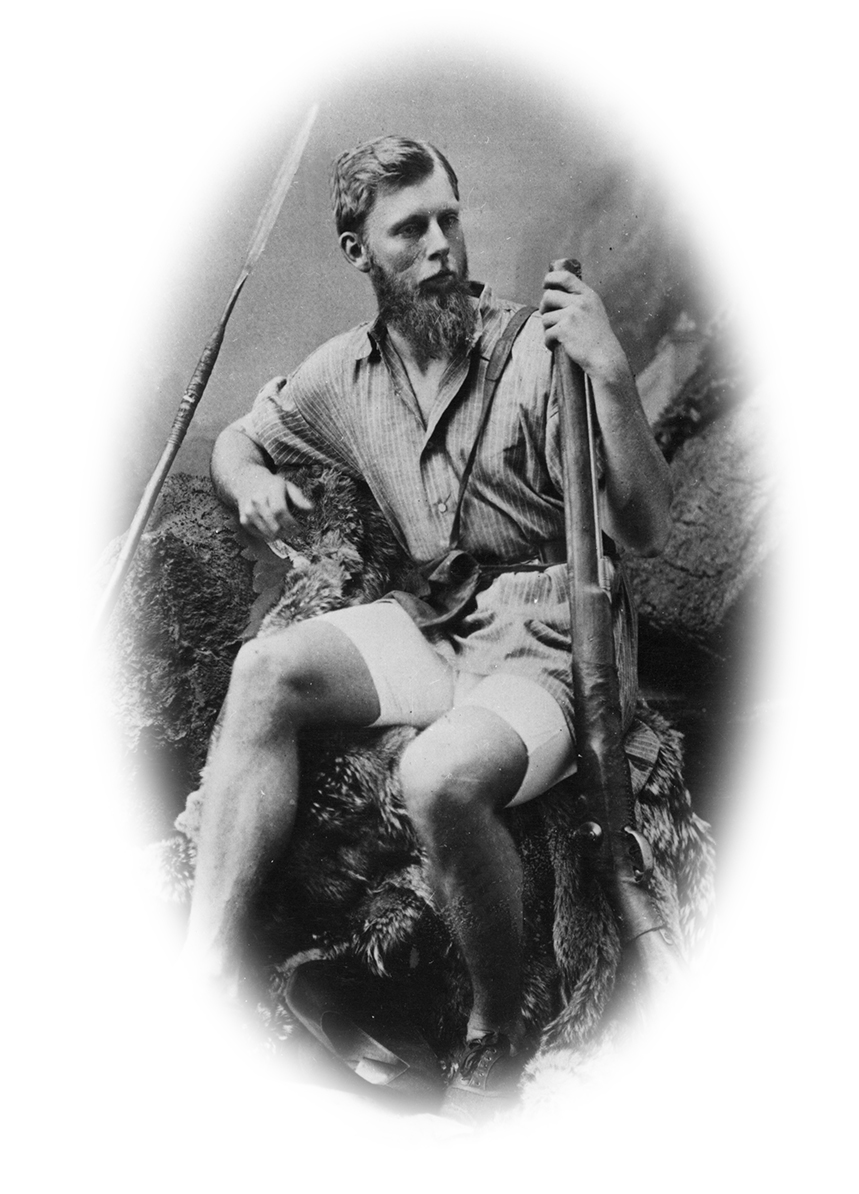
Before he became the most famous hunter of the Victorian Era, Frederick Selous nearly met his end when he ended up lost and alone in the wilderness of southern Africa.

He would eventually become one of the most famous and accomplished hunters of his time and a man of many distinctions, but in 1872 Frederick Courteney Selous was only nineteen years old and had just recently arrived in South Africa. It was his first visit to the continent he had read and dreamed about while growing up in England, and his first venture into the “far interior,” which was largely unmapped and roadless except for a few rutted wagon-track paths. Young Fred’s plan was to explore with three new-met friends, hunt as much as possible, and make money shooting and trading for ivory, which at that time was still considered a legitimate–and sometimes profitable–profession.

On horseback, with ox-drawn wagons full of trade goods and a retinue of native helpers, Selous and his cronies labored their way north from Port Elizabeth, a trek of some months with many delays and hardships. Around mid-August the men followed the wagon track into country ruled by the Matabele tribe although, except for a few scattered Bushmen, the area seemed largely uninhabited. At a place called Shakani, where there were two “pretty vleys” (shallow ephemeral lakes), they stayed for a week. Each day Selous rode out with one or more companions in search of game. He wrote, “we always guided ourselves back by a low range of hills that ran parallel with the [wagon track] road, behind the vleys, and particularly by one single hill that stood by itself.” In modern terms, they were using these hills as a baseline that could be followed to find their way back to camp, and the single rock-mound hill (or kopje) was a landmark that stood out in otherwise homogenous terrain.  

Leaving Shakani, they continued northward, and after a four-hour trek reached Lemouni Pan, a large, open piece of ground surrounded by thick forest and scrubby brush. During the dry season it was almost destitute of water. August is mid-winter at that latitude, and though the sun was hot during the day–as hot as summer in England, Selous thought–the nights “were intensely cold, and tea left in the kettle was often frozen.” 

Just before dawn one day, being completely out of meat, Selous and two companions decided to ride out on horseback in search of game. “So, hastily drinking a cup of hot coffee, we saddled up our horses and started.” 

This would be his first serious mistake: taking off for the hunt with no thought of preparation and adequate equipment–not even a compass, or food and water, or a coat and blanket, or matches. After all, they were only going out for a half-day jaunt.

Early that morning they came upon some hartebeest, and wounding one, went on a long chase after it, finally losing the animal in thick woods. Thinking they were riding parallel to the main wagon track, they continued on until afternoon, seeing no game. About to give up and head back to the road, they spotted several giraffes in the distance, “their heads appearing amongst the tops of the trees. We at once started in eager pursuit, hoping to secure some steaks for supper, as giraffes are splendid eating … and their fat is a luxury that no one can properly appreciate till he has lived for a time on nothing but the dry meat of the smaller antelopes.” 

Selous and his friends galloped toward the herd of about twenty animals, which took off with their gliding gait. “At a hard gallop, they can spin along for miles, and so we found today. After an hour or so [of chasing them on horseback at top speed] the giraffes separated and I found myself lying on my back, with my right leg nearly broken, by coming violently into contact with the trunk of a tree.” When Selous managed to rise, the giraffes were gone, and so were his companions.

A portrait of Frederick Selous as a young man. He arrived in Africa from England at the age of nineteen, where he discovered he had a lot to learn about wilderness survival.

Thinking they too must have given up the chase, he fired a signal shot and immediately heard an answering report to his right. He rode in that direction for some distance “and shouted with all my might,” but received no reply. He fired another shot, without effect. His horse was worn out from the hard chase, so he unsaddled for a time and attempted a third signal shot. He “listened intently for an answer, but all was silent as the grave; so, as the sun was now low, I saddled up again and struck a line for the wagon road, thinking my friends had already done the same thing.” 

He kept riding, very slowly, on his spent, thirsty horse, as the sun sank on the horizon and finally disappeared. The moon was bright but the temperature was lowering fast. “Still thinking I must be close to the road, I kept on for a couple of hours or so, when, it being intensely cold, I resolved to try and light a fire and pass the night where I was. Having no matches, in endeavoring to get a light I had to make use of my cartridges, of which I had only three remaining.” He broke one of these open, rubbed some gunpowder into a piece of linen torn from his shirt, dropped it into the muzzle of his rifle and tried to ignite it with the percussion cap. He managed to get a bit of dry grass smoldering, but “could not for the life of me make it flare, and soon had the mortification of finding myself, after two more unsuccessful attempts, just as cold and hungry as before, and minus my three cartridges to boot. Were the same circumstances to occur again, no doubt everything would be different; but at the time I was quite a tyro in all forest lore.” 

It was now very cold. His clothing consisted of a hat, shirt, trousers, and light shoes. Using his hat for a pillow, he pulled the saddle over his chest and hoped to “fall asleep and forget my cares; vain indeed, for the bitter cold crept in … from my feet upwards, til I was soon shivering from head to foot as if my very life depended upon it.” After two hours of this he could bear it no longer and struggled, stiffly, to get up. He ran back and forth in the moonlight until he was reasonably warm again, then lay down. In this manner he passed the long, frigid night.

At dawn he saddled up and rode, very slowly, on his poor horse, which was too fatigued and dehydrated to move faster. Coming near a high tree, he climbed it to look for a recognizable landmark. But “on every side the country was covered with forest, and in the distance were several low ranges of hills, yet nothing seemed familiar to my eye.” Spotting a lone kopje, he rode for it, passing “three beautiful gemsbuck, which allowed me to come quite close to them, though they are usually very wild; but they had nothing to fear from me, as I had no cartridges, and so could do nothing more than admire them.” 

Then it struck him: he must have already ridden across the narrow wagon-track road last evening in the moonlight, when it would have been easy to miss. He became so sure of this he turned his horse around and rode back in the direction from which he’d just come. This is typical lost-person behavior, changing or reversing course on a sudden whim, filled with doubt and anxiety-based impatience, wanting to locate something recognizable, to once again feel safely re-oriented. Very often this leads people to change course just before they are about to reach the very place–the trail or turn or fork or road–they are seeking. 

Selous kept on until midday, but there was still no road. “I began to think that I was in stern reality lost in the veldt, without even a bullet to obtain food for myself, and no water within heaven knew what distance away, except the far-apart drinking-places along the road. And where was that road–was it behind me or in front?” 

Seeing another kopje, he climbed it for a look around. “A most bewildering prospect it was–a vast ocean of forest on all sides, as far as the eye could reach; but nowhere could I make out a landmark to guide me in the least.” He did see, in the direction from which he’d just come, a thin line of blue smoke curling up from the trees–which he took to indicate a wood fire made by a native who could probably guide him to safety. So he remounted his beleaguered horse, turned it around once again, and rode back in the direction of the smoke, now believing that the road had in fact been behind him. Recounting this later, Selous interjects, “I may here say that as I afterward found out, I never had crossed the road in the night, but must twice have turned and ridden away when within but a short distance [of it].” 

Nearing where he thought the wood fire should be, he climbed a tall tree and searched, but could find no trace of smoke or human. Discouraged–and probably more worried and frightened than he admits in his narrative–he tried to keep his spirits up by imagining “how I should enjoy a cup of tea and a damper with my companions round the campfire.” (A frequent tactic of survivors is using pleasant imaginings and other goads to restore motivation while staving off panic and despair.) But “as the sun dipped lower and lower in the western sky, my spirits sank with it, and at last when it finally disappeared, I had to prepare for a second night on the bare ground, without food, water, fire, or blanket.”

Since his depleted horse had eaten nothing all day, he decided to hobble it with rawhide thongs rather than tie it to a tree, hoping the animal might forage during the night and gain some strength for the next day. “It was full moon, and fearfully cold, from which, in addition to hunger and thirst, I suffered intensely, almost shivering myself to pieces; but everything has an end in this world, and so had this most intolerably long winter’s night.” 

At the first streak of dawn he tried to rise, but his legs were numb with cold. Eventually he restored enough circulation to stand, look around, and realize his horse was gone. Though tightly hobbled, the animal was so parched it must have hopped and shuffled off in search of water, despite the crippling restraints. Selous tried tracking it for a short while but the ground was so hard and dry he couldn’t find adequate spoor. Now he was lost and unequipped–and on foot. It had been forty-eight hours since any food or liquid passed his lips. But “all that day I walked as I have seldom walked since, only resting at long intervals for a few minutes at a time, devoured by a burning thirst and growing sensibly weaker from hunger.” 

Near sunset he climbed a steep hill, pausing every few steps to pant and rest, only to reach the top and see “nothing but range upon range of rugged, stony hills.” Exhausted, he settled in for another frigid night. Now he was frightened, thinking he “was doomed to die of starvation and thirst in the wilderness, my fate remaining a mystery to all my friends.” 

Instead of panicking, however, Selous’s thinking shifted, “a feeling that it was too hard to die thus like a rat in a hole, and though things certainly looked desperate at present, I still felt some gleam of hope that they would eventually come right.”

The cold was not so intense up on the mountain as it had been on the floor of the plain, “nor did I feel the pangs of hunger to any great degree; but my thirst was now intolerable, my throat, tongue, and lips being quite dry and swollen, so that it was very painful to swallow.”        

When he awoke atop the hill he saw that he “commanded a view over a vast extent of country. Suddenly I fancied I recognized a certain detached kopje as the one with which I was well acquainted, close to [the] Shakani vleys.” He felt certain that if he could reach that kopje he would be saved, although it was very far away. He took off walking for it and marched all day, stopping periodically to climb a tree and relocate the landmark, which he couldn’t see from ground level. Though fatigued and weak, he wouldn’t rest for more than a few minutes at a time. At last, just before sundown, he was nearing the Shakani kopje when he saw two native men walking ahead. He called to them as much as his parched throat would allow. They led him to a small kraal consisting of three crude huts. He asked for water, but the old Bushman there would not give him any. “Holding a giraffe’s intestine full of the precious fluid under his arm, [he] said, ‘Buy the water!’” This infuriated Selous, but just then a boy came in carrying a large calabash of fresh goat’s milk. Selous offered his only tradable item, his clasp knife, which the boy accepted. The milk was an indescribable treat, and “about the very best thing I could have taken in my state.”

By the next afternoon he was back with his friends, eating heartily and very glad to be sleeping once again under warm blankets. “Thus terminated an adventure which, had it not been for a sound constitution, might have terminated me,” he wrote. He also noted that it was having the low range of hills and the kopje landmark “well impressed upon my mind” that had probably saved his life. 

As for his horse, which he assumed had died of thirst or fallen prey to lions or hyenas, the hobbled animal had somehow managed to return to the native village where had Selous purchased it. Though in tough shape, its legs cut by the leather thongs, the horse–like young Fred Selous–had found a way to survive.   

Author’s note: This account can be found in Selous’s A Hunter’s Wanderings in Africa, (originally published in 1907, reprinted in 2019), an absorbing memoir of hunting, exploration, and natural history in southern Africa. 

Leave a Comment

Tough Enough for the Tian Shan

The CANIS Pamir Insulation Jacket and Nunavut Rain Jacket and Pants were the ideal layers for a hard mountain hunt.

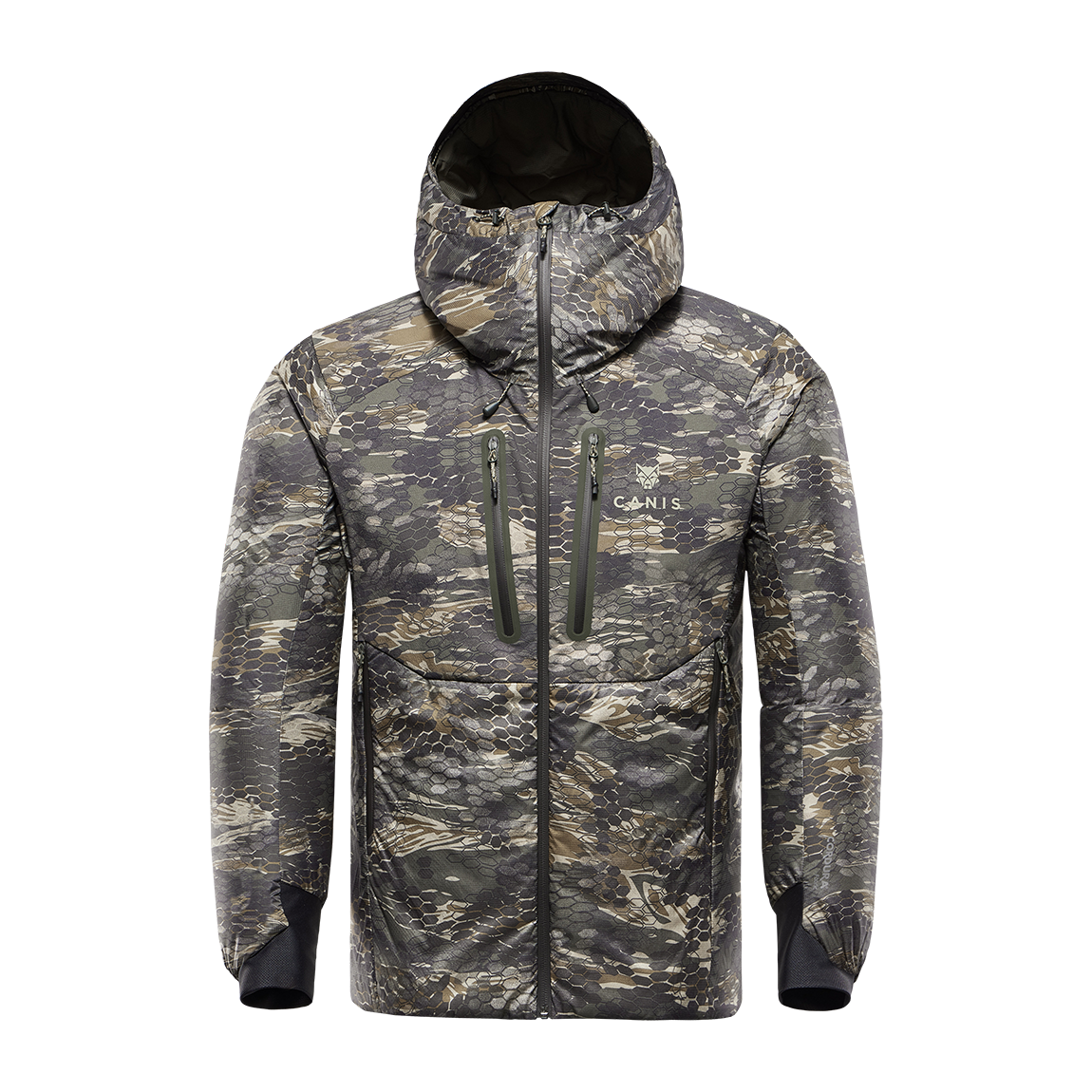
Photo above: The author wore the Pamir Insulation Jacket from CANIS every day on his hunt in Kazakhstan. This lightweight, packable puffy works well under an outer layer or on its own.

Last fall I hunted maral stag and ibex in the high, rugged mountains of Kazakhstan’s Tian Shan range. Serious prep for this trip started twelve months out, and every item of gear had to be carefully considered. The entire hunt was spent on horseback or on foot, and every night was spent in a tent. It was not a hunt where you could easily dry out your clothes in the evenings. Besides keeping me warm and dry, it was crucial that every item I took on this trip be both lightweight and bombproof. 

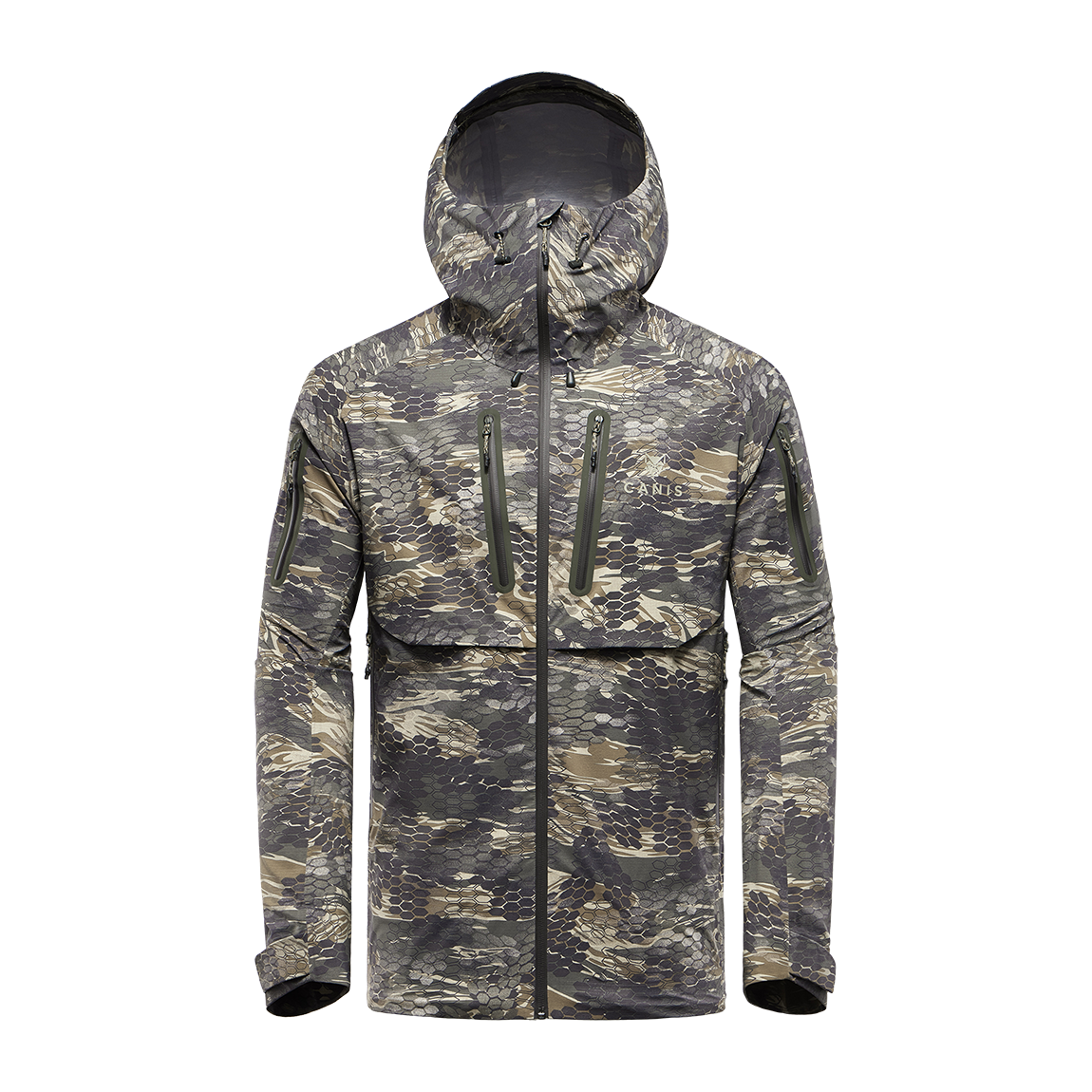
In preparation for the trip, I spent some time in the CANIS booth at the DSC convention, where they showed me their layering system. I was impressed with the practicality, light weight, and quality of the workmanship, so I ordered a Pamir Insulation Jacket and a Nunavut Rain Jacket with a matching pair of Nunavut Rain Pants. The real test of this gear, of course, would be in the field.

The Nunavut Rain Jacket and pants are 100 percent waterproof and breathable. This gear is sized to fit over baselayers and insulation layers and is made of a quiet, three-layer fabric ideal as an outer layer for almost any hunt.

The total trip was eighteen hunting days during which I undertook two separate hunts, one for ibex and another for maral stag, the Asian variety of the American elk. Typical variable fall mountain weather was encountered: snow, heavy winds, heavy rain showers, and sometimes very warm periods around midday. Every morning the guides and I got up around 4 am and went to bed between 7 and 8 pm; six or seven hours a day was spent on horses pushing through pine forests and willow-choked creek bottoms. I lost count of how many times my clothing and backpack snagged on branches as we rode. 

For nearly three weeks, the CANIS gear got its workout on a real mountain hunt and passed with flying colors. I lived in it and only took it off when I went to bed.  Actually, one night it got so cold that I got up and put on the Pamir Insulation Jacket, put up the hood, crawled back into the sleeping bag, and slept like a warm bug in a rug! I had the Nunavut Rain Gear with me every day, and if I was not wearing it straight out of camp, it was tied on the horse or stashed in my backpack.  

The CANIS Nunavut Rain Jacket and Pants were an essential layer, providing protection from rain, snow, and wind.

Let’s discuss the rain gear first. The fabric of both the jacket and the pants is a three-layer design with the pants having Kevlar-reinforced knee patches for kneeling or crawling in rough terrain. Taking the jacket and pants on and off was a daily event in the ever-changing weather conditions, and each leg of the pants has full-length, three-headed zippers, enabling me to do this easily while keeping my boots on. Two large pockets in the pants allowed me to carry everything I needed.  The rain jacket has no fewer than seven pockets, including two lower hand-warming pockets, double breast pockets, two upper sleeve pockets, and an interior pocket–more storage than the Russian Army needs! The hood zips close around the face and is adjustable. Both the pants and the jacket are very quiet, comfortably stretchy, and resistant to rips. All seams are sealed and the gear is completely waterproof but also breathable.  

I wore the Pamir Insulation Jacket day and night, both under the Nunavut Rain Jacket and on its own. Filled with a water-repelling, quick-drying synthetic insulation called Climashield APEX, the jacket is very warm while still being light and packable. It has five pockets, including an interior chest pocket for important papers, fleece-lined wrists and collar, and a snug, adjustable hood.  Like the rain gear, this jacket is very rip-resistant.

High-tech, quality clothing like this is not inexpensive, but on a hunt where you depend on your clothing to keep you from being miserable, it’s not just a bargain but worth its weight in gold. Every ounce you carry on a tough mountain hunt has to count, and not only did this clothing keep me dry as a cork during the entire trip, all three pieces, together, weighed just three pounds! If you’re looking for gear that not only performs well but stands up to the rigors of a tough hunt, the lightweight, high-tech clothing from CANIS fits the bill. Learn more at canisathlete.com

The Pamir Insulation Jacket is filled with synthetic Climashield APEX insulation, which is water-resistant and quick drying. The author’s jacket was in Alpha camo; the jacket is also available in solid colors.

Leave a Comment

50 Great Stalks

Craig Boddington’s latest book is a collection of his greatest hunting memories.

I think it’s safe to say that there are few people in the world today with the length, breadth, and depth of hunting experience possessed by Craig Boddington. Craig never claims to have done everything the hunting world has to offer, but he has certainly come closer than almost anyone I can think of. Craig is a mountain hunter extraordinaire and a veteran of scores of African safaris, and he has spent extensive time in the forests and fields of North America, South America, Europe, Asia, and the South Pacific. In fact, over five decades he’s hunted in fifty-six countries, all told. His hunting awards and accolades are too numerous to mention, other than to say they include the incredibly prestigious Weatherby Trophy and the Conklin (“Tough Guy”) Award.

Best of all, Craig has spent his lifetime not only hunting, but also sharing his stories, knowledge, and expertise with those of us who only wish we could spend as much time in the field as he does. In the course of this, he has published some thirty-one books, most of them with specific themes such as Africa, North America, firearms and shooting, or hunting techniques for a single species such as buffalo or elephant. 

Craig’s latest book, 50 Great Stalks: Hunting the World’s Greatest Game Up Close, is something of a departure from those single-themed books. As he says in the Preface, “I guess you could call [this] a ‘hunting highlights’ book, and I suppose I’m old enough to indulge in such.” It’s a collection of half a hundred tales of his most memorable and enjoyable hunts from all around the world. But these are not just any hunts, nor are they chance encounters; they are (almost) all spot-and-stalk adventures. “The more I thought about it,” Craig writes, “I realized that my favorite hunting memories come from identifying a desired animal, then approaching for the shot.”

The book is divided into four parts: Plain, Forest, Skyline Pursuits, and Formidable Game, with a dozen or so stories falling under each heading. Each tale stands on its own and every one of them is a great read, so you can savor this book of hunting adventures cover-to-cover, or flip directly to the section or chapters that most interest you (guilty as charged—I devoured the entire “Skyline Pursuits” section first). These stories take the reader on a fascinating romp through the world’s greatest game fields, ranging from coastal Alaska to the high Pamirs in Tajikistan to the Wyoming prairies to the swamps of Mozambique and beyond. While the stories are not in chronological order, they span several decades, including a tale of Craig’s first safari in Kenya in 1977 and a pronghorn hunt with his father in 1978, and ending with a fun tale of a buffalo hunt on his seventieth birthday in 2022—one that made him late for his own birthday party. 

If you are a fan of Craig’s writing you will recognize the broad outlines of many of these hunts, since he has written about most of them in the pages of Sports Afield and other publications. However, the chapters in this book are not reprints of his magazine articles. In the process of looking back at these adventures, he often adds details and context that were not included in the original stories. As such, through some of these tales you’ll get a taste of how the world of hunting has changed over the years. The book’s ending is inspiration in itself—we should all hope to still be hunting dangerous game (and everything else) as we head into our eighth decade.

It’s hard to pick a favorite among Craig’s many excellent books, since he has an uncanny ability to capture the essence and thrill of big-game hunting in the world’s most exotic places while still making it approachable and enjoyable for the average hunter—and ensuring the reader also learns something along the way. But for sheer variety of subject matter and great storytelling, if you only own one Boddington book, this is the one to get. It’s the one you’ll curl up with and read by the fire as you dream of your own next adventure. Order a signed copy directly from craigboddington.com.

Leave a Comment

Africa’s Toughest Antelope

The wildebeest is often called “the poor man’s Cape buffalo.”

Legend has it that African antelopes are “tougher” than similar-sized animals elsewhere in the world. It’s certainly true that with a full suite of predators to worry about, Africa’s prey species are constantly on edge, ready for that surge of adrenaline that might speed them out of harm’s way.

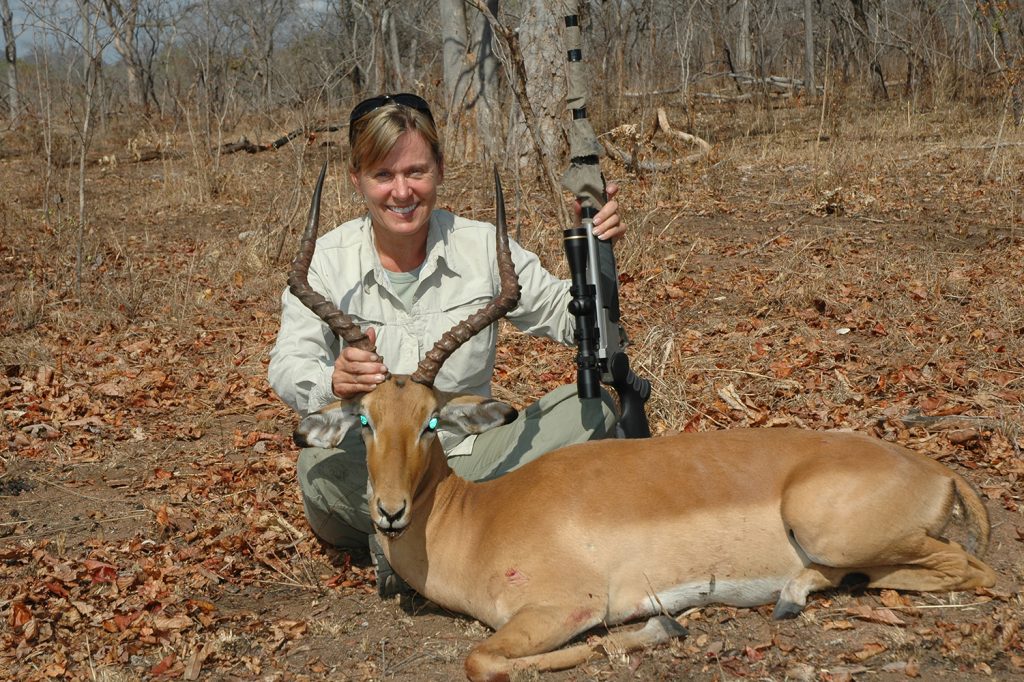
As for toughness, it varies. I can’t think of an African animal that’s hardier, pound for pound, than an impala. Similar in size to a modest Hill Country whitetail, an impala, when perfectly hit, will consistently travel farther than one thinks it should have been able to. With a poorly hit impala, all bets are off. Zebras are also tough, strongly built, and heavier than most antelopes. The whole oryx-roan-sable clan is tough. To me, spiral horns and the hartebeests are not particularly tough.

To some extent, we’re all victims of our own limited experience. Just one train wreck with an animal, or with a particular cartridge or bullet, tends to make us generalize. After all, that bad experience couldn’t be based on poor shooting, could it? I think most African professional hunters—who have seen lots of terrible shooting by folks like you and me—would agree: The wildebeest is one of Africa’s toughest animals. It’s a big, powerful antelope. Not among the wariest, not the most beautiful, but just plain tough. That doesn’t mean you need a cannon, but you better put your bullet in the right place.

Decades ago, early in my African experience, we were trying to get a big blue wildebeest bull. He was wandering alone and apparently skipped the classes teaching him he was supposed to be stupid. After multiple failed stalks he sauntered across a little clearing and gave us a chance. I was shooting a .340 Weatherby Magnum, which is a cannon. I was certain of the shot, but I was wrong. I know that because we eventually got him, many hours and miles later, after some brilliant tracking. Maybe he took a step on me, maybe I just blew the shot. Whatever happened, I’d hit him just a bit too far back. Doesn’t take much of an error to have a long day with a wildebeest.

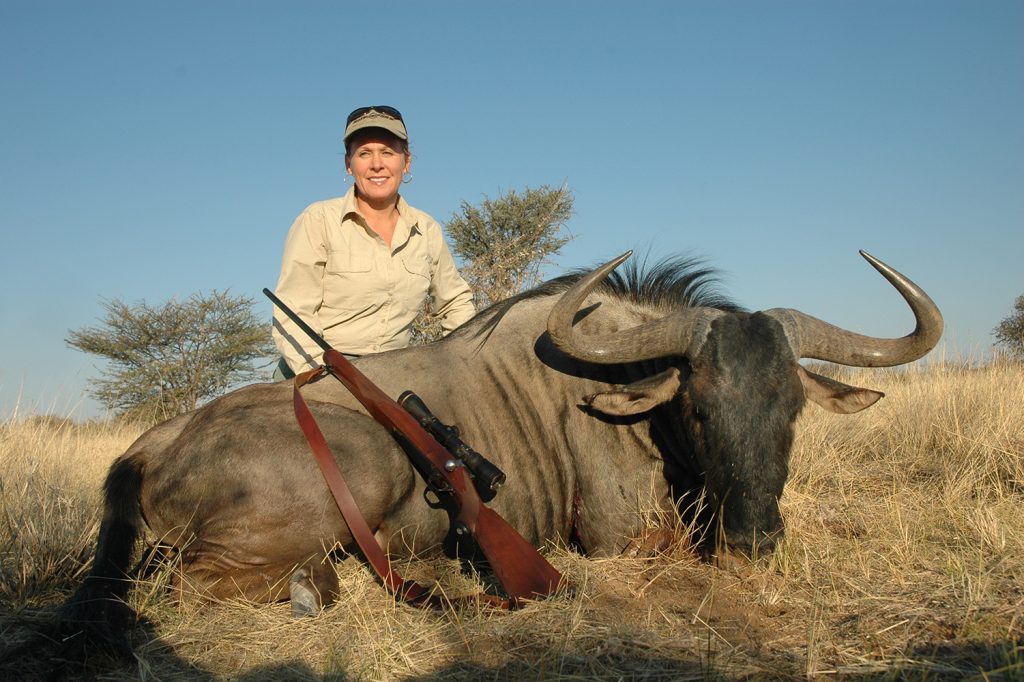
Donna Boddington took this blue wildebeest in central Namibia. With horn width well outside the ears and long tips, this is an exceptional bull. She used a Ruger M77 in .30-06.

Years later, on daughter Caroline’s second safari, Scot Burchell glassed a small herd of blue wildebeest feeding on a brushy ridge. We got in close, isolated a nice bull, and Caroline took a shot with her little 7mm-08. I couldn’t see the bull when she shot, only saw dark blue bodies running everywhere. Scot was confident and he was right; her bull didn’t go forty yards, down and dead with a 140-grain bullet centered on the shoulder.

I’ve seen my elder daughter Brittany take several wildebeest with her 7mm-08, and I’ve seen them taken cleanly with the .260 Remington and 6.5 Creedmoor. Always, it’s more important where an animal is hit than what it’s hit with, but wildebeest are tough enough that it’s essential to do it right and use a bullet that is certain to penetrate.

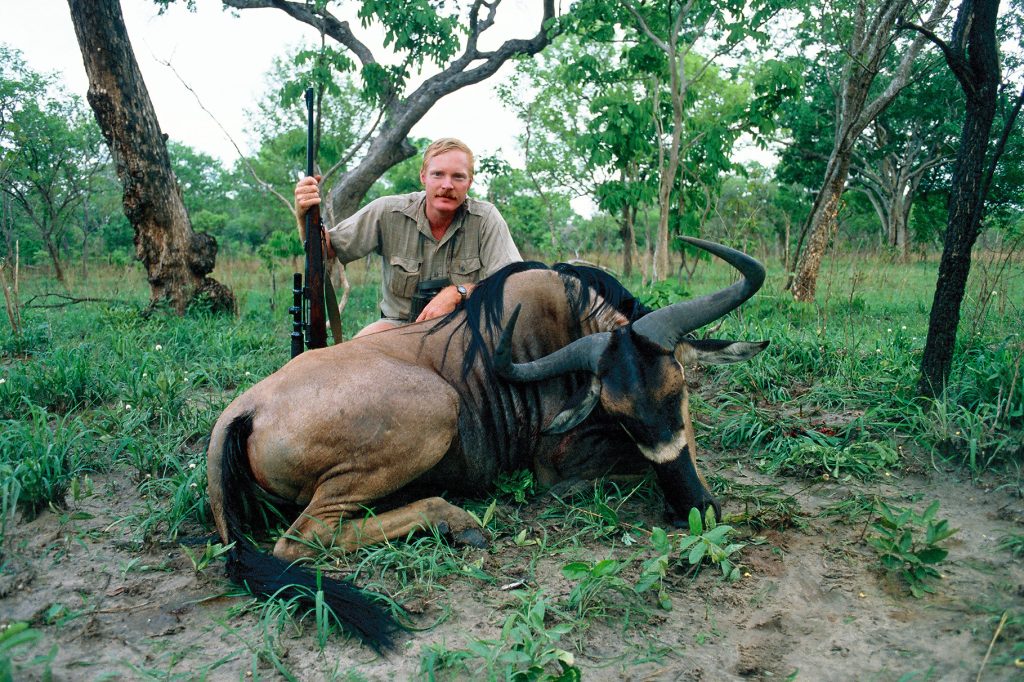
The author believes the Nyasaland wildebeest is the most attractive, with chocolate coat and bright white nose chevron. This bull was taken in Tanzania’s Selous Reserve.

Wildebeest comes from Afrikaans for “wild beast” because of their weird antics. Often referred to as “the poor man’s buffalo,” in build they are bovine-like, and have the buffalo’s toughness. I prefer the nickname “clown of the African veld.” Perceiving a real or imagined threat, a herd will stampede off in their rocking canter for several hundred yards. Then they’re just as likely to come stampeding right back.

Primarily grazers of open plains and edge habitat, there are two distinct species: Connochaetes gnou, the black wildebeest or white-tailed gnu; and C. taurinus, the brindled gnu. The black wildebeest occupied a restricted range in what would become South Africa’s Orange Free State, squarely in the path of the Boer voortrekkers as they departed English rule in Cape Colony.

The black wildebeest nearly became extinct, saved only by a couple of forward-thinking farmers who protected the last survivors. When I first hunted South Africa in 1979, black wildebeest were still scarce, found on few properties in small numbers. Today they’re common in central South Africa and widely introduced into Namibia. The black wildebeest is smaller than the brindled gnu, with bulls about 400 pounds. Coal black with a long white tail, weird vertical forehead brush. Although closely related with hybridization possible, horns of the two species are totally different. Black wildebeest horns grow from a massive boss, forward and down, then curve forward and up, tips near-vertical.

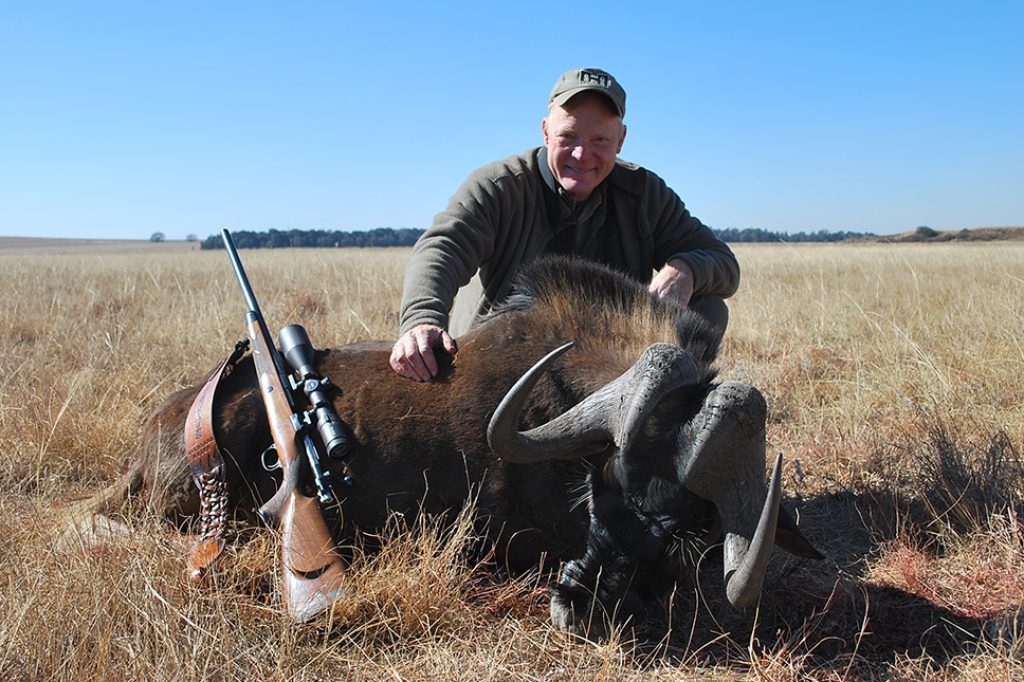
In black wildebeest, you want good heavy bases or bosses, with points that drop well down before turning up, finishing in point reaching nearly to the top of boss. This is a good bull, taken in South Africa with a Musgrave .375 H&H.

The brindled gnu’s horns grow mostly horizontal from heavy bases, tips curving up. Males and females of both species grow similar horns; primary tell-tales are the heavier bases and larger body size of mature males. The brindled gnu is much larger. One reference suggests bulls go up to 900 pounds. I’ve never seen one that big, but I’ll buy 500 to 600 pounds.

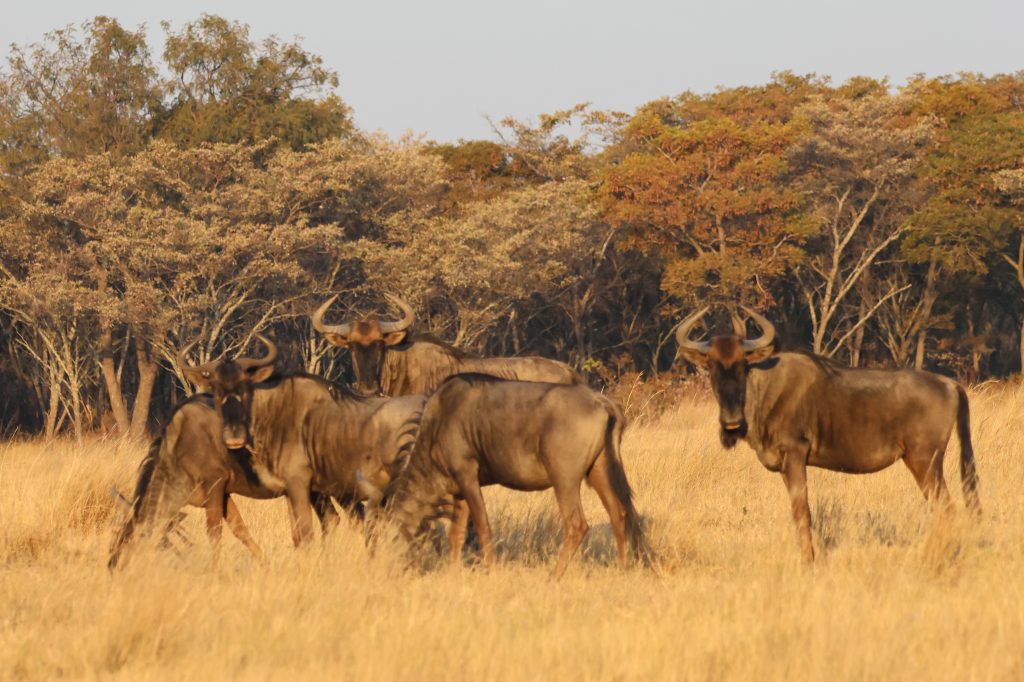
From Southern Africa northeast to Kenya there are five recognized subspecies of brindled gnu: blue; Cookson’s; Nyasaland; and Eastern and Western white-bearded wildebeest. Hunters tend to recognize just four, lumping together the two white-bearded races. Horns and body size are generally similar, but coloration varies. Most widespread is the blue wildebeest, found in plains and thornbush habitat across most of Southern Africa. At a distance, the blue wildebeest appears very dark, almost blue. Up closer, the skin is dark gray, typically with vertical black striping. While a shoulder mount of a wildebeest is pure Africa at its finest, the full skin is extremely attractive, and all wildebeests are excellent table fare.

North of the blue wildebeest, Cookson’s wildebeest has the most restrictive range, found only in Zambia’s Luangwa Valley. The striping pattern is more pronounced, again primarily evident on close inspection. To me the Nyasaland wildebeest is the most distinctive and the most attractive with a Hershey-bar chocolate body color and a striking white nose chevron reminiscent of the unrelated spiral-horned antelopes. The Nyasaland wildebeest is found in northern Mozambique and on into southeastern Tanzania, perhaps most plentiful in and around the Selous Reserve.

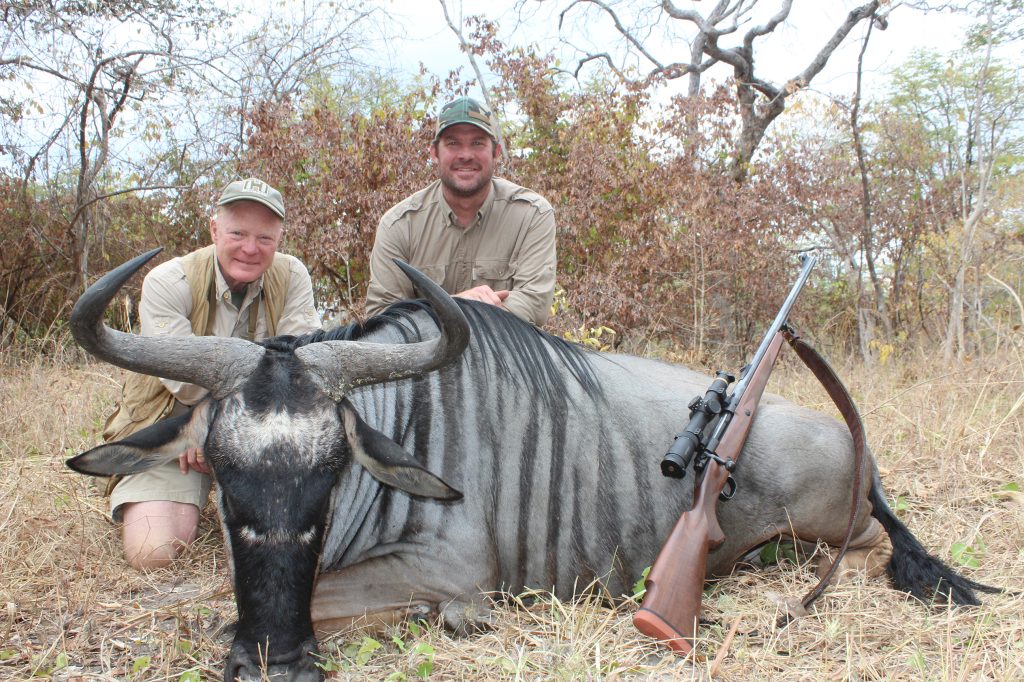
The author and his son-in-law Brad Jannenga with Brad’s Cookson’s wildebeest, taken in the northern Luangwa Valley. Although blue wildebeest also have this striping effect on their flanks, it’s much more pronounced with the Cookson’s variety.

The Eastern white-bearded wildebeest is the wildebeest of the Serengeti migration. Beards are white or blonde, while dark in all other races. The white-bearded wildebeest is also the lightest in body color, slate gray. The Western race is to the west, no break between. One must assume a hybrid zone, justifying why we hunters lump them together. With Kenya long closed, northern Tanzania is the only place white-bearded wildebeest can be hunted native range. Most of the wildebeest introduced into the US are white-bearded, common on Texas game ranches.

Although plentiful in the wild where they occur, they are not present in all Masailand blocks. The only opportunity I ever had at a white-bearded wildebeest was in 1988. One afternoon on the Simanjaro Plain, along the border of Tarangire National Park, Michel Mantheakis and I ran into a small herd, made a stalk, and took a nice bull.

Of the two species, the black wildebeest is more difficult to judge. You want heavy bosses but, as usual, horn length is more important, so you look for horns that drop well down, then turn up into long tips. Blue wildebeest are simpler: Most hunters look first for outside spread. This is not a record book criterion, but it’s a visible indicator. Much the same as mule deer, with similar numbers: A wildebeest with horns out to ear-tips is probably about 26 inches wide. A couple inches outside the ear-tips and he’s huge, closing on 30 inches wide. Check for big horn bases as the best sign of maturity, just don’t dither too much.

I’ve only taken a couple of black wildebeests, and only one or two each of the northern races. Over the years, I’ve shot a lot of blue wildebeests for camp meat, bait, and culling. I’ve seen few giants. As with most common animals, exceptionally large trophies are rare. In Botswana’s Okavango in 1987, Ronnie MacFarlane said he’d seen an exceptional wildebeest bull. We went looking for him, found him far off across a burned plain. It was difficult to get close, made more difficult because I was shooting an open-sighted .318 Westley Richards.

The rifle shot well, and the front sight was tiny. No way could I see it today, but I could see it back then. I lay down over a pack at 300 yards, put up the 200-yard leaf, and held that tiny bead a bit high on the shoulder. The bull dropped to the shot, which is not common with blue wildebeest. I’m pretty sure that’s the biggest bull I’ve ever taken. For certain, one of the best (or luckiest) shots I’ve ever made.

Leave a Comment

Deer of the Desert Southwest

Hunting the elusive Coues and Carmen Mountain whitetails.

It’s early February and I’m in northern Mexico, one of the best places on Earth in late winter. Mornings are brisk, midday sunny and pleasant under a cloudless sky, bright campfire at night. I’m hunting Coues whitetail, the grey ghost of southern Arizona and northwest Mexico. I’ve been at it for three days, haven’t seen a good buck yet. Maybe I will, maybe I won’t, really don’t care. Love the desert mountains this time of year, and these tricky little deer are one of my all-time favorite pursuits.

Like so many of my generation, I first read about them in Jack O’Connor’s Game in the Desert(Derrydale Press, 1939). The Professor made hunting these crafty little deer sound like so much fun. Today we mostly hunt Coues deer by painstaking glassing. In O’Connor’s Arizona days, they were more commonly hunted by riding horseback through good habitat, jumping deer, and bailing off the horse to get a shot. Late in his life, I was fortunate to know great Coues deer hunter George W. Parker. Between 1926 and 1969, Parker put an amazing seven Coues bucks into B&C’s all-time book. George described his early Coues deer hunting just like O’Connor: Jump-shooting from horseback. I don’t know if there were more deer back then, but I’m sure the shooting was even more difficult than they described. Especially since much of their hunting was with iron sights.

Jack O’Connor with a nice Coues whitetail, circa 1930s. O’Connor’s writing brought some of the first notoriety to Coues deer hunting. Note that his rifle wears iron sights…that was some tough shooting.

I first hunted Coues deer in the fall of 1978, with Marvin and Warner Glenn out of Douglas, Arizona. Marvin is gone, but the Glenn family is still famous for their sturdy riding mules. Although the Glenns did plenty of glassing, I got my first Coues whitetail just as Parker and O’Connor described. Late in the hunt, we were riding up toward a saddle, Marvin in the lead, when he jumped some deer and vaulted off his mule. I hustled, got a quick shot at a nice buck just as he topped out. I rushed the shot, didn’t hit him well, but we caught him moving around a bowl over the rim and I got in a finisher.

I did more hunts with the Glenns, then studied post-graduate Coues deer glassing under great Arizona hunter Duwane Adams. I loved the Arizona hunting, was usually successful…when I drew. Not drawing drove me to Mexico, often with Kirk Kelso. Several times in Chihuahua, more frequently Sonora. The B&C book suggests that the biggest bucks come from Arizona. Probably true, but Arizona is mostly public land and hunting pressure is greater. I’ve never had huge trouble finding Coues deer in Arizona, including recently on BLM land adjoining son-in-law’s ranch north of Phoenix. However, in Mexico, legal nonresident hunting is on private (or communal/tribal) land. Success is higher, average size better, although Arizona’s top end bucks are probably bigger. Whatever, I love to hunt in northern Mexico. Like the feel of the remote ranchos, love the home-cooked Mexican fare, enjoy the people (I wish my Spanish was better).

Army surgeon and naturalist Elliott Coues “discovered” his small, grey deer in the Department of Arizona during the Apache Wars. So different from the “Virginia deer,” it was believed a full separate species well into the Twentieth Century. Today, Odocoileus virginianus couesi is accepted as just one of (arguably) thirty-eight whitetail subspecies, twenty-nine in North and Central America. In Boone & Crockett’s Records of North American Big Game, only the Coues deer is singled out with separate category. Fine by me, but it’s important to appreciate that this special treatment is based on tradition and taxonomic error.

One of Boddington’s best Coues bucks, taken with Kirk Kelso in Sonora in 2002. Even on this typical ten-point, most of the points aren’t perfectly straight, a common characteristic with Coues whitetails.

The Coues deer is not the only whitetail subspecies unique to the American Southwest and northwestern Mexico. The other is the Carmen Mountain whitetail (O. c. carminis), after the Sierra del Carmen range in western Coahuila. This whitetail is not nearly as well-known as the Coues. Safari Club International’s record-keeping system now recognizes it, along with several other Mexico-unique whitetail races, and it’s part of the collection of all of Mexico’s deer, a most difficult task that many Mexican (and a few crazy Americans) strive for.

The carminis, or del Carmen, locally called “fantail” in Texas, is essentially the whitetail of the Big Bend region, the huge Park itself, and peripheries in both Mexico and US. As O’Connor’s writing drew me to Coues deer, it was early reading that drew me to del Carmen, When I was young and only dreaming about this stuff, Hal Swiggett wrote a story about hunting whitetail, desert mule deer, and “fantail” in West Texas. Wow, three kinds of free-range deer in one area? The Carmen Mountains whitetail went on my bucket list, right next to Coues.

Today I know that, even as big as Far West Texas ranches can be, it’s unlikely to have two pure whitetail strains in one place. Almost all whitetail races have broad hybrid zones. Still, the Carmen Mountains whitetail is a real and unique Southwestern deer. In Texas, found in and around the Big Bend National Park. In Mexico, del Carmen has perhaps the smallest range of any of Mexico’s whitetails, restricted to western Coahuila.

North and east, they bump into Texas whitetails; west and south, into Coues deer. Carminis and couesi are both smaller races, hunting conditions much the same, low densities in country with spikey plants, crumbling rock offering terrible footing. Although I’ve done much Coues deer hunting, I know less about del Carmen. However, being that guy, interested in the unusual, I’ve hunted them in both Texas and Coahuila.

Jess Rankin and Boddington with a nice Carmen Mountain whitetail from western Coahuila. Coues and del Carmen are similar, but the Carmen Mountains whitetail is potentially larger, depending on your luck.

We think of them as similar, but this is a disservice to both deer. There are similarities, also differences. Compared to northern whitetails, both have larger ears and outsized tails, for heat dissipation in their warm climate. When raised in alarm, it’s that big, luxurious tail that gives the Carmen Mountains deer its nickname “fantail.”

Del Carmen is larger than the Coues deer and can grow larger antlers. This might seem misleading, because their range in Texas is harsh and dry, almost certainly reducing body size and antler growth. In western Coahuila the country changes dramatically. The Sierra del Carmen range has significant forest, and grassy valleys below are popular for breeding horses. Western Coahuila’s softer country has potential for larger deer.

Visually, the Coues deer is very grey, while the Carmen is brown. It also seems to me that Carmen antlers are more typical, straighter lines and smoother curves, while Coues antlers seem to often form in kinky curves and are rarely perfectly matched one side to the other. In both size and appearance, it seems to make sense that Carmen deer are more like the Texas whitetails they adjoin, while the more distant Coues deer show greater differences.

An above-average Coues buck, good mass but short points and, as is common with Coues, major differences from one side to the other.

My first hunt for del Carmen was with Steve Jones in the Chinati Mountains west of Big Bend. In Texas the fantails share their country with free-range aoudad, so this was a marvelous combo hunt. Lots of aoudad, fewer deer. One afternoon we glassed up a nice eight-pointer. We had him in the spotting scope, waiting to see what he did before making a move. He was walking along a little rimrock far below us and I guess he stepped into a bedded aoudad ram that materialized into the field of view, one of the most amazing sights I’ve seen through a lens. The buck dropped off the rim and out of sight, so I slipped down and shot him.

I went into Coahuila with New Mexico outfitter Jess Rankin. Much different, better-watered country. We saw few deer, although we took a nice buck. Depends on where you are; Mexican friends tell me some ranches have high numbers. One thing the area did have: Plenty of black bears, killing horse foals on that ranch. Among Mexican hunters, it’s axiomatic that black bears and Carmen Mountains whitetails go together.

An exceptionally heavy-antlered Carmen Mountains whitetail, taken in Chihuahua by Boddington’s friend Andres Santos.

Whether carminis or couesi, intensive glassing is the primary technique. Small deer, thinly dispersed in big country. Patient glassing with the biggest and best optics. I’d almost call glassing the only technique. Except: In some situations, waiting over water sources can be effective. I’m at Buelna Ranch in Sonora with my friends, brothers Andres and Santiago Santos. We spend some time at waterholes here. Also, unusually, in this area whitetails are often found out on the desert floor as well as in the hills. So, we do some cruising from high racks for both whitetails and desert mule deer. Still, glassing remains the preferred method. This afternoon we’re going to climb a ridge and glass an enticing canyon until dark. There’s lots of sign–must be a big buck in there. Maybe today will be the day.

Duwane Adams and Boddington with a nice Arizona 8-pointer, early 1980s.

Leave a Comment

Field Tested: Kuiu Women’s PRO Brush Pants and Gila LS Hoodie

The newest additions to Kuiu’s women’s line provide ultimate fit and function for upland hunting and beyond.

I’ve been a fan of Kuiu Ultralight Hunting clothing since 2012, when I admired the high-tech gear my guides were wearing on an Alaska grizzly hunt and asked them what it was. As soon as I got home, I ordered Kuiu’s Attack Pants, Guide Jacket, and rain gear. I still have those original pieces, and they’ve performed beautifully and held up well on countless hunts over the years. Kuiu is best known for building lightweight, technical clothing for mountain hunters, but its product line now includes a full stack of gear for deer hunters, bird hunters, and everyone in between.

When the company came out with a women’s line a few years ago, I was impressed with the features and fit — it had obviously been designed and tested by actual, hard-core women hunters — and the fact that the quality and performance was every bit as good as the men’s gear I’d been wearing for years.

This past fall I had the opportunity to field test a couple of the latest additions to the Kuiu women’s lineup. I wore the new women’s PRO Brush Pant and the lightweight Gila Hoodie on a September dove hunt in eastern Colorado and on a couple of subsequent forays in search of grouse.

Honestly, I used to hate brush pants because most of them are hot, heavy, noisy, and uncomfortable. But the PRO Brush Pants have none of those qualities. Weighing just 19 ounces, they are lightweight, well-fitting, and comfortable. I love that they actually breathe and stretch. Yet they’re super tough, made of densely woven, tear-resistant Primeflex fabric, with reinforced panels on the lower legs, knees, and thighs for extra durability. Everything on the Colorado prairie has thorns and stickers, which the pants sloughed off easily going through numerous fencerows. Nor did they pick up burrs. 

The early September days started out chilly and warmed up fast, and the PRO Brush Pants kept me comfortable throughout. They fit well and look good, but still run large enough to accommodate a light base layer underneath. The zippered, mesh-lined vents on the hip and inner thigh are a great feature—unzip them to help dump body heat when you’re hiking. The pants come with removable suspenders (which I did remove since I prefer a belt), and have two deep front pockets, two large, zippered cargo pockets, and zippered back pockets. The cuffs are reinforced and have a hook that attaches to your boot laces to keep them from riding up when you’re busting though brush.

Lightweight hoodies are the go-to layer these days for hot weather hunting and fishing, and the women’s Gila LS Hoodie paired perfectly with the brush pants during my early-season hunts. With Cool-Touch fabric technology, the Gila Hoodie provides UPF 50+ sun protection as well as anti-odor treatment, and it wicks sweat and dries quickly. Like the pants, the fit is the right mix of streamlined and roomy. Raglan sleeves allow plenty of leeway for swinging a shotgun, and the hood is made to pull over a ball cap if you need to protect your neck and ears from the sun. I’m fairly tall, so I also appreciated the longer length of the body and sleeves, which have thumbholes.

The PRO Brush Pants come in Valo camo or a solid color, ash; and in the hoodie you have a choice of Valo, Verde, or Vias camo, or solid bone.

What’s great about both of these pieces is not only will I get a lot of use out of them for bird hunting, but they’re also going to be ideal for early season big-game hunts, especially pronghorn. Oh, and the Gila Hoodie is turning out to be an excellent fishing shirt as well. I highly recommend them both. Learn more and order direct at kuiu.com.

The author in the dove field wearing Kuiu’s Women’s Gila LS Hoodie and Women’s PRO Brush Pants, both in Valo camo.

Leave a Comment

Beyond Bucks and Bulls

Improve your hunting skills and do your part for wildlife management by filling a doe or cow elk tag.

Photo above: Calling in this cow elk on public land in Colorado made for an exciting and memorable hunt. Photo by Trail’s End Media

It was a beautiful fall morning in the Colorado high country. I was sitting with my back against a tree, rifle across my knees, watching as dawn slowly brightened a grassy opening that was ringed with the brilliant gold of aspen trees at the height of their autumn glory.

A piercing bugle sounded from somewhere behind me. A real bull, I wondered, or another hunter? This was national forest land, and there were plenty of other hunters around, so I couldn’t be sure. I sat still and waited. From roughly that same direction came a series of chirps and mews. Cow elk. I sat up straighter. Maybe there were actual elk close by.

My husband, Scott, was sitting against another tree about ten yards behind me, facing in the opposite direction. I was the one with the either-sex elk tag, so he held a call instead of a rifle. He had heard the cow-chirps, too, so he let out one of his own.

The forest was silent for a few minutes, and then he chirped again, softly. Almost instantly, there was a crashing noise and a rustling of leaves, followed by Scott’s low warning: “Elk coming!” 

The rifle came to my cheek as I caught a flash of movement from my left. Two cow elk trotted past me, just fifty yards away. I was glad I had turned my scope to its lowest setting. I quickly verified that neither animal had antlers, then swung the cross hairs to the front of the lead elk’s chest and fired. She stumbled, ran forward, and stopped broadside a hundred yards away. I racked the bolt and put a second round through the center of her shoulder, and she dropped in her tracks as the second elk vanished through the trees. 

I watched the elk in the scope for a few moments to ensure she wasn’t moving, put the rifle on safety, and then got shakily to my feet, the adrenaline rush still surging. Scott and I looked at each other, wide-eyed. “Wow, that was exciting!” he said.

“You’re not kidding!” I said. “I guess now we know you can call in cow elk just like bulls!”

I wish anyone who thinks a hunt for an antlerless animal can’t be an adrenaline-filled experience could have been with us that morning. Most hunters understand the idea of hunting antlerless elk and deer for meat, but many of them dismiss hunts for does and cows as “too easy” or “not very exciting.” I beg to differ on both points.

Several years ago I was hunting on a snow-covered ridgetop in northern Pennsylvania in early December. I had both a buck and a doe tag in my pocket, and I had been out for several days without getting a shot at either one. I had seen numerous deer, but in this thickly forested region, visibility is rarely more than fifty or sixty yards. That means, unless you sit very still or move with great stealth, deer are going to see you long before you see them.  

Still-hunting, or moving very quietly through deer habitat, is a time-honored tradition in this area, and it was a favorite method for old-timers like my dad, who never liked to be stuck in a stand all day. It’s a fascinating and effective way to hunt, but it’s also incredibly difficult. That season, I was determined to pull it off, but I was having trouble making myself move slowly enough. I was working hard to stay quiet and keep the wind in my favor; nevertheless, I was continually bumping deer. Every time I got close, I’d peer through the trees and see white tails waving goodbye as their owners bounded away.

That afternoon, something happened. I finally made myself slow way down, moving just two or three steps at a time, then stopping to glass for several minutes. I actually got so focused I lost track of time, so I have no idea how long I had been in this groove when I spotted the tip of a deer’s ear sticking out from behind a tree on the hillside below me. There were two does browsing on some beech brush, completely unaware of my presence. I dropped one with a single shot at fifty yards, then tobogganed down the snowy slope to put my hands on her warm hide. It may have been “just” a doe, but I still consider that successful still-hunt one of my favorite hunting experiences.

The author sneaked up on this whitetail doe by still-hunting along a snowy ridgetop in northern Pennsylvania. Photo by Trail’s End Media

According to the National Deer Association (NDA), most states need to increase their doe harvest. In places where there are more deer than the habitat can support for optimal health of both the animals and the land, hunters can improve their region’s trophy buck potential by shooting more does. It seems paradoxical to buck-only hunters, many of whom can’t understand how taking does can actually strengthen a deer herd and even improve their chances at a good buck. The NDA explains that where there are large numbers of deer, taking some does out improves the health and nutrition of the remaining animals. It also balances the buck-to-doe ratio, which means bucks must move around more during the rut–so hunters are more likely to see them.

According to the Rocky Mountain Elk Foundation, there are also excellent management reasons for taking a cow elk. Reducing an elk herd to fit the carrying capacity of its winter range is important to the long-term health of elk and elk habitat, and taking a cow elk instead of a bull is an effective way to do this. Wildlife agencies issue either-sex tags specifically to encourage hunters to take cows. If more hunters were willing to kill cows in areas where biologists have identified the need to do so, the herds would be healthier and the bull numbers would actually increase. (Taking a cow elk usually also makes the local ranchers happy.) 

As I can attest after a long day of packing out my cow elk, these animals provide plenty of excellent eating. A mature cow will yield 150 pounds or more of edible meat. On my cow elk hunt, Scott and I used all the same skills we use on our quests for bulls: identifying good elk habitat, figuring out the terrain, hiking, glassing, calling, making the shot, and of course quartering, boning, and packing out a whole lot of meat.

You may think of cows and does as less wary than their male counterparts, but that’s not necessarily the case. As with all wild animals, they have keenly developed senses, and while you may get lucky, especially in areas where they are abundant, hunting them is not necessarily easy. 

Some states, including Colorado and Montana, even issue limited-draw tags for bighorn ewes. This surprised me when I learned about it, since bighorn sheep are hardly overabundant, and bighorn ram tags are among the most highly coveted of all big-game licenses. But in some regions, there are solid management reasons for hunters to take a few female animals out of the sheep population. 

The unit where I hunted my bighorn ram in southwestern Colorado is a good example. In 2023, the state issued 14 ram tags and 7 ewe tags for that unit. When I spoke with Jamin Grigg, Southwest Region Senior Biologist for Colorado Parks & Wildlife, he explained that sheep in this area, as in many areas of the West, are “managed for separation.” Although the population is healthy, the threat of disease transmission from domestic sheep herds that graze in the area is a major concern. If bighorn numbers increase too much, they are more likely to come into contact with domestic sheep and contract a highly contagious pneumonia that could spread through the herd. 

“We issue ewe tags partly to give hunters increased opportunity, but mostly to mitigate the risk of contact with domestic sheep,” he explained. Now that I know how delicious the meat of bighorn sheep is, and how magical it is to spend time in sheep country with rifle in hand, I would seriously consider applying for a ewe tag.

Hunts for the females of a species build your hunting skills, fill your memory banks, stock your freezer, and improve the health of herds. Tags are often easier to draw and less expensive than those for bucks and bulls, and you’ll gain valuable intel about the game in your chosen hunting area. As a bonus, taking a doe or a cow this year could lead to more and bigger bucks and bulls next year.

Leave a Comment

tablet

Never Miss An Issue!Subscribe Now: 6 Issues for $34.97

More Details
WordPress Video Lightbox Plugin