Sports A Field

A Reminder from South Africa

The Professional Hunting Association of South Africa recently warned that foreign hunters who wish to hunt in South Africa should be sure they know the legal requirements for hunting in the country and aren’t fooled by advertisements for unguided hunting opportunities sometimes advertised in South African magazines and association newsletters and on websites. These advertised hunts are aimed at the resident South African hunter, but overseas hunters also have access to this information, especially via websites. South African provincial legislation clearly states that a foreign client may not hunt in South Africa unless the hunt is organized and presented by a registered hunting outfit and the client is guided or escorted by a registered professional hunter.

Leave a Comment

The Selous Game Reserve

Africa’s greatest hunting area

The Selous Game Reserve in southeastern Tanzania is the greatest stronghold of large wild animals on earth. At 22,000 square miles, it’s larger than Wales or Maryland, and four times the size of Serengeti National Park.

Little changed from a century ago, the Selous has significant numbers of elephant, buffalo, antelope, wild dog, and lion. Its wildlife management program, which gives neighboring villagers a stake in conservation by providing jobs and buyers for food, fuel, and supplies, has become the benchmark for similar initiatives elsewhere in Africa, such as the five-nation Kavango-Zambezi Transfrontier Conservation Area, slated to open by 2010.

The Germans established a small game reserve in 1905 between the Rufiji and Beho-Beho rivers in what was then German East Africa–later Tanganyika–and is now Tanzania. It fell into British hands in 1918 and, four years later, they named the area after Frederick Courtenay Selous, who was killed there in 1917 by the Germans.

When the British took control, however, the Selous was a mere 1,000 square miles. It wasn’t until a dedicated conservationist named C.J.P. Ionides joined the Tanganyika game department in the 1930s that it began to take on the massive proportions of today. Ionides, born in 1901 to a wealthy Greek family, took an Army commission and then turned ivory hunter. By 1930 he was hunting out of Arusha; three years later he joined the game department, where he devised a strategy for a vast self-contained wild area for animals and hunting.

Aided by poor soils and abundant tsetse fly, Ionides discouraged settlement in vast areas surrounding the original Selous, persuading Africans to move by denying protection from crop-raiding elephant. An outbreak of sleeping sickness in 1935 led to clustering people near medical facilities. Each time an area was vacated, Ionides pushed it as an addition to Selous. When larger boundaries were drawn in 1940, a few Africans remained inside, so Ionides again denied them protection from elephants. When the last tribesman had moved out three years later, the area was declared an elephant sanctuary and they were barred from returning.

Brian Nicholson came to the Selous in 1949. He had apprenticed as a professional hunter but really wanted to be a game warden. Finding no jobs in his native Kenya, he landed a post under Ionides. He was nineteen. Ionides retired in 1954, but Nicholson continued his work.

As tourism and foreign revenues gained importance, so did wildlife. In 1961, controlled hunting became government policy and Nicholson’s duties shifted from elephant control to conservation. He spent long periods in Selous, mapping further extensions.

Its present boundaries were set in 1975, rendering the Selous twenty times larger than the original tract. By then, safari hunting supported the entire Selous with revenues left over. Nicholson carved it into forty-seven hunting concessions, with tight quotas for each species. In 1982, the United Nations designated the Selous a World Heritage Site.

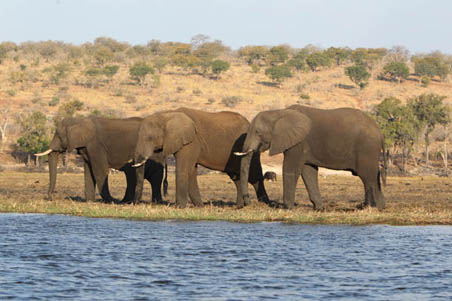
African Elephant (Loxodonta africana) by GaryKramer.net, 530-934-3873, [email protected]

Leave a Comment

Malaria: One Hunter’s Experience

If you hunt in Africa, you have to think about malaria.

Two weeks after returning from a safari in Zimbabwe, I was suddenly hit with a severe headache, racking chills, and a fever that reached 104 degrees within two hours: all classic signs of malaria. When you hunt in certain parts of Africa, contracting malaria is a real possibility and a very unpleasant one. The disease is a potentially deadly killer and should not be taken lightly. In my case, it led to ten days in the hospital, including several days in the intensive care unit.

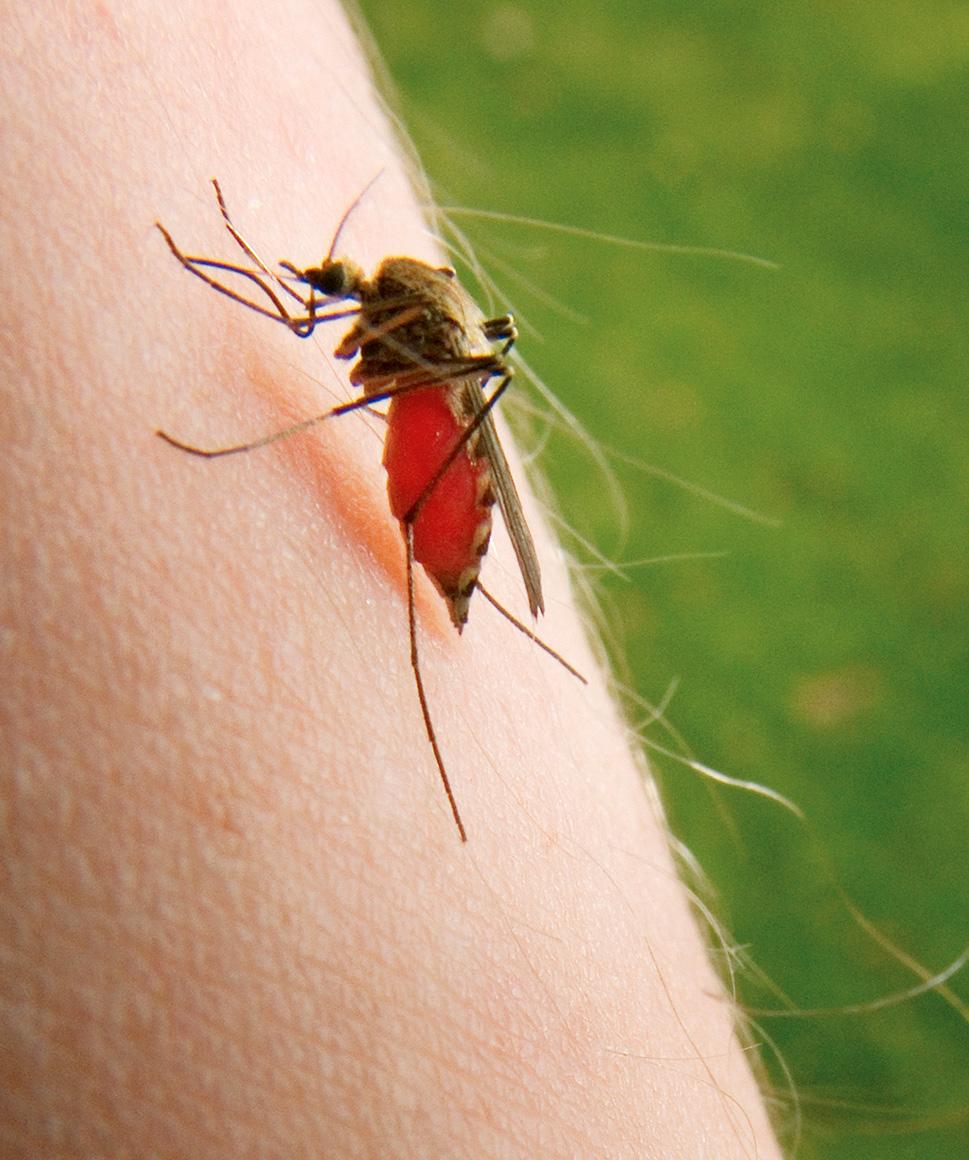
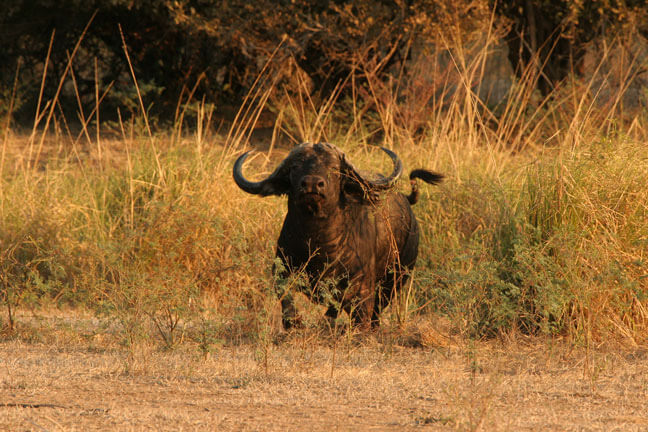
As it turned out, I contracted the disease while hunting buffalo in the Matetsi area near the Zambezi River. This area is endemic for Plasmodium malariae. When we found ourselves too far afield to return to the safari vehicle one dark, moonless night, we spent the night out in the bush, sleeping next to a fire. During the night, I was bitten by mosquitoes, and, despite prophylaxis, came down with cerebral malaria two weeks later.

Of the four species of the Plasmodium protozoan, P. falciparum is the type most likely to be encountered by the hunter in Africa and it is the most deadly strain. P. ovale, P. malariae, and P vivax are less frequently encountered and, in general, are less deadly. Transmitted by the bite of an infected female Anopheles mosquito, malaria remains the biggest killer in Africa, and indeed, the world. Over a million people die annually from the disease. The cerebral form and the hemolytic form, blackwater fever with renal failure, can be particularly lethal.

Previously effective, the medication chloroquine is no longer used in most areas because of resistance developed by the pathogen. Effective treatment includes such drugs as mefloquine, doxycycline, and Arinate. The latter is available usually only in Africa. Quinine is usually reserved for severe or refractory cases.

No malarial prophylaxis provides 100 percent protection, and the first rule is not to be bitten. Mosquito repellents and mosquito nets should be faithfully used. Nets are provided for good reason–not because they look romantic. Most mosquito bites occur during the hours of 11 p.m. and 4 a.m. Whether you use Larium or Malarone for prophylaxis, continuing its use for four weeks after your return from Africa is incredibly important.

Many, U.S. physicians (and I was one) have limited knowledge about malaria. Many do not realize that in some cases, a person on malaria prophylaxis will not show malarial parasites on blood smears. This is the experience of several African physicians that I have met. In my personal experience, here at home, they relied only on positive blood smears to make a diagnosis, even in the face of classic symptoms. Inexplicably, despite my recent trip to Africa, my classic symptoms, and my insistence that I had malaria, I was initially told that I suffered, perhaps, from toxic shock syndrome, due to some skin scratches I had, or possibly from Dengue fever, a viral infection carried by the Aedes mosquito, which was very unlikely considering the remote area I was hunting. (It is more commonly found in crowded environs.) This was extremely frustrating.

They came to this conclusion since no malarial parasites were seen on thick blood smears used in diagnosis. Many of the lab personnel looking for parasites on such smears are young or inexperienced and have never seen a case of malaria. The parasites can be difficult to see microscopically. Another diagnostic tool, the immuno-chromatographic test, is accurate and rapid in diagnosis but is not often used in the USA. My physicians, to my relief, hedged their bets and placed me on doxycycline therapy, effective therapy for malaria.

The average African PH, who along with his wife and family has almost invariably had the disease, and along with African physicians, know more about the diagnosis of malaria and its effective treatment, than many here in the USA. They do not routinely use prophylaxis, but are treated when symptoms occur. Commonly used are Arinate and Sulfadar, both of which are used by the PHs and Zambian physicians I have met. Arinate is a derivative of a Chinese plant in the artemesia family and a course of therapy can be purchased in Africa for about $5. These drugs, though effective, have not found widespread use in the United States.

So, what should you do? Do take Lariam or Malarone for prophylaxis. (Lariam has been criticized for its hallucinogenic side effects and can cause vivid dreams.) Take upon yourself the responsibility to read up on the disease and its treatment in the locale in which you plan to visit or hunt. Current information on the disease, methods of prevention, and drug resistance is available on the internet from the Center for Disease Control as well as on other sites. Do, however, consult a physician for advice on which drug to use in the country or area where you will be hunting. Having malaria once conveys no immunity. Those who live in Africa get it repeatedly.

Leave a Comment

How to bring your hunting rifle into South Africa

Bringing a rifle into South Africa for your safari hunt doesn’t have to be difficult.

Bringing hunting firearms into South Africa is relatively easy, but you do need to be prepared before you arrive or you face a long wait.

Make absolutely sure you have the following documents in hand when you arrive (and copies of each just in case): Passport; return tickets to your country of origin (or copy of your itinerary); a letter of invitation from the outfitter with the outfitter’s permit number on it; a stamped and endorsed Proof of Ownership for your firearms (for U.S. citizens, that’s a U.S. Customs form 4457; for all other citizens, bring a firearms certificate or hunting license with your guns listed); and the SAP 520 form completed in black ink in block letters. (You can download this form at www.saps.gov.za.) The hunter must NOT sign this document at home but rather must do so in the presence of a police officer at the airport in South Africa. This form can be downloaded from the Professional Hunters of South Africa Web site, or your outfitter can arrange to have the form sent to you before you leave.

Many hunters are now reporting that if you have a U.S. Customs form 4457, it must be current and have been filled out and stamped by Customs in the last 6 months.

According to South African customs, the most common mistakes made by international hunters are a) not having the SAP 520 form filled out in BLACK ink; b) not having a letter of invitation from the outfitter with the permit number on it; and c) signing the SAP 520 form before arriving at RSA customs.

Learn more at the website of the Professional Hunters Association of South Africa: www.phasa.co.za.

Leave a Comment

Four Tips from Tanzania

When I returned from a seven-day buffalo safari in Tanzania last September, friends who were planning their own safari asked what I’d learned on the trip. Here are a few of the tips I shared with them.

  • Tsetse flies are tough to deter, but Avon Skin-So-Soft works pretty well. I found some at my local REI store. The flies seem to be particularly annoying when you’re riding in a vehicle, and they are especially attracted to dark-colored clothing.
  • There’s not much you can do about the misery of a sixteen-hour flight (especially if you’re flying in coach) except sleep. Bring a sleep mask, earplugs, and your favorite over-the-counter or prescription sleep med. Drink lots of water–more than you want. That will keep you hydrated and also force you to get up occasionally.
  • Consider arriving in the country a couple of days before your safari begins. This allows you to sightsee and recover from jet lag, and builds in a safety valve of time if any of your flights are delayed or you miss a connection. You can take day trips to Ngorongoro Crater from Arusha, for example. Your travel agent, booking agent, or outfitter will help you set something up.
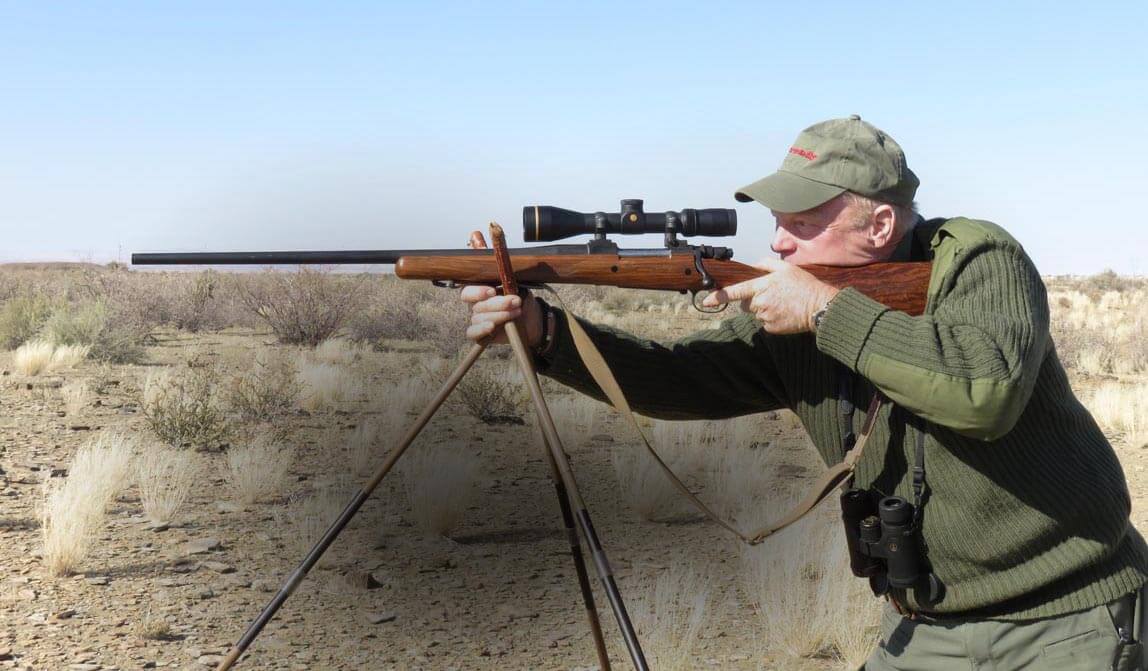
  • Practice, practice, practice with your safari rifle, especially if it’s a heavier caliber than you are used to shooting. My practice regimen consisted of shooting twelve to fifteen shots at a session from sitting and kneeling positions and from shooting sticks. I did this once a week for three months, and the practice paid off handsomely when I was able to place good shots on two nice buffalo.

Leave a Comment

Heading for Africa

Preparing for a safari is almost as much fun as the trip itself.

The anticipation has been building for months, and at last the day is almost here. I’m getting ready to leave for a safari in Namibia, via a flight to Washington, DC, where I’ll connect with South African Airways to Johannesburg, and then on to Windhoek. My duffel is stuffed with safari clothes and soft-soled leather boots and lots of additional stuff I probably won’t really need; my rifle is sighted in and ready to be locked in its case; three boxes of ammo are locked in a hard-sided pistol case inside the duffel; and my carry-on contains my passport and a sheaf of other paperwork as well as cameras, reading material, and a variety of sleep aids for that 16-hour ordeal in coach.

They’re big planes, but they seem awfully tiny when you’ve been wedged in a coach seat for hours and hours.

There’s a lot to think about when you’re getting ready for a hunt in Africa, but the preparation is almost as much fun as the trip! Robert Ruark said it best in The Old Man and the Boy: “The best part of hunting and fishing was the thinking about going and the talking about it after you got back.” OK, maybe it’s not the best part, but the anticipation and the remembering are always an integral part of the experience.

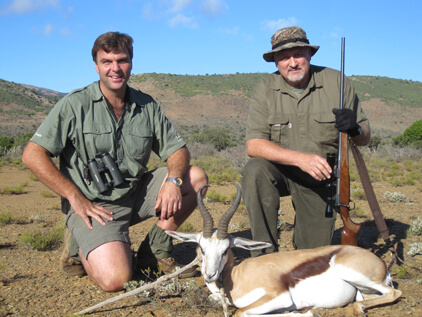
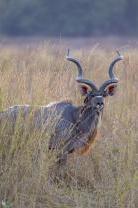
I’ll be hunting in northwestern Namibia with Omujeve Safaris in their Omatendeka Concession, which, by all accounts, is huge, wild, uninhabited, and unfenced. And crawling, so they say, with outsized examples of Namibia’s beautiful plains game—kudu, gemsbok, mountain zebra, springbok, and common eland.

The eland is my main goal. I want to hunt one of these huge spiral-horned antelope in the classic manner, by getting on a track in the morning and following it until we catch up or get busted by the wind. Eland will walk for miles and miles in a day, so they say, so it can be a real challenge. That said, though, I’ve been to Africa several times before, and I know that sometimes what the hunt gives you is not what you expect, so I’ve learned to be flexible and enjoy whatever happens.

One of the great things about Africa is you don’t need much in the way of fancy clothing. Two or three safari shirts, dark green or dark khaki, and the equivalent in lightweight pants will do it for your basic gear. I also have a cool safari vest I got from Boyt Harness company. Lightweight boots with very quiet soles for stalking (I got mine from Russell Moccasin), a windproof fleece jacket for those cold rides in the Land Cruiser in the mornings and evenings, and a hat with a brim, round out the essentials. I’m taking a light, bright 10×32 Zeiss FL binocular, and of course a good camera.

The most important consideration, of course, is the rifle and ammo. For this trip, I’m taking a Ruger M77 in .300 Win Mag, topped with a Trijicon 3-9×42 scope. It will be loaded with Hornady’s Superformance ammo with 180-grain Interbond bullets. I have full confidence in this rig to do the job on any large plains game animal that crosses our path, as long as I’m able to put the bullet in the right place.

Shooting practice is one of the most important, and according to many PHs I’ve talked to, one of the most overlooked aspects of safari preparation. It’s not enough to just sight-in your rifle on the bench; it’s also crucial to practice shooting from a variety of positions, including sitting, offhand, and resting on shooting sticks. I’ve been to the range several times in the past couple of months, but I’ve also supplemented that with a regimen of daily dry-firing, which has helped me to gain even more familiarity with the rifle.

This will be my second trip to Namibia. My husband, Scott, and I chose Namibia for our very first safari in 2003 and had a wonderful time. It’s one of the safest countries in Africa (if not the safest), and has great infrastructure, excellent game management, and wonderfully friendly people. You don’t need any special shots or medications in most areas (although I always take malaria preventative whenever I go to Africa, just as a precaution.)

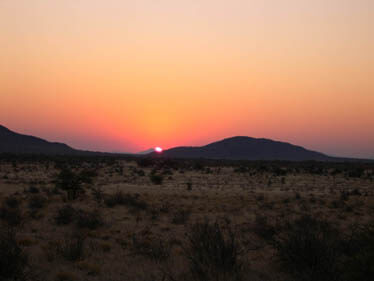
Sunsets in Namibia are beautiful, especially when you’re watching one after a successful day of hunting.

The only bad part about going to Africa is the long flight, but all you can do is prepare as well as possible with lots of reading material and whatever helps you sleep. My travel agent, Annelise Dubose, specializes in Africa, and she has been a tremendous help in finding me the best flights and helping me figure out the connections, get the gun permits, and plan a little sightseeing after my hunt. Between Annelise and my friends at Omujeve Safaris, I know I couldn’t be in better hands. Now all I need to do is concentrate on shooting straight and enjoying the experience. It doesn’t get any better than that!

Leave a Comment

Preparing for an International Hunt

A successful hunt begins well before you take that first step out of a vehicle, lodge, tent, or your back door. It pays to plan ahead, and this goes double when you are heading out of the country.

Keith Atcheson with a Botswana elephant.

Staying well organized and knowing what to expect requires guidance by an experienced booking agent or professional hunter,” says Keith Atcheson, who is a representative with booking agency Jack Atcheson & Sons, based in Butte, Montana. Your PH or outfitter will provide you with the basics, but when it comes to making sure you have remembered everything and know what to expect, Atcheson says, “A good agent here in the States is usually more practical and effective.”

“Hunters should begin by having a chronological checklist of items that need to be taken care of in a timely matter. For example, some species require CITES permits for importation, and those permits need to be obtained at least two to three months prior to departing for the hunt.”

Hunters should also think about, and plan for, their personal safety.

“Rent a satellite phone!” urges Atcheson. “Buy accident, sickness, and evacuation insurance without fail. To not do so is completely foolish. We had it when my wife was gored and nearly killed by a Cape buffalo in 2004, so believe me, this is really important, and it’s cheap. Deposit cancellation insurance is also a great idea, but it does make the insurance package more expensive.” These policies will need to be purchased, and the forms completed, well before your departure date.

So what’s the best strategy to head off airline problems and other unplanned travel disasters?

“Consider spending an extra night along the route to your destination to make sure your baggage can catch up to you if it’s lost,” Atcheson suggests. “The benefits of the extra rest are also obvious when dealing with jet lag.”

He also strongly suggests carrying your optics, medications, and one change of clothing, plus hunting boots, if possible, in your carry-on bag in case your checked luggage is hopelessly lost. You will at least be prepared to hunt with some comfort.

So what’s the one thing that’s always useful when traveling to hunt?
“Knowing that you have done everything possible to be organized from beginning to end,” Atcheson says. “Peace of mind is priceless.”–Michael D. Faw

Leave a Comment

Super-Safe Travel with Firearms

Tips and tricks to ensure your hunting guns arrive when you do.

To my knowledge, firearms have not been used in the hijacking of an airliner in decades Sportsmen’s firearms checked as legal baggage have not been involved in any airline hijackings since—well, ever.

Nevertheless, traveling hunters face ever more strict regulations for flying with the tools of their trade. The rules continue to vary from airline to airline, country to country, check-in agent to check-in agent. As suggested before in this column, one is best prepared to fly firearms by getting complete, written rules and regulations that apply to one’s destination country/airline. One’s outfitter ought to provide this. For in-country flights, one should scour his/her airline’s website for its latest baggage rules/restrictions. Print out those rules in case you need backup at the check-in counter.

For further backup, carry a printout of the latest TSA Web site regulations for shipping firearms and ammunition. Remember, TSA rules can be superseded by individual airline rules. For example, TSA permits the inclusion of ammunition in the same hard case as the firearm. Most airlines do not. You must abide by the airline’s rules. American Airlines, for instance, will not permit checked firearms on any flight going to or through the United Kingdom.

Interestingly, while TSA asks that regular checked baggage not be locked or be locked only with “universal master locks” that TSA can open, federal law mandates that firearms cases be not only locked, but locked with a device that TSA employees CANNOT open (non-TSA compatible master locks.) The idea is that once your firearms case has been checked by TSA, locked and place into the luggage system, no one should be able to access it. Great idea. To accomplish this, travelers are usually asked to carry their tagged firearm case to a TSA agent, lock it after the inspection, and retain the key. The traveler has the key (or combination,) not the TSA agent. In some airports, one is asked to lock the case at the check-in counter and wait while the case rides the luggage belt to a TSA inspection site where it is presumably X-rayed, sniffed, and chemically tested. Should a hand-check be warranted, TSA calls the airline desk, directing you to the appropriate TSA agent to deliver the key. Sometimes the agent takes the key to the TSA folks, sometimes those folks come get the key. But in all cases, the key must be returned to you.

The beauty of this system is that, once the case is declared safe, no one can easily tamper with it. No contraband can be inserted and your firearms cannot be removed. Federal law prohibits the placement of any markers or tags externally identifying the case as containing firearms, but most thieves can, of course, figure out what a firearm case looks like. Camouflaging options include using golf club cases (TuffPak) and any sort of hard-sided, lockable case such as a battered old, oversized Samsonite large enough to accommodate a dismantled gun. Pack foam or clothing around the parts.

Since a rash of thefts (mostly from O’Hare in Chicago around 2003), firearms have been sailing through pretty safely in obvious gun cases. Apparently few airport workers have the opportunity to slip away with firearms (the bigger and more obvious the case and firearm, the more difficult it is to hide and sneak out of an airport) and/or they fear repercussions from getting caught. Today’s job shortage should inspire most workers to value a steady paycheck over the bonus of a few fenced guns.

The combination of this locked security and the physical protection a hard gun case provides has inspired many to begin inserting other valuables in gun cases. Those without room in their carry-on for binocular, rangefinder, extra camera lenses, and even treasured books, expensive shoes and handbags believe such items are more secure in a locked gun case than unlocked, regular luggage.

More than a few experienced flyers believe that solidly locked firearms cases decrease the chances of “lost luggage” because airline workers don’t want to be responsible for an unaccounted-for firearm loose in the system. When they see those big, locked cases, they expedite their progress on down the line.

Generally, increased security means that checked firearms are less likely to be stolen or lost in today’s commercial flight world. Still, nothing is certain. If you insist on traveling with a particularly expensive firearm, consider buying additional insurance to protect it against any and all travel loss.

Leave a Comment

You can do this! How to afford your dream hunt

It just takes some planning.

You’ve been dreaming about doing a big hunt–a trip to Alaska, your first African safari–but pesky necessities like mortgage payments and utility bills keep getting in the way. Despite the rising cost of guided hunts today, determined hunters of modest means need not despair of participating in a far-flung adventure. Here are a few ways to start working toward that dream hunt:

  • Plan and prioritize. Just like anything else worth doing, affording a great hunt requires coming up with a plan to set the money aside and deciding that doing the trip is going to be a priority. Especially when it comes to physical hunts such as those for sheep and mountain goats, you’ll have a better experience if you prioritize saving for the trip in your younger years, rather than “waiting until you can afford it.”
  • Set up an automatic savings account that will set a designated amount aside each month to earn interest in your “hunting account.”
  • Cut out small expenses, such as that daily trip to Starbucks, and make sure that money goes into your hunting account.
  • Sell some of your old hunting gear or guns to help pay for your trip. E-Bay, Craig’s List, and other online emporiums make it easy.
  • Accumulate frequent-flyer miles with a miles credit card. Don’t run up your credit card just to get miles, of course, but if you use a credit card anyway you might as well be racking up airline miles. By the time you’re ready to book your trip, you might even have enough miles for a free ticket.
  • Apply for tags. Some premium elk and deer areas (and even sheep hunts) in Western states are open to do-it-yourself or semi-guided hunters, but it may take years to draw a tag. In states that offer preference points, it pays to start early and apply every year. In the meantime, gain valuable hunting experience and learn the country by purchasing over-the-counter cow and doe tags for public land where they are available.
  • Get on e-mail lists and mailing lists of outfitters and booking agents who offer “cancellation hunts.” You’ll have to be flexible enough to take such hunts on short notice, but the prices can be attractive.

Leave a Comment

Book ‘Em!

What you should know about hunt booking agents

If you want to hunt in an unfamiliar destination but aren’t sure where to begin or how to choose a reputable outfitter, start by contacting a hunt booking agent. The best way to ensure you’re working with a trustworthy one is to make sure he or she is a full-time agent with at least five years of experience and is a member of the American Association of International Professional Hunting and Fishing Consultants. Advice from a booking agent is free–it doesn’t cost you, the hunter, a thing, since booking agents are paid through commissions from the outfitters they represent. That means you have nothing to lose by making a call.

A good booking agent should be able to recommend hunts, countries, area, dates, and outfitters that fit your particular needs and desires. Even if you’ve always wanted to go to Africa but think such a trip might be financially out of reach, it’s worth contacting a reputable booking agent and being frank about your budget and time constraints. They’ll be honest with you if your expectations are unrealistic, and you might be surprised by what is available.

Leave a Comment

tablet

Never Miss An Issue!Subscribe Now: 6 Issues for $34.97

More Details
WordPress Video Lightbox Plugin