Sports A Field

Travels with Optics

Optics aren’t just an adjunct to a hunt, they’re an amplifier, increasing your visual pleasure, providing more information, and saving time and steps.

Naturally, you’ll need a binocular for your hunt. But when you travel, don’t pack your glass in your checked luggage. First, you don’t want to risk having an expensive set of optics lifted by a sticky-fingered baggage handler. But more to the point, your binocular is too useful to restrict to hunting camp only. Include it in your carry-on bag or even wear it around your neck. And use it often. Just as it’s important to dry-fire your rifle to develop and maintain proficiency, so is it essential to practice glassing whenever possible, whether you’re studying a bird outside your hotel window or the Rockies from the Salt Lake City airport waiting room.

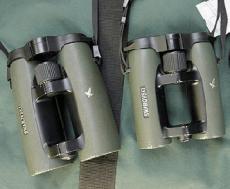
If you fear drawing attention with your Swarovski 10×42 ELs in JFK (although I haven’t heard of any TSA bans on them yet), try the smaller 8x32s or even a unit as small as a 8×20 compact. A well-made miniature binocular can never transmit as much light or resolve quite as much detail as an equally well-made, full-size binocular, but the higher-quality pocket models come surprisingly close. And they’re so compact, so light, you can store them in a corner of any carry-on bag, or even your shirt pocket. Even if you then pack a full-size hunting binocular, you’ll have a back up. But don’t settle for an inexpensive, off-brand mini binocular. At this size, materials and construction must be first-rate.

Another option is to carry a mid-sized tool such as the 8×32 Swarovski EL or any similar instrument from a top-line manufacturer. Roughly 4.5 inches square and weighing around 20 ounces, 8x32s are my idea of the perfect all-round travel and hunting binocular. Their 4mm exit pupil, coupled with some of the industry’s most efficient multi-coated lenses and phase-coated prisms, makes them bright enough for effective use 30 minutes to 45 minutes after sunset. Heck, I’ve used them on full-moon nights to detect single stems of tall, winter grass against brushy backgrounds at 60 yards. Pack something like this in your carry-on and you might not even need a larger binocular in your baggage.

If, like this traveling hunter, you love what a spotting scope does for your viewing pleasure, consider taking it along, too. You’re not going to wear a 3-pound spotting scope around your neck, but you might squeeze it into a carefully packed carry-on bag. An acceptable compromise between too big and too small is something like the mid-sized Swarovski ATS 20-60x65MM HD, at 2.4 pounds and 13 inches. I frequently fit one of these in my camera backpack, along with an amazing collection of lenses, bodies, a flash, chargers, binoculars, toiletries, spare socks, underwear, shirt–everything I figure I’ll need to survive lost baggage for a day or two. They won’t let me pack a gun in there, but at least I’ll be able to view, study, and photograph wildlife while awaiting the delayed firearms.

I find a spotting scope essential for sizing up open-country game like sheep, goats, and pronghorns. Lots of magnification is also critical for hunting trophy mule deer, elk, whitetails, and even African antelope. Anything with horns or antlers really requires a careful, high magnification vetting if you’re aiming for maximum trophy quality. A binocular is rarely sufficient for seeing small details, and an inch of horn often spans the difference between “book” and no-cigar. Sure, you can let your guide do the studying through his spotter, but that hardly enriches your experience.

If you’re going to pack any optic with a magnification above 12X, it’ll need solid support. A tripod is best. To save weight, I screw a small photo ball head or the Switcheroo head atop a Bog-Pod tripod and slip it into my rifle case. This unit weighs about 2 pounds, but its legs telescope from 22 to 68 inches. Taped together with supplied Velcro, it works fairly well as a walking staff. At camp it suffices as a support pole for rain tarps or laundry lines. Attach a spotting scope or binocular to the head for steady glassing at any height from sitting to standing. Screw on the yoke and use as a rifle rest. After your shot, you can even attach your camera to the tripod and get some self-portraits.

Leave a Comment

Learning About Lions

How the study of these big African cats helps ensure their future.

No matter how often you’ve heard it, a lion’s growl is still enough to send chills down your spine. Standing atop the utility box in the bed of my Land Cruiser in the sweltering heat of a Zambian October, the sound permeated the air with the overpowering menace of a fast-approaching locomotive. Despite having spent years around lions in the wild, I was foolishly engrossed with another task at hand. At the instant that my preoccupied brain finally registered the danger, the lioness charged. Exploding from the nearby bushes in a tawny blur of coughs and snarls, she rocketed to within a few feet of the Cruiser before stopping abruptly, fixing me with a baleful stare, and vanishing back into the shrubby cover.

I was lucky that day; I was also just plain stupid. Getting distracted when you’re in the bush is risky, and in the close company of large carnivores it can easily become the last mistake you ever make. Statistics tell us that most charges are bluffs, but the jelly-like quality of my knees spoke to the small percentage that culminates in full-blown attacks. Hastily, I crawled down off the toolbox into the relative safety of the cab, the metallic tang of adrenaline sharp on my tongue.

Unknown to me at the time was the fact that this big lioness had small cubs hidden nearby. To add to her annoyance, I had just smacked her in the backside with a biopsy dart to collect DNA as part of my research project on African lions in Zambia. This minimally invasive technique involves no drugs or handling of the animal. Like most of the lions that I had darted, this one had taken being unceremoniously jabbed by the little projectile in relatively good humor. However, the dart containing the sample had bounced underneath the scattering of nearby bushes and disappeared, and my lingering search for it had exhausted her maternal tolerance.

A second lioness watched intently from the other end of the thicket, ready to lend support if necessary. This younger female had somehow lost all but a small stump of her tail. The truncated appendage rendered her oddly terrier-like as she walked away with a last disapproving stare over her shoulder at me, now seated sheepishly behind the steering wheel. Fortunately the charge was only a warning, but the point was well taken: I had crossed the line between mere annoyance and threat, and they would not have to tell me again.

The lionesses had come at a run in response to a recording of a bawling buffalo calf. It didn’t help their mood that they felt cheated out of an easy breakfast. Playing sounds of prey in distress is a popular method for surveying African carnivores, and in addition to lions, spotted hyenas, wild dogs, leopards, and even cheetahs sometimes respond to my calls. I often feel a little guilty when a predator appears on the run, sometimes licking its lips in anticipation, to find nothing more edible than a pickup truck and loudspeaker. But the inherent difficulties of working in largely roadless, thickly vegetated habitats necessitates pulling out all the stops.

Zambia is a premier destination for sport hunting of lions, yet until recently, little was known about the country’s lion populations. Most studies focus on lions that live in open plains or scattered woodlands, often in national parks or private reserves. Much less is known about lion populations that inhabit thickly forested and brushy habitats, or lions that reside in hunting areas. It was for that reason that, in 2003, I first came to Zambia to learn more about the country’s lions in the places where it is hardest to find them. Playback recordings and biopsy sampling are two methods I am utilizing to study lions that spend most of their lives in heavy cover.

Compounding the challenge is the fact that the majority of my work is conducted in hunting blocks called Game Management Areas (GMAs), rather than in the more controlled environments of parks or reserves. The anti-poaching efforts of the hunters and safari operators in these areas result in an abundance of game, but some naturally shy species such as lions can be more reclusive because they are not exposed to the high volume of daily tourist traffic compared to lions that reside within national parks, and because older males are targeted as trophies. Although working under these conditions is far more difficult, that is a big part of what makes this study particularly valuable and exciting.

biopsy-darting_1

The Zambia Lion Project’s research focuses on promoting sustainable sport hunting of wild lions as a conservation tool. In Kenya, where trophy hunting no longer occurs, lions quickly lost their value outside of the national parks. In contrast, rural communities in Zambia that are involved with the hunting industry reap financial rewards directly from the hunting activities, as well as employment, community improvements like schools, clinics and boreholes, and meat from harvested animals. The year-round anti-poaching efforts conducted (and funded) by safari operators in GMAs result in the protection of wildlife over an area that effectively doubles the size of the country’s national parks.

My work would not be possible without the cooperation and assistance of the Zambian hunting community. In addition to logistical support, they provide samples and information about lions in their areas. Each year, professional hunters, safari operators, and trophy exporters like Banguelo Taxidermy provide photographs and a tooth from each trophy lion, information that is instrumental to developing an age-based trophy selection program. A small snip from each lion hide (along with the biopsy dart samples I collect from live lions) provides DNA that is used to estimate population size, illustrate dispersal patterns, and measure the genetic “health” of Zambia’s lions. Field surveys and end-of-season interviews document lion population status and trends on a countrywide scale. In partnership with the Zambia Wildlife Authority, the Zambia Lion Project’s research is leading the effort to ensure that Zambia is managing its lion populations–and its lion hunting–in a sustainable fashion that is based on rigorous science.

The burning sun had melted its way through the colorful layers of another African sunset as I returned to the site of the morning’s entertainment. As the dusk gathered, I pulled the Cruiser close to the shrubs where the lionesses and my biopsy dart were last seen. Wielding a powerful SureFire flashlight equipped with a blue filter, I scanned the leaf litter and immediately picked out the glint of the metallic dart amid the dry clutter. As the lionesses were likely still nearby, I leaned down from the driver’s seat and snatched up the dart containing the tiny, precious sample without leaving the cab.

Sometimes the smallest things are the most important. Whether it be upholding ethical hunting standards, or teaching the next generation to respect nature, in our own small ways we are each responsible for the future of wildlife and wild lands.

For the African lion, sound methods and levels of harvest combined with anti-poaching and community involvement are key components to responsible stewardship. Only through developing, promoting, and insisting upon sustainable hunting practices such as age-based trophy selection and off-take quotas that are scientifically based on population size, can we demonstrate that sport hunting is a valuable tool for conserving lions, and thus help to ensure the future of the elusive King of Beasts.–Paula White

Dr. Paula A. White is Director of the Zambia Lion Project, research aimed at developing and promoting sustainable hunting practices to help ensure the long-term future of trophy lion hunting. To learn more, e-mail [email protected].

Leave a Comment

Sustainable Hunting: A Crucial Conservation Tool

Hunting makes critical contributions to the future of wildlife populations around the world.

“Sustainable hunting will continue to be a major conservation tool in the 21st century. It conserves wildlife populations and biodiversity in general, whereas hunting bans can speed up extinction,” said the President of the CIC Tropical Game Commission, Dr. Rolf D. Baldus, at a conference during the international IWA-Outdoors Classic trade fair in Nürnberg, Germany. The conference on “Hunting and Sportshooting in the 21st Century” was organized by the “World Forum on the Future of Sport Shooting Activities” (WFSA). The WFSA represents over one hundred million sport shooters from all around the world.

There is no reason for hunters to be defensive or to hide their passion. The high expenditures of hunters all over the world and their investments into the conservation of natural habitats are major and often critical contributions to maintain biodiversity. At the same time this saves the taxpayers millions of dollars, which they otherwise would have to spend for the same purposes. The income hunters provide for landowners serves as a powerful economic incentive for the conservation of nature.

“Total protection of wildlife and hunting bans often achieve the opposite,” Dr. Baldus said, “as they remove the economic value of wildlife, and something without value is defenselessly doomed to decline and in final consequence to extinction.”

The CIC is very concerned about the present effort of a coalition of anti-hunting and animal rights groups to list the African lion under the US Endangered Species Act. This would outlaw the import of lion trophies into the USA. All large cats, which have been formally protected for decades are indeed more and more endangered: the tiger, the snow leopard, and the jaguar. In Kenya the lion has not been legally hunted for over 30 years and during that period, the lion population size has crashed to roughly about 10% of the neighboring Tanzanian lion population, which has been hunted all along the same period! Bans clearly not only do not work, but accelerate the extinction of species.

Wild lion populations outside national parks only have a future if rural people see a direct benefit of living with lions. Official and controlled hunting encourages the lion range states to leave hunting blocks as wilderness and refrain from converting them into pastoral rangeland and agricultural land with little biodiversity left. Banning lion trophy hunting or creating barriers for hunters to take home legally obtained trophies removes the economic as well as management and law enforcement incentives that are necessary for conservation. These counter balances were removed in Kenya that downgraded the lion to vermin, and led poor rural herdsmen to poison lions with easily obtainable insecticides. It is difficult to prevent retaliatory killings when livelihood strategies are threatened: the law is reluctant to impose stiff sentences that compromise poverty alleviation. Conservation authorities cannot defend their justification to conserve lions in such circumstances.

It is a disgrace to observe how the animal welfare organizations follow a neo-colonialist approach. They want to force sovereign African nations and poor rural people to adopt their Disneyland-like version of African nature. Banning lion hunting is a first step to terminate all official hunting in Africa. It aims at depriving developing countries and rural communities from earning necessary revenues from biodiversity. This is a direct violation of the main principles of the Convention on Biological Biodiversity (CBD). The CIC is confident that the United States will not follow this ill-conceived petition of the animal rights organizations.

During the conference, the WFSA presented their “Sports Shooting Ambassadors Awards” to the Namibian Minister of Environment and Tourism, Hon. Netumbo Nandi-Ndaitwah, and Marina Lamprecht of the Namibia Professional Hunting Association (NAPHA) for their achievements to conserve Namibia’s wildlife through hunting tourism.

Ms. Nandi-Ndaitwah explained that wildlife has more than tripled in recent years, as hunting tourism encourages landowners to have game on their land. Wildlife has turned from a cost into an asset. This has been the case on farms and ranches, but more importantly many rural communities have formed conservancies, and the income from wildlife now contributes to their livelihoods. Game is back on land where it had not been seen in years.

“Come to Namibia and hunt,” she encouraged the international hunting community. “By hunting you help Namibia to keep its wildlife for future generations.”–International Council for Game and Wildlife Conservation (CIC). For more on CIC, see www.cic-wildlife.org

Leave a Comment

Women Outpace Men as New Hunters

Women are the fastest-growing demographic in the hunting world

More women than men took up hunting last year, according to new data from the National Sporting Goods Association. While total hunters in the USA decreased slightly (.05 percent) between 2008 and 2009, the number of female hunters increased by 5.4 percent, netting 163,000 new participants. Growth areas for women included muzzleloading (up 134.6 percent), bowhunting (up 30.7 percent), and hunting with firearms (up 3.5 percent).

Data also show women outpaced men among net newcomers to target shooting with a rifle, where female participation grew by 4.1 percent.

The growth in new participation among women was no surprise to Steve Sanetti, president of the National Shooting Sports Foundation. “Over the past several years, our industry has worked hard to help build this segment of the market,” he explained. “We’ve developed shooting and hunting products especially for women, reached out with welcoming and instructional workshops for women, and encouraged existing hunters and shooters to introduce their spouses, daughters, and other newcomers to shooting sports and outdoor lifestyles. I believe these efforts are paying off, which is a bright spot for our industry as well as conservation.”

Leave a Comment

Hunters and Grizzlies

Are Yellowstone-area bears really more dangerous?

As hunter-grizzly conflicts increase in the Northern Rockies, one name keeps appearing in the accounts of run-ins, charges and maulings: Yellowstone.

That so many bad encounters occur “north of Yellowstone,” or “not far from Yellowstone Park,” seems to substantiate a general belief that grizzlies in the greater Yellowstone area—which includes hunting lands in Montana, Wyoming and Idaho— collide with hunters more often than bears in other regions.

“Yes, historically that’s true,” says Kevin Frey, bear management specialist with Montana’s Fish, Wildlife & Parks, who works in the Yellowstone Ecosystem. “We do seem to have a higher number of conflicts.”

In the last 4 years, according to Frey, 21 people were injured by Yellowstone-area grizzlies, and 48 griz have been killed by hunters.
Why so many clashes? The problem is not solely a matter of bear numbers, as some believe; other areas have as many grizzlies, with a lower percentage of conflicts.

“It’s mostly because the Yellowstone bear is more of a meat-eater than the northern bear,” Frey explains. “In the northern system they have an abundant huckleberry crop and the bears do well with that. Bears everywhere eat meat, don’t get me wrong; but in Yellowstone the grizzly’s diet is heavily protein, whether it’s ground squirrels, bison, elk, carcasses or scavenging winter kills. They hunt calves in spring, they make adult animal kills periodically; and they do actively seek out and latch onto what hunters leave on the landscape in fall, which keeps them in close contact with hunters.” Given this proximity, Frey says, it’s only a matter of time before bears and hunters “bump into each other at too close a range.”

Yellowstone grizzlies are not “meaner” because they eat so much meat, Frey says, although competition with other bears might result in griz that are more defensive over a carcass, and more aggressive in hurrying to claim a gut-pile or carcass.


Leave a Comment

Ranching for Restoration

Hunting Super Exotics Conserves Rare Big Game

If the last Eld’s deer disappears from the forest, will anyone notice?
The answer, as is so often the case, is this: Hunters will. And they’ll do something about it.

Eld’s deer had disappeared from the forests and plains of Thailand, where they are the national animal. Poaching and habitat loss had decimated them, and none were believed to have survived. Of course, most people didn’t notice, because most people don’t even know what an Eld’s deer is.

Serious trophy hunters know. They know that the Eld’s deer is a striking animal, with antlers shaped like a streamlined caribou rack. A hunter wanting an Eld’s deer today must go to a Texas game ranch, the only place on earth where these very rare animals can be pursued.

If shooting one of the world’s rarest deer seems irresponsible, consider this: If Texas game ranches quit allowing Eld’s deer hunting, the animals would find themselves in far worse trouble.

Eld’s deer are one of the big-game species involved in a program called Ranching for Restoration, run by the wildlife conservation and hunter advocacy organization Conservation Force. John J. Jackson III, chairman and president of the organization, ranks among the world’s most active hunting advocates. The Ranching for Restoration service, which Conservation Force provides free of charge, has become the leading program for conserving some of the world’s rarest big-game species.

Here’s how it works: Texas game ranches must obtain special permits to allow breeding and culling of four rare species, and 10 percent of the trophy fees charged to hunters for these species go toward conservation programs in the animal’s native habitat. In addition to Eld’s deer, these species include red lechwe, Arabian oryx, and barasingha (or swamp deer).

Jackson, a lawyer specializing in wildlife law, completes the necessary permitting process for the rancher free of charge, and ensures the trophy fees go directly to programs that enhance wild populations.

These animals, called “super exotics” by the game ranching industry, command trophy fees of $5,000 to $10,000 because they can only be hunted on select game ranches. Conservation Force applies a percentage of that funding to active global conservation projects.

For example, last year Thailand welcomed home some Eld’s deer, thanks to a reintroduction program that received significant funding from the Ranching for Restoration program.Similarly, in Zambia, trophy fees from red lechwe pay for anti-poaching patrols and habitat preservation, coordinated with the Wildlife Conservation Society. Unlike in many parts of their range, lechwe thrive in these areas.

“It’s one more instance where American hunters are paying their way for conservation,” says Jackson. “Ranching for Restoration is doing more for these animals than any other conservation program.”

Texas game ranches, often tens of thousands of acres, offer hunting for a wide variety of exotic species. This hunting keeps large ranches intact and undeveloped, and provides habitat or a variety of native species. But these ranches also attract a lot of criticism, even from hunters.

Jackson wants both hunters and the nonhunting public to recognize the conservation work these ranches make possible. He notes that the largest populations of some species—scimitar-horned oryx, addax, Dama gazelle—are now found in Texas, not in their native lands.

“Some hunters may not care to hunt exotic game that is captive bred,” says Jackson. “But at Conservation Force, we put conservation first. This program is good for endangered species, and it’s good for trophy hunting.”

Jackson notes that every year, animal rightists introduce legislation to ban or restrict exotic game hunting, which he believes could have negative impacts on global big-game conservation.

“Exotic hunting is the principal tool of saving these endangered species,” he says. “If this hunting were outlawed, it would be a tremendous loss. These species would lose the conservation programs most effective at ensuring their survival.”

Eco-tourists don’t travel to see a barasingha or an Arabian oryx. Red lechwe don’t make it onto the cover of environmental fundraising brochures. But serious trophy hunters can add these animals to their collections—and know that they’re leading the way in conservation.

“At Conservation Force, we want hunting to pay for the conservation of species,” says Jackson. “That’s what the hunting of super exotics in Texas is doing. It’s ensuring that we still have Eld’s deer and other animals, not only on game ranches, but also in their native lands.”

Leave a Comment

Support Your Local Shooters

SST provides much-needed funds to school shooting teams.

Shooting teams at high schools, colleges, and universities provide great opportunities for students to develop confidence, shooting skills, and learn discipline and leadership. Unfortunately, more and more schools are running into funding problems and often, shooting teams are among the first things to be cut. Enter the Scholastic Shooting Trust. Its mission is to raise money for shooting education, invest it, and distribute the earnings in the form of grants. Whether the program is an NCAA competitor or the FFA shooting team at your local high school, it is eligible for support through the SST.

The easiest way to support your local team is to visit the SST Web site, scholasticshootingtrust.org, and register. From there, you can suggest a school for your donation. There are more than 23,000 high schools, colleges, and universities to choose from. A portion of your initial donation will be distributed to school teams, and the rest will be invested so that the fund can continue to provide grants in the future—ensuring the long-term future of shooting teams across the nation. The SST was created in 2008 through the MidwayUSA Foundation Inc, and donations are tax deductible.

Leave a Comment

Giant Sable Restoration in Angola

New hope for a magnificent African antelope.

When a giant sable, an African antelope native to Angola and once feared to be extinct, was photographed with a trail camera in a forest reserve in this civil-war-ravaged country in 2004, it excited the interest of the hunting and conservation community. Dr. Pedro vaz Pinto of the Centre of Studies and Scientific Research at the Catholic University of Angola, who was instrumental in rediscovering the giant sable, spearheaded an ambitious and successful relocation effort this summer in hopes of protecting the few remaining giant sable and encouraging them to breed.

This giant sable is part of an effort to restore the population of these rare animals in Angola.

Giant sable resemble the common sable found in southern and eastern Africa, but they have much larger horns. Horns longer than 60 inches have been recorded, with tip-to-tip spreads of as much as 35 inches. Their range is restricted to northcentral Angola between the Cuanza and Luando rivers, mainly in and around the Luando Reserve and Cangandala National Park.

The first part of the relocation operation involved finding and capturing as many of the remaining purebred sable cows as possible in Cangandala National Park and transporting them to a 400-hectare breeding enclosure constructed for the purpose. Nine pure sable females were found and captured, all of them between eight and fourteen years old. Because no giant sable bulls existed in the area where the cows were found, some of the giant sable had bred with roan antelope, producing hybrids. Scientists were careful to translocate only animals they positively identified as true Hippotragus niger variani.

The darting and capture operation was carried out via helicopter, with Botswana pilot Barney O’Hara flying the chopper, Pedro vaz Pinto handling the maps, and veterinarian Pete Morkel doing the darting. Scientists Jeremy Anderson and Richard Estes also assisted with the effort. All of the darted animals were marked with color ear tags, and some received VHF or GPS/GSM tracking collars. Those that were relocated into the sanctuary area had their horn tips removed.

The team then moved to the Luando Reserve, where another small group of giant sable had been discovered—eight bulls and three females, two with calves. Many of these animals also received tracking collars, and, most significantly, one of the bulls was darted and translocated to the enclosure in Cangandala. After spending some time in a holding pen where the animals were able to adapt to their new surroundings, the bull and his new harem of nine females was released into the larger enclosure where, it is hoped, they will thrive and breed.

The operation, described by vaz Pinto as “an utter success,” is a huge step forward for the recovery of the giant sable, and it likely happened in the nick of time, based on the advanced age of most of the giant sable that were captured. The scientists will now closely monitor the animals in the breeding enclosure as well as the ones still in the wild in the Luando Preserve.

The giant sable recovery operation was funded by grants from the oil firm Esso Angola, the telephone company UNITEL, and the German Technical Corporation, and the TUSK Trust, and received assistance from scientists from Botswana and South Africa as well as the Angolan military. Read further details about the giant sable restoration efforts in the free online publication African Indaba:

www.africanindaba.co.za.

Leave a Comment

Big Bucks in the Sage

How mule deer benefit from sage grouse conservation.

Mule deer in many parts of Wyoming migrate from summer range in the high country to lower-elevation winter range on sagebrush flats, where they are often displaced by development.

The next time you hunt a big mule deer buck in Wyoming, you might want to thank a sage grouse.

That’s because a major initiative to conserve sage grouse populations in the West is having beneficial impacts on other game as well—especially mule deer. The Sage Grouse Initiative (SGI) is a federal initiative designed to conserve fast-declining populations of sage grouse and, hopefully, keep the birds off the Endangered Species List. The work that is being done to improve and save sage grouse habitat is directly benefiting big game around the West, particularly in the state of Wyoming.

“Sage grouse need big and intact native rangelands,” said University of Montana biologist David Naugle, one of the nation’s leading sage grouse experts. “When you preserve these, you also benefit mule deer and pronghorn.”

The Sage Grouse Initiative, which is administered by the USDA’s Natural Resources Conservation Service and funded by the Farm Bill, takes a “core-area” approach. Because three-quarters of the West’s remaining sage grouse live in about 50 million acres across eleven states, SGI targets the majority of its efforts on these lands (the “core areas”) in order to get the most bang for the program’s bucks. SGI uses voluntary incentives and agreements with landowners to engage in grouse-friendly practices such as rotational cattle grazing, and to steer energy and residential development to less sensitive areas.

Wyoming’s core area policy influences 9.5 million acres of sagebrush habitat, according to Naugle. Studies have shown that while habitat work and protection of these core areas do not completely eliminate impacts to deer (or grouse), they seem to be having a beneficial effect.

A good example of how the sage grouse efforts are helping deer involves the crucial winter-range habitat of the Mesa and Ryegrass mule deer herds in oil- and gas-rich western Wyoming. The deer move from high-elevation Forest Service lands in spring and summer to low-elevation winter range out on the sagebrush steppe occupied by sage grouse. Even a small amount of disturbance from oil and gas development can disrupt the ability of deer to survive on or get to their winter range. Recent studies of collared mule deer show, for example, that just a 3 percent surface disturbance from natural gas development on the Mesa winter range is associated with a 42 percent reduction in mule deer abundance.

But, thanks to the Sage Grouse Initiative, some 90 percent of the winter range of the Ryegrass herd has been saved from energy development, while 52 percent of the winter range has been preserved for the Mesa herd—all of this as a direct result of the actions taken to conserve sage grouse. It’s a win-win situation for bird hunters and big-game hunters alike.

Leave a Comment

The Future of African Hunting

Challenges for the International Community

Presentation to the World Forum on the Future of Sport Shooting Activities, Nuremberg, Germany, 8 March 2007

© Diana Rupp, Editor in chief, Sports Afield

Did you know that without hunters, African animals like the black wildebeest and the white rhino probably would not exist today? Hunting plays an important role in conserving large areas of wildlife habitat in Africa and providing income to people in impoverished areas of the continent. And those of us who don’t even live in Africa will have a major effect in deciding what happens to its wildlife.

Africa has changed more over the past hundred years than any continent in the world, and we can expect it to continue to change dramatically in the course of the next hundred. While we look with concern to the future of this troubled continent and its rich wildlife resource, we can also take heart that Africa today remains the undisputed mecca for the big-game hunter. The question is, will that still be true twenty-five years from now?

The first thing to understand about hunting in general, and particularly African hunting, is that it is more than a recreational activity. Smartly crafted hunting programs serve and save wildlife around the world. Safari hunting is a little different than resident hunting in America and Europe in terms of economics—it brings in huge amounts of money and, where it is well managed, results in relatively few animals taken. Those two things combine to create economic incentives for wildlife conservation over wide areas.

Safari hunting is a significant industry in about a dozen countries in Africa. A 2006 study estimated that trophy hunting generates gross revenues of just over 152 million Euro per year in Africa from some 18,500 visiting safari hunters.

Safari hunting as an industry is growing in southern and eastern Africa and is static or declining in central and western Africa. Five countries—South Africa, Namibia, Zimbabwe, Tanzania, and Botswana, attract the most clients, with South Africa in the lead. It hosts some 8,500 clients each year, about 57 percent of them from the USA, and generates 76 million Euro and more than 6,000 jobs. Namibia is second with almost 5,400 hunters per year, with about 43 percent of them coming from Germany and Austria. If you look at hunting revenue as a proportion of Gross Domestic Product, safari hunting is most significant in Botswana and Tanzania where it represented just over 1/10 of a percent of GDP last year.

There are essentially three types of hunting areas in Africa. On government concessions, such as the one I hunted buffalo on last year in Tanzania, the government leases the hunting rights to an outfitter and receives the money as well as the trophy fees from animals shot. On communal lands, local communities lease their hunting rights to an outfitter and the people and villages receive the proceeds.

Private land hunting is the third type and it is a huge business in southern Africa, where a large scale conversion of livestock ranches to game ranches in the 1970s kicked off a major resurgence in wildlife numbers. In Namibia, the shift to game ranching resulted in an 80 percent increase in wildlife populations during 1972-1992. Today, South Africa has about 9,000 game ranches that are home to almost 2 million wild animals.

It was safari hunting that stimulated that shift to game ranching and the resulting increase in wildlife populations. Common species like kudu and springbok benefited, but so did formerly rare species like the white rhino, the bontebok, and the black wildebeest. In fact, South African game ranchers are credited with being almost singlehandedly responsible for bringing back the white rhino from the brink of extinction. It’s important to note that a well-designed, ethically run game ranch on a property that is large enough to allow animals to escape from predators is not a “canned” hunt. These areas can provide challenging hunting and are a more affordable alternative to traditional wilderness safaris.

Hunting in Africa is a major industry that makes important economic contributions. And it is an important factor in the long-term health of wildlife populations on the continent. But African hunting faces serious challenges in the 21st century—challenges that we in the international community need to address to ensure that hunting continues on this continent for generations to come.

First, We must be sure that local communities have a stake in their wildlife and its management.

Second, We must work with international treaty organizations and with governments in North America and Europe to ease restrictions on the imports of hunting trophies.

Third, We need to educate governments and people in countries that do not currently allow hunting, or where the hunting industry is struggling, and give them the tools and aid to develop hunting programs.

First we’ll address the idea of giving communities a stake in their wildlife.

It won’t surprise anyone who knows even a little bit about Africa that one of the main threats to its wildlife, and by extension to the continuance of legal safari hunting, is poaching. I’d like to share with you an interesting fact: Countries in Africa that allow hunting tend to have good, stable wildlife populations. The countries that don’t allow hunting, such as Kenya, have declining wildlife populations. Wildlife in Kenya’s national parks is doing OK, but these are just small islands of protected land. Since Kenya closed hunting in 1977, wildlife populations outside of the parks have declined between 60 and 70 percent as a result of a huge surge in poaching for bush meat.

One reason this is true is because the modern professional hunter, or safari guide, in wild Africa acts as a manager of wildlife. When he is there, there is somebody who has a vested interest in what happens to the wildlife. Simply speaking, the presence of safari operators keeps poachers out. Whether you’re talking about a villager who is shooting duikers to sell as bush meat in the local village or whether it’s a high-level international poaching ring out for the big money in ivory, having a legal presence out there in the bush—an organized presence with vehicles and rifles and radios–is a major deterrent.

But safari hunting can also be a crucial part of a far more permanent way to deter poaching. And that is to get the community involved and invested with the wildlife that surrounds it. This is one of the most important trends in African hunting right now– the alignment of safari hunting with community conservation and development policies, which are supported by a number of international donor agencies. This happened first in Zimbabwe with the program known as CAMPFIRE.

Under CAMPFIRE, members of local tribal communities living on communal land manage the hunting on their own land. With assistance from the national parks and the World Wide Fund for Nature, the community sets its own hunting quotas and leases the hunting to one or more safari operators. Fees paid by the hunting operator and trophy fees paid by the client are plowed directly back into the community, providing money for schools, clinics, and other necessities so badly needed in most of rural Africa.

Similar programs are going on in other countries as well—Namibia, Zambia, Mozambique, CAR, and Cameroon.

No one is more aware of the need for community involvement than safari operators themselves, and some of them have set up their own programs. The flagship is called the Cullman and Hurt community project, started by Tanzania safari outfitter Robin Hurt and the late Joseph Cullman of New York. For every animal that is hunted, the project gives an additional 20 percent over and above the normal government trophy fee directly to the local village.

Robin Hurt told me recently that he believes the biggest threat to hunting in Africa today is human encroachment—loss of habitat for wildlife. Over the last forty years, on average, human populations in Africa have increased between six and eight fold. That’s why these community programs are so crucial. With this kind of population growth, wildlife must have a tangible benefit to the local community or it will be destroyed.

Hunting in Africa is vulnerable to political developments in the USA and Europe. Pressure from antihunting lobbyists and adverse international conservation policies has the potential to severely restrict the growth and survival of Africa’s sport hunting industry.

The Convention on International Trade in Endangered Species, or CITES, is the treaty that sets quotas and other restrictions on the import and export of wildlife parts. CITES has of course been extremely important in helping to control illegal trade in wildlife. And, this treaty recognizes the special role of recreational hunting by making exceptions for the export of hunting trophies from countries where hunting is well managed and is doing good things for wildlife.

It’s important that the role of sustainable use continue to be kept at the forefront of CITES discussions. Quotas should be thoughtfully and scientifically based to help countries and species that need help. For example, one of the issues likely to come up at the CITES meeting in the Netherlands this year is the management of the African lion. At the last meeting in 2004, a proposal to list the lion on Appendix 1 of CITES, which could have severely restricted lion hunting, was defeated, and since then hunting groups have been working to spread the word that controlled hunting is one of the most important facets of lion conservation.

The other aspect of this is that individual governments—in North America, Europe, Australia, etc.–may set their own restrictions on the import of hunting trophies, even those on a CITES quota. This can be a major limiting factor on the success of hunting programs in Africa. An example involves Mozambique, where elephant populations are increasing dramatically in some areas, and CITES has decided that elephant hunting is appropriate there and has established a quota of elephant that the country may export. BUT an American hunter who legally takes an elephant in Mozambique is not allowed to bring its tusks home because the USA restricts the import of elephant trophies from Mozambique. Until such restrictions are lifted, Mozambique won’t be able to become a premier safari destination and will therefore struggle to fund its wildlife programs. The fact is, safari hunting in Africa depends on hunters from the United States and Europe traveling to Africa and hunting there. And if they can’t take their trophies home, they won’t go.

This issue is not limited to the USA–I understand there has been some talk within the European Parliament to ban the import of some CITES-listed hunting trophies into the EU. It’s crucial that as hunters we keep on top of these developments.

It’s encouraging to note that several countries, including Angola, Guinea, and Uganda, are making at least tentative moves to open their doors to hunting. We need to support this trend.

These are countries struggling with political instability, which is so often an issue in Africa. Obviously, a hunting program is not going to work until a certain level of stability has been achieved. But hunters are more adventurous than other tourists. For example, with the onset of Robert Mugabe’s land re-distribution program that caused upheavals in Zimbabwe starting in 2000, regular tourist occupancy fell by 75 percent, but safari hunting revenues only dropped by 12 percent. As an aside, the fact that hunters are still going to Zimbabwe is probably a major reason it still has any wildlife at all.

At any rate, hunting is one of the first industries that can be restored in a country that is recovering from unrest; we saw it happen in Mozambique, where hunting outfitters moved in once the civil war ended in 1992.

Take the example of Angola. Its wildlife has been severely depleted as a result of its long civil war. However, as professional hunters have pointed out to me many times, wildlife has a remarkable ability to recover. Provided the habitat has not been lost, those game populations will grow back. An organized hunting program helps with this by providing legal protection and money for recovery. Most people I’ve talked to believe that hunting will re-start in Angola, and in fact, the Hunting Report newsletter just had a report on preliminary work done by an outfitter who hopes to start hunting commercially in Angola in about two years.

Kenya is once again talking about re-opening hunting, but that country faces tremendous resistance from anti-hunting groups.

Something that would help these struggling countries with their efforts is more independent scientific research into how hunting helps African countries economically and ecologically. Science is on our side; in fact I just read an interview with a scientist from the University of California who used to be anti-hunting but had totally changed his position as a result of his extensive research into biodiversity in Tanzania. That shows the facts speak for themselves.

In conclusion, there are many healthy trends in African hunting. The affordable private-land hunts in southern Africa are drawing more American and European hunters to Africa than ever before. In more remote areas, programs that help local communities co-exist with wildlife and benefit from safari hunting means that both African wildlife and African people have a fighting chance to improve their lot. And the support of the international community can help to ensure the future of African hunting is a long and bright one.

The more safari hunters who travel to Africa, and the more Africans who derive a tangible benefit from their presence, the better. Together, they represent a powerful coalition of conservationists who care about African hunting and who will be our allies in the fight to support the sustainable use of wildlife on the entire continent.

Leave a Comment

tablet

Never Miss An Issue!Subscribe Now: 6 Issues for $34.97

More Details
WordPress Video Lightbox Plugin