Sports A Field

Happiness in the High Pamirs

A hunter celebrates his birthday with a very special ibex hunt in Ravmed, a remote mountain village in Tajikistan.

Ravmed is a village in the Pamir Mountains of Tajikistan. About three hundred people live there: subsistence farmers and livestock herders whose way of life has not changed much in hundreds of years. The village is in a steep valley at 9,800 feet. You can see peaks more than 20,000 feet high from the village.

I tried to go to Ravmed last April, but the road from the Bartang Valley was blocked by a huge avalanche. I was hoping for better luck this time.

On January 6, 2024, Mike Rossey and I met our guide, Latifa Gulomamadova, in Dushanbe, the capital city. It was Mike’s first trip to Tajikistan, and my sixth.

Hunting guide Latifa Gulomamadova.

It took fourteen bumpy hours to drive from Dushanbe to Ravmed. Much of the way, there was unstable-looking rock on the left side of the Land Cruiser and a deep canyon on the right. The last half of the journey was on gravel roads.

Mike and I had come to Tajikistan to hunt ibex. I had booked the trip through Neal and Brownlee, booking agents who have extensive experience and contacts in this area.

Hunting in Tajikistan was uncontrolled until recently. In 2009, only about 100 ibex remained in the mountains near Ravmed. Subsistence hunters had overharvested the area.

Tajikistan has been doing a much better job of managing wildlife in recent years. In 2010, people in Ravmed and nearby villages stopped uncontrolled hunting and established a 100,000-acre hunting conservancy owned by the villagers.  

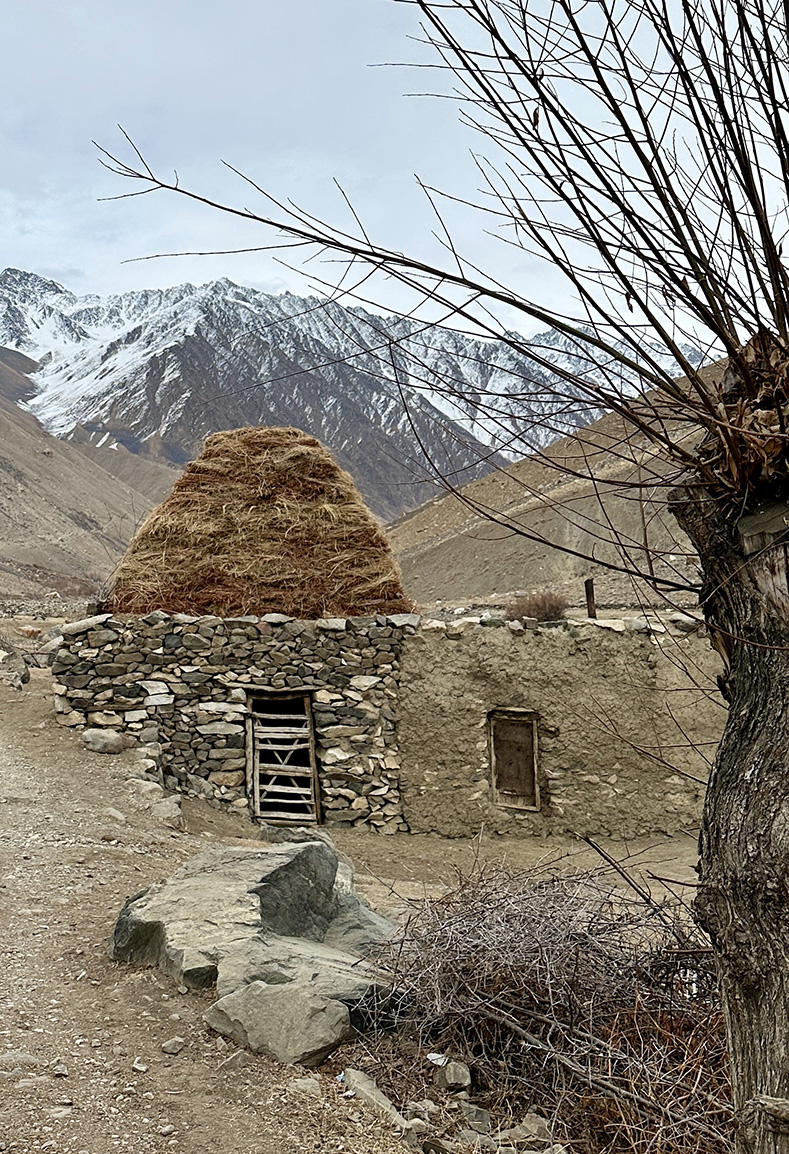
A traditional home in Ravmed village, complete with haystack.

Bringing a limited number of trophy hunters to the area has added cash to the village’s subsistence economy and has given the people who live there an incentive not to overharvest wildlife. The population of ibex has increased to approximately 1,000, a tenfold gain in only fourteen years. 

Snow leopards eat ibex. Their numbers also have increased.

Bureaucratic problems paused trophy hunting in Ravmed for two years.  This January, the conservancy reopened, with two permits for ibex issued by the government of Tajikistan.

I was very happy to be hunting once more in Tajikistan and to be guided again by Latifa, whom I have known for seven years. I was also able to spend time with her father. Gulbek is fifty-nine years old and 100 percent old school. When he was in his twenties and thirties, he hunted the mountains around Ravmed with a matchlock rifle, ragged cotton clothing and played-out, lopsided boots. He crossed the high passes alone, wandering through terrain that reminds me of the Alaska Range.

Latifa and her father, Gulbek, in their home in Ravmed, Tajikistan.

Most winters, snow pushes the ibex down from the high peaks. Gulbek says they sometimes come within a hundred yards of his house. This January, there was only a dusting of snow.  We saw ibex every day, but they were thousands of feet above us.

I was in no hurry. I wanted to absorb as much knowledge as I could from Gulbek and the other mountain people. I was happy to wait for the ibex to come to me. I spent the days glassing animals from the village and visiting with Latifa’s relatives. Everyone offered me tea and soup or dumplings along with traditional flat bread.

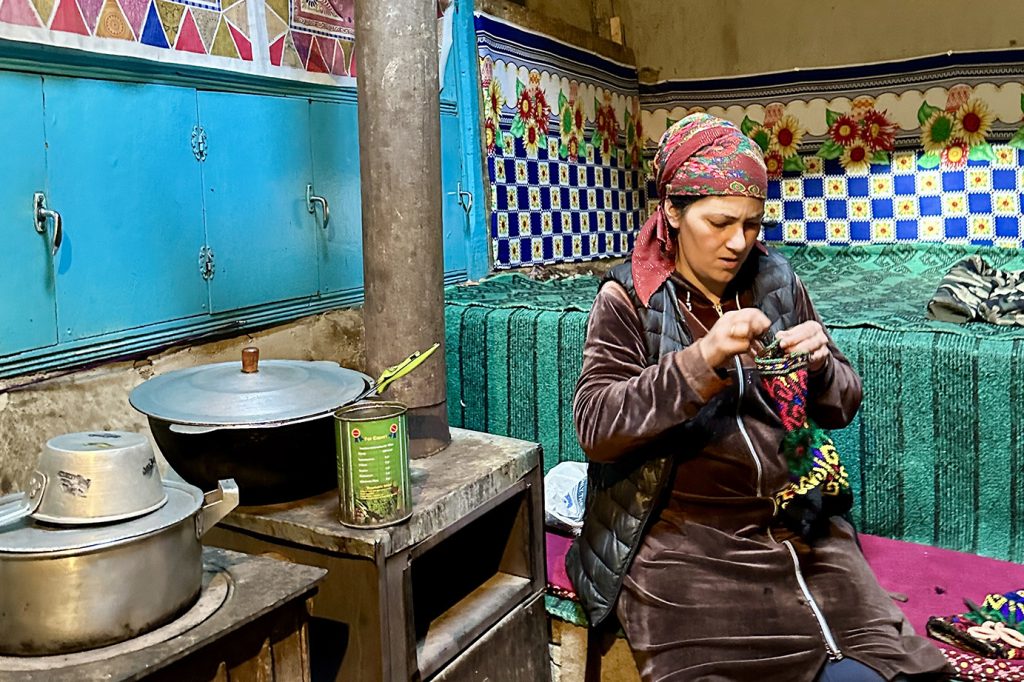
The interior of a typical home in Ravmed.

Villagers live in flat-roofed houses made of peeled poplar logs and rocks covered with adobe. Some of the houses are around two hundred years old, with the ceilings and rafters blackened by years of smoky fires. The village has a small hydroelectric plant. Nobody has running water.  

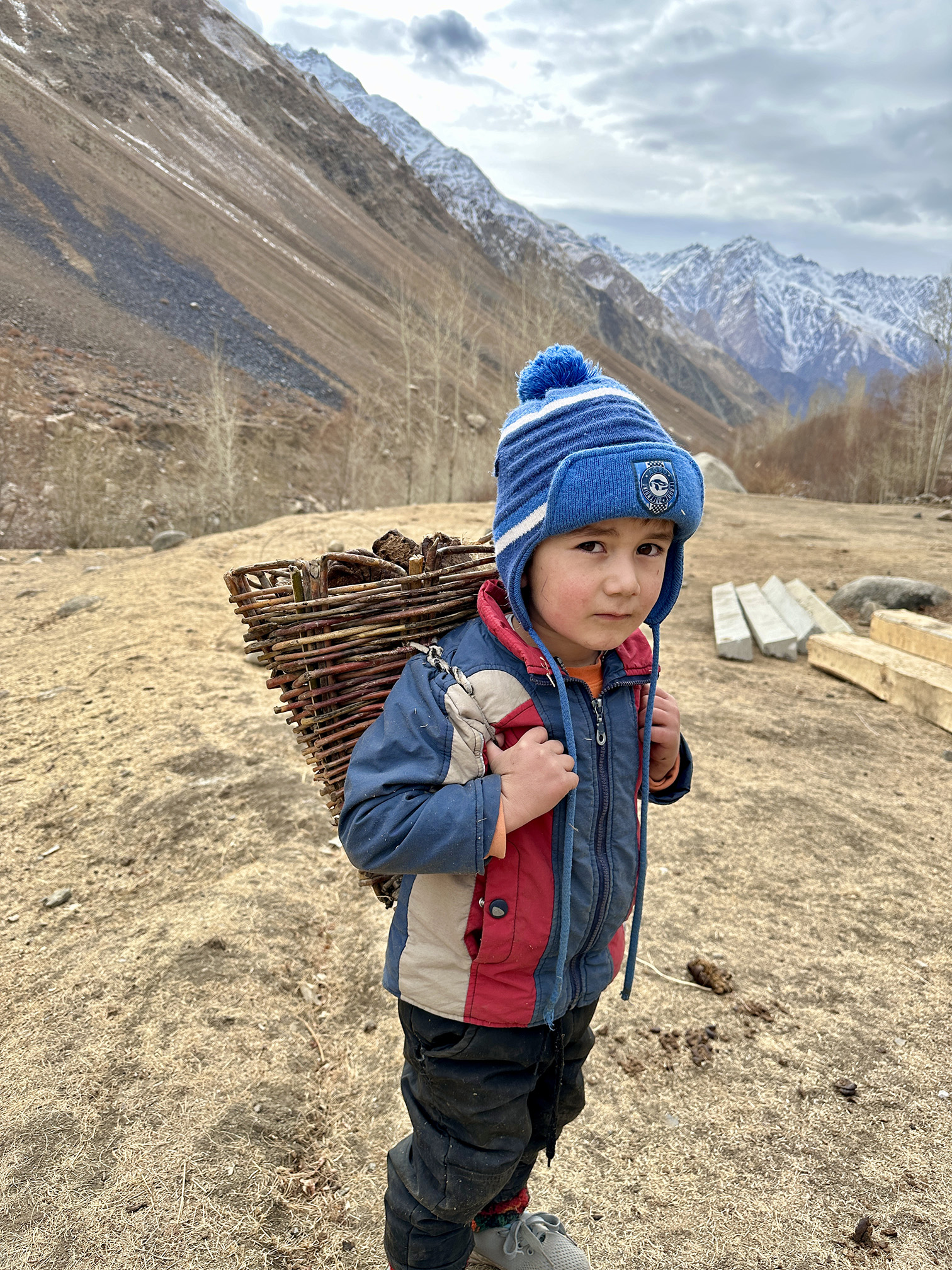
Most houses are a single room that is heated by a stove made of welded sheet metal. There are not many trees at this altitude. Villagers burn twigs and branches up to about two inches in diameter. The ones who are doing well can buy a bag of coal. The others burn animal dung.

A young resident of the village gathering animal dung to burn for heat.

One day, we watched a mother snow leopard attempt to stalk a herd of ibex while her two kittens hid. A few nights later, wolves came into the village and killed a dog.

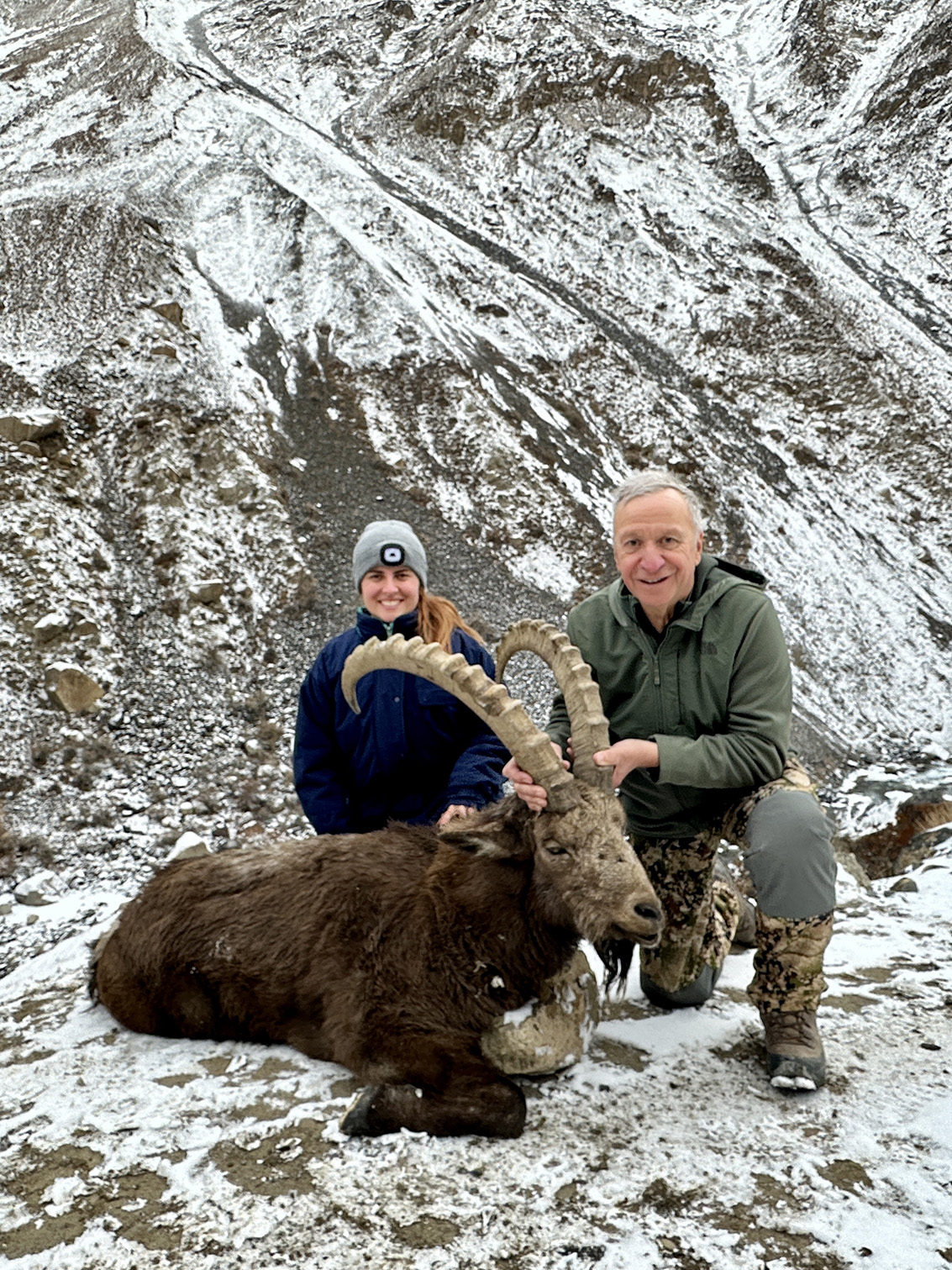
On January 16, a nine-year-old ibex obliged me by walking down to within 300 yards of where I was sitting. I fired my single-shot Blaser.  The ibex took a couple of steps and rolled down the mountain like a rag doll, setting off a rockslide. Six men waded the fast, icy river barefoot to retrieve it.

Latifa, the author, and his nine-year-old ibex.

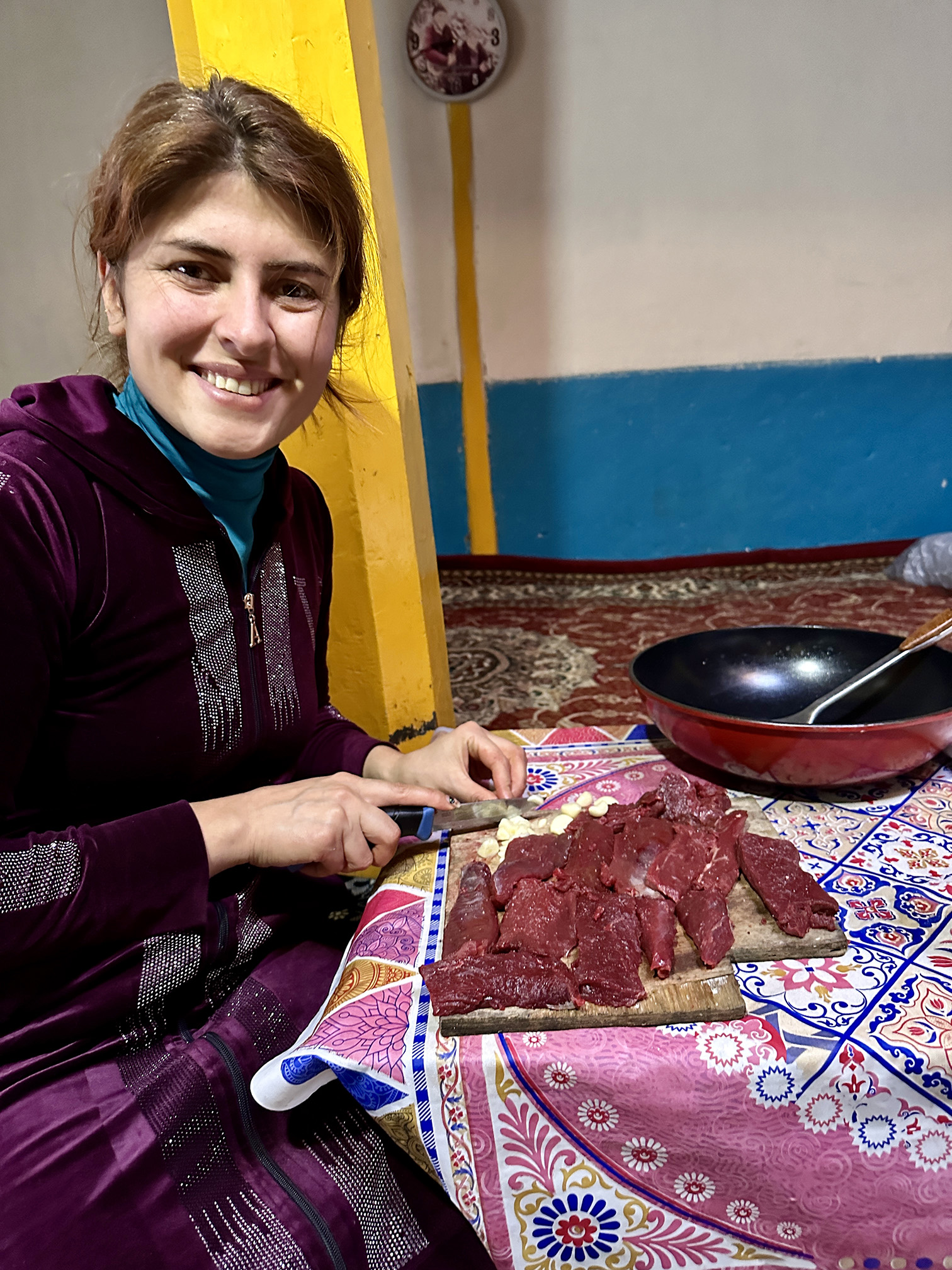
My birthday was two days later. Latifa cooked chunks of my ibex with rice, onions, carrots, and cumin. She also made a frosted six-layer cake on the wood stove. Gulbek brought out a plastic Coca-Cola bottle of moonshine that he distills from wheat and apricots. Traditional music in a minor key wailed and warbled from somebody’s phone. Nobody even complained when I tried to dance.

It’s too bad that I had to wait seventy-two years to have a birthday party this good.

Latifa prepares ibex steaks for the author’s birthday.

Leave a Comment

Birds of the Borderlands

Hunting the little-known Gould’s turkey in the rugged mountains of northern Mexico.

The truck rolled to a stop on the rough dirt track long before daylight, and when Ted shut off the engine, we all sat for a moment in the kind of deep silence you can only experience far from civilization. As I opened the door and slid quietly out into the desert darkness, the crooked, fingerlike silhouettes of ocotillo plants pointed toward the starlit sky. More than a century ago, Pancho Villa and his revolutionary band prowled this rugged landscape, perhaps gathering in this very spot to plan a predawn raid. 

Our purpose here was nefarious as well, at least from a turkey’s perspective. We were preparing to lure an unsuspecting gobbler into an ambush. And not just any gobbler. We were hunting the Gould’s turkey,  the largest, rarest, and arguably the most beautiful of all turkey subspecies. These are birds of the borderlands, occurring in small numbers in the far southern regions of Arizona and New Mexico, and more commonly in northwestern Mexico. They’re well suited to this rough desert country, frequenting rocky canyons and high mountains.

Like all turkeys, however, they need mature trees to roost in and openings where they can feed and strut. Our guide, Ted Jaycox, had found just such a location here on the grounds of Rancho Mababi in northern Sonora, and had placed a pop-up blind in a likely spot a couple of days earlier. We made our way by starlight, walking as silently as possible in his footsteps, crossing a dry wash and emerging into what I dimly discerned was a meadow. My hunting partner, Kristin Alberts, and I crawled into the blind while Ted sneaked out to set up a decoy. 

We sat silently in the darkness for fifteen or twenty minutes before the pale dawn began to creep over the landscape. As it did, the quiet morning was shattered by an earsplitting gobble that sounded like it was right outside the blind. Then another gobble, from another direction, and a third one behind us. In the darkness inside the blind, I couldn’t see Ted and Kristin grinning, but I could feel their excitement, as palpable as my own. 

Then, as I peered through the rectangular opening in the blind, I spotted a gobbler on the branch of a tree some fifty yards away, silhouetted against the gradually lightening sky. I marveled as the ungainly-looking bird strutted back and forth along the high branch, his tail magnificently fanned out and his gobbling nearly continuous. I could hardly contain my anticipation—surely he was about to fly down and land right in front of us. But he continued to gobble from his lofty perch, turning in every direction to showcase his impressive accoutrements to every hen in the area.

Eventually he did fly down, but in the other direction, and we couldn’t see where he landed. A variety of songbirds called from the trees around us, but turkey sounds grew quiet, although an occasional distant gobble kept us hopeful. Half an hour later, Kristin indicated with an oblique hand gesture that she had spotted a mature gobbler walking along the right-hand side of the meadow. Ted made a couple of soft clucks on his box call. The gobbler stepped into view, stopped at the sound of the call, turned our way, and caught sight of the decoy.

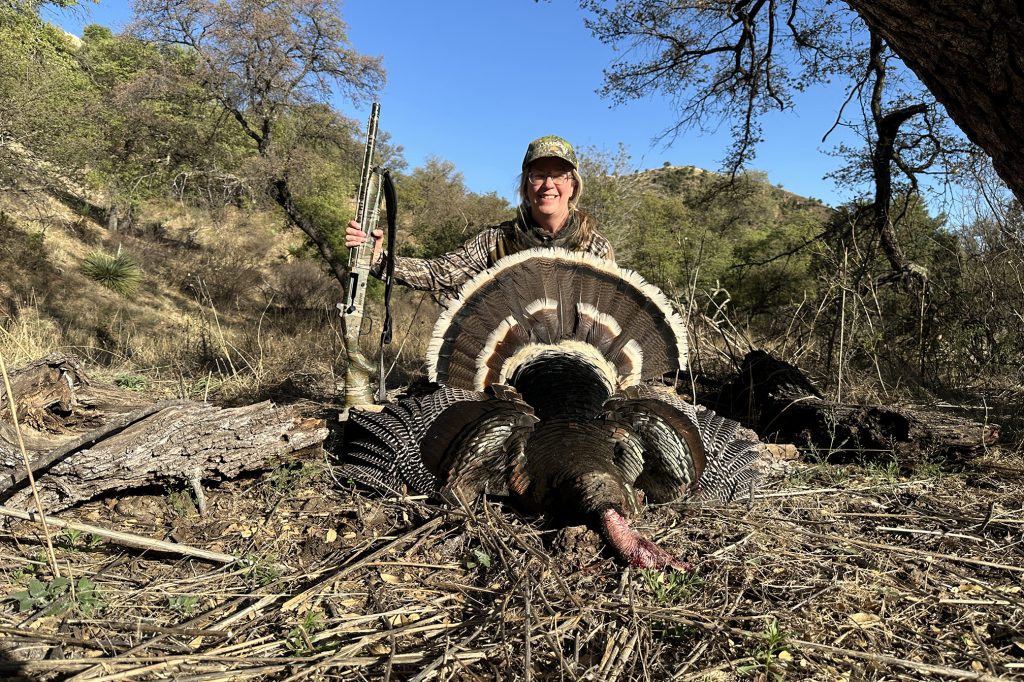
The result was dramatic. The big bird went straight for the decoy at a dead run. When he reached it, he paused, ready to do battle. The boom of Kristin’s 12-gauge shattered the morning air, the shot bowling the bird over instantly, stone dead. Our ruse was a success.

The beauty of a mature male Gould’s turkey, with its scarlet head and the bright white tips on its tail feathers, is matched only by that of the magnificent land it lives in. I took some photos of Kristin and her bird in the morning light with the gleaming 5,000-foot peaks of Sonora’s rugged Ajo Mountains in the background.

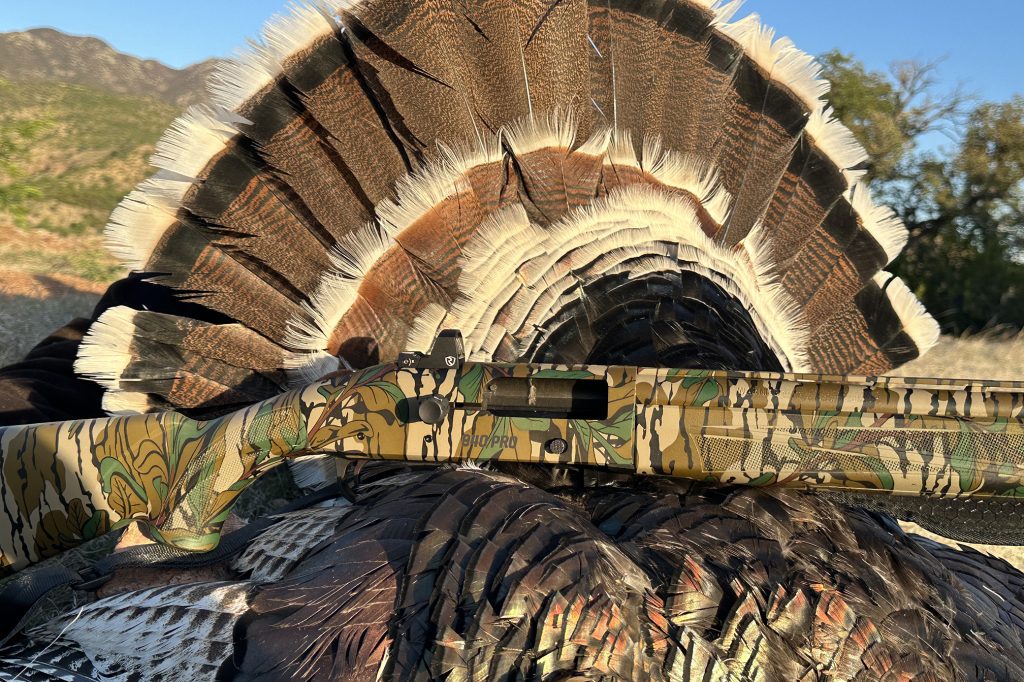
The white-tipped tail feathers of the Gould’s turkey make it one of the most beautiful of all turkey subspecies.

The Gould’s is our least-known turkey subspecies. These birds are similar to Merriam’s turkeys, but they are larger and have more dramatic and distinctive coloration in their tail feathers and the feathers along their rumps. Like the Merriam’s, they are birds of the mountains, typically living at elevations between 4,500 and 9,500 feet. 

You can hunt Gould’s turkeys in Arizona and New Mexico, but tags are only available via a draw and are extremely limited. The National Wild Turkey Federation and its partners are working to rectify this by re-establishing strong, huntable populations in these states, but for now, your best bet if you want a Gould’s is to travel south of the border, where these birds are relatively abundant. And you don’t need to go very far into Mexico—the lovely Rancho Mababi, where we hunted with Jaycox’s Tall Tine Outfitters, is a ninety-minute drive from the border town of Agua Prieta, and just forty air miles south of Douglas, Arizona. 

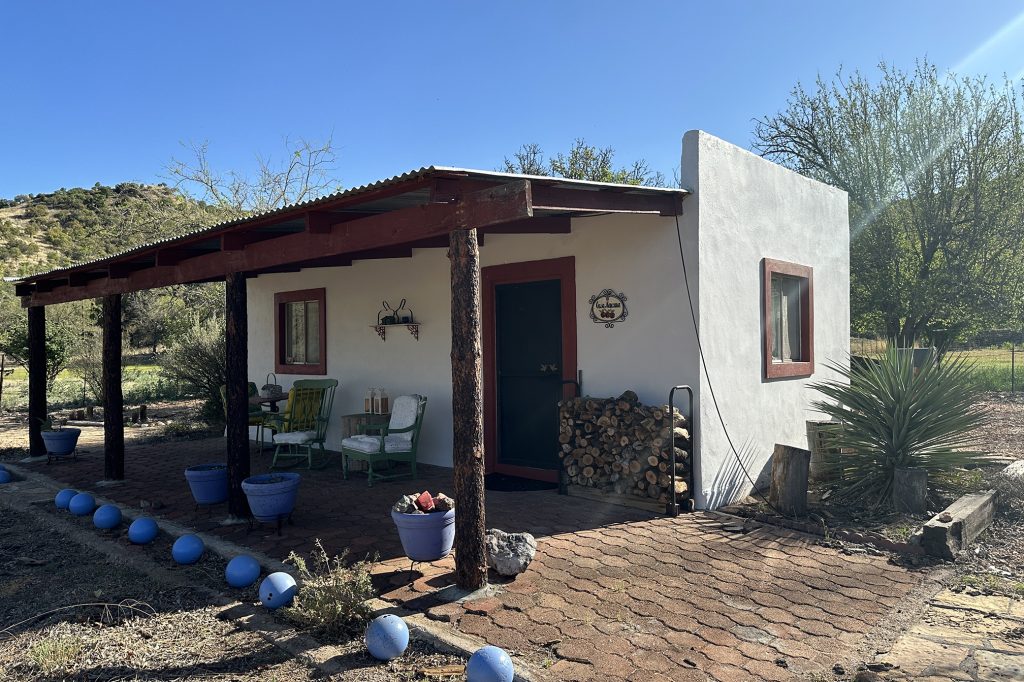
The thick-walled adobe buildings at Rancho Mababi, which date from the early 1900s, provide comfortable accommodations for hunters. 

I’d had my own encounter with one of these stunning birds the previous afternoon. Ensconced in a different blind, with a hen and jake decoy twenty-five yards in front, I scanned a grassy opening as Ted made enticing turkey sounds on his call. A trickle of water ran somewhere to our front, and a riot of songbirds called from the oak and palo verde trees scattered through the meadow. To our left, a mountainside flanked us like a wall. We hadn’t been set up for more than fifteen minutes when we heard a turkey gobble from somewhere above us on that steep slope. A few minutes later we spotted him, well out of range, chasing a jake. The two turkeys disappeared into the trees.

We heard some sporadic gobbles as the afternoon wore on, but saw no more turkeys until about 5 p.m., when our gobbler—or perhaps it was a different one—reappeared, this time with several hens in tow. The flock worked its way through the meadow in front of us, about a hundred yards out. The hens were feeding, clucking, and occasionally sparring with each other, while the gobbler paraded back and forth, putting on a great show. Ted clucked periodically, but the turkeys initially seemed to pay little attention to his calls.

Soon, though, the flock began to feed closer to us, and the preoccupied gobbler continued to strut and preen, totally focused on his harem of hens. A large tree stood between him and our decoys. When he stepped clear of it, Ted clucked, much louder this time. The gobbler turned, looked, spotted the decoys—interlopers!—and raced toward them at a full gallop, wings tucked in and head outstretched. I had my shotgun ready and slid the safety off. As he skidded to a stop beside the decoys, I centered the red-dot sight on his neck and pressed the trigger. The shot pole-axed him, and he landed on his back with both feet in the air. 

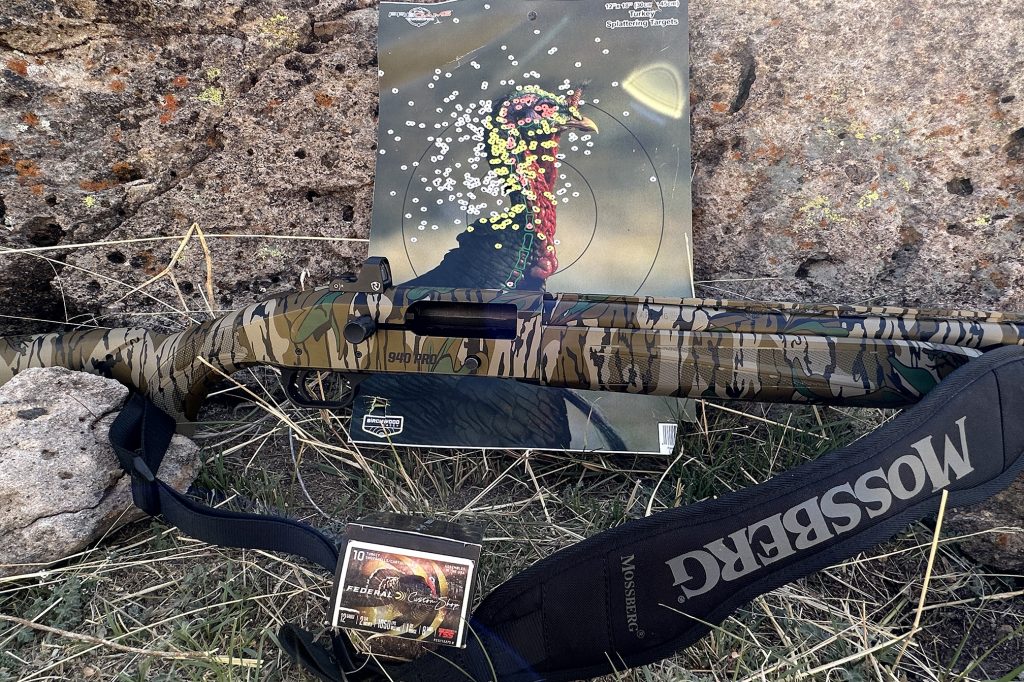
This Gould’s gobbler came in on the run after spotting the decoys. The shot was 25 yards with a Mossberg Pro Turkey shotgun and Federal’s Custom Shop TSS load.

I was thrilled with my bird, a fine 22-pound gobbler with beautiful tail feathers, a good beard, and spurs well over an inch long. After taking photos, Kristin and I returned to the blind and stayed until dark, enjoying the teenager-like antics of a gang of eight jakes that milled around our decoys, strutting, making squeaky gobbles, and trying their best to impress the unresponsive plastic hen.

We were treated to an unexpected bonus the next morning, as we drove back to the Rancho Mababi headquarters with Kristin’s gobbler. We were traversing a beautiful creek bottom filled with large sycamores. As we stopped to take a few photos of the lovely area, we heard a resonant call not unlike that of a hen turkey. Ted told us to grab our binoculars, and at his urging, I focused my optics on a stunning songbird with a long tail, green head, and red breast. As it turns out, the Gould’s turkey is not the only interesting bird in this species-rich region of northern Mexico: Serious birdwatchers travel here from far and wide in hopes of spotting the elegant trogon, one of the most sought-after birds in North America for life-listers. We had the privilege of watching four of these beautiful birds as they sat on tree branches, scanning their surroundings and occasionally erupting into flight after some delectable insect.

That evening, over a delicious dinner of wild turkey with cream sauce and poblano peppers prepared on a vintage wood stove, we learned more about the history of Rancho Mababi, which dates from the early 1900s. Local lore has it that upheaval of the Mexican Revolution made life difficult for the original owners, and that Pancho Villa paid the ranch at least one visit to commandeer supplies. The borderlands have a chaotic and fascinating history of war and peace, outlaws and lawmen. This beautiful region of deserts and mountains is still a great place to seek adventure—as well as a wonderful destination to hunt a unique and magnificent wild turkey.

Book your own hunt for Gould’s or any of the other wild turkey subspecies with Tall Tine Outfitters.

The Ultimate Turkey Rig

Mossberg’s 940 Pro Turkey shotgun with Federal’s Custom Shop ammo loaded with tungsten super shot (TSS) proved to be an absolutely deadly combination for big Gould’s gobblers. It would be hard to find a more ideal turkey gun than the 940 Pro Turkey. This 12-gauge semiauto has a clean-running gas-vent system, a handy 18.5-inch barrel length, five-round capacity, quick-empty mag release, adjustable length of pull, and is choked with an X-Factor XX Full Turkey Tube. Overall length is under 40 inches, which makes this shotgun very handy to use in a blind. It comes with a HIVIZ fiber-optic sight and is also optics-ready.

TSS is an incredibly dense shot that has taken the hunting world by storm in recent years, and it’s an integral part of Federal Premium’s HEAVYWEIGHT TSS and Black Cloud TSS loads. Shotshells loaded with TSS represent a big upgrade from anything previously available, letting hunters kill gobblers, waterfowl, and upland game at longer distances. I shot my turkey at an ideal distance of 25 yards, thanks to the placement of the decoys, but TSS loads have the ability to reach out much farther for one-shot kills on big gobblers.

Federal’s online Custom Shop offers more than thirty-five possible shotshell combinations loaded with tungsten super shot (TSS). The Custom Shop ammo is a great solution for hunters who prefer 28-gauge and 16-gauge shotguns, since turkey loads can be hard to find for these smaller gauges. Simply go to the website and choose the gauge, shell length, shot size, and shot weight from a list of options. Gauges include 10, 12, 16, 20 and 28, as well as .410 bore, with shotshell length varying from 2¾ inch up to 3½ inches. Payloads range from 11/16-ounce up to a heavy-hitting 2½-ounce, and TSS shot sizes such as 7, 8, 9, and 10 are available. Order at federalpremium.com/custom-shop/custom-shotshell.–D.R.

Leave a Comment

Coues Deer Time

These challenging little whitetails are the perfect cure for the winter blues.

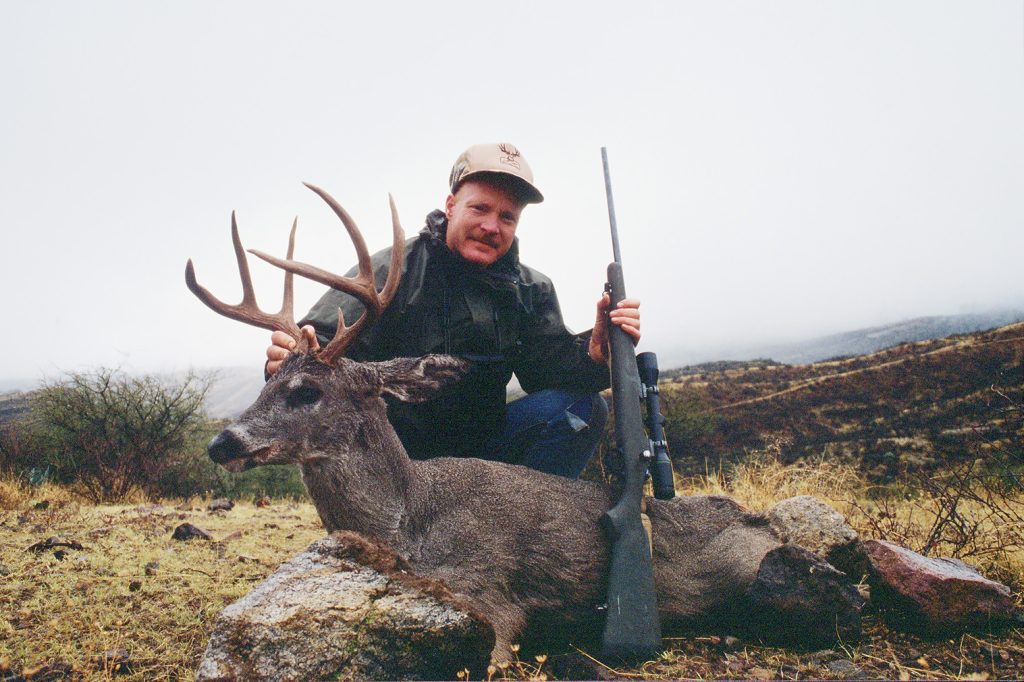
Photo above: Taken with Ted Jaycox on Rancho Mababi in northern Sonora, this is a good buck, with a B&C score about 105. A buck like this is a very possible goal; it’s much more difficult to break the B&C typical minimum of 110.

February and March are mostly the doldrums for hunting. There are a few seasons open: It’s the right time for winter cougar and wolf hunts, and also the right time to hunt in the savanna country of Central Africa. There is still some Eurasian mountain hunting open. What else is awesome at this time of year? That’s easy. When it’s cold and icy up north, it’s prime time in northern Mexico.

Seasons for desert bighorn and desert mule deer are open. Both are great hunts, and I’m happy I was able to do them, but they’ve slipped out of my price range. Coues deer hunting remains reasonable, successful, and now is the perfect time. There is good rutting activity through February, and good numbers of quality deer. It’s a challenging and enjoyable hunt, and a wonderful time to enjoy the warm desert sun.

In late winter, northern Mexico is one of the greatest places on Earth, with cool mornings, mild middays, a peaceful and long-forgotten lifestyle on remote ranchos. In gorgeous country, with plenty of deer.

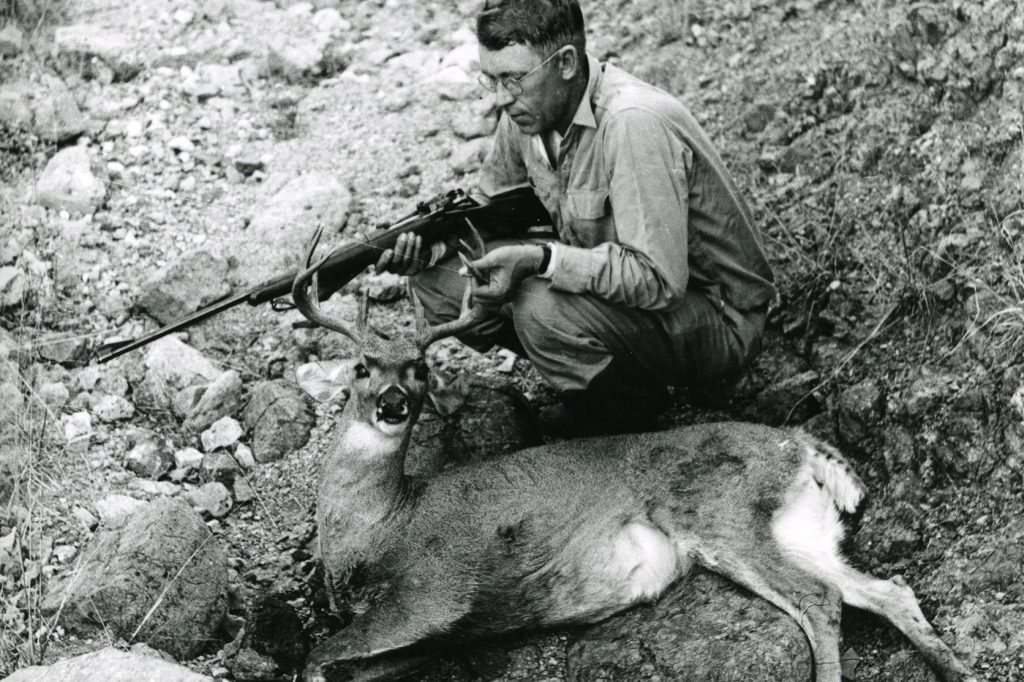
My uncle, Art Popham, hunted Coues deer in Arizona and Mexico in the late 1930s with Jack O’Connor and George Parker, the greatest Coues deer hunter of all time. I didn’t hunt with any of them, but was lucky to know them, and I had Coues whitetail on my bucket list from an early age.

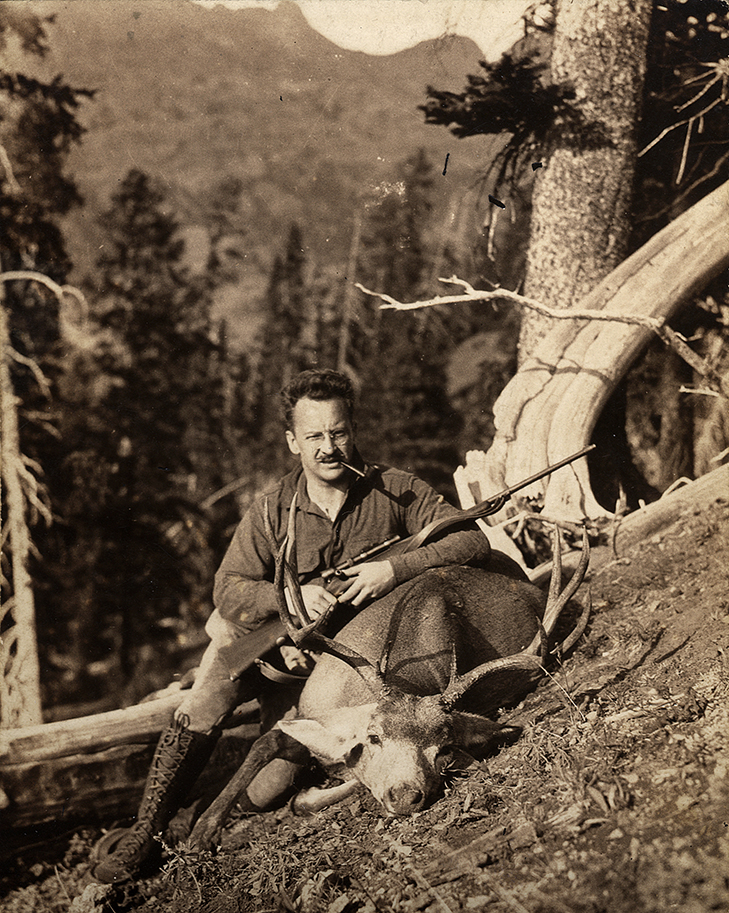
Jack O’Connor with a nice Coues buck, circa 1930s. O’Connor’s writing made Boddington want to hunt this little desert deer. It must have been a whole lot more difficult with iron sights.

I started in southeast Arizona with Marvin and Warner Glenn, hunting on their famous riding mules. A few years later, Duwane Adams, also a Coues deer legend, took me under his wing. We shot some nice deer. Not easy, but too successful to call it difficult. There were plenty of deer you just needed to know how to look for them. This I learned from Duwane Adams, one of the first to use big binoculars stabilized on tripods.

After a couple of tag rejections in Arizona, I started going to Mexico. I hunted a lot with Kirk Kelso, often with Tucson gunmakers David Miller and Curt Crumm. More recently, in Sonora with Ted Jaycox, and in Arizona on my son-in-law’s ranch. Coues deer hunting in Mexico is wonderfully successful, but so is Arizona. The biggest problem is finding them, because spotting these small deer in their big country is the most difficult post-graduate glassing test I know of.

They’re thin on the ground, but they’re there. Once located, they are generally stalkable. Coues deer are, after all, just a desert subspecies of whitetail, maybe not as wary as their harder-hunted northern cousins. Hunting them is never a slam dunk, and there is never any assurance of a giant. Me being me, I rarely hold out for a giant, usually won’t pass a respectable buck. Just having fun, enjoying a great deer hunt in. wonderful winter weather.

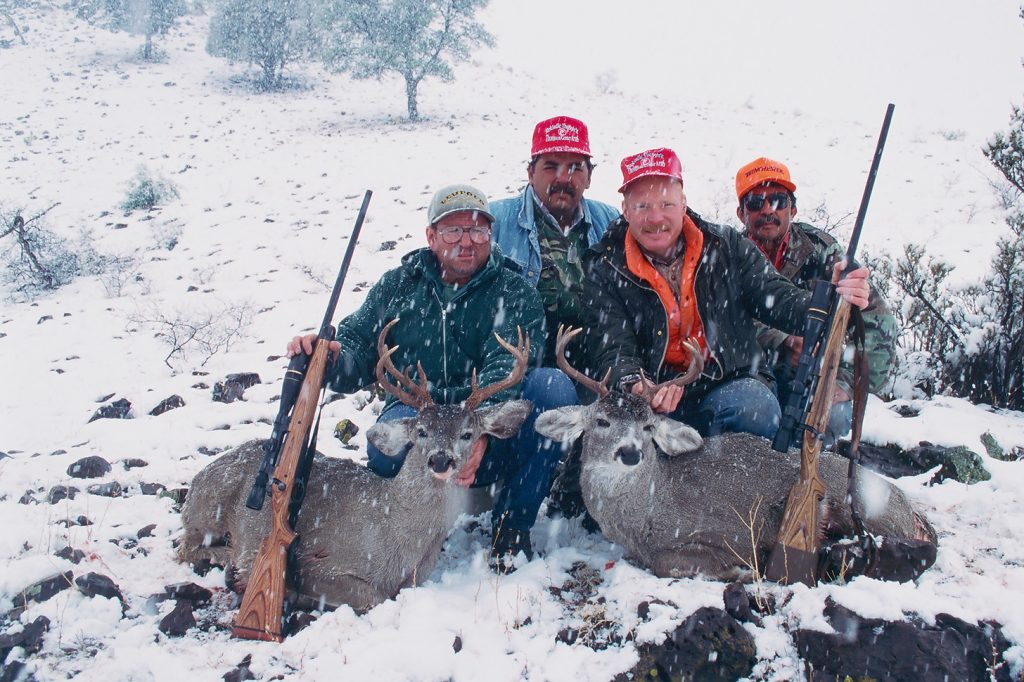
I’ve hunted Sonora the most, also did several Coues deer hunts in Chihuahua. My spin: good country in Sonora generally has more deer, but Chihuahua has some awesome bucks. Perhaps the coolest (literally) Coues deer hunt of all was in Chihuahua, where we were caught by a freak overnight blizzard.

Tucson gunmaker David Miller and Boddington with two bucks taken on an unusual snowy morning in Chihuahua, Mexico. Neither  buck is outstanding,  but Miller’s has a double main beam on its right, uncommon for any deer.

In Arizona, I’ve hunted Coues deer in rain and light snow, but that was the only time I’ve hunted them in deep snow. Maybe I should have been pickier, but time was running short, and I caught an 8-point buck coming down a snowy cut, 400 yards straight below me. I mean straight down. Angle-correcting rangefinders didn’t exist. I shot over him twice, the deer clueless as the bullets thumped into deep snow. Third shot, I aimed at his knee and dumped him.

The Sonoran Desert is so weird to me. I expect to find desert sheep in the hills and mountains. Seems the desert mule deer should also be there. No. Coues whitetails are in the hills, mule deer are on the desert floor. Clearly, it’s a matter of feed and preference, because I’ve never seen a desert mule deer in Sonora up in the hills, and I’ve rarely seen Coues deer down low.

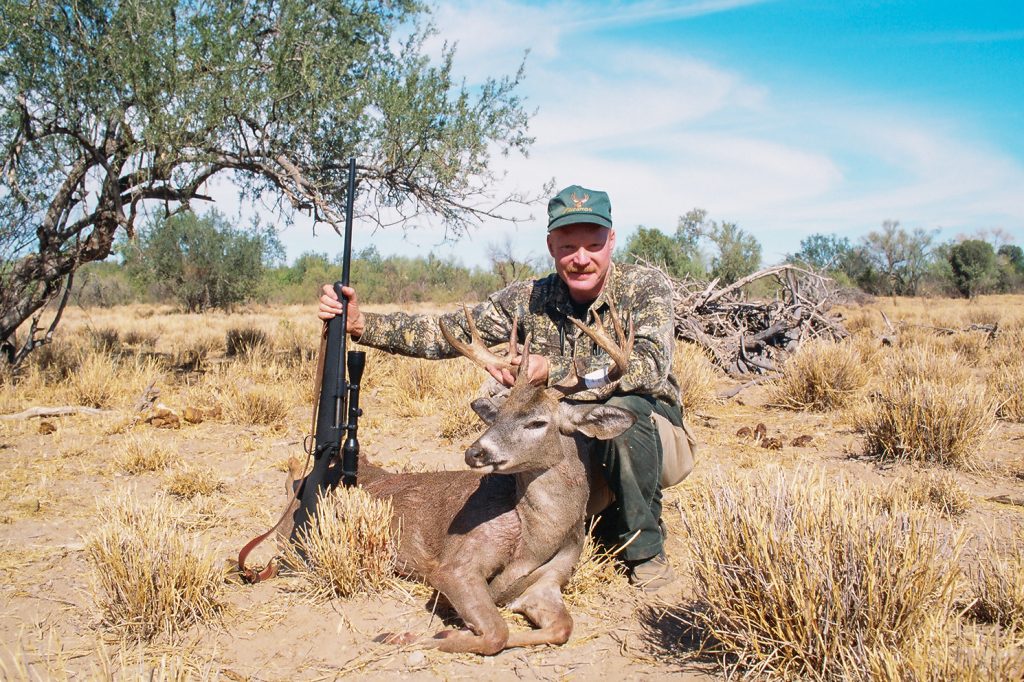
Once, walking across a desert flat, looking for mule deer, my Mexican cowboy-guide and I saw a wide-antlered buck feeding in a bushy tree. My Spanish is limited, my hearing worse. I heard him to be saying, “Shoot.” Hell, he was saying “Coues,” telling me not to shoot. I threw up my Jarrett .30-06 and dumped it, a fine buck. Fortunately, I had permits for both species. My guide didn’t know that, and he expressed much concern at that moment.

A good, heavy-antlered Sonoran buck, taken right down on the desert floor. This is one of very few Coues whitetails Boddington has ever seen on level ground.

Duwane Adams and I took a great Coues buck forty years ago, my first big one. He had a spot on the back side of the Catalinas, only accessed by starting the uphill climb about midnight. I can’t believe I could do that stuff so easily back then. We got into position overlooking a big basin, started glassing, freezing our tails off in the chill dark.

After maybe an hour of shivering, light growing slowly, Adams looked up from his tripoded binoculars and said, excitement in his voice, “Boddington, dump all your shells out on the ground. I got a barn-burner.” And he did.

Fortunately, I only needed one shot. Coues deer are small deer in tough, brushy, thorny country, and they can be some of North America’s most difficult shooting. 

I’m off on a Coues deer hunt next week. No idea what might happen, and I don’t really care. B&C’s typical minimum is 110, so I figure 100 is a fine buck. It’s not so hard to find a buck in the 100 to 105 class, but then the air rarifies. I’m not trying to beat any records; I just hope to enjoy some great deer hunting.

A more interesting statistic: In thirty years of hunting Coues deer in Mexico—not every year, but in some years more than once—I have only failed once. That time it was not Sonora’s fault, nor the fault of my friend Kirk Kelso. On the last day, he showed me a nice buck, moving back and forth on a brushy hillside like a whack-a-mole. I found him in the scope, lost him, found him again, couldn’t get a shot off. Embarrassing. That was the only time I’ve failed on Coues deer in northern Mexico, and it was completely my fault.

This Sonoran buck was taken at forty yards during a freak rainstorm. Not a big buck, but the point length is exceptional.

Other than that weird blizzard in Chihuahua, I suppose the most unusual situation I ever had on Coues deer was during a winter rainstorm in Sonora’s Sierra Madre. We were huddled under some thick mesquites while the rain dripped down, just waiting for the storm to pass, when a bachelor group of bucks appeared out of the mist.

It was early in the hunt, and there was no reason to be impatient, but one buck was too nice to ignore, a big 8-pointer with long tines. Good enough, too good to pass. I think that was the closes shot I ever had at a Coues whitetail, not 40 yards. Next week, I don’t expect to get that close. Maybe I’ll see a good buck. If I don’t, it doesn’t matter; it will be good to be back in Coues deer country, one of the great North American hunts I never tire of.

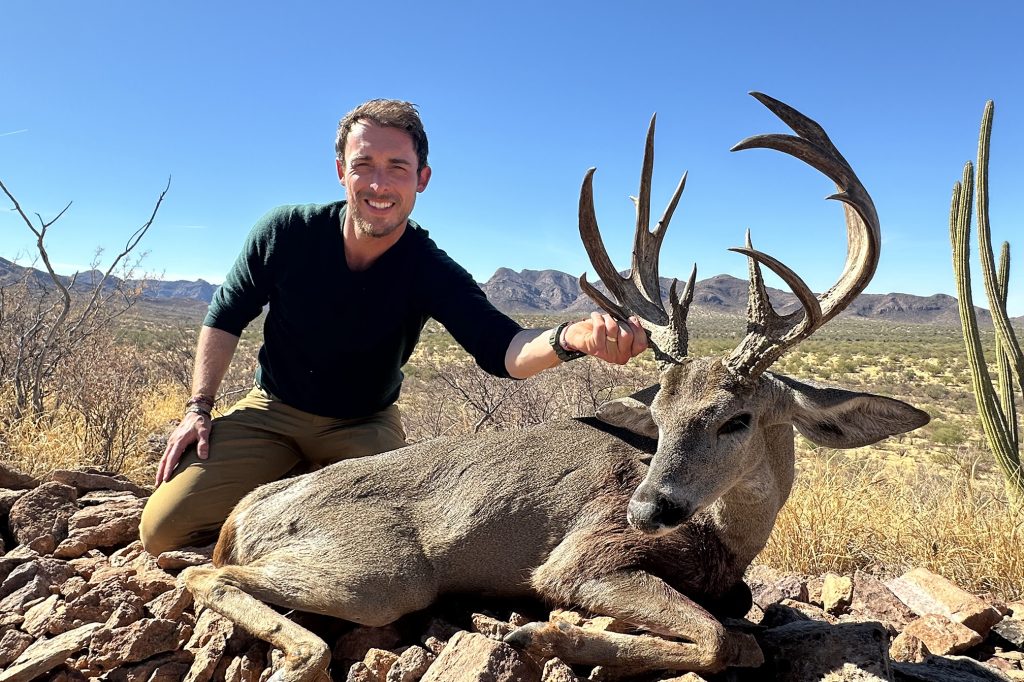
Boddington’s friend Andres Santos guided a hunter to this incredible Coues buck in January 2024. 

Leave a Comment

All About the Impala

He may be common, but he’s one very classy antelope.

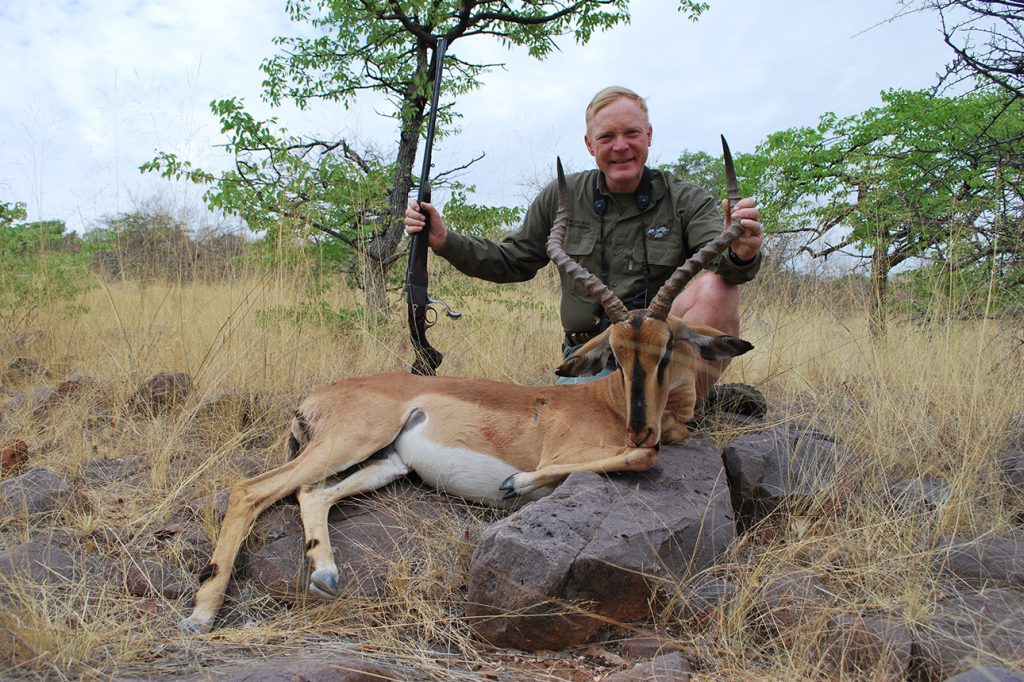
Thanks to Chevrolet, the impala is probably Africa’s most recognized antelope. Reddish tan, with white underparts and attractive lyre-shaped horns, the impala is a classic and classy little antelope. In much of East and Southern Africa the impala is the most common antelope, and for many of us he was our first African animal, treasured forever as a shoulder mount. Usually available, plentiful, and inexpensive, impalas will feed the camp, provide baits for your leopard hunt, and offer many hours of great hunting.

Of course, that depends on where you are. In East Africa, impala don’t occur west of Uganda, and in that area kobs are the most common antelopes. In Southern Africa, it depends on the habitat. Typically creatures of dry thornbush, impalas don’t occur in true desert, so in the Kalahari, Karoo, and Namib deserts, the most common antelope is the springbok. Apparently, impalas also don’t like country that’s too wet. When I first hunted coastal Mozambique, I was surprised that impala were rarely seen. There, the common reedbuck is the most common antelope.

Although not found everywhere, the impala is one of Africa’s most widespread antelopes. Scientifically, he is Aepyceros melampus, just one species within that genus. His English name came first from Tswana in 1802, palla or red antelope. Impala comes more directly from Zulu, mpala, first used in English in 1875. Science has identified possibly six subspecies, not all substantiated. Across their huge range, we hunters identify just three races: East African, Southern, and black-faced or Angolan impala. In the British lexicon, males are usually referred to as rams.

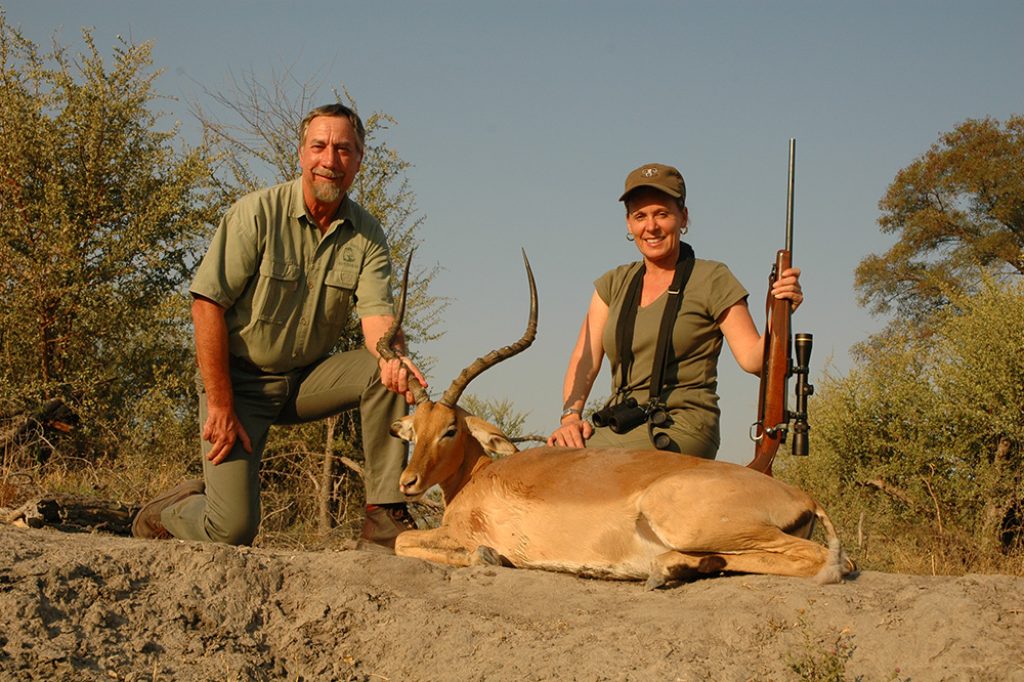
Johan Calitz and Donna Boddington with an excellent Southern impala. Taken in 2007, this is one of the last antelopes taken in Botswana’s Okavango before it transitioned to a photographic-safari-only area.

The primary difference between East African and Southern impala is horn size. The East African impala averages larger in body, but at their best, horns pick up where Southern impalas leave off. Horn length of 24 inches is always exceptional for Southern impalas, while big East African impalas can go up into the high 20s, occasionally beyond. 

Record books have to draw a line somewhere, so we reckon the East African impala ranges as far south as the Selous Reserve. I suppose. Impalas are common in the Selous, but are rarely large in either body or horn. Even in Tanzania’s Masailand, big impalas are scarce. Over the years, by being within their designated range, I’ve shot several impalas that were classified as East African. However, the only impala I’ve ever taken that was big enough to be a proper East African impala came from Kenya on my first safari. With Kenya now closed to hunting for 47 years, good luck on that.

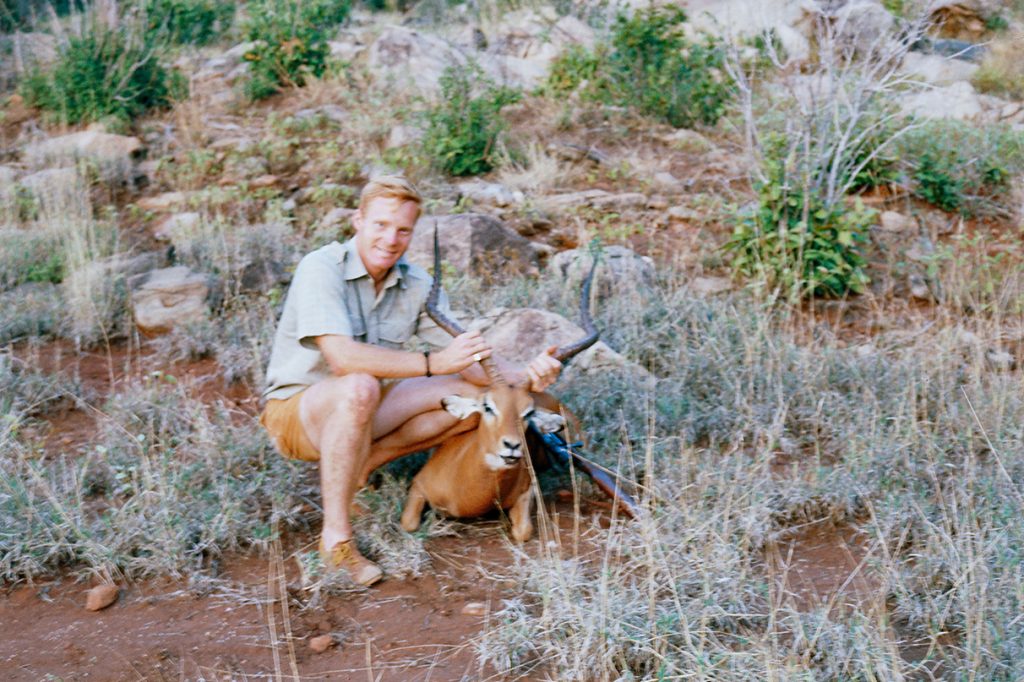
 Taken in Kenya in 1977, this is the last surviving photo of Boddington’s one and only good East African impala, an excellent ram with horns in the high twenties.

Right now, the best East African impalas are coming from east-central Uganda. However, impalas are spotty in that country. They don’t occur in Karamoja in the far northeast, nor in Murchison Falls Park in the northwest, or points north. In three Uganda safaris, I have yet to see an impala.

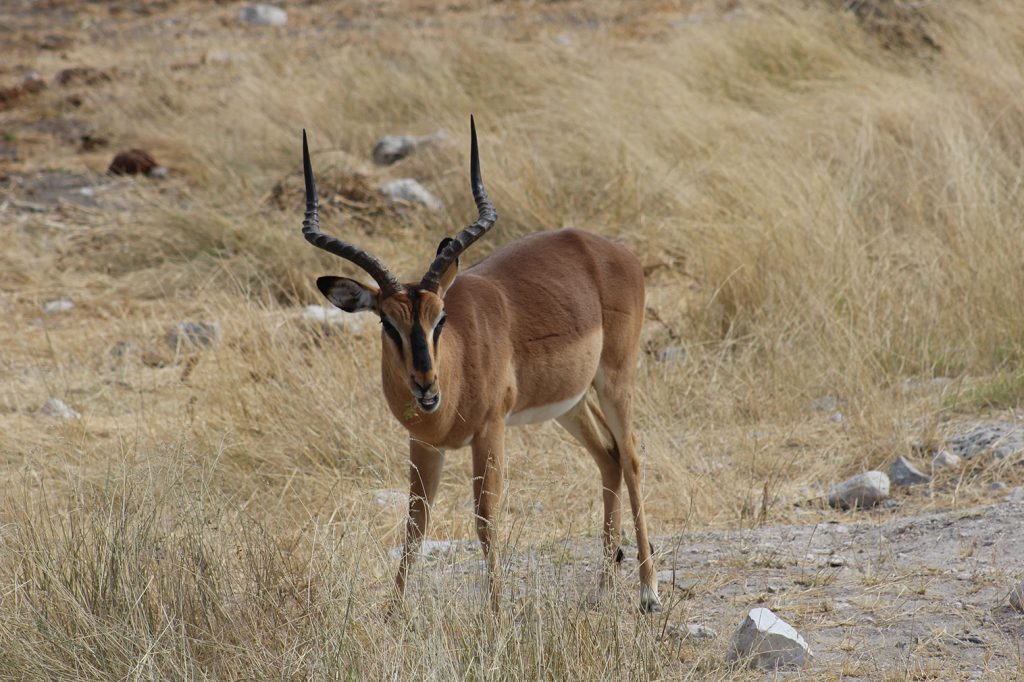
The black-faced or Angolan impala has a distinctive black stripe running the length of its nose. Technically confined to northwestern Namibia and adjacent Angola, this impala is considered by the US Fish and Wildlife Service to be endangered, so the US does not allow importation. This ruling is unfortunate, since it reduces its value and hinders its management. Realistically, it seems a silly ruling; I’ve seen impalas with full-on black face stripes well outside of the designated range. The black-faced impala is probably the same size as the Southern impala but, combining little hunting with restricted range, the sampling is so small that hunting records suggest it doesn’t grow as large as its southern cousin. In 2011, on purpose, I shot a “real” black-faced impala, which is now mounted in Dirk de Bod’s lodge in central Namibia. 

A good black-faced or Angolan impala, taken in northwest Namibia. The characteristic black facial stripe is sometimes seen outside of this impala’s official range.

In Southern Africa, big impalas are where you find them. Like most common and widespread animals (whitetails, warthogs, roebuck), exceptional impalas are few and far between. Well-watered areas in South Africa, such as KwaZulu-Natal and the Limpopo Valley, tend to produce big impalas, but they aren’t plentiful. If you see an impala approaching mid-20 inches, you’d better take him.

If you can! The impala is a wary, nervous antelope, always difficult to stalk. The only saving grace: Impalas are highly territorial, depositing their round dung in middens. A big ram seen in a certain area will almost certainly be seen there again.

Males often congregate into bachelor herds, but a group of females will usually have one dominant male. This is probably the best opportunity to find a big boy. However, the more eyes and ears there are, the more difficult it is to approach, sort, and get a shot. My big East African impala was taken near Tsavo National Park. That area is generally too dry for the biggest impalas, and they weren’t plentiful. We’d seen this big male with a group of females and made several stalks, but there were too many animals, and it was too thick to sort him out.

On our last try, we caught them coming one at a time through a narrow opening. I focused on the gap, while PH Willem van Dyk watched them coming, tolling them off one female at a time. A tiny field of view was all I had. When Willem said, “The ram is coming now,” I was ready. I briefly saw the horns, but I was looking for the shoulder, found it, led it a bit, and pressed the trigger.

A truly excellent black-faced or Angolan impala. This impala is considered smaller than the Southern, but this may be misleading because, with so little hunting opportunity, the known sample is small.

An East African impala male might exceed 150 pounds. Southern rams run smaller. Either way, they are not large antelopes. However, perhaps because they seem constantly keyed up, to my thinking the impala is one of Africa’s toughest antelopes, pound for pound. Shot placement matters with everything, but it is especially critical with impala. Hit an impala wrong, and you’re likely to have a long day. As my old friend and Tracks Across Africa producer Tim Danklef likes to say, “If impala were as big as buffalo, we’d all be dead.”

Even when you hit an impala properly, expect it to run. Back in 1988, hunting with Michel Mantheakis in Tanzania’s Masailand, I shot an impala squarely behind the shoulder with a 7mm Remington Magnum. It took off as if nothing happened and ran a solid 200 yards. We found it stone dead, after little blood. We Americans love our behind-the-shoulder lung shots. Like most African PHs, Mantheakis prefers center-shoulder shots, and he suggested I should have shot farther forward. The behind-the-shoulder lung shot is fatal, but a central shoulder shot often works faster. I’ve remembered that ever since. Given a choice, I go for the shoulder shot.

I suppose the reason impalas are so keyed up is because they are primary prey for leopards. Everything loves to eat impala venison, us included. As table fare, impala is tough to beat. I’m not big on organ meat, but fresh impala liver is mild and sweet–excellent. Although I’ve shot few big impalas, I’ve taken many average ones for leopard baits and camp meat. They are a classic African animal, and they are always great fun to stalk.

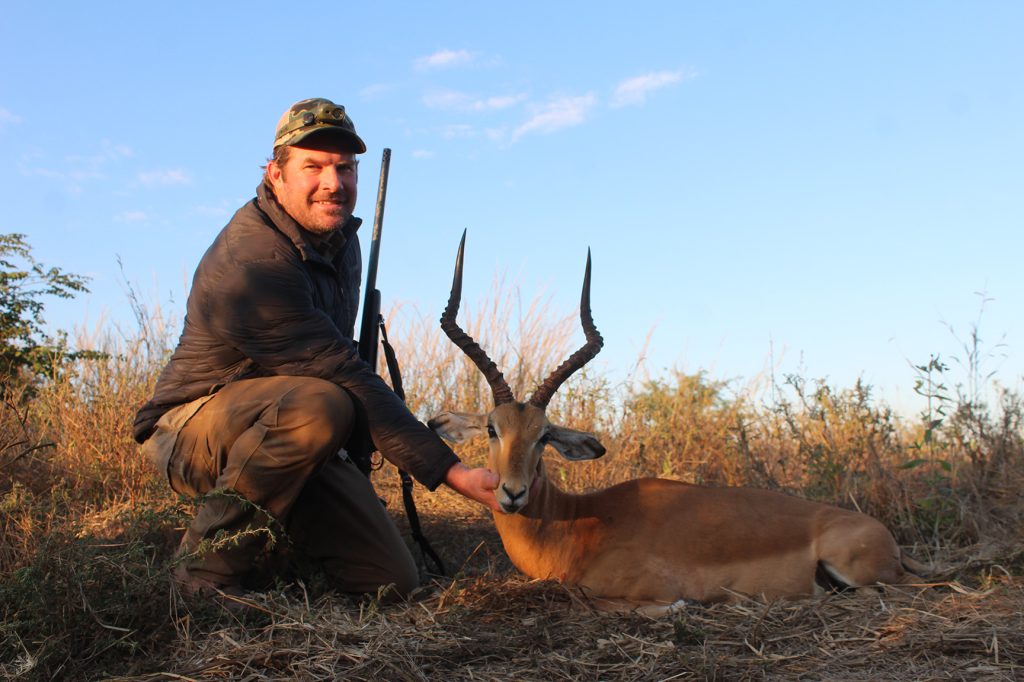
Big impalas occur throughout their range, but are never common. This fine ram was taken by Boddington’s son-in-law, Brad Jannenga, in Zambia’s Luangwa Valley.

Leave a Comment

A Precious Resource

Funding and support from safari hunters is crucial to the conservation of both black and white rhinos.

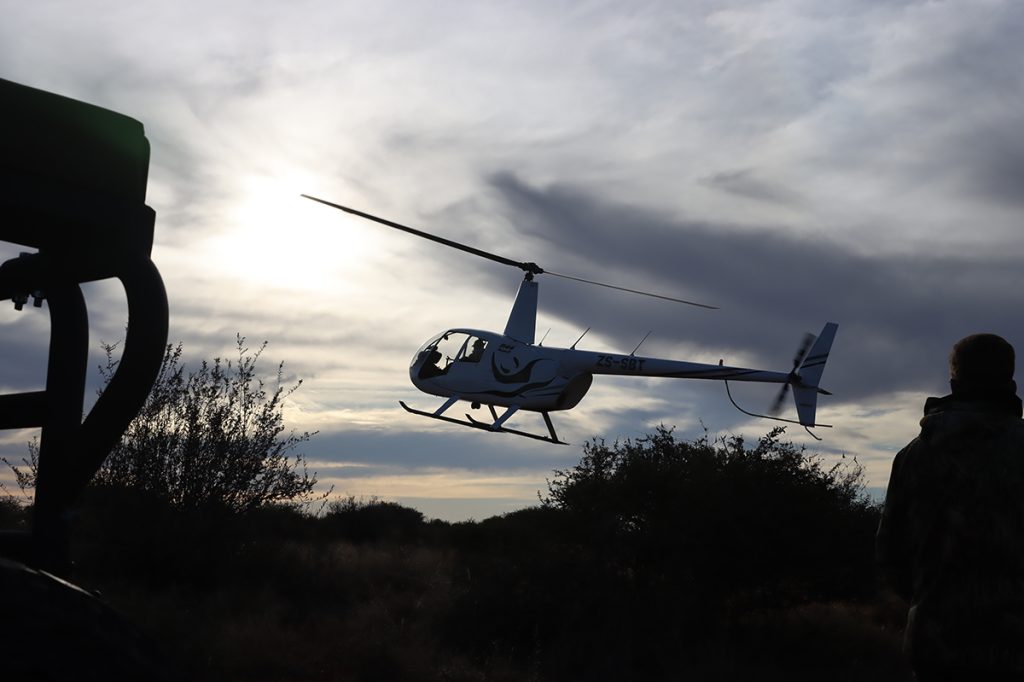
“The dart is in.” The calm voice coming through my headset was that of the pilot of the Robinson 44 helicopter, Jacobus “Koos” Bench. Koos uses his helicopter much like a West Texas cowboy uses his quarter horse for cutting out a cow from a herd, but in this case the cutting involves gently guiding a female black rhino away from the dense brush and into an open glade where sampling, marking, and medical treatment (if necessary) can occur.

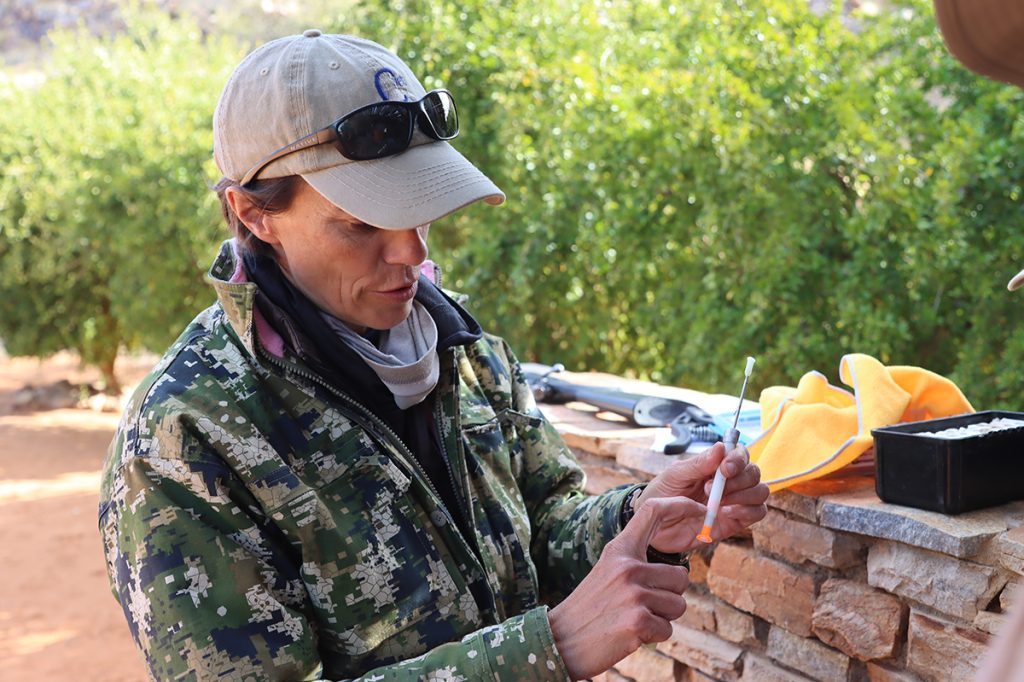
The animal the dart protruded from was a female desert black rhino (Diceros bicornis bicornis), once prevalent here in the Kalahari Desert. Pre-flight, I watched as wildlife veterinarian Charlotte Moueix loaded the dart destined for the chamber of her New Dart 389 rifle with a mixture of etorphine and azaperone using a small needle and syringe. The dart itself had a small explosive charge which would activate when the dart plunged through the two-inch-thick skin on the rhino’s rump. Charlotte explained that etorphine is 8,000 times the strength of morphine and can produce a depressed respiration in highly sensitive animals like rhinos. That is why she mixed in azaperone, a short-acting tranquilizer that causes a slight rise in respiration, counteracting some of the effect of etorphine. 

The owners of Kalahari Oryx and their hunter-clients are funding work protecting a precious resource, with the expensive services of wildlife vets like Charlotte necessary to safeguard the health of irreplaceable animals. This is particularly the case for the black rhinos found and darted this crisp winter morning in the Kalahari Desert.

Female black rhinos are not usually darted and sampled on this property. Johan Maritz, manager of Kalahari Oryx, explained, “It is impossible to purchase black rhino females, so we must let their numbers increase through births. If the veterinarian makes a mistake, or the female darted is somehow unusually sensitive to the drugs, and she dies, it will be a catastrophe for our conservation program. It would set us back by at least a decade.” My visit, and the opportunity to tell a conservation story about hunters funding rhino conservation, was the catalyst for the owners and staff of Kalahari Oryx carrying out this risky event. I wasn’t sure how I felt about that.

When the black rhino cow tipped over and began blissfully snoozing, I contemplated the amount of monetary investment she represented. Jacques Hartzenberg became a co-owner of Kalahari Oryx some twenty years ago, and the first black rhinos, three females and one male, arrived on the property in 2008. Since then, only males have been available for purchase from other properties and national park herds. Given that the most recent bull purchased cost more than $25,000 US, the owners’ investment is astronomical.

Wildlife veterinarian Charlotte Moueix points to the small explosive charge that injects the drug cocktail when the dart strikes the rhino.

“Will you make the money back?” I asked. Jacque answered, “No. If our goal is a legacy of black rhino conservation, we must be willing to shoulder some of the enormous cost. But this is also a business. For us to survive, we must have the cash flow from the black and white rhino hunting permits allowed by law. Unfortunately, though the white rhino tags have been forthcoming, due to political issues no black rhino tags have been issued since 2019. This, of course, is catastrophic for black rhino conservation. Every time we sell a black rhino permit, we purchase four more sub-adult males–not for hunting, but for increasing the meta-population on our property and countrywide. Every permit denied means four fewer males protected from poaching.”

Charlotte and her team continued their work, which included ear clipping (cutting a notch in the ear to make the rhino easy to identify from a distance), running an electronic detector over the neck and horn of the female to check for microchips, insertion of the farm’s own microchip, measuring the base circumference and length of both horns, removing hair and follicles from the tail for DNA typing, taking blood samples, and snapping photographs.

Charlotte also administered 40 ccs of antibiotic through the two inches of skin covering the animal’s rump. This was in response to an ugly discharge from the female’s vulva. I asked about the likely outcome. “She should be fine,” Charlotte said. “This antibiotic is a general spectrum drug, and this looks like a simple case of pyometra (uterine infection).”

The farm spends $30,000 to $40,000 US per month just on anti-poaching efforts, using both human and technological safeguards. If poachers make it to the Kalahari Oryx boundary, they will face scores of US Navy SEAL-trained, armed response members patrolling the property and fence lines 24/7, both on foot and in four-wheel-drive vehicles. And if poachers are unlucky enough to hear the whop-whop of the rotors of an approaching helicopter, Koos is enroute.

It may seem counterintuitive, but the vast amount of energy, sweat, and money expended on security focusses primarily on the protection of white rather than black rhinos, since there are more white rhinos on the property, thus making them the target for the poaching syndicates. The non-issuance of the black rhino hunting permits could, in the long-term, mean the loss of both types of rhinos due to lack of funds to cover the security costs. This is the almost-certain outcome from the wrong-headed narrative generated by so-called animal-rights activists.

The above inference is not hunter vitriol. National parks in South Africa cannot protect their rhinos. For example, Kruger National Park, in spite of its best efforts, lost 70 percent of their rhinos to poaching in a single decade. During that same decade, Kalahari Oryx did not lose a single rhino to poaching, and no poachers ever breached the boundary fence.

Three more female black rhinos went to sleep that cloudless morning and woke up with ear clippings and microchips inserted in their necks. Black rhinos are notoriously aggressive, and each of the four females darted that morning woke up after the administration of the antidote and immediately charged the hovering helicopter. 

Our work alongside Charlotte and the Kalahari team continued after a break for lunch. The afternoon’s task involved partially sedating three white rhino bulls, one mature and two sub-adults, for transport from the “hospital” pasture to the main property; the old bull was moved because he had previously killed two subadult bulls. Likewise, the two subadult bulls had healed from wounds incurred in fights with other bulls.

I rode along in the helicopter for the darting of the mature male, and again heard Koos’ calm “The dart is in.” He used the Robinson 44 to gently guide the animal into the path of the ground convoy, which incuded what looked like an oversized, reinforced cattle trailer. As the bull began showing signs of stupor, Koos landed and Charlotte and I jumped out, with the vet quickly pulling out the dart, throwing on an eye-covering and beginning the marking and sampling work.

Rhino study and protection relies heavily on the skills of pilots like Jacobus “Koos” Bench, who uses his Robinson 44 helicopter to push rhinos into open areas where they can be darted.

This time, when the work was done, a new stage began. What I can only refer to as a rodeo ensued. With people (including yours truly positioned with one hand gripping an ear and one gripping the front horn) lining each side of the massive, stumbling animal, we danced along guiding the 2½-ton bull toward the ramp leading into the trailer. Some might tell you it’s straightforward keeping a rhino high on drugs from trampling your feet and legs. I disagree. Fortunately, the rest of the crew knew what they were doing.

The day ended late, just as another magnificent African sunset painted the horizon. We watched as the last of the three bulls came back to his senses and trotted away. I was thankful for the opportunity to be in the presence of these great works of biological art, and for those willing to expend so much of their time, energy, and money for the effective conservation of these magnificent animals. It is not hyperbole to say that without the efforts of and funding from hunters, both black and white rhinos may disappear from the natural world.

Leave a Comment

The Beavers that Ate Massachusetts

…and other cautionary tales of ballot-box biology.

The story of ballot-box biology is a tale of two different realities, where the information presented to the public tends to be very different from what happens when the measure is approved. This divergence, the result of targeted disinformation campaigns by special-interest groups, has played out countless times across numerous states, and it puts the very future of hunting at risk nationwide. To better understand the dangers, one has only to look at the unfortunate story of Massachusetts’ burgeoning beaver population.  

Historically, Massachusetts successfully managed its beaver population through regulated harvest and reporting in the form of licensed trappers.1  These trappers paid the state for an annual trapping license and recouped their costs by selling the beaver pelts on the commercial fur market (as well as enjoying the meat, which is generally considered delicious).  With this system, state biologists could control beaver numbers by annually modifying the regulations – such as raising or lowering the harvest limit and expanding or contracting the trapping season.  This system also helped prevent human-beaver conflicts and damage, because any “problem” animals could be proactively removed during the trapping season, when the beaver young were independent, and the pelt and meat could be fully utilized.  In this way, trappers, working in conjunction with state biologists, were able to maintain the beaver population within both social tolerance levels and the biological carrying capacity of the landscape.

The system began breaking down with the onset of two problems, the first being a decreasing number of trappers. Fluctuations in the commercial fur market (spurred in part by anti-fur campaigns) made it more and more difficult for trappers to cover their expenses. The second problem arose from expanding human development in the form of suburban sprawl, which began encroaching into beaver habitat and creating greater incidents of conflict.  

A solution was needed, but not the one that was soon proposed. As the problems came to a head, in stepped a coalition of special-interest groups, including the Humane Society of the United States (HSUS). These groups started an anti-trapping campaign, advocating for the banning of “cruel” devices such as foot-hold traps and the Conibear (formerly approved by the American Humane Association).  They created a targeted television ad campaign, implying that pets and children were caught and harmed in the traps (which was untrue), as well as showing traps and trapping practices that were already illegal under Massachusetts law. It was a now-classic tactic: swaying public opinion by utilizing disinformation and pulling on emotional heartstrings.  

In this manner, enough signatures were collected to put a proposed trapping ban on the state ballot in 1996. Meanwhile, the Massachusetts Division of Fisheries and Wildlife (MassWildlife) refuted the HSUS claims, noting that wildlife scientists used padded foot-hold traps to catch, release, and tag animals without harm, and that banning such traps would greatly hamper state efforts to manage beavers, muskrats, and other animals. The special-interest groups protested this, claiming that MassWildlife was lobbying, which government officials were legally barred from doing. In response, the state ordered MassWildlife to stop, effectively silencing the very people tasked with managing its wildlife.  

Later that year, 64 percent of voters approved the ballot measure, meaning that now only “humane” cage-style live traps could be used.  The few remaining trappers did not want to invest in the far more expensive and heavy live traps, so they quit.2 Beaver and muskrat populations exploded, as did related damage, threatening infrastructure such as electric and communication towers as well as community water supplies.  Damage complaints increased by 90 percent, and as most of these complaints required site visits, MassWildlife staff were forced to shift their focus and resources away from wildlife conservation priorities and instead spend time and money resolving human/beaver conflicts.3  

The special-interest groups downplayed this development, saying that beaver populations would stabilize over time based on available habitat and food.4  Unfortunately, housing developments continued to expand along with increasing beaver populations, bringing more people into more conflict with beavers as they encroached on their habitat.  

This demonstrated the important reality that the social carrying capacity of a landscape (meaning the tolerance of people for wildlife) is often much lower than the biological carrying capacity (how many beavers can live in the existing habitat).  As conflicts kept rising, the beaver was turned from a beloved and valued creature into one viewed as a public nuisance.5 To quote Bill Davis, a spokesman for MassWildlife, “The majority of the voting public was very well intentioned but very misinformed.  I think this is what happens when you take a wildlife management issue and make it a political one.”6

The irony was that few, if any, of the voters in favor of the anti-trapping ballot measure truly understood what it entailed or how far-reaching its consequences would be, and here was where the two realities diverged.  On the one hand, the message of the anti-trapping campaign was, essentially: Vote for this initiative and animals won’t die. However, the reality was that using live traps didn’t change the outcome – the animals trapped by wildlife officers were still killed, since relocating wild animals in Massachusetts is illegal (and for good cause, namely related to disease).7

With almost no natural predators on the landscape outside of humans, beaver populations still needed to be reduced to maintain proper carrying capacities on the land.  The difference was that now it mostly occurred out of the public eye in the form of nuisance/damage permit removals, in numbers higher than trappers had ever formerly removed.8 And instead of the animals being utilized, they generally just ended up in the landfill.  Instead of helping to fund state wildlife and habitat conservation through the sale of trapping permits, beaver management now consumed taxpayer dollars and funded private wildlife nuisance control businesses instead. The public perception of beavers changed, and as a result, tolerances had drastically decreased.  Ballot-box biology had won, but at what price to wildlife?

After this success in Massachusetts, the special-interest groups realized they had an effective blueprint to utilize across every state in the nation, and so they did, playing out the same emotional disinformation campaigns in Colorado, New Mexico, California, and even in my own Washington State, where in November of 2000, Initiative 713 (I-713) was passed by 55 percent of the voters.  Yet again, the text of the legislation proposed did not match the regulations eventually passed.  The original voter’s pamphlet described I-713 as protecting people, domestic pets, and wildlife from “the dangers of cruel and indiscriminate steel-jawed leg-hold traps and poisons, and to encourage the use of humane methods of trapping.”9  

The initiative made it sound as though all poisons would be banned, yet the truth was that it only actually prohibited two: sodium fluoroacetate and sodium cyanide, neither of which are used in many common pest control poisons.  While admitting that poisons “do not discriminate, victimizing any creature that stumbles upon them including eagles, cats, and dogs…For every ‘target’ animal killed…studies indicate there are up to ten ‘non-target’ victims,”10 I-713 managed the special distinction of making such items as mole traps illegal, while still allowing homeowners to kill them with poisons.  

Compared to the more targeted (and many would argue, more humane) traps, killing animals with poisons has implications that ripple across food webs. Any predators that may find and eat the poisoned animal are likely to die– as the supporters of the ballot initiative had already admitted.  Furthermore, by banning the use of leg-hold traps, I-713 impeded the ability of state officials to manage wildlife; for example, they could no longer trap the river otters feasting on salmon smolts at the state’s hatcheries.11 As with Massachusetts, the reality of what the voting public thought they were passing versus what the legislation actually entailed were very different. 

In recent years, ballot-box biology has moved beyond the banning of traps and poisons into issues such as the reintroduction of wildlife, bypassing the scientific data of state biologists and leaving decisions in the hands of well-intentioned but uninformed voters. The prime example is Colorado, where in 2020, voters approved Proposition 114 to reintroduce wolves west of the Continental Divide.  The issue of wolf reintroduction had been previously studied at length by Colorado Parks & Wildlife (CPW) biologists, and had been deemed not to be a good idea for several reasons, including the potentially devastating effects gray wolves could have on a genetically fragile population of reintroduced Mexican wolves to the south.12  As in Massachusetts, officials from CPW were prohibited by state law from even commenting on Proposition 114, making them “effectively muzzled and rendered irrelevant in the arena they were created to manage.”13  

The focus of Proposition 114’s pro-reintroduction campaign had little to do with science and the overwhelmingly technical logistics involved with putting wolves back on the landscape – as well as the resulting impacts to rural residents in the proposed reintroduction areas – and far more to do with urban voters’ perceived intrinsic value of wolves on the landscape.  The proposition squeaked by, with 50.91 percent of voters approving it.14

Fast-forward to 2023, and Colorado has yet another example of ballot-box biology looming on the horizon. An animal-rights group called Cats Aren’t Trophies (CATS), backed by other special-interest groups such as the Humane Society of Boulder Valley, Center for Biological Diversity, and the Mountain Lion Foundation, has created Initiative 91 (I-91), which seeks to ban the hunting of mountain lions, bobcats, and lynx statewide.  The initiative specifically states that “any trophy hunting of mountain lions, bobcats, or lynx is inhumane,” further adding that “trophy hunting is practiced primarily for the display of an animal’s head, fur, or other body parts, rather than for utilization of the meat.”15   With 64 percent of the nation already saying that they disapprove of “trophy” hunting (according to the latest survey by the Outdoor Stewards of Conservation Foundation16), I-91’s repeated use of the term “trophy” to describe all forms of hunting is willfully misleading.  

A press release put out by CATS stated, “Colorado mountain lions and bobcats are killed primarily so their body parts can be used as trophies, or their fur sold to foreign markets. Trophy hunters do not kill mountain lions and bobcats for their meat and research demonstrates that killing mountain lions and bobcats for trophies and fur serves no legitimate management purpose.”17  

The blatant inaccuracy of this statement can be shown by two of Colorado’s game laws: C.R.S.33-6-117 and C.R.S. 33-6-119, which require hunters to recover all meat from game animals and process it for consumption. (Editor’s note: Mountain lion meat is known to be delicious, described by many hunters as tasting like lean pork.) As to hunting (or trapping) not being a legitimate management device, we have only to look at the unfortunate example of Massachusetts to see how inaccurate that claim is.  Harvest management is an important, and often necessary, tool to help control wildlife populations and walk the delicate balance between the social carrying capacity of a landscape and its biological one.

The same special-interest group tactics are playing out across the nation, using the same blueprint of emotional disinformation campaigns to sway public sentiment.  Recently, these attacks have grown far bolder, endangering the very future of hunting and science-based wildlife management.  As a hunting community, it’s time to realize that these are no longer state-specific conflicts, but rather an eroding of the very fabric of the North American Model of Wildlife Conservation.  

Hunters need to band together across state lines and be proactive in fighting these campaigns, and part of that may include rethinking how the very nature of hunting is portrayed.  As urbanization increases, and people’s connection to their food grows ever more distant from reality (and ever more tied to what they see on social media or TV18), the fight to save hunting is, in part, a fight for its social acceptance.  Hunters may not be able to sway the fringe extremist viewpoints, but they do need to educate the moderate many.  

Hunting is not only a human inheritance and a cherished mode of cultural existence, but also a vital tool for wildlife management and conservation funding.  It is a way for many people to reconnect to the land and the animals that feed them, a reminder of our place in the food chain and the realities of eating – something that grows ever more difficult to attain in this age of factory farming.  

When ballot-box biology wins, it’s not just a loss for hunting, but a loss for wildlife, too. As Chris Dorsey, a biologist and conservation journalist, so aptly phrased it, “When it comes to managing wildlife through the ballot box, it’s all about a public relations battle where facts often become the endangered species. Motivate the electorate through emotionally charged messaging – wildlife experts and science be damned – and you’re apt to have your way…for better or worse.”19  

More often than not, it’s for worse.

Sources Cited:

1, 8 The Massachusetts Experience. Vermont Fish & Wildlife Department, https://vtfishandwildlife.com/sites/fishandwildlife/files/documents/Hunt/trapping/beaver%20inforgraphic.pdf. Assessed 24 November 2023. 

2, 4, 7 Sterba, Jim. Nature Wars. New York, Broadway Books, 2012.

3Association of Fish and Wildlife Agencies Furbearer Conservation Working Group. The Implication of a Statewide Ban on Trapping: The Massachusetts Experience.  The Association of Fish & Wildlife Agencies, 2020, https://www.fishwildlife.org/application/files/8016/4460/6980/Conservation-Brief-Beaver-FINAL.pdf.  Assessed 15 November 2023.

Jonker, Sandra, Muth, R., Organ, J., Zwick, R., Siemer, W. “Experiences with Beaver Damage and Attitudes of Massachusetts Residents Toward Beaver.” Wildlife Society Bulletin, vol. 34, issue 4, 2006, pp. 1009-1012, https://onlinelibrary.wiley.com/doi/abs/10.2193/0091-7648%282006%2934%5B1009%3AEWBDAA%5D2.0.CO%3B2. Assessed 15 November 2023.   

Osnos, Evan.  “Beaver Laws Trap Towns.” Chicago Tribunehttps://www.chicagotribune.com/news/ct-xpm-2001-08-06-0108060137-story.html. Assessed 15 November 2023.

9, 10 State of Washington. Voters Pamphlet. Office of the Secretary of State, 2000, https://www2.sos.wa.gov/_assets/elections/voters’%20pamphlet%202000.pdf. Assessed 21 November 2023.

11 Queary, Paul. “State’s Trapping Ban Unleashes Nuisance Wildlife.” Seattle PI, 5 October 2001, https://www.seattlepi.com/local/article/State-s-trapping-ban-unleashes-nuisance-wildlife-1067938.php. Assessed 15 November 2023.

12 Odell, Eric, Heffelfinger, J., Rosenstock, S., Bishop, C., Liley, S., González-Bernal, A., Velasco, J., Martínez-Meyer, E., “Perils of Recovering the Mexican Wolf Outside of its Historic Range.” Biological Conservation, vol. 220, April 2018, pp. 290-298, https://www.sciencedirect.com/science/article/pii/S0006320717312776?via%3Dihub. Assessed 15 November 2023.

13 Dorsey, Chris. “Ballot Box Biology’s Hostile Takeover of State Wildlife Agencies.” Forbeshttps://www.forbes.com/sites/chrisdorsey/2023/10/05/ballot-box-biologys-hostile-takeover-of-state-wildlife-agencies/?sh=10c8f7df5c4c. Assessed 15 November 2023.

14, 18 Niemiec, Rebecca, Berl, R., Gonzalez, M., Teel, T., Salerno, J., Breck, S., Camara, C., Collins, M., Schultz, C., Hoag, D., Crooks, K., “Rapid Changes in Public Perception Toward a Conservation Initiative.” Conservation Science and Practice, vol. 4, issue 4, April 2022, e12632, https://conbio.onlinelibrary.wiley.com/doi/10.1111/csp2.12632. Assessed 15 November 2023.

15 “2023-2024 #91 – Prohibit Trophy Hunting.” Colorado Secretary of State. https://leg.colorado.gov/sites/default/files/initiatives/2023-2024%2520%252391.pdf. Assessed 16 November 2023.

16 Outdoor Stewards of Conservation Foundation.  Americans’ Attitudes Towards Legal, Regulated Fishing, Target/Sport Shooting, Hunting, and Trapping. Responsive Management, June 2023, https://www.outdoorstewards.org/wp-content/uploads/2023/06/Americans-Attitudes-Survey-Report-Final-June-2023-FULL-REPORT.pdf. Assessed 14 November 2023.  

17 Cats Aren’t Trophieshttps://catsarenttrophies.org/. Assessed 15 November 2023.

19 Dorsey, Chris. “Wolf Wars Move to the Ballot Box.” Forbeshttps://www.forbes.com/sites/chrisdorsey/2020/08/05/wolf-wars-move-to-the-ballot-box/?sh=35fbd51842a6. Assessed 20 November 2023. 

Leave a Comment

Lumpers and Splitters

Two schools of thought in the world of taxonomy (and record books).

Photo above: The roan antelope is a larger-bodied, lighter-colored, and shorter-horned cousin to the sable antelope. We group them into regional races across Africa. Body and horn size differ a bit, but they are visually indistinguishable. This is a Southern roan, photographed in South Africa.

Taxonomy is the science of organizing and naming living creatures. The modern system goes back to Swedish botanist Carl Linnaeus’s Systema Naturae, published in 1735, dividing living organisms into domain, kingdom, phylum, class, order, family, genus, and species. The upper classifications are usually clear, so scientific discussion usually centers on the last two, genus and species, such as Tragelaphus strepsiceros, genus and species for the greater kudu.

We (including me) often refer to this scientific name as the “Latin” name. This is erroneous because most of the roots are Greek. This goes clear back to Aristotle, who made the first recorded effort to systematically classify living things. In the case of the kudu, Tragelaphus stems from Greek for goat-deer; strepciseros from Greek for twist-horn.

In our little world, we usually add a final classification for subspecies or races which, as we’ll see, is a whole lot squishier and often sparks disagreement among both scientists and laymen. Typically, the “type” specimen, from which a species was identified, repeats the species name, as in T. s. strepciseros, which we know as the Southern greater kudu. Other subspecies, if any, are often named for the person who identified them, or brought them to western science. As in: T. s. cottoni, the Western greater kudu, after hunter and explorer Percy Powell-Cotton; or Odocoileus virginianus couesi, the Coues whitetail, after Army surgeon and ornithologist Elliott Coues. Since subspecies are often regional, location is also commonly used, as in O. v. texanus, the Texas whitetail, which overlaps into Oklahoma and Mexico.

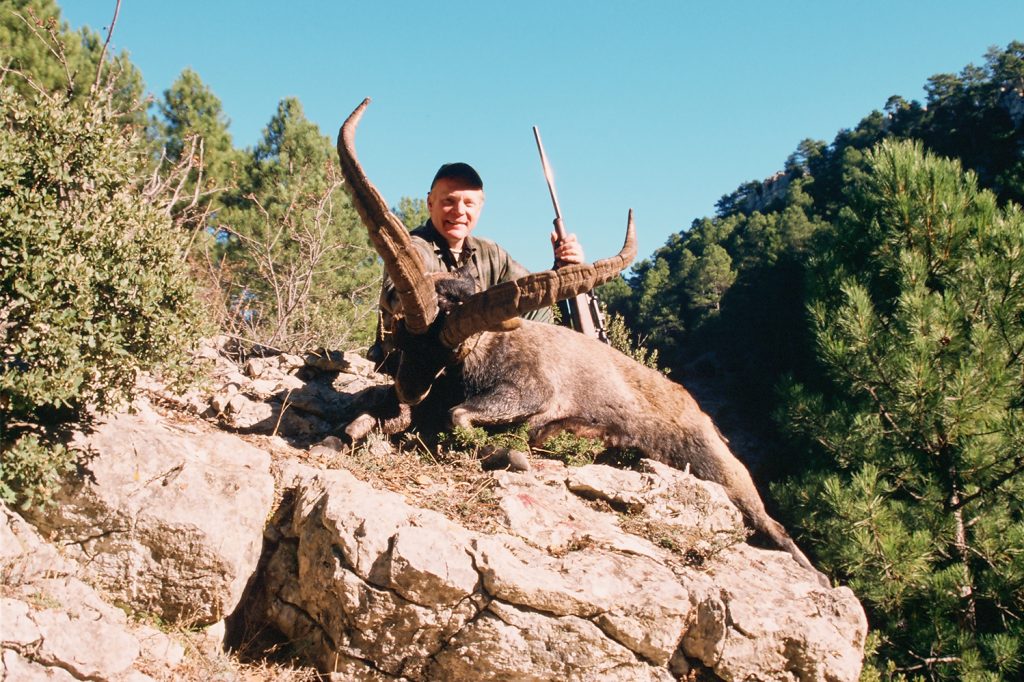
Mountain hunters are splitters, identifying four different Spanish ibexes. There are regional differences in size, but not all ibexes show them. This Beceite ibex from the northeast shows almost no visual difference from the Gredos ibex.

There are two primary schools of thought in animal classification: the “lumpers” and the “splitters.” The lumpers try to reduce the number of subspecies, while the splitters wish to create as many as possible. The splitters really got going in the late nineteenth and early twentieth centuries during the last gasp of exploration, when every adventurer wanted plants, birds, or animals named for them. By 1900, the world was running out of new, previously unknown species, but there were a few big winners. The mountain nyala, Tragelaphus buxtoni, unique to Ethiopia’s highlands, was first described by Richard Lydekker in 1910, and named after Major Ivor Buxton, who brought the first specimen to Europe in 1908. The giant forest hog, Hylochoerus meinertzhageni, is named after British officer Richard Meinertzhagen. Stationed in East Africa, he shipped the first known specimen to England in 1904.

These two were Africa’s last large mammals to be identified, and neither has any known subspecies. Others weren’t as fortunate as Buxton and Meinertzhagen; many of the self-named subspecies or races “identified” by latter-day explorers are no longer considered valid or are disputed by modern science. Powell-Cotton also got lucky. “His” Western greater kudu, smaller than the rest, is the only greater kudu easily distinguished from the others.

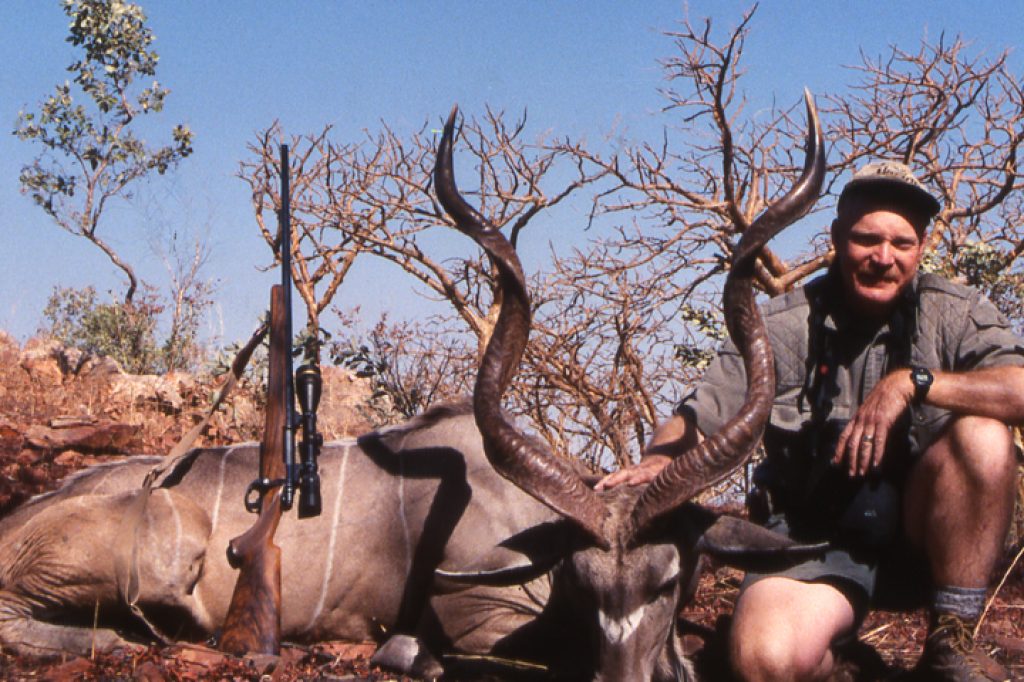
Of the several greater kudus agreed upon by science, and our hunters’ regional groupings, only the Western greater kudu is visually different, this only because of its much smaller size. This Western greater kudu was taken in Chad.

Among we hunters, splitters hold sway. In our record books, we have categories for vast numbers of races and subspecies. Many are scientifically valid, and many are regional groupings. Traditional in our little world, these last usually—not always—make sense because of significant antler, horn, or body size differences from one area to another. Inevitably, as we split animals out, and try to recognize the various continents, our splitting has created a lot of look-alikes and duplication. None of this is good or bad; it just is, although examined objectively, some of our splitting seems excessive. I find it unlikely that a country the size of Spain holds four unique ibexes. Or that a region even as huge as Siberia holds a half-dozen unique snow sheep. Unlikely, even, that the various mountain ranges of the European continent actually hold as many “different” types of chamois as we recognize.

Then we have numerous animals that span continental lines, either naturally or by human intervention. There’s just one European fallow deer, Dama dama. People started moving fallow deer around at least 2000 years ago, and they are now present on all continents except Antarctica. Safari Club International has six “by continent” categories for the same European fallow deer. Hunting awards like the Weatherby Award use ballots organized by continents, including separate credit for trans-continental species. You can’t win that one without look-alikes and duplication.

Between 1803 and 1913, six subspecies of roan antelope (Hippotragus equinus) were identified. There are slight differences in horn and body size, and possibly color. With roan, our record books don’t necessarily follow science, rather establishing five regional record book categories. Put all of them on the wall, and I defy anyone to tell which is which. (It’s currently impossible to put them all on the wall because the Sudan roan hasn’t been hunted since 1983.) Similarly, science identified a dozen races of waterbuck (Kobus ellipsiprymnus). Unusually, we hunters have used more restraint, typically recognizing just one common waterbuck (with the white rump ring); and several regional groupings of defassa waterbuck (absent the ring). There are differences in potential size and perhaps on-average coloration. Again, put shoulder mounts of all the waterbucks on a wall side by side, and they defy accurate identification.

Although recent studies have suggested splitting reindeer and caribou into six species worldwide, they are typically lumped into just one, classified by Linnaeus in 1758 as Rangifer tarandus, just one species of caribou and reindeer that circumnavigate the globe just below the polar region. Disagreement on races and subspecies continues, with hunters traditionally separating caribou and reindeer into regional groupings. Boone and Crockett’s Records of North American Big Game isn’t exactly a lumper, but it often does less splitting than SCI or Rowland Ward. B&C identifies five regional caribou groupings: woodland, Quebec-Labrador, Central Canada barren ground, mountain, and barren ground. SCI adds the Arctic Island caribou, and of course has categories for Asian, European, and introduced caribou/reindeer.

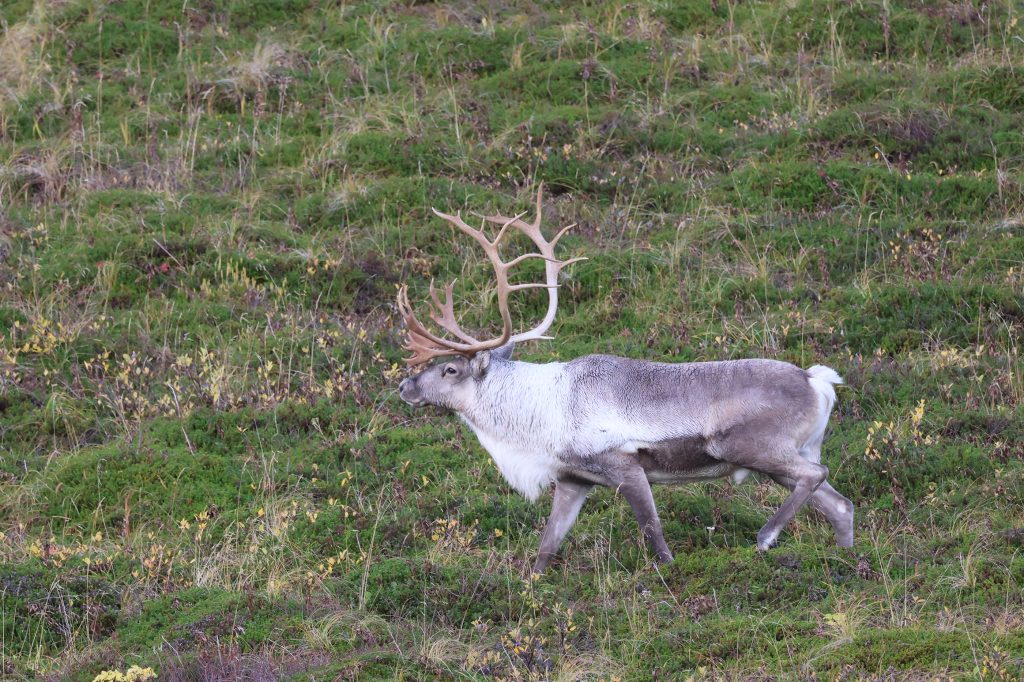
This happens to be a medium-sized barren ground caribou, R. t. granti. With a bull this size, you’d have to know where you were to know which caribou you’re looking at.

There are regional trends in size and antler conformation. The Arctic Island caribou is smaller and paler. Old World animals look a wee bit different. However, if you put good to excellent specimens of the five primary North American caribou on the wall next to each other, few hunters would correctly identify all of them. With northern Quebec currently closed, it’s not possible to hunt all the different types of caribou.

Also, because Quebec-Labrador caribou are not available, it is no longer possible to hunt all of the traditionally recognized varieties of North American big game. I note that “substitutions” are now allowed by Grand Slam/Ovis for their “North American 29” and Rex Baker “Super 40” North American awards. Similarly, for their ascending award levels, SCI typically requires a certain number of animals within categories, but not necessarily all of them.

This is not new. In the mid-1950s, New York ad man Grancel Fitz was the first person to take all known varieties of North American big game. However, his list wasn’t the same as today’s. In Fitz’s day—and when I was young—jaguars could be hunted in Mexico, so all organizations considered the jaguar native North American (as well as South American) big game. Mexico closed jaguar hunting fifty years ago, so decades have passed since we considered the jaguar a game animal. In the same time frame, the North American list has grown: Quebec-Labrador and Central Canada barren ground caribou weren’t separate categories in Fitz’s day. Nor were Roosevelt or tule elk, Sitka blacktail, and more.

Grancel Fitz, shown with a nice mule deer, was the first person to take all varieties of North American big game. Fitz worked off a different “list” than we have today, with some of his animals no longer hunted, and other subspecies and categories added.

The splitters haven’t won completely. Although some are disputed by biologists, there are some three dozen subspecies of whitetail deer, many with overlapping or indistinct ranges. Nobody tries to categorize or keep records on all of them, thank goodness. To this day, B&C separates out only the Coues whitetail, this based on a nineteenth-century taxonomic mistake when Elliott Coues’s deer was initially considered a full species, rather than one of many races of the “Virginia deer.” 

Of all the record-keeping organizations, SCI has been the most aggressive in adding “new” categories. This has worked well for them, giving recognition to and placing value on obscure animals. They have not attempted the near-impossible task of splitting out the many whitetail races, instead grouping whitetails into regional categories: Coues, Texas, Midwest, Southern, Northeastern, Northwestern, Tropical. I authored this system when the SCI record book was new, and it still seems to make some semblance of sense. Since then, SCI split Columbian whitetail when hunting for it reopened. More recently, they’ve split Mexico’s numerous whitetail (and mule deer) races into regional groupings, which is a great boon for hunting and conservation down there.

SCI began the practice of separating the numerous whitetail races into regional groupings. Definitely not scientific, but makes sense for we hunters. This is a big-bodied northwestern whitetail from Saskatchewan.

It doesn’t really matter whether you’re a lumper or a splitter, or whose list or which authority you prefer to follow. As Weatherby winner Rex Baker likes to say: “We don’t make the rules, we just go hunting.” None of us must go if we don’t want to. Options are good; the more options the better. I’ve always used the record books and various lists to guide my plans and dreams. Today my bucket list is pretty short, but I’ve always been more of a splitter than a lumper. 

Leave a Comment

No Guarantees

On a real hunt, the outcome is never assured.

Photo above: This was home for two weeks during the 2023 Alaska Peninsula brown bear season. Boddington saw a big bear three times, but came home empty-handed.

I just got back from a wet, windy brown bear hunt on the Alaskan Peninsula. I saw a good bear in the 10-foot class three times. There’s no sprinting in muskeg, and we were glassing him from a distance. Every time we got to the last place we’d seen him, he’d vanished, swallowed up in the big country. End result: No bear.

As my friend Conrad Evarts described me on my seventieth birthday, I’m “pathologically optimistic…and dangerously masochistic.” I don’t mind tough hunts, and I always go in expecting success. If success weren’t anticipated, I don’t know how I could put myself through this stuff. Great expectations aside, the reality of hunting is we can’t always make things happen.

Even when the odds are terrible, you have to try. Here, Boddington is hunting in one of Montana’s “unlimited” bighorn zones. Success rates are less than 10 percent, but there are sheep there, and some hunters are successful.

I hate to get beat, and I hate it even more on a difficult and costly hunt like an expedition for an Alaskan brown bear. To some extent, it’s mind over matter: The country doesn’t mind, and we don’t matter.

On another level, it’s the very unpredictability of hunting that makes it so attractive. On any given outing, we don’t know what’s going to happen. For sure, we can’t control weather and game movement. So, we make the best plans, trying to hit the right places at the best times. We bring the right gear, get in the best shape possible, and spend plenty of time at the range so we can take advantage of an opportunity. Even so, sometimes it’s just not going to happen. It’s a bitter pill to swallow, but if you can’t choke it down, you’re in the wrong game.

Random luck is a factor. You might hunt as hard as you can, but sometimes the right animal can’t be found or doesn’t present itself for a shot. Some hunters seem luckier than others, but this comes and goes. When I was a young hunter, I seemed charmed. Wherever I went, I filled my tag. My Dad called me “Lucky Pierre.”

Sooner or later, even the luckiest (and best) hunter gets a comeuppance. Mine was on my first safari, in Kenya. The animal I wanted most was a lion. I’d read Hemingway and Ruark. I figured if you paid your money and hunted hard, you’d get your lion. By the mid-1970s, chances weren’t nearly as good as I thought, but I didn’t know that. I passed a couple of young males on about the eighteenth day. The PH and I were both proud of ourselves that we passed. The twentieth and next-to-last evening, we heard what sounded like a good lion roaring in Tsavo Park. He didn’t come in, and that was that. The safari ended with no lion. I was all in on that hunt, with my budget stretched thin. It was a bitter pill to swallow, and a good lesson.

I’ve been pretty lucky over the last forty-five years. Still optimistic, I always expect to take the animal I’m after. It doesn’t always happen, in part because I’m not the same hunter I was back then. I’m pickier now, and the more selective we are, the worse our chances. 

Everybody knows Arizona holds some of the biggest Rocky Mountain elk, and the odds for drawing are poor, especially for nonresidents. I’ve had three Arizona elk tags and I never got a monster wapiti. Once, if I must admit it, it was because I missed. Hunt enough, and that’s going to happen. When it does, the game isn’t obligated to offer a second chance.

Those Arizona elk hunts were golden opportunities, and I was hoping for greatness…but there were never any guarantees. When you swing for the fences, it must be accepted that you might strike out. Mind you, I don’t always look for the biggest and best. I’m usually happy with a nice, representative animal. In part, this is because I’m a gunwriter, always on a limited budget, and I want to get a good story. Reasonable expectations greatly increase the odds.

Overall, Boddington’s success on elk has been pretty good. In part, this is because he’s usually been happy with bulls like this Colorado five-by-five. So far, his hunts for monster bulls have come up empty.

Sometimes I break from that, such as on those Arizona elk hunts, but when you pass a good animal looking for a huge one, you are taking a chance. I shot a couple of OK grizzlies when I was young, but later I decided I wanted a big grizzly. Dave Leonard, who hunts the Noatak drainage north of Kotzebue, Alaska, has big grizzlies in his area. The first time I went, it was too early; the bears were just coming out of their dens. The second time, it was too late. There was an early spring, with snowmelt coming fast, and we had to get out. Despite poor conditions, we passed OK bears on both hunts, but I didn’t see the bear I wanted. Fair enough. I tried one more time and hit it right. The third time was the charm, and I took a wonderful grizzly on a moose kill.

Boddington and Dave Leonard with a fine grizzly from northwest Alaska. Success isn’t high, but persistence counts. This was Boddington’s third attempt for a big Arctic grizzly.

Persistence counts. So does planning, but even with the best planning, there are no promises. It’s just part of the deal. Some animals are more difficult than others, and so are some places. In the entire world of big-game hunting, North America offers some of the most difficult hunting, with some of the worst odds for success. Our North American Model of wildlife management dictates that wildlife is a public trust resource, jointly owned by all of us. This is a huge success story and I love it, but it means that our resources are shared among the hunting public. And it means the harvest is often limited by short seasons, which may not be at the ideal time.

Elsewhere in the world, wildlife is often privatized, or owned by the government. As visiting hunters, we are paying for the privilege and funding management, and there are often fewer hunters in the field. This makes hunting on other continents, on average, far more successful than in Canada and the United States. 

Most of my hunts in Europe, Asia, South Pacific, and South America have been successful for the primary game sought. In North America, some of our greatest hunts offer less than 50 percent odds. These include most hunts in Alaska and Canada for elk, moose, the big bears, and sheep. I’ve been generally lucky on sheep and elk, not so much on moose. Newfoundland has Canada’s densest moose population. It took me four tries to get a nice Newfie moose, and in the last decade I’ve been 0 for 3 on western Canada moose.

Research and planning help, but there are still no guarantees. Deal with the possibility of failure, and be certain you’re prepared. It’s easy to say that you’re there for the experience and the memories. Win, lose, or draw, these you will have, but it’s tough when you head home empty-handed, having expended much effort and treasure with nothing tangible to show.

A fine eastern Canada moose from Newfoundland. Newfoundland has North America’s densest moose population; still, it took Boddington four tries to get this bull.

When possible, I like to hedge my bets with consolation prizes. This means combination hunts. Africa is wonderful for this, with multiple species almost always available.  You may not take your primary animal, especially if it is one of the difficult prizes. I didn’t get a lion on that first safari. As consolation, I took most of the East African antelopes, plus the memories of hunting in soon-to-close Kenya. To be honest, it was some years before I appreciated these as much as I do today. I also didn’t get a bongo on my first try, nor a Derby eland on my first hunt for them, and I’ve been beaten by leopards more times than I’ve won.

In Kenya on his first safari, Boddington failed to take the lion he dreamed of. Consolation prizes included most of the prized East African antelopes, including this lesser kudu.

The blow of failure is softened by success on other species. That said, I cannot argue against the tactic of concentrating on the game you want most, ignoring the rest. Just understand you are going for broke. Thirty years ago, I did that on my first giant eland hunt, passing opportunities for buffalo, kob, waterbuck, and more. I shot nothing at all on that safari, the only time that has happened in my African experience. Since then, I haven’t played an African hunt quite that way!

Armenia was my only unsuccessful Asian hunt. It’s a beautiful country, with friendly people, but I was on a spring hunt after a winter of record snows. The Armenian sheep were across the border in Iran behind snow-blocked passes, and the bears were still in their dens. There were plenty of Bezoar goats around, and they were on license. Hoping for a break, I declined. I don’t regret it because I already had a good Bezoar from Turkey. If I didn’t already have one, I’d have taken the consolation prize!

Spring in Armenia after a record snowfall. The sheep were somewhere beyond the snow-choked passes, the bears not out of their dens. Good hunt, tough hunt, but Boddington’s only Asian hunt that was completely unsuccessful.

I talked to a Kansas neighbor just back from his first out-of-state hunt. He went to New Mexico for elk and pronghorn. He didn’t get an elk, which is hardly uncommon. But he was delighted with his excellent pronghorn, a fine consolation prize.

Combinations aren’t always possible. On my unsuccessful brown bear hunt, we had several excellent caribou bulls pass by our spike camp, but the season was closed. We took some good photos, watched ptarmigan and porcupines, and hoped for a break that didn’t come our way. All you can do is make the most of it. I’m older now, and I understand that’s the way it goes sometimes. I hope I can give it another try.

Leave a Comment

The Pangolin Project

The hunting community extends a helping hand to one of the world’s most endangered animals.

Photo above: Mike Arnold spends some quality time with a rescued pangolin prior to its release into the wilds of Mozambique.

The tongue of the prehistoric-looking creature flicked in and out, reminding me of a snake. But this tongue belonged to one of the rarest creatures on the globe–the pangolin. Its name derives from the Malay pengguling, referring to something that rolls up. Pangolins defend themselves from predators such as leopards, lions, and hyenas using their thick, sharp-edged scales and the ability to roll into a ball, with the scales on the outside. This one in Mozambique was a Temminck’s pangolin (Smutsia temminckii), also known as a scaly anteater.

Reaching a maximum height of 15 inches, and tipping the scales at only 30 pounds, the Temminck’s pangolin doesn’t enthrall by being large. Its star power rests in its interlocking scales, long-recurved claws used for tearing apart the ground in search of ants and termites, and the previously mentioned tongue. Of all its physical attributes, the pangolin’s tongue takes a back seat only to its scales in the rank of interesting adaptations. We watched as it foraged, continually projecting its sticky tongue to lap up ants uncovered in its excavations. If an adult Temminck’s pangolin fully extended this appendage-–the base is connected near the animal’s pelvis-– the length, around 15 inches, would exceed the length of its body.

Pangolins appeared, according to the fossil record, approximately 65 million years ago. They were once distributed throughout Asia, Southeast Asia, the Indian subcontinent, and Africa. Today, however, they are among the world’s most endangered and trafficked animals. Pangolin poachers capture, kill, and cut up the animals for their scales and meat. With their meat considered an epicurean’s delight and their scales coveted by witch doctors, proponents of Traditional Chinese Medicine, and jewelers, more than 10,000,000 pangolins have disappeared in the past decade.

Zambeze Delta Safaris (ZDS), in partnership with local Sena villagers, is beginning a major restoration effort centered around the pangolin. The reintroduction thus far has restored a handful of animals to nature; animals rescued from poachers by the Mozambique equivalent of the U.S. Fish and Wildlife Service. Once confiscated, pangolins are airlifted by helicopter into the ZDS hunting concession, Mozambique’s Coutada 11. Upon arrival, the resident scientists, Willem Briers-Louw and Tamar Kendon immediately launch the rehabilitation phase, with the animals often arriving dehydrated and underfed by their passage through the poachers’ hands. Once the rehabilitation ends, the scientists equip each of the scaly creatures with a small version of the satellite-tracking devices used for lions, leopards, cheetahs, and elephants. In the pangolins’ case, the trackers (tags) attach to the scales at the base of each animal’s tail.

A newly released pangolin begins foraging as he heads into his new home.

ZDS’s Mark Haldane and his wife, Laurette, are self-funding the initial efforts. When asked about the money needed for the pangolin rescue/reintroduction to continue, Mark said, “We’ll start the fundraising soon because with the successful relocations so far, we know it works.”

The pangolin I was watching had just been released by Tamar and Willem into the landscape. As we walked back to the Land Cruiser, I couldn’t help but reflect that we were witnesses to yet another seriously endangered species wandering around in a restored, natural environment, all because hunting outfitters and their clients make long-term investments in money, time, and energy. Non-hunters sometimes assume hunters’ interest in nature always involves the crack of a rifle shot. The Coutada 11 Pangolin Project belies that assumption.

Leave a Comment

The Toughest Bird

Which upland game bird is the most challenging to hunt… and to hit?

Photo above: Lori Thomas is about to drop a Mearns quail over a point by her late German wire-haired pointer, Maggie. Tough shots in dense cover are typical for this species. Photo by Don & Lori Thomas

Superlatives can be tricky, especially when trying to name the best of anything, but we just can’t resist making the attempt. Greatest novel of the twentieth century? Best shotgun of all time?  Babe Ruth or Wille Mays? No matter what the subject, two points are certain: Objectivity will be impossible, and controversy will be inevitable. If you don’t believe me, try telling a diehard Michael Jordan fan that LeBron is the best who ever played the game.

Here’s a question I have frequently debated over dinner with friends after a long day in the field. What is the most challenging upland gamebird in the country? I believe there are two components to the question: the demands of the terrain and the difficulty of hitting the bird on the wing. At the risk of inciting just the kind of controversy mentioned earlier, I’ll share some thoughts, if only to invite discussion.

There are certainly plenty of candidates to choose from. By my rough count, we are home to nearly two dozen varieties of upland game, including non-gallinaceous species like woodcock and snipe but excluding members of the dove family and outliers like the chachalaca and Himalayan snow cock. Some have a regional distribution, leaving them unfamiliar to many readers, but all are legal game somewhere. In other words, it’s a target-rich environment, no pun intended.

While these are purely personal opinions, some can be dropped from consideration at the outset. Turning first to our dozen grouse species, spruce grouse are easy to cross off the list because of their naivety, given that you can kill one with a stick (and I have). Ponderous on the wing and residents of flat, open terrain, sage grouse are so easy that I haven’t hunted them for years, never mind their shaky conservation status. Willow ptarmigan, our most widespread and abundant ptarmigan species, inhabit level ground and offer easy shots during the early season when most of us hunt them. (We’ll get to our other ptarmigan later.) Wary winter ptarmigan of any species are another story, but since most of us don’t do much hunting on snowshoes in sub-zero weather, I’ll ignore them. Perhaps my favorite prairie gamebirds, sharptails, hold wonderfully for pointing dogs, inhabit intermediate terrain, and offer close shots during the early season. Prairie chickens are one of just two American gamebirds I’ve never hunted so I lack any basis for opinion, although friends who have hunted them consider them significantly harder than other prairie grouse.

Quail are delightful gamebirds that offer wonderful hunting over pointing dogs, but with one important exception, they usually offer easy walking and open shots at close range—not to say I’ve never missed one. Snipe defy easy classification, although they offer some of the trickiest wingshooting of any bird on this list.

The author and Maggie in typical Idaho chukar habitat. Chukar are his pick for the second-toughest North American game bird because of where they live. Photo by Don & Lori Thomas

Hunting any of these birds can be challenging at times, and it’s certainly enjoyable, but I don’t think any deserves consideration as the toughest.

We now reach the middle of the pack, birds that, to paraphrase Brando’s character in On the Waterfront,could have been contenders. They are all tough, gratifying, and a lot of fun to hunt, but each in their own way lacks the sharp edge of difficulty needed to make the top of the list.

At the risk of offense (and I am a life member of Pheasants Forever), I’ll start with our most popular and widely distributed gamebird. Ringnecks are big, beautiful, delicious, and a joy to hunt, but they aren’t our most difficult. A lot of classic Midwestern pheasant cover is easy to walk. They aren’t as fast on the wing as several other birds in this discussion. To give them their due, there are important exceptions to these generalizations. Some western pheasant habitat can be demanding, as I’m reminded whenever I spend a day chasing roosters up and down our steep local coulees. Pheasants are the smartest, wiliest birds on this list, and educated late-season ringnecks can drive even experienced hunters to distraction, with shots then are longer, faster, and more difficult than they are during opening week. They are as hard to bring down quickly as any bird under discussion. Finally, they pose more difficulties for dogs at every stage of the game, running out ahead of points and eluding pursuit by the best retrievers. In summary: close, but not quite gold medal level, because of terrain and easy early season shooting.

When, as a kid in upstate New York, I killed the first two ruffed grouse I shot at, my father told me I should quit while I was ahead, and he had a point. I went through a box of shells before dropping my third. The walking was easy unless we were thrashing through brush, and the toughest part of the shooting came from obstructions in the thick cover they inhabit. However, their behavior changes in the Mountain West, where I now live. Perhaps because of limited hunting pressure, here they behave more like fool hens than the noble gamebirds of New England. 

Woodcock deserve mention. There isn’t a lot of up and down in most woodcock habitat, although fighting through alders is never easy. Their erratic flight patterns through thick cover make them notoriously difficult to hit. Their willingness to hold points is a wonderful characteristic, but their camouflage and reluctance to flush make them very difficult for hunters without dogs. If you had to climb more hills to hunt them, I’d bump them up to the next level.

Now we reach the Final Four, if you will.

I’ll begin by circling back to the two lesser known ptarmigan species. I’ll consider them together because they share a habitat preference for rugged terrain. Rock ptarmigan prefer exposed rocky slopes at higher elevations than willow ptarmigan. They require more hiking to reach, and the footing is usually difficult once you get there. When I lived in Alaska, I covered a lot of tough miles hunting them. White-tailed ptarmigan live even higher up, and have the distinction of being the only one of the three found in the Lower 48. Friends in Colorado hunt them above the tree line at nose-bleeding elevations. Habitat preference accounts for their high position on my list.

My selection of Huns (properly called gray partridge) among the elite may raise some eyebrows. Their habitat is gentle like that of sharptails, and I commonly encounter both on the same morning. True covey birds, they flush like quail with significant differences. The first covey rise often occurs beyond shotgun range. They usually stay together until the third or fourth rise, which is likely to require a lot of hiking to reach. Huns are masters at disappearing behind terrain features, and hunters may not find them again even with good dogs. Unless the covey has broken up, they offer confusion, high speed, and crazy shot angles, all of which is enough to make me consider them one of our most challenging gamebirds.

A well-earned rest overlooking the Columbia River in Washington state. In such steep terrain, a capable retriever can save a lot of climbing after a successful hunt. Photo by Don & Lori Thomas

Now on to one I’m sure many readers have already put atop their list. When I first started hunting chukar, I was a fit teenager and hardly noticed how steep their habitat was. My father did, though, and he told me that I would eventually find climbing those hills exhausting. He was right. Chukar hunting reminds me of hunting sheep or mountain goats. Loose rock underfoot invites slipping, sliding, and falling, and I have banged up more knees—and shotguns—hunting chukar than any other bird in the country except the one that follows. There’s nothing easy about the shooting, either, as they streak past overhead at wild angles rarely seen from any other American gamebird. Chukar earn a solid silver medal.

Now—drumroll—on to my pick for the toughest upland bird, even though it will likely be unfamiliar to many readers because of its limited range. Unless you cross the border, Mearns quail hunting is limited to southern Arizona and New Mexico, where they inhabit mountain foothills with thick live oak canopy. I rank them at the top not because of any one challenging characteristic but because of the way they combine several.

While they sometimes occupy grassy, level canyon bottoms, I more often find them on steep, rocky sidehills. While the terrain may not be quite as demanding as chukar country, I rarely reach a dog on point uphill without having to stop for breath, and the rocks hurt just as much when you tumble. Covey rises are as startling and confusing as with Huns, and require the same concentration to isolate one target from many possibilities. To top it off, shooting through the trees reminds me of hunting ruffed grouse in dense cover back East. As I once had to point out to a bewildered visiting friend, if you’re not huffing, puffing, and shooting oak leaves, you’re not shooting Mearns quail.

There you have it–a long string of personal opinions, as acknowledged from the start. Whether the subject is quarterbacks or game birds, there is no way to objectify discussions of this sort, which is one reason they are so much fun. So, discuss the matter with your hunting partners, secure in the knowledge that none of you will ever be wrong.

Maggie with a southern Arizona Mearns quail, the author’s pick for the most challenging upland game bird. Photo by Don & Lori Thomas

Leave a Comment

tablet

Never Miss An Issue!Subscribe Now: 6 Issues for $34.97

More Details
WordPress Video Lightbox Plugin